

 Download PDF
Market Overview
Based on a recent historical assessment, the Qatar aviation headsets market was valued at USD ~ billion, driven by sustained commercial aviation activity, expanding pilot workforce requirements, and continuous fleet operations by national and private operators. Demand is supported by mandatory cockpit communication standards, rising emphasis on pilot hearing protection, and replacement cycles for certified headsets across fixed wing and rotary platforms. Strong procurement by airlines, military aviation units, and training organizations reinforces consistent demand for advanced noise reduction and communication performance.
Based on a recent historical assessment, Doha emerged as the dominant center within the Qatar aviation headsets market due to the concentration of airline headquarters, major airports, aviation training facilities, and defense aviation units. The presence of Qatar Airways operations, government aviation authorities, and military airbases supports continuous headset procurement and replacement demand. Centralized fleet management, high flight activity levels, and strict safety compliance requirements further reinforce dominance, supported by strong links with international aviation equipment suppliers and authorized distributors operating in the country.
Market Segmentation
By Product Type
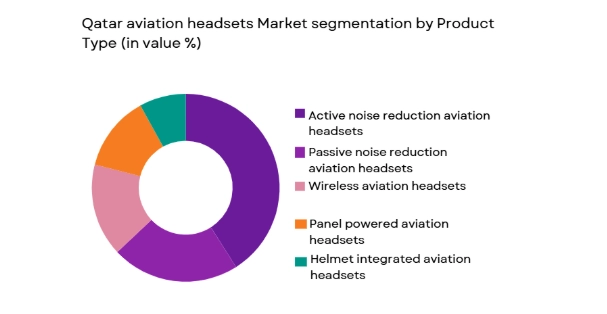
Qatar aviation headsets market is segmented by product type into active noise reduction aviation headsets, passive noise reduction aviation headsets, wireless aviation headsets, panel powered aviation headsets, and helmet integrated aviation headsets. Recently, active noise reduction aviation headsets have a dominant market share due to their superior ability to reduce cockpit noise exposure during long flight hours, especially on jet and rotary aircraft. Pilots operating in high utilization environments increasingly prefer ANR headsets to reduce fatigue and protect hearing. Airline standardization policies favor ANR systems for cockpit crews. Technological improvements in digital signal processing, lighter materials, and extended battery life further enhance adoption. Strong brand presence and proven reliability across commercial and military fleets reinforce dominance in procurement decisions.
By End User
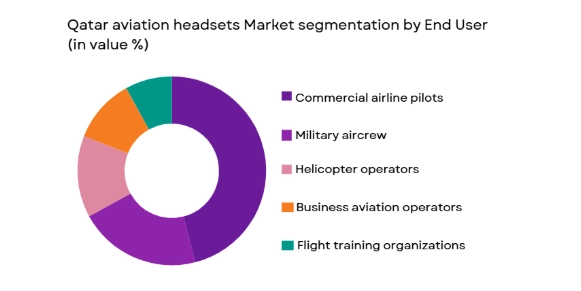
Qatar aviation headsets market is segmented by end user into commercial airline pilots, military aircrew, helicopter operators, business aviation operators, and flight training organizations. Recently, commercial airline pilots have a dominant market share due to the scale of flight operations, standardized cockpit equipment policies, and high replacement frequency driven by intensive utilization. Large fleets operating long haul and regional services require consistent headset performance and compliance with strict safety standards. Airlines invest in high quality headsets to maintain communication clarity and crew comfort. Continuous pilot onboarding and training further increase demand. Centralized procurement by airlines ensures volume purchases, reinforcing dominance among end user segments.
Competitive Landscape
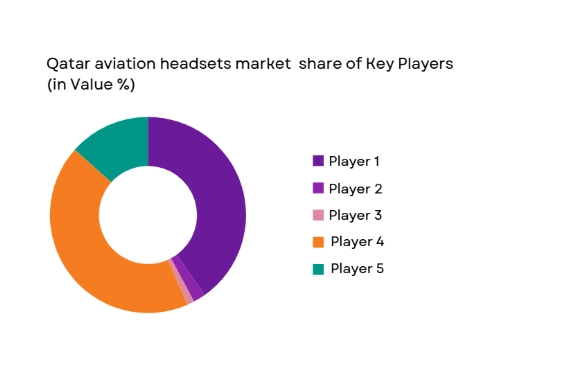
The Qatar aviation headsets market is moderately consolidated, with a small group of internationally established manufacturers dominating supply through authorized distributors and airline procurement channels. Strong brand recognition, certification compliance, and long-standing relationships with airlines and defense operators give major players significant influence over pricing, product selection, and replacement cycles.
| Company Name | Establishment Year | Headquarters | Technology Focus | Market Reach | Key Products | Revenue | Certification Coverage |
| Bose Corporation | 1964 | Massachusetts, USA | ~ | ~ | ~ | ~ | ~ |
| David Clark Company | 1935 | Massachusetts, USA | ~ | ~ | ~ | ~ | ~ |
| Lightspeed Aviation | 1996 | Oregon, USA | ~ | ~ | ~ | ~ | ~ |
| Sennheiser Aviation | 1945 | Wedemark, Germany | ~ | ~ | ~ | ~ | ~ |
| Telex Communications | 1946 | Minnesota, USA | ~ | ~ | ~ | ~ | ~ |
Qatar Aviation Headsets Market Analysis
Growth Drivers
Expansion of Commercial Aviation Operations and Pilot Workforce
Expansion of commercial aviation operations and pilot workforce is a major growth driver for the Qatar aviation headsets market as airline activity remains intensive and operationally demanding. National carriers operate large fleets with high flight frequencies, increasing headset utilization rates. Continuous recruitment of pilots creates sustained baseline demand for certified headsets. Airline safety policies mandate standardized communication equipment. Long haul operations require high comfort and noise protection standards. Replacement demand is driven by wear and certification lifecycle requirements. Centralized airline procurement amplifies volume purchases. These factors collectively ensure stable and recurring market demand.
Rising Emphasis on Pilot Comfort, Hearing Protection, and Safety Compliance
Rising emphasis on pilot comfort, hearing protection, and safety compliance significantly drives the Qatar aviation headsets market as occupational health considerations gain importance. Prolonged exposure to cockpit noise necessitates advanced attenuation solutions. Regulatory oversight reinforces hearing protection standards. Airlines invest in premium headsets to reduce fatigue and improve communication clarity. Improved comfort directly supports operational efficiency. Adoption of ANR technology enhances long duration flight performance. Training organizations align equipment with airline standards. These combined priorities strengthen sustained headset adoption.
Market Challenges
High Cost of Advanced Certified Aviation Headsets
High cost of advanced certified aviation headsets presents a notable challenge in the Qatar aviation headsets market as premium ANR systems carry significant unit prices. Budget constraints affect training organizations and smaller operators. Replacement decisions may be deferred due to cost sensitivity. Import dependence increases landed costs. Limited local alternatives restrict price competition. Certification requirements limit low cost substitutes. Currency exposure affects procurement planning. These factors constrain rapid penetration across all segments.
Stringent Aviation Certification and Compatibility Requirements
Stringent aviation certification and compatibility requirements challenge the Qatar aviation headsets market by restricting product choices. Headsets must comply with FAA and EASA standards. Compatibility with diverse aircraft avionics is essential. Certification processes increase manufacturer costs. Approval timelines delay product introductions. Operators avoid uncertified alternatives. Maintenance documentation requirements add complexity. These constraints limit flexibility for buyers and suppliers.
Opportunities
Adoption of Wireless and Smart Cockpit Headset Technologies
Adoption of wireless and smart cockpit headset technologies represents a key opportunity for the Qatar aviation headsets market as operators modernize flight decks. Bluetooth integration supports secondary communication devices. Reduced cabling improves cockpit ergonomics. Smart features enhance audio clarity and customization. Pilots increasingly prefer advanced connectivity options. New aircraft platforms support digital interfaces. Premium upgrades drive aftermarket demand. These trends create differentiation opportunities.
Growth of Aviation Training and Simulator-Based Programs
Growth of aviation training and simulator-based programs offers opportunity within the Qatar aviation headsets market due to expanding pilot development initiatives. Training centers require durable standardized headsets. Simulator environments demand clear communication systems. Government support for aviation skills development sustains enrollment. Fleet expansion increases training throughput. Replacement cycles are frequent. Alignment with airline specifications boosts demand. These factors create stable institutional purchasing opportunities.
Future Outlook
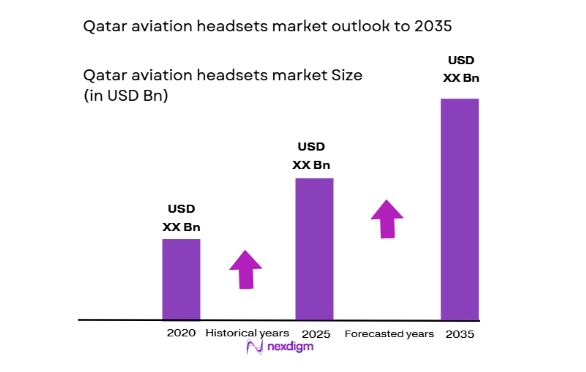
The Qatar aviation headsets market is expected to experience steady growth over the next five years, supported by sustained airline operations and continuous pilot workforce development. Advancements in noise reduction, wireless connectivity, and ergonomic design will enhance product adoption. Regulatory emphasis on safety and hearing protection will remain strong. Increasing training activity and fleet modernization will further reinforce long-term demand.
Major Players
- Bose Corporation
- David Clark Company
- Lightspeed Aviation
- Sennheiser Aviation
- Telex Communications
- ASA Headsets
- Clarity Aloft
- Flightcom Corporation
- Phonak Communications
- Plantronics Aviation
- UflyMike
- Rugged Air Headsets
- Imtradex Aviation
- Senic Aviation
- Faro Aviation
Key Target Audience
- Commercial airlines
- Military aviation units
- Business jet operators
- Helicopter service providers
- Flight training academies
- Aviation MRO organizations
- Investments and venture capitalist firms
- Government and regulatory bodies
Research Methodology
Step 1: Identification of Key Variables
Demand drivers, certification requirements, fleet size, pilot workforce data, and procurement practices were identified through structured secondary research and aviation authority publications.
Step 2: Market Analysis and Construction
Collected information was analyzed to construct market size, segmentation, and competitive structure using validated analytical frameworks.
Step 3: Hypothesis Validation and Expert Consultation
Findings were validated through discussions with aviation equipment suppliers, pilots, and training organization representatives.
Step 4: Research Synthesis and Final Output
All validated insights were synthesized into a coherent report with consistency checks to ensure reliability and clarity.

- Executive Summary
- Research Methodology (Definitions, Scope, Industry Assumptions, Market Sizing Approach, Primary & Secondary Research Framework, Data Collection & Verification Protocol, Analytic Models & Forecast Methodology, Limitations & Research Validity Checks)

- Market Definition and Scope
- Value Chain & Stakeholder Ecosystem
- Regulatory / Certification Landscape
- Sector Dynamics Affecting Demand
- Strategic Initiatives & Infrastructure Growth

- Growth Drivers
Expansion of commercial aviation operations and pilot workforce
Rising emphasis on pilot comfort and hearing protection
Modernization of military and government aviation fleets
Growth of business aviation and helicopter services
Advancements in noise reduction and wireless headset technologies - Market Challenges
High unit cost of advanced aviation headsets
Stringent aviation certification and compliance requirements
Limited local manufacturing and reliance on imports
Compatibility issues across diverse aircraft platforms
Replacement cycles dependent on fleet utilization rates - Market Opportunities
Increasing adoption of active noise reduction headsets
Rising demand from pilot training academies
Upgrades driven by wireless and smart cockpit integration - Trends
Shift toward lightweight and ergonomically designed headsets
Growing penetration of Bluetooth enabled aviation headsets
Preference for multi-platform compatible headset solutions
Increased focus on long duration comfort and fatigue reduction
Adoption of modular and easily serviceable headset designs - Government Regulations & Defense Policy
Strict civil aviation authority certification standards
Defense aviation safety and communication mandates
Support for aviation safety equipment modernization - SWOT Analysis
- Stakeholder and Ecosystem Analysis
- Porter’s Five Forces Analysis
- Competition Intensity and Ecosystem Mapping

- By Market Value, 2020-2025
- By Installed Units, 2020-2025
- By Average System Price, 2020-2025
- By System Complexity Tier, 2020-2025

- By System Type (In Value%)
Active noise reduction aviation headsets
Passive noise reduction aviation headsets
Wireless aviation headsets
Panel powered aviation headsets
Helmet integrated aviation headsets - By Platform Type (In Value%)
Commercial fixed wing aircraft
Business jets and general aviation aircraft
Rotary wing helicopters
Military transport and patrol aircraft
Training and flight school aircraft - By Fitment Type (In Value%)
Line fit aircraft installations
Retrofit and aftermarket installations
Pilot owned personal equipment
Fleet standardized fitments
Temporary and leased aircraft fitments - By EndUser Segment (In Value%)
Commercial airline pilots
Military aircrew
Helicopter operators
Business jet operators
Flight training organizations - By Procurement Channel (In Value%)
Direct airline and operator procurement
Defense procurement contracts
Aviation OEM and integrator supply
Aftermarket and MRO procurement
Authorized aviation equipment distributors - By Material / Technology (in Value %)
Advanced acoustic noise cancellation technology
Digital signal processing electronics
Lightweight composite materials
Bluetooth and wireless communication modules
High durability microphone and speaker assemblies

- Market structure and competitive positioning
Market share snapshot of major players - Cross Comparison Parameters (Noise Reduction Performance, Weight and Ergonomics, Audio Clarity, Wireless Capability, Certification Compliance, Durability, Lifecycle Cost, Aftermarket Support, Platform Compatibility)
- SWOT Analysis of Key Players
- Pricing & Procurement Analysis
- Key Players
Bose Corporation
David Clark Company
Lightspeed Aviation
Sennheiser Aviation
Telex Communications
ASA Headsets
Clarity Aloft
Flightcom Corporation
Phonak Communications
Plantronics Aviation
UflyMike
Farmer Aviation
Imtradex Aviation
Senic Aviation
Rugged Air Headsets

- Airlines prioritize standardized headset specifications for pilots
- Military users demand ruggedized and secure communication headsets
- Helicopter operators focus on high noise attenuation performance
- Training organizations emphasize durability and cost efficiency

- Forecast Market Value, 2026-2035
- Forecast Installed Units, 2026-2035
- Price Forecast by System Tier, 2026-2035
- Future Demand by Platform, 2026-2035


 Request a Sample
 Ask for Customization
 Get a Quote
 Enquire Now