

 Download PDF
 Download PDF
Market Overview
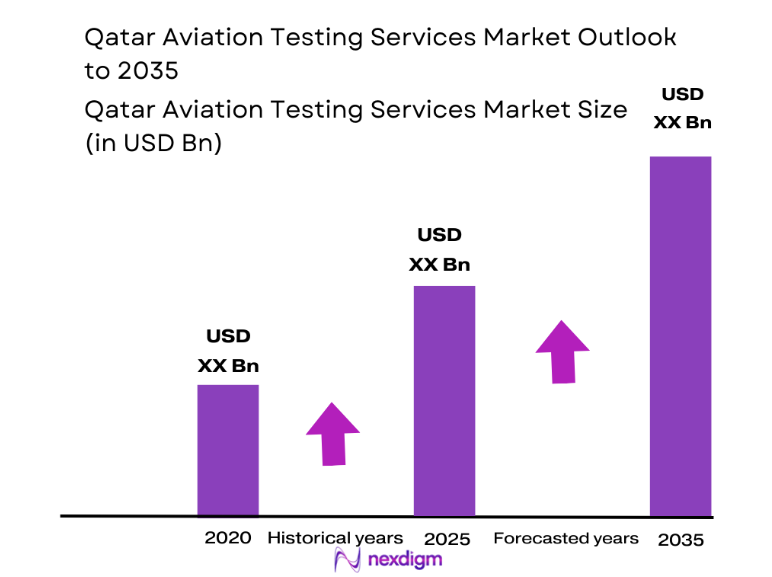
The Qatar Aviation Testing Services Market is valued at approximately USD ~ billion, driven by the rapid expansion of Qatar’s aviation sector and increasing investments in aerospace infrastructure. As the country seeks to enhance its position as a global aviation hub, significant spending on testing services for both commercial and military aircraft is supporting the market’s growth. The country’s flagship carrier, Qatar Airways, plays a pivotal role in this development, along with the large-scale expansion of the country’s airports and aviation facilities. These factors have created a thriving environment for testing services, driven by stringent safety and regulatory requirements. Furthermore, increasing advancements in aviation technology, such as the development of unmanned aerial vehicles (UAVs) and green aviation solutions, are creating fresh demand for innovative testing services that ensure safety, functionality, and compliance with international standards. This sector is expected to continue experiencing robust growth, thanks to Qatar’s strategic investments in aviation technologies and infrastructure, as well as its pursuit of global leadership in the aviation industry.
Dominant cities and countries in the Qatar Aviation Testing Services Market include Doha, where most aviation testing services are concentrated. This is due to the presence of Qatar Airways, the national carrier, and the establishment of advanced testing facilities supported by government investments in the aviation sector. Doha’s strategic location in the Gulf region enhances its position as a key player in the aviation industry, making it an attractive destination for international companies seeking to capitalize on the growing aviation sector in the Middle East. Additionally, the country’s drive to expand its military capabilities, with a focus on defense aviation, contributes to the demand for aviation testing services. The global influence of Qatar’s aviation industry, coupled with its strategic investments in infrastructure, positions the country as a key player in the regional and global aviation testing landscape. Qatar’s global reach, combined with its ambitious plans to position itself as an aviation hub, further strengthens its dominance in the sector.
Market Segmentation
By System Type
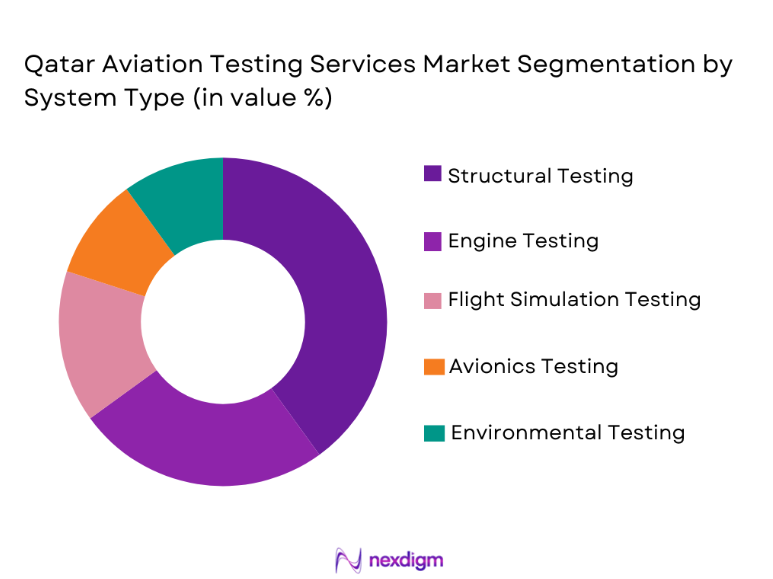
The Qatar Aviation Testing Services Market is segmented by system type into structural testing, engine testing, flight simulation testing, avionics testing, and environmental testing. Recently, structural testing has dominated the market share due to the high demand for safety assurance and compliance with international aviation standards. As Qatar continues to expand its fleet of commercial and military aircraft, structural integrity testing has become a critical part of aircraft development and maintenance, particularly in the face of evolving regulations and the increasing complexity of modern airframes. With the growth in passenger and cargo traffic, coupled with the rise in military defense contracts, the need for structural integrity and safety is crucial in preventing failures that could lead to catastrophic events. Qatar’s aviation authorities, along with private and military operators, invest significantly in structural testing to ensure the reliability and security of aircraft, which in turn supports the growth of this sub-segment. The strong safety culture and the stringent safety standards required by Qatar Civil Aviation Authority (QCAA) further bolster the demand for structural testing services.
By Platform Type
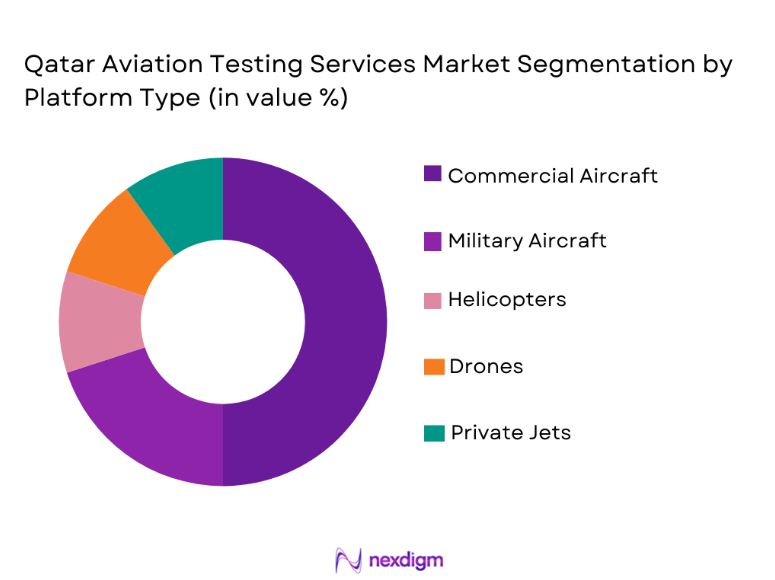
The Qatar Aviation Testing Services Market is also segmented by platform type into commercial aircraft, military aircraft, helicopters, drones, and private jets. Commercial aircraft testing services have a dominant market share in Qatar due to the prominence of Qatar Airways, which leads in global air traffic and is continually expanding its fleet. The demand for commercial aircraft testing services is driven by the need for rigorous safety assessments and compliance with international aviation regulations. This market segment is expected to maintain its dominance as Qatar continues to increase its international aviation operations and technological advancements. The growing fleet of Qatar Airways, combined with the expansion of international airports and maintenance facilities in Doha, has created a solid foundation for the continued demand for commercial aircraft testing services. Additionally, military aircraft testing services also contribute significantly to market growth, with Qatar’s growing defense sector increasing its need for advanced military aviation testing services.
Competitive Landscape
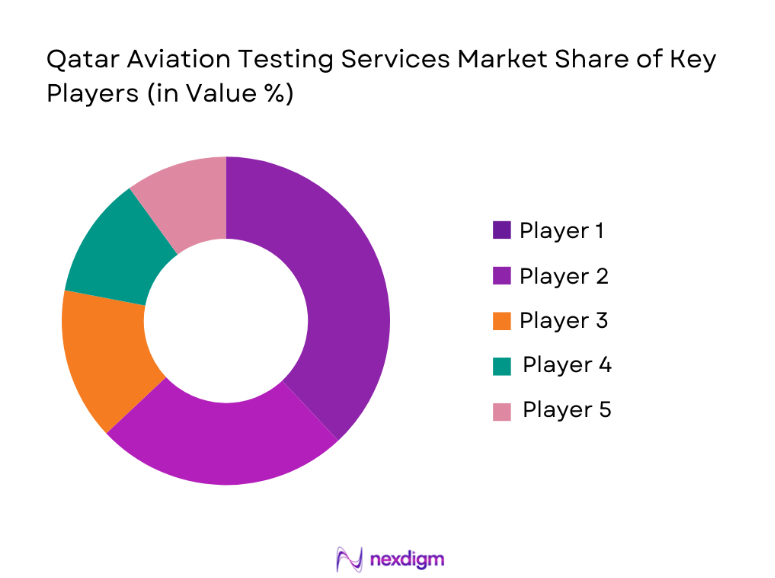
The Qatar Aviation Testing Services Market is highly competitive, with a mix of international and local players providing specialized testing services. Key players in this market are focused on technological advancements, regulatory compliance, and expanding their geographic reach to cater to both regional and global demands. As the market grows, major players are consolidating through acquisitions and strategic partnerships to enhance their service offerings and capitalize on the expanding aerospace infrastructure in Qatar and the surrounding region. Players like Qatar Airways, Boeing, and Airbus are leading the way in offering comprehensive testing services, ensuring aircraft safety and performance in line with global standards. The government of Qatar plays a central role in facilitating this growth, ensuring that the aviation testing infrastructure remains state-of-the-art and aligned with international safety standards. The market is also marked by a trend of collaboration between testing service providers and aerospace companies, allowing them to share resources and technologies to enhance testing capabilities.
| Company Name | Establishment Year | Headquarters | Technology Focus | Market Reach | Key Products | Revenue | Market-specific Parameter |
| Qatar Airways | 1993 | Doha, Qatar | ~ | ~ | ~ | ~ | ~ |
| Boeing | 1916 | Chicago, USA | ~ | ~ | ~ | ~ | ~ |
| Airbus | 1970 | Toulouse, France | ~ | ~ | ~ | ~ | ~ |
| Lockheed Martin | 1995 | Bethesda, USA | ~ | ~ | ~ | ~ | ~ |
| Honeywell | 1906 | Charlotte, USA | ~ | ~ | ~ | ~ | ~ |
Qatar Aviation Testing Services Market Analysis
Growth Drivers
Government Investment in Aerospace Infrastructure
Qatar’s government has heavily invested in developing cutting-edge infrastructure to support its aviation sector, creating a conducive environment for the growth of the aviation testing services market. This includes the establishment of advanced testing facilities and the modernization of existing infrastructure, which allows for more sophisticated testing of aircraft and components. As the demand for aircraft safety and innovation continues to rise globally, Qatar’s investment in these capabilities has positioned the country to become a key player in the global aviation testing landscape. The government’s support extends beyond just infrastructure, with policies and subsidies designed to attract international companies, further enhancing Qatar’s attractiveness as a testing hub. Additionally, investments in airports and military bases have made Qatar a regional leader in aviation-related services, not just in testing, but across the entire aviation value chain. This infrastructure investment provides Qatar with a strong foundation to expand its testing services and remain competitive globally.
Technological Advancements in Aircraft Testing
As new technologies emerge in the aviation industry, the demand for innovative testing services increases. Qatar is embracing these technologies, which include AI-powered simulation systems, 3D-printed components for testing, and real-time monitoring systems that provide data analytics during flight tests. These advancements enhance the efficiency and accuracy of aviation testing, allowing for better safety protocols and reducing operational downtime. Additionally, with increasing focus on sustainable aviation technologies, testing services related to environmentally friendly aircraft are on the rise. The integration of these technologies into Qatar’s aviation testing services market is expected to foster significant growth in the coming years. Qatar’s push to become a leader in sustainable aviation also increases the demand for testing services that focus on green technologies. With the rise of electric aircraft and sustainable fuel alternatives, technological advancements will drive the market’s future growth, offering new revenue streams for service providers.
Market Challenges
High Capital Expenditure in Testing Services
One of the major challenges in the Qatar Aviation Testing Services Market is the high capital expenditure required to maintain state-of-the-art testing infrastructure. The cost of setting up and maintaining advanced testing equipment is substantial, which can make it difficult for small and medium-sized players to enter the market. This high cost can also lead to longer lead times and higher service fees, further limiting market accessibility. Companies must balance the costs of investment with the need to maintain competitive pricing while ensuring they comply with increasingly stringent safety standards. As the demand for new testing services grows, the need for continued investment in infrastructure becomes even more pronounced. For some companies, the inability to secure sufficient funding or scale operations efficiently could limit their ability to participate in Qatar’s rapidly growing aviation testing services market. The market’s reliance on large infrastructure projects adds a layer of complexity, especially as new regulatory demands emerge.
Regulatory Compliance and Certification
Qatar’s aviation sector is heavily regulated, with stringent testing requirements in place to ensure the safety and reliability of aircraft operating within the country. These regulations are continuously updated, and companies must stay ahead of changes to remain compliant. The challenge of meeting the evolving regulatory standards, while also addressing the growing demand for testing services, places a significant burden on testing service providers. Companies must invest in continuous training, certification, and testing technologies to ensure that they can keep up with the regulatory requirements. Failure to do so may result in delays, penalties, or loss of business. Furthermore, international regulations imposed by the International Civil Aviation Organization (ICAO) and other governing bodies influence Qatar’s internal testing standards. Meeting these international standards requires significant investment in new technologies and specialized equipment, which adds pressure to providers who are competing to offer services at competitive rates while staying compliant.
Opportunities
Expansion of Drone Testing Services
With the global rise of drone technology, there is a significant opportunity for growth in the testing services market, particularly in Qatar, which is investing heavily in unmanned aerial vehicles (UAVs) for commercial and defense purposes. Drone testing services are becoming more critical as the aviation industry explores new applications for UAVs in sectors such as logistics, surveillance, and emergency response. This shift presents a prime opportunity for testing service providers to expand their offerings to cater to the unique needs of the drone market. As regulations evolve to accommodate UAV integration into national airspaces, the demand for dedicated testing services will rise. Qatar’s favorable regulatory environment for UAVs positions it well to become a regional leader in this area. With the increasing adoption of drones for various industries, the need for drone-specific testing services, including flight performance, safety compliance, and environmental impact, will drive market growth in this sub-segment.
Adoption of Sustainable Aviation Technologies
Qatar’s commitment to sustainability presents an opportunity for the aviation testing services market to grow, particularly in areas related to environmentally friendly aircraft testing. As the global aviation industry works to reduce its carbon footprint, the demand for testing services focused on sustainable technologies, such as electric and hybrid aircraft, will increase. Qatar’s government is actively supporting green initiatives within its aviation sector, and this focus is expected to drive the need for testing services that cater to new sustainable aircraft designs and technologies. The growing interest in green aviation presents a lucrative market opportunity for testing service providers who specialize in environmentally friendly technologies. As Qatar leads the way in implementing sustainability practices in aviation, it creates an ideal environment for the development and testing of green technologies. This trend will contribute significantly to the overall market growth over the next few years.
Future Outlook
The Qatar Aviation Testing Services Market is poised for steady growth in the next five years. With continued investments in the country’s aviation infrastructure, technological advancements in testing services, and increased demand for aircraft safety and sustainability, Qatar is expected to remain a key player in the global aviation testing landscape. Regulatory support, particularly for drone testing and sustainable aviation technologies, will further fuel growth. Additionally, as the demand for both commercial and military aircraft testing services continues to rise, Qatar’s market position will continue to strengthen, making it an attractive destination for both local and international players.
Major Players
- Qatar Airways
- Boeing
- Airbus
- Lockheed Martin
- Honeywell
- Raytheon Technologies
- L3 Technologies
- Gulfstream Aerospace
- Northrop Grumman
- General Electric
- Rolls-Royce
- Thales
- Collins Aerospace
- Safran
- Embraer
Key Target Audience
- Investments and venture capitalist firms
- Government and regulatory bodies
- Aircraft manufacturers
- Airlines and aircraft operators
- Aerospace and defense contractors
- Aviation technology developers
- Aviation safety organizations
- Military and defense agencies
Research Methodology
Step 1: Identification of Key Variables
We identify the primary drivers, challenges, and opportunities that affect the Qatar Aviation Testing Services Market by analyzing trends, regulatory frameworks, and technological advancements.
Step 2: Market Analysis and Construction
Comprehensive market analysis is conducted through secondary research, gathering data from reputable sources such as government publications, industry reports, and expert interviews.
Step 3: Hypothesis Validation and Expert Consultation
We validate the identified hypotheses by consulting with experts in the field and industry stakeholders to ensure the accuracy and relevance of the research findings.
Step 4: Research Synthesis and Final Output
The final research output is synthesized into a structured report, summarizing key findings, insights, and market projections, with actionable recommendations for stakeholders.

- Executive Summary
- Research Methodology (Definitions, Scope, Industry Assumptions, Market Sizing Approach, Primary & Secondary Research Framework, Data Collection & Verification Protocol, Analytic Models & Forecast Methodology, Limitations & Research Validity Checks)

- Market Definition and Scope
- Value Chain & Stakeholder Ecosystem
- Regulatory / Certification Landscape
- Sector Dynamics Affecting Demand
- Strategic Initiatives & Infrastructure Growth

- Growth Drivers
Growth of Qatar’s Aviation Industry
Increasing Focus on Aircraft Safety and Compliance
Technological Advancements in Aircraft Testing
Rise in Military Aircraft Modernization Programs
Government Support for Aerospace Infrastructure - Market Challenges
High Capital Expenditure on Testing Equipment
Regulatory and Certification Complexities
Dependence on Specialized Skilled Labor
Challenges in Integrating New Testing Technologies
Environmental Concerns in Aviation Testing - Market Opportunities
Increasing Demand for Drone Testing Services
Expansion of Testing Services for Private Aviation
Adoption of Advanced Simulation Technologies - Trends
Growth of Autonomous Aircraft Testing
Integration of AI and Machine Learning in Testing
Increased Use of Virtual Reality for Testing Scenarios
Focus on Green Aviation and Sustainable Testing Practices
Rise in International Collaborations for Aircraft Testing - Government Regulations & Defense Policy
Aerospace Certification Standards by Qatar Civil Aviation Authority
Impact of International Aviation Safety Regulations
Qatar’s Defense Procurement Policies - SWOT Analysis
- Stakeholder and Ecosystem Analysis
- Porter’s Five Forces Analysis
- Competition Intensity and Ecosystem Mapping

- By Market Value, 2020-2025
- By Installed Units, 2020-2025
- By Average System Price, 2020-2025
- By System Complexity Tier, 2020-2025

- By System Type (In Value%)
Aircraft Structural Testing
Aircraft Engine Testing
Flight Simulation Testing
Avionics Testing
Environmental Testing - By Platform Type (In Value%)
Commercial Aircraft
Military Aircraft
Helicopters
Drones
Private Jets - By Fitment Type (In Value%)
OEM Aviation Testing
Aftermarket Aviation Testing
Integrated Aviation Testing
Custom Aviation Testing
Test System Rentals - By EndUser Segment (In Value%)
Airlines
Military Forces
Aircraft Manufacturers
Aerospace Research Institutions
Private Aircraft Operators - By Procurement Channel (In Value%)
Direct Procurement from Manufacturers
Third-party Service Providers
OEM Procurement
Government Procurement
Online Procurement - By Material / Technology (In Value%)
Composite Materials Testing
Metallic Materials Testing
Sensors & Instrumentation Testing
Flight Data Monitoring Systems
Simulated Environment Testing

- Market structure and competitive positioning
- Market share snapshot of major players
- CrossComparison Parameters (Testing Technology, Cost Efficiency, Certification Compliance, Service Availability, Customer Support, Geographical Reach, Regulatory Adaptability, Testing Speed, Innovation, and Market Reputation)
- SWOT Analysis of Key Players
- Pricing & Procurement Analysis
- Key Players
Qatar Airways
Qatar Aeronautical College
Doha Aerospace Engineering
Qatar Defense Ministry
Qatar Civil Aviation Authority
Emirates Flight Training Academy
Boeing
Airbus
General Electric
Lockheed Martin
Honeywell
Raytheon Technologies
L3 Technologies
Boeing Test & Evaluation
Airbus Defence and Space

- Airlines focusing on safety and efficiency improvements
- Military forces enhancing operational readiness and safety
- Aircraft manufacturers driving innovation in testing services
- Private aircraft operators increasing demand for cost-effective testing

- Forecast Market Value, 2026-2035
- Forecast Installed Units, 2026-2035
- Price Forecast by System Tier, 2026-2035
- Future Demand by Platform, 2026-2035


 Request a Sample
 Ask for Customization
 Get a Quote
 Enquire Now