

 Download PDF
 Download PDF
Market Overview
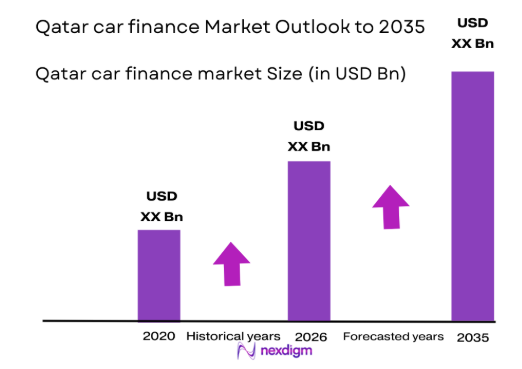
The Qatar car finance market is experiencing substantial growth, with the market size valued at approximately USD ~ billion, driven by increasing demand for personal and commercial vehicles. The expansion of financial products tailored to car purchases, including loans and leasing options, is fostering a competitive landscape. Growth is primarily spurred by rising disposable incomes and a growing population, which significantly increases the demand for affordable vehicle financing solutions. In addition, government incentives and supportive infrastructure are playing a key role in fostering the market’s development.
The key cities contributing to the market’s dominance include Doha, with its status as the economic hub, and Al Rayyan, known for its burgeoning residential areas. These cities benefit from significant infrastructure developments, including enhanced vehicle financing options through banks and private lenders. Qatar’s robust economy, underpinned by the oil and gas industry, along with ongoing modernization programs, positions it as a leader in the GCC region. This development encourages foreign investment and attracts consumers seeking flexible financing options for vehicles.
Market Segmentation
By Product Type
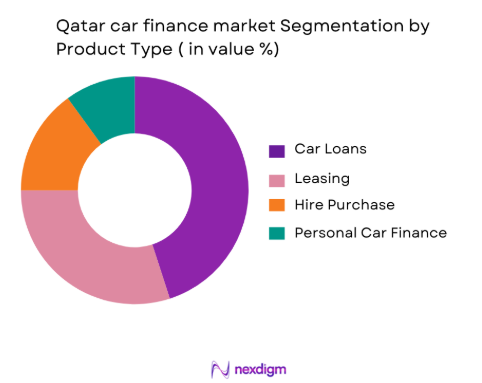
The Qatar car finance market is segmented by product type into car loans, leasing, hire purchase, and personal car finance. Recently, the car loan segment has seen a dominant market share, primarily driven by consumer preference for ownership, coupled with low-interest rates and affordable financing terms. These factors have encouraged consumers to choose car loans over leasing and hire purchase. Furthermore, the availability of flexible repayment plans has increased the attractiveness of this option.
By Platform Type
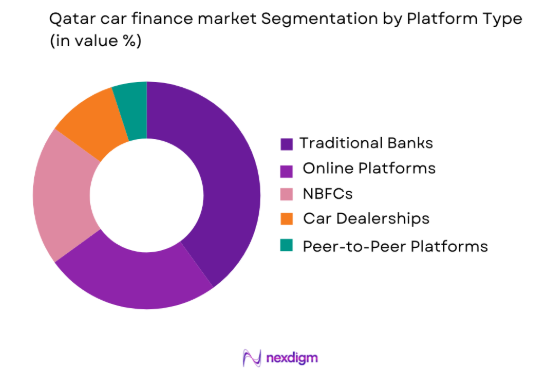
The market is segmented into traditional banks, online platforms, non-banking financial companies (NBFCs), car dealerships, and peer-to-peer platforms. Online platforms have rapidly gained traction due to their convenience, transparency, and faster processing times. Consumers prefer digital platforms for their ease of use and the ability to compare various financing options in real-time. The rapid digitalization of financial services and increasing internet penetration have made online car financing solutions more attractive to tech-savvy consumers.
Competitive Landscape
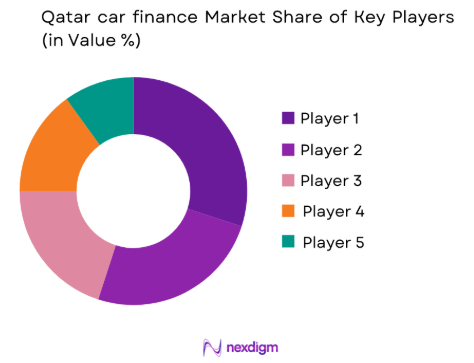
The competitive landscape of the Qatar car finance market is characterized by both local and international players, with consolidation occurring among banks and financial institutions. Major players are leveraging technological advancements to offer more personalized and accessible finance solutions. The rise of online financing platforms has intensified competition, prompting traditional banks to digitize their offerings. As the market expands, strategic partnerships between banks and automotive dealers are becoming increasingly common, allowing for better customer outreach and financing solutions.
| Company Name | Establishment Year | Headquarters | Technology Focus | Market Reach | Key Products | Revenue | Additional Parameter |
| Qatar Islamic Bank | 1982 | Doha, Qatar | ~ | ~ | ~ | ~ | ~ |
| Qatar National Bank | 1964 | Doha, Qatar | ~ | ~ | ~ | ~ | ~ |
| Doha Bank | 1990 | Doha, Qatar | ~ | ~ | ~ | ~ | ~ |
| Al Khaliji Bank | 2007 | Doha, Qatar | ~ | ~ | ~ | ~ | ~ |
| Al Rayan Bank | 2006 | Doha, Qatar | ~ | ~ | ~ | ~ | ~ |
Qatar car finance Market Analysis
Growth Drivers
Government Support for Car Financing
Government policies have been a significant growth driver for the Qatar car finance market. The government has been actively promoting affordable vehicle financing through various initiatives such as interest rate subsidies and tax exemptions for car buyers. These measures have created a conducive environment for consumers to access finance products. With an increasing focus on boosting the automotive sector and promoting environmentally friendly vehicles, government-backed schemes further encourage citizens to opt for financing options. Additionally, the establishment of a clear regulatory framework has also helped instill confidence in financial institutions, resulting in a robust market for car loans and leasing products.
Rise in Consumer Demand for Vehicles
The steady increase in disposable incomes and population growth has driven the demand for vehicles, particularly in urban areas like Doha and Al Rayyan. Rising income levels are enabling consumers to afford both new and used vehicles, thereby propelling the need for financing solutions. The growing preference for owning cars, particularly among millennials, who are more financially stable and technologically inclined, has further fueled demand for car loans. Additionally, the shift toward more sustainable and eco-friendly vehicles has influenced purchasing behavior, with consumers more likely to seek financing for electric and hybrid vehicles, which continues to drive market growth.
Market Challenges
High Interest Rates on Car Loans
Despite the government’s efforts to make financing more accessible, high-interest rates on car loans remain a major challenge in the Qatar car finance market. Although the government has made strides in providing affordable financing solutions, interest rates still pose a financial burden for many consumers, particularly in the long term. High rates discourage potential buyers from applying for car loans, especially for individuals with lower credit scores. This creates a barrier to broader adoption of car financing options and limits the growth potential of the market. Consumers are increasingly looking for more competitive rates, and the market is responding by offering varied loan terms to address this concern.
Economic Volatility
Economic instability, such as fluctuations in global oil prices, can impact the overall purchasing power of consumers. This, in turn, affects their ability to take on car loans. Qatar’s economy, while robust, is heavily dependent on the oil and gas industry, and any downturn in global oil prices could result in reduced consumer spending power. As a result, potential customers may delay or avoid purchasing new vehicles or financing them, which presents a challenge to car finance providers. Financial institutions must adapt to these changes by offering more flexible terms or exploring alternative loan structures to maintain growth during economic downturns.
Opportunities
Digital Transformation in Car Finance
The digital transformation of the car finance market presents a significant opportunity for growth. With the increasing penetration of the internet and smartphones, more consumers are turning to online platforms for financing options. This shift presents a tremendous opportunity for both new and existing players to develop user-friendly, digital financing solutions that cater to the growing tech-savvy population. The ability to apply for loans online, compare rates, and receive instant approvals offers a seamless experience for customers, making it easier to obtain financing. Moreover, the integration of artificial intelligence and data analytics into car finance platforms enables more personalized offerings, enhancing customer satisfaction and driving market growth.
Rise in Electric Vehicle Financing
The growing adoption of electric vehicles (EVs) presents a new opportunity in the Qatar car finance market. As the global automotive industry increasingly shifts toward sustainability, Qatar’s market is witnessing a rising demand for EVs, which are often more expensive than traditional vehicles. The need for financing tailored to the electric vehicle segment is becoming more critical. Financial institutions that develop specialized EV financing programs, including lower interest rates and longer repayment terms, will have a competitive edge in attracting environmentally-conscious consumers. Moreover, government incentives for electric vehicles further boost the demand for financing solutions in this sector.
Future Outlook
The future of Qatar’s car finance market looks promising, with continued growth expected over the next few years. Technological advancements will drive the adoption of digital platforms, making the process of securing car loans and leases more accessible and efficient for consumers. Furthermore, regulatory support and increasing consumer demand for flexible financing solutions will ensure the market remains dynamic. The introduction of more sustainable car financing options, especially for electric vehicles, will shape future trends, positioning Qatar as a key player in the region’s automotive sector.
Major Players
- Qatar Islamic Bank
- Qatar National Bank
- Doha Bank
- Al Khaliji Bank
- Al Rayan Bank
- Commercial Bank of Qatar
- Barwa Bank
- Masraf Al Rayan
- Qatar Finance House
- International Bank of Qatar
- Gulf Bank
- Doha Leasing Company
- Al Dana Investment Company
- Qatar Leasing and Financing
- Al Jazeera Finance
Key Target Audience
- Investments and venture capitalist firms
- Government and regulatory bodies
- Car dealerships and manufacturers
- Banks and financial institutions
- Online car financing platforms
- Non-banking financial companies
- Private equity firms
- Automotive industry associations
Research Methodology
Step 1: Identification of Key Variables
This step involves identifying the key variables driving the Qatar car finance market, such as consumer demand, interest rates, and government policies.
Step 2: Market Analysis and Construction
In this step, we analyze the market’s historical data and develop market construction models that outline potential growth drivers and barriers.
Step 3: Hypothesis Validation and Expert Consultation
We validate our hypotheses by consulting industry experts and reviewing the latest market research publications to ensure the accuracy and relevance of our findings.
Step 4: Research Synthesis and Final Output
Finally, we synthesize the gathered data and insights to develop a comprehensive report that outlines the current state of the market and forecasts its growth potential.

- Executive Summary
- Research Methodology (Definitions, Scope, Industry Assumptions, Market Sizing Approach, Primary & Secondary Research Framework, Data Collection & Verification Protocol, Analytic Models & Forecast Methodology, Limitations & Research Validity Checks)

- Market Definition and Scope
- Value Chain & Stakeholder Ecosystem
- Regulatory / Certification Landscape
- Sector Dynamics Affecting Demand
- Strategic Initiatives & Infrastructure Growth

- Growth Drivers
Increasing Consumer Purchasing Power
Government Support for Car Finance Programs
Rise in Disposable Income Among Millennials
Shift to Online Financing Platforms
Technological Advancements in Financial Services - Market Challenges
High Interest Rates on Car Loans
Regulatory Barriers in Car Financing
Limited Consumer Awareness of Financing Options
Economic Instability Impacting Car Sales
Dependence on Traditional Financing Models - Market Opportunities
Growth of Eco-friendly Car Financing
Expansion of Digital Financing Platforms
Increased Financing for Electric Vehicles - Trends
Shift Towards Digital Car Finance Platforms
Rising Demand for Used Car Financing
Increased Interest in Short-Term Car Leasing - Government Regulations
- Porter’s Five Forces
- SWOT Analysis of Key Competitors

- By Market Value, 2020-2025
- By Installed Units, 2020-2025
- By Average System Price 2020-2025
- By System Complexity Tier 2020-2025

- By System Type (In Value%)
Car Loan Financing
Leasing Financing
Hire Purchase Financing
Personal Car Finance
Commercial Car Finance - By Platform Type (In Value%)
Traditional Banks
Online Platforms
Non-Banking Financial Companies
Car Dealerships
Peer-to-Peer Platforms - By Fitment Type (In Value%)
Standard Fitment
Advanced Fitment
Customized Fitment
Integrated Fitment
Hybrid Fitment - By End User Segment (In Value%)
Individual Customers
Corporate Customers
Government Entities
Car Dealerships
Leasing Companies - By Procurement Channel (In Value%)
Direct Financing
Dealer Financing
Online Financing Platforms
Government Subsidy Programs
Third-Party Brokers

- Market Share Analysis
- Cross Comparison Parameters (System Type, Platform Type, Procurement Channel, End User Segment, Fitment Type, Financing Models, Loan Terms, Interest Rates, Customer Demographics, Vehicle Type)
- SWOT Analysis of Key Competitors
- Pricing & Procurement Analysis
- Key Players
Qatar Islamic Bank
Qatar National Bank
Doha Bank
Al Khaliji Bank
Qatar Commercial Bank
Qatar Central Bank
Al Rayan Bank
Qatar Finance House
Gulf Bank
Barwa Bank
Qatar Leasing Company
Al Dana Investment
Alijarah Finance
Qatar Car Financing Company
Anaam International Holding Group

- Demand for Car Financing Among Millennials
- Increasing Corporate Fleet Financing Needs
- Government Adoption of Car Financing Programs
- Rise in Demand for Short-Term Car Leasing

- Forecast Market Value, 2026-2035
- Forecast Installed Units, 2026-2035
- Price Forecast by System Tier, 2026-2035
- Future Demand by Platform, 2026-2035


 Request a Sample
 Ask for Customization
 Get a Quote
 Enquire Now