

 Download PDF
 Download PDF
Market Overview
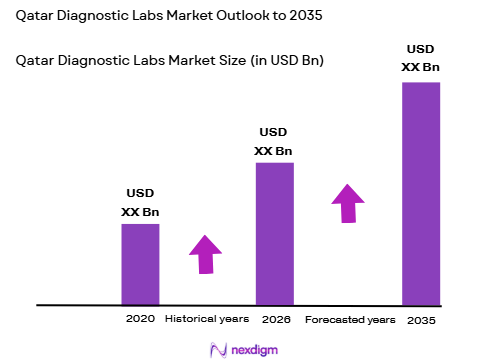
Based on a recent historical assessment, the Qatar Diagnostic Labs Market is valued at approximately USD ~ Billion. The market is driven by increasing demand for diagnostic services, including medical imaging, laboratory tests, and molecular diagnostics. The rising prevalence of chronic diseases, such as diabetes, cardiovascular conditions, and cancer, alongside the growing need for early disease detection, significantly contributes to the market’s expansion. Additionally, the government’s ongoing investments in healthcare infrastructure and diagnostic technologies are accelerating market growth.
Doha, the capital city of Qatar, is the dominant center for diagnostic services due to the concentration of advanced hospitals, specialized medical centers, and diagnostic labs. The city’s strong healthcare infrastructure, supported by national health initiatives, encourages the development of cutting-edge diagnostic facilities. Additionally, government-backed healthcare programs are further boosting the availability and accessibility of high-quality diagnostic services. The rising demand for specialized tests and advanced diagnostics in Doha continues to drive the market, making it a critical hub for diagnostic lab services in the region.
Market Segmentation
By Service Type
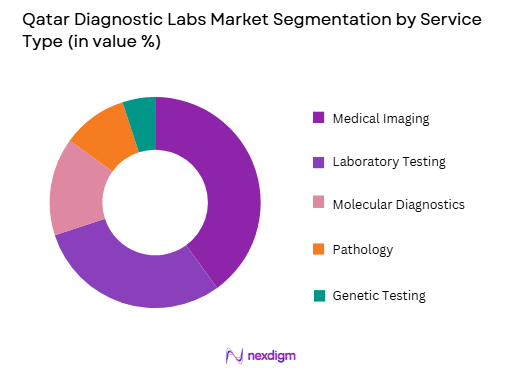
Qatar Diagnostic Labs market is segmented by service type into Medical Imaging, Laboratory Testing, Molecular Diagnostics, Pathology, and Genetic Testing. Recently, Medical Imaging has a dominant market share due to the increasing demand for advanced diagnostic imaging techniques, such as MRI, CT scans, and ultrasound, used in detecting and monitoring various diseases. Medical imaging technologies are vital for diagnosing a wide range of medical conditions, including cancers, heart diseases, and neurological disorders, which are on the rise in Qatar. The expansion of healthcare facilities, including diagnostic imaging centers, and the integration of advanced imaging technologies have made medical imaging services more accessible. The increasing focus on early detection and personalized treatment has also accelerated the demand for these services. As the healthcare sector continues to modernize and incorporate state-of-the-art diagnostic equipment, medical imaging remains a leading segment in the Qatar Diagnostic Labs Market.
By End User
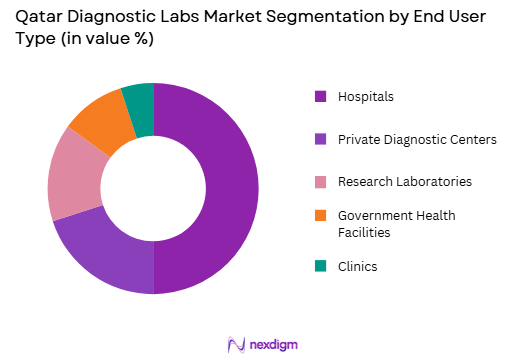
Qatar Diagnostic Labs market is segmented by end user into Hospitals, Private Diagnostic Centers, Research Laboratories, Government Health Facilities, and Clinics. Recently, Hospitals have a dominant market share due to the high demand for comprehensive diagnostic services provided in integrated healthcare systems. Hospitals in Qatar are equipped with advanced diagnostic laboratories and imaging centers that offer a wide range of diagnostic tests, including blood work, imaging, pathology, and molecular diagnostics. With a large patient population requiring diagnostic services for various medical conditions, hospitals provide a one-stop solution for healthcare needs, making them the leading users of diagnostic lab services. Furthermore, government initiatives to modernize hospital infrastructure and improve diagnostic capabilities support hospitals’ continuous adoption of advanced diagnostic technologies, reinforcing their dominance in the market.
Competitive Landscape
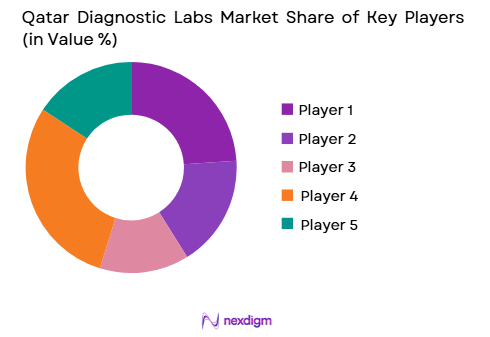
The Qatar Diagnostic Labs Market is highly competitive, with both local and international players competing to provide cutting-edge diagnostic services. The market is characterized by a high level of investment in advanced diagnostic technologies, particularly in medical imaging and molecular diagnostics. Large hospitals and private diagnostic centers dominate the market, while smaller players are increasingly focusing on niche diagnostic services. The competitive landscape is further shaped by the government’s regulatory framework, which ensures high standards in healthcare delivery. As a result, major players are investing in innovation, partnerships, and technological integration to enhance service offerings and expand their market share.
| Company Name | Establishment Year | Headquarters | Technology Focus | Market Reach | Key Products | Revenue | Market-Specific Parameter |
| Hamad Medical Corporation | 1979 | Doha | ~ | ~ | ~ | ~ | ~ |
| Al Emadi Hospital | 1998 | Doha | ~ | ~ | ~ | ~ | ~ |
| Aster DM Healthcare | 1987 | Dubai | ~ | ~ | ~ | ~ | ~ |
| Qatar Medical Center | 2010 | Doha | ~ | ~ | ~ | ~ | ~ |
| Dallah Healthcare | 1994 | Riyadh | ~ | ~ | ~ | ~ | ~ |
Qatar Diagnostic Labs Market Analysis
Growth Drivers
Government Investment in Healthcare Infrastructure
Government Investment in Healthcare Infrastructure is a key driver for the growth of the Qatar Diagnostic Labs Market, as the government continues to prioritize healthcare modernization through infrastructure development and digital health adoption. National healthcare programs, such as the Qatar National Health Strategy, focus on improving healthcare services, particularly in diagnostic testing and imaging. This includes investments in advanced diagnostic technologies, healthcare facilities, and the expansion of laboratory networks to meet the growing demand for diagnostic services. Government support, including public health funding and regulatory frameworks, facilitates the establishment of state-of-the-art diagnostic labs and ensures high-quality standards. The construction of new hospitals and diagnostic centers, along with the upgrade of existing facilities, expands the overall diagnostic capacity and strengthens the healthcare infrastructure. Additionally, government-backed initiatives promote accessibility and affordability, enabling diagnostic services to reach underserved populations, further driving the market growth.
Growing Prevalence of Chronic Diseases
Growing Prevalence of Chronic Diseases is another critical growth driver for the Qatar Diagnostic Labs Market. Chronic conditions such as diabetes, cardiovascular diseases, and cancer are becoming increasingly common in Qatar, necessitating regular and early diagnostic interventions. Diagnostic labs play a vital role in managing chronic diseases by providing essential tests for disease detection, monitoring, and management. As the demand for diagnostic services grows with the rising incidence of chronic diseases, healthcare providers are investing in advanced diagnostic tools to improve patient care. Early detection through advanced diagnostic testing enables more effective treatment plans and reduces the overall healthcare burden, making diagnostic labs integral to the healthcare system. With the aging population and changing lifestyles in Qatar, the need for comprehensive diagnostic services continues to increase, further driving the demand for diagnostic labs in the country.
Market Challenges
High Operational Costs
High Operational Costs represent a significant challenge to the growth of the Qatar Diagnostic Labs Market, as maintaining and upgrading diagnostic facilities and technologies can be expensive. Advanced diagnostic equipment such as MRI machines, CT scanners, and laboratory automation systems require substantial capital investment, along with high operational costs related to maintenance, staffing, and training. Additionally, the cost of reagents and consumables for diagnostic tests contributes to overall expenses. Smaller diagnostic centers may face financial constraints in acquiring and maintaining high-end diagnostic equipment, which can limit their ability to compete with larger players. The high cost of operating diagnostic labs is a barrier for new entrants to the market and may limit the expansion of services to underserved areas, especially in the private sector. To overcome this challenge, collaboration between government bodies and private institutions, as well as public-private partnerships, could play a vital role in reducing operational costs.
Regulatory Compliance and Quality Control
Regulatory Compliance and Quality Control present significant challenges for diagnostic labs operating in Qatar, as they must adhere to stringent local and international standards. Healthcare regulations governing the operation of diagnostic labs are often complex and require significant investment in quality control measures to ensure that testing processes are accurate, reliable, and secure. Diagnostic labs must comply with health and safety standards, environmental regulations, and patient data protection laws, which can incur additional operational costs. The certification and accreditation processes required to meet these standards can be time-consuming and costly. Non-compliance with regulatory requirements can lead to fines, operational shutdowns, or loss of reputation, which could damage the market standing of diagnostic labs. As the demand for diagnostic services grows, maintaining high standards of quality control while adhering to regulations becomes increasingly challenging.
Opportunities
Expanding Medical Tourism in Qatar
Expanding Medical Tourism in Qatar presents a major opportunity for the Diagnostic Labs Market, as the country positions itself as a regional hub for healthcare services, including advanced diagnostic testing. Qatar’s state-of-the-art healthcare infrastructure, coupled with high-quality diagnostic services, attracts international patients seeking specialized treatments and early disease detection. Diagnostic labs play a crucial role in this growing medical tourism sector by offering comprehensive diagnostic tests and fast results for patients traveling to Qatar for medical care. By enhancing diagnostic capabilities and offering competitive pricing, diagnostic labs can attract foreign patients who require advanced imaging, genetic testing, and laboratory analysis. As Qatar continues to develop its medical tourism sector, the demand for diagnostic services will rise, creating a significant market opportunity for diagnostic labs to expand their services and cater to international patients.
Technological Advancements in Diagnostic Testing
Technological Advancements in Diagnostic Testing offer significant growth opportunities for the Qatar Diagnostic Labs Market, as innovations in medical imaging, molecular diagnostics, and laboratory automation continue to evolve. Advancements such as AI-powered diagnostic tools, next-generation sequencing for genetic testing, and automated lab systems improve accuracy, reduce turnaround times, and enhance overall operational efficiency. These technologies also enable diagnostic labs to provide more personalized and precise testing, which is increasingly in demand due to the rising prevalence of chronic diseases and the focus on early detection and prevention. As the healthcare sector in Qatar adopts these technologies, diagnostic labs can differentiate themselves by offering cutting-edge services that attract patients seeking advanced medical solutions. The integration of digital health platforms and telemedicine also creates opportunities for diagnostic labs to expand their reach and offer remote diagnostic services to patients across the country and the region.
Future Outlook
The Qatar Diagnostic Labs Market is expected to experience steady growth over the next five years, driven by advancements in diagnostic technologies, government investment in healthcare infrastructure, and the rising prevalence of chronic diseases. As the demand for high-quality, efficient, and accurate diagnostic services continues to grow, diagnostic labs will play an increasingly important role in Qatar’s healthcare landscape. Technological innovations, such as AI-powered diagnostics and molecular testing, will continue to drive market growth, offering new opportunities for service providers.
Major Players
- Hamad Medical Corporation
- Al Emadi Hospital
- Aster DM Healthcare
- Qatar Medical Center
- Dallah Healthcare
- NMC Healthcare
- Qatar Diagnostics Center
- Al Ahli Hospital
- American Hospital Doha
- Doha Clinic Hospital
- Life Diagnostics
- Medlab
- Health Care Corporation
- Sidra Medicine
- Universal Diagnostic Labs
Key Target Audience
- Government and regulatory bodies
- Hospital operators
- Healthcare infrastructure developers
- Diagnostic service providers
- Medical device manufacturers
- Pharmaceutical companies
- Insurance companies
- Investments and venture capitalist firms
Research Methodology
Step 1: Identification of Key Variables
Key market variables, including the demand for diagnostic tests, healthcare infrastructure expansion, technological innovations, and regulatory frameworks, were identified through comprehensive research and industry data analysis.
Step 2: Market Analysis and Construction
The market analysis was constructed by examining the growth patterns of diagnostic labs, technological adoption rates, and the impact of government healthcare policies on the diagnostic services sector.
Step 3: Hypothesis Validation and Expert Consultation
The hypothesis regarding market trends, growth drivers, and challenges was validated by consulting with industry experts, including healthcare providers, laboratory managers, and technology developers.
Step 4: Research Synthesis and Final Output
Data from primary and secondary sources was synthesized to provide a comprehensive market report, highlighting key trends, opportunities, challenges, and forecasts for the Qatar Diagnostic Labs Market.

- Executive Summary
- Research Methodology (Definitions, Scope, Industry Assumptions, Market Sizing Approach, Primary & Secondary Research Framework, Data Collection & Verification Protocol, Analytic Models & Forecast Methodology, Limitations & Research Validity Checks)

- Market Definition and Scope
- Value Chain & Stakeholder Ecosystem
- Regulatory / Certification Landscape
- Sector Dynamics Affecting Demand
- Strategic Initiatives & Infrastructure Growth

- Growth Drivers
Government investment in healthcare infrastructure under Qatar National Vision 2030
Growing demand for advanced diagnostic services due to rising chronic diseases
Increasing awareness of early disease detection and preventive healthcare - Market Challenges
High operational costs associated with advanced diagnostic technology
Shortage of skilled medical professionals in specialized diagnostic fields
Challenges in integrating digital diagnostic solutions across the healthcare sector - Market Opportunities
Expansion of diagnostic lab services in underserved and rural areas
Partnerships with international diagnostic companies for technological upgrades
Rising medical tourism creating demand for high-quality diagnostic services - Trends
Increased adoption of AI and machine learning in diagnostics
Rise in demand for at-home diagnostic testing solutions - Government Regulations
Regulatory requirements for diagnostic lab certification and quality standards
Data privacy and security regulations for patient health information
Government initiatives supporting healthcare digitalization and lab modernization - SWOT Analysis
- Porter’s Five Forces

- By Market Value, 2020-2025
- By Installed Units, 2020-2025
- By Average System Price, 2020-2025
- By System Complexity Tier, 2020-2025

- By System Type (In Value%)
Clinical Chemistry Diagnostics
Molecular Diagnostics
Immunoassay Diagnostics
Hematology Diagnostics
Microbiology Diagnostics - By Platform Type (In Value%)
Centralized Diagnostic Labs
Point-of-Care Diagnostic Platforms
Mobile Diagnostic Units
Digital Diagnostic Platforms
Integrated Diagnostic Systems - By Fitment Type (In Value%)
Standalone Diagnostic Systems
Integrated Diagnostic Systems
Portable Diagnostic Devices
Smart Diagnostic Platforms - By End User Segment (In Value%)
Private Diagnostic Laboratories
Public Healthcare Institutions
Specialty Medical Centers
Hospitals and Healthcare Networks

- Market Share Analysis
- Cross Comparison Parameters (Diagnostic System Complexity, Adoption of AI Technology, Regulatory Compliance, Integration with Healthcare Networks, Cost-Effectiveness, Digital Health Integration)
- SWOT Analysis of Key Competitors
- Pricing & Procurement Analysis
- Key Players
Hamad Medical Corporation
Doha Clinic Hospital
Aster DM Healthcare
Sidra Medicine
Al Emadi Hospital
Medcare Hospital
Qatar Red Crescent Society
Al Khor Hospital
International Medical Center
Al Ahli Hospital
Qatar Specialized Medical Center
Rumailah Hospital
Aspetar
Al Gharafa Hospital
Rashid Hospital

- Public and private hospitals integrating advanced diagnostic technologies
- Diagnostic labs expanding service offerings to cater to medical tourism
- Healthcare networks adopting centralized lab systems for improved efficiency
- Specialized medical centers investing in molecular and genomic diagnostics

- Forecast Market Value, 2026-2035
- Forecast Installed Units, 2026-2035
- Price Forecast by System Tier, 2026-2035
- Future Demand by Platform, 2026-2035


 Request a Sample
 Ask for Customization
 Get a Quote
 Enquire Now