
 Download PDF
 Download PDF
Market Overview
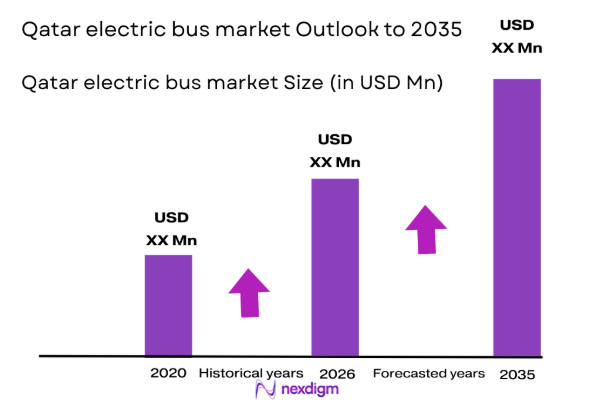
The Qatar electric bus market has seen significant growth, driven by substantial government investments in sustainable transportation solutions. The market is fueled by a commitment to reducing carbon emissions and transitioning toward greener energy solutions, with an emphasis on clean energy for public transportation. The market size is currently valued at USD ~ million, primarily influenced by government incentives for electric vehicle (EV) adoption and the rising demand for environmentally friendly solutions.
Major cities in Qatar, including Doha, lead the adoption of electric buses due to their concentrated urban infrastructure and public transportation networks. The government’s focus on eco-friendly mobility solutions, alongside infrastructure development such as charging stations and fleet expansion, supports the dominance of these cities. Additionally, Qatar’s position as a regional leader in adopting sustainable technology further strengthens the country’s role in the market.
Market Segmentation
By Product Type
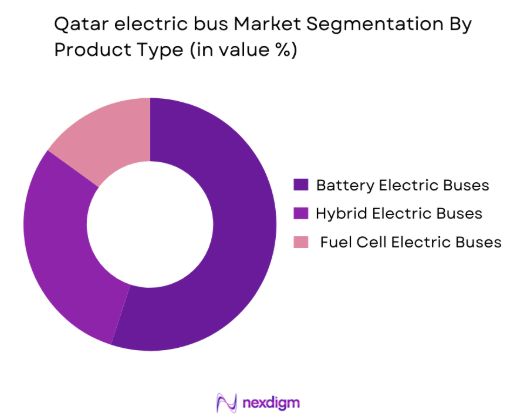
The Qatar electric bus market is segmented by product type into battery electric buses (BEB), hybrid electric buses (HEB), and fuel cell electric buses (FCEB). Among these, battery electric buses have gained the most traction due to their low operational costs and advanced battery technologies. The increasing demand for zero-emission buses, supported by government incentives and infrastructure expansion, has allowed BEBs to dominate the market. Additionally, lower maintenance costs and the environmental appeal of BEBs have contributed significantly to their market dominance.
By Platform Type
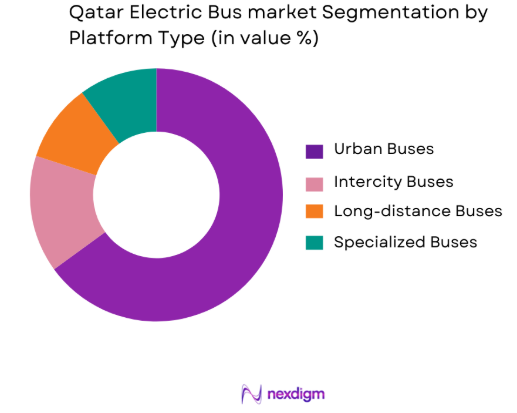
The market is segmented by platform type into urban buses, intercity buses, long-distance buses, and specialized buses. Urban buses have the highest market share, driven by the increasing urbanization in cities like Doha. These buses are in high demand due to their efficient routes, short travel distances, and ease of integration into existing urban public transport systems. Furthermore, the government’s focus on clean transportation solutions in urban centers has made urban buses a dominant sub-segment in the market.
Competitive Landscape
The Qatar electric bus market is highly competitive, with both local and international players striving to capture market share. The market has seen consolidation as major electric bus manufacturers collaborate with local governments and transit authorities to expand their offerings. Players are focused on offering innovative solutions in battery technology and charging infrastructure to address the growing demand for sustainable transportation.
| Company Name | Establishment Year | Headquarters | Technology Focus | Market Reach | Key Products | Revenue | Additional Parameter |
| BYD Company | 1995 | China | ~ | ~ | ~ | ~ | ~ |
| NFI Group | 1993 | Canada | ~ | ~ | ~ | ~ | ~ |
| Volvo Buses | 1927 | Sweden | ~ | ~ | ~ | ~ | ~ |
| Yutong Bus | 1997 | China | ~ | ~ | ~ | ~ | ~ |
| Proterra Inc. | 2004 | USA | ~ | ~ | ~ | ~ | ~ |
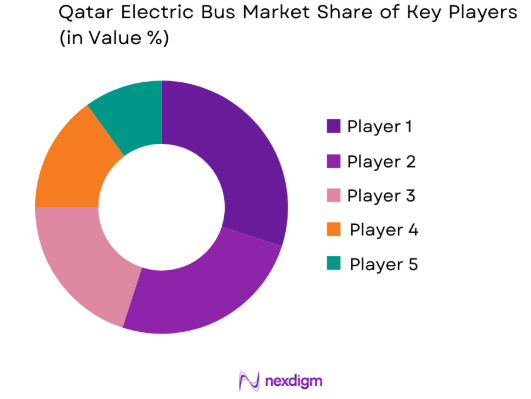
Qatar electric bus Market Analysis
Growth Drivers
Government Support for Sustainable Transportation
Government incentives and policies encouraging the adoption of electric buses have been a major driver for the market. With ambitious targets for reducing carbon emissions, the Qatar government has introduced subsidies and tax exemptions for companies adopting electric buses. These policies not only promote cleaner air and sustainable public transport solutions but also drive demand for electric buses, benefiting manufacturers and suppliers in the sector. The government’s long-term commitment to sustainability continues to stimulate growth, with increased funding allocated to infrastructure such as charging stations and bus fleets. Furthermore, the government’s National Vision 2030, which prioritizes environmental sustainability, aligns with the growing demand for electric buses.
Technological Advancements in Electric Bus Systems
Advances in battery technology and electric propulsion systems have played a key role in driving the electric bus market. The improvements in battery efficiency, faster charging times, and longer operational ranges have made electric buses more cost-effective and feasible for widespread adoption. Additionally, electric buses offer a cleaner alternative to conventional diesel buses, leading to significant reductions in maintenance costs and fuel consumption. As technology continues to evolve, electric buses are becoming increasingly attractive to both public and private transport operators. The continual enhancement of electric vehicle technologies is expected to fuel market growth by offering more competitive solutions in terms of performance and cost-efficiency.
Market Challenges
High Initial Capital Investment
One of the biggest challenges for the adoption of electric buses in Qatar is the high initial investment required. Despite the long-term operational cost savings associated with electric buses, the upfront cost of purchasing electric buses and installing necessary infrastructure such as charging stations can be prohibitive for many transport authorities and private companies. The need for financial support and subsidies to offset these costs is a crucial barrier to market expansion. As governments and transit operators weigh the initial expenses against the long-term savings, they may hesitate to fully commit to electric bus fleets, limiting market penetration.
Charging Infrastructure Development
The development of sufficient and widespread charging infrastructure remains a significant hurdle for the growth of the electric bus market. While some urban areas in Qatar have begun investing in public charging stations, the current infrastructure is not yet widespread enough to support large fleets of electric buses. Furthermore, the implementation of fast-charging stations, which are crucial for the efficient operation of electric buses, remains limited. The lack of sufficient charging infrastructure hampers the full-scale adoption of electric buses and raises concerns about the reliability of electric fleets for public transport operations.
Opportunities
Urban Mobility Transformation
The ongoing transformation of urban mobility presents a significant opportunity for electric bus manufacturers. As Qatar’s population continues to grow and urbanize, the demand for efficient, sustainable public transportation solutions increases. Electric buses are well-suited to meet this growing demand, especially in urban areas where transportation is heavily reliant on public transit. The government’s investment in green transportation infrastructure, such as dedicated bus lanes and charging stations, creates a favorable environment for the adoption of electric buses. This shift towards cleaner transportation options is expected to continue, providing ample opportunities for market players.
Expansion of Public-Private Partnerships
The potential for expanding public-private partnerships (PPP) in the electric bus market is another key opportunity. Governments in Qatar and the wider region are increasingly open to collaborating with private companies to fund and deploy electric bus fleets. These partnerships can help mitigate the high initial costs of electric buses and charging infrastructure while accelerating the transition to cleaner transport solutions. By leveraging PPPs, companies can gain access to funding, favorable policies, and market access, all of which can facilitate faster market penetration and growth for electric bus manufacturers.
Future Outlook
Over the next five years, the Qatar electric bus market is expected to experience significant growth, driven by technological advancements and strong government support for green transportation initiatives. As battery technology continues to improve, electric buses will become more cost-competitive and efficient, making them increasingly attractive to transport authorities and private operators. The government’s continued investment in charging infrastructure and clean energy solutions will help accelerate adoption, with major urban centers leading the way. Qatar’s commitment to achieving its sustainability goals further strengthens the outlook for the electric bus market, ensuring a positive future trajectory.
Major Players
- BYD Company
- NFI Group
- Volvo Buses
- Yutong Bus
- Proterra Inc.
- Solaris Bus & Coach
- New Flyer Industries
- Alexander Dennis
- ABB Group
- Cummins Inc.
- Siemens AG
- VDL Bus & Coach
- Man Truck & Bus
- Green Power Motor Company
- Daimler AG
Key Target Audience
- Investments and venture capitalist firms
- Government and regulatory bodies
- Public transportation authorities
- Private fleet operators
- Electric bus manufacturers
- Charging infrastructure providers
- Environmental advocacy groups
- Logistics and freight operators
Research Methodology
Step 1: Identification of Key Variables
The identification of key market variables such as product types, platform types, and regional trends is essential for building a comprehensive market model.
Step 2: Market Analysis and Construction
Data analysis is conducted using both primary and secondary research to construct the market size and forecasts for the electric bus market.
Step 3: Hypothesis Validation and Expert Consultation
Expert consultations are carried out to validate key market assumptions and ensure the accuracy of forecasts and data interpretation.
Step 4: Research Synthesis and Final Output
The final output integrates all findings and forecasts into a structured market report, ensuring all data points align with market realities.

- Executive Summary
- Research Methodology (Definitions, Scope, Industry Assumptions, Market Sizing Approach, Primary & Secondary Research Framework, Data Collection & Verification Protocol, Analytic Models & Forecast Methodology, Limitations & Research Validity Checks)

- Market Definition and Scope
- Value Chain & Stakeholder Ecosystem
- Regulatory / Certification Landscape
- Sector Dynamics Affecting Demand
- Strategic Initiatives & Infrastructure Growth

- Growth Drivers
Increase in Government Support for Green Transportation
Reduction in Operational Costs for Electric Fleets - Market Challenges
High Initial Investment in Electric Bus Infrastructure
Limited Charging Infrastructure Development - Market Opportunities
Expansion of Electric Bus Fleets in Urban Areas
Technological Advancements in Battery Life and Charging Speed - Trends
Growing Demand for Sustainable Public Transport
Advancements in Battery Technology for Long-Distance Electric Buses
Rising Awareness and Adoption of Clean Energy Solutions - Government Regulations
- Porter’s Five Forces
- SWOT Analysis of Key Competitors

- By Market Value, 2020-2025
- By Installed Units, 2020-2025
- By Average System Price, 2020-2025
- By System Complexity Tier, 2020-2025

- By System Type (In Value%)
Battery Electric Buses
Hybrid Electric Buses
Fuel Cell Electric Buses
Plug-in Hybrid Electric Buses
Electric Bus Charging Systems - By Platform Type (In Value%)
Urban Buses
Intercity Buses
Long-Distance Buses
Specialized Buses
Electric Bus Depots - By Fitment Type (In Value%)
Original Equipment Manufacturer (OEM)
Aftermarket Solutions
Integrated Bus Systems
Modular Solutions
Customization Options - By End User Segment (In Value%)
Public Transportation Authorities
Private Fleet Operators
Government Agencies
Tourism & Leisure Transport
Logistics & Freight Operators - By Procurement Channel (In Value%)
Direct Procurement
Government Tender Bids
Private Sector Contracts
Online Platforms
Third-party Distributors

- Market Share Analysis
- Cross Comparison Parameters (System Type, Platform Type, Procurement Channel, End User Segment, Fitment Type, Battery Type, Charging Infrastructure, Bus Capacity, Vehicle Range, Maintenance Models)
- SWOT Analysis of Key Competitors
- Pricing & Procurement Analysis
- Key Players
BYD Company
NFI Group
Proterra Inc.
Volvo Buses
Yutong Bus
Ebusco
Solaris Bus & Coach
New Flyer Industries
Alexander Dennis
ABB Group
Cummins Inc.
Siemens AG
VDL Bus & Coach
Man Truck & Bus
Green Power Motor Company

- Increasing Demand for Eco-friendly Transport Solutions
- Government Mandates for Green Bus Fleets
- Private Sector Investment in Electric Public Transport
- Growth of Electric Buses in Tourist Transport Services

- Forecast Market Value, 2026-2035
- Forecast Installed Units, 2026-2035
- Price Forecast by System Tier, 2026-2035
- Future Demand by Platform, 2026-2035


 Request a Sample
 Ask for Customization
 Get a Quote
 Enquire Now