
 Download PDF
 Download PDF
Market Overview
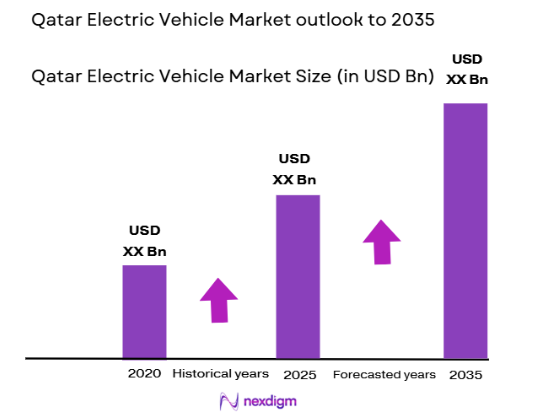
Based on a recent historical assessment, the Qatar electric vehicle market is valued at USD ~ billion. This market is primarily driven by government incentives, growing environmental awareness, and increasing consumer demand for sustainable transportation. The country’s substantial investments in electric vehicle infrastructure, including charging stations and supportive policies, have further propelled market growth. The government’s ambitious carbon reduction targets and economic diversification strategies are also key growth factors. The market is set to grow steadily in the coming years, aided by technological advancements and regulatory support.
Qatar has emerged as a dominant player in the electric vehicle sector in the Gulf region. The government’s push towards sustainability, along with rising oil prices, has fueled the demand for energy-efficient vehicles. Doha, the capital, leads the charge, benefiting from the government’s infrastructure projects and private sector investments. Qatar’s relatively small size and concentrated urban population make it an ideal market for electric vehicles, enabling rapid adoption rates. Government subsidies and the development of green vehicle-friendly policies further enhance Qatar’s position as a regional leader in the electric vehicle market.
Market Segmentation
By Product Type
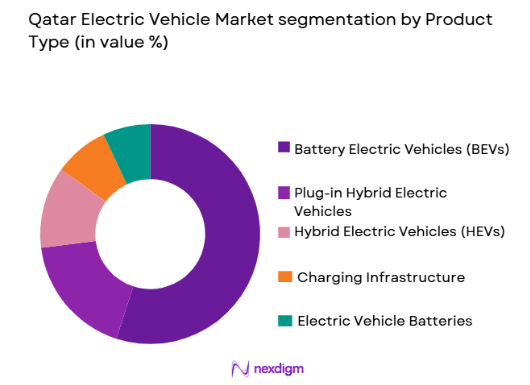
Qatar Electric Vehicle market is segmented by product type into Battery Electric Vehicles (BEVs), Plug-in Hybrid Electric Vehicles (PHEVs), Hybrid Electric Vehicles (HEVs), Charging Infrastructure, and Electric Vehicle Batteries. Recently, Battery Electric Vehicles (BEVs) have a dominant market share due to the growing consumer preference for fully electric solutions, coupled with advancements in battery technology. The decreasing cost of BEVs, government subsidies, and the expansion of charging infrastructure have significantly contributed to their increasing adoption. Qatar’s urban setting and supportive policies have made BEVs a more feasible option for consumers looking for sustainable transport solutions. BEVs also benefit from an increasing number of charging stations, improving accessibility and convenience. As technology advances, BEVs are expected to continue dominating the market, meeting the growing demand for eco-friendly vehicles.
By Platform Type
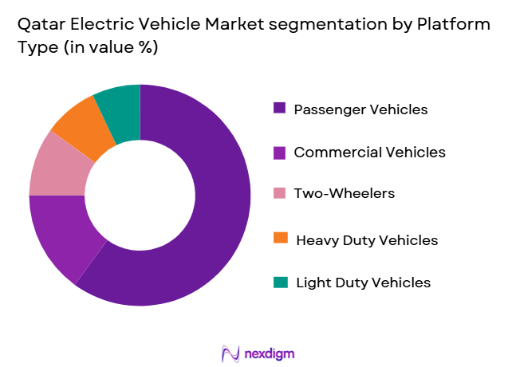
Qatar Electric Vehicle market is segmented by platform type into Passenger Vehicles, Commercial Vehicles, Two-Wheelers, Heavy Duty Vehicles, and Light Duty Vehicles. Recently, Passenger Vehicles have a dominant market share due to increasing demand from consumers looking for environmentally friendly alternatives to traditional combustion engine cars. The growing preference for luxury electric cars and government incentives supporting private electric vehicle ownership are major factors driving this segment’s growth. Additionally, passenger vehicles benefit from the growing popularity of electric vehicle brands, which offer a wider range of models suited for urban environments. With high disposable income and an increased focus on reducing the carbon footprint, passenger vehicles are expected to continue leading the market in Qatar.
Competitive Landscape
The Qatar electric vehicle market is characterized by growing competition among established global players and new entrants. Consolidation is evident in the market as key players expand their presence through partnerships with local firms. The increasing penetration of electric vehicles in Qatar has encouraged companies to focus on both electric vehicle production and the supporting infrastructure, such as charging stations and battery solutions. Global automakers and local manufacturers are increasingly investing in the market to meet rising demand driven by government policies and consumer preferences for cleaner, more efficient vehicles.
| Company Name | Establishment Year | Headquarters | Technology Focus | Market Reach | Key Products | Revenue (USD) | Market-Specific Parameter |
| Tesla | 2003 | USA | ~ | ~ | ~ | ~ | ~ |
| Nissan | 1933 | Japan | ~ | ~ | ~ | ~ | ~ |
| BMW | 1916 | Germany | ~ | ~ | ~ | ~ | ~ |
| Chevrolet | 1911 | USA | ~ | ~ | ~ | ~ | ~ |
| Hyundai | 1967 | South Korea | ~ | ~ | ~ | ~ | ~ |
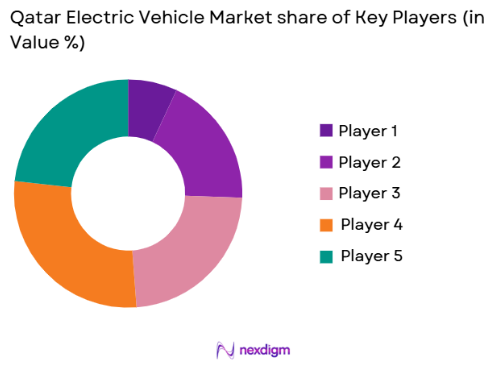
Qatar Electric Vehicle Market Analysis
Growth Drivers
Government Incentives and Policies
The Qatar government plays a pivotal role in accelerating the adoption of electric vehicles. With its vision for a greener future, Qatar offers numerous incentives, such as subsidies for electric vehicles and tax exemptions. These measures are aimed at making electric vehicles more affordable and accessible for consumers. Government initiatives, such as building electric vehicle charging infrastructure and introducing favorable policies for the manufacturing of electric vehicles, have enhanced the growth potential for this market. Additionally, public awareness campaigns have been launched to educate consumers about the environmental benefits of electric vehicles, further driving demand. By removing financial barriers and offering rebates, the government has created a favorable ecosystem for the growth of the electric vehicle market.
Technological Advancements in Battery Efficiency
Advances in battery technology have played a significant role in the growth of the electric vehicle market in Qatar. The reduction in the price of batteries, combined with improvements in energy density and charging speed, has made electric vehicles more attractive to consumers. These developments have helped increase the driving range of electric vehicles, mitigating one of the major concerns among consumers. The rapid evolution of battery technology has also contributed to the lowering of overall vehicle costs, making electric vehicles more affordable. With manufacturers investing heavily in developing high-performance batteries, the market is poised to see further advancements that will drive the demand for electric vehicles in Qatar.
Market Challenges
High Initial Purchase Cost
One of the major challenges to the widespread adoption of electric vehicles in Qatar is their high upfront cost. Although the total cost of ownership for electric vehicles tends to be lower over time due to reduced fuel and maintenance costs, the initial purchase price remains a barrier for many consumers. Even with government incentives, electric vehicles remain more expensive than their internal combustion engine counterparts, limiting their appeal to price-sensitive buyers. The higher cost of batteries, which make up a significant portion of an electric vehicle’s price, is a key factor behind this challenge. Although the price gap is gradually closing, the high initial cost remains a hurdle for widespread adoption.
Limited Charging Infrastructure
Despite significant progress in building charging stations, the availability of electric vehicle charging infrastructure in Qatar is still limited. The lack of widespread and easily accessible charging points continues to pose a challenge for potential buyers. With the increasing number of electric vehicles on the road, there is a growing need for an expanded charging network to support them. This challenge is exacerbated in rural areas and certain parts of the city where charging infrastructure is not readily available. A more extensive and reliable charging network will be essential to drive future growth and ensure that electric vehicle owners are not concerned about running out of charge, particularly during long drives.
Opportunities
Expansion of Charging Infrastructure
One of the most promising opportunities for the electric vehicle market in Qatar is the expansion of charging infrastructure. As the number of electric vehicles increases, so will the need for more charging stations to ensure that users can charge their vehicles conveniently. Expanding the charging network across the country, including fast-charging stations at strategic locations, will improve the user experience and encourage more consumers to switch to electric vehicles. Partnerships between the government, private sector, and electric vehicle manufacturers can facilitate the creation of an extensive and robust charging network. As more charging infrastructure is built, consumer confidence in the feasibility of electric vehicles will increase, leading to greater market adoption.
Introduction of Electric Commercial Vehicles
Another significant opportunity for the electric vehicle market in Qatar is the introduction of electric commercial vehicles. With Qatar’s growing transportation and logistics sectors, there is a significant opportunity to introduce electric trucks, buses, and delivery vehicles. These vehicles can reduce operating costs by offering lower fuel consumption and reduced maintenance needs, making them highly attractive to businesses. Furthermore, the government’s efforts to diversify the economy and promote sustainable transportation will encourage the shift to electric commercial vehicles. With an expanding infrastructure for charging commercial vehicles, this segment is expected to witness rapid growth in the coming years.
Future Outlook
The future outlook for the Qatar electric vehicle market is promising, with significant growth expected in the coming years. The market is set to benefit from continued government support, including favorable policies, tax incentives, and infrastructure development. Technological advancements, particularly in battery technology, will continue to lower the cost of electric vehicles and improve their performance, making them more appealing to consumers. Additionally, the growing awareness of environmental concerns and the push for sustainable transportation will further fuel demand. As charging infrastructure expands and becomes more accessible, electric vehicles will become a more viable option for the broader population, driving market growth.
Major Players
- Tesla
- Nissan
- BMW
- Chevrolet
- Hyundai
- Volkswagen
- Audi
- Mercedes-Benz
- Ford
- Toyota
- Rivian
- Lucid Motors
- BYD
- Kia
- Porsche
Key Target Audience
- Government agencies and regulators
- Electric vehicle manufacturers
- Charging station developers
- Investment firms and venture capitalists
- Fleet operators and logistics companies
- Environmental organizations and NGOs
- Automotive suppliers and parts manufacturers
- Sustainable technology firms
Research Methodology
Step 1: Identification of Key Variables
We identify the key variables affecting the electric vehicle market, including technological advancements, government policies, infrastructure development, and consumer preferences.
Step 2: Market Analysis and Construction
A thorough analysis of market trends, historical data, and future projections is conducted to build a clear and detailed picture of the market.
Step 3: Hypothesis Validation and Expert Consultation
We validate our market hypotheses by consulting industry experts, automotive manufacturers, and technology providers to ensure accuracy and relevance.
Step 4: Research Synthesis and Final Output
We synthesize the findings into a comprehensive report, providing actionable insights and strategic recommendations for stakeholders in the Qatar electric vehicle market.

- Executive Summary
- Research Methodology (Definitions, Scope, Industry Assumptions, Market Sizing Approach, Primary & Secondary Research Framework, Data Collection & Verification Protocol, Analytic Models & Forecast Methodology, Limitations & Research Validity Checks)

- Market Definition and Scope
- Value Chain & Stakeholder Ecosystem
- Regulatory / Certification Landscape
- Sector Dynamics Affecting Demand
- Strategic Initiatives & Infrastructure Growth

- Growth Drivers
Government Initiatives & Subsidies
Technological Advancements in Battery Efficiency
Increasing Consumer Awareness
Rising Fuel Prices
Growing Environmental Concerns - Market Challenges
High Initial Purchase Cost
Charging Infrastructure Shortages
Consumer Range Anxiety
Limited Vehicle Model Availability
Battery Recycling Challenges - Market Opportunities
Expansion of Charging Infrastructure
Growth in Electric Commercial Vehicles
Strategic Partnerships with Tech Companies - Trends
Shift Towards Autonomous Electric Vehicles
Integration of Renewable Energy with EV Charging
Development of Fast-Charging Technologies
Government Policy Support for EV Adoption
Increased Focus on EV Battery Recycling - Government Regulations & Defense Policy
Emission Reduction Targets
Subsidies for Electric Vehicles
Import Regulations for EVs and Components - SWOT Analysis
- Stakeholder and Ecosystem Analysis
- Porter’s Five Forces Analysis
- Competition Intensity and Ecosystem Mapping

- By Market Value, 2020-2025
- By Installed Units, 2020-2025
- By Average System Price, 2020-2025
- By System Complexity Tier, 2020-2025

- By System Type (In Value%)
Battery Electric Vehicles
Plug-in Hybrid Electric Vehicles
Hybrid Electric Vehicles
Charging Infrastructure
Electric Vehicle Batteries - By Platform Type (In Value%)
Passenger Vehicles
Commercial Vehicles
Two-Wheelers
Heavy Duty Vehicles
Light Duty Vehicles - By Fitment Type (In Value%)
OEM Integration
Aftermarket Integration
Hybrid Solutions
Modular Solutions
Custom Solutions - By EndUser Segment (In Value%)
Private Owners
Government & Public Sector
Fleet Operators
Ride-Sharing & Taxi Services
Logistics & Distribution - By Procurement Channel (In Value%)
Direct Procurement
Online Platforms
Dealerships
Government Tenders
Leasing & Financing - By Material / Technology (in Value%)
Lithium-Ion Batteries
Solid-State Batteries
Battery Management Systems
Charging Infrastructure
Electric Motors

- Market structure and competitive positioning
- Market share snapshot of major players
- Cross Comparison Parameters (System Type, Platform Type, Procurement Channel, EndUser Segment, Fitment Type, Material/Technology, Growth Drivers, Challenges, Opportunities, Trends)
- SWOT Analysis of Key Players
- Pricing & Procurement Analysis
- Key Players
Tesla
Nissan
BMW
BYD
Chevrolet
Ford
Hyundai
Kia
Volkswagen
Mercedes-Benz
Rivian
Lucid Motors
Audi
Porsche
Toyota

- Private Vehicle Owners’ Demand for EVs
- Government’s Role in EV Adoption
- Fleet Operators Seeking Cost-Efficient EVs
- Logistics and Distribution Companies’ EV Adoption

- Forecast Market Value, 2026-2035
- Forecast Installed Units, 2026-2035
- Price Forecast by System Tier, 2026-2035
- Future Demand by Platform, 2026-2035


 Request a Sample
 Ask for Customization
 Get a Quote
 Enquire Now