
 Download PDF
 Download PDF
Market Overview
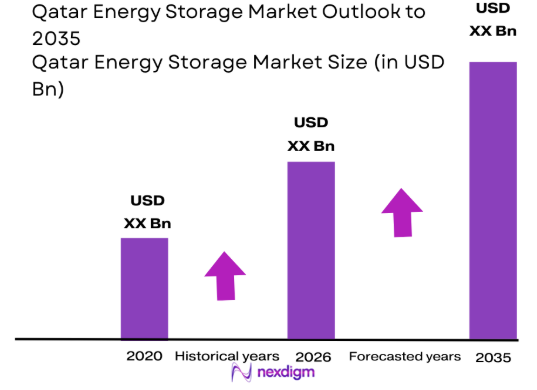
The Qatar energy storage market is valued at approximately USD ~ billion, primarily driven by the growing demand for renewable energy integration, government incentives for green energy, and technological advancements in energy storage systems. This sector is being propelled by initiatives aimed at reducing carbon emissions and increasing energy independence. With Qatar’s commitment to sustainable energy as part of its National Vision, this market is expected to witness significant growth in both capacity and adoption of energy storage solutions.
Dominant countries such as Qatar are leading the way in energy storage due to their government-backed initiatives, vast renewable energy potential, and strategic importance in global energy markets. Qatar, with its abundant solar resources and energy storage infrastructure development, is at the forefront. Additionally, the country’s push to diversify its energy mix, through investments in energy storage systems and infrastructure, solidifies its leadership in the sector.
Market Segmentation
By Product Type
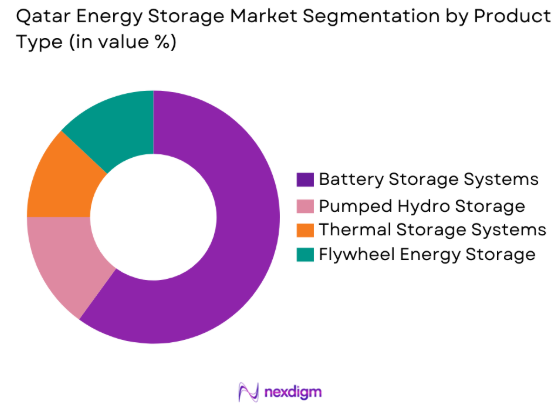
The Qatar Energy Storage market is segmented by product type into battery storage systems, pumped hydro storage, thermal storage systems, and flywheel energy storage systems. Battery storage has emerged as the dominant sub-segment due to advancements in lithium-ion battery technologies, which offer efficient, scalable solutions for both grid-connected and off-grid systems. The growing demand for reliable and cost-effective storage solutions has led to the widespread adoption of battery storage systems, supported by government incentives and an increasing focus on renewable energy integration.
By End-User Segment
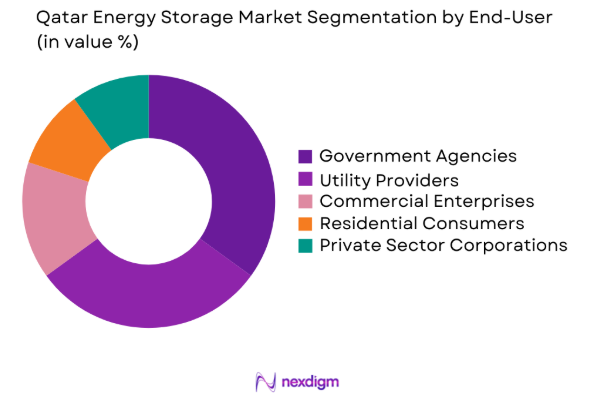
The Qatar Energy Storage market is segmented into government agencies, utility providers, commercial enterprises, residential consumers, and private sector corporations. Government agencies hold the largest market share due to their significant investments in infrastructure to meet energy security goals and sustainability targets. The government’s initiatives to reduce reliance on fossil fuels have led to large-scale deployments of energy storage systems, particularly in the form of grid balancing solutions. The continued push for sustainable energy has made government-backed projects central to the expansion of the energy storage market.
Competitive Landscape
The competitive landscape of the Qatar energy storage market is characterized by increasing consolidation and the dominance of large global players with established technological expertise. Key players like Siemens, General Electric, and Tesla are driving market development with their advanced energy storage technologies. These companies are strengthening their positions through strategic partnerships, technological innovations, and infrastructure investments. The market also sees the emergence of local players who are focusing on niche energy storage solutions, contributing to the market’s competitive dynamics.
| Company Name | Establishment Year | Headquarters | Technology Focus | Market Reach | Key Products | Revenue | Additional Parameter |
| Siemens Energy | 1847 | Germany | ~ | ~ | ~ | ~ | ~ |
| Tesla | 2003 | USA | ~ | ~ | ~ | ~ | ~ |
| General Electric | 1892 | USA | ~ | ~ | ~ | ~ | ~ |
| Fluence Energy | 2018 | USA | ~ | ~ | ~ | ~ | ~ |
| LG Chem | 1947 | South Korea | ~ | ~ | ~ | ~ | ~ |
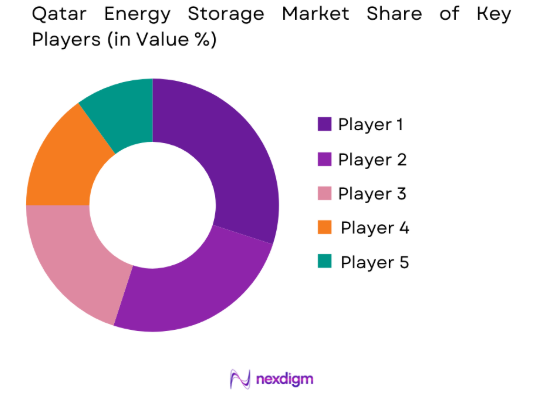
Qatar Energy Storage Market Analysis
Growth Drivers
Technological Advancements
Advancements in battery technology, especially lithium-ion batteries, have significantly lowered costs and improved the efficiency of energy storage systems. These innovations have made energy storage more accessible and scalable, which is crucial for integrating renewable energy sources like solar and wind. Moreover, the development of new battery chemistries and improved battery life cycles has boosted adoption across multiple sectors. Both governments and private entities are increasingly relying on energy storage systems to enhance grid stability, improve energy security, and reduce dependence on fossil fuels. As these technologies continue to evolve, energy storage will play an essential role in enabling a sustainable energy future.
Government Incentives
Qatar’s government has played a key role in fostering the growth of the energy storage market through incentives and subsidies for renewable energy and storage projects. Aligned with its National Vision, Qatar is making substantial investments in sustainable energy solutions, including large-scale storage systems. These initiatives, combined with the global shift toward cleaner energy, have led to a significant increase in energy storage system deployments. Additionally, the government is developing a supportive regulatory framework, further enhancing the attractiveness of the sector for investment. This proactive approach is helping Qatar achieve its sustainability goals and driving the adoption of energy storage technologies across the country.
Market Challenges
High Initial Capital Investment
The high initial costs of energy storage systems remain a major obstacle to market growth. Although the cost of energy storage technologies has reduced in recent years, the upfront capital required for large-scale installations can be a significant challenge for many businesses and government agencies. This financial burden often deters smaller entities from adopting energy storage solutions, despite their potential for long-term savings and environmental benefits. To overcome this challenge, financial support and innovative funding models are essential. These mechanisms would make energy storage more accessible to a broader range of market participants, enabling the widespread adoption of these systems and supporting the transition to renewable energy.
Regulatory Hurdles
Although Qatar has made progress in fostering a favorable environment for energy storage, the regulatory landscape remains complex. The absence of standardized frameworks for energy storage technologies and regulations related to grid integration creates uncertainty, which can hinder market growth. This lack of clarity may delay the deployment of energy storage systems and discourage potential investors from entering the market. For the energy storage market to reach its full potential, Qatar needs to establish clear, consistent regulations, create standardization in technology deployment, and provide stronger incentives for market players. These measures would streamline the regulatory process, encouraging broader adoption and accelerating the growth of energy storage systems in the country.
Opportunities
Expansion of Solar and Wind Energy Projects
Qatar’s commitment to expanding its renewable energy capacity, particularly in solar and wind energy, creates significant opportunities for the energy storage market. Due to the intermittent nature of solar and wind energy, energy storage systems are essential for managing this variability and ensuring a stable energy supply. As Qatar continues to scale its renewable energy projects, the need for energy storage solutions to stabilize the grid and provide backup power will grow. This growing demand for reliable energy storage presents a key opportunity for companies specializing in energy storage systems, positioning them to play a crucial role in Qatar’s energy transition and sustainability efforts.
Smart Grid Integration
The growth of smart grid technologies presents a key opportunity for energy storage systems. Integrating energy storage with smart grids allows utilities to optimize energy use, enhance efficiency, and improve grid reliability. This integration will play a crucial role in driving the adoption of energy storage solutions, especially as urban areas increasingly adopt smart grids. In Qatar, the modernization of energy infrastructure, coupled with the integration of smart grids and energy storage systems, will be essential for ensuring a resilient and sustainable energy future. This trend will support the seamless integration of renewable energy and bolster Qatar’s efforts toward energy security and sustainability.
Future Outlook
The future outlook for the Qatar energy storage market is promising, with significant growth expected in the coming years. Technological advancements in energy storage solutions, particularly in battery technology, are expected to further reduce costs and improve efficiency. Government support for renewable energy projects, coupled with increased investments in infrastructure, will continue to drive market growth. The market is expected to see a rise in the adoption of energy storage systems in both residential and commercial sectors, with a focus on integrating these systems with renewable energy sources to support Qatar’s sustainability goals.
Major Players
- Siemens Energy
- Tesla
- General Electric
- Fluence Energy
- LG Chem
- ABB Group
- Vestas
- AES Energy Storage
- BYD
- Mitsubishi Heavy Industries
- Enel Green Power
- First Solar
- NextEra Energy
- S&C Electric
- Schneider Electric
Key Target Audience
- Investments and venture capitalist firms
- Government and regulatory bodies
- Energy producers and distributors
- Utility companies
- Renewable energy project developers
- Commercial enterprises
- Residential developers
- Large-scale infrastructure investors
Research Methodology
Step 1: Identification of Key Variables
The key variables for this market include technological trends, government policies, and infrastructure developments, which are identified through expert consultation and primary research.
Step 2: Market Analysis and Construction
Data is collected from various industry sources to build a comprehensive market model. Market sizing is performed based on historical data, current trends, and expected future growth rates.
Step 3: Hypothesis Validation and Expert Consultation
The market model is validated through consultations with industry experts and key stakeholders to ensure its accuracy and alignment with real-world conditions.
Step 4: Research Synthesis and Final Output
The findings from the analysis are synthesized to generate actionable insights, which are then presented in the final market report for the stakeholders.

- Executive Summary
- Research Methodology (Definitions, Scope, Industry Assumptions, Market Sizing Approach, Primary & Secondary Research Framework, Data Collection & Verification Protocol, Analytic Models & Forecast Methodology, Limitations & Research Validity Checks)

- Market Definition and Scope
- Value Chain & Stakeholder Ecosystem
- Regulatory / Certification Landscape
- Sector Dynamics Affecting Demand
- Strategic Initiatives & Infrastructure Growth

- Growth Drivers
Increase in Renewable Energy Adoption
Government Support for Green Energy
Technological Advancements in Energy Storage - Market Challenges
High Initial Capital Investment
Lack of Standardization and Infrastructure
Environmental Concerns with Battery Disposal - Market Opportunities
Growing Demand for Grid Stabilization Solutions
Expansion of Solar and Wind Energy Projects
Technological Innovations in Energy Storage Systems - Trends
Integration of AI in Energy Storage Management
Rise in Decentralized Energy Storage Solutions
Focus on Sustainable Battery Technologies - Government Regulations
- SWOT Analysis of Key Competitors
- Porter’s Five Forces

- By Market Value, 2020-2025
- By Installed Units, 2020-2025
- By Average System Price, 2020-2025
- By System Complexity Tier, 2020-2025

- By System Type (In Value%)
Energy Storage Systems
Battery Storage Solutions
Pumped Hydro Storage
Thermal Storage Systems
Flywheel Energy Storage - By Platform Type (In Value%)
Grid-Connected Platforms
Off-Grid Platforms
Hybrid Platforms
Mobile Storage Platforms
Residential Storage Platforms - By Fitment Type (In Value%)
On-Premise Solutions
Cloud-based Solutions
Hybrid Solutions
Modular Solutions
Integrated Solutions - By End User Segment (In Value%)
Government Agencies
Utility Providers
Private Sector / Corporations
Commercial Enterprises
Residential Consumers - By Procurement Channel (In Value%)
Direct Procurement
Government Tenders
Private Sector Procurement
Online Bidding Platforms
Third-party Distributors

- Market Share Analysis
- Cross Comparison Parameters (System Type, Platform Type, Procurement Channel, End User Segment, Fitment Type, Technology Type, Storage Capacity, Region, Installation Type, Application Type)
- SWOT Analysis of Key Competitors
- Pricing & Procurement Analysis
- Key Players
Siemens Energy
General Electric
Tesla
AES Energy Storage
LG Chem
Samsung SDI
Fluence Energy
NextEra Energy
Schneider Electric
Mitsubishi Heavy Industries
Vestas
BYD
RWE Group
S&C Electric Company
NRG Energy

- Increasing Demand from Government Agencies
- Adoption by Utility Providers for Grid Efficiency
- Growth in Commercial Sector Applications
- Residential Consumers’ Growing Interest in Off-Grid Solutions

- Forecast Market Value, 2026-2035
- Forecast Installed Units, 2026-2035
- Price Forecast by System Tier, 2026-2035
- Future Demand by Platform, 2026-2035


 Request a Sample
 Ask for Customization
 Get a Quote
 Enquire Now