
 Download PDF
 Download PDF
Market Overview
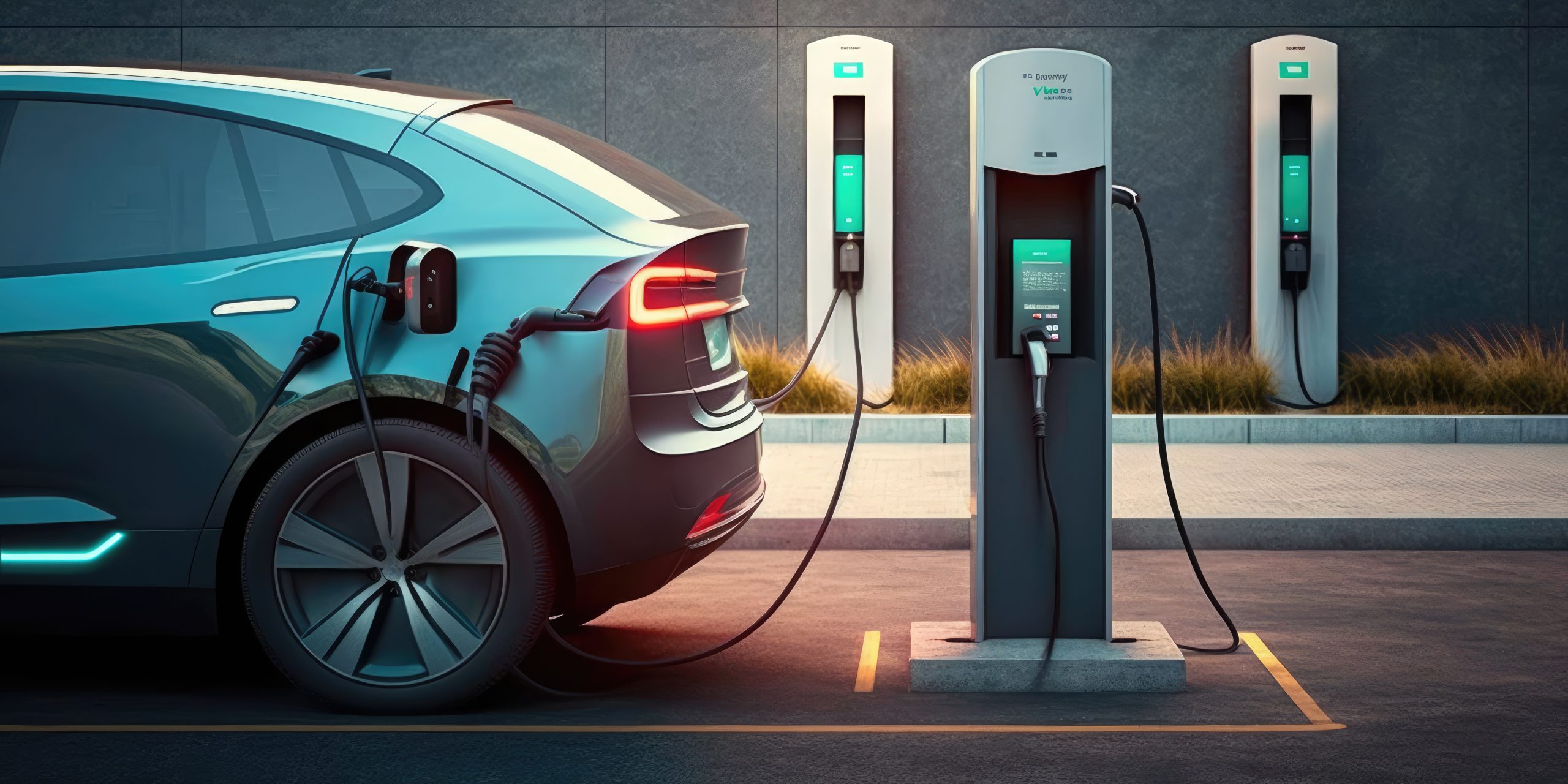
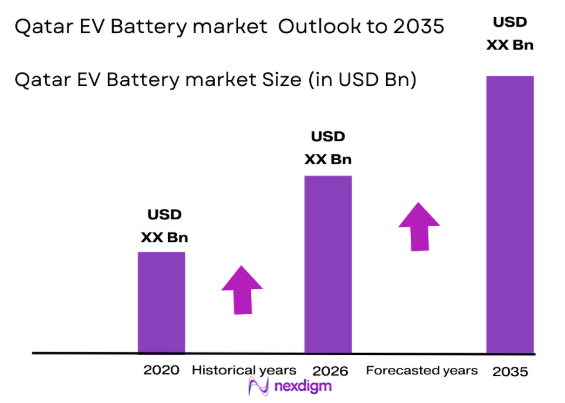
The Qatar EV Battery market has witnessed robust growth, driven by substantial investments in electric vehicle (EV) infrastructure and advancements in battery technologies. Based on a recent historical assessment, the market is valued at approximately USD ~ billion, largely fueled by the country’s commitment to reducing carbon emissions and promoting green technologies. The adoption of EVs has been accelerated by government incentives and the increasing availability of charging infrastructure, positioning Qatar as a significant player in the regional EV landscape.
Qatar has emerged as a leading hub for EV adoption, driven by its strategic location, abundant energy resources, and commitment to sustainability. Cities like Doha, with their robust economic activities and high disposable income levels, dominate the demand for EVs and related technologies. This dominance can be attributed to strong governmental support, favorable regulatory policies, and a growing emphasis on green technologies in both private and public sectors. These factors have made Qatar a favorable market for investments in EV battery technology.
Market Segmentation
By System Type
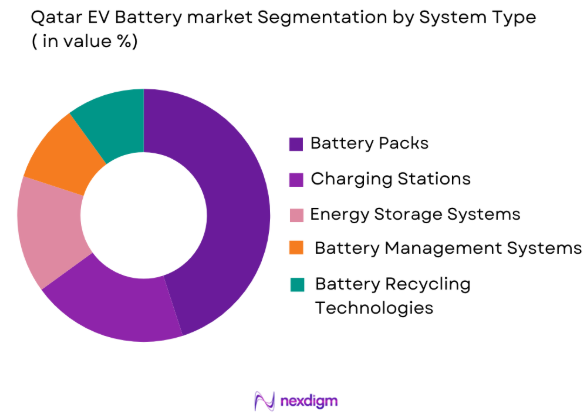
The Qatar EV Battery market is segmented by system type into battery packs, charging stations, energy storage systems, battery management systems, and battery recycling technologies. Recently, battery packs have dominated the market due to the increasing adoption of electric vehicles and the expansion of charging infrastructure. Battery packs are a crucial component, providing the necessary power storage for EVs, making them central to the country’s EV strategy. The demand for high-performance and long-lasting battery packs is growing, especially with the increased focus on sustainability and energy efficiency.
By Platform Type
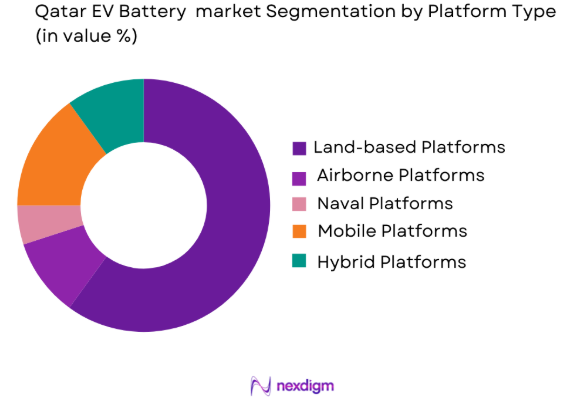
The Qatar EV Battery market is segmented by platform type into land-based platforms, airborne platforms, naval platforms, mobile platforms, and hybrid platforms. Land-based platforms, specifically electric cars and commercial vehicles, hold the dominant market share. This is due to the growing number of EVs on the roads, supported by favorable government incentives, improved infrastructure, and increased consumer awareness about the environmental benefits of electric mobility.
Competitive Landscape
The competitive landscape of the Qatar EV Battery market is shaped by both local and international players aiming to leverage Qatar’s growing EV infrastructure. With the increasing demand for efficient EV batteries and charging solutions, key players are focusing on technological advancements and expansion strategies to enhance market presence. Consolidation in the market has been seen, as major players partner with governments and local entities to improve infrastructure and battery manufacturing capabilities. Companies are investing in research and development to offer cost-effective and high-performance EV batteries.
| Company Name | Establishment Year | Headquarters | Technology Focus | Market Reach | Key Products | Revenue (USD) | Additional Parameter |
| Tesla | 2003 | USA | ~ | ~ | ~ | ~ | ~ |
| BYD | 1995 | China | ~ | ~ | ~ | ~ | ~ |
| LG Chem | 1947 | South Korea | ~ | ~ | ~ | ~ | ~ |
| CATL | 2011 | China | ~ | ~ | ~ | ~ | ~ |
| Panasonic | 1918 | Japan | ~ | ~ | ~ | ~ | ~ |
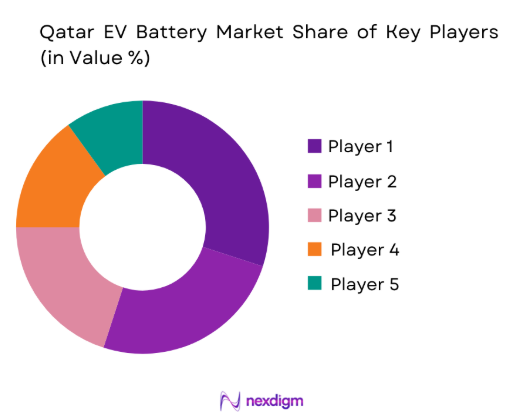
Qatar EV Battery Market Analysis
Growth Drivers
Government Initiatives for EV Adoption
Government initiatives have been crucial in accelerating the adoption of electric vehicles in Qatar. With clear policies and financial incentives for consumers and manufacturers, the government aims to reduce carbon emissions and diversify its energy sources. These policies include tax breaks for EV buyers, grants for charging infrastructure, and a commitment to green energy solutions. Additionally, the country’s investment in infrastructure development, including the installation of charging stations across key urban centers, provides the essential backbone for EV adoption. As more charging stations are built, EV adoption is expected to rise, reinforcing the government’s long-term sustainability goals. These factors combined are expected to drive continuous growth in the EV battery market, making Qatar a leading market for electric mobility in the Middle East.
Technological Advancements in Battery Solutions
The rapid advancements in battery technology are another significant growth driver for the EV battery market in Qatar. With improvements in energy density, charging speed, and battery lifespan, manufacturers are able to provide more efficient and cost-effective solutions for electric vehicles. Solid-state batteries, which offer higher energy efficiency and enhanced safety, are being actively researched and deployed. These technological innovations have made EVs more appealing to consumers due to their increased range, reduced charging time, and longer lifespan. Qatar’s focus on renewable energy and sustainable transportation is fostering an environment conducive to the adoption of these advanced technologies, which will continue to fuel the market for EV batteries.
Market Challenges
High Initial Investment Costs
One of the main challenges facing the EV battery market in Qatar is the high initial investment required for the development and installation of EV infrastructure. While government initiatives and incentives help alleviate some of these costs, the infrastructure development for EVs, such as charging stations and battery manufacturing plants, requires significant capital investment. For EV adoption to reach its full potential, private and public sectors must work together to overcome these cost barriers. This challenge remains critical in ensuring long-term market sustainability, especially as the demand for electric vehicles continues to increase. Additionally, the supply chain for EV components, including raw materials like lithium and cobalt, remains volatile, further adding to the cost of battery production and, consequently, the final price of EVs.
Regulatory and Compliance Barriers
Despite Qatar’s commitment to sustainable development and its push for EV adoption, regulatory and compliance barriers pose challenges for the market. These include complex approval processes for setting up charging stations, import restrictions on certain battery technologies, and the need for updated safety regulations concerning battery storage and recycling. For manufacturers and infrastructure developers, these regulatory hurdles can delay project timelines and increase operational costs. Additionally, the lack of uniform standards across the region for EV charging infrastructure creates fragmentation in the market, further hindering seamless EV adoption across the country.
Opportunities
Expansion of EV Charging Infrastructure
One of the most promising opportunities in the Qatar EV Battery market is the expansion of EV charging infrastructure. As the number of electric vehicles increases, so does the need for a comprehensive network of accessible and fast-charging stations. Qatar is already making strides in this direction, with plans to build more charging stations in urban and suburban areas. This expansion is vital in supporting the growing demand for EVs and will create opportunities for companies involved in the installation and operation of charging networks. Furthermore, the development of ultra-fast charging stations can significantly reduce charging times, making EVs even more attractive to consumers. The growing demand for charging infrastructure is expected to drive significant investments in the sector, creating a sustainable ecosystem for EV adoption in Qatar.
Battery Recycling and Second-Life Applications
Another major opportunity in the Qatar EV battery market lies in battery recycling and second-life applications. As the adoption of electric vehicles grows, the number of used EV batteries will increase, creating an opportunity for businesses to recycle these batteries for reusable materials such as lithium, cobalt, and nickel. Additionally, second-life applications for EV batteries—such as using them for stationary energy storage in homes or businesses—can extend the life of batteries and reduce waste. Qatar’s focus on sustainability and its growing demand for energy storage solutions make it an ideal market for the development of battery recycling infrastructure. Companies focusing on these areas will not only help reduce the environmental impact of used batteries but also tap into a growing market for sustainable energy solutions.
Future Outlook
The Qatar EV Battery market is expected to continue its upward trajectory, with increasing investments in infrastructure and advancements in battery technologies. Technological innovations, such as faster charging times and enhanced battery efficiency, will continue to make EVs more appealing to consumers. In the coming years, government initiatives aimed at reducing carbon emissions and promoting sustainable energy will provide a strong foundation for the market’s growth. The rise of charging infrastructure and the development of second-life applications for batteries will drive long-term market sustainability, positioning Qatar as a leading hub for electric mobility in the region.
Major Players
- Tesla
- BYD
- LG Chem
- CATL
- Panasonic
- Siemens
- ABB
- Eaton
- Schneider Electric
- Honda
- Toyota
- Ford Motor Company
- General Motors
- BMW
- Volkswagen
Key Target Audience
- Investments and venture capitalist firms
- Government and regulatory bodies
- Automobile manufacturers
- Charging station developers
- Energy storage companies
- Infrastructure developers
- Battery technology firms
- Environmental organizations
Research Methodology
Step 1: Identification of Key Variables
Key variables, including technological advancements, market demand, and government policies, are identified through secondary and primary research.
Step 2: Market Analysis and Construction
Data collected from credible sources are analyzed to construct a detailed market model, taking into account regional trends and growth potential.
Step 3: Hypothesis Validation and Expert Consultation
Expert consultations and validation of hypotheses are conducted to ensure the accuracy of market predictions and to refine the overall market model.
Step 4: Research Synthesis and Final Output
The findings from primary and secondary research are synthesized to create a comprehensive market report with actionable insights and strategic recommendations.

- Executive Summary
- Research Methodology (Definitions, Scope, Industry Assumptions, Market Sizing Approach, Primary & Secondary Research Framework, Data Collection & Verification Protocol, Analytic Models & Forecast Methodology, Limitations & Research Validity Checks)

- Market Definition and Scope
- Value Chain & Stakeholder Ecosystem
- Regulatory / Certification Landscape
- Sector Dynamics Affecting Demand
- Strategic Initiatives & Infrastructure Growth

- Growth Drivers
Increasing Demand for Electric Vehicles
Government Initiatives for Sustainability
Technological Advancements in Battery Technologies - Market Challenges
High Initial Investment in EV Battery Infrastructure
Regulatory Barriers to Battery Recycling
Limited Availability of Raw Materials - Market Opportunities
Expansion of Charging Infrastructure
Growth in EV Battery Recycling
Strategic Partnerships for Battery Technology Innovation - Trends
Advancements in Fast-charging Technology
Integration of Artificial Intelligence in Battery Systems
Shift Towards Solid-state Batteries
Government Regulations
SWOT Analysis of Key Competitors
Porter’s Five Forces

- By Market Value, 2020-2025
- By Installed Units, 2020-2025
- By Average System Price, 2020-2025
- By System Complexity Tier, 2020-2025

- By System Type (In Value%)
Battery Packs
Charging Stations
Energy Storage Systems
Battery Management Systems
Battery Recycling Technologies - By Platform Type (In Value%)
Land-based Platforms
Airborne Platforms
Naval Platforms
Mobile Platforms
Hybrid Platforms - By Fitment Type (In Value%)
On-board Battery Systems
Portable Battery Systems
Fixed Stationary Battery Systems
Hybrid Systems
Battery Leasing Systems - By End User Segment (In Value%)
Automobile Manufacturers
Electric Vehicle Owners
Charging Infrastructure Providers
Battery Manufacturers
Government and Regulatory Bodies - By Procurement Channel (In Value%)
Direct Procurement
Government Tenders
Private Sector Procurement
Online Platforms
Third-party Distributors

- Market Share Analysis
- Cross Comparison Parameters (Battery Type, Platform Type, Procurement Channel, End User Segment, Fitment Type, Charging Technology, Raw Material Sourcing, Battery Lifecycle, Technological Innovation, Geographic Region)
- SWOT Analysis of Key Competitors
- Pricing & Procurement Analysis
- Key Players
Tesla
BYD
LG Chem
CATL
Panasonic
Samsung SDI
Siemens
ABB
Eaton
Schneider Electric
Honda
Toyota
Ford Motor Company
General Motors
BMW

- Automobile Manufacturers’ Role in EV Battery Development
- Electric Vehicle Owners’ Increasing Demand for Efficient Batteries
- Charging Infrastructure Providers’ Investment in EV Batteries
- Government and Regulatory Bodies’ Support for EV Battery Policies

- Forecast Market Value, 2026-2035
- Forecast Installed Units, 2026-2035
- Price Forecast by System Tier, 2026-2035
- Future Demand by Platform, 2026-2035


 Request a Sample
 Ask for Customization
 Get a Quote
 Enquire Now