

 Download PDF
 Download PDF
Market Overview
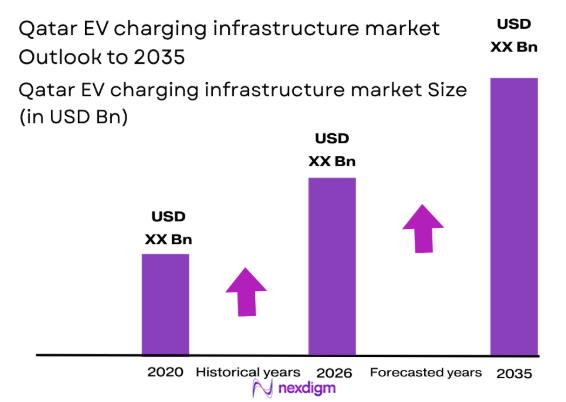
The Qatar EV charging infrastructure market is experiencing rapid growth, driven by increasing adoption of electric vehicles and strong governmental support for green energy initiatives. With significant investments in infrastructure development, the market is projected to USD ~ by 2024, supported by both public and private sector efforts. These investments are bolstered by policies focused on sustainability, energy efficiency, and reducing carbon emissions, positioning Qatar as a leader in the region’s transition to clean energy.
Dominant cities in Qatar, such as Doha, are at the forefront of the EV charging infrastructure market due to high urbanization and government-led urban development projects. This focus on building sustainable infrastructure, coupled with Qatar’s ambitious Vision 2030, drives demand for EV adoption and corresponding charging infrastructure. Doha, being the capital and the hub of economic activities, plays a pivotal role in implementing these initiatives. Additionally, regulatory incentives further enhance the market’s dominance in these urban centers, pushing for more extensive EV charging networks.
Market Segmentation
By System Type
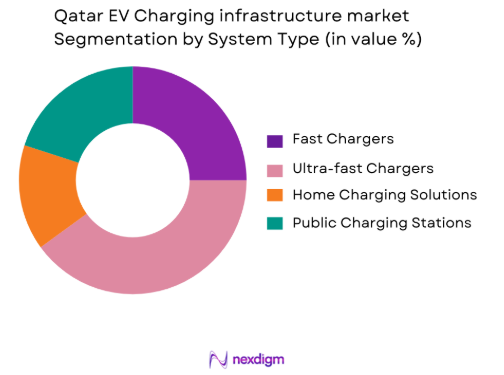
The Qatar EV charging infrastructure market is segmented by system type into fast chargers, ultra-fast chargers, home charging solutions, and public charging stations. Recently, ultra-fast chargers have seen the largest market share due to the increasing demand for quicker vehicle turnaround times and advancements in charging technology. The growing adoption of electric vehicles that require high-speed charging solutions, along with a focus on minimizing downtime, is driving the demand for these advanced charging systems.
By Platform Type
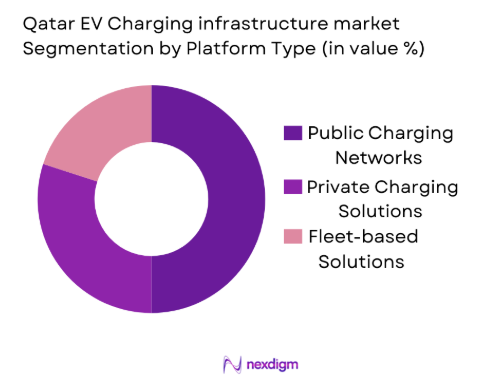
The market is segmented by platform type into public charging networks, private charging solutions, and fleet-based solutions. Public charging networks currently dominate the market due to government investments in building publicly accessible charging stations, primarily in urban areas. These networks play a significant role in supporting widespread EV adoption and are frequently integrated into national EV strategies and infrastructure development plans.
Competitive Landscape
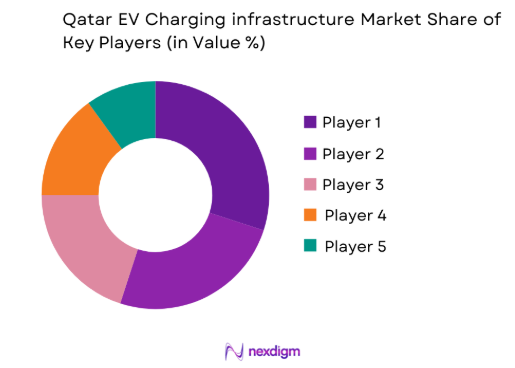
The competitive landscape of the Qatar EV charging infrastructure market is shaped by several key players that offer integrated solutions, including hardware and software for EV charging stations. With increasing consolidation in the market, major players are focusing on expanding their network offerings, entering strategic partnerships, and integrating advanced technologies such as AI and IoT for smart charging solutions. International firms like ABB, Siemens, and local entities such as Qatar Electricity & Water Company (QEWC) continue to lead the market with robust infrastructure projects.
| Company Name | Establishment Year | Headquarters | Technology Focus | Market Reach | Key Products | Revenue | Additional Parameter |
| ABB | 1988 | Switzerland | ~ | ~ | ~ | ~ | ~ |
| Siemens | 1847 | Germany | ~ | ~ | ~ | ~ | ~ |
| ChargePoint | 2007 | USA | ~ | ~ | ~ | ~ | ~ |
| Tesla | 2003 | USA | ~ | ~ | ~ | ~ | ~ |
| Engie | 2008 | France | ~ | ~ | ~ | ~ | ~ |
Qatar EV charging infrastructure Market Analysis
Growth Drivers
Government Support
Government policies are driving the growth of the EV charging infrastructure market in Qatar. With the increasing focus on sustainability and reducing carbon emissions, the Qatari government has been offering incentives for electric vehicle adoption and the development of supporting infrastructure. The introduction of various green energy regulations and the commitment to achieving Vision 2030 are contributing to the market’s rapid expansion. As the government continues to push for a greener future, investments in electric vehicle infrastructure have surged, stimulating both public and private sector participation. Public-private partnerships are further accelerating the deployment of charging stations across urban areas, improving access to charging and enhancing the convenience of EV ownership. These initiatives have proven to be effective in increasing the demand for electric vehicles and subsequently driving the need for charging infrastructure to meet this demand. The continued government support, along with favorable regulatory conditions, is set to remain a major driver of the EV charging infrastructure market in Qatar in the years to come.
Technological Advancements
The development of high-speed and ultra-fast chargers is another significant driver of growth in Qatar’s EV charging infrastructure market. The rising demand for fast and convenient charging solutions has led to the widespread adoption of ultra-fast charging stations, which significantly reduce the time required to charge electric vehicles. This technological shift has been complemented by the integration of smart technologies such as artificial intelligence (AI) and the Internet of Things (IoT) into charging stations. These innovations enable optimized energy management, predictive maintenance, and enhanced user experience, making charging stations more efficient and convenient for consumers. The demand for ultra-fast chargers is further fueled by the increasing number of electric vehicles on the road, as consumers seek faster turnaround times for charging their vehicles. As these technologies evolve, charging infrastructure is becoming more accessible and attractive to both private EV owners and commercial fleet operators. The continuous advancements in charging technology are expected to play a crucial role in driving the future growth of the EV charging infrastructure market in Qatar.
Market Challenges
Infrastructure Development Costs
Despite strong government support, one of the major challenges facing the EV charging infrastructure market in Qatar is the high initial cost of developing the necessary infrastructure. The installation of ultra-fast chargers, as well as other advanced charging systems, requires significant capital investment, which can deter smaller players from entering the market. Furthermore, the acquisition of land for the placement of charging stations in key urban locations adds another layer of financial burden. While the government offers incentives and subsidies to encourage infrastructure development, the initial capital expenditure remains a critical challenge for the broader adoption of EV charging networks. Additionally, long-term sustainability of these investments requires careful consideration of operational and maintenance costs, as well as ensuring the profitability of charging stations over time. Addressing these financial barriers is key to ensuring continued growth in the EV charging infrastructure market in Qatar.
Technological Integration
Another significant challenge is the technological integration required to effectively connect EV charging stations with existing energy grids and renewable energy sources. While there is a growing demand for ultra-fast chargers and smart charging solutions, integrating these systems with the grid to ensure a stable and reliable energy supply can be complex. There are issues related to grid capacity, voltage regulation, and the need for upgrading infrastructure to support increased demand. Moreover, ensuring compatibility and interoperability between different EV models and charging stations presents a technological challenge that must be addressed to promote widespread adoption. The integration of renewable energy sources into the charging infrastructure adds an additional layer of complexity. Developing a seamless, efficient, and sustainable energy ecosystem for EV charging requires close coordination between government agencies, utility companies, and private developers. Without addressing these integration challenges, the full potential of EV charging infrastructure growth may be hindered.
Opportunities
Expansion of Charging Networks
One of the primary opportunities in the Qatar EV charging infrastructure market is the expansion of charging networks across urban and suburban areas. As more electric vehicles hit the road, the demand for convenient, reliable charging solutions will increase. This offers a significant opportunity for both public and private sector players to invest in the expansion of charging networks, particularly in locations such as shopping malls, parking lots, business districts, and residential complexes. Public-private partnerships can play a pivotal role in accelerating this expansion, with the government providing incentives to encourage private sector participation. Additionally, offering charging stations at key transportation hubs like airports and public transport stations can further enhance the accessibility of EV charging solutions. This expansion is not only crucial for meeting the growing demand for EVs but also provides a chance to establish Qatar as a leader in the EV infrastructure market in the Middle East. The ongoing development of Qatar’s Vision 2030 strategy, which emphasizes sustainable energy solutions, will likely continue to drive the establishment of a comprehensive and accessible EV charging network.
Partnerships with Real Estate Developers
Another promising opportunity lies in forming strategic partnerships with real estate developers to integrate EV charging infrastructure into residential, commercial, and mixed-use developments. As the adoption of electric vehicles grows, the demand for home-based and workplace charging solutions is rising. Real estate developers can capitalize on this trend by incorporating EV charging stations into new residential projects, office buildings, and commercial developments. By offering these solutions as part of their building amenities, developers can appeal to eco-conscious buyers and tenants, increasing the attractiveness and value of their properties. Additionally, retrofitting existing properties with EV charging stations is an opportunity to cater to the growing number of electric vehicle owners in older buildings. This collaboration between the real estate sector and the EV charging industry can help address the rising need for private charging options while contributing to Qatar’s sustainability goals. The push for greener, smarter cities aligns with the evolving needs of both developers and consumers, making this a key area for future growth in the EV charging infrastructure market.
Future Outlook
The Qatar EV charging infrastructure market is poised for significant growth over the next few years, driven by technological advancements, increased government support, and growing adoption of electric vehicles. With substantial investments in the charging network, Qatar is positioning itself as a leader in the transition to clean energy. Furthermore, advancements in ultra-fast charging technology and the integration of renewable energy into charging solutions will continue to shape the market. Regulatory incentives and sustainability-focused initiatives will support market growth, with both public and private sector players playing a crucial role in the expansion of the charging network. The demand for reliable and efficient charging solutions, alongside infrastructure development, is expected to increase, contributing to Qatar’s broader vision of a sustainable, low-emission future.
Major Players
- ABB
- Siemens
- ChargePoint
- Tesla
- Engie
- Schneider Electric
- EVBox
- BP Chargemaster
- Greenlots
- Shell
- Blink Charging
- Pod Point
- Enel X
- ClipperCreek
- ChargeTech
Key Target Audience
- Investments and venture capitalist firms
- Government and regulatory bodies
- EV manufacturers
- Fleet operators
- Commercial businesses
- Electric vehicle infrastructure developers
- Public transport authorities
- Real estate developers
Research Methodology
Step 1: Identification of Key Variables
This step involves identifying the critical variables influencing the market, including technology trends, consumer behavior, and regulatory developments.
Step 2: Market Analysis and Construction
The market is analyzed using quantitative and qualitative data sources, including industry reports, expert consultations, and market modeling techniques.
Step 3: Hypothesis Validation and Expert Consultation
The preliminary hypotheses about the market’s future direction are validated through expert interviews, surveys, and consultations with industry leaders.
Step 4: Research Synthesis and Final Output
The final report synthesizes all collected data and insights, presenting a comprehensive analysis of the market’s current and future state.

- Executive Summary
- Research Methodology (Definitions, Scope, Industry Assumptions, Market Sizing Approach, Primary & Secondary Research Framework, Data Collection & Verification Protocol, Analytic Models & Forecast Methodology, Limitations & Research Validity Checks)

- Market Definition and Scope
- Value Chain & Stakeholder Ecosystem
- Regulatory / Certification Landscape
- Sector Dynamics Affecting Demand
- Strategic Initiatives & Infrastructure Growth

- By System Type (In Value%)
Charging Stations
Fast Chargers
Ultra-fast Chargers
Home Charging Solutions
Commercial Charging Solutions - By Platform Type (In Value%)
Public Charging Networks
Private Charging Solutions
Fleet Charging Solutions
Workplace Charging Solutions
Residential Charging Solutions - By Fitment Type (In Value%)
On-site Installations
Off-site Installations
Mobile Charging Units
Retrofit Installations
Public Infrastructure Installations - By End User Segment (In Value%)
Private EV Owners
Fleet Operators
Government Entities
Commercial Businesses
EV Manufacturers - By Procurement Channel (In Value%)
Direct Procurement
Government Tenders
Private Sector Procurement
Online Bidding Platforms
Third-party Distributors - Qatar EV Charging Infrastructure Market Dynamics
Growth Drivers
Increased Government Focus on Sustainability
Rising EV Adoption Rates
Expanding Infrastructure Networks
Government Incentives and Regulations
Advancements in Charging Technologies - Market Challenges
High Initial Infrastructure Costs
Technological Standardization Issues
Land Availability for Charging Stations
Regulatory Compliance and Permits
Public Awareness and Education - Market Opportunities
Collaborations with Real Estate Developers
Investment in Smart Charging Solutions
International Expansion of EV Charging Networks - Trends
Rise of Ultra-fast Charging Networks
Integration of Renewable Energy in Charging Stations
Emergence of EV Battery Swapping Technologies
- Government Regulations
SWOT Analysis of Key Competitors
Porter’s Five Forces

- By Market Value, 2020-2025
- By Installed Units, 2020-2025
- By Average System Price, 2020-2025
- By System Complexity Tier, 2020-2025

- By System Type (In Value%)
Charging Stations
Fast Chargers
Ultra-fast Chargers
Home Charging Solutions
Commercial Charging Solutions - By Platform Type (In Value%)
Public Charging Networks
Private Charging Solutions
Fleet Charging Solutions
Workplace Charging Solutions
Residential Charging Solutions - By Fitment Type (In Value%)
On-site Installations
Off-site Installations
Mobile Charging Units
Retrofit Installations
Public Infrastructure Installations - By End User Segment (In Value%)
Private EV Owners
Fleet Operators
Government Entities
Commercial Businesses
EV Manufacturers - By Procurement Channel (In Value%)
Direct Procurement
Government Tenders
Private Sector Procurement
Online Bidding Platforms
Third-party Distributors

- Market Share Analysis
- Cross Comparison Parameters (System Type, Platform Type, Procurement Channel, End User Segment, Fitment Type, Charging Speed, Infrastructure Support, Network Connectivity, Market Coverage, Regulatory Compliance)
- SWOT Analysis of Key Competitors
- Pricing & Procurement Analysis
- Key Players
Tesla
ABB
Siemens
Schneider Electric
EVBox
ChargePoint
Blink Charging
Greenlots
Shell
BP Chargemaster
Engie
RWE
E.ON
Volkswagen Group
BYD

- Private EV Owners’ Adoption of Charging Stations
- Fleet Operators’ Need for Scalable Charging Solutions
- Government Support for EV Infrastructure Projects
- Commercial Business Adoption of EV Fleets

- Forecast Market Value, 2026-2035
- Forecast Installed Units, 2026-2035
- Price Forecast by System Tier, 2026-2035
- Future Demand by Platform, 2026-2035


 Request a Sample
 Ask for Customization
 Get a Quote
 Enquire Now