

 Download PDF
 Download PDF
Market Overview
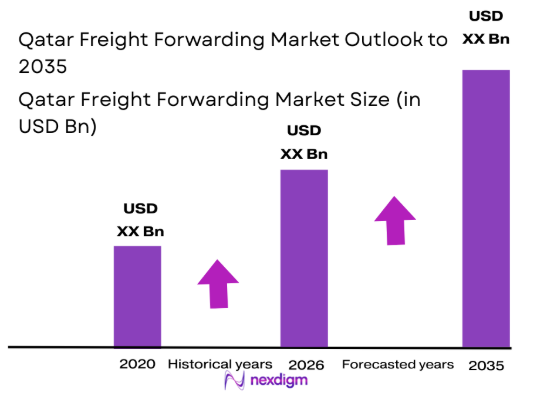
Based on a recent historical assessment, the Qatar Freight Forwarding Market is valued at approximately USD ~ billion, supported by the country’s expanding logistics ecosystem and growing international trade flows. Strategic infrastructure investments including Hamad Port, Hamad International Airport cargo terminals, and logistics free zones have strengthened the country’s position as a regional logistics gateway. Increasing imports of construction materials, machinery, consumer goods, and industrial equipment further stimulate freight forwarding services across air, sea, and multimodal transportation networks.
Doha remains the primary logistics hub for freight forwarding activities due to the concentration of port infrastructure, airport cargo terminals, and integrated logistics facilities. Hamad Port serves as the country’s largest maritime gateway handling international containerized cargo, while Hamad International Airport supports high value air freight shipments and express logistics. Industrial cities such as Ras Laffan and Mesaieed generate significant cargo demand due to energy sector operations, petrochemical exports, and industrial equipment imports requiring specialized freight forwarding services.
Market Segmentation
By Freight Mode
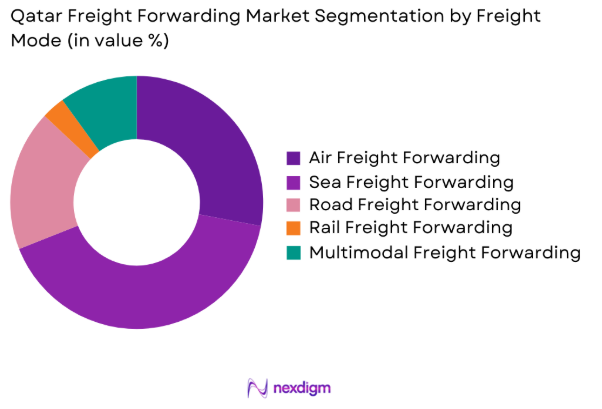
Qatar Freight Forwarding market is segmented by freight mode into air freight forwarding, sea freight forwarding, road freight forwarding, rail freight forwarding, and multimodal freight forwarding. Recently, sea freight forwarding has a dominant market share due to factors such as large-scale import volumes, cost efficiency for bulk cargo shipments, and strong port infrastructure at Hamad Port. Maritime freight is widely used for transporting construction materials, machinery, industrial equipment, and consumer goods imported into the country. The expansion of container terminals and automated port logistics systems has further strengthened sea freight handling capacity. Energy sector projects also require large shipments of industrial equipment that are typically transported via ocean freight due to size and cost considerations. Additionally, global shipping networks connect Hamad Port with major international trade corridors across Asia, Europe, and the Middle East, making maritime freight the most practical logistics option for long-distance cargo transportation into Qatar.
By End User Industry
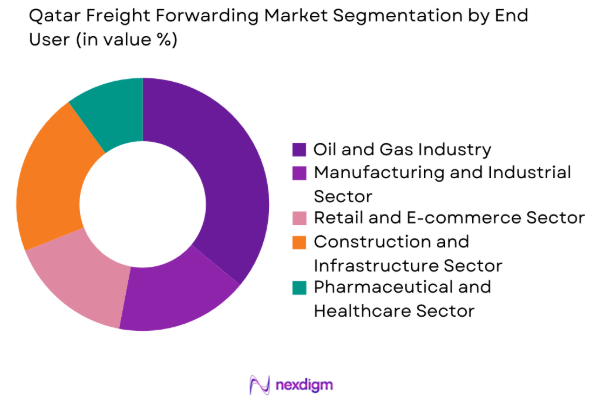
Qatar Freight Forwarding market is segmented by end user industry into oil and gas industry, manufacturing and industrial sector, retail and e-commerce sector, construction and infrastructure sector, and pharmaceutical and healthcare sector. Recently, the oil and gas industry has a dominant market share due to large-scale logistics requirements associated with offshore energy operations, petrochemical projects, and liquefied natural gas infrastructure development. Energy companies regularly import drilling equipment, heavy machinery, pipeline components, and industrial tools that require specialized freight forwarding services and project cargo logistics management. The presence of major LNG processing facilities and export terminals generates continuous cargo movement both for operational supply chains and export shipments. Freight forwarders often coordinate complex international logistics operations including chartered vessels, heavy lift cargo handling, and multimodal transportation for energy sector projects. The industry’s high cargo value and specialized logistics requirements therefore position the oil and gas sector as the largest freight forwarding demand generator within Qatar’s logistics ecosystem.
Competitive Landscape
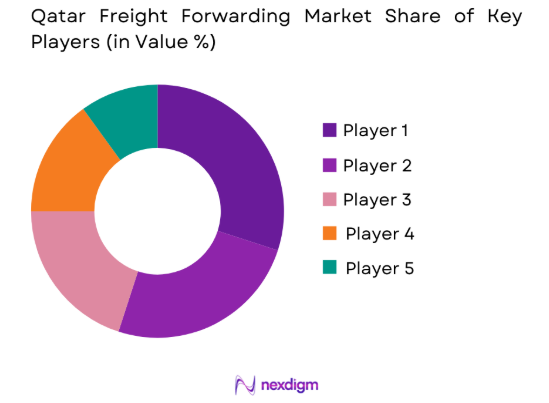
The Qatar Freight Forwarding Market is moderately consolidated with a mix of global logistics corporations and regional logistics providers competing for international cargo contracts. Multinational logistics companies dominate high value freight forwarding services through advanced digital logistics platforms, extensive global networks, and specialized supply chain capabilities. Regional players maintain strong presence through local logistics infrastructure, customs clearance expertise, and established relationships with government entities and industrial clients.
| Company Name | Establishment Year | Headquarters | Technology Focus | Market Reach | Key Products | Revenue | Fleet Size |
| DHL Global Forwarding | 1969 | Germany | ~ | ~ | ~ | ~ | ~ |
| Kuehne + Nagel | 1890 | Switzerland | ~ | ~ | ~ | ~ | ~ |
| DB Schenker | 1872 | Germany | ~ | ~ | ~ | ~ | ~ |
| DSV A/S | 1976 | Denmark | ~ | ~ | ~ | ~ | ~ |
| Gulf Warehousing Company | 2004 | Qatar | ~ | ~ | ~ | ~ | ~ |
Qatar Freight Forwarding Market Analysis
Growth Drivers
Expansion of National Logistics Infrastructure and Trade Connectivity
Qatar Freight Forwarding Market growth is supported by large investments in logistics infrastructure that position the country as a regional trade and transportation hub. Key assets including Hamad Port, Hamad International Airport cargo terminals, and integrated logistics zones improve cargo handling capacity and supply chain efficiency. Logistics free zones provide warehousing, distribution centers, and bonded storage supporting international trade operations. Multimodal logistics corridors connecting ports, airports, and industrial zones strengthen freight transportation networks. Qatar’s strategic location between Asia, Europe, and the Middle East enables regional transshipment services. Increasing containerized cargo volumes and air freight shipments therefore sustain strong demand for freight forwarding services across the country.
Rapid Expansion of E-Commerce and Consumer Goods Imports
The rapid expansion of digital retail platforms and rising consumer goods imports significantly increase demand for freight forwarding services across Qatar as international merchandise shipments continue growing. Online marketplaces enable consumers to purchase products from global suppliers, increasing demand for cargo transportation and customs clearance services. Retailers rely on freight forwarders for cross-border shipping, warehousing, distribution management, and last-mile logistics coordination. Demand for electronics, fashion products, household appliances, and packaged goods has increased cargo volumes entering through maritime ports and air cargo terminals. Freight forwarders deploy digital booking platforms, cargo tracking systems, and logistics management software to improve shipment visibility and delivery efficiency across international supply chains.
Market Challenges
Volatility in Global Freight Rates and Shipping Capacity Constraints
Qatar Freight Forwarding Market faces operational challenges due to fluctuations in global freight rates and periodic shipping capacity shortages affecting supply chain stability. Maritime shipping prices vary depending on fuel costs, port congestion, container availability, and geopolitical disruptions influencing international trade routes. Freight forwarders must frequently adjust pricing structures and transportation strategies to manage unpredictable logistics costs. Air freight rates also fluctuate because of airline cargo capacity limitations and seasonal trade demand. Limited shipping capacity during peak periods can cause shipment delays and port congestion. Freight forwarding companies therefore rely on strong carrier partnerships, advanced logistics planning, and digital analytics tools to manage transportation demand and maintain operational efficiency.
Dependence on Global Trade Stability and Geopolitical Supply Chain Risks
Qatar Freight Forwarding Market operations depend heavily on stable international trade routes and global geopolitical conditions. Freight forwarding companies rely on continuous cargo flows across shipping corridors linking Asia, Europe, and the Middle East. Political tensions, trade restrictions, and economic sanctions can disrupt logistics operations by limiting shipping routes or delaying cross-border cargo movement. Changes in international trade policies may also affect customs regulations and import procedures. Global crises, port congestion, and transportation bottlenecks can increase shipment delays and logistics costs. Freight forwarders therefore develop diversified transportation networks and maintain partnerships with multiple carriers while strengthening compliance systems to manage evolving international trade regulations effectively.
Opportunities
Expansion of Digital Freight Platforms and Smart Logistics Technologies
Qatar Freight Forwarding Market presents strong opportunities through adoption of digital logistics technologies that enhance supply chain transparency and operational efficiency. Freight forwarding companies increasingly use digital freight booking platforms allowing customers to schedule shipments, track cargo movement, and manage logistics documentation through integrated online systems. Artificial intelligence driven route optimization and predictive analytics improve delivery planning and reduce transportation costs. Blockchain systems provide secure digital records for shipping transactions and customs documentation. Internet of Things sensors installed in containers enable real time monitoring of cargo conditions including location, temperature, and security status. These technologies support efficient management of high value shipments such as pharmaceuticals, electronics, and industrial equipment.
Growth of Specialized Logistics Services for Energy and Industrial Projects
Qatar Freight Forwarding Market benefits from opportunities in specialized project logistics services linked to industrial and energy infrastructure development. Liquefied natural gas facilities, petrochemical plants, and industrial projects require transportation of oversized equipment, heavy machinery, and complex components sourced internationally. Freight forwarders coordinate heavy lift vessels, chartered cargo aircraft, and multimodal routes connecting ports, airports, and industrial zones. These logistics operations require engineering planning and specialized cargo handling systems for oversized shipments. Continuous expansion of energy infrastructure and industrial manufacturing activities increases demand for project logistics expertise. Freight forwarding companies capable of managing heavy lift cargo, specialized packaging, and complex logistics coordination can secure major contracts linked to national infrastructure development.
Future Outlook
The Qatar Freight Forwarding Market is expected to experience steady growth driven by the country’s long-term logistics development strategy and continued expansion of international trade flows. Investments in logistics free zones, digital supply chain infrastructure, and multimodal transportation networks are expected to strengthen freight handling capacity across the country. Technological adoption including automated cargo management systems and digital freight platforms will improve logistics efficiency. Growing e-commerce demand and industrial infrastructure projects are also expected to sustain long-term freight forwarding demand.
Major Players
- DHL Global Forwarding
- Kuehne + Nagel
- DB Schenker
- DSV A/S
- CEVA Logistics
- Expeditors International
- Nippon Express
- Bollore Logistics
- Yusen Logistics
- Agility Logistics
- Aramex
- Gulf Warehousing Company
- MilahaLogistics
- Panalpina Logistics
- Qatar Navigation QPSC
Key Target Audience
- Freightforwardingservice providers
- Logistics infrastructure developers
- Shipping and maritime companies
- Retail and e-commerce companies
- Manufacturing and industrial companies
- Investments and venture capitalist firms
- Government and regulatory bodies
- Oil and gas companies
Research Methodology
Step 1: Identification of Key Variables
The study begins by identifying key variables influencing freight forwarding demand including international trade flows, logistics infrastructure development, cargo volumes, and supply chain digitalization. Primary indicators such as port throughput, air cargo capacity, and logistics infrastructure investments are analyzed to determine market dynamics.
Step 2: Market Analysis and Construction
Market structure is constructed through analysis of logistics service providers, freight transportation modes, and industrial demand sectors. Secondary research sources including logistics industry reports, trade databases, and government infrastructure statistics are used to evaluate market size and segmentation.
Step 3: Hypothesis Validation and Expert Consultation
Industry experts including logistics operators, freight forwarding managers, and port authorities are consulted to validate research assumptions and refine market segmentation analysis. Expert interviews provide insights into supply chain trends, operational challenges, and emerging logistics technologies.
Step 4: Research Synthesis and Final Output
All collected data is synthesized through quantitative and qualitative analysis to generate comprehensive market insights. Market forecasts, competitive landscape evaluation, and demand trend analysis are developed to provide a complete overview of the freight forwarding industry.

- Executive Summary
- Research Methodology (Definitions, Scope, Industry Assumptions, Market Sizing Approach, Primary & Secondary Research Framework, Data Collection & Verification Protocol, Analytic Models & Forecast Methodology, Limitations & Research Validity Checks)

- Market Definition and Scope
- Value Chain & Stakeholder Ecosystem
- Regulatory / Certification Landscape
- Sector Dynamics Affecting Demand
- Strategic Initiatives & Infrastructure Growth

- Growth Drivers
Expansion of International Trade and Port Infrastructure Development
Growth of E Commerce and Cross Border Logistics Demand
Increasing Investments in Logistics Free Zones and Supply Chain Modernization - Market Challenges
Volatility in Global Freight Rates and Shipping Capacity
Complex Customs Procedures and Regulatory Compliance Requirements
Dependence on Global Supply Chain Stability and Trade Routes - Market Opportunities
Expansion of Digital Freight Platforms and Logistics Automation
Growth of Cold Chain and Pharmaceutical Logistics Services
Development of Integrated Multimodal Logistics Hubs - Trends
Adoption of Real Time Freight Tracking and Supply Chain Visibility Platforms
Integration of Artificial Intelligence in Logistics Route Optimization
Increasing Demand for Sustainable and Green Freight Solutions - Government Regulations
- SWOT Analysis of Key Competitors
- Porter’s Five Forces

- By Market Value, 2020-2025
- By Installed Units, 2020-2025
- By Average System Price, 2020-2025
- By System Complexity Tier, 2020-2025

- By System Type (In Value%)
Air Freight Forwarding
Sea Freight Forwarding
Road Freight Forwarding
Rail Freight Forwarding
Multimodal Freight Forwarding - By Platform Type (In Value%)
Digital Freight Platforms
Integrated Logistics Management Platforms
Warehouse Management Systems
Transportation Management Systems
Blockchain Enabled Logistics Platforms - By Fitment Type (In Value%)
Asset Light Forwarding Services
Asset Based Freight Forwarding
Third Party Logistics Integration
Contract Logistics Solutions
Integrated Supply Chain Services - By End User Segment (In Value%)
Oil and Gas Companies
Manufacturing and Industrial Firms
Retail and E Commerce Companies
Construction and Infrastructure Companies
Pharmaceutical and Healthcare Companies - By Procurement Channel (In Value%)
Direct Corporate Contracts
Government Logistics Tenders
Third Party Logistics Partnerships
Digital Freight Marketplaces
Freight Brokerage Networks

- Market Share Analysis
- Cross Comparison Parameters (Service Portfolio, Freight Mode Coverage, Technology Integration, Geographic Reach, Logistics Infrastructure, Pricing Model, Customs Clearance Capability, Warehouse Network Strength, Strategic Partnerships, Industry Vertical Focus)
- SWOT Analysis of Key Competitors
- Pricing & Procurement Analysis
- Key Players
DHL Global Forwarding
Kuehne + Nagel
DB Schenker
DSV A/S
Agility Logistics
Bollore Logistics
Expeditors International
Panalpina Logistics
Nippon Express
CEVA Logistics
Aramex
Gulf Warehousing Company
Milaha Logistics
Qatar Navigation QPSC
Yusen Logistics

- Oil and Gas Industry Demand for Heavy Equipment Logistics
- Retail and E Commerce Sector Expansion Increasing Parcel Shipments
- Infrastructure Development Projects Driving Construction Material Logistics
- Pharmaceutical and Healthcare Sector Growth Increasing Specialized Logistics

- Forecast Market Value, 2026-2035
- Forecast Installed Units, 2026-2035
- Price Forecast by System Tier, 2026-2035
- Future Demand by Platform, 2026-2035


 Request a Sample
 Ask for Customization
 Get a Quote
 Enquire Now