
 Download PDF
 Download PDF
Market Overview
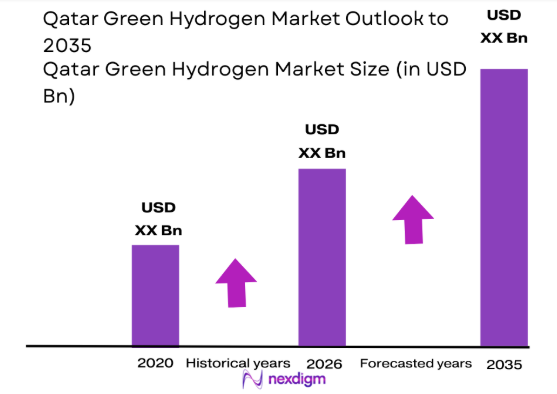
The Qatar Green Hydrogen market is experiencing significant growth, driven by investments in renewable energy infrastructure and government initiatives aimed at achieving sustainability goals. The market size is valued at over USD ~ billion, driven by the increasing demand for clean energy solutions. Green hydrogen is becoming a key player in the transition to carbon-neutral energy sources, with major investments in hydrogen production, storage, and distribution technologies, further enhancing market potential.
Qatar’s dominance in the green hydrogen market is attributed to its abundant renewable energy resources, particularly solar energy, and its favorable regulatory environment. The country’s vast land area, coupled with extensive solar potential, provides the ideal setting for large-scale hydrogen production. Major cities like Doha lead the efforts, supported by strategic government investments and collaborations with international technology firms. These initiatives position Qatar as a key player in the green hydrogen sector.
Market Segmentation
By System Type
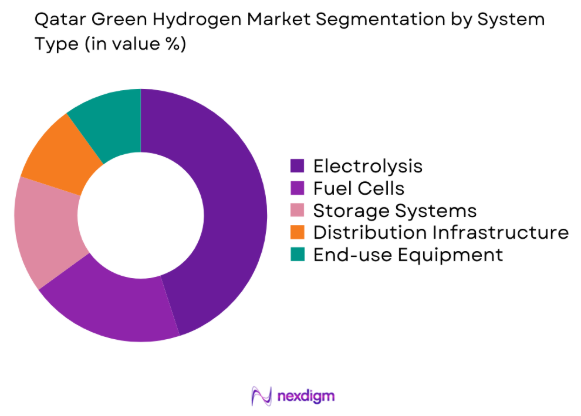
The Qatar Green Hydrogen market is segmented by system type into electrolysis, fuel cells, storage systems, distribution infrastructure, and end-use equipment. Electrolysis systems have gained significant traction due to their ability to produce hydrogen from water using renewable energy sources. This sub-segment dominates the market due to the scalability of electrolysis systems, their ability to integrate with solar and wind power, and their growing application in large-scale hydrogen production projects, thus positioning electrolysis as the primary method for green hydrogen generation.
By Platform Type
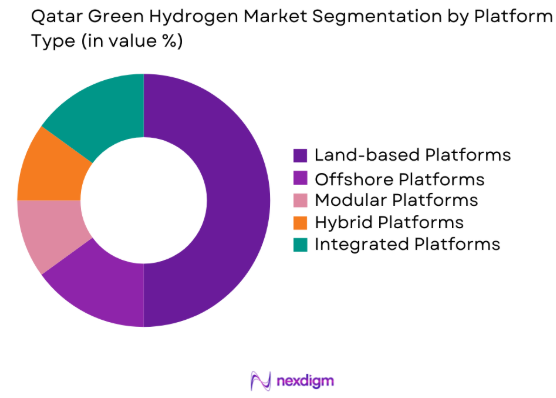
The Qatar Green Hydrogen market is segmented by platform type into land-based platforms, offshore platforms, modular platforms, hybrid platforms, and integrated platforms. Land-based platforms dominate the market due to their cost-effectiveness, scalability, and the large open spaces available for renewable energy production, such as in Qatar’s desert areas. These platforms are ideal for hosting large electrolysis systems, making them the dominant platform for green hydrogen production.
Competitive Landscape
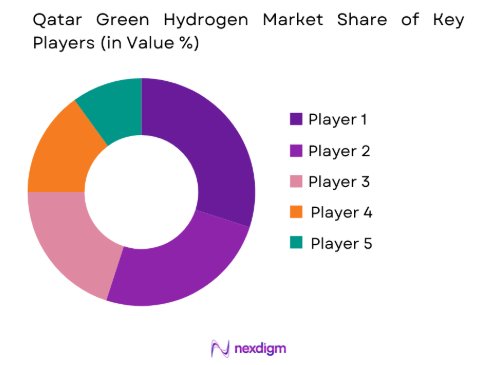
The competitive landscape of Qatar’s green hydrogen market is characterized by a mix of local and international players, all aiming to capitalize on the growing demand for clean energy. As Qatar establishes itself as a leader in hydrogen production, companies are focusing on developing large-scale hydrogen production, storage, and distribution projects. These players are leveraging strategic partnerships with global firms to introduce advanced technologies and enhance their market offerings. As the market matures, consolidation among key players is expected, with the leading companies expanding their capabilities.
| Company Name | Establishment Year | Headquarters | Technology Focus | Market Reach | Key Products | Revenue | Additional Parameter |
| Qatar Petroleum | 1974 | Doha, Qatar | ~ | ~ | ~ | ~ | ~ |
| Shell | 1907 | The Hague, NL | ~ | ~ | ~ | ~ | ~ |
| Siemens Energy | 1847 | Munich, DE | ~ | ~ | ~ | ~ | ~ |
| Air Products | 1940 | Allentown, US | ~ | ~ | ~ | ~ | ~ |
| Linde | 1907 | Guildford, UK | ~ | ~ | ~ | ~ | ~ |
Qatar Green Hydrogen Market Analysis
Growth Drivers
Government Investments in Renewable Energy
The Qatar Green Hydrogen market is heavily influenced by significant government investments in renewable energy infrastructure. The country’s commitment to achieving sustainability goals has driven substantial funding into the development of large-scale hydrogen production projects, particularly utilizing solar energy. These investments support the establishment of hydrogen plants, storage facilities, and distribution networks, enabling Qatar to position itself as a major player in the global hydrogen market. By funding research and development, the government is helping to reduce production costs and scale up hydrogen infrastructure, which in turn attracts further investments from international stakeholders. As global demand for sustainable energy increases, the government’s continued backing of green hydrogen projects provides the market with the necessary resources to grow rapidly.
Technological Advancements in Electrolysis Systems
The growth of Qatar’s green hydrogen market is also driven by advancements in electrolysis technologies. Electrolyzers, which use renewable electricity to separate water into hydrogen and oxygen, have seen significant improvements in efficiency and cost-effectiveness. These technological advancements have made it possible to produce hydrogen at competitive prices, reducing the overall cost of green hydrogen production. As electrolysis technology continues to improve, Qatar’s ability to scale up its hydrogen production capacity will increase, enabling the country to meet domestic energy needs and position itself as a global exporter of green hydrogen. The continued development of large-scale electrolyzers will further accelerate the growth of this market.
Market Challenges
High Capital Investment Requirements
Despite the growth potential of the Qatar green hydrogen market, one of the major challenges is the high capital investment required for the construction of hydrogen production plants and related infrastructure. The cost of building large-scale electrolysis systems, storage facilities, and distribution networks can be prohibitive, especially in the early stages of market development. While the government’s investments have helped mitigate some of these costs, private sector involvement remains crucial for the sustained growth of the market. High initial capital requirements, combined with relatively long payback periods, can deter some potential investors. To address this challenge, Qatar will need to continue attracting international investment and implement financial mechanisms that reduce the financial burden on market participants.
Regulatory and Compliance Challenges
As with any emerging energy sector, the Qatar green hydrogen market faces challenges related to regulatory and compliance requirements. The market must adhere to various environmental, safety, and energy production standards, which can complicate the implementation of hydrogen projects. While Qatar has made strides in creating a favorable regulatory environment for renewable energy, navigating these regulations can still lead to delays and increased costs for hydrogen producers. Furthermore, aligning with global hydrogen standards, especially for exports, will require rigorous compliance and certification processes. Regulatory challenges must be addressed to ensure the smooth and efficient development of the green hydrogen market in Qatar.
Opportunities
Hydrogen Export Market
Qatar has significant opportunities to expand its green hydrogen market through exports. With its vast renewable energy resources, particularly solar power, the country is well-positioned to produce hydrogen at large scales and export it to international markets, particularly in Europe and Asia. Global demand for clean energy solutions is increasing, and hydrogen is seen as a key component of this transition. As a leading producer of green hydrogen, Qatar can capitalize on this demand and establish itself as a major supplier of sustainable hydrogen. This opportunity is further enhanced by Qatar’s strategic location, which provides easy access to global shipping routes, making it an ideal export hub for hydrogen.
Strategic Collaborations and Partnerships
A key opportunity for the Qatar green hydrogen market lies in forming strategic partnerships with international technology firms. Collaborating with global leaders in renewable energy and hydrogen sectors will provide Qatar access to advanced technologies, enhancing its production and distribution capabilities. These partnerships will accelerate the scaling of hydrogen production and foster innovation in production methods and storage solutions. Furthermore, these collaborations will facilitate the transfer of expertise, improving the efficiency of operations. By partnering with global companies, Qatar can expand its hydrogen exports and tap into international markets, positioning itself as a key player in the global energy transition and reinforcing its leadership in the green hydrogen sector.
Future Outlook
The future of Qatar’s green hydrogen market looks promising, with continued growth expected over the next five years. The country’s commitment to renewable energy, technological advancements in hydrogen production, and favorable regulatory support provide a strong foundation for market expansion. As global demand for clean energy solutions continues to rise, Qatar is well-positioned to become a global leader in green hydrogen production and export. Technological innovations in electrolysis and storage systems will further enhance the market’s efficiency and scalability, while strategic partnerships will foster international growth opportunities.
Major Players
- Qatar Petroleum
- Shell
- Siemens Energy
- Air Products
- Linde
- TotalEnergies
- ExxonMobil
- Thyssenkrupp
- Brookfield Renewable Partners
- Hydrogenics
- Plug Power
- Bloom Energy
- BP
- Equinor
- Mitsubishi Heavy Industries
Key Target Audience
- Investments and venture capitalist firms
- Government and regulatory bodies
- Renewable energy companies
- Hydrogen technology developers
- Industrial manufacturers
- Energy storage companies
- International energy organizations
- Clean tech innovators
Research Methodology
Step 1: Identification of Key Variables
Identification of critical market variables such as hydrogen production technologies, infrastructure needs, and demand drivers.
Step 2: Market Analysis and Construction
Analysis of market trends, including technological advancements, regulatory frameworks, and demand shifts, to construct a comprehensive market model.
Step 3: Hypothesis Validation and Expert Consultation
Validation of assumptions through consultations with industry experts, market participants, and key stakeholders.
Step 4: Research Synthesis and Final Output
Synthesis of gathered data into a final market report, integrating insights from both primary and secondary sources for a comprehensive market overview.

- Executive Summary
- Research Methodology (Definitions, Scope, Industry Assumptions, Market Sizing Approach, Primary & Secondary Research Framework, Data Collection & Verification Protocol, Analytic Models & Forecast Methodology, Limitations & Research Validity Checks)

- Market Definition and Scope
- Value Chain & Stakeholder Ecosystem
- Regulatory / Certification Landscape
- Sector Dynamics Affecting Demand
- Strategic Initiatives & Infrastructure Growth

- Growth Drivers
Increased Government Investment in Renewable Energy
Technological Advancements in Hydrogen Production
Rising Global Demand for Sustainable Energy Solutions - Market Challenges
High Capital Investment Requirements
Infrastructure Development and Distribution Barriers
Regulatory and Compliance Complexity - Market Opportunities
Expansion of Hydrogen Transportation Networks
Strategic Partnerships for Technological Advancements
Focus on Green Hydrogen for Industrial Decarbonization - Trends
Advancements in Electrolysis Technology
Growing Role of Green Hydrogen in Energy Transition
Increased Focus on Carbon-Neutral Solutions - Government Regulations
- SWOT Analysis of Key Competitors
- Porter’s Five Forces

- By Market Value, 2020-2025
- By Installed Units, 2020-2025
- By Average System Price, 2020-2025
- By System Complexity Tier, 2020-2025

- By System Type (In Value%)
Electrolyzers
Fuel Cells
Storage Systems
Distribution Infrastructure
End Use Equipment - By Platform Type (In Value%)
Land-Based Platforms
Offshore Platforms
Modular Platforms
Hybrid Platforms
Integrated Platforms - By Fitment Type (In Value%)
On-premise Solutions
Cloud-based Solutions
Hybrid Solutions
Modular Solutions
Integrated Solutions - By End User Segment (In Value%)
Energy & Utilities
Transportation & Mobility
Industrial Manufacturing
Government & Public Services
Agriculture & Food Production - By Procurement Channel (In Value%)
Direct Procurement
Government Tenders
Private Sector Procurement
Online Bidding Platforms
Third-party Distributors

- Market Share Analysis
- Cross Comparison Parameters (System Type, Platform Type, Procurement Channel, End User Segment, Fitment Type, Technology Type, Production Capacity, Regulatory Compliance, Market Reach, Pricing Strategy)
- SWOT Analysis of Key Competitors
- Pricing & Procurement Analysis
- Key Players
Qatar Petroleum
Shell
Siemens Energy
Air Products
Linde
ExxonMobil
Thyssenkrupp
Eni
TotalEnergies
Chevron
Uniper
Brookfield Renewable Partners
Hydrogenics
Plug Power
Bloom Energy

- Energy & Utilities Industry’s Shift to Renewable Sources
- Transportation Sector Adoption of Hydrogen Fuel
- Industrial Manufacturing Sector’s Decarbonization Needs
- Government Initiatives Promoting Green Energy Adoption

- Forecast Market Value, 2026-2035
- Forecast Installed Units, 2026-2035
- Price Forecast by System Tier, 2026-2035
- Future Demand by Platform, 2026-2035


 Request a Sample
 Ask for Customization
 Get a Quote
 Enquire Now