
 Download PDF
Market Overview
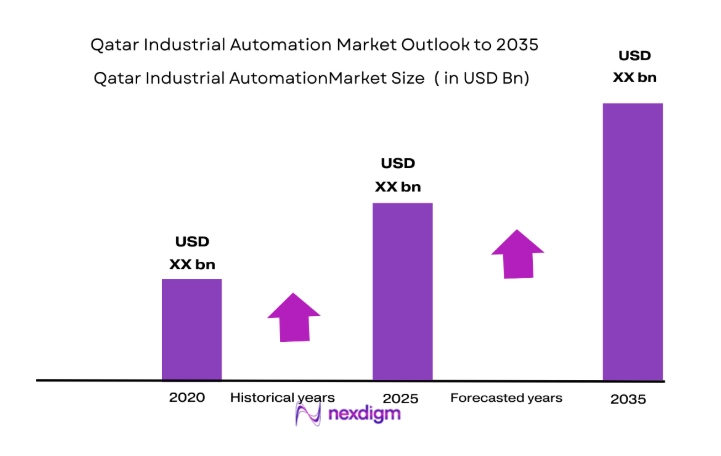
Based on a recent historical assessment, the Qatar Industrial Automation Market recorded a total value of approximately USD ~ supported by rapid industrial infrastructure development and increasing deployment of robotics, control systems, and automated production technologies across manufacturing and energy sectors. Expansion of petrochemical processing facilities, LNG production infrastructure, and large scale logistics hubs has increased demand for programmable logic controllers, distributed control systems, and industrial robotics used to optimize production efficiency, reduce operational downtime, and improve safety across complex industrial environments.
Industrial automation deployment is concentrated across key industrial zones including Doha, Ras Laffan Industrial City, Mesaieed Industrial City, and Dukhan due to the presence of major energy processing infrastructure, petrochemical complexes, and heavy industrial manufacturing operations. Ras Laffan hosts some of the world’s largest liquefied natural gas processing facilities requiring highly automated control systems, while Mesaieed industrial clusters support petrochemical and fertilizer manufacturing plants that depend on advanced process automation to maintain operational efficiency and industrial safety standards.
Market Segmentation
By Product Type
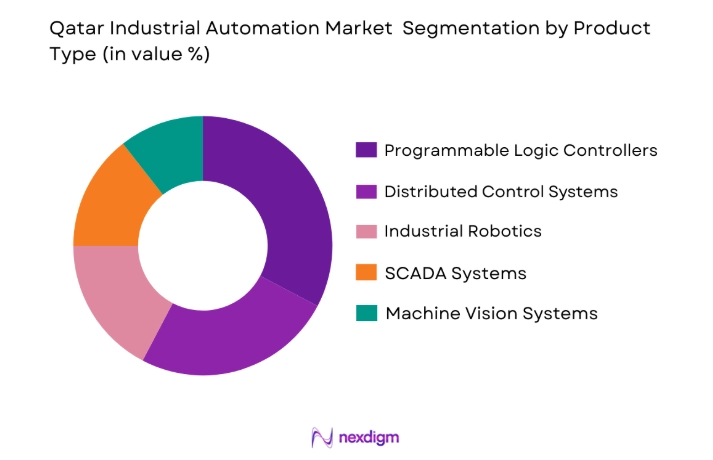
Qatar Industrial Automation market is segmented by product type into Industrial Robotics, Programmable Logic Controllers, Distributed Control Systems, SCADA Systems, and Machine Vision Systems. Recently, Programmable Logic Controllers has a dominant market share due to strong deployment across oil and gas facilities, petrochemical plants, and manufacturing industries that rely on PLC based automation systems to control production processes and monitor industrial equipment. PLC systems provide highly reliable real time control across complex industrial operations including refinery processing units, LNG production lines, automated packaging systems, and heavy industrial machinery. Industrial operators across Qatar increasingly integrate PLC platforms with industrial IoT networks and data analytics software to improve operational monitoring, predictive maintenance, and production efficiency. PLC systems are also favored due to their scalability, strong compatibility with legacy industrial equipment, and widespread availability of technical service providers supporting system integration across industrial facilities.
By End User Industry
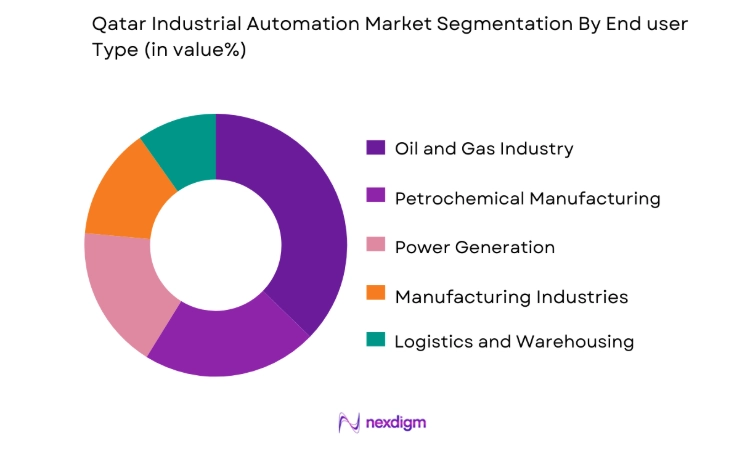
Qatar Industrial Automation market is segmented by end user industry into Oil and Gas Industry, Petrochemical Manufacturing, Power Generation, Manufacturing Industries, and Logistics and Warehousing. Recently, Oil and Gas Industry has a dominant market share due to the extensive use of automated control systems across upstream extraction, LNG processing plants, refinery operations, and gas transportation infrastructure. Qatar operates some of the world’s largest LNG production facilities where advanced automation technologies manage complex processes such as gas compression, liquefaction, storage, and transportation systems. Automated monitoring systems ensure safe operation of pipelines, compressors, pressure control units, and processing equipment across energy facilities. Industrial automation significantly improves operational reliability, reduces manual intervention in hazardous environments, and enables real time monitoring of critical equipment across energy infrastructure, making oil and gas operators the largest adopters of automation technologies throughout the country’s industrial sector.
Competitive Landscape
The Qatar Industrial Automation Market is moderately consolidated with a group of global industrial automation providers dominating system supply, integration services, and automation software platforms across energy and manufacturing industries. Large multinational companies maintain strong relationships with energy operators and industrial infrastructure developers in Qatar through long term engineering contracts and technology partnerships. Regional system integrators and engineering contractors support automation deployment across refinery facilities, petrochemical plants, and smart industrial infrastructure projects.
| Company Name | Establishment Year | Headquarters | Technology Focus | Market Reach | Key Products | Revenue | Industrial Automation Integration Capability |
| Siemens AG | 1847 | Germany | ~ | ~ | ~ | ~ | ~ |
| ABB Ltd | 1988 | Switzerland | ~ | ~ | ~ | ~ | ~ |
| Schneider Electric | 1836 | France | ~ | ~ | ~ | ~ | ~ |
| Rockwell Automation | 1903 | United States | ~ | ~ | ~ | ~ | ~ |
| Honeywell International | 1906 | United States | ~ | ~ | ~ | ~ | ~ |
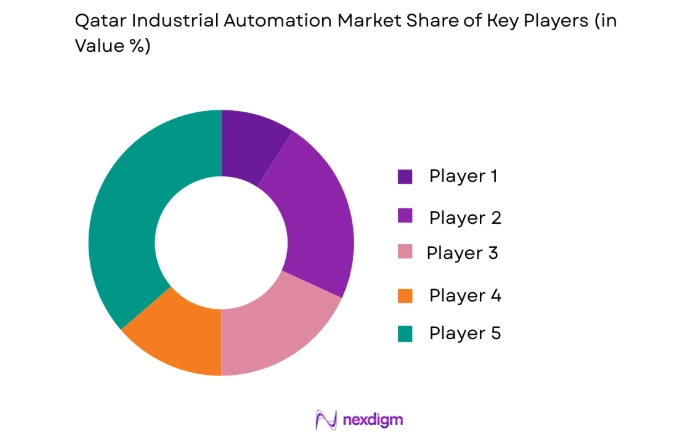
Qatar Industrial Automation Market Analysis
Growth Drivers
Expansion of LNG Processing Infrastructure and Petrochemical Industrial Facilities:
Qatar’s industrial sector continues expanding rapidly due to significant investments in liquefied natural gas production capacity and petrochemical processing infrastructure that require highly advanced automation technologies to manage complex industrial operations safely and efficiently across large scale energy facilities. LNG production plants involve extremely complex processes including gas compression, purification, liquefaction, cryogenic storage, and transportation operations which must be precisely controlled using automated control systems capable of monitoring thousands of process variables simultaneously. Industrial automation systems such as distributed control systems, programmable logic controllers, and advanced process control software ensure stable production conditions across these complex processing units while minimizing operational risks associated with high pressure and high temperature processing environments. Large LNG processing complexes located in Ras Laffan Industrial City rely on integrated automation platforms capable of managing equipment performance across compressors, turbines, pipelines, and storage systems to maintain continuous production operations without interruptions. Automation systems also support predictive maintenance programs that allow energy operators to detect equipment faults early and schedule maintenance activities without causing unexpected shutdowns that could disrupt energy production operations. As Qatar continues expanding LNG production capacity and petrochemical manufacturing operations, demand for sophisticated automation solutions continues increasing significantly across process industries. Energy companies also integrate digital monitoring platforms and industrial data analytics systems with automation infrastructure to optimize production performance and reduce operational costs across industrial facilities. These developments significantly strengthen long term demand for industrial automation technologies within Qatar’s energy driven industrial ecosystem.
Industrial Digitalization and Smart Manufacturing Transformation Across Manufacturing Facilities:
Manufacturing industries across Qatar increasingly adopt industrial automation technologies as part of broader digital transformation strategies designed to enhance production efficiency, reduce operational costs, and improve product quality within competitive global manufacturing supply chains. Smart manufacturing initiatives involve integrating robotics systems, machine vision inspection technologies, advanced sensors, and industrial control platforms capable of collecting and analyzing real time production data across automated manufacturing lines. Industrial automation technologies enable manufacturing facilities to operate with minimal human intervention while maintaining high levels of production accuracy and consistency across repetitive manufacturing tasks such as assembly, welding, inspection, and packaging. Digital manufacturing platforms allow production managers to monitor equipment performance remotely, identify operational inefficiencies, and optimize manufacturing processes through advanced data analytics and artificial intelligence driven optimization algorithms. Automated production lines also reduce workplace safety risks by allowing machines to perform hazardous manufacturing tasks involving heavy machinery, high temperatures, and complex mechanical operations. Industrial automation also supports rapid product customization by enabling manufacturing systems to adjust production configurations quickly based on changing product specifications. As Qatar continues diversifying its economy beyond hydrocarbon industries through manufacturing sector development, adoption of industrial automation technologies becomes increasingly essential for improving global manufacturing competitiveness and operational efficiency across industrial production facilities.
Market Challenges
High Capital Investment Requirements for Industrial Automation System Deployment:
Industrial automation technologies require substantial upfront investment costs that often present financial challenges for many industrial operators considering automation upgrades within existing manufacturing and processing facilities. Advanced automation systems including robotics platforms, distributed control systems, machine vision inspection equipment, and industrial data analytics software involve significant procurement expenses in addition to engineering integration costs associated with installing and configuring automation infrastructure across complex industrial environments. Industrial automation deployment also requires specialized engineering expertise to design automation architectures, integrate control systems with legacy industrial equipment, and ensure reliable communication between sensors, controllers, and monitoring platforms operating across production facilities. These system integration processes often require extensive project planning and engineering resources which further increase overall automation project costs. Smaller manufacturing companies may find it difficult to justify these large investments especially when automation deployment requires temporary production interruptions during installation and testing phases. Additionally, automation systems require long term maintenance contracts and periodic software upgrades that add recurring operational costs for industrial operators. Industrial companies therefore must carefully evaluate long term productivity improvements and operational cost savings before committing to automation investments. Despite the strong long term benefits of automation technologies, the high capital expenditure associated with system deployment remains a major barrier slowing adoption across certain segments of Qatar’s industrial sector.
Limited Availability of Highly Skilled Industrial Automation Engineers and Technical Specialists:
Industrial automation systems require highly specialized engineering expertise for system design, installation, programming, maintenance, and continuous operational monitoring across industrial facilities that depend on automated control technologies. Qatar’s industrial sector continues expanding rapidly which increases demand for automation engineers, robotics specialists, industrial software developers, and control systems technicians capable of managing complex automation infrastructure across manufacturing plants, energy processing facilities, and logistics operations. However the availability of skilled professionals trained in advanced industrial automation technologies remains relatively limited within the domestic workforce. Many industrial companies therefore rely on international engineering specialists and technology providers to design and maintain automation systems operating within critical infrastructure facilities. Dependence on foreign technical expertise can increase project costs and sometimes delay automation deployment when specialized engineering resources are not immediately available. Industrial automation technologies also evolve rapidly which requires continuous technical training for engineering professionals responsible for maintaining and upgrading control systems. Companies must therefore invest heavily in workforce training programs and international technical partnerships to ensure reliable automation system management across industrial operations. Addressing this technical skills gap remains essential for supporting long term expansion of automation technologies throughout Qatar’s industrial ecosystem.
Opportunities
Integration of Industrial Internet of Things Platforms with Automation Systems:
Industrial Internet of Things technologies create significant opportunities for expanding industrial automation capabilities across Qatar’s manufacturing and energy sectors by enabling real time connectivity between industrial equipment, sensors, control systems, and digital analytics platforms operating within automated production environments. IIoT systems allow industrial operators to collect massive volumes of operational data from machines, production lines, and energy processing infrastructure through networks of connected sensors embedded throughout automated facilities. These data streams can be analyzed using advanced analytics software capable of identifying performance patterns, predicting equipment failures, and optimizing production efficiency across automated manufacturing operations. Integration of IIoT technologies with industrial automation platforms significantly improves predictive maintenance capabilities by enabling early detection of equipment anomalies that could otherwise lead to unexpected system failures. Automated monitoring systems equipped with IIoT connectivity also allow engineers to remotely supervise industrial operations and adjust process parameters in real time through centralized control platforms. As Qatar invests heavily in smart industrial infrastructure and digital transformation initiatives across manufacturing and energy sectors, adoption of IIoT integrated automation systems is expected to accelerate significantly.
Development of Smart Industrial Zones and Digitally Integrated Manufacturing Clusters:
Qatar’s economic diversification initiatives encourage development of advanced industrial zones designed to attract high technology manufacturing industries and strengthen domestic industrial production capabilities beyond traditional hydrocarbon sectors. These industrial zones increasingly incorporate digital infrastructure including high speed communication networks, smart energy management systems, and automated logistics platforms designed to support advanced manufacturing operations operating within integrated industrial ecosystems. Automation technologies play a critical role within these smart industrial clusters by enabling fully automated manufacturing lines, robotic material handling systems, and digitally integrated supply chain management platforms capable of coordinating production activities across multiple facilities. Industrial companies establishing operations within these zones often deploy advanced automation technologies from the outset to maximize production efficiency and maintain international manufacturing standards. Government support for industrial infrastructure development combined with strategic incentives for technology investment therefore creates strong opportunities for automation technology providers to expand system deployment across new manufacturing clusters emerging throughout the country’s industrial landscape.
Future Outlook
Over the next five years, the Qatar Industrial Automation Market is expected to witness strong expansion supported by ongoing industrial diversification initiatives, increasing adoption of smart manufacturing technologies, and expansion of energy processing infrastructure. Integration of industrial IoT, robotics, and artificial intelligence driven automation platforms will continue improving operational efficiency across manufacturing and energy sectors. Government initiatives promoting advanced industrial infrastructure and digital transformation will further accelerate automation adoption across emerging manufacturing clusters and logistics infrastructure.
Major Players
- Siemens AG
- ABB Ltd
- Schneider Electric
- Rockwell Automation
- Honeywell International
- Emerson Electric
- Yokogawa Electric Corporation
- Mitsubishi Electric Corporation
- Omron Corporation
- Fanuc Corporation
- Bosch Rexroth
- KUKA AG
- Delta Electronics
- Hitachi Industrial Equipment Systems
- SICK AG
Key Target Audience
- Oil and Gas Companies
- Petrochemical Manufacturing Companies
- Manufacturing Industries
- Logistics and Warehouse Operators
- Industrial Automation System Integrators
- Industrial Equipment Manufacturers
- Investments and venture capitalist firms
- Government and regulatory bodies
Research Methodology
Step 1: Identification of Key Variables
Key industrial automation technologies, industrial infrastructure investments, manufacturing capacity expansion, and energy sector automation adoption were identified as primary variables influencing the Qatar Industrial Automation Market. Data was collected from industry databases, company reports, and energy sector development initiatives.
Step 2: Market Analysis and Construction
Industrial automation deployment across manufacturing plants, LNG facilities, and petrochemical complexes was analyzed to construct market estimates. Technology adoption patterns across industrial sectors were mapped to determine system demand trends.
Step 3: Hypothesis Validation and Expert Consultation
Industry experts including automation engineers, industrial technology providers, and energy infrastructure specialists were consulted to validate market assumptions, automation adoption rates, and technology deployment patterns.
Step 4: Research Synthesis and Final Output
Collected market intelligence, technology deployment analysis, and expert validation insights were synthesized into a comprehensive market report presenting industry trends, segmentation insights, and strategic growth opportunities.

- Executive Summary
- Research Methodology (Definitions, Scope, Industry Assumptions, Market Sizing Approach, Primary & Secondary Research Framework, Data Collection & Verification Protocol, Analytic Models & Forecast Methodology, Limitations & Research Validity Checks)

- Market Definition and Scope
- Value Chain & Stakeholder Ecosystem
- Regulatory / Certification Landscape
- Sector Dynamics Affecting Demand

- Growth Drivers
Rapid Industrial Diversification Initiatives Under National Development Programs
Expansion of Oil and Gas Processing Infrastructure Requiring Advanced Automation
Increasing Adoption of Smart Manufacturing Technologies in Industrial Facilities - Market Challenges
High Capital Costs Associated with Advanced Automation Systems Deployment
Shortage of Skilled Industrial Automation Engineers and Technical Specialists
Integration Complexity with Legacy Industrial Infrastructure - Market Opportunities
Growing Demand for Smart Factory Development Across Industrial Zones
Integration of Artificial Intelligence and Industrial IoT in Automation Systems
Expansion of Automated Logistics Infrastructure Supporting Trade Growth - Trends
Rising Deployment of Industrial Robotics in Manufacturing Facilities
Integration of Digital Twin Technologies for Industrial Process Optimization
Growth of Industrial IoT Platforms for Predictive Maintenance and Monitoring - Government Regulations
- SWOT Analysis of Key Competitors
- Pricing & Procurement Analysis

- By Market Value, 2020-2025
- By Installed Units, 2020-2025
- By Average System Price, 2020-2025
- By System Complexity Tier, 2020-2025

- By System Type (In Value%)
Industrial Robotics Systems
Distributed Control Systems (DCS)
Programmable Logic Controllers (PLC)
Supervisory Control and Data Acquisition (SCADA) Systems
Machine Vision and Inspection Systems - By Platform Type (In Value%)
Manufacturing Automation Platforms
Process Automation Platforms
Warehouse and Logistics Automation Platforms
Energy and Utilities Automation Platforms
Integrated Smart Factory Platforms - By Fitment Type (In Value%)
Greenfield Industrial Installations
Brownfield System Upgrades
Modular Automation Systems
Fully Integrated Automation Solutions
Hybrid Automation Deployments - By EndUser Segment (In Value%)
Oil and Gas Processing Facilities
Petrochemical Manufacturing Plants
Manufacturing and Industrial Production Companies
Power Generation and Utility Operators

- Market Share Analysis
- CrossComparison Parameters (Automation System Portfolio, Industrial Robotics Capability, Process Control Technology,System Integration Expertise, Regional Service Network)
- SWOT Analysis of Key Competitors
- Pricing & Procurement Analysis
- Porter’s Five Forces
- Key Players
Siemens AG
ABB Ltd
Rockwell Automation
Schneider Electric
Mitsubishi Electric Corporation
Honeywell International Inc
Emerson Electric Co
Yokogawa Electric Corporation
Bosch Rexroth AG
Omron Corporation
Fanuc Corporation
KUKA AG
Delta Electronics Inc
Hitachi Industrial Equipment Systems
SICK AG

- Oil and gas companies increasingly deploy automated process control systems to improve operational efficiency and safety
- Manufacturing industries adopt robotics and machine vision systems to enhance production precision and reduce manual labor dependency
- Power generation facilities integrate automation platforms for efficient energy distribution and grid management
- Logistics operators deploy automated material handling and warehouse systems to support expanding trade infrastructure

- Forecast Market Value, 2026-2035
- Forecast Installed Units, 2026-2035
- Price Forecast by System Tier, 2026-2035
- Future Demand by Platform, 2026-2035


 Request a Sample
 Ask for Customization
 Get a Quote
 Enquire Now