
 Download PDF
 Download PDF
Market Overview
Based on a recent historical assessment, the Qatar Industrial IoT market generated approximately USD ~ million in revenue, driven by accelerated deployment of connected industrial infrastructure across energy, utilities, and manufacturing sectors. Government-led digital transformation initiatives supporting industrial automation and predictive maintenance solutions significantly expand the use of IoT sensors, industrial analytics platforms, and connected asset monitoring systems across oil fields, smart utilities, and industrial facilities. Rising investments in smart infrastructure and intelligent industrial systems continue strengthening adoption.
Major industrial cities including Doha, Ras Laffan, and Mesaieed dominate the Qatar Industrial IoT market due to their concentration of energy infrastructure, petrochemical complexes, and advanced industrial zones. These locations host large oil refining facilities, LNG processing plants, and industrial manufacturing operations that rely heavily on digital monitoring, automated operations, and predictive maintenance technologies. Industrial connectivity deployments in these zones are further supported by national digital infrastructure programs and industrial modernization strategies.
Market Segmentation
By Component
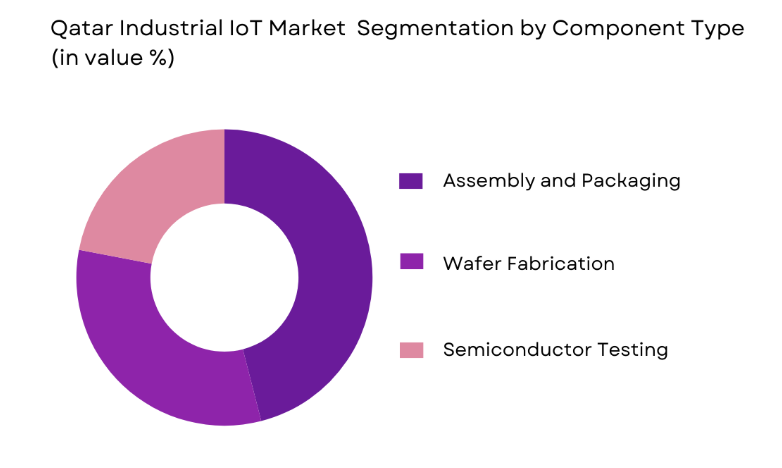
Qatar Industrial IoT market is segmented by component into hardware, software, and services. Recently, hardware has a dominant market share due to factors such as demand patterns, brand presence, infrastructure availability, or consumer preference. Industrial sectors across Qatar rely heavily on connected sensors, gateways, embedded devices, and industrial networking hardware to monitor energy infrastructure, oil pipelines, and industrial machinery. Large-scale industrial installations require extensive deployment of physical devices capable of collecting real-time operational data. Oil and gas facilities operating in Ras Laffan and Mesaieed deploy thousands of industrial sensors across pipelines, drilling equipment, and processing plants to track operational conditions. Industrial gateways that enable machine-to-machine communication remain essential for integrating legacy equipment with modern digital monitoring platforms. Hardware investments are also strengthened by expansion of smart utilities infrastructure, which requires grid sensors, asset tracking devices, and automated monitoring systems. The country’s growing industrial infrastructure therefore maintains continuous demand for hardware installations supporting digital transformation initiatives across energy, utilities, and manufacturing environments.
By End User Industry
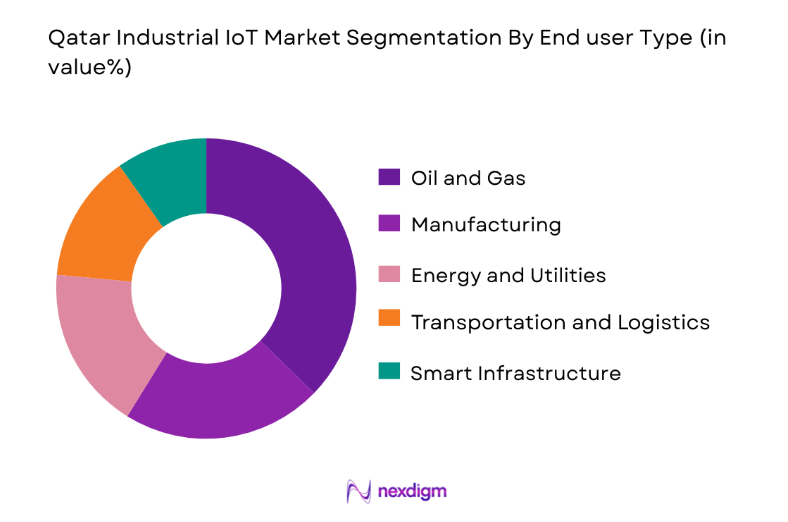
Qatar Industrial IoT market is segmented by end user industry into oil and gas, manufacturing, energy and utilities, transportation and logistics, and smart infrastructure. Recently, oil and gas has a dominant market share due to factors such as demand patterns, brand presence, infrastructure availability, or consumer preference. Qatar hosts one of the world’s largest natural gas production ecosystems, requiring advanced digital monitoring systems to manage pipelines, refineries, offshore platforms, and liquefied natural gas facilities. Industrial IoT platforms enable predictive maintenance for drilling equipment, real-time pipeline monitoring, and automated safety systems across gas processing facilities. Industrial operators rely on connected sensors and advanced analytics to detect operational anomalies, prevent equipment failure, and optimize production efficiency. Large-scale LNG infrastructure requires continuous monitoring of pressure systems, storage tanks, and export terminals, further expanding IoT adoption. Government investments in digital oilfield technologies and industrial automation programs continue accelerating the deployment of connected industrial systems across hydrocarbon production facilities and downstream processing infrastructure.
Competitive Landscape
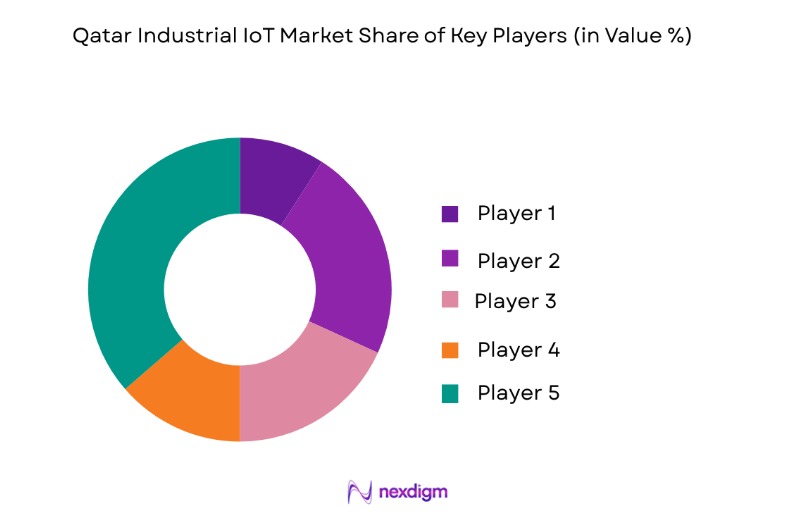
The Qatar Industrial IoT market demonstrates moderate consolidation as global industrial automation providers collaborate with regional technology integrators to deploy connected industrial systems across energy infrastructure and manufacturing environments. Major multinational companies dominate the supply of industrial connectivity platforms, predictive maintenance solutions, and industrial analytics systems, while local system integrators provide implementation and maintenance services. Strategic partnerships with national energy companies and government infrastructure programs further strengthen the position of leading technology vendors operating within Qatar’s industrial ecosystem.
| Company Name | Establishment Year | Headquarters | Technology Focus | Market Reach | Key Products | Revenue | Industrial IoT Deployment Model |
| Siemens AG | 1847 | Germany | ~ | ~ | ~ | ~ | ~ |
| ABB Ltd | 1988 | Switzerland | ~ | ~ | ~ | ~ | ~ |
| Schneider Electric | 1836 | France | ~ | ~ | ~ | ~ | ~ |
| Honeywell International | 1906 | USA | ~ | ~ | ~ | ~ | ~ |
| Cisco Systems | 1984 | USA | ~ | ~ | ~ | ~ | ~ |
Qatar Industrial IoT Market Analysis
Growth Drivers
Expansion of Digital Oilfield Infrastructure Across Qatar Energy Sector:
Industrial IoT adoption in Qatar continues accelerating due to rapid expansion of digital oilfield infrastructure across upstream and downstream hydrocarbon production facilities operated by national energy companies and international oil majors. Modern hydrocarbon extraction environments require continuous monitoring of drilling systems, pipelines, compressors, and refining infrastructure in order to maintain safe and efficient production operations across complex energy networks. Industrial IoT sensors embedded within drilling equipment capture temperature, pressure, vibration, and operational data in real time, enabling engineers to detect anomalies before they develop into costly equipment failures or production disruptions. Predictive maintenance systems built on industrial IoT platforms analyze equipment performance data collected from thousands of field devices to anticipate mechanical degradation and schedule maintenance operations before failures occur. The integration of digital monitoring systems significantly reduces unplanned downtime across large-scale hydrocarbon production facilities that operate continuously across offshore and onshore extraction environments. Connected industrial infrastructure also supports advanced operational analytics enabling energy companies to optimize drilling efficiency, reduce equipment wear, and maximize hydrocarbon output across extraction sites. Industrial automation systems connected through IoT networks enable centralized monitoring of distributed oilfields, allowing operational teams to manage production infrastructure from remote command centers located within industrial control hubs. Qatar’s energy sector maintains some of the world’s most complex liquefied natural gas processing infrastructure, requiring advanced digital monitoring technologies capable of supervising large industrial equipment networks and ensuring stable operational performance. Industrial IoT deployment therefore continues expanding across gas processing plants, pipeline transportation networks, and export terminals responsible for supplying liquefied natural gas to global markets. These developments significantly strengthen demand for industrial connectivity platforms, predictive maintenance technologies, and real-time industrial analytics systems across Qatar’s energy ecosystem.
Government-Led Smart Industry and Industrial Digitalization Initiatives:
National digital transformation strategies implemented across Qatar’s industrial ecosystem significantly accelerate adoption of Industrial IoT technologies across manufacturing zones, logistics hubs, and energy infrastructure. Government infrastructure programs focus heavily on developing intelligent industrial environments capable of supporting advanced manufacturing systems, digital supply chains, and automated industrial operations powered by connected technologies. Smart industrial zones established near Doha, Mesaieed, and Ras Laffan integrate digital infrastructure including high-speed connectivity networks, industrial data platforms, and advanced monitoring systems supporting connected industrial operations. Industrial IoT technologies allow manufacturing operators to monitor production equipment performance in real time while optimizing machine utilization across automated production lines. Connected industrial sensors installed across manufacturing equipment capture operational data including machine temperature, vibration, and power consumption which enables predictive maintenance strategies that minimize downtime and improve production efficiency. Logistics and port infrastructure also deploy industrial IoT monitoring technologies to manage cargo handling equipment, warehouse automation systems, and container tracking platforms across maritime logistics hubs. Industrial digitalization initiatives further encourage adoption of advanced analytics platforms capable of transforming operational data into actionable insights supporting industrial decision-making. Industrial operators rely on these platforms to improve asset utilization, reduce operational costs, and enhance safety performance across industrial facilities. National programs supporting digital transformation across industrial sectors therefore create favorable conditions for expansion of Industrial IoT deployments across Qatar’s manufacturing, logistics, and energy ecosystems. These strategic initiatives ultimately strengthen long-term growth of the Industrial IoT market as digital technologies become essential components of modern industrial operations.
Market Challenges
Industrial Cybersecurity Risks Within Connected Infrastructure Environments:
Rapid expansion of connected industrial systems significantly increases cybersecurity vulnerabilities across industrial infrastructure networks that previously operated within isolated operational environments. Industrial IoT deployments introduce thousands of connected sensors, gateways, and industrial control devices across energy facilities, manufacturing plants, and logistics infrastructure, creating expanded digital attack surfaces for potential cyber threats. Industrial control systems responsible for managing drilling equipment, power generation facilities, and automated production lines require extremely high levels of operational security to prevent disruptions that could cause economic damage or safety hazards. Cyber attackers targeting industrial infrastructure may attempt to compromise industrial control networks through vulnerabilities within connected devices or data communication channels linking operational equipment with digital monitoring platforms. Industrial IoT devices often operate within complex operational environments where legacy industrial equipment must integrate with modern connectivity platforms, creating compatibility challenges that may weaken cybersecurity protections. Securing large industrial networks containing thousands of distributed sensors and industrial gateways requires continuous monitoring of device activity, software updates, and threat detection systems capable of identifying suspicious operational patterns. Industrial operators must invest heavily in advanced cybersecurity solutions including network segmentation, device authentication systems, and encryption protocols to protect industrial communication networks from unauthorized access. Regulatory compliance requirements related to industrial cybersecurity further increase operational complexity for companies deploying Industrial IoT technologies across critical infrastructure sectors such as energy production and utilities. Maintaining secure industrial IoT ecosystems therefore represents a major challenge for industrial operators attempting to balance operational efficiency benefits with cybersecurity protection requirements. These concerns often slow deployment of connected industrial technologies across critical infrastructure environments where operational safety remains a top priority.
High Integration Complexity with Legacy Industrial Systems:
Many industrial facilities operating within Qatar’s energy and manufacturing sectors rely on legacy industrial equipment that was originally designed without digital connectivity capabilities, making integration with modern Industrial IoT platforms technically complex and costly. Industrial operators must retrofit older machinery with external sensors, communication modules, and gateway devices capable of collecting operational data and transmitting it to digital monitoring platforms. Retrofitting large industrial facilities containing thousands of mechanical components requires extensive engineering planning to ensure compatibility between existing operational equipment and new digital monitoring technologies. Legacy industrial control systems often use proprietary communication protocols that may not easily interface with modern IoT connectivity platforms designed around standardized communication frameworks. Engineers must therefore develop customized integration solutions enabling older industrial equipment to communicate with digital monitoring platforms while maintaining operational stability across production systems. The integration process also requires temporary equipment shutdowns to install sensors and connectivity modules, potentially disrupting production operations across energy facilities and manufacturing plants. Industrial operators must carefully coordinate integration projects to minimize operational interruptions and avoid production losses associated with equipment downtime. Training operational staff to manage newly integrated digital monitoring systems represents an additional challenge as industrial technicians must adapt to data-driven operational environments that differ significantly from traditional mechanical maintenance practices. These complexities often increase implementation timelines and investment requirements associated with Industrial IoT adoption across industrial facilities that rely heavily on legacy infrastructure systems. As a result, some industrial operators delay adoption of advanced digital monitoring technologies until modernization programs upgrade existing equipment networks.
Opportunities
Integration of 5G Enabled Industrial Connectivity Networks:
The expansion of advanced telecommunications infrastructure supporting private industrial 5G networks creates significant opportunities for Industrial IoT adoption across Qatar’s industrial ecosystem. Industrial facilities require reliable high-speed connectivity capable of transmitting real-time operational data between thousands of sensors, control devices, and centralized monitoring platforms operating across large industrial environments. Private 5G networks deployed within industrial zones provide ultra-low latency communication channels enabling instant data exchange between machines, analytics platforms, and automated control systems. These networks allow industrial operators to implement advanced automation solutions such as autonomous industrial vehicles, robotic inspection systems, and real-time production monitoring platforms operating across large manufacturing facilities. Oil and gas infrastructure also benefits significantly from high-speed connectivity capable of transmitting real-time monitoring data from offshore extraction platforms to centralized operational control centers located onshore. Industrial IoT systems connected through 5G networks support advanced digital twin technologies capable of simulating operational performance across complex industrial environments. Engineers can use digital twin models built on real-time sensor data to simulate equipment performance, predict operational risks, and optimize production processes without disrupting physical infrastructure operations. Industrial logistics infrastructure such as ports and transportation hubs also deploy connected monitoring technologies enabling automated cargo tracking, equipment monitoring, and predictive maintenance systems. The deployment of advanced connectivity infrastructure therefore enables entirely new industrial IoT applications across energy production, manufacturing automation, and logistics management environments. These technological developments significantly strengthen long-term growth opportunities for industrial IoT technology vendors operating across Qatar’s industrial ecosystem.
Expansion of Smart Energy Infrastructure and Utility Networks:
Qatar continues expanding its national energy infrastructure including power generation facilities, electricity transmission networks, water desalination plants, and smart utility systems supporting urban development projects. These infrastructure networks require advanced digital monitoring technologies capable of managing energy distribution systems, detecting operational anomalies, and improving operational efficiency across large utility networks. Industrial IoT platforms enable real-time monitoring of power generation equipment, transmission lines, and water distribution systems by collecting operational data from sensors deployed across utility infrastructure networks. Utility operators rely on these monitoring systems to detect faults, predict equipment failures, and manage energy distribution across interconnected infrastructure systems serving urban and industrial demand centers. Smart grid technologies built on IoT connectivity platforms allow energy providers to optimize electricity distribution based on real-time demand patterns across urban infrastructure networks. Connected sensors installed across power generation facilities monitor equipment performance while automated control systems adjust energy output based on consumption requirements. Water desalination facilities also deploy IoT monitoring technologies to supervise filtration systems, pressure systems, and water treatment equipment across large processing plants supplying fresh water to urban populations. Industrial analytics platforms process operational data generated across utility infrastructure networks to identify efficiency improvements and reduce operational costs. Government investments in national energy infrastructure modernization therefore create strong opportunities for expanded deployment of Industrial IoT technologies supporting smart energy management systems across Qatar’s utility ecosystem.
Future Outlook
The Qatar Industrial IoT market is expected to witness sustained expansion as industrial sectors increasingly integrate connected technologies into operational infrastructure. Advancements in edge computing, artificial intelligence driven analytics, and industrial connectivity networks are expected to enhance real time monitoring and automation capabilities across industrial facilities. Government initiatives supporting digital transformation of energy and manufacturing sectors will further accelerate adoption of connected industrial platforms. Expanding smart infrastructure programs and industrial modernization strategies will continue strengthening demand for industrial IoT technologies across Qatar.
Major Players
- Siemens AG
- ABB Ltd
- Schneider Electric
- Honeywell International
- Cisco Systems
- IBM Corporation
- Microsoft Corporation
- Rockwell Automation
- Emerson Electric
- Bosch Rexroth
- Hitachi Industrial Equipment Systems
- Oracle Corporation
- PTC Inc
- Huawei Technologies
- General Electric Digital
Key Target Audience
- Oil and Gas Companies
- Manufacturing Companies
- Energy and Utility Providers
- Industrial Automation System Integrators
- Industrial Equipment Manufacturers
- Logistics and Infrastructure Operators
- Investments and venture capitalist firms
- Government and regulatory bodies
Research Methodology
Step 1: Identification of Key Variables
Primary research begins by identifying key variables influencing the Qatar Industrial IoT market including industrial digitalization initiatives, energy infrastructure investment, industrial automation adoption, and connectivity infrastructure expansion. Secondary research sources including government publications, industry reports, and company disclosures are analyzed to determine technological deployment patterns and investment flows.
Step 2: Market Analysis and Construction
Market sizing is constructed through a combination of bottom up and top down analytical approaches integrating industrial infrastructure spending data, industrial automation adoption trends, and technology deployment across major industrial sectors. Multiple data sources including industry databases, financial reports, and regulatory publications are triangulated to develop reliable market estimates.
Step 3: Hypothesis Validation and Expert Consultation
Preliminary research findings are validated through consultations with industry experts including industrial automation engineers, digital transformation specialists, and infrastructure technology providers operating across energy and manufacturing sectors. Expert feedback helps refine assumptions regarding technology adoption rates and market structure dynamics.
Step 4: Research Synthesis and Final Output
All research findings are consolidated through structured analytical frameworks to produce a comprehensive assessment of the Qatar Industrial IoT market including segmentation analysis, competitive landscape evaluation, and strategic insights. Data verification processes ensure accuracy and consistency across all sections of the final market report.

- Executive Summary
- Research Methodology (Definitions, Scope, Industry Assumptions, Market Sizing Approach, Primary & Secondary Research Framework, Data Collection & Verification Protocol, Analytic Models & Forecast Methodology, Limitations & Research Validity Checks)

- Market Definition and Scope
- Value Chain & Stakeholder Ecosystem
- Regulatory / Certification Landscape
- Sector Dynamics Affecting Demand

- Growth Drivers
Expansion of Smart Oil and Gas Infrastructure
Government Smart Industry Initiatives and Digital Transformation Programs
Rising Adoption of Industrial Automation Across Energy and Utilities - Market Challenges
High Integration Costs for Legacy Industrial Systems
Cybersecurity Risks in Connected Industrial Environments
Limited Availability of Specialized Industrial IoT Skills - Market Opportunities
Deployment of Edge Computing Across Industrial Facilities
Industrial Digital Twin Adoption in Energy Infrastructure
Expansion of Smart Industrial Zones and Digital Factories - Trends
Adoption of AI Driven Predictive Maintenance Platforms
Integration of Industrial IoT with 5G Private Networks
Growth of Cloud Based Industrial Data Platforms - Government Regulations

- By Market Value, 2020-2025
- By Installed Units, 2020-2025
- By Average System Price, 2020-2025
- By System Complexity Tier, 2020-2025

- By System Type (In Value%)
Industrial Connectivity Platforms
Predictive Maintenance Solutions
Asset Monitoring Systems
Industrial Data Analytics Platforms
Edge Computing Systems - By Platform Type (In Value%)
Manufacturing Platforms
Energy & Utilities Platforms
Oil & Gas Industrial Platforms
Transportation & Logistics Platforms
Smart Infrastructure Platforms - By Fitment Type (In Value%)
Embedded Industrial IoT Modules
Retrofit Industrial Sensor Systems
Integrated Automation Platforms
Edge Gateway Installations
Hybrid Cloud Industrial Systems - By EndUser Segment (In Value%)
Oil & Gas Companies
Manufacturing Industries
Energy & Utility Providers

- Market Share Analysis
- CrossComparison Parameters (Technology Capability, Industrial Platform Integration, Deployment Model, EndUser Industry Focus, Regional Presence)
SWOT Analysis of Key Competitors
Pricing & Procurement Analysis
Porter’s Five Forces
Key Players
Siemens AG
ABB Ltd
Schneider Electric
Honeywell International
Cisco Systems
IBM Corporation
Microsoft Corporation
Rockwell Automation
Emerson Electric
General Electric Digital
Bosch Rexroth
Hitachi Industrial Equipment Systems
Oracle Corporation
PTC IncHuawei Technologies

- Oil and Gas Operators Integrating IoT for Asset Monitoring and Operational Efficiency
- Manufacturing Facilities Deploying Smart Factory Automation Platforms
- Energy and Utilities Companies Implementing Smart Grid and Infrastructure Monitoring
- Transportation Infrastructure Operators Utilizing IoT for Predictive Maintenance

- Forecast Market Value, 2026-2035
- Forecast Installed Units, 2026-2035
- Price Forecast by System Tier, 2026-2035
- Future Demand by Platform, 2026-2035


 Request a Sample
 Ask for Customization
 Get a Quote
 Enquire Now