
 Download PDF
Market Overview
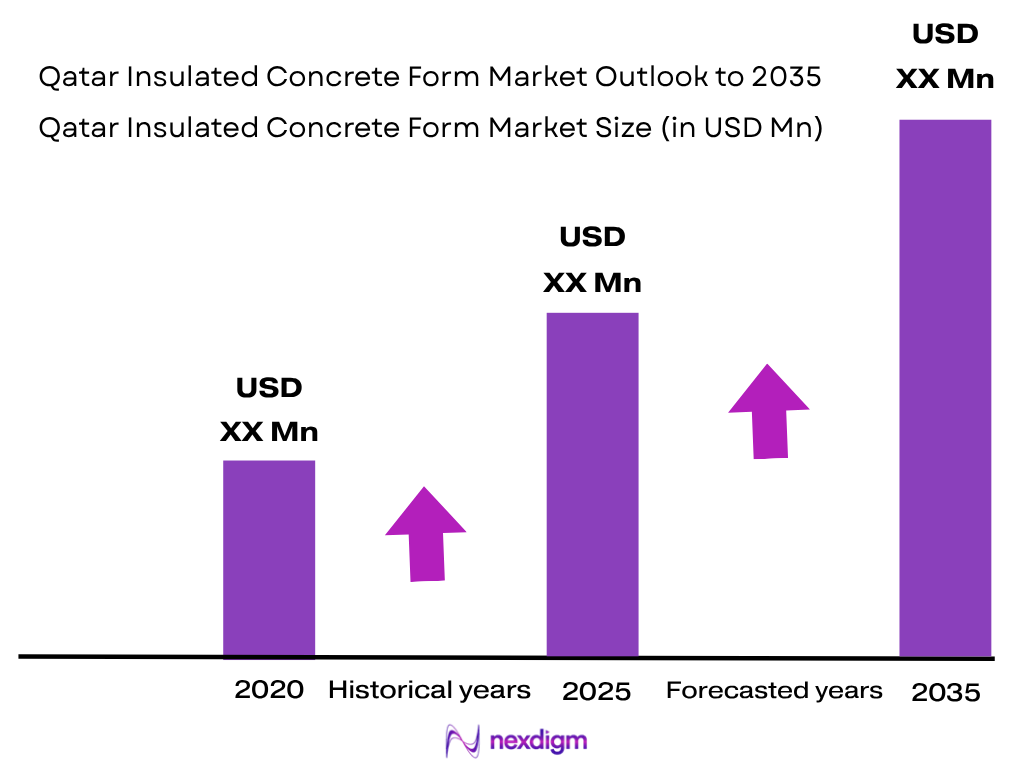
The Qatar Insulated Concrete Form Market is valued at approximately USD ~XX million, supported by villa construction, residential compounds, institutional buildings and demand for thermally insulated reinforced-concrete envelopes. Building permits increased from 769 to 884 in the comparable October periods, while villa permits reached 247 in the latest period. Qatar’s economy recorded USD 219.16 billion GDP and USD 76,688.7 GDP per capita, providing a strong construction-spending base.
Al Rayyan, Doha, Al Daayen and Al Wakrah dominate Qatar’s addressable ICF construction opportunity because they combine substantial building-permit activity with villa, residential and urban-development concentration. In comparable October periods, Al Rayyan permits increased from 180 to 257, Doha from 142 to 185, while Al Daayen recorded 158 permits in both periods and Al Wakrah recorded 134 and 129. These municipalities consequently offer the strongest pipeline for ICF villa and low-rise applications.
Market Segmentation
By ICF System Type
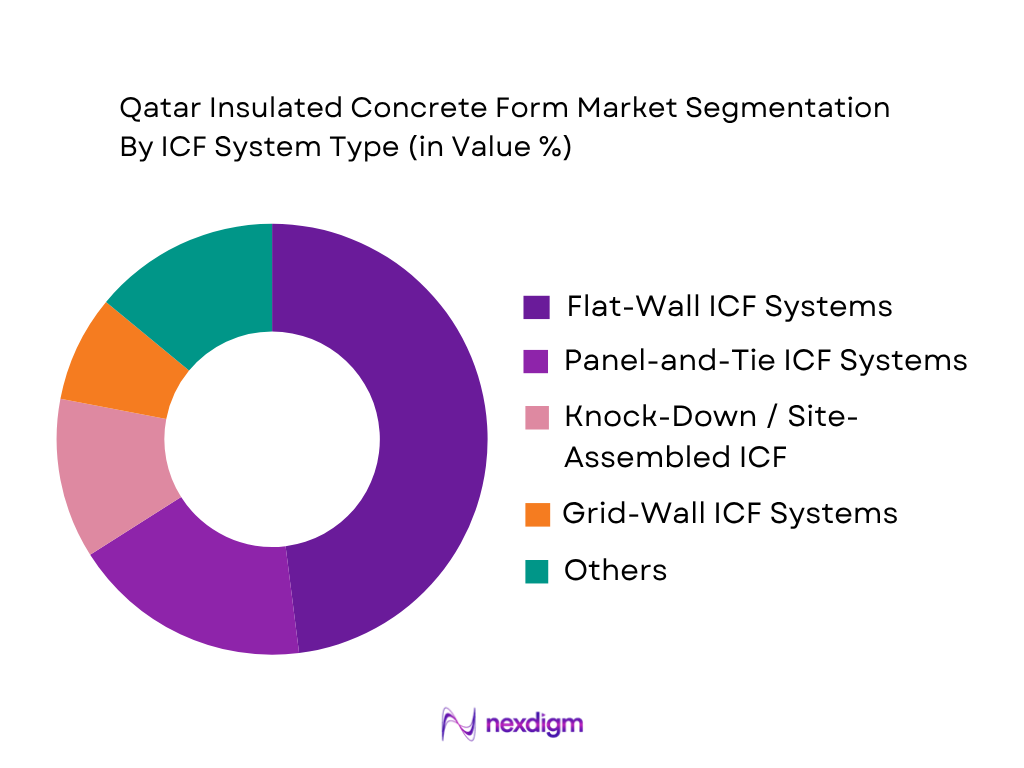
By ICF System Type: The Qatar Insulated Concrete Form Market is segmented into flat-wall ICF systems, panel-and-tie systems, knock-down systems, grid-wall systems, vertical systems and composite ICF systems. Flat-wall EPS ICF systems are estimated to account for the dominant share because their configuration aligns most closely with Qatar’s reinforced-concrete construction practices while providing continuous insulation on both faces of the concrete core. Local systems such as BuildKing use two EPS insulation layers connected through molded web connectors, illustrating the suitability of this architecture for regional construction. Flat-wall systems also offer straightforward reinforcement placement, concrete pouring and attachment of internal and external finishes. They are particularly applicable to villas, residential compounds, basements and low-rise buildings where structural concrete walls and building-envelope insulation can be combined in one assembly. Qatar Construction Specifications also provide the broader technical framework governing construction and building materials, increasing the importance of standardized wall assemblies with documented structural, thermal and material performance.
By End-Use Construction
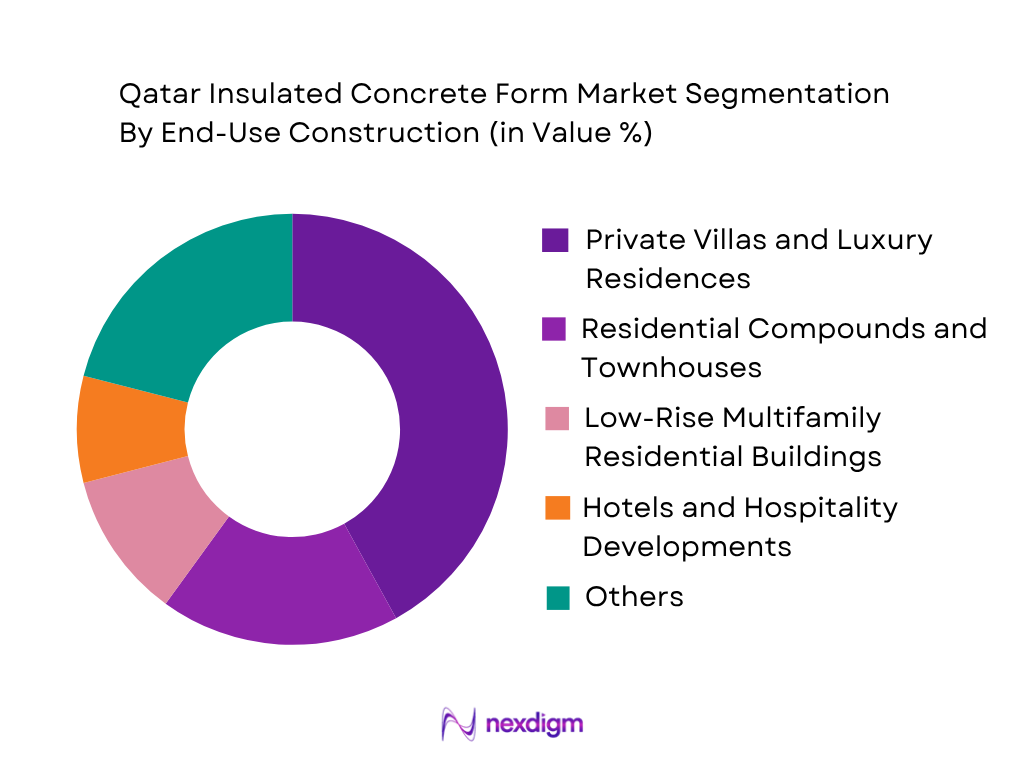
By End-Use Construction: The Qatar Insulated Concrete Form Market is segmented into private villas and luxury residences, residential compounds and townhouses, low-rise multifamily buildings, hospitality developments, educational and healthcare facilities, commercial buildings, government facilities and specialty buildings. Private villas and luxury residences are estimated to dominate demand because villas represent the largest category within new residential building permits. The National Planning Council recorded 247 villa permits in an October reporting period, compared with only 24 apartment-building permits and 5 other residential-building permits. Similar patterns appeared across other reporting months, with 232 villa permits in May, 183 in July and 201 in August. This construction profile favors ICF because detached and low-rise residential buildings can more readily adopt alternative structural-envelope systems than standardized high-rise developments. ICF also addresses Qatar-specific requirements for external-wall insulation, cooling-load management, airtightness and monolithic reinforced-concrete wall construction.
Competitive Landscape
The Qatar Insulated Concrete Form Market remains relatively concentrated and specialized, with a small number of locally available EPS-based ICF systems supplemented by international technology suppliers that act as product, design and performance benchmarks. National Polystyrene Packaging Factory provides the BuildKing system locally, while Decolite identifies itself as an exclusive ICF manufacturer in Qatar. Global companies such as Nudura, Fox Blocks and BuildBlock strengthen the competitive benchmark through broader ICF portfolios, contractor training, engineering documentation and multiple concrete-core configurations.
| Major Player | Establishment Year | Headquarters | ICF System Portfolio | EPS / Form Manufacturing Capability | Concrete Core Flexibility | Qatar / GCC Relevance | Technical & Contractor Support | Building Application Coverage |
| National Polystyrene Packaging Factory | 1994 | Doha, Qatar | ~ | ~ | ~ | ~ | ~ | ~ |
| Decolite / Gulf Walls System | Not publicly disclosed | Doha, Qatar | ~ | ~ | ~ | ~ | ~ | ~ |
| Nudura | 2001 | Beachwood, Ohio, USA | ~ | ~ | ~ | ~ | ~ | ~ |
| Fox Blocks | 2005 | Omaha, Nebraska, USA | ~ | ~ | ~ | ~ | ~ | ~ |
| BuildBlock Building Systems | 2004 | Oklahoma City, Oklahoma, USA | ~ | ~ | ~ | ~ | ~ | ~ |
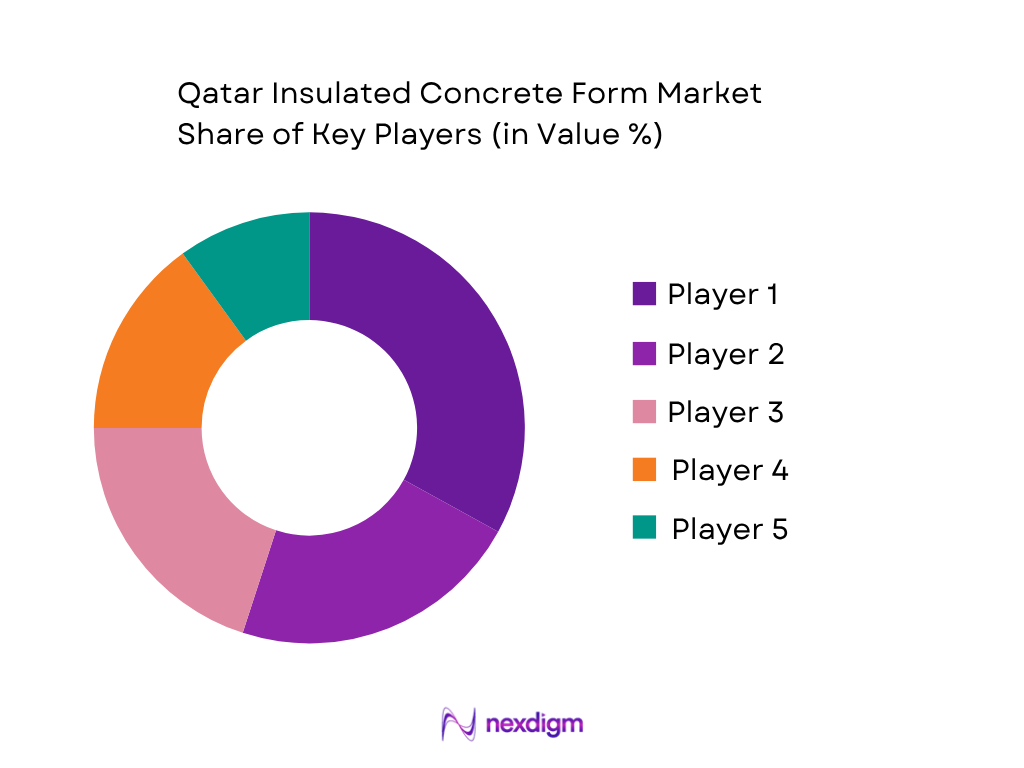
Qatar Insulated Concrete Form Market Analysis
Growth Drivers
Dominance of Villa Construction and Demand for Integrated Reinforced-Concrete Wall Systems
Qatar’s villa-intensive residential construction pipeline provides a direct demand base for insulated concrete forms because ICF systems are particularly suitable for detached and low-rise structures requiring reinforced concrete, continuous insulation and rapid wall erection. National Planning Council data show 247 new villa permits in October 2024, compared with 24 apartment-building permits and 5 other residential-building permits. Villa activity was also substantial in preceding months, with 232 permits in May 2024, 183 in July 2024 and 201 in August 2024. October recorded 884 total building permits, including 257 permits in Al Rayyan, 185 in Doha, 158 in Al Daayen and 129 in Al Wakrah, giving ICF suppliers a concentrated geographic construction base. ICF allows structural concrete walls and EPS insulation to be executed through one stay-in-place forming system, making it relevant for villas, residential compounds and basement structures. Qatar’s broader economic capacity also supports premium and performance-oriented construction: World Bank data record 2024 GDP of USD 219.16 billion and GDP per capita of USD 76,688.7. The combination of high villa permit volumes, concentrated residential development and substantial national income strengthens demand for thermally insulated monolithic wall technologies.
Thermal-Envelope Requirements and Qatar’s Updated Construction Specification Framework
The requirement for durable, insulated external walls is strengthening the relevance of ICF systems in Qatar, where reinforced concrete construction must perform under persistent cooling demand and stringent building-envelope specifications. Qatar General Organization for Standardization formally issued QS 27:2024 – Qatar Construction Specifications 2024 on 3 March 2024, replacing QS 27:2014 and creating an updated national technical framework for construction and building materials. ICF systems combine two insulation layers with a cast reinforced-concrete core, helping contractors deliver structural strength and continuous thermal insulation without treating the envelope and structural wall as entirely separate packages. The scale of active construction amplifies this requirement: the National Planning Council recorded 884 building permits in October 2024, including 319 permits for new buildings, while the same month produced 247 new villa permits. August recorded 201 villa permits, while July recorded 183, confirming a continuing stream of low-rise residential projects where external-wall thermal performance is commercially relevant. World Bank data place Qatar’s 2024 GDP at USD 219.16 billion and GDP per capita at USD 76,688.7, supporting investment in higher-performance building systems. Updated specifications, continuous villa construction and high-income development therefore create a structurally favorable environment for ICF adoption.
Market Challenges
Structural, Fire-Safety and Project Approval Requirements Increase ICF Specification Complexity
Qatar’s ICF suppliers face a significant challenge in satisfying structural, materials and building-envelope documentation requirements before alternative wall systems can achieve broader specification among developers, engineers and contractors. Qatar General Organization for Standardization introduced QS 27:2024 under Ministerial Decree 15/2024 on 3 March 2024, replacing the earlier QS 27:2014 framework. Consequently, suppliers of EPS stay-in-place forms must demonstrate that complete wall assemblies—rather than only individual EPS components—can meet applicable requirements relating to concrete, reinforcement, thermal insulation, material quality and construction execution. This becomes particularly important because ICF walls require controlled bracing, reinforcement placement, service penetrations and staged concrete pours to preserve alignment and structural integrity. National Planning Council data illustrate the size of the mainstream construction ecosystem against which ICF must compete: Qatar issued 884 building permits in October 2024, including 257 in Al Rayyan, 185 in Doha, 158 in Al Daayen and 129 in Al Wakrah. Suppliers therefore need technical support capable of servicing multiple active construction clusters. World Bank figures record 2024 GDP of USD 219.16 billion and GDP per capita of USD 76,688.7, indicating that the constraint is less economic capacity than technical acceptance, documentation and execution capability.
Competition from Established Conventional Wall Construction and Limited Mainstream ICF Specification
ICF adoption in Qatar must compete with established reinforced-concrete frames, concrete blockwork, insulated blocks and other wall systems already familiar to local contractors, consultants and developers. The challenge is particularly relevant because the construction pipeline is substantial enough for incumbent methods to benefit from established procurement practices and experienced labor. National Planning Council data show 884 building permits issued in October 2024, of which 319 related to new buildings, while 537 permits covered additions and 28 permits covered fencing. Within new residential construction, 247 villa permits were issued in the same month, following 232 villa permits in May, 183 in July and 201 in August. For ICF suppliers, converting this activity requires architects, structural engineers, MEP teams and contractors to coordinate wall thicknesses, reinforcement, concrete pours, openings and building services around a system that may differ from their conventional workflow. Qatar’s updated QS 27:2024 construction specification further increases the need for product documentation and consultant acceptance. World Bank data show 2024 GDP of USD 219.16 billion and GDP per capita of USD 76,688.7. The commercial barrier is therefore gaining specification share within a large but conventionally structured building industry rather than absence of construction demand.
Market Opportunities
Private Villas and Residential Compounds Create the Strongest ICF Expansion Opportunity
Private villas and residential compounds represent the clearest future growth opportunity for Qatar’s ICF industry because current construction activity is heavily concentrated in building types that can readily adopt insulated reinforced-concrete wall systems. National Planning Council statistics recorded 247 new villa permits in October 2024, compared with 24 apartment-building permits and 5 other residential permits. Earlier months provide further evidence of sustained addressable activity, including 232 villa permits in May, 183 in July and 201 in August. October municipality data also identify where suppliers can concentrate future contractor training and project development: 75 villa permits were issued in Al Rayyan, 55 in Al Daayen, 49 in Al Wakrah, 22 in Doha, 20 in Umm Salal and 18 in Al Khor. These clusters offer opportunities for standardized ICF villa packages incorporating forms, reinforcement detailing, concrete-pour guidance and installer support. The updated QS 27:2024 specification framework can further favor suppliers able to provide documented thermal and structural performance. World Bank data record Qatar’s 2024 GDP at USD 219.16 billion and GDP per capita at USD 76,688.7, supporting continued demand for durable, energy-conscious residential construction. Current permit volumes therefore provide a measurable base from which broader ICF penetration can develop.
Domestic EPS-ICF Manufacturing and Integrated ICF-Ready-Mix Packages Offer Localization Potential
Qatar has an opportunity to expand locally manufactured ICF systems and integrated supply packages combining moulded EPS forms, reinforcing steel coordination, ready-mix concrete specifications, bracing and contractor technical support. Current construction volumes provide sufficient application depth to support greater localization: the National Planning Council recorded 884 building permits in October 2024, with 319 permits for new buildings, and 247 new villa permits forming the largest residential category. Al Rayyan alone recorded 257 total permits, followed by Doha with 185, Al Daayen with 158 and Al Wakrah with 129, indicating several concentrated logistics corridors where locally stocked ICF components could shorten project response times. Qatar’s adoption of QS 27:2024 also creates an opportunity for domestic producers to design product documentation, concrete-core configurations and thermal assemblies specifically around national construction requirements rather than relying solely on imported system specifications. Local moulding of standard forms, corner units and project-specific accessories could also improve system availability for villa and institutional projects. World Bank data put Qatar’s 2024 GDP at USD 219.16 billion and GDP per capita at USD 76,688.7, providing a strong economic base for localized building-material investment. Current construction activity therefore supports future expansion of vertically integrated Qatar-based ICF supply and installation capability.
Future Outlook
The Qatar Insulated Concrete Form Market is expected to expand at approximately ~XX% CAGR during 2026-2035, supported by continued villa construction, high-performance building-envelope requirements and growing interest in integrated structural-insulation systems. Demand is expected to remain concentrated in low-rise residential projects, residential compounds and selected institutional applications. Greater contractor familiarity, local EPS moulding capability and specification support from architects and structural engineers will be central to wider ICF adoption.
Major Players
- National Polystyrene Packaging Factory – BuildKing
- Decolite / Gulf Walls System – iForm
- Forma Insulation
- Qatar Factory for Polystyrene Products
- Reward Wall Systems
- Nudura
- Amvic Building System
- Fox Blocks
- BuildBlock Building Systems
- Quad-Lock Building Systems
- SuperForm Products
- LiteForm Technologies
- RASTRA
- Faswall
- Polycrete International
Key Target Audience
- Insulated Concrete Form and EPS Building-System Manufacturers
- Villa, Residential Compound and Real Estate Developers
- Main Contractors and Specialist ICF Installation Contractors
- Architects, Structural Engineering and Building-Envelope Firms
- Ready-Mix Concrete, Reinforcement and Construction Material Suppliers
- Investments and Venture Capitalist Firms
- Government and Regulatory Bodies (Ministry of Municipality, Qatar General Organization for Standardization, Qatar Civil Defence, Kahramaa, Public Works Authority – Ashghal)
- Private Equity Firms, Construction Groups and Strategic Building-Material Investors
Research Methodology
Step 1: Identification of Key Variables
The initial stage develops a Qatar-specific ICF ecosystem covering EPS manufacturers, ICF technology suppliers, ready-mix concrete producers, reinforcement suppliers, contractors, developers, architects and regulators. Key variables include villa permits, installed ICF wall area, EPS consumption, concrete-core requirements, imported form availability, domestic moulding capacity and competing wall-system adoption.
Step 2: Market Analysis and Construction
Historical market construction combines top-down construction activity with bottom-up ICF consumption. The top-down model evaluates residential building permits, municipality-level development, villa construction and applicable wall area, while the bottom-up model assesses supplier revenues, ICF form volumes, concrete consumption, EPS requirements, project installations and average wall-system realization.
Step 3: Hypothesis Validation and Expert Consultation
Market hypotheses are validated through computer-assisted telephone interviews with ICF suppliers, EPS manufacturers, contractors, architects, structural engineers, ready-mix companies and developers. Interviews test assumptions concerning system selection, wall thickness, concrete-core configuration, installation productivity, thermal-performance requirements, local versus imported supply and barriers to specification.
Step 4: Research Synthesis and Final Output
Primary findings are triangulated with National Planning Council building-permit statistics, Qatar Construction Specifications, company disclosures and construction-project information. Bottom-up ICF volumes are reconciled with addressable building activity to avoid double counting between manufacturer sales, distributor supply and contractor installations before final market sizing, segmentation and forecasting.

- Executive Summary
- Research Methodology (Market Definition and Scope, Qatar Insulated Concrete Form Market Classification, ICF System Demand Assessment, EPS Insulated Form Consumption Mapping, Installed ICF Wall Area Assessment, Domestic ICF Manufacturing Capacity Assessment, Imported ICF System Dependency Analysis, EPS Resin and Moulding Assessment, Reinforced Concrete Core Consumption Mapping, Ready-Mix Concrete Integration Assessment, Reinforcement Steel Requirement Assessment, Building Application-Level Demand Mapping, Villa Construction Pipeline Assessment, Municipality-Level Building Permit Assessment, Contractor and Developer Adoption Assessment, Primary Industry Interviews, Top-Down Market Sizing, Bottom-Up Company Revenue and Installation Volume Assessment, Project Pipeline Analysis, Data Triangulation, Pricing Assessment, Forecasting Framework)

- Definition and Scope
- Qatar Insulated Concrete Form Industry Evolution
- Qatar Insulated Concrete Form Value Chain Analysis
- Qatar Insulated Concrete Form Supply Chain Analysis
- Domestic ICF Manufacturing Versus Imported ICF System Structure

- Growth Drivers (Dominance of Villa Construction in New Residential Permits, Requirement for Thermally Insulated External Walls, High Cooling-Load Reduction Requirement, Expansion of Residential Compounds, Demand for Monolithic Reinforced Concrete Wall Systems, Growth of Energy-Efficient Building Envelopes, Domestic EPS Manufacturing Capability, Ready-Mix Concrete Availability, Faster Wall Construction Requirement, Demand for Integrated Structure-and-Insulation Systems)
- Market Challenges (Limited Number of Dedicated ICF Manufacturers, Contractor Familiarity Compared with Conventional Blockwork, Competition from AAC and Insulated Concrete Blocks, Structural Consultant Approval Requirements, Concrete Pour Pressure Management, Bracing and Alignment Control, Fire-Performance Documentation for EPS Forms, Skilled ICF Installer Availability, Project-Specific MEP Penetration Coordination, Limited ICF Specification in Mainstream Projects)
- Market Opportunities (Private Villa ICF Construction, Luxury Residential Compounds, High-Performance Government Buildings, School and Healthcare Projects, Basement and Foundation Applications, Swimming Pool Construction, Domestic EPS-ICF Manufacturing Expansion, ICF Contractor Certification, High-Thermal-Resistance Wall Systems, Integrated ICF-Ready-Mix Packages, Locally Moulded ICF Accessories, Qatar-to-GCC Export Opportunities)
- Market Trends (Interlocking Twin-Wall EPS Blocks, Reversible ICF Forms, Higher-Density Fire-Retardant EPS, Integrated Plastic Webs, Preformed Rebar Positioning, Variable Concrete Core Thickness, BIM-Based Wall Coordination, Factory-Moulded EPS Forms, Continuous Insulation, Monolithic Reinforced Concrete Walls, Reduced Thermal Bridging, Integrated Window and Door Buck Systems)
- Regulatory and Standards Landscape (Qatar Construction Specifications, Kahramaa Energy and Water Conservation Code, External Wall Thermal Transmittance Requirements, Roof Thermal Performance Requirements, Qatar Civil Defence Fire and Life Safety Requirements, Structural Concrete Requirements, EPS Material Testing, Building Envelope Energy Requirements, GSAS Design and Build Requirements, Product Approval and Material Certification)
- SWOT Analysis
- Porter’s Five Forces Analysis
- PESTLE Analysis

- By Market Value (2020-2025)
- By ICF Form Consumption Volume (2020-2025)
- By Installed ICF Wall Area (2020-2025)
- By Domestic ICF Production Volume (2020-2025)
- By Imported ICF Form Volume (2020-2025)
- By EPS Consumption in ICF Applications (2020-2025)

- By ICF System Type (In Value %)
Flat-Wall ICF Systems
Panel-and-Tie ICF Systems
Knock-Down ICF Systems
Post-and-Beam ICF Systems
Grid-Wall ICF Systems
Screen-Grid ICF Systems
Vertical ICF Systems
Composite ICF Systems - By Insulating Form Material (In Value %)
Expanded Polystyrene ICF
Graphite-Enhanced Expanded Polystyrene ICF
Cement-Bonded EPS Composite ICF
Cement-Bonded Fibre ICF
Polyurethane-Based Insulated Forms
Recycled EPS Composite ICF
Hybrid Insulated Concrete Forms
Other Stay-in-Place Insulated Form Systems - By Concrete Core Thickness (In Value %)
100–125 mm Concrete Core
150 mm Concrete Core
200 mm Concrete Core
250 mm Concrete Core
300 mm and Above Concrete Core
Project-Specific Variable Concrete Core Systems - By Building Application (In Value %)
External Load-Bearing Walls
Internal Structural Walls
Basement Walls
Foundation Walls
Retaining Walls
Swimming Pools and Water Features
Mechanical and Service Buildings
Insulated Concrete Roof and Floor Integration - By End-Use Construction (In Value %)
Private Villas and Luxury Residences
Residential Compounds and Townhouses
Low-Rise Multifamily Residential Buildings
Hotels and Hospitality Developments
Schools and Educational Facilities
Healthcare Facilities
Commercial Buildings - By Building Height (In Value %)
Single-Storey Buildings
Two-Storey Villas
Three- to Four-Storey Buildings
Mid-Rise Buildings
Basement-Integrated Buildings

- Market Share of Major Players (Qatar Revenue, ICF Form Consumption Volume, Installed ICF Wall Area, ICF System Portfolio, Villa Project Exposure, Commercial and Institutional Project Exposure, Qatar Manufacturing and Distribution Footprint, Installation and Technical Support Capability)
- Cross Comparison Parameters (Qatar ICF Revenue, ICF Block and Panel System Portfolio Breadth, Available Concrete Core Thickness Range, EPS Thermal Insulation and External Wall U-Value Capability, Qatar ICF and EPS Manufacturing Capability, Villa-Commercial-Institutional Project Coverage, Qatar Contractor and Installation Support Footprint, Structural Design-Training and Technical Service Capability)
- SWOT Analysis of Major Players (Qatar Manufacturing Presence, ICF Technology, Thermal Performance, Product Breadth, Installer Support, Specification Strength, Import Dependency, GCC Reach)
- Pricing and ICF System Category Benchmarking (Standard Blocks, Specialty Forms, Web Systems, Bracing Accessories, Contractor Packages, Project-Based Supply)
- Detailed Profiles of Major Companies
Gulf Walls System / Decolite
National Polystyrene Packaging Factory Qatar
Forma Insulation
Qatar Factory for Polystyrene Products
Reward Wall Systems
Nudura
Amvic Building System
Fox Blocks
BuildBlock Building Systems
Quad-Lock Building Systems
SuperForm Products
LiteForm Technologies
RASTRA
Faswall
Polycrete International

- Private Villa Developer ICF Adoption Assessment
- Residential Compound Developer Requirement Analysis
- Luxury Homeowner High-Performance Wall Requirement Assessment
- Hospitality Developer ICF Adoption Assessment
- Government and Institutional Procurement Assessment
- Main Contractor ICF Capability Assessment
- Architect ICF Specification Assessment

- By Market Value (2026-2035)
- By ICF Form Consumption Volume (2026-2035)
- By Installed ICF Wall Area (2026-2035)
- By Domestic ICF Production Volume (2026-2035)
- By Imported ICF Form Volume (2026-2035)
- By EPS Consumption in ICF Applications (2026-2035)


 Request a Sample
 Ask for Customization
 Get a Quote
 Enquire Now