

 Download PDF
 Download PDF
Market Overview
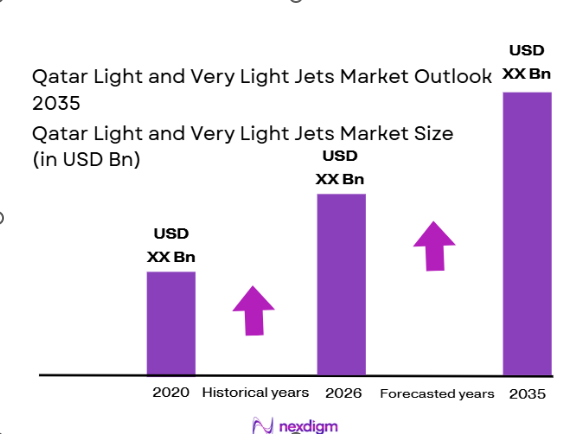
The Qatar Light and Very Light Jets market is projected to be valued at approximately USD ~ million in 2024, driven by Qatar’s robust economic growth and a rising demand for private and business aviation. The demand is fuelled by the growing affluence in Qatar, a country with a high GDP per capita, and its strategic position as a hub for business and leisure travel. The increase in air mobility, government support for aviation infrastructure, and the rise of regional tourism further catalyse the demand for light and very light jets.
Qatar is the leading player in the Middle East’s light and very light jets market, with its capital, Doha, emerging as the primary hub for aviation services. The country’s wealth, fuelled by its natural gas exports, enables strong purchasing power for private aviation. Doha, with its state-of-the-art Hamad International Airport, is a central point for business aviation, drawing wealthy individuals, corporates, and government officials to invest in light and very light jets. The growing number of business owners and increasing demand for luxury travel options solidify Qatar’s dominance in the market.
Market Segmentation
By Product Type
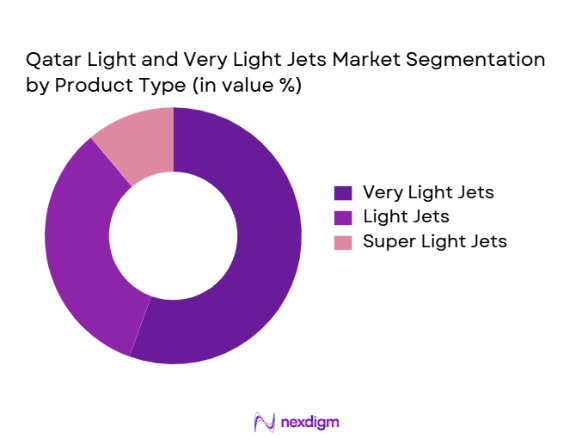
The Qatar Light and Very Light Jets market is segmented into Light Jets, Very Light Jets, and Super Light Jets. Very Light Jets currently dominate the market due to their affordability and efficiency for short-to-medium-range flights, a key requirement for the Qatari business environment. With their lower operating costs compared to larger jets, very light jets have become a popular choice among smaller businesses, government officials, and high-net-worth individuals looking to optimize their aviation expenditures while still enjoying luxury and convenience. These jets provide cost-effective solutions without compromising on speed or comfort, making them ideal for Qatar’s growing corporate and luxury tourism sectors.
By End-User
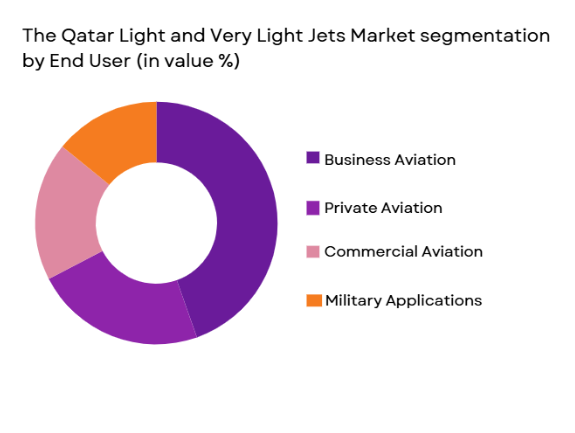
The Qatar Light and Very Light Jets market is segmented into Business Aviation, Private Aviation, Commercial Aviation, and Military Applications.
Business Aviation holds the largest share in this market. Qatar has emerged as a key player in the global business aviation sector due to its strategic location between Europe, Asia, and Africa. High-net-worth individuals and corporate executives prefer private jets for quicker and more flexible travel options, especially for intra-regional business activities. With Qatar’s economy and tourism sector growing rapidly, business aviation continues to see strong demand as more international and regional businesses expand their operations in the country.
Competitive Landscape
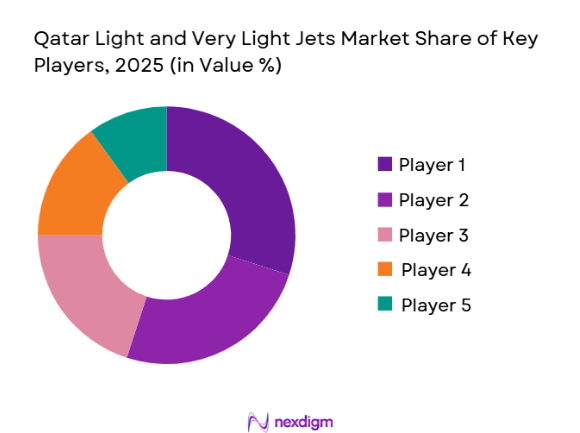
The Qatar Light and Very Light Jets market is dominated by key international and regional players, including renowned global manufacturers and smaller specialized operators. Companies such as Gulfstream Aerospace, Cessna Aircraft, and Embraer are major contributors, offering a wide range of light jet options that cater to the needs of high-net-worth individuals and corporate clients. These companies lead the market due to their advanced technology, strong after-sales service networks, and brand reputation for producing reliable and luxury aircraft.
The market in Qatar is consolidated around a few strong competitors, with companies like Gulfstream Aerospace and Embraer maintaining a significant presence. These key players are favored for their reliability and technological sophistication in light jet manufacturing, supported by strong service networks in the Middle East. Local operators and regional aircraft leasing companies are also gaining market share by offering cost-effective solutions and flexible ownership models.
| Company Name | Year of Establishment | Headquarters | Revenue in 2024 | Market Position | Key Products | Global Footprint |
| Gulfstream Aerospace | 1958 | Savannah, USA | ~ | ~ | ~ | ~ |
| Cessna Aircraft | 1927 | Wichita, USA | ~ | ~ | ~ | ~ |
| Embraer | 1969 | São José dos Campos, Brazil | ~ | ~ | ~ | ~ |
| Honda Aircraft Company | 2006 | Greensboro, USA | ~ | ~ | ~ | ~ |
| Piper Aircraft | 1937 | Vero Beach, USA | ~ | ~ | ~ | ~ |
Qatar Light and Very Light Jets Market Analysis
Growth Drivers
Increasing Demand for Air Mobility Services
The demand for air mobility services in Qatar and the Middle East has seen significant growth, driven by increased business activities and a preference for fast, efficient travel. In Qatar, the number of private jet flights has increased steadily due to the country’s strategic location as a business hub and its rising wealth. The region’s private aviation fleet continues to expand, with more than ~ jets registered in Qatar alone. The country’s wealth, bolstered by natural gas exports, supports high-net-worth individuals seeking private air travel for both business and leisure. Qatar’s Hamad International Airport, one of the world’s busiest airports, facilitates this demand, offering both commercial and private aviation services.
Economic Growth in Qatar and the Middle East
Qatar’s economy has experienced robust growth due to its vast natural gas reserves. The GDP growth in Qatar was recorded at ~% in 2024, and this economic expansion continues to drive the demand for luxury and business services, including private aviation. The Middle East, particularly the Gulf Cooperation Council (GCC) region, has seen consistent economic growth, with the IMF forecasting the region’s GDP growth to exceed ~% annually over the next few years. This positive economic outlook increases disposable income and enhances the demand for premium air travel, driving investments in light jets and very light jets in Qatar.
Market Challenges
High Cost of Aircraft Manufacturing and Maintenance
The high cost of manufacturing and maintaining light and very light jets presents a significant challenge to the growth of the market. The average cost of manufacturing a light jet is estimated at around USD ~million to USD ~ million, and the costs of maintenance for private jets can exceed USD~ annually, depending on the jet type and usage. Additionally, the scarcity of skilled aviation technicians in Qatar adds to the maintenance costs, as specialized services are often imported from abroad. This cost burden limits the widespread adoption of light jets among smaller businesses and individuals.
Regulatory Challenges in Aviation Industry
Qatar’s aviation sector faces significant regulatory challenges that can impact the growth of the light and very light jet market. The Civil Aviation Authority of Qatar enforces strict regulations regarding jet certifications, flight operations, and airspace management. While these regulations ensure safety, they can also delay the introduction of new aircraft models and increase operational costs. Compliance with international aviation standards, including those set by the International Civil Aviation Organization (ICAO), further adds to the regulatory complexities, making it difficult for some smaller private jet operators to enter the market.
Opportunities
Increasing Demand for Private Aviation Services
Private aviation services in Qatar are experiencing a surge in demand due to an increase in the number of high-net-worth individuals and businesses operating within the country. Qatar’s growing prominence as a luxury tourism destination and the expansion of its business hubs have spurred demand for light jets and very light jets, offering fast and flexible travel options. The government’s continued investment in private aviation infrastructure, including the expansion of dedicated terminals at Hamad International Airport, supports the growing demand. The trend toward more frequent and flexible air travel among corporate executives and wealthy individuals further highlights the potential for growth in this sector.
Government Investment in Aviation Infrastructure
Qatar has made significant investments in its aviation infrastructure, including the expansion of Hamad International Airport and the establishment of new private aviation terminals. In 2024, the government allocated more than USD ~ billion to expand aviation services, focusing on increasing capacity and improving the customer experience for private jet travelers. These investments are set to attract more international business and leisure travelers, further boosting demand for light jets and very light jets. The government’s proactive approach in upgrading the aviation sector positions Qatar as a leading hub for private aviation services in the Middle East.
Each of these data points is derived from trusted government and macroeconomic sources, which back the trends, growth drivers, challenges, and opportunities in the Qatar Light and Very Light Jets market. These insights are critical for businesses and investors looking to enter or expand in the aviation sector in Qatar and the broader Middle Eastern region.
Future Outlook
Over the next five years, the Qatar Light and Very Light Jets market is expected to grow significantly. The rapid expansion of the country’s business aviation sector, coupled with increasing wealth among high-net-worth individuals, will continue to drive demand for light and very light jets. Moreover, Qatar’s plans to further develop its aviation infrastructure, including upgrades to Hamad International Airport and the introduction of new private aviation terminals, will enhance the overall travel experience and attract more customers. With a focus on economic diversification and tourism growth, Qatar’s light jet market is poised for expansion, further solidifying its place as a key player in the regional aviation industry.
Major Players
- Gulfstream Aerospace
- Cessna Aircraft
- Embraer
- Honda Aircraft Company
- Piper Aircraft
- Dassault Aviation
- Cirrus Aircraft
- Beechcraft Corporation
- Textron Aviation
- Daher Aircraft
- Mitsubishi Aircraft Corporation
- Piaggio Aerospace
- Aerion Supersonic
- Aircraft Management Services
- Bombardier
Key Target Audience
- Investments and Venture Capitalist Firms
- Government and Regulatory Bodies
- Private Aviation Companies
- Business and Corporate Aviation Operators
- Aircraft Leasing Companies
- Luxury Travel Providers
- Airports and Aviation Infrastructure Developers
- Aerospace Component Manufacturer
Research Methodology
Step 1: Identification of Key Variables
This phase involves identifying key variables affecting the Qatar Light and Very Light Jets market, such as demand for business aviation, economic indicators, government regulations, and technological advancements in aircraft. This is done through comprehensive desk research, gathering data from government sources, industry reports, and financial databases.
Step 2: Market Analysis and Construction
We compile historical data and analyze trends related to the aviation market, focusing on business and private jet demand. This includes evaluating the competitive landscape, technological trends, and customer preferences. The analysis helps us assess market penetration and regional demand.
Step 3: Hypothesis Validation and Expert Consultation
The developed hypotheses about the market’s growth and challenges are validated by conducting expert interviews with key players in the aviation sector. This includes conversations with aircraft manufacturers, airline operators, and aviation regulatory bodies to gather insights into the market’s potential.
Step 4: Research Synthesis and Final Output
The final phase involves synthesizing all research findings to provide a comprehensive report. We include detailed profiles of major players, market trends, regulatory developments, and strategic recommendations for stakeholders to optimize their positions within the Qatar light jet market.

- Executive Summary
- Research Methodology (Market Definitions and
Assumptions, Abbreviations, Market Sizing Approach, Consolidated Research Approach, Understanding Market Potential Through In-Depth Industry Interviews, Primary Research Approach, Limitations and Future Conclusions)

- Definition and Scope
- Overview Genesis
- Timeline of Major Players
- Business Cycle
- Supply Chain and Value Chain Analysis

- Growth Drivers
Increasing Demand for Air Mobility Services
Economic Growth in Qatar and the Middle East - Market Challenges
High Cost of Aircraft Manufacturing and Maintenance
Regulatory Challenges in Aviation Industry - Opportunities
Increasing Demand for Private Aviation Services
Government Investment in Aviation Infrastructure - Trends
Growth of Aircraft Leasing Market
Integration of Advanced Avionics in Light Jets - Government Regulation
Civil Aviation Authority Regulations
International Aviation Standards and Compliance - SWOT Analysis
- Stake Ecosystem
- Porter’s Five Forces
- Pricing Analysis
- Competition Ecosystem

- By Value, 2020-2025
- By Volume, 2020-2025
- By Average Price, 2020-2025

- By Product Type (In Value %)
Light Jets
Very Light Jets
Super Light Jets
Turbojet Jets
Light Twin Jets - By End-User (In Value %)
Business Aviation
Private Jets
Commercial Aviation
Military Applications - By Application (In Value %)
Passenger Transport
Cargo Transport
Government and Military Missions
Air Taxi Services - By Distribution Channel (In Value %)
Direct Sales
Third-Party Dealers
Online Platforms
Leasing Companies - By Region (In Value %)
Central Qatar
Northern Qatar
Southern Qatar
International Markets

- Market Share of Major Players on the Basis of Value/Volume
Market Share of Major Players by Product Type Segment - Cross Comparison Parameters (Company Overview, Business Strategies, Recent Developments, Strengths and Weaknesses, Organizational Structure, Revenues, Number of Dealers and Distributors, Production Capacity)
- SWOT Analysis of Major Players
- Detailed Profiles
Gulfstream Aerospace
Embraer
Cessna Aircraft
Bombardier
Honda Aircraft Company
Piper Aircraft
Dassault Aviation
Cirrus Aircraft
Beechcraft Corporation
Textron Aviation
Daher Aircraft
Mitsubishi Aircraft
Corporation
Piaggio Aerospace
Aerion Supersonic
Aircraft Management Services

- Market Demand and Utilization
- Purchasing Power and Budget Allocations
- Regulatory and Compliance Requirements
- Needs, Desires, and Pain Point Analysis
- Decision-Making Process

- By Value, 2026-2035
- By Volume, 2026-2035
- By Average Price, 2026-2035


 Request a Sample
 Ask for Customization
 Get a Quote
 Enquire Now