

 Download PDF
 Download PDF
Market Overview
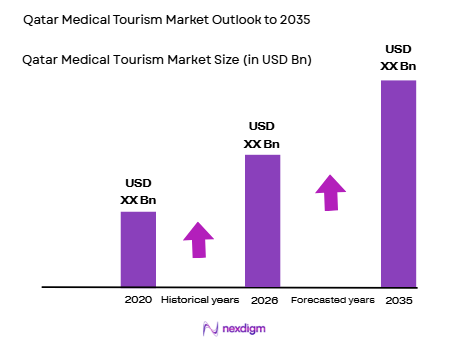
Based on a recent historical assessment, the Qatar Medical Tourism Market is valued at approximately USD ~ billion. The market is driven by increasing demand for high-quality healthcare services, particularly in specialized fields such as cardiology, oncology, orthopedics, and fertility treatments. The growing medical tourism sector in Qatar is also supported by world-class healthcare facilities, the government’s initiatives to promote Qatar as a leading healthcare destination, and the availability of advanced medical technologies that attract international patients seeking specialized treatments.
Doha is the dominant city for medical tourism in Qatar, hosting the country’s major hospitals, specialized treatment centers, and medical facilities. The city’s reputation for offering high-quality healthcare services, combined with its advanced infrastructure and proximity to global markets, makes it a preferred destination for medical tourists. Qatar’s government plays a key role in promoting the country’s medical tourism industry through initiatives that enhance healthcare services and attract international patients. The increasing number of private hospitals and partnerships with global healthcare providers further strengthen Doha’s position as the central hub for medical tourism.
Market Segmentation
By Treatment Type
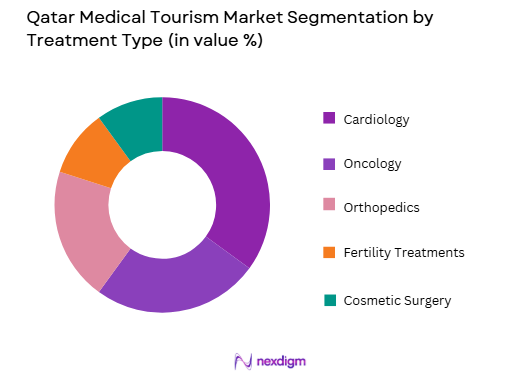
Qatar Medical Tourism market is segmented by treatment type into Cardiology, Oncology, Orthopedics, Fertility Treatments, and Cosmetic Surgery. Recently, Cardiology has a dominant market share due to the growing prevalence of heart diseases, particularly among aging populations, and the advanced cardiac care facilities available in Qatar. The country’s healthcare institutions provide world-class cardiology services, including cutting-edge diagnostic tools, minimally invasive surgeries, and highly specialized treatments. Qatar’s hospitals, such as Hamad Medical Corporation, have become regional leaders in offering comprehensive cardiac care, which includes high-risk surgeries, rehabilitation programs, and heart disease prevention. The country’s strong medical infrastructure, coupled with the expertise of local and international cardiologists, has led to increased patient demand for cardiology services, both from local and international patients. With the government’s continuous efforts to promote Qatar as a medical tourism hub, cardiology remains a key pillar in the country’s medical tourism sector.
By Origin of Patients
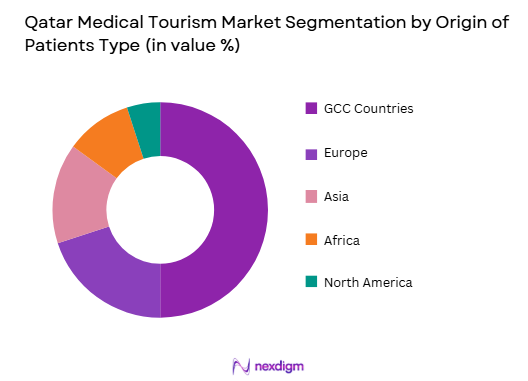
Qatar Medical Tourism market is segmented by the origin of patients into GCC Countries, Europe, Asia, Africa, and North America. Recently, GCC Countries have a dominant market share due to the close geographical proximity and the commonality of medical treatment needs, particularly in specialized fields like fertility treatments and cardiovascular care. Patients from the GCC region, including Saudi Arabia, the UAE, and Kuwait, frequently visit Qatar for advanced medical procedures, attracted by the high standards of healthcare services available in the country. Additionally, the availability of treatment packages, the ease of access, and the strong relationships between GCC healthcare providers have made Qatar a preferred destination for residents of these neighboring countries. With healthcare systems in some GCC countries still developing in certain specialized areas, Qatar’s advanced medical facilities offer high-quality alternatives that make the country a top choice for medical tourists from the region.
Competitive Landscape
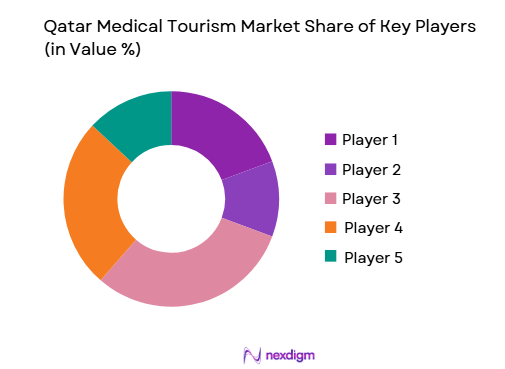
The Qatar Medical Tourism Market is competitive, with both local and international healthcare providers establishing a strong presence in the country. Key players in the market include both government-backed healthcare organizations and private hospitals that offer specialized treatments catering to international patients. The competitive environment is also shaped by Qatar’s ongoing investments in healthcare infrastructure, which enhances the country’s ability to deliver high-quality medical services to medical tourists. As the market grows, private hospitals are increasingly collaborating with global healthcare providers to bring cutting-edge treatment options and attract medical tourists. These collaborations and continuous innovations in treatment options make Qatar an appealing destination for medical tourism.
| Company Name | Establishment Year | Headquarters | Technology Focus | Market Reach | Key Products | Revenue | Market-Specific Parameter |
| Hamad Medical Corporation | 1979 | Doha | ~ | ~ | ~ | ~ | ~ |
| Al Ahli Hospital | 2004 | Doha | ~ | ~ | ~ | ~ | ~ |
| Sidra Medicine | 2018 | Doha | ~ | ~ | ~ | ~ | ~ |
| Aster DM Healthcare | 1987 | Dubai | ~ | ~ | ~ | ~ | ~ |
| American Hospital Doha | 2015 | Doha | ~ | ~ | ~ | ~ | ~ |
Qatar Medical Tourism Market Analysis
Growth Drivers
Government Initiatives to Promote Medical Tourism
Government Initiatives to Promote Medical Tourism play a critical role in driving the growth of the Qatar Medical Tourism Market. Qatar has placed significant emphasis on building a world-class healthcare infrastructure to attract international patients, ensuring that the country is recognized as a leading medical tourism hub. The government’s support includes strategic investments in healthcare facilities, expanding hospitals, and providing subsidies for medical treatment. The introduction of medical tourism packages, including travel, accommodation, and treatment, has made it easier for international patients to seek medical services in Qatar. Additionally, Qatar’s commitment to implementing international healthcare standards and accreditation further enhances its appeal as a medical destination. The government is also facilitating regulatory reforms to streamline visa and treatment processes, improving accessibility for medical tourists. These efforts have positioned Qatar as a competitive player in the medical tourism market, attracting patients from across the GCC and beyond.
High-Quality Healthcare Services
High-Quality Healthcare Services are a major growth driver for the Qatar Medical Tourism Market, as patients from various parts of the world seek specialized medical treatments unavailable in their home countries. Qatar is home to state-of-the-art medical facilities equipped with the latest technologies, offering services across multiple specialties, including cardiology, oncology, and fertility treatments. The presence of highly skilled medical professionals, including internationally trained doctors and surgeons, further enhances Qatar’s ability to provide exceptional medical care. Patients seeking advanced surgeries, diagnostic tests, and high-risk treatments are attracted to Qatar’s healthcare facilities for their ability to deliver successful outcomes. Qatar’s reputation for offering high standards of care, combined with the advanced medical infrastructure, provides a compelling reason for international patients to seek treatment in the country, contributing to the market’s rapid growth.
Market Challenges
High Treatment Costs
High Treatment Costs are a major challenge for the Qatar Medical Tourism Market, as medical procedures in Qatar are often expensive compared to other regional destinations. The costs associated with advanced medical services, including specialized surgeries, diagnostic tests, and fertility treatments, can be a barrier for some international patients, particularly from emerging markets in Asia and Africa. While Qatar offers high-quality healthcare, the high costs associated with medical procedures can make it less affordable for medical tourists who do not have the financial means to pay for advanced care. Moreover, the cost of accommodation, travel, and other expenses related to medical tourism can further increase the overall financial burden on patients. Healthcare providers must find ways to offer competitive pricing while maintaining high standards of care to ensure that Qatar remains an attractive destination for medical tourists.
Dependence on International Travel
Dependence on International Travel presents another challenge to the Qatar Medical Tourism Market. Patients from countries in the GCC region, Asia, and Europe rely on air travel to access healthcare services in Qatar, which makes the market susceptible to fluctuations in international travel patterns. Any disruptions in international flights, such as those caused by global crises or political instability, can negatively impact the number of medical tourists visiting Qatar. Additionally, long travel distances, visa restrictions, and limited flight availability can deter potential patients from traveling to Qatar for medical treatment. While Qatar is strategically located to serve as a medical hub for neighboring countries, the reliance on international travel introduces uncertainty and risks to the medical tourism sector. To address this challenge, Qatar must continue to enhance its accessibility by strengthening partnerships with international airlines, offering travel incentives, and ensuring smooth visa processes.
Opportunities
Expansion of Telemedicine and Remote Consultations
Expansion of Telemedicine and Remote Consultations offers significant opportunities for the Qatar Medical Tourism Market. The increasing use of telemedicine allows patients to consult with healthcare providers in Qatar remotely, reducing the need for in-person visits for initial consultations, follow-up appointments, or routine check-ups. This service expansion is particularly valuable for international patients who may have concerns about traveling to Qatar for minor procedures or consultations. Remote consultations make it easier for patients to receive medical advice before deciding to travel to Qatar for treatment. Additionally, telemedicine can facilitate the continued monitoring of patients after their treatment, reducing the need for frequent travel. The integration of telemedicine with Qatar’s medical tourism infrastructure enhances the overall patient experience, making it more convenient and accessible, and contributing to the market’s growth.
Development of Wellness and Preventive Healthcare Tourism
Development of Wellness and Preventive Healthcare Tourism represents an emerging opportunity in the Qatar Medical Tourism Market. Beyond traditional medical treatments, Qatar has the potential to become a hub for wellness tourism, offering services such as detox programs, rejuvenation therapies, and preventive health check-ups. These services cater to individuals seeking proactive healthcare solutions and lifestyle improvements. Wellness and preventive care have become increasingly popular among international travelers, particularly from high-income countries, who are looking for high-quality, customized health services. Qatar’s ability to provide luxury healthcare experiences, including world-class spas, wellness resorts, and personalized health programs, can attract affluent tourists seeking holistic health solutions. The development of wellness tourism, in combination with medical treatments, provides a unique value proposition that sets Qatar apart from other medical tourism destinations, boosting its position in the global healthcare market.
Future Outlook
The Qatar Medical Tourism Market is poised for substantial growth, driven by government initiatives, expanding healthcare infrastructure, and increasing international demand for high-quality medical services. Technological advancements, the growing popularity of wellness tourism, and expanding telemedicine services will contribute to the market’s development. With continued investment in healthcare and the promotion of Qatar as a premier medical tourism destination, the country is expected to attract an increasing number of international patients seeking specialized treatments.
Major Players
- Hamad Medical Corporation
- Al Ahli Hospital
- Sidra Medicine
- Aster DM Healthcare
- American Hospital Doha
- Al Emadi Hospital
- Qatar Medical Center
- Life Diagnostics
- Medlab
- Healthcare Corporation
- Sidra Women’s Hospital
- Universal Diagnostic Labs
- Doha Clinic Hospital
- Prime Healthcare Group
- Qatar Healthcare Group
Key Target Audience
- Government and regulatory bodies
- Hospital operators
- Healthcare infrastructure developers
- Medical device manufacturers
- Pharmaceutical companies
- Insurance companies
- Investments and venture capitalist firms
- Medical tourism agencies
Research Methodology
Step 1: Identification of Key Variables
Key variables, including treatment types, medical specialties, patient demographics, and government healthcare policies, were identified to assess the market’s drivers and challenges.
Step 2: Market Analysis and Construction
Market analysis was conducted by examining medical tourism trends, the availability of medical services, and patient preferences in Qatar to understand the competitive landscape.
Step 3: Hypothesis Validation and Expert Consultation
Market assumptions were validated through expert consultations with healthcare providers, medical tourism agencies, and policy makers to confirm emerging trends.
Step 4: Research Synthesis and Final Output
The data collected from primary and secondary sources was synthesized to create a comprehensive market report, highlighting growth opportunities, challenges, and forecasts for the Qatar Medical Tourism Market.

- Executive Summary
- Research Methodology (Definitions, Scope, Industry Assumptions, Market Sizing Approach, Primary & Secondary Research Framework, Data Collection & Verification Protocol, Analytic Models & Forecast Methodology, Limitations & Research Validity Checks)

- Market Definition and Scope
- Value Chain & Stakeholder Ecosystem
- Regulatory / Certification Landscape
- Sector Dynamics Affecting Demand
- Strategic Initiatives & Infrastructure Growth

- Growth Drivers
Government initiatives supporting medical tourism infrastructure development
Increased demand for high-quality healthcare services from neighboring regions
Rising medical tourism spending due to availability of affordable, world-class treatment - Market Challenges
Competition from neighboring countries with established medical tourism industries
Limited awareness of Qatar’s medical tourism offerings outside the region
High dependence on international patients and the impact of global economic changes - Market Opportunities
Development of specialized medical tourism zones for high-end treatments
Collaborations with international healthcare institutions to enhance credibility
Increased demand for cosmetic surgery and elective treatments from the Middle East and beyond - Trends
Growth in inbound medical tourism with a focus on wellness and aesthetic services
Rising use of telemedicine and virtual consultations for medical tourism - Government Regulations
Regulatory guidelines for medical tourism in Qatar
Licensing and certification of medical tourism facilitators and agencies
Regulations for cross-border patient care and legal frameworks for treatment - SWOT Analysis
- Porter’s Five Forces

- By Market Value, 2020-2025
- By Installed Units, 2020-2025
- By Average System Price, 2020-2025
- By System Complexity Tier, 2020-2025

- By System Type (In Value%)
Medical Services for International Patients
Healthcare Services for Domestic Patients
Cosmetic Surgery Services
Chronic Disease Treatment Packages
Rehabilitation and Post-surgery Care - By Platform Type (In Value%)
Government-Run Medical Tourism Platforms
Private Hospital and Clinic-based Platforms
Tourism Agency and Health Facilitator Platforms
Online Medical Tourism Portals
Medical Tourism Services with Travel Package Integration - By Fitment Type (In Value%)
Standalone Medical Tourism Packages
Integrated Health and Travel Solutions
Tailored Cosmetic Surgery Packages
Rehabilitation and Recovery Focused Packages - By End User Segment (In Value%)
International Patients Seeking Medical Care
Tourists Combining Healthcare and Leisure
Domestic Patients Seeking Specialized Treatments
Medical Tourism Agencies and Facilitators

- Market Share Analysis
- Cross Comparison Parameters (Service Quality, Cost Competitiveness, International Patient Services, Specialized Treatment Availability, Infrastructure Investment, Government Support for Medical Tourism)
- SWOT Analysis of Key Competitors
- Pricing & Procurement Analysis
- Key Players
Hamad Medical Corporation
Doha Clinic
Al Emadi Hospital
Aspetar
Qatar Red Crescent Society
Medcare Hospital
Al Ahli Hospital
International Medical Center
Rashid Hospital
Al Gharafa Hospital
Al Khor Hospital
Sidra Medicine
King Khalid University Hospital
Aster DM Healthcare
Healthigo

- Patients from GCC countries seeking specialized treatments
- International patients attracted by advanced medical services and cost-effectiveness
- Medical tourism facilitators connecting patients with healthcare providers
- Government institutions driving the healthcare service offerings for tourists

- Forecast Market Value, 2026-2035
- Forecast Installed Units, 2026-2035
- Price Forecast by System Tier, 2026-2035
- Future Demand by Platform, 2026-2035


 Request a Sample
 Ask for Customization
 Get a Quote
 Enquire Now