

 Download PDF
Market Overview
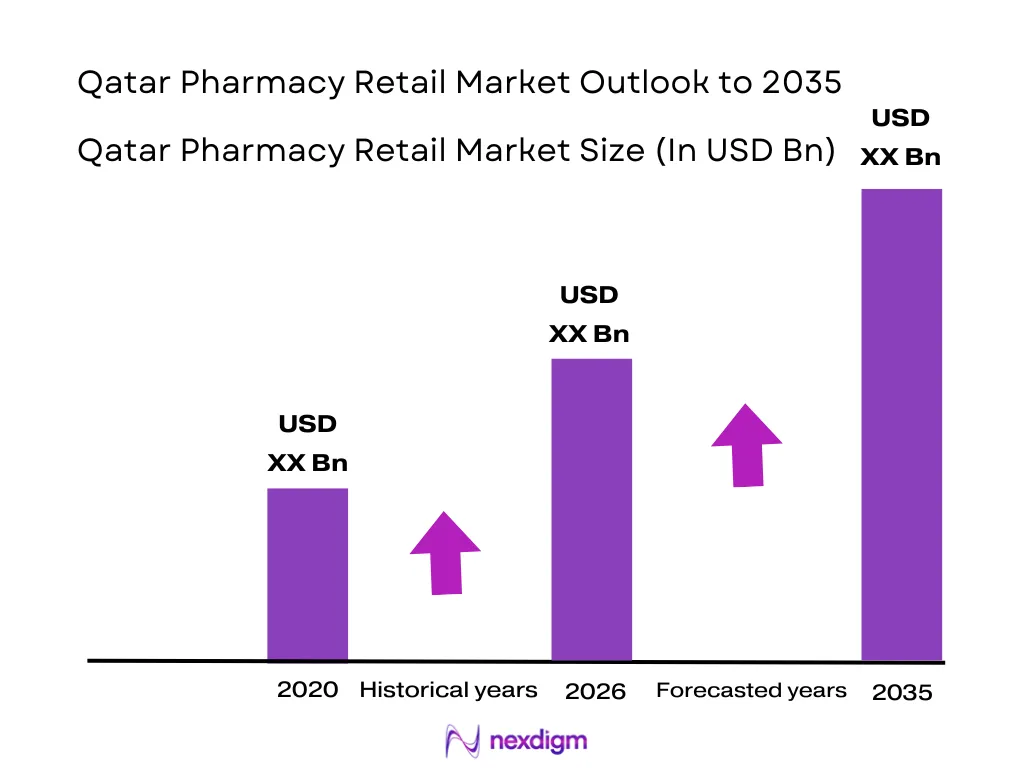
The Qatar pharmacy retail market is valued at approximately ~, supported by rising pharmaceutical consumption and increasing outpatient care demand, with recorded revenues of nearly ~ in the previous period. Growth is driven by high per capita healthcare expenditure exceeding ~, strong insurance-backed prescription demand, and expanding OTC consumption. Regulatory drug pricing controls by the Ministry of Public Health and reliance on imports, which account for over ~ registered pharmaceutical products, further shape the market structure.
Doha dominates the Qatar pharmacy retail market due to its dense population, concentration of hospitals, and presence of premium pharmacy chains supported by advanced healthcare infrastructure. Areas such as Al Rayyan and Al Wakrah are also expanding rapidly due to urbanization and residential developments. The dominance of these cities is driven by higher healthcare accessibility, stronger insurance coverage utilization, and proximity to major healthcare institutions, enabling higher prescription volumes and increased consumer spending on wellness products.
Market Segmentation
By Product Category
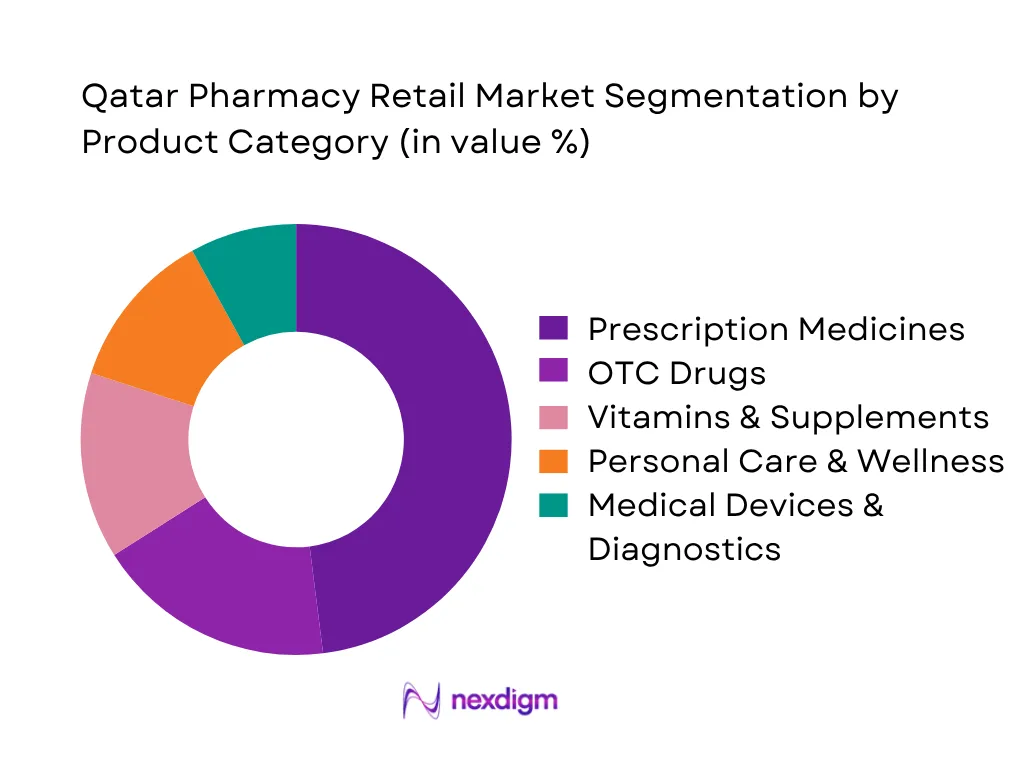
The Qatar pharmacy retail market is segmented by product category into prescription medicines, over the counter (OTC) drugs, vitamins & dietary supplements, personal care & wellness products, and medical devices & diagnostics. Prescription medicines dominate the market with the highest share due to the increasing burden of chronic diseases such as diabetes and cardiovascular conditions in Qatar. The strong insurance-backed reimbursement system ensures affordability and accessibility of prescription drugs, encouraging higher consumption volumes. Additionally, physician-driven prescription patterns and growing outpatient visits significantly contribute to this segment’s dominance. The centralized procurement and strict regulatory control over drug pricing also reinforce the steady demand for prescription medicines, making it the largest revenue contributor within the pharmacy retail landscape.
By Pharmacy Type
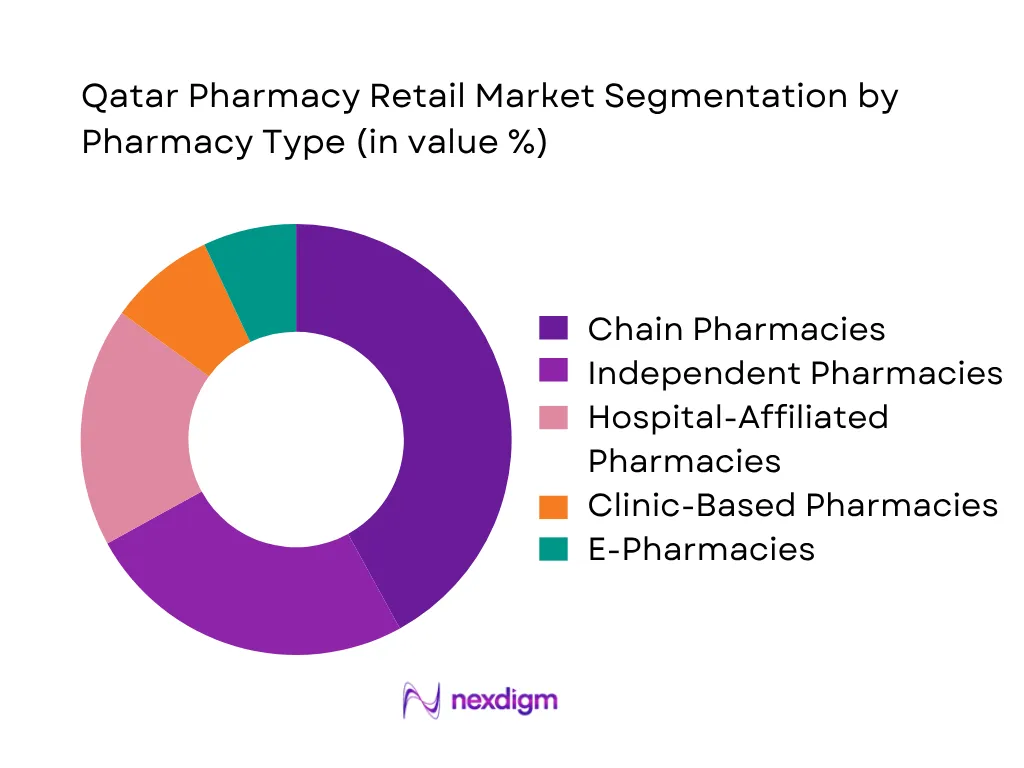
The market is segmented by pharmacy type into chain pharmacies, independent pharmacies, hospital-affiliated pharmacies, clinic-based pharmacies, and e-pharmacies. Chain pharmacies hold a dominant position in Qatar due to their strong brand presence, standardized service quality, and extensive network coverage across urban centers. These pharmacies benefit from economies of scale, enabling them to offer competitive pricing, wider product assortments, and integrated digital platforms for customer engagement. Additionally, partnerships with insurance providers and healthcare institutions allow chain pharmacies to capture a larger share of prescription dispensing. Their ability to invest in advanced inventory management systems and last-mile delivery further strengthens their dominance over independent and smaller pharmacy formats.
Competitive Landscape
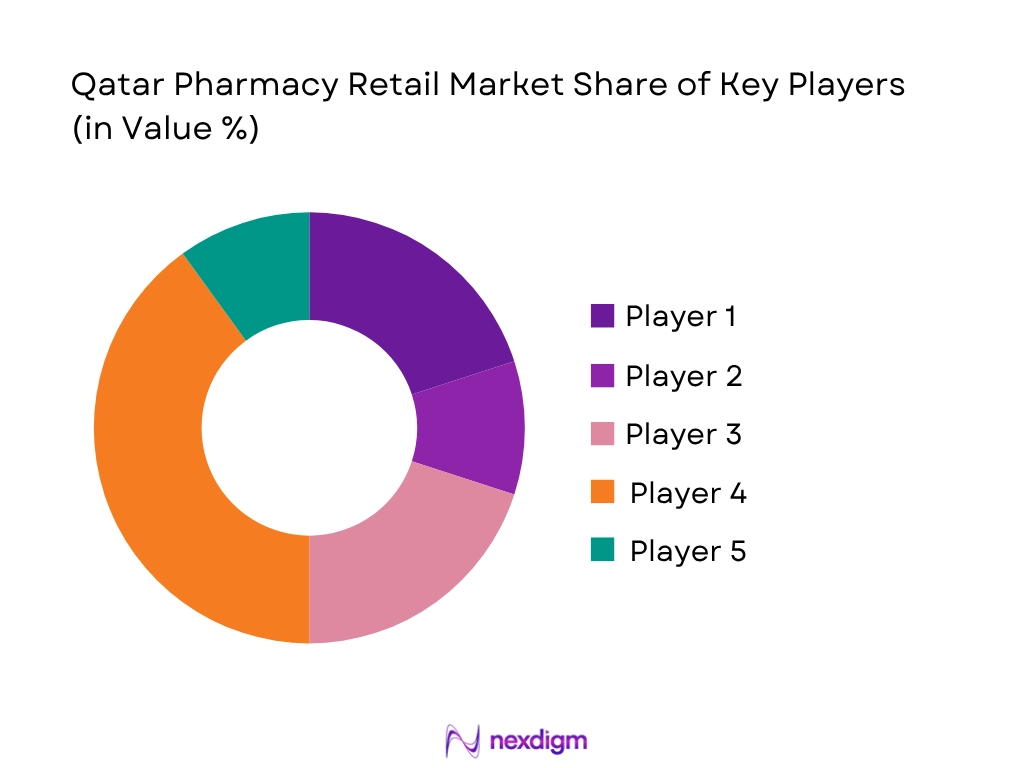
The Qatar pharmacy retail market is moderately consolidated, with a mix of regional chains and international pharmacy brands operating across major urban centers. Leading players leverage strong distribution networks, insurance partnerships, and premium product portfolios to maintain competitive advantage. The presence of established pharmacy chains alongside independent outlets creates a competitive yet structured ecosystem, where service quality and accessibility play a crucial role in market positioning.
| Company | Establishment Year | Headquarters | No. of Outlets | Avg SKU Count | Insurance Tie-ups | Digital Presence | Avg Revenue per Store | Delivery Capability |
| Kulud Pharmacy | 1969 | Doha | ~ | ~ | ~ | ~ | ~ | ~ |
| Care n Cure | 2014 | Doha | ~ | ~ | ~ | ~ | ~ | ~ |
| Aster Pharmacy | 2010 | Dubai | ~ | ~ | ~ | ~ | ~ | ~ |
| Wellcare Pharmacy | 2005 | Doha | ~ | ~ | ~ | ~ | ~ | ~ |
| Boots Pharmacy Qatar | 2008 | UK | ~ | ~ | ~ | ~ | ~ | ~ |
Qatar Pharmacy Retail Market Dynamics
Growth Drivers
Rising Burden of Lifestyle Diseases
Qatar’s pharmacy retail demand is strongly driven by the increasing prevalence of lifestyle-related diseases such as diabetes, cardiovascular disorders, and obesity. Qatar records over 17.0 adults per 100 diagnosed with diabetes, while obesity affects more than 35.0 adults per 100, reflecting a high dependency on chronic medication. Qatar’s life expectancy exceeds 80 years, increasing long-term medication needs. Additionally, outpatient visits in Qatar exceed 10 million annually, directly driving prescription volumes across pharmacies. These factors collectively sustain continuous pharmaceutical demand, particularly for long-term therapies, boosting pharmacy retail throughput and repeat purchase cycles.
Expansion of Mandatory Health Insurance
The expansion of mandatory health insurance under Qatar’s national healthcare reforms is significantly increasing pharmacy retail utilization. The Seha insurance scheme is being implemented across the population of over 2.7 million residents, ensuring broader access to reimbursed medications. Government healthcare expenditure exceeded QAR 25 billion annually, supporting pharmaceutical access and insurance coverage expansion. Additionally, physician consultations per capita remain among the highest globally, indicating strong prescription generation. The integration of insurance with pharmacy networks increases prescription redemption rates and reduces out-of-pocket expenditure, encouraging higher medication adherence and retail pharmacy footfall.
Market Challenges
Stringent Pricing Regulations by MoPH
Pharmacy retail operations in Qatar are heavily influenced by strict drug pricing regulations enforced by the Ministry of Public Health. The government maintains a centralized drug pricing system covering more than 12,000 registered pharmaceutical products, limiting pricing flexibility for retailers. Qatar’s controlled inflation environment, with consumer price index stability around 100–105 index points, reflects tight regulatory oversight across essential goods including medicines. While this ensures affordability for consumers, it compresses pharmacy margins and restricts competitive pricing strategies. Furthermore, mandatory compliance requirements and licensing regulations increase operational costs, creating barriers for independent pharmacies and limiting profitability despite high demand for pharmaceutical products.
Dependence on Imported Pharmaceuticals
Qatar’s pharmacy retail market faces structural challenges due to its heavy reliance on imported pharmaceuticals. Pharmaceutical imports into Qatar exceed USD 1.5 billion annually, reflecting minimal domestic manufacturing capacity. Additionally, Qatar imports over 90 percent of its medical and pharmaceutical products, making supply chains vulnerable to global disruptions. Port throughput data indicates continued growth in medical imports, increasing dependency on international suppliers. This reliance leads to risks such as supply delays, currency fluctuations, and regulatory bottlenecks, directly impacting pharmacy inventory management and product availability across retail outlets.
Opportunities
Growth of E-Pharmacy & Telehealth Integration
Digital healthcare adoption in Qatar is creating strong opportunities for e-pharmacy and telehealth integration. Qatar has internet penetration exceeding 99 users per 100 people, enabling seamless adoption of online pharmacy platforms. Digital health services are integrated across national healthcare systems, supporting e-prescriptions and remote consultations. Additionally, mobile cellular subscriptions exceed 4.5 million active connections, facilitating app-based pharmaceutical ordering. These factors enable pharmacies to expand beyond physical stores, improve last-mile delivery efficiency, and enhance customer convenience, creating new revenue streams through digital channels and integrated healthcare ecosystems.
Expansion of Private Label Products
The increasing demand for cost-effective alternatives is driving opportunities for private label pharmaceutical and wellness products in Qatar. Qatar’s per capita income exceeds USD 80,000, yet healthcare cost awareness is rising among consumers, particularly expatriates forming over 2.3 million residents. Strong retail consumption trends in personal care and health products support private label penetration. Pharmacies can leverage this by introducing store-branded generics and wellness products with higher margins and competitive pricing. This strategy enhances brand loyalty, improves profitability, and reduces dependency on imported branded pharmaceuticals while catering to price-sensitive consumer segments.
Future Outlook
Over the forecast period, the Qatar pharmacy retail market is expected to witness steady expansion driven by healthcare sector reforms and increasing consumer awareness. The rollout of mandatory health insurance will significantly enhance access to pharmaceutical products, boosting prescription volumes across the country. Additionally, the rising prevalence of lifestyle-related diseases will continue to drive demand for chronic care medications and wellness products. Digital transformation will play a pivotal role, with e-pharmacies and telemedicine integration gaining traction. Pharmacy chains are expected to expand their footprint in semi-urban regions while investing in omnichannel retail models. Furthermore, increasing demand for premium imported pharmaceuticals and preventive healthcare solutions will shape product portfolios and revenue streams in the coming years.
Major Players
- Kulud Pharmacy
- Wellcare Pharmacy
- Care n Cure Pharmacy
- Al Jazeera Pharmacy
- Pharmacy & More
- Aster Pharmacy Qatar
- Boots Pharmacy Qatar
- Al-Dawaa Pharmacy
- Supercare Pharmacy
- Apollo Pharmacy Qatar
- Al Danah Pharmacy
- Medicare Pharmacy Group
- Al Mashaf Pharmacy
- Gulf Care Pharmacy
- Family Pharmacy Qatar
Key Target Audience
- Pharmaceutical Manufacturers & Distributors
- Retail Pharmacy Chains & Independent Pharmacy Owners
- Healthcare Investors and Private Equity Firms
- Investments and Venture Capitalist Firms
- Government and Regulatory Bodies
- Health Insurance Providers & TPAs
- Hospital & Clinic Networks
- E-Pharmacy and HealthTech Platform Providers
Research Methodology
Step 1: Identification of Key Variables
The research begins with mapping the Qatar pharmacy retail ecosystem, identifying stakeholders such as distributors, pharmacies, regulators, and insurers. Secondary research sources including healthcare databases and government publications are analyzed to define key variables such as prescription volume, OTC sales, and pharmacy density.
Step 2: Market Analysis and Construction
Historical data is compiled to assess revenue generation patterns, pharmacy penetration rates, and consumer purchasing behavior. Market sizing is conducted using a bottom-up approach, combining pharmacy-level revenues and pharmaceutical sales data to construct accurate market estimates.
Step 3: Hypothesis Validation and Expert Consultation
Primary interviews are conducted with pharmacists, distributors, and healthcare professionals to validate assumptions. These consultations provide insights into pricing dynamics, insurance reimbursements, and operational challenges within the pharmacy retail sector.
Step 4: Research Synthesis and Final Output
The final phase integrates quantitative and qualitative findings to develop a comprehensive market outlook. Data triangulation ensures accuracy, while insights from industry participants refine segmentation, competitive analysis, and future projections.

- Executive Summary
- Research Methodology (Market Definitions and Assumptions, Abbreviations, Market Sizing Approach (Bottom-Up Revenue Mapping, Prescription Volume Mapping), Demand-Side & Supply-Side Triangulation, Primary Interviews with Pharmacists & Distributors, Regulatory Mapping Framework (MoPH Qatar), Data Validation Models, Limitations and Future Assumptions)

- Definition and Scope
- Evolution of Pharmacy Retail Ecosystem in Qatar
- Healthcare Infrastructure Linkages with Pharmacy Retail
- Business Cycle and Demand Seasonality
- Supply Chain & Pharmaceutical Distribution Value Chain
- Role of Government & Healthcare Policies
- Insurance Penetration and Reimbursement Landscape

- Growth Drivers
Rising Burden of Lifestyle Diseases
Expansion of Mandatory Health Insurance
Increasing OTC Self-Medication Trends
Growth in Wellness & Preventive Healthcare - Market Challenges
Stringent Pricing Regulations by MoPH
Dependence on Imported Pharmaceuticals
Margin Pressures on Retail Pharmacies
Licensing and Workforce Constraints - Opportunities
Growth of E-Pharmacy & Telehealth Integration
Expansion of Private Label Products
Specialized Chronic Care Pharmacy Models
Home Healthcare & Remote Dispensing - Trends
Digital Transformation of Pharmacy Retail
Shift Toward Preventive Healthcare Products
Increasing Demand for Premium Imported Brands
Personalized Medication & Patient Counseling - Regulatory Landscape
- SWOT Analysis
- Stakeholder Ecosystem
- Porter’s Five Forces
- Competitive Landscape Structure

- By Value, 2020–2025
- By Volume, 2020–2025
- By Average Ticket Size, 2020–2025
- By Prescription vs OTC Contribution, 2020–2025

- By Product Category (in Value %)
Prescription Medicines
Over-the-Counter (OTC) Drugs
Vitamins & Dietary Supplements
Personal Care & Wellness Products
Medical Devices & Diagnostics - By Pharmacy Type (in Value %)
Chain Pharmacies
Independent Pharmacies
Hospital-Affiliated Pharmacies
Clinic-Based Pharmacies
E-Pharmacies / Online Pharmacies - By Distribution Channel (in Value %)
Offline Retail Stores
Online Platforms
Telemedicine Integrated Dispensing
Quick Commerce / Last-Mile Delivery - By Therapeutic Category (in Value %)
Cardiovascular & Diabetes Care
Respiratory & Allergy Treatments
Anti-Infectives & Antibiotics
Gastrointestinal & Pain Management
Dermatology & Cosmeceuticals - By Customer Demographics (in Value %)
Qatari Nationals
Expatriate Population
Corporate/Insured Patients
Elderly Population
Pediatric Segment - By Location Type (in Value %)
Urban Centers
Semi-Urban Centers
Hospital Zones & Medical Clusters
Retail Malls & Commercial Centers

- Market Share Analysis
- Cross Comparison Parameters (Revenue per Outlet, SKU Count per Store, Prescription Fulfillment Rate, OTC Conversion Rate, Average Ticket Size, Insurance Claim Processing Time, E-Commerce Contribution %, Store Expansion Rate)
- SWOT Analysis of Key Players
- Pricing Benchmarking
- Company Profiles
Kulud Pharmacy
Wellcare Pharmacy
Care n Cure Pharmacy
Al Jazeera Pharmacy
Pharmacy & More
Aster Pharmacy Qatar
Boots Pharmacy Qatar
Al-Dawaa Pharmacy
Supercare Pharmacy Qatar
Apollo Pharmacy Qatar
Al Danah Pharmacy
Medicare Pharmacy Group Qatar
Al Mashaf Pharmacy
Gulf Care Pharmacy
Family Pharmacy Qatar

- Demand Patterns and Consumption Behavior
- Insurance vs Out-of-Pocket Spending Mix
- Customer Journey Mapping
- Pain Points
- Brand Switching Behavior

- By Value, 2026–2035
- By Volume, 2026–2035
- By Average Ticket Size, 2026–2035
- By Prescription vs OTC Contribution, 2026–2035


 Request a Sample
 Ask for Customization
 Get a Quote
 Enquire Now