

 Download PDF
 Download PDF
Market Overview
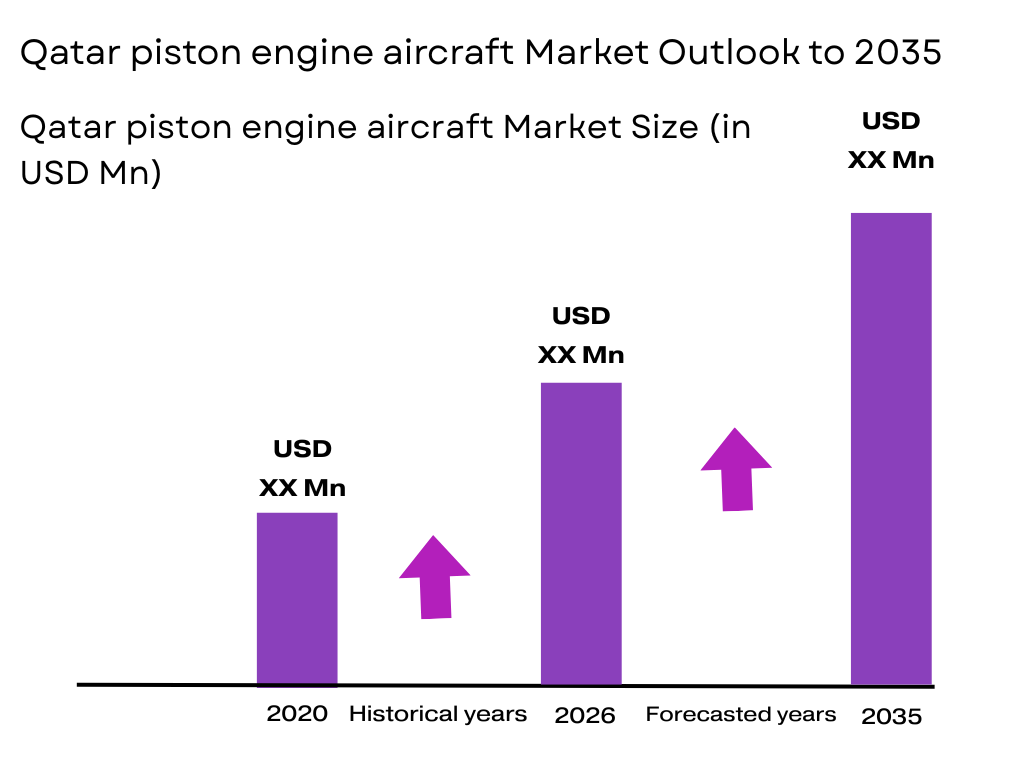
The Qatar piston engine aircraft market is valued at USD ~ million, based on a recent historical assessment. The market growth is primarily driven by the expansion of aviation infrastructure in the region and a growing interest in private and recreational flying. The demand for small, cost-effective piston engine aircraft, particularly for pilot training, leisure, and regional air transportation, has increased due to economic development and a rising number of aviation enthusiasts in Qatar. The market is also benefiting from government initiatives to support the aviation sector under Qatar’s Vision 2030 plan. Qatar is the dominant country in the Gulf Cooperation Council (GCC) region when it comes to piston engine aircraft, driven by its expanding aviation industry and growing number of flight schools, air clubs, and private pilots. Doha, the capital of Qatar, leads the market, given its status as a financial and business hub. Additionally, the government’s investment in aviation infrastructure, as part of its broader economic diversification strategy under Vision 2030, has made Qatar an attractive destination for both aviation training and recreational flying, leading to increased demand for piston engine aircraft.
Market Segmentation
By Engine Type
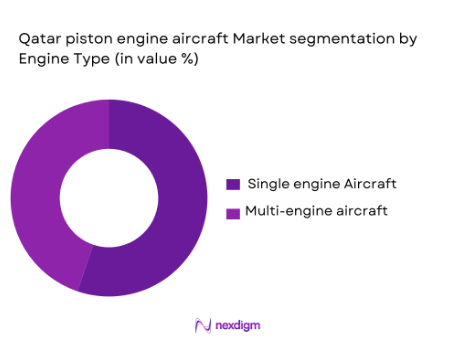
The Qatar piston engine aircraft market is segmented by engine type into single-engine and multi-engine aircraft. Single-engine aircraft dominate the market due to their affordability, ease of maintenance, and suitability for pilot training and recreational flying. These aircraft are commonly used in flight schools and by private owners, as they offer lower operating costs compared to multi-engine alternatives. Their ability to serve both as training tools and personal transport options has made them a popular choice for aspiring pilots in Qatar, which continues to foster a growing aviation community.
By Aircraft Type
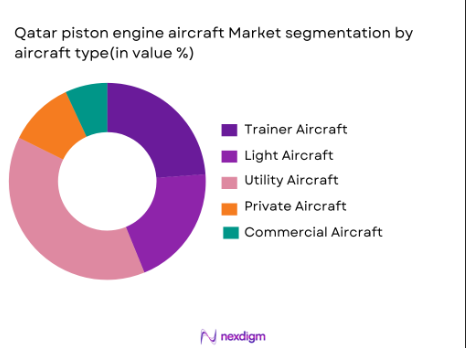
The market is also segmented by aircraft type into light aircraft, trainer aircraft, utility aircraft, private aircraft, and commercial aircraft. Trainer aircraft dominate the market due to Qatar’s increasing investment in flight schools and pilot training programs. The need to train new pilots to meet the growing demand for aviation services in the region has resulted in a strong demand for trainer aircraft. These aircraft are often small, reliable, and cost-effective, making them ideal for training purposes. Qatar’s focus on expanding its aviation sector has further propelled the demand for trainer aircraft, as they form the backbone of the nation’s pilot training infrastructure.
Competitive Landscape
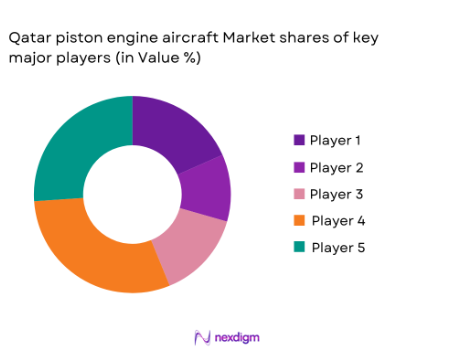
The Qatar piston engine aircraft market is competitive, with several key players contributing to the development and sale of piston engine aircraft in the region. Companies like Textron Aviation, Cessna Aircraft, Piper Aircraft, and Diamond Aircraft dominate the market due to their well-established reputation, diverse product offerings, and strong market presence in the Gulf region. The competition in this market highlights the importance of aircraft performance, reliability, and cost-efficiency for meeting the needs of both training institutions and private buyers in Qatar.
| Company Name | Establishment Year | Headquarters | Aircraft Models | Market Focus | Revenue (USD) | Global Presence |
| Textron Aviation | 1923 | Wichita, USA | – | – | – | – |
| Piper Aircraft | 1937 | Vero Beach, USA | – | – | – | – |
| Cessna Aircraft | 1927 | Wichita, USA | – | – | – | – |
| Diamond Aircraft | 1981 | Wiener Neustadt, Austria | – | – | – | – |
| Cirrus Aircraft | 1984 | Duluth, USA | – | – | – | – |
Qatar Piston Engine Aircraft Market Dynamics
Growth Drivers
Increasing Demand for Private and Commercial Aviation
The demand for private and commercial aviation in Qatar has been steadily increasing, primarily due to the country’s growing economic diversification and the expansion of its tourism sector. Qatar’s aviation industry saw over 35 million passengers passing through Hamad International Airport in 2023, and the number is expected to continue rising as tourism and business travel grow. The development of private aviation and air charter services is also boosting demand for piston engine aircraft, as these are an affordable and efficient option for smaller aircraft fleets.
Rising Investments in the Aviation Infrastructure of Qatar
Qatar is heavily investing in the expansion and modernization of its aviation infrastructure as part of its Vision 2030 plan, which aims to diversify the economy and boost tourism. In 2023, the Qatar government allocated USD 4.5 billion to develop its aviation infrastructure, including the expansion of Hamad International Airport and the development of new regional airports. This investment supports the growing demand for aircraft, including piston engine models for private and training purposes, as they complement the country’s expanding flight schools, aviation training centers, and private aviation services.
Market Challenges
High Maintenance and Operational Costs for Piston Engine Aircraft
Piston engine aircraft, while generally more affordable than jet engine aircraft, still come with significant operational costs, particularly for maintenance and fuel. The average cost of maintaining a piston engine aircraft in Qatar is around USD 50,000 annually, driven by the frequent servicing requirements, parts replacement, and inspections. The climate in the region, with its high temperatures and sandy conditions, also increases wear and tear on aircraft, contributing to higher maintenance costs. This challenge can be a barrier for
Competition from Jet Engine Aircraft in Commercial Aviation
Despite the demand for smaller aircraft, the commercial aviation sector in Qatar remains largely dominated by jet engine aircraft due to their higher efficiency, speed, and range. Qatar Airways, the national carrier, operates a fleet primarily made up of jet engines, with minimal use of piston engine aircraft. The competition from jet aircraft, which offer greater operational flexibility and speed for longer distances, poses a challenge for the market adoption of piston engine aircraft in the commercial aviation space. As jet engine technology continues to advance, it further limits the growth potential for piston engine aircraft in this segment.
Market Opportunities
Growing Demand for Light Aircraft for Training and Leisure Flying
There is a growing interest in light aircraft in Qatar, particularly for flight training and leisure flying. The number of aviation schools has increased due to the country’s expanding aviation sector, with more than 20 flight schools operating in Qatar as of 2024. These schools heavily rely on piston engine aircraft for pilot training due to their lower operational costs and suitability for beginner pilots. Additionally, the growing popularity of flying as a recreational activity is further driving the demand for light piston engine aircraft, which are used for short flights and leisure activities
Expansion of Qatar’s Aviation Infrastructure under Qatar National Vision 2030
Qatar’s Vision 2030 plan includes a significant expansion of aviation infrastructure, with a focus on improving both commercial and private aviation capabilities. The government is investing in new airports, upgrades to existing facilities, and the creation of new aviation zones that cater to private aviation and training. This expansion is expected to increase demand for piston engine aircraft, particularly for flight schools, private aviation operators, and recreational flying. Qatar’s growing focus on aviation tourism is also an opportunity for light aircraft, which will be increasingly utilized to support the sector.
Future Outlook
Over the next decade, the Qatar piston engine aircraft market is expected to see robust growth driven by increasing investments in aviation infrastructure, the expansion of flight schools, and the rising demand for pilot training. Qatar’s Vision 2030 plan is expected to further accelerate this growth by enhancing the aviation sector, promoting recreational flying, and encouraging private ownership of light aircraft. The demand for piston engine aircraft, especially in the training segment, will continue to rise as more individuals seek careers in aviation, further boosting the market’s growth potential.
Major Players
- Textron Aviation
- Piper Aircraft
- Cessna Aircraft
- Diamond Aircraft
- Cirrus Aircraft
- Mooney International Corporation
- Beechcraft
- Embraer
- Honda Aircraft Company
- Socata Aircraft
- Pipistrel
- Robinson Helicopter Company
- Bristell Aircraft
- Jabiru Aircraft
- Vulcan Aircraft
Key Target Audience
- Investments and Venture Capitalist Firms
- Government and Regulatory Bodies
- Aviation Manufacturers
- Flight Schools
- Aviation Training Institutions
- Private Aircraft Owners and Pilots
- Military and Defense Organizations
- Aviation Enthusiasts and Hobbyists
Research Methodology
Step 1: Identification of Key Variables
The first phase involves identifying key variables that affect the Qatar piston engine aircraft market, including consumer behavior, market demand drivers, and regulatory frameworks. This is done by gathering secondary research from industry reports, government publications, and other credible sources.
Step 2: Market Analysis and Construction
In this phase, we collect and analyze historical market data, identifying key trends in aircraft sales, training institutions, and private ownership. We analyze the ratio of single-engine to multi-engine aircraft and assess market penetration.
Step 3: Hypothesis Validation and Expert Consultation
Hypotheses are validated through consultations with industry experts, including manufacturers, flight school operators, and aviation regulators. These interviews provide insights into operational challenges and future trends that affect market growth.
Step 4: Research Synthesis and Final Output
In the final phase, the data collected is synthesized, and the market forecasts are refined. Direct engagement with key market players will verify and complement the data, ensuring a comprehensive and accurate report.

- Executive Summary
- Research Methodology (Definitions, Scope, Industry Assumptions, Market Sizing Approach, Primary & Secondary Research Framework, Data Collection & Verification Protocol, Analytic Models & Forecast Methodology, Limitations & Research Validity Checks)

- Market Definition and Scope
- Value Chain & Stakeholder Ecosystem
- Regulatory / Certification Landscape
- Sector Dynamics Affecting Demand
- Strategic Initiatives & Infrastructure Growth

- Growth Drivers
Increasing demand for private and commercial aviation
Rising investments in the aviation infrastructure of Qatar
Government initiatives to promote aviation tourism and recreational flying - Market Challenges
High maintenance and operational costs for piston engine aircraft
Competition from jet engine aircraft in commercial aviation
Regulatory complexities in aircraft certification - Market Opportunities
Growing demand for light aircraft for training and leisure flying
Expansion of Qatar’s aviation infrastructure under Qatar National Vision 2030
Technological advancements in piston engine aircraft efficiency - Trends
Increased adoption of electric propulsion systems in small aircraft
Rising popularity of private aviation in the Middle East
Advancements in fuel efficiency and hybrid engine technologies

- By Market Value 2020-2025
- By Installed Units 2020-2025
- By Average System Price 2020-2025
- By System Complexity Tier 2020-2025

- By Engine Type (In Value%)
Single-engine Aircraft
Multi-engine Aircraft
Turbocharged Aircraft
Diesel Engine Aircraft
Electric Engine Aircraft - By Aircraft Type (In Value%)
Light Aircraft
Trainer Aircraft
Utility Aircraft
Private Aircraft
Commercial Aircraft - By End User Segment (In Value%)
Military
Commercial Aviation
Private Aviation
Flight Schools
Government Agencies - By Procurement Channel (In Value%)
Direct Procurement
Leasing
Government Contracts
Private Sector Procurement
Online Procurement

- Market Share Analysis
- Cross Comparison Parameters (Price, Engine Efficiency, Maintenance Costs, Operational Range, Certification Status)
- SWOT Analysis of Key Competitors
- Pricing & Procurement Analysis
- Porter’s five Forces
- Detailed Company Profiles
Textron Aviation
Piper Aircraft
Cessna Aircraft
Diamond Aircraft
Cirrus Aircraft
Beechcraft
Rotax Aircraft Engines
Lycoming Engines
Continental Motors
Jabiru Aircraft
Mooney International Corporation
L3 Technologies
Pratt & Whitney Canada
Honda Aircraft Company
Piaggio Aerospace

- Increased interest in private aviation among high-net-worth individuals
- Demand for flight training aircraft from aviation schools
- Government and military demand for utility aircraft
- Commercial airlines looking for cost-effective regional aircraft

- Forecast Market Value 2026-2035
- Forecast Installed Units 2026-2035
- Price Forecast by System Tier 2026-2035
- Future Demand by Platform 2026-2035


 Request a Sample
 Ask for Customization
 Get a Quote
 Enquire Now