

 Download PDF
Market Overview
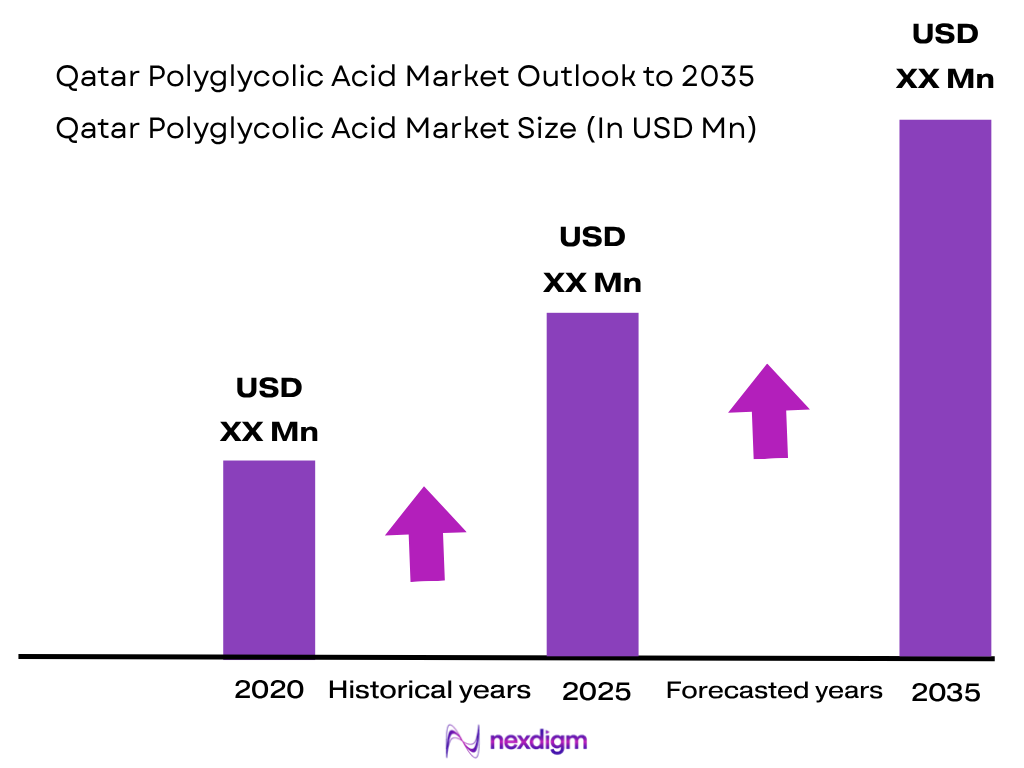
The Qatar Polyglycolic Acid Market is valued at approximately USD ~XX million, based on historical demand analysis. Demand is driven primarily by oilfield-grade degradable polymers, followed by absorbable surgical materials and specialty medical applications. Qatar exported 78.762 million tons of LNG in the preceding reporting period and 78.652 million tons in the latest period, while crude-oil exports moved from 534.058 thousand barrels per day to 528.321 thousand barrels per day, sustaining a substantial addressable oilfield-material ecosystem.
Doha, Ras Laffan Industrial City and Qatar’s North Field-linked energy corridor dominate the Qatar Polyglycolic Acid Market because they concentrate healthcare procurement, natural-gas production, LNG infrastructure and oilfield-service activity. Qatar’s population increased from 2,656,032 to 2,857,822, supporting healthcare consumption, while the North Field contains confirmed gas resources exceeding 2,000 trillion cubic feet. Ras Laffan’s position within Qatar’s LNG and downstream industrial ecosystem makes it particularly relevant for potential oilfield-grade PGA applications.
Market Segmentation
By Grade Type
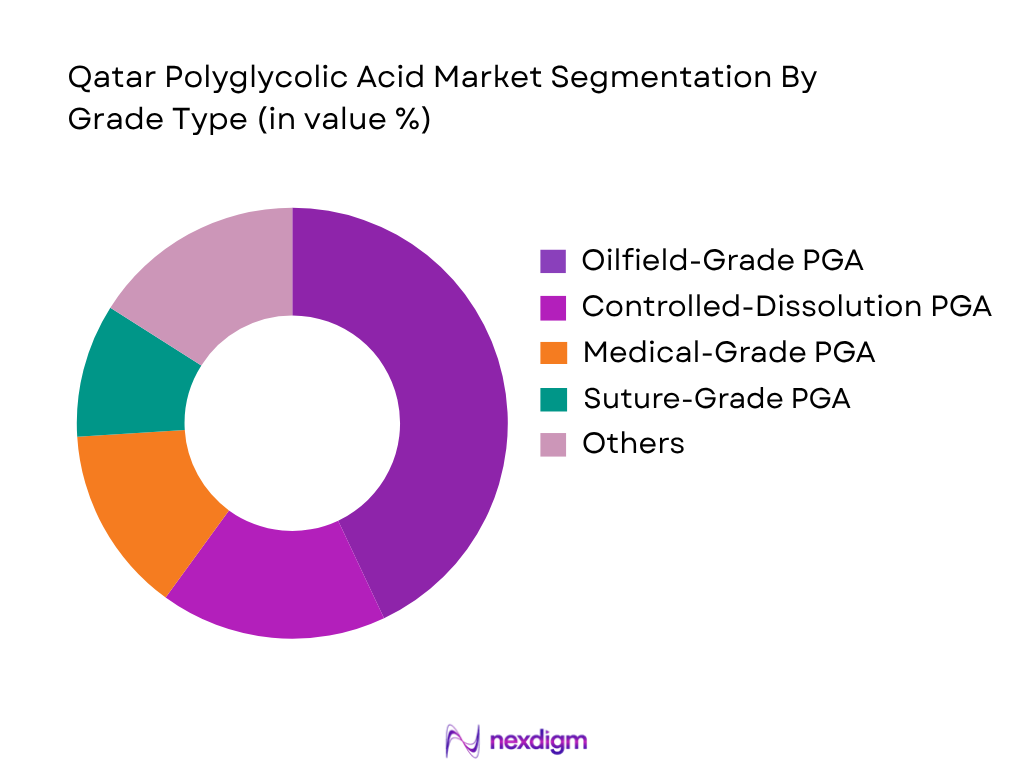
The Qatar Polyglycolic Acid Market is segmented into oilfield-grade PGA, controlled-dissolution PGA, medical-grade PGA, suture-grade PGA, implantable-grade PGA, industrial-grade PGA and barrier-film/coating-grade PGA. Oilfield-grade PGA holds the dominant share in the report model, reflecting Qatar’s exceptional concentration of natural-gas production, well-development infrastructure and specialized energy-service activity. PGA possesses the combination of mechanical strength and hydrolytic degradation needed for temporary downhole components. Kureha specifically identifies downhole tools as a major application for its Kuredux PGA, including machined balls used in oil and gas extraction.
By Application Type
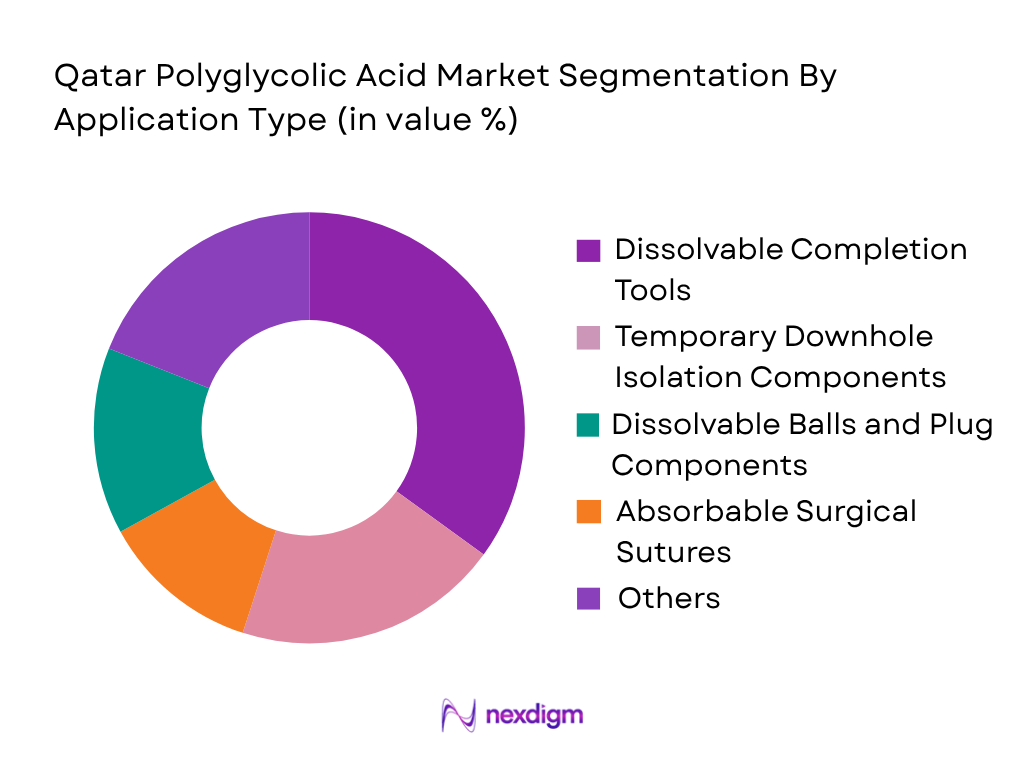
The Qatar Polyglycolic Acid Market is segmented into dissolvable completion tools, temporary downhole isolation components, dissolvable balls and plug components, absorbable surgical sutures, bioresorbable medical devices, drug-delivery systems, high-barrier packaging and specialty industrial components. Dissolvable downhole tools hold the dominant share in the report model, reflecting Qatar’s hydrocarbon-intensive industrial structure and the functional advantages PGA offers for temporary well components. Kureha commercially uses PGA in degradable plugs and downhole tools because the polymer combines high mechanical strength with degradation after performing its temporary isolation function.
Competitive Landscape
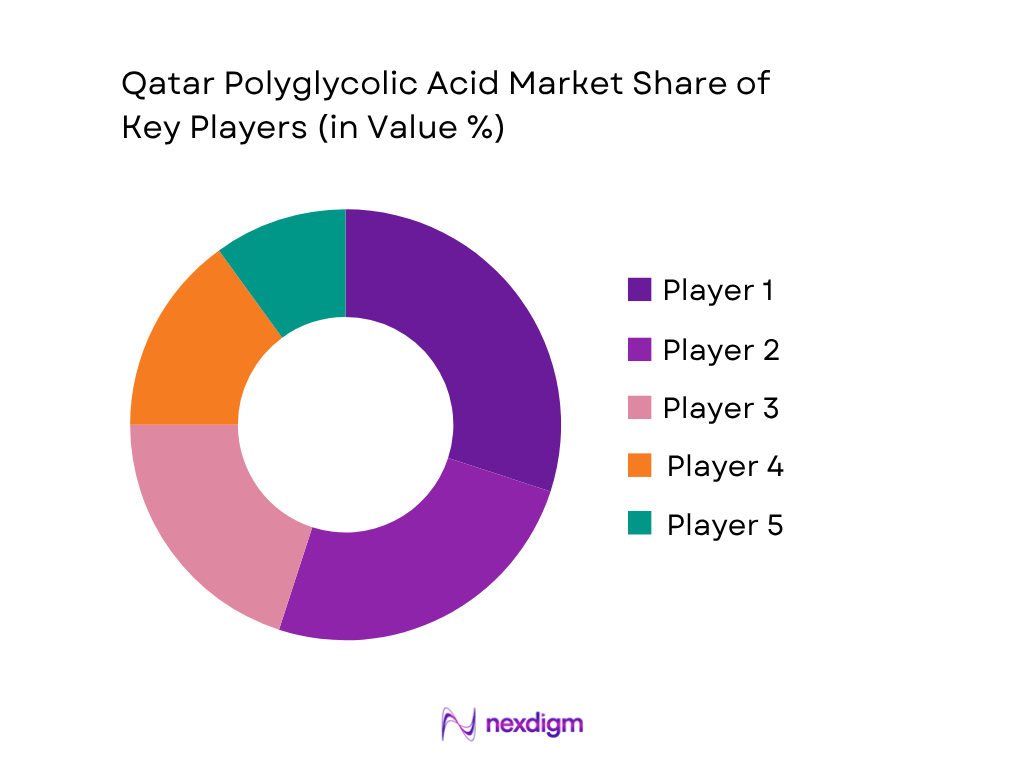
The Qatar Polyglycolic Acid Market has a specialized competitive structure spanning PGA resin producers, biomedical polymer suppliers and oilfield-service companies rather than a conventional large local manufacturing base. Kureha is strategically important because of its industrial PGA technology and downhole applications, while Corbion addresses medical-grade polyglycolide requirements. SLB, Halliburton and Baker Hughes participate downstream through completion, intervention and well-construction technologies. Competition therefore depends on controlled degradation performance, downhole engineering, medical-grade material quality, application development and access to Qatar’s energy and healthcare procurement ecosystems.
| Company | Established | Headquarters | PGA / Technology Position | Primary Qatar-Relevant Application | Degradation Capability | Downhole Capability | Medical Capability | Regional Relevance |
| Kureha Corporation | 1944 | Tokyo, Japan | ~ | ~ | ~ | ~ | ~ | ~ |
| Corbion N.V. | 1919 | Amsterdam, Netherlands | ~ | ~ | ~ | ~ | ~ | ~ |
| SLB | 1926 | Houston, USA | ~ | ~ | ~ | ~ | ~ | ~ |
| Halliburton | 1919 | Houston, USA | ~ | ~ | ~ | ~ | ~ | ~ |
| Baker Hughes | 1907 | Houston, USA | ~ | ~ | ~ | ~ | ~ | ~ |
Qatar Polyglycolic Acid Market Analysis
Growth Drivers
Extensive Oil and Gas Well Infrastructure Supporting Degradable PGA Applications
Qatar’s large upstream gas and LNG infrastructure provides the strongest structural driver for the Qatar Polyglycolic Acid Market, particularly for oilfield-grade PGA used in temporary downhole isolation and completion components. QatarEnergy recorded average natural-gas production of 20 billion standard cubic feet per day and condensate production of 601 thousand barrels per day in 2024, while cumulative annual gas production reached 7,477 billion standard cubic feet and condensate production approached 220 million barrels. The North Field Alpha complex alone operated 22 producing wells and 3 wellhead platforms, while North Field Bravo operated 26 wells and RasGas Alfa operated 15 wells. QatarEnergy LNG additionally operated 11 remotely controlled wellhead platforms and 14 LNG trains. This concentration of wells, completion operations and offshore production infrastructure creates an addressable technical environment for PGA-based dissolvable balls, plugs, temporary isolation components and other intervention-reducing materials. Macroeconomic capacity further supports adoption of advanced oilfield technologies: World Bank data record Qatar’s 2024 GDP at USD 219.16 billion and GDP per capita at USD 76,688.7. These industrial and economic fundamentals support expenditure on specialized high-performance materials capable of simplifying well-completion and intervention workflows.
Large LNG and Hydrocarbon Export Operations Sustaining Specialty Downhole Material Demand
The Qatar Polyglycolic Acid Market benefits from Qatar’s sustained hydrocarbon export activity, which requires continuous production reliability, well maintenance and sophisticated completion technologies. QatarEnergy’s official open-data records show that Qatar exported 78.652 million tonnes of LNG in 2024, alongside average pipeline-gas exports of 1.994 billion cubic feet per day, crude-oil exports of 528.321 thousand barrels per day, and light and heavy naphtha exports of 170.259 thousand barrels per day. These volumes are supported by the North Field, whose confirmed gas resources exceed 2,000 trillion cubic feet, creating a highly concentrated operating environment for specialized downhole materials. PGA is relevant because degradable polymer components can provide temporary mechanical functionality before hydrolysing, reducing dependence on conventional retrieval or milling operations in suitable completion designs. Qatar’s economic capacity reinforces the ability of operators and service companies to adopt such engineered materials: the World Bank recorded USD 219.16 billion of GDP and USD 76,688.7 of GDP per capita in 2024. Together, the country’s LNG throughput, upstream resource base and capital-intensive operating environment create sustained technical justification for oilfield-grade PGA development and supplier participation.
Market Challenges
Demanding Downhole Operating Conditions Increase PGA Qualification Complexity
A central challenge for the Qatar Polyglycolic Acid Market is ensuring that degradable PGA components provide sufficient mechanical integrity before dissolving under Qatar’s highly productive gas-field operating environment. QatarEnergy reported average national natural-gas production of 20 billion standard cubic feet per day in 2024, accompanied by 601 thousand barrels per day of condensate, demonstrating the operational intensity associated with the country’s upstream system. North Field Bravo produces approximately 1.6 billion standard cubic feet per day of gas from 26 wells, while RasGas Alfa produces 1 billion standard cubic feet per day from 15 wells. Another 11 remotely operated wellhead platforms have production capability reaching 12.3 billion standard cubic feet per day of natural gas and 312.5 thousand barrels per day of condensate. Within such high-output infrastructure, dissolvable components require precise control of structural strength, hydrolysis timing, geometry and fluid interaction to prevent premature degradation or delayed dissolution. These qualification requirements become commercially significant in an economy with USD 219.16 billion of GDP and USD 76,688.7 GDP per capita in 2024, where reliability expectations for critical energy infrastructure are correspondingly high. PGA suppliers therefore require strong application engineering and field-specific validation capabilities.
Limited Domestic Scale for Specialized Medical-Grade PGA Conversion
Medical-grade PGA faces a different challenge in Qatar because the healthcare system is sophisticated but comparatively concentrated, limiting the scale available to justify dedicated local production of specialized bioresorbable polymers. Qatar’s official healthcare-facility database recorded 15 governmental hospitals, 12 private hospitals, 22 diagnostic and treatment centres providing day surgery, 31 Primary Health Care Corporation centres, 99 specialized dental centres and 80 specialized health centres in 2024. The PHCC system registered 1,874,919 patients and 5,169,993 visits across 31 operational health centres during the same year. These figures establish a substantial clinical base for absorbable sutures and related surgical materials, but they also show that procurement is concentrated within a relatively defined healthcare ecosystem rather than a broad domestic medical-device manufacturing industry. Consequently, suppliers of medical-grade PGA must address product registration, sterilization compatibility, molecular consistency, controlled absorption and hospital procurement requirements without the manufacturing volumes available in major global medical-device production hubs. World Bank indicators nevertheless demonstrate strong purchasing capacity, with Qatar recording USD 219.16 billion in GDP and USD 76,688.7 GDP per capita in 2024. The challenge is therefore commercialization scale and specialized qualification rather than healthcare purchasing capability.
Market Opportunities
Local Conversion of PGA for Dissolvable Downhole Components
The strongest future opportunity in the Qatar Polyglycolic Acid Market lies in developing local conversion and application-engineering capabilities for oilfield-grade PGA rather than immediately establishing upstream PGA polymerization. Qatar already possesses the operating scale needed to support precision-machined degradable balls, plugs and temporary isolation components: QatarEnergy reported 20 billion standard cubic feet per day of average natural-gas production, 601 thousand barrels per day of condensate and 7,477 billion standard cubic feet of annual gas production in 2024. Its North Field system includes 22 producing wells at North Field Alpha, 26 wells at North Field Bravo, 15 wells at RasGas Alfa and 11 additional remotely operated wellhead platforms. Furthermore, 14 LNG trains process North Field gas at the country’s established LNG complex. These current assets create a sizable installed environment in which imported high-grade PGA resin could be locally machined, moulded, qualified and integrated into downhole tools closer to end users. Qatar’s USD 219.16 billion GDP and USD 76,688.7 GDP per capita in 2024 provide a favorable economic platform for specialized manufacturing investment. Local conversion could therefore improve technical responsiveness, customization, inventory availability and operator-specific material qualification while retaining global resin sourcing.
Expansion into Absorbable Sutures and Bioresorbable Medical Applications
Healthcare applications offer a second long-term growth pathway for the Qatar Polyglycolic Acid Market, particularly absorbable sutures, surgical meshes, temporary tissue-support products and selected bioresorbable devices. Qatar’s current healthcare infrastructure provides an established clinical platform for such products. Official 2024 records identify 15 governmental hospitals, 12 private hospitals, 22 diagnostic and day-surgery centres, 99 specialized dental centres and 80 specialized health centres, while the Primary Health Care Corporation operated 31 health centres. PHCC facilities recorded 1,874,919 registered patients and 5,169,993 visits in 2024, demonstrating the scale of patient interaction feeding Qatar’s broader secondary and tertiary healthcare system. PGA-based materials are particularly relevant where temporary mechanical support and subsequent absorption are preferable to permanent material retention, making surgical wound closure the clearest initial commercial route before broader bioresorbable-device adoption. Qatar also possesses substantial economic capacity to support premium medical technologies: World Bank data record 2024 GDP of USD 219.16 billion and GDP per capita of USD 76,688.7. These current healthcare and macroeconomic fundamentals provide a credible base for future supplier partnerships involving medical-grade PGA, absorbable sutures, specialized distribution, hospital qualification and application-specific bioresorbable products.
Future Outlook
The Qatar Polyglycolic Acid Market is projected to expand at approximately ~XX% CAGR during 2026–2035, driven by the intersection of advanced oilfield technologies and specialized healthcare applications. North Field development provides a strong environment for advanced completion and temporary downhole materials, while healthcare modernization supports medical-grade resorbable polymers. Opportunities are also expected around local machining and conversion of imported PGA rather than immediate upstream polymer production.
Oilfield applications are likely to remain strategically important. QatarEnergy’s North Field development is expanding the country’s LNG system from its established 77 million tons per annum base through North Field East, North Field South and North Field West. The North Field itself contains more than 2,000 trillion cubic feet of confirmed gas resources, supporting sustained demand for sophisticated drilling, completion and production technologies. Healthcare provides a second diversification route. Qatar’s population reached 2,857,822 in 2024, compared with 2,656,032 in 2023, while life expectancy reached 83 years. These demographic conditions support sophisticated hospital and surgical services where absorbable sutures and advanced biomaterials can be deployed.
Major Players
- Kureha Corporation – Kuredux PGA resin and degradable oilfield materials
- Corbion N.V. – PURASORB medical-grade polyglycolide
- BMG Co., Ltd. – Medical-grade polyglycolide and bioresorbable materials
- Shanghai Pujing Chemical Technology Co., Ltd. – Oilfield and industrial PGA materials
- CHN Energy Yulin Chemical Co., Ltd. – PGA and glycolic-acid-chain production
- Shanghai DODGEN Chemical Technology Co., Ltd. – PGA polymerization and processing technology
- SLB – Dissolvable completion and well-isolation technologies
- Halliburton – Dissolvable plugs and completion technologies
- Baker Hughes – Well completion and advanced downhole technologies
- Weatherford International – Well intervention and completion systems
- Johnson & Johnson MedTech / Ethicon – Glycolide-based absorbable sutures
- B. Braun – Synthetic absorbable surgical sutures
- Healthium Medtech Limited – PGA-based absorbable sutures
- DemeTECH Corporation – PGA absorbable surgical sutures
- SERAG-WIESSNER GmbH & Co. KG – Synthetic PGA absorbable sutures
Key Target Audience
- PGA Resin and Glycolide Manufacturers
- Oilfield Service and Well-Completion Companies
- Oil and Gas Exploration and Production Companies
- Downhole Tool and Dissolvable Component Manufacturers
- Medical Device and Absorbable Suture Manufacturers
- Specialty Polymer Importers and Distributors
- Investments and Venture Capitalist Firms
- Government and Regulatory Bodies (Qatar Ministry of Public Health, Ministry of Commerce and Industry, Ministry of Energy Affairs, QatarEnergy)
Research Methodology
Step 1: Identification of Key Variables
The initial phase involves constructing an ecosystem map covering stakeholders within the Qatar Polyglycolic Acid Market, including PGA producers, glycolide suppliers, oil and gas operators, oilfield-service companies, completion-tool manufacturers, medical-device suppliers and specialty polymer distributors. Key variables include PGA consumption, grade requirements, degradation conditions, downhole applications, healthcare usage, imports and customer qualification requirements.
Step 2: Market Analysis and Construction
Historical demand is analyzed through combined top-down and bottom-up market construction. Top-down analysis evaluates Qatar’s oil and gas activity, well-completion ecosystem, healthcare infrastructure and specialty material imports. Bottom-up analysis estimates PGA requirements across dissolvable completion components, temporary downhole tools, absorbable sutures, bioresorbable devices and other relevant applications to construct the consolidated demand framework.
Step 3: Hypothesis Validation and Expert Consultation
Market hypotheses are validated through computer-assisted telephone interviews with oilfield-service professionals, specialty polymer distributors, downhole-tool manufacturers, medical-device suppliers and healthcare procurement stakeholders. These consultations assess PGA qualification requirements, degradation performance, temperature and salinity conditions, material substitution, import dependence and purchasing structures, allowing assumptions developed through secondary research to be refined and validated.
Step 4: Research Synthesis and Final Output
The final phase triangulates application-level consumption with Qatar’s energy, healthcare and specialty-material ecosystem. Oilfield demand is reconciled with well-completion activity and PGA usage intensity, while medical demand is assessed through surgical and bioresorbable applications. Supplier positioning, import channels and technology requirements are subsequently integrated to establish market segmentation, competitive benchmarking and the long-term Qatar Polyglycolic Acid Market outlook.

- Executive Summary
- Research Methodology (Market Definition and Scope, Qatar Polyglycolic Acid Market Classification, Oilfield-Grade and Medical-Grade PGA Assessment, Glycolic Acid and Glycolide Feedstock Mapping, PGA Resin Supply Assessment, Dissolvable Downhole Material Evaluation, Absorbable Suture Demand Assessment, Bioresorbable Medical Device Mapping, Oilfield Service Ecosystem Analysis, Specialty Packaging Application Evaluation, Import and Distribution Analysis)

- Definition and Scope
- Qatar Polyglycolic Acid Industry Evolution and Development of Specialty Degradable Polymer Ecosystem
- PGA Chemistry, Glycolide Polymerization, Hydrolytic Degradation and Mechanical Performance Characteristics
- Qatar Polyglycolic Acid Value Chain Analysis
- Qatar Polyglycolic Acid Supply Chain Analysis
- Glycolic Acid, Glycolide, PGA Resin, Oilfield Material, Medical Polymer and Specialty Packaging Ecosystem Analysis
- PGA Integration Assessment Across Dissolvable Oilfield Tools, Absorbable Surgical Sutures, Bioresorbable Medical Devices and High-Barrier Packaging Applications

- Growth Drivers (Expansion of North Field Gas Development, Increasing Well Completion Activity, Demand for Intervention-Free Downhole Technologies, Advanced Oilfield Material Adoption, Development of Healthcare Infrastructure, Increasing Specialized Surgical Care)
- Market Challenges (Dependence on Imported PGA Resin, Absence of Domestic Commercial PGA Polymerization, Downhole Temperature and Salinity Performance Requirements, Material Qualification Complexity, Medical Device Regulatory Requirements, Competition from Dissolvable Magnesium Alloys and Alternative Bioresorbable Polymers)
- Market Opportunities (Dissolvable Downhole Isolation Components, Customized PGA Degradation Profiles for Gas Wells, Local Conversion of Imported PGA Resin, Absorbable Surgical Sutures, Bioresorbable Medical Devices, High-Barrier Packaging Applications)
- Market Trends (Interventionless Well Completion, Controlled-Dissolution Materials, High-Temperature Degradable Polymer Development, Specialty Material Localization, Advanced Surgical Material Adoption, Medical Polymer Traceability, Sustainable Specialty Packaging)
- Regulatory and Standards Landscape (Qatar Ministry of Public Health Medical Device Requirements, Healthcare Facility Medical Device Approval, QatarEnergy Supplier Qualification Requirements, Oilfield Material Testing Standards, Industrial Import Compliance, Product Traceability Requirements, Food-Contact Packaging Requirements)
- SWOT Analysis
- Porter’s Five Forces Analysis
- PESTLE Analysis
- Stakeholder Ecosystem
- Competition Ecosystem

- By Market Value (2020-2025)
- By PGA Consumption Volume (2020-2025)
- By Oilfield-Grade PGA Consumption Volume (2020-2025)
- By Medical-Grade PGA Consumption Volume (2020-2025)
- By Dissolvable Downhole Tool PGA Consumption Volume (2020-2025)
- By Absorbable Suture PGA Consumption Volume (2020-2025)
- By Bioresorbable Medical Device PGA Consumption Volume (2020-2025)

- By Grade Type (In Value %)
Oilfield-Grade PGA
High-Strength Downhole PGA
Controlled-Dissolution PGA
Medical-Grade PGA
Suture-Grade PGA
Implantable-Grade PGA
Industrial-Grade PGA
Fiber-Spinning-Grade PGA
Barrier-Film and Coating-Grade PGA - By Application Type (In Value %)
Dissolvable Frac Balls
Dissolvable Frac Plugs
Dissolvable Bridge Plugs
Temporary Downhole Isolation Components
Dissolvable Completion Tools
Oilfield Sealing and Flow-Control Components
Absorbable Surgical Sutures
Bioresorbable Medical Devices
Drug-Delivery Systems
High-Barrier Packaging Applications - By End-Use Industry (In Value %)
Oil and Gas Exploration and Production
Natural Gas Development
Oilfield Services and Well Completion
Medical Device and Surgical Consumables
Hospitals and Surgical Care
Orthopedic and Specialty Healthcare
Pharmaceutical and Drug Delivery
Food and Beverage Packaging
Specialty Polymer Processing - By Physical Form (In Value %)
PGA Resin Pellets
PGA Granules
Machined PGA Components
Injection-Moulded PGA Components
Extruded PGA Components
Dissolvable Balls
Dissolvable Plug Components
Multifilament Fibers
Braided PGA Sutures
Barrier Films and Coatings - By Degradation Profile (In Value %)
Rapid-Dissolution PGA
Temperature-Activated Degradable PGA
Salinity-Responsive Degradable PGA
Controlled-Dissolution PGA
Standard-Absorption Medical PGA
Rapid-Absorption Medical PGA
Extended Mechanical-Retention PGA Systems
Application-Specific PGA Copolymer Systems - By Processing Technology (In Value %)
Injection Moulding
Precision Machining
Melt Extrusion
Compression Moulding
Fiber Spinning
Suture Braiding
Medical Polymer Coating
Barrier-Film Extrusion
Specialty Polymer Compounding - By Sales Channel (In Value %)
Direct PGA Producer Supply
Oilfield Service Company Procurement
Energy Operator Procurement
Downhole Tool Manufacturer Procurement
Specialty Polymer Importers
Medical Biomaterial Distributors
Hospital and Healthcare Procurement
Medical Device Manufacturer Procurement
Packaging Converter Procurement - By Region (In Value %)
Doha
Ras Laffan Industrial City
Mesaieed Industrial City
Al Khor
Dukhan
Al Rayyan
Al Wakrah

- Market Share of Major Players (By PGA Resin Supply, Oilfield Application Presence, Medical-Grade PGA Presence, Dissolvable Tool Portfolio, Absorbable Suture Portfolio, Distribution Coverage, Customer Segment, Qatar Market Presence)
- Cross Comparison Parameters (Oilfield-Grade PGA Resin Supply Capability, Controlled-Dissolution Material Engineering, Downhole Temperature and Salinity Performance, Dissolvable Completion Tool Portfolio, Medical-Grade PGA and Suture Capability, Qatar Energy-Sector Customer Reach, Qatar Healthcare Distribution Reach, Application Development and Technical Support Capability)
- SWOT Analysis of Major Players
- Competitive Positioning Matrix
- Detailed Profiles of Major Companies
Kureha Corporation – Kuredux PGA Resin, High-Strength Degradable Polymer and Oilfield Applications
Corbion N.V. – PURASORB Polyglycolide and Medical-Grade Bioresorbable Polymer Materials
BMG Co., Ltd. – Medical-Grade Polyglycolide and Bioresorbable Polymer Materials
Shanghai Pujing Chemical Technology Co., Ltd. – Oilfield, Medical and Industrial PGA Materials
CHN Energy Yulin Chemical Co., Ltd. – PGA and Glycolic-Acid-Chain Production
Shanghai DODGEN Chemical Technology Co., Ltd. – PGA Polymerization Technology and Industrial PGA Materials
SLB – Dissolvable Completion Plugs, Well Isolation and Interventionless Completion Technologies
Halliburton – Dissolvable Frac Plugs, Downhole Isolation and Completion Technologies
Baker Hughes – Well Completion Systems, Downhole Tools and Advanced Oilfield Materials
Weatherford International – Completion Tools, Well Intervention and Downhole Isolation Technologies
Johnson & Johnson MedTech / Ethicon – Glycolide-Based Absorbable Surgical Sutures and Wound-Closure Products
B. Braun – Synthetic Absorbable Sutures and Surgical Wound-Closure Solutions
Healthium Medtech Limited – PGA-Based Absorbable Sutures and Surgical Products
DemeTECH Corporation – PGA Absorbable Surgical Sutures
SERAG-WIESSNER GmbH & Co. KG – PGA-Based Synthetic Absorbable Surgical Sutures

- Oil and Gas Operator PGA Adoption Assessment
- Oilfield Service Company Material Requirements Analysis
- Well Completion Contractor Technology Assessment
- Downhole Tool Manufacturer Material Assessment
- Hospital and Surgical Application Assessment
- Absorbable Suture Procurement Analysis
- Bioresorbable Medical Device Application Assessment
- Medical Biomaterial Distributor Assessment
- PGA Material Attribute Preference Analysis

- By Market Value (2026-2035)
- By PGA Consumption Volume (2026-2035)
- By Oilfield-Grade PGA Consumption Volume (2026-2035)
- By Medical-Grade PGA Consumption Volume (2026-2035)
- By Dissolvable Downhole Tool PGA Consumption Volume (2026-2035)
- By Absorbable Suture PGA Consumption Volume (2026-2035)
- By Bioresorbable Medical Device PGA Consumption Volume (2026-2035)


 Request a Sample
 Ask for Customization
 Get a Quote
 Enquire Now