

 Download PDF
 Download PDF
Market Overview
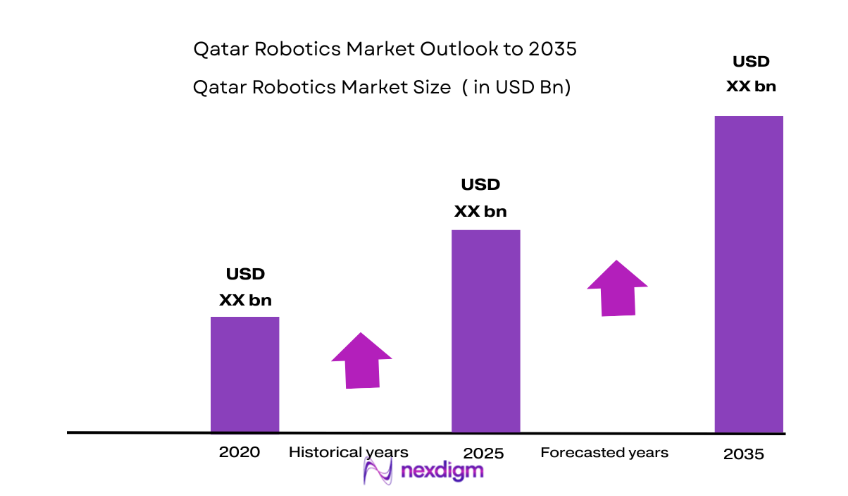
Based on a recent historical assessment, the Qatar robotics market recorded a total market value of approximately USD ~ according to data referenced by the International Federation of Robotics and the Qatar Ministry of Communications and Information Technology. The market is primarily driven by rapid automation adoption in oil and gas operations, industrial manufacturing, logistics automation, and healthcare robotics deployment. Significant government investment in digital infrastructure and Industry 4.0 programs continues to accelerate robotics system deployment across industrial facilities and large-scale infrastructure projects.
Doha has emerged as the dominant hub for robotics adoption due to its concentration of industrial zones, healthcare institutions, logistics facilities, and smart city initiatives. The presence of large oil and gas infrastructure in Ras Laffan Industrial City and Mesaieed Industrial City also strengthens robotics demand for inspection, maintenance, and automation applications. Government-backed innovation initiatives, technology parks, and digital transformation programs across Qatar further accelerate robotics deployment within industrial automation and advanced manufacturing environments.
Market Segmentation
By Product Type
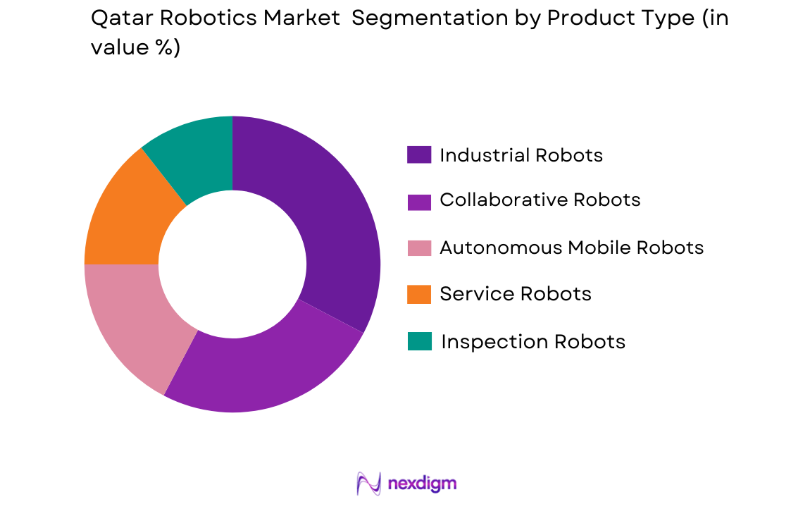
Qatar Robotics Market is segmented by product type into Industrial Robots, Collaborative Robots, Autonomous Mobile Robots, Service Robots, and Inspection Robots. Recently, Industrial Robots has a dominant market share due to factors such as strong demand from oil and gas operations, manufacturing automation, and infrastructure maintenance applications. Industrial robots are widely deployed in precision assembly, welding, material handling, and industrial inspection tasks where human safety risks and operational complexity are high. Qatar’s large industrial infrastructure requires automated robotic systems capable of performing hazardous maintenance tasks across refineries, pipelines, and processing facilities. The adoption of robotics in logistics warehouses and manufacturing assembly lines also strengthens demand for programmable industrial robotic arms integrated with machine vision systems. Additionally, increasing investments in industrial automation programs and smart manufacturing initiatives have accelerated the deployment of robotics solutions capable of improving productivity and operational efficiency within energy, manufacturing, and logistics sectors.
By End User Industry
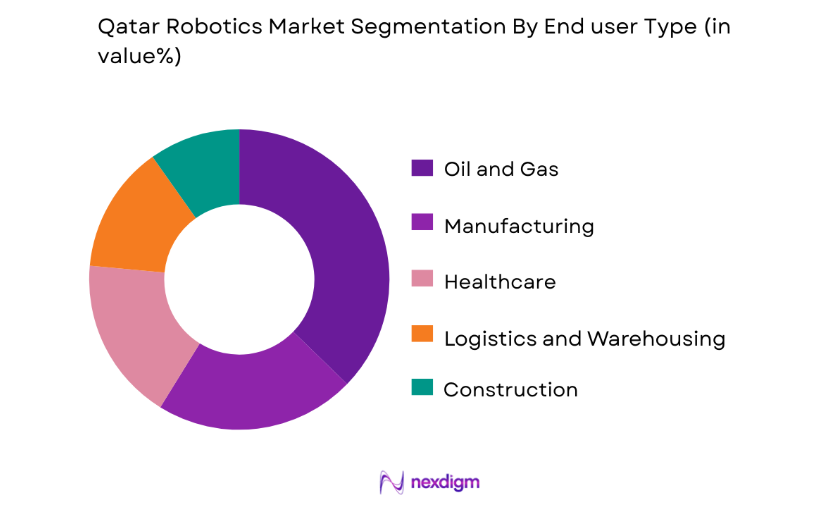
Qatar Robotics Market is segmented by end user industry into Oil and Gas, Manufacturing, Healthcare, Logistics and Warehousing, and Construction. Recently, Oil and Gas has a dominant market share due to factors such as extensive energy infrastructure, operational safety requirements, and large-scale industrial inspection needs. Oil and gas facilities require robotics systems capable of performing pipeline inspection, hazardous equipment monitoring, and maintenance operations within high-risk environments. Robotics deployment allows companies to minimize human exposure to dangerous operating conditions while maintaining continuous operational monitoring of energy infrastructure. Industrial inspection robots equipped with advanced sensors and imaging technologies help companies detect equipment failures, corrosion, and structural weaknesses before they escalate into operational disruptions. Qatar’s large liquefied natural gas facilities and petrochemical plants therefore rely heavily on robotics technologies to support safe and efficient industrial operations across energy production environments.
Competitive Landscape
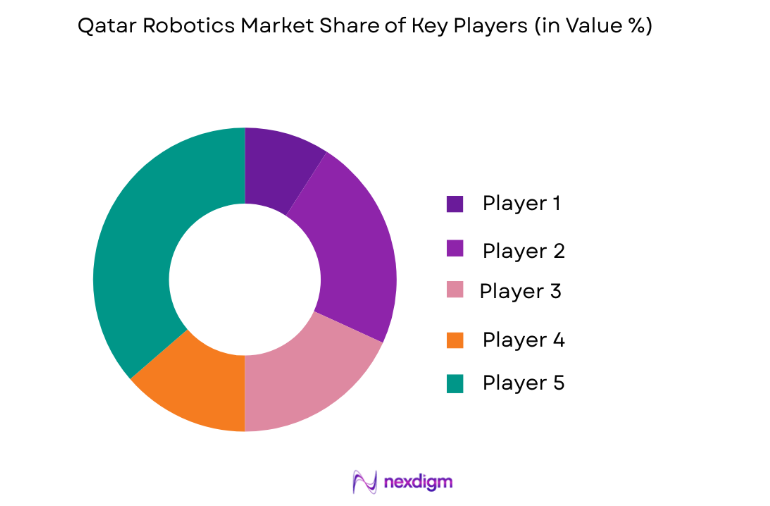
The Qatar robotics market demonstrates moderate consolidation where a small number of global robotics manufacturers dominate technology supply while regional system integrators handle project implementation and customization. Major international robotics companies supply advanced robotic systems, artificial intelligence control platforms, and automation software used across industrial sectors. Local engineering firms and system integrators collaborate with global technology vendors to deploy robotics solutions tailored to Qatar’s oil and gas infrastructure, logistics facilities, healthcare institutions, and manufacturing plants.
| Company Name | Establishment Year | Headquarters | Technology Focus | Market Reach | Key Products | Revenue | Robotics Integration Capability |
| ABB Ltd | 1988 | Switzerland | ~ | ~ | ~ | ~ | ~ |
| KUKA AG | 1898 | Germany | ~ | ~ | ~ | ~ | ~ |
| Fanuc Corporation | 1956 | Japan | ~ | ~ | ~ | ~ | ~ |
| Yaskawa Electric | 1915 | Japan | ~ | ~ | ~ | ~ | ~ |
| Mitsubishi Electric | 1921 | Japan | ~ | ~ | ~ | ~ | ~ |
Qatar Robotics Market Analysis
Growth Drivers
Expansion of Smart Manufacturing and Industrial Automation Programs in Qatar:
Rapid industrial automation across energy production facilities manufacturing plants logistics hubs and infrastructure development projects significantly accelerates robotics adoption throughout Qatar’s industrial sector. Companies increasingly deploy robotics systems to automate repetitive precision tasks such as material handling assembly welding inspection and maintenance operations within complex industrial environments. Robotics integration allows companies to improve operational efficiency while reducing workplace safety risks associated with hazardous industrial processes including oil and gas facility maintenance. Large scale energy infrastructure requires continuous monitoring and automated inspection capabilities which robotic technologies can provide more efficiently than traditional manual operations. Robotics systems equipped with artificial intelligence machine vision sensors and predictive maintenance software enable industrial companies to detect equipment faults before operational disruptions occur. These technologies improve industrial productivity by enabling automated monitoring of pipelines refinery equipment and manufacturing assembly lines. Government programs encouraging digital transformation across industrial sectors also stimulate robotics investments within smart factory development initiatives. Companies deploying robotics systems benefit from improved production accuracy faster operational cycles and enhanced workplace safety conditions. As industrial automation programs continue expanding across Qatar’s energy manufacturing and logistics sectors robotics technologies become essential tools supporting operational efficiency and infrastructure reliability.
Government Investment in Artificial Intelligence and Robotics Innovation Infrastructure:
National innovation strategies focusing on artificial intelligence digital transformation and advanced technology development significantly accelerate robotics adoption across Qatar’s economy. Government initiatives encourage the integration of robotics technologies across healthcare logistics transportation infrastructure and industrial manufacturing sectors. Investment programs supporting technology parks research institutions and startup innovation ecosystems strengthen robotics research development and deployment capabilities across the country. Public sector digital transformation strategies promote the use of automation technologies capable of improving operational efficiency within government infrastructure services and large scale construction projects. Robotics systems integrated with artificial intelligence platforms allow organizations to automate complex operational tasks while improving data analysis capabilities across industrial processes. Healthcare institutions increasingly adopt robotic surgical systems rehabilitation robots and automated hospital logistics platforms capable of improving patient care efficiency. Government funding also encourages international robotics technology companies to establish partnerships with regional engineering firms supporting technology transfer and local robotics expertise development. These investments significantly strengthen Qatar’s robotics ecosystem by expanding research capabilities workforce training programs and robotics system deployment across key economic sectors.
Market Challenges
High Capital Investment Requirements for Robotics System Deployment:
Robotics system deployment requires substantial upfront capital investment which presents a major challenge for many industrial organizations considering automation technologies. Industrial robotics platforms require specialized hardware including robotic arms motion control systems machine vision sensors safety systems and automation software which significantly increase initial deployment costs. Companies must also invest in facility upgrades infrastructure integration and system customization in order to fully implement robotics solutions within existing operational environments. Skilled engineers and robotics technicians are required to design integrate and maintain robotics systems which further increases operational costs associated with robotics adoption. Smaller industrial companies may face financial constraints that limit their ability to deploy advanced robotics systems despite potential productivity benefits. Robotics integration also requires operational training programs allowing employees to effectively operate automated systems and collaborate with robotic equipment within industrial workplaces. Maintenance and software upgrades represent additional ongoing expenses required to maintain robotics performance reliability and cybersecurity protection. These cost factors can delay robotics adoption among organizations that require long term financial justification before implementing large scale automation technologies.
Shortage of Skilled Robotics Engineers and Automation Specialists:
The limited availability of specialized robotics engineers automation specialists and artificial intelligence developers presents a significant challenge for robotics deployment across Qatar’s industrial sectors. Robotics systems require highly skilled professionals capable of designing integrating programming and maintaining complex automated equipment within industrial production environments. Companies implementing robotics solutions must recruit engineers with expertise in robotics software control systems machine vision integration and industrial automation architecture. However the regional workforce currently experiences a shortage of professionals with advanced robotics engineering capabilities which can slow robotics adoption across multiple sectors. Industrial companies deploying robotics systems often rely on international specialists to manage system integration and maintenance operations. Workforce training programs focused on robotics engineering automation technologies and artificial intelligence development therefore become essential for supporting long term robotics adoption across the country. Educational initiatives encouraging students to pursue engineering careers related to robotics automation and artificial intelligence can gradually strengthen the domestic robotics talent pool. Until workforce capabilities expand significantly companies may continue facing challenges associated with recruiting skilled professionals capable of supporting large scale robotics deployment.
Opportunities
Expansion of Robotics Applications in Smart City Infrastructure Projects:
Large scale smart city development projects across Qatar create substantial opportunities for robotics technology deployment within urban infrastructure systems. Smart cities rely on advanced automation technologies capable of supporting infrastructure maintenance intelligent transportation systems environmental monitoring and public safety operations. Robotics platforms equipped with artificial intelligence sensors and autonomous navigation capabilities can support city infrastructure inspection waste management public transportation monitoring and construction automation tasks. Autonomous mobile robots and inspection robots can efficiently monitor large infrastructure networks including pipelines power systems transportation corridors and building facilities. Robotics technologies therefore enable smart cities to maintain complex infrastructure networks while improving operational efficiency and reducing maintenance costs. Smart city infrastructure programs also require advanced data collection capabilities where robotics systems equipped with sensors and imaging technologies gather environmental operational and safety data from urban infrastructure networks. As Qatar continues developing technology driven urban infrastructure robotics technologies will become essential tools supporting smart city management and automated infrastructure maintenance.
Growing Adoption of Healthcare Robotics and Medical Automation Systems
Healthcare robotics represents a rapidly expanding opportunity within Qatar’s robotics market as hospitals and medical institutions increasingly adopt automated technologies capable of improving healthcare delivery efficiency. Robotic surgical systems allow surgeons to perform highly precise minimally invasive procedures that improve patient outcomes and reduce recovery times. Hospitals also deploy robotic rehabilitation systems patient assistance robots and automated hospital logistics platforms capable of transporting medical supplies and equipment within healthcare facilities. Robotics technologies support medical imaging diagnostics laboratory automation and pharmaceutical handling operations which improve overall hospital productivity and service quality. Healthcare institutions benefit from robotics deployment by reducing manual workload while improving accuracy within complex medical procedures and laboratory testing operations. The healthcare sector therefore becomes an important growth segment within the robotics market as medical institutions continue investing in advanced technology capable of improving healthcare service delivery.
Future Outlook
The Qatar robotics market is expected to experience steady expansion as industrial automation initiatives continue expanding across energy manufacturing logistics and healthcare sectors. Increasing adoption of artificial intelligence robotics and smart manufacturing technologies will accelerate robotics deployment within industrial production environments. Government investment in digital transformation programs and innovation infrastructure will further strengthen robotics development and adoption. Growing demand for automation within smart city infrastructure healthcare services and logistics operations will continue shaping robotics technology adoption across Qatar’s evolving digital economy.
Major Players
- ABB Ltd
- Fanuc Corporation
- KUKA AG
- Yaskawa Electric Corporation
- Mitsubishi Electric Corporation
- Omron Corporation
- Universal Robots
- Kawasaki Robotics
- Denso Robotics
- Epson Robots
- Hyundai Robotics
- Nachi-Fujikoshi Corporation
- StäubliRobotics
- Rockwell Automation
- Siemens AG
Key Target Audience
- Robotics Manufacturing Companies
- Oil and Gas Industry Operators
- Industrial Manufacturing Companies
- Logistics and Warehouse Operators
- Healthcare Technology Providers
- Investments and venture capitalist firms
- Government and regulatory bodies
- Industrial Automation System Integrators
Research Methodology
Step 1: Identification of Key Variables
The research process begins by identifying core variables influencing the Qatar robotics market including robotics technology adoption, industrial automation demand, government technology initiatives, and robotics deployment across key sectors such as energy, healthcare, logistics, and manufacturing.
Step 2: Market Analysis and Construction
Primary and secondary research sources including industry publications, government technology strategies, robotics association reports, and corporate financial disclosures are analyzed to construct a comprehensive understanding of robotics market structure and sector adoption patterns.
Step 3: Hypothesis Validation and Expert Consultation
Market assumptions and analytical models are validated through consultations with robotics engineers, industrial automation specialists, and technology sector experts who provide insights into robotics deployment trends and future industry development patterns.
Step 4: Research Synthesis and Final Output
All collected data is synthesized through structured market modeling and sector analysis frameworks to produce a final research report outlining robotics market dynamics, competitive landscape, future opportunities, and technology adoption trends.

- Executive Summary
- Research Methodology (Definitions, Scope, Industry Assumptions, Market Sizing Approach, Primary & Secondary Research Framework, Data Collection & Verification Protocol, Analytic Models & Forecast Methodology, Limitations & Research Validity Checks)

- Market Definition and Scope
- Value Chain & Stakeholder Ecosystem
- Regulatory / Certification Landscape
- Sector Dynamics Affecting Demand

- Growth Drivers
Expansion of Smart Manufacturing and Industry 4.0 Initiatives
Automation Demand in Oil and Gas Industrial Operations
Government Investment in Technology and Innovation Infrastructure - Market Challenges
High Capital Investment Requirements for Robotics Systems
Shortage of Skilled Robotics Engineers and Technicians
Integration Complexity with Legacy Industrial Systems - Market Opportunities
Adoption of Autonomous Robotics in Logistics and Warehousing
Expansion of Healthcare Robotics for Surgical and Rehabilitation Applications
Growth of Robotics Solutions in Smart City Infrastructure Projects
- Trends
Increasing Deployment of Collaborative Robots in Industrial Facilities
Integration of Artificial Intelligence and Machine Vision in Robotics Systems
Growing Adoption of Autonomous Mobile Robots for Warehouse Automation - Government Regulations
- SWOT Analysis of Key Competitors
- Pricing & Procurement Analysis

- By Market Value, 2020-2025
- By Installed Units, 2020-2025
- By Average System Price, 2020-2025
- By System Complexity Tier 2020-2025

- By System Type (In Value%
Industrial Robotics Systems
Collaborative Robots
Service Robots
Autonomous Mobile Robots
Inspection and Surveillance Robots - By Platform Type (In Value%)
Manufacturing Platforms
Logistics and Warehouse Platforms
Healthcare Platforms
Oil and Gas Industrial Platforms
Construction and Infrastructure Platforms - By Fitment Type (In Value%)
New System Installations
Retrofit Automation Systems
Integrated Smart Factory Solutions
Modular Robotic Units
Robotics as a Service Deployments - By EndUser Segment (In Value%)
Oil and Gas Companies
Manufacturing Industries
Healthcare Institutions
Construction and Infrastructure Firms
Logistics and Warehouse Operators

- Market Share Analysis
- CrossComparison Parameters (System Integration Capability, Robotics Product Portfolio, Industrial Application Expertise, Regional Distribution Network, Technology Innovation)
- SWOT Analysis of Key Competitors
- Pricing & Procurement Analysis
- Porter’s Five Forces
- Key Players
ABB Ltd
Fanuc Corporation
Yaskawa Electric Corporation
KUKA AG
Mitsubishi Electric Corporation
Omron Corporation
Kawasaki Robotics
Universal Robots
Denso Robotics
Epson Robots
Stäubli Robotics
Nachi-Fujikoshi Corporation
Hyundai Robotics
Rockwell Automation
Siemens AG

- Industrial companies increasingly deploy robotics to improve operational efficiency
- Healthcare institutions adopt robotic systems for advanced surgical procedures and patient rehabilitation
- Logistics operators implement robotic automation to enhance warehouse productivity andorder fulfillment
- Construction firms explore robotic solutions for inspection, surveying, and infrastructure maintenance

- Forecast Market Value, 2026-2035
- Forecast Installed Units, 2026-2035
- Price Forecast by System Tier, 2026-2035
- Future Demand by Platform, 2026-2035


 Request a Sample
 Ask for Customization
 Get a Quote
 Enquire Now