

 Download PDF
 Download PDF
Market Overview
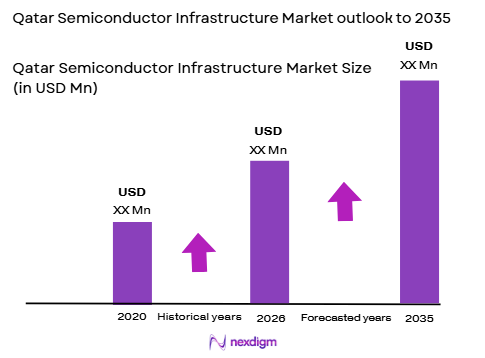
Based on a recent historical assessment, the Qatar semiconductor infrastructure market reached approximately USD ~ billion, driven by national digital infrastructure programs, data center expansion, and state-backed advanced manufacturing initiatives. Public investment in technology parks, research fabs, and high-performance computing facilities has stimulated demand for cleanroom construction, wafer processing utilities, and specialty semiconductor equipment infrastructure. Collaboration with global semiconductor engineering firms and equipment suppliers has further accelerated ecosystem readiness.
Doha and Ras Laffan dominate infrastructure deployment due to concentration of technology zones, energy-intensive industrial clusters, and proximity to logistics corridors supporting semiconductor equipment importation. Strategic alignment with Gulf technology diversification programs and sovereign wealth funding has positioned Qatar as a regional semiconductor research and advanced packaging hub. International partnerships with European and Asian semiconductor infrastructure providers have reinforced technology transfer, engineering capability development, and localized supply chain enablement.
Market Segmentation
By Infrastructure Type
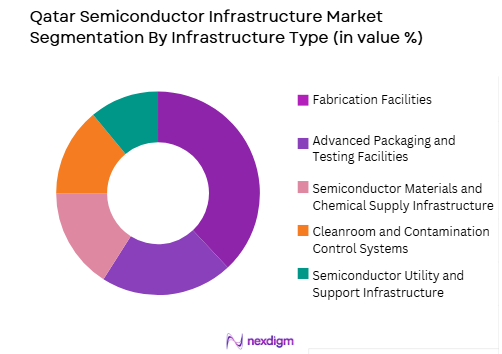
Qatar Semiconductor Infrastructure Market is segmented by infrastructure type into fabrication facilities, advanced packaging and testing facilities, semiconductor materials and chemical supply infrastructure, cleanroom and contamination control systems, and semiconductor utility and support infrastructure. Recently, fabrication facilities has a dominant market share due to factors such as national focus on establishing pilot semiconductor manufacturing capability, high capital intensity of wafer fabrication environments, and demand for precision process utilities including ultrapure water, specialty gases, and controlled power systems.
By End-Use Application
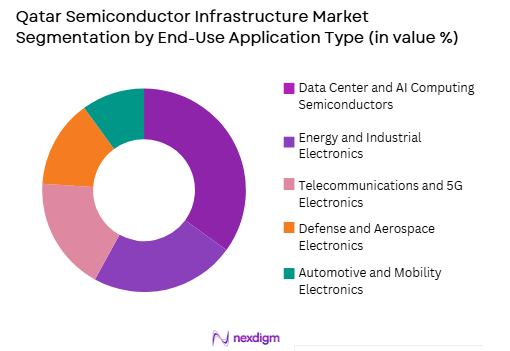
Qatar Semiconductor Infrastructure Market is segmented by end-use application into data center and AI computing semiconductors, energy and industrial electronics, telecommunications and 5G electronics, defense and aerospace electronics, and automotive and mobility electronics. Recently, data center and AI computing semiconductors has a dominant market share due to factors such as hyperscale data center growth, national AI compute infrastructure programs, and demand for high-performance processors requiring advanced packaging, testing, and reliability infrastructure.
Competitive Landscape
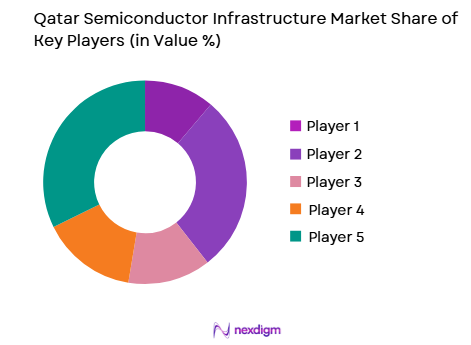
The Qatar semiconductor infrastructure market is moderately concentrated, with a small number of global semiconductor engineering, cleanroom construction, and facility utility providers leading major projects through government-backed contracts and joint ventures. Market entry barriers are high due to capital intensity, technical complexity, and regulatory compliance requirements. Strategic partnerships between international semiconductor facility specialists and local industrial developers dominate project execution and technology transfer.
| Company Name | Establishment Year | Headquarters | Technology Focus | Market Reach | Key Products | Revenue | Local Project Presence |
| ASML Holding | 1984 | Netherlands | ~ | ~ | ~ | ~ | ~ |
| Applied Materials | 1967 | USA | ~ | ~ | ~ | ~ | ~ |
| Lam Research | 1980 | USA | ~ | ~ | ~ | ~ | ~ |
| KLA Corporation | 1975 | USA | ~ | ~ | ~ | ~ | ~ |
| Tokyo Electron | 1963 | Japan | ~ | ~ | ~ | ~ | ~ |
Qatar Semiconductor Infrastructure Market Analysis
Growth Drivers
National Semiconductor Sovereignty and Technology Diversification Investments
Qatar has prioritized advanced technology self-reliance within broader economic diversification programs, directing sovereign investment toward semiconductor infrastructure capability including pilot fabrication, packaging, and advanced electronics manufacturing support facilities. Large-scale public funding has been allocated to science and technology parks, high-performance computing centers, and electronics manufacturing zones that require specialized semiconductor infrastructure such as cleanrooms, chemical handling systems, and precision environmental control. The country’s long-term strategy emphasizes reducing dependence on imported electronics components while building domestic capability in high-value semiconductor segments aligned with energy, defense, and digital sectors. Government partnerships with international semiconductor equipment and engineering firms have enabled knowledge transfer and accelerated infrastructure deployment timelines. Public sector demand from defense electronics, smart energy systems, and national data infrastructure programs has created sustained baseline utilization for semiconductor facilities. Incentives including industrial land allocation, subsidized utilities, and research funding have lowered entry barriers for semiconductor infrastructure projects. The integration of semiconductor capability within national digital transformation strategies has increased demand for fabrication and advanced packaging infrastructure linked to AI computing and telecommunications hardware. Regional competition among Gulf states to establish semiconductor ecosystems has further reinforced investment momentum. These combined factors have positioned semiconductor infrastructure as a strategic national capability priority with stable multi-year funding visibility.
Hyperscale Data Center and AI Compute Infrastructure Expansion
Rapid growth in hyperscale data centers and artificial intelligence computing infrastructure in Qatar has significantly increased demand for semiconductor fabrication support, advanced packaging, and testing infrastructure required for high-performance processors and accelerators. National initiatives to develop sovereign AI compute capacity have driven procurement of advanced semiconductor hardware and associated infrastructure including thermal management, power conditioning, and clean assembly environments. Data localization policies and regional digital service expansion have encouraged domestic deployment of cloud and AI infrastructure facilities requiring specialized semiconductor assembly and testing ecosystems. The increasing computational intensity of AI workloads has elevated requirements for advanced packaging technologies such as chiplet integration and high-bandwidth memory assembly, stimulating infrastructure investment. Partnerships with global cloud providers and semiconductor hardware firms have accelerated local facility construction and technology transfer. Growth in edge computing infrastructure across energy, industrial, and smart city applications has expanded semiconductor device demand requiring localized testing and reliability infrastructure. Energy sector digitalization programs using sensors, automation, and power electronics have further supported semiconductor infrastructure utilization. The convergence of AI, telecommunications, and industrial electronics demand has created a broad semiconductor hardware ecosystem requiring sustained infrastructure capacity expansion. These structural digital economy drivers ensure continued scaling of semiconductor infrastructure aligned with compute demand growth.
Market Challenges
Limited Domestic Semiconductor Manufacturing Ecosystem Depth
Qatar’s semiconductor infrastructure expansion faces structural constraints due to the limited depth of a domestic semiconductor manufacturing ecosystem, including absence of large-scale commercial wafer fabrication, restricted local supply chains, and a relatively small base of semiconductor design and device companies. Semiconductor infrastructure projects require co-location with device manufacturing and packaging operations to achieve sustainable utilization, yet domestic demand remains concentrated in specific sectors such as energy electronics and telecommunications. Dependence on imported semiconductor materials, specialty gases, and equipment components increases operational complexity and cost volatility. Skilled semiconductor process engineers, equipment technicians, and cleanroom specialists are in limited supply domestically, requiring reliance on expatriate expertise and international service providers. Technology transfer agreements often include intellectual property protection constraints that limit local capability replication. The absence of a large domestic semiconductor customer base reduces incentives for private investment in fabrication-scale infrastructure. Regional competition from established semiconductor hubs in Asia and emerging Gulf initiatives increases pressure on Qatar to differentiate in niche segments rather than full-scale manufacturing. Infrastructure utilization risk remains elevated without sustained device production pipelines. These ecosystem limitations constrain the pace and scale at which semiconductor infrastructure can achieve global competitiveness.
High Capital Intensity and Long Payback Periods of Semiconductor Facilities
Semiconductor infrastructure development requires exceptionally high upfront capital investment in specialized construction, precision environmental systems, and process utilities with long depreciation cycles and uncertain utilization trajectories in emerging markets. Fabrication-grade cleanrooms, ultrapure water plants, specialty gas distribution networks, and vibration-controlled facilities demand engineering precision that significantly elevates project costs relative to conventional industrial infrastructure. The absence of continuous high-volume wafer production in Qatar increases financial risk associated with underutilization of infrastructure assets. Semiconductor equipment integration requires ongoing upgrades and maintenance aligned with rapid technology node evolution, increasing lifecycle cost exposure. Financing such infrastructure depends heavily on sovereign funding or long-term government contracts rather than private commercial demand. Payback periods often exceed a decade, limiting attractiveness for private investors and infrastructure developers. Currency exposure and global semiconductor equipment price volatility further complicate cost projections. Construction timelines are extended due to regulatory approvals, technical validation, and equipment lead times. These financial and operational risks collectively constrain the scalability and speed of semiconductor infrastructure deployment despite strategic national intent.
Opportunities
Advanced Packaging and Heterogeneous Integration Hub Development
Qatar has the opportunity to position itself as a regional hub for advanced semiconductor packaging and heterogeneous integration infrastructure, focusing on assembly, testing, and chiplet integration rather than capital-intensive wafer fabrication. Advanced packaging facilities require lower capital investment compared to full fabrication while serving rapidly growing demand from AI, telecommunications, and power electronics sectors. National digital and energy infrastructure programs create domestic demand for high-performance semiconductor modules and sensor electronics suitable for local packaging and testing operations. Partnerships with global semiconductor firms seeking geographically diversified packaging capacity could enable technology transfer and ecosystem formation. Proximity to Gulf markets and logistics connectivity supports regional semiconductor module distribution. Specialized packaging technologies such as 3D integration, high-bandwidth memory stacking, and power module packaging align with energy and AI compute applications prioritized in Qatar. Government incentives and industrial zone infrastructure can accelerate facility deployment. Establishing advanced packaging capability would integrate Qatar into global semiconductor supply chains without requiring full fabrication ecosystem depth. Workforce development in assembly and reliability engineering is more achievable than full semiconductor process engineering. This strategic positioning offers a realistic pathway to semiconductor infrastructure specialization.
Semiconductor Infrastructure for Energy and Industrial Electronics Localization
Qatar’s dominant energy and industrial sectors create strong demand for localized semiconductor infrastructure supporting power electronics, sensing devices, and industrial automation components used in energy production, grid systems, and process industries. Power semiconductor modules for high-voltage conversion, motor drives, and renewable energy integration require specialized packaging, testing, and reliability infrastructure suitable for domestic deployment. Localization of semiconductor components for energy equipment can enhance supply chain resilience and reduce import dependence in critical infrastructure. Collaboration between national energy companies and semiconductor infrastructure providers can establish dedicated electronics manufacturing and testing zones aligned with industrial needs. Industrial digitalization initiatives including smart grids, predictive maintenance, and automation increase semiconductor device consumption across energy operations. Harsh environmental operating conditions in energy infrastructure create demand for reliability testing and ruggedized semiconductor packaging capabilities. Export potential exists for energy electronics modules to regional oil and gas and power markets. Integration of semiconductor infrastructure with energy technology clusters supports cross-sector innovation. This sector-driven semiconductor demand provides a stable utilization base for infrastructure investments beyond general electronics markets.
Future Outlook
Over the next five years, the Qatar semiconductor infrastructure market is expected to expand steadily as national technology diversification programs continue funding fabrication support, packaging, and testing facilities aligned with digital and energy sector demand. Growth will be supported by AI computing expansion, hyperscale data center deployment, and localization of industrial electronics supply chains. International partnerships and sovereign investment will remain central to infrastructure scale-up. Advanced packaging and specialized semiconductor infrastructure niches are likely to define Qatar’s competitive positioning.
Major Players
- Applied Materials
- ASML Holding
- Tokyo Electron
- Lam Research
- KLA Corporation
- SilTest Semiconductors
- imec
- Silian Partners
- Linde Engineering
- Air Liquide Electronics
- Edwards Vacuum
- Daifuku
- Jacobs Engineering
- Chiyoda Almana Engineering
- Technip Energies
Key Target Audience
- Semiconductor device manufacturers
- Data center and AI hardware companies
- Energy and industrial electronics firms
- Telecommunications equipment providers
- Defense and aerospace electronics companies
- Investments and venture capitalist firms
- Government and regulatory bodies
- Industrial infrastructure developers
Research Methodology
Step 1: Identification of Key Variables
Key variables including semiconductor infrastructure types, facility investments, end-use demand sectors, and technology deployment patterns were identified through analysis of national technology programs, industrial policies, and semiconductor ecosystem structures relevant to Qatar.
Step 2: Market Analysis and Construction
Market size and segmentation were constructed by mapping semiconductor infrastructure investments across fabrication, packaging, utilities, and cleanroom systems, combined with end-use semiconductor demand drivers from AI, energy, and telecommunications sectors.
Step 3: Hypothesis Validation and Expert Consultation
Findings were validated through consultation with semiconductor infrastructure engineers, facility designers, and regional technology policy experts to ensure alignment with realistic deployment and utilization conditions in Qatar.
Step 4: Research Synthesis and Final Output
All quantitative and qualitative insights were synthesized into a structured market framework covering segmentation, competitive landscape, growth dynamics, and strategic opportunities to produce a comprehensive Qatar semiconductor infrastructure outlook.

- Executive Summary
- Research Methodology (Definitions, Scope, Industry Assumptions, Market Sizing Approach, Primary & Secondary Research Framework, Data Collection & Verification Protocol, Analytic Models & Forecast Methodology, Limitations & Research Validity Checks)

- Market Definition and Scope
- Value Chain & Stakeholder Ecosystem
- Regulatory / Certification Landscape
- Sector Dynamics Affecting Demand
- Strategic Initiatives & Infrastructure Growth

- Growth Drivers
National semiconductor self-sufficiency initiatives and localization policies
Expansion of regional advanced electronics manufacturing ecosystem
Government-backed technology and R&D infrastructure investments - Market Challenges
High capital intensity and long payback periods for semiconductor fabs
Limited domestic semiconductor manufacturing expertise and talent
Supply chain dependency on imported semiconductor equipment - Market Opportunities
Development of compound semiconductor and power electronics fabs
Regional hub positioning for advanced packaging and testing services
Public–private partnerships for semiconductor R&D infrastructure - Trends
Shift toward modular and scalable fab infrastructure models
Integration of advanced packaging within fabrication ecosystems
Adoption of energy-efficient and sustainable cleanroom facilities - Government regulations
National industrial diversification and localization mandates
Technology transfer and foreign investment partnership frameworks
Strategic semiconductor and advanced manufacturing incentives - SWOT analysis
- Porters five forces

- By Market Value, 2020-2025
- By Installed Units, 2020-2025
- By Average System Price, 2020-2025
- By System Complexity Tier, 2020-2025

- By System Type (In Value%)
Wafer Fabrication Facilities
Semiconductor Assembly and Packaging Lines
Cleanroom and Contamination Control Systems
Semiconductor Process Equipment Infrastructure
Testing and Metrology Infrastructure - By Platform Type (In Value%)
300mm Fabrication Platforms
Advanced Packaging Platforms
Compound Semiconductor Platforms
MEMS and Sensor Platforms
R&D Pilot Line Platforms - By Fitment Type (In Value%)
Greenfield Fab Infrastructure
Brownfield Expansion Infrastructure
Modular Fab Units
Pilot and Prototype Facilities
Retrofitted Legacy Facilities - By End User Segment (In Value%)
Integrated Device Manufacturers
Foundry Service Providers
OSAT Providers
Research and Academic Institutes
Government Semiconductor Programs - By Procurement Channel (In Value%)
Direct OEM Procurement
EPC Semiconductor Projects
Government Tender Programs
Strategic Technology Partnerships
Turnkey Fab Integrators

- Market Share Analysis
- Cross Comparison Parameters (Infrastructure Type, Technology Node Capability, Fab Capacity, Cleanroom Class, Process Integration Scope, Automation Level, Utilities and Energy Efficiency, Project Delivery Model, End-to-End EPC Capability, Regional Service Support)
- SWOT Analysis of Key Competitors
- Pricing & Procurement Analysis
- Key Players
ASML
Applied Materials
Lam Research
KLA Corporation
Tokyo Electron
ASM International
Advantest
Teradyne
Kulicke & Soffa
ASMPT
AIXTRON
EV Group
SUSS MicroTec
Toppan Photomasks
Air Liquide Electronics

- Integrated device manufacturers seeking regional fabrication resilience
- Foundry operators targeting Middle East customer proximity
- OSAT providers expanding packaging and testing capacity
- Research institutes developing semiconductor process capabilities

- Forecast Market Value, 2026-2035
- Forecast Installed Units, 2026-2035
- Price Forecast by System Tier, 2026-2035
- Future Demand by Platform, 2026-2035


 Request a Sample
 Ask for Customization
 Get a Quote
 Enquire Now