
 Download PDF
 Download PDF
Market Overview
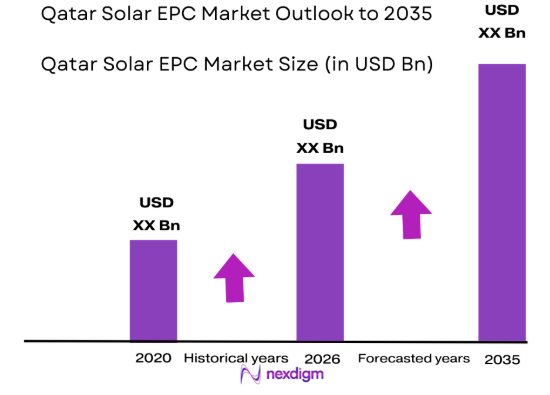
The Qatar Solar EPC market is experiencing significant growth, with an estimated value of USD ~ billion based on recent historical assessments. This growth is primarily driven by the government’s focus on diversifying the energy mix and increasing reliance on renewable energy sources to meet sustainability targets. Strong investment in large-scale solar projects, coupled with technological advancements in solar PV and energy storage systems, has accelerated this market’s development. Furthermore, the availability of funding, both from public and private sectors, has enhanced the scalability of solar infrastructure across Qatar.
Qatar is emerging as a dominant player in the solar energy sector due to its vast land resources, high solar radiation levels, and robust governmental support. The government’s commitment to its National Vision 2030 and large-scale projects like the Al Kharsaah Solar Power Plant has positioned Qatar as a leader in solar energy production. Additionally, the country’s strategic location in the Middle East enhances its capability to become a major exporter of solar energy solutions. Qatar’s increasing investments in solar technology and grid infrastructure further solidify its market leadership.
Market Segmentation
By System Type
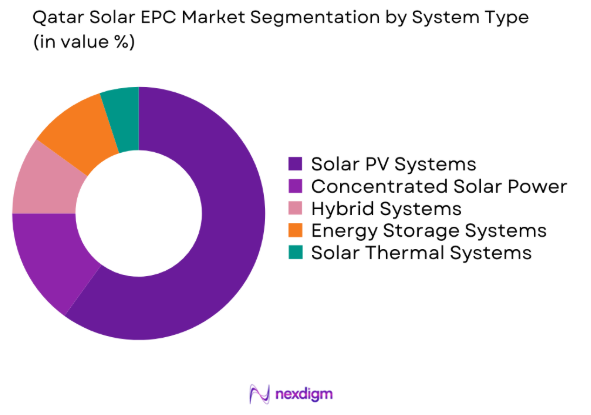
The Qatar Solar EPC market is segmented by system type into solar PV systems, concentrated solar power (CSP) systems, hybrid systems, energy storage systems, and solar thermal systems. Among these, solar PV systems dominate the market, as they are the most widely adopted due to their cost-effectiveness and scalability. The increase in residential, commercial, and industrial installations has been driven by favorable government policies, such as financial incentives and tax exemptions. The simplicity and efficiency of solar PV technology, coupled with decreasing installation costs, have made it the preferred choice in Qatar’s renewable energy sector.
By Platform Type
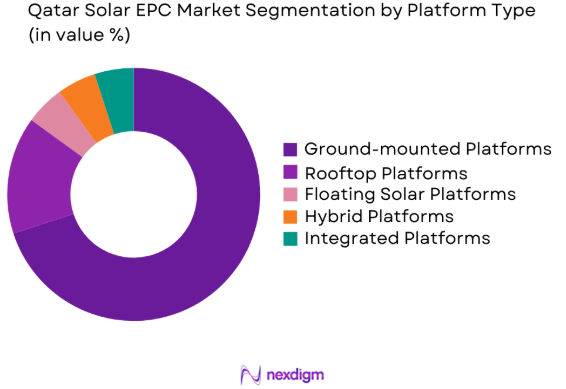
The Qatar Solar EPC market is further segmented by platform type into ground-mounted platforms, rooftop platforms, floating solar platforms, hybrid platforms, and integrated platforms. Ground-mounted platforms have the largest market share, largely driven by large-scale utility projects, such as the Al Kharsaah Solar Power Plant. The flat terrain and abundant land availability in Qatar make ground-mounted solar systems a feasible and efficient option. This platform type also benefits from easier maintenance and higher energy generation efficiency compared to rooftop systems.
Competitive Landscape
The competitive landscape in the Qatar Solar EPC market is marked by consolidation, as large global and regional players collaborate with local firms to execute high-profile solar projects. Key players such as Siemens Gamesa, First Solar, and SunPower are influential in driving market growth by leveraging technological expertise and establishing long-term strategic partnerships with the government. These companies have created strong alliances with local entities to ensure that they meet the unique demands of the Qatari market. The market is also seeing an increase in the involvement of regional EPC contractors.
| Company Name | Establishment Year | Headquarters | Technology Focus | Market Reach | Key Products | Revenue | Additional Parameter |
| Siemens Gamesa | 1976 | Spain | ~ | ~ | ~ | ~ | ~ |
| First Solar | 1999 | USA | ~ | ~ | ~ | ~ | ~ |
| SunPower | 1985 | USA | ~ | ~ | ~ | ~ | ~ |
| JinkoSolar | 2006 | China | ~ | ~ | ~ | ~ | ~ |
| ACWA Power | 2008 | Saudi Arabia | ~ | ~ | ~ | ~ | ~ |
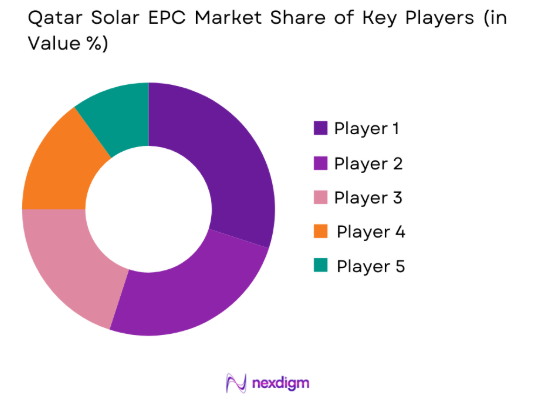
Qatar Solar EPC Market Analysis
Growth Drivers
Government Investment in Renewable Energy
Qatar’s government has made significant investments in renewable energy, driving the rapid expansion of solar infrastructure. With a clear goal to reduce dependence on fossil fuels and diversify its energy sources, large-scale projects like the Al Kharsaah Solar Power Plant have been central to this shift. Financial incentives, tax exemptions, and government-backed initiatives have lowered solar energy production costs, making it more accessible to both residential and commercial sectors. This commitment to sustainability has also attracted international interest in solar EPC projects, further accelerating the growth of the market. As a result, the country’s focus on renewable energy has positioned solar power as a key component of Qatar’s long-term energy strategy.
Technological Advancements in Solar Energy
The rapid advancements in solar technology, especially in solar PV and energy storage systems, have fueled the growth of the solar EPC market in Qatar. The development of more efficient solar panels, enhanced energy storage solutions, and smart grid technologies has made solar power more reliable and cost-effective. These innovations have significantly reduced costs and improved efficiency, making solar energy a competitive alternative to traditional power sources. As a result, solar energy has become increasingly attractive to various sectors, driving higher adoption rates and accelerating the transition towards renewable energy in Qatar, contributing to the growth of the solar EPC market.
Market Challenges
High Initial Capital Investment
A major barrier to the growth of the solar EPC market in Qatar is the high initial capital investment required for large-scale solar projects. While installation costs have decreased, the upfront capital expenditure remains significant, making it difficult for smaller firms and individuals to enter the market. This challenge is particularly acute for residential and small-scale commercial installations, where the high costs of installation and grid integration may not be recovered quickly. The substantial initial investment can deter potential investors, limiting the market’s growth and adoption of solar energy, particularly among those who may struggle with the long-term payback periods associated with such projects.
Intermittency of Solar Power Generation
Solar energy production relies on sunlight, which causes fluctuations in energy output throughout the day and across seasons. This intermittency presents a challenge for integrating solar power into the grid, as a stable and continuous energy supply is critical for the efficient functioning of the national grid. While energy storage solutions are advancing, the high costs associated with large-scale storage systems remain a significant barrier. These systems are necessary to ensure a reliable power supply during periods of low sunlight or high demand. Without cost-effective energy storage, maintaining a consistent and dependable solar energy output remains a key challenge for the sector’s long-term success.
Opportunities
Energy Storage Solutions
As solar energy demand grows in Qatar, the need for efficient energy storage solutions becomes crucial. Energy storage systems, like lithium-ion batteries, can store excess energy generated during the day for use at night or in low-sunlight periods. This creates an opportunity for EPC contractors to diversify their services and address the intermittency challenges of solar power. By investing in energy storage technology, contractors can enhance the reliability and efficiency of solar installations, making them more reliable and appealing to end-users. These systems will not only ensure a stable power supply but also increase the overall value and performance of solar energy projects.
Strategic Partnerships with Global Technology Providers
Local players in Qatar’s solar EPC market have a significant opportunity to form strategic partnerships with global technology providers, such as solar panel and energy storage system manufacturers. Collaborating with international firms enables local companies to access advanced technologies, gain valuable technical expertise, and strengthen their market position. These partnerships facilitate knowledge transfer and capacity building, empowering local businesses to enhance their capabilities and remain competitive. By leveraging the expertise of global players, local firms can better address the growing demand for renewable energy solutions, positioning themselves to thrive not only in Qatar but also in the broader regional and international markets.
Future Outlook
The future outlook for Qatar’s Solar EPC market is highly optimistic, with continued growth driven by government investments, technological advancements, and international collaboration. As Qatar strives to meet its renewable energy targets under the National Vision 2030, the market for solar energy is expected to expand rapidly. The government’s ongoing initiatives to diversify its energy sources and promote sustainability, coupled with the increasing adoption of solar technologies, will likely result in a thriving solar EPC sector. The next five years will likely witness a rise in demand for energy storage solutions and the integration of smart grid systems, creating new opportunities for innovation and market expansion.
Major Players
- Siemens Gamesa
- First Solar
- SunPower
- JinkoSolar
- ACWA Power
- Trina Solar
- Vestas
- Canadian Solar
- SolarEdge Technologies
- Enel Green Power
- ABB
- Sharp Solar
- Hanwha Q CELLS
- Risen Energy
- LONGiSolar
Key Target Audience
- Investments and venture capitalist firms
- Government and regulatory bodies
- Solar developers and contractors
- Utility companies
- Industrial corporations
- Commercial businesses
- Research and development firms
- Solar equipment manufacturers
Research Methodology
Step 1: Identification of Key Variables
The first step in the research methodology involves identifying the key variables that drive the solar EPC market, such as system types, platform types, procurement channels, and market trends. This ensures that the study focuses on relevant factors that impact the market.
Step 2: Market Analysis and Construction
Market data is gathered from primary and secondary sources, including interviews with key industry stakeholders and government reports. This data is used to build a comprehensive understanding of the market size, growth trends, and potential opportunities.
Step 3: Hypothesis Validation and Expert Consultation
The collected data is validated through consultations with industry experts, ensuring that assumptions and market forecasts are accurate. Expert insights provide an additional layer of validation to the market analysis.
Step 4: Research Synthesis and Final Output
The final output is a synthesis of the analyzed data, market trends, and expert insights, providing a detailed report that highlights key findings and actionable recommendations for stakeholders.

- Executive Summary
- Research Methodology (Definitions, Scope, Industry Assumptions, Market Sizing Approach, Primary & Secondary Research Framework, Data Collection & Verification Protocol, Analytic Models & Forecast Methodology, Limitations & Research Validity Checks)

- Market Definition and Scope
- Value Chain & Stakeholder Ecosystem
- Regulatory / Certification Landscape
- Sector Dynamics Affecting Demand
- Strategic Initiatives & Infrastructure Growth

- Growth Drivers
Increasing Government Investment in Renewable Energy
Declining Solar Panel Prices
Growing Demand for Energy Security and Sustainability - Market Challenges
High Initial Capital Investment
Intermittency of Solar Power Generation
Regulatory and Compliance Barriers - Market Opportunities
Emerging Demand for Energy Storage Solutions
Advancements in Solar Panel Technology
Strategic Partnerships with Global Players - Trends
Growth of Integrated Solar Solutions
Adoption of Smart Grid Technologies
Focus on Sustainable Infrastructure Development - Government Regulations
- SWOT Analysis of Key Competitors
- Porter’s Five Forces

- By Market Value, 2020-2025
- By Installed Units, 2020-2025
- By Average System Price, 2020-2025
- By System Complexity Tier, 2020-2025

- By System Type (In Value%)
Solar PV Systems
Concentrated Solar Power (CSP)
Hybrid Systems
Energy Storage Systems
Solar Thermal Systems - By Platform Type (In Value%)
Ground-mounted Platforms
Rooftop Platforms
Floating Solar Platforms
Hybrid Platforms
Integrated Platforms - By Fitment Type (In Value%)
On-grid Solutions
Off-grid Solutions
Hybrid Solutions
Modular Solutions
Integrated Solutions - By End User Segment (In Value%)
Government Entities
Commercial & Industrial Sector
Residential Sector
Utility Providers
Private Sector / Technology Firms - By Procurement Channel (In Value%)
Direct Procurement
Government Tenders
Private Sector Procurement
Online Bidding Platforms
Third-party Distributors

- Market Share Analysis
- Cross Comparison Parameters (System Type, Platform Type, Procurement Channel, End User Segment, Fitment Type, Installation Method, Project Scale, Government Initiatives, Technology Integration, Regulatory Compliance)
- SWOT Analysis of Key Competitors
- Pricing & Procurement Analysis
- Key Players
First Solar
SunPower Corporation
Siemens Gamesa
Larsen & Toubro
Canadian Solar
Enel Green Power
Abengoa Solar
JinkoSolar
SMA Solar Technology
Trina Solar
Sungrow Power Supply
ACWA Power
Tata Power Solar Systems
Kuwait Solar Company
Green Energy Solution

- Government and Utility Provider Focus on Sustainability
- Increased Demand from the Commercial Sector
- Residential Sector Adoption of Solar Energy Solutions
- Private Sector Involvement in Solar Energy Projects

- Forecast Market Value, 2026-2035
- Forecast Installed Units, 2026-2035
- Price Forecast by System Tier, 2026-2035
- Future Demand by Platform, 2026-2035


 Request a Sample
 Ask for Customization
 Get a Quote
 Enquire Now