
 Download PDF
 Download PDF
Market Overview
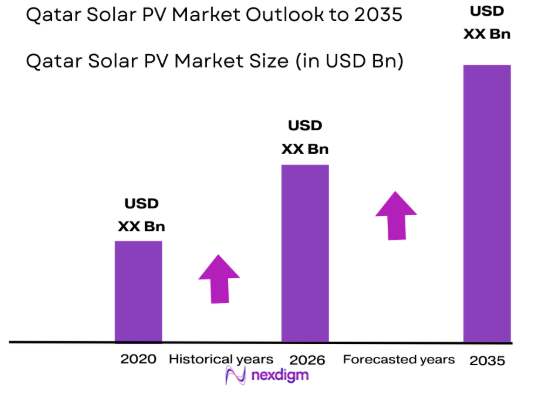
The Qatar solar PV market has witnessed significant growth in recent years, driven by substantial investments in renewable energy and government-led initiatives promoting clean energy adoption. Based on a recent historical assessment, the market size is projected to reach USD ~ billion. The primary drivers of this growth are Qatar’s ambitious energy diversification goals, substantial subsidies for renewable energy projects, and the country’s push towards meeting sustainability targets under its National Vision 2030.
Qatar’s dominance in the solar PV market is underpinned by its strategic investments in infrastructure and partnerships with leading global solar manufacturers. The nation’s strong focus on energy sustainability, combined with favorable government policies, has attracted both local and international players to invest in solar energy projects. Qatar’s economic wealth and favorable geographical location, with abundant sunshine, make it an ideal market for solar power projects, further accelerating its growth and market leadership.
Market Segmentation
By Product Type
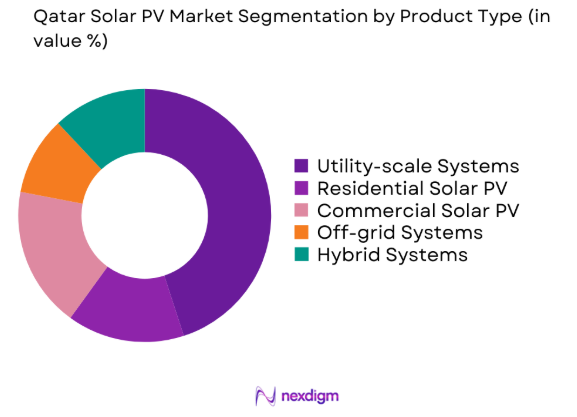
The Qatar solar PV market is segmented by product type into utility-scale systems, residential solar PV, commercial solar PV, off-grid systems, and hybrid systems. Recently, utility-scale systems have a dominant market share due to the country’s large-scale solar farms, which are increasingly being developed to meet national energy demands and sustainability targets. These systems are favored for their efficiency, scalability, and ability to support Qatar’s growing energy requirements as it transitions toward renewable energy sources.
By Platform Type
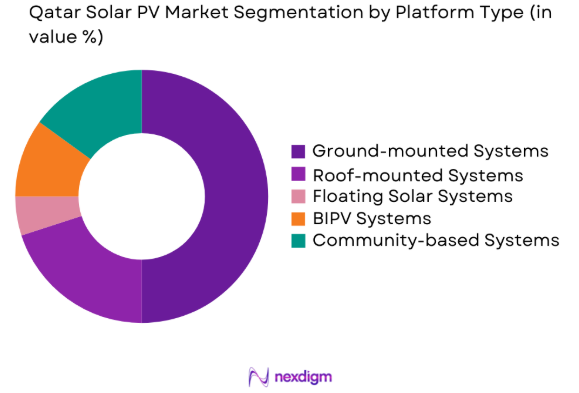
The Qatar solar PV market is segmented into roof-mounted systems, ground-mounted systems, floating solar systems, building-integrated photovoltaics (BIPV), and community-based solar systems. Ground-mounted systems hold a dominant share as they are well-suited for large-scale installations and offer significant flexibility in terms of land use, which is abundant in Qatar. These systems are increasingly being deployed for utility-scale solar projects to meet the nation’s renewable energy targets.
Competitive Landscape
The Qatar solar PV market is highly competitive, with several key players involved in the development, installation, and maintenance of solar energy systems. These players include both local companies and global giants, contributing to the rapid growth of the market. The competitive landscape is characterized by technological innovation, partnerships with international firms, and increasing government support for solar initiatives. The market is expected to see further consolidation as companies strive to secure large-scale projects in the face of growing demand.
| Company Name | Establishment Year | Headquarters | Technology Focus | Market Reach | Key Products | Revenue (USD) | Additional Parameter |
| First Solar | 1999 | United States | ~ | ~ | ~ | ~ | ~ |
| SunPower Corporation | 1985 | United States | ~ | ~ | ~ | ~ | ~ |
| JinkoSolar | 2006 | China | ~ | ~ | ~ | ~ | ~ |
| Trina Solar | 1997 | China | ~ | ~ | ~ | ~ | ~ |
| Canadian Solar | 2001 | Canada | ~ | ~ | ~ | ~ | ~ |
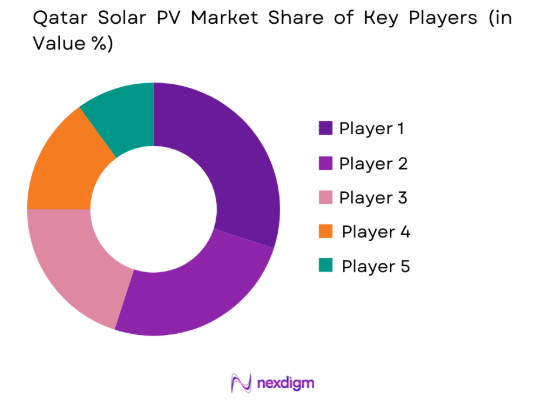
Qatar Solar PV Market Analysis
Growth Drivers
Government Investment in Renewable Energy
Qatar’s government has increased investments in renewable energy to diversify its energy mix and reduce reliance on fossil fuels. Large-scale solar projects like the Al Kharsaah Solar Power Plant, one of the region’s largest, have boosted demand for solar PV. Qatar’s commitment to National Vision 2030, focusing on reducing carbon emissions and improving energy efficiency, has accelerated solar energy adoption. This shift not only addresses environmental concerns but also promotes economic benefits such as job creation and energy security. Qatar’s abundant sunlight and vast land area make it an ideal location for solar PV installations, and government funding continues to position solar energy as a key element of the country’s energy future.
Technological Advancements in Solar PV Systems
Continuous improvements in solar technology have driven cost reductions, increased efficiency, and enhanced energy generation capabilities of solar PV systems. Innovations such as bifacial solar panels and energy storage systems have improved the viability of solar projects, even in areas with limited sunlight during certain months of the year. Moreover, advancements in solar inverters and tracking systems that optimize panel performance further contribute to the growth of the solar PV market in Qatar. As the technology becomes more accessible and affordable, both residential and commercial sectors are increasingly adopting solar PV solutions. These technological advancements not only support Qatar’s sustainability goals but also enable economic growth by reducing the reliance on traditional energy sources.
Market Challenges
High Initial Capital Investment
Despite the rapid adoption of solar energy, the high initial cost of installing solar PV systems remains a significant barrier, particularly for residential and smaller commercial projects. The cost of solar panels, inverters, and installation can be substantial, and while the long-term savings on energy bills may offset this, many businesses and individuals find it difficult to afford the upfront costs. Additionally, the installation of supporting infrastructure, such as energy storage systems and grid integration, adds to the overall expense. Although government subsidies and incentives have made solar energy more accessible, the high initial investment remains a challenge for broader adoption, particularly in the residential segment.
Grid Integration Challenges
As Qatar increases its solar power generation capacity, one of the key challenges the country faces is the integration of solar energy into the existing grid infrastructure. The intermittency of solar power, which is highly dependent on weather conditions and sunlight, poses a challenge for grid stability and reliability. The existing grid system was designed for conventional energy sources like natural gas, and significant upgrades are needed to accommodate renewable energy sources such as solar. The lack of a robust energy storage infrastructure further exacerbates this issue, as energy generated during peak sunlight hours cannot always be stored for use during periods of low solar production.
Opportunities
Expansion of Solar Energy Storage Solutions
As Qatar’s solar capacity expands, the development of energy storage solutions becomes crucial to overcoming the intermittency challenges of solar power. Integrating energy storage systems with solar PV installations will enable the storage of excess energy produced during the day for use at night or during cloudy periods. This will enhance the efficiency, reliability, and grid stability of solar power. The demand for energy storage technologies, such as lithium-ion batteries and other innovative solutions, is expected to grow rapidly as solar adoption rises. The Qatari government’s support for energy storage research and development will further accelerate this growth, creating substantial opportunities for players in both the solar and energy storage sectors.
Partnerships with International Solar Developers
Qatar’s solar PV market presents significant opportunities for collaboration with global solar developers, technology providers, and financiers. International companies with expertise in large-scale solar projects can capitalize on Qatar’s favorable investment climate and abundant resources to establish a strong market presence. These partnerships will facilitate knowledge transfer, enhance local capabilities, and accelerate the development of large-scale solar farms. Furthermore, collaborations can drive the faster deployment of solar PV technologies, increase market competition, and reduce project costs, thereby expediting the transition to renewable energy. This will contribute to meeting Qatar’s ambitious energy diversification and sustainability goals while fostering a more competitive solar industry.
Future Outlook
The future of Qatar’s solar PV market looks promising, with increasing adoption expected across residential, commercial, and industrial sectors. Technological advancements, government incentives, and large-scale solar projects will continue to drive market growth. Additionally, the development of energy storage solutions and grid integration infrastructure will support the country’s transition to a renewable energy-driven economy. As Qatar moves toward its renewable energy goals, solar PV is set to become a cornerstone of the country’s sustainable energy future.
Major Players
- First Solar
- SunPower Corporation
- JinkoSolar
- Trina Solar
- Canadian Solar
- LONGi Solar
- Hanwa Q Cells
- REC Group
- SMA Solar Technology
- Yingli Solar
- GCL-Poly Energy
- JA Solar Technology
- Sharp Solar
- First Solar
- Suntech Power
Key Target Audience
- Investments and venture capitalist firms
- Government and regulatory bodies
- Solar power developers
- Commercial and industrial energy managers
- Utilities and grid operators
- Renewable energy technology providers
- Energy storage companies
- International energy investors
Research Methodology
Step 1: Identification of Key Variables
The research process begins with identifying the key variables influencing the Qatar solar PV market, including market size, technology trends, government policies, and economic factors.
Step 2: Market Analysis and Construction
This step involves analyzing the current market conditions, competitive landscape, and technology developments in the solar PV sector to build an accurate model of market dynamics.
Step 3: Hypothesis Validation and Expert Consultation
The next step is to validate hypotheses with expert consultations, including interviews with industry stakeholders, to ensure the accuracy and relevance of the research findings.
Step 4: Research Synthesis and Final Output
The final step synthesizes all gathered data, including market insights and expert opinions, to produce the final research report, outlining key trends, drivers, challenges, and opportunities.

- Executive Summary
- Research Methodology (Definitions, Scope, Industry Assumptions, Market Sizing Approach, Primary & Secondary Research Framework, Data Collection & Verification Protocol, Analytic Models & Forecast Methodology, Limitations & Research Validity Checks)

- Market Definition and Scope
- Value Chain & Stakeholder Ecosystem
- Regulatory / Certification Landscape
- Sector Dynamics Affecting Demand
- Strategic Initiatives & Infrastructure Growth

- Growth Drivers
Government Initiatives and Subsidies
Technological Advancements in Solar PV
Increasing Environmental Concerns - Market Challenges
High Initial Investment Costs
Grid Integration Challenges
Technological Limitations in Solar Storage - Market Opportunities
Expanding Solar Projects in Desert Regions
Partnerships for Technological Advancements
Government Infrastructure Development - Trends
Integration of Smart Grids in Solar PV
Rise in Solar Leasing Models
Use of Solar Energy for Desalination - Government Regulations
- SWOT Analysis of Key Competitors
- Porter’s Five Forces

- By Market Value, 2020-2025
- By Installed Units, 2020-2025
- By Average System Price, 2020-2025
- By System Complexity Tier, 2020-2025

- By System Type (In Value%)
Solar Photovoltaic Systems
Concentrated Solar Power Systems
Solar Thermal Systems
Hybrid Solar Systems
BIPV (Building-Integrated Photovoltaic) Systems - By Platform Type (In Value%)
Ground-mounted Solar PV Systems
Roof-mounted Solar PV Systems
Floating Solar PV Systems
Integrated Solar PV Solutions
Off-grid Solar Systems - By Fitment Type (In Value%)
On-premise Solar Solutions
Commercial Solar Solutions
Industrial Solar Solutions
Residential Solar Solutions
Utility-scale Solar Solutions - By End User Segment (In Value%)
Residential Customers
Commercial Businesses
Industrial Facilities
Government Entities
Utilities - By Procurement Channel (In Value%)
Direct Procurement
Government Tenders
Private Sector Procurement
Online Procurement Platforms
Third-party Distributors

- Market Share Analysis
- Cross Comparison Parameters (System Type, Platform Type, Procurement Channel, End User Segment, Fitment Type, Installation Type, Region, Technology Type, Power Output, Storage Capacity)
- SWOT Analysis of Key Competitors
- Pricing & Procurement Analysis
- Key Players
Qatar Solar Energy
First Solar
JinkoSolar
Trina Solar
Sungrow Power Supply
Siemens Gamesa
SMA Solar Technology
Enel Green Power
Canadian Solar
Longi Solar
Risen Energy
JA Solar Technology
Yingli Solar
Vikram Solar
Tata Power Solar

- Government and Public Sector Adoption
- Growing Interest from Commercial Sectors
- Residential Adoption and Government Incentives
- Large-Scale Utility Solar Projects

- Forecast Market Value, 2026-2035
- Forecast Installed Units, 2026-2035
- Price Forecast by System Tier, 2026-2035
- Future Demand by Platform, 2026-2035


 Request a Sample
 Ask for Customization
 Get a Quote
 Enquire Now