
 Download PDF
Market Overview
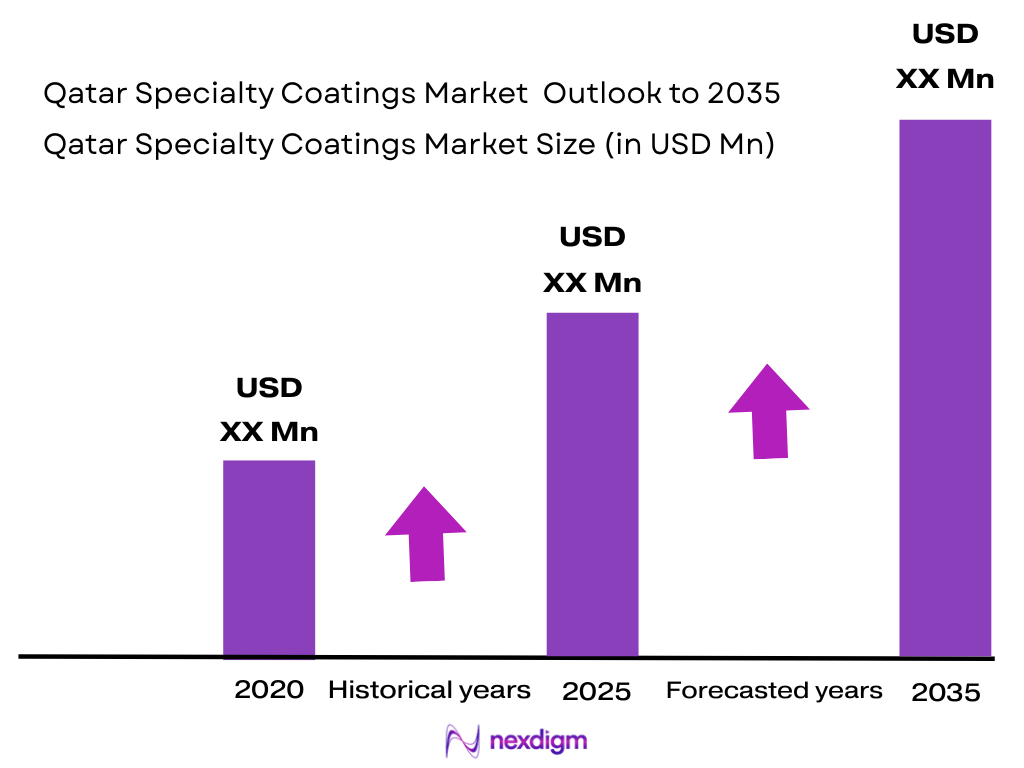
The Qatar Specialty Coatings Market is valued at ~USD XX million in 2024 and is expected to grow at a CAGR of ~8.7% during 2026-2035. The market is supported by demand from oil and gas infrastructure, LNG facilities, marine assets, construction projects, industrial equipment and corrosion-protection applications. Qatar’s large-scale energy infrastructure requires advanced coatings for protection against saltwater exposure, high temperatures and chemical environments. The specialty coatings market is further supported by infrastructure modernization programs and industrial diversification initiatives under Qatar National Vision 2030. Existing market assessments indicate that Qatar’s specialty coatings demand is strongly concentrated around anti-corrosion and protective coating applications due to the country’s energy-intensive industrial base.
The Qatar Specialty Coatings Market is concentrated around industrial and economic hubs including Doha, Ras Laffan Industrial City, Mesaieed Industrial City and Dukhan due to their concentration of energy, petrochemical, marine and infrastructure assets. Ras Laffan remains a critical demand center because of LNG processing facilities, export infrastructure and offshore operations requiring protective coating systems. Mesaieed supports demand through petrochemical, steel, manufacturing and port-related activities. Doha contributes through commercial construction, transportation infrastructure and public development projects. Qatar’s industrial ecosystem generated strong requirements for corrosion-resistant coatings due to exposure to marine environments, hydrocarbons and harsh climatic conditions.
Market Segmentation
By Resin Type
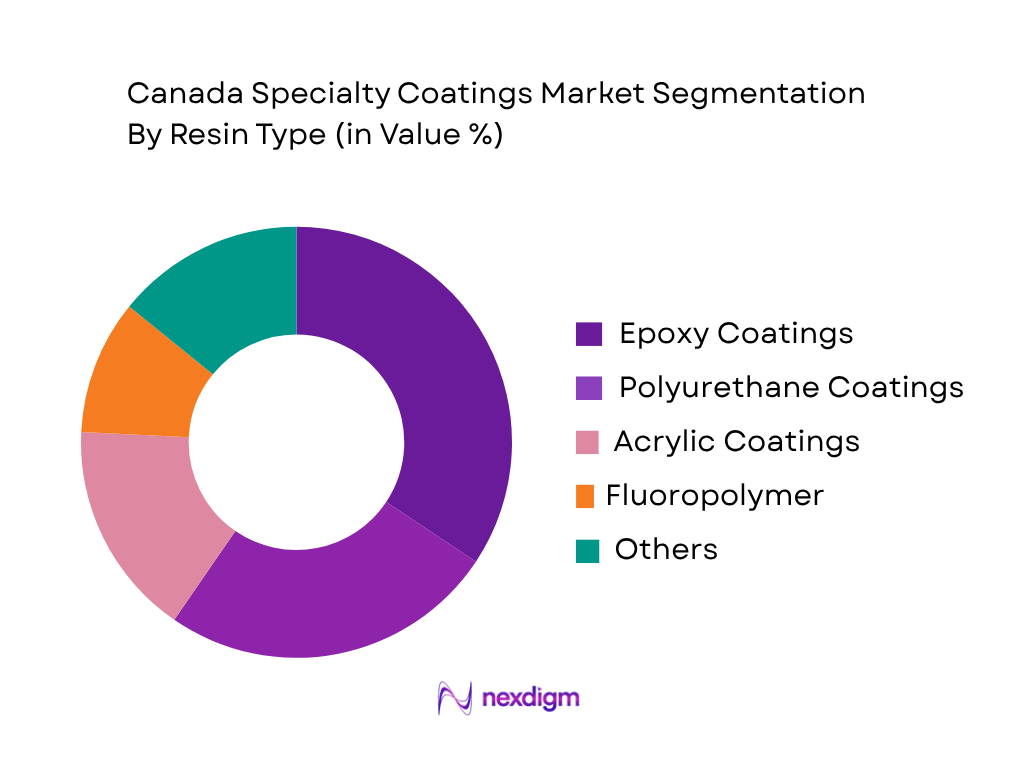
The Qatar Specialty Coatings Market is segmented by resin type into epoxy coatings, polyurethane coatings, acrylic coatings, fluoropolymer coatings, alkyd coatings and silicone coatings. Epoxy coatings dominate the resin type segment with approximately 34% market share in 2024, driven by their extensive usage in oil and gas facilities, LNG infrastructure, pipelines, offshore platforms and industrial flooring applications. Epoxy formulations provide high adhesion, chemical resistance and corrosion protection, making them suitable for Qatar’s hydrocarbon-heavy industrial environment. Energy operators and infrastructure developers widely use epoxy systems for steel protection, storage tanks, processing equipment and marine structures exposed to moisture and salt conditions. The growing requirement for long-life protective solutions across Ras Laffan and Mesaieed industrial zones further strengthens epoxy coating adoption.
By Application Industry
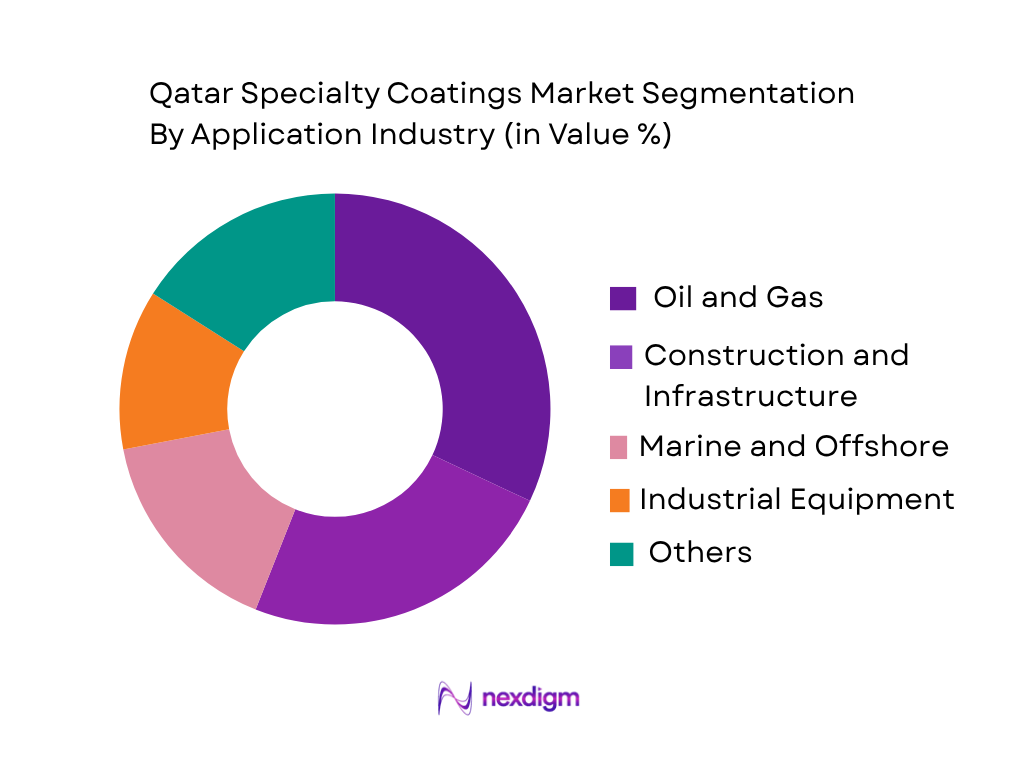
The Qatar Specialty Coatings Market is segmented by application industry into oil and gas, construction and infrastructure, marine and offshore, industrial equipment, power and utilities, and automotive and transportation. Oil and gas dominates the application segment with approximately 32% market share in 2024 due to Qatar’s globally significant LNG and hydrocarbon infrastructure. Specialty coatings are essential across pipelines, offshore platforms, storage tanks, refineries, processing plants and export terminals to prevent corrosion and extend asset life. Qatar’s LNG expansion activities and continuous maintenance requirements across energy facilities create recurring demand for high-performance coatings. The country’s offshore environment, characterized by humidity, seawater exposure and temperature variations, increases the requirement for epoxy, polyurethane and anti-corrosion coating systems.
Competitive Landscape
The Qatar Specialty Coatings Market is characterized by the presence of global coating manufacturers, regional suppliers and specialized industrial coating providers. Competition is primarily driven by product performance, corrosion resistance capability, certification standards, technical support and ability to supply coatings for oil & gas, LNG, marine and infrastructure projects. Major companies compete through epoxy, polyurethane, fire-resistant, thermal barrier and anti-corrosion coating solutions designed for Qatar’s harsh climatic and industrial conditions. The market includes established players such as Jotun, Akzo Nobel, Hempel, PPG Industries and Sherwin-Williams, which supply advanced coating systems for energy, marine and construction applications.
| Company | Establishment Year | Headquarters | Key Product Portfolio | Major Application Areas | Qatar Market Focus | Technology Strength | Distribution Approach | Industry Certifications |
| Jotun | 1926 | Sandefjord, Norway | ~ | ~ | ~ | ~ | ~ | ~ |
| Akzo Nobel | 1994 | Amsterdam, Netherlands | ~ | ~ | ~ | ~ | ~ | ~ |
| Hempel | 1915 | Lyngby, Denmark | ~ | ~ | ~ | ~ | ~ | ~ |
| PPG Industries | 1883 | Pittsburgh, United States | ~ | ~ | ~ | ~ | ~ | ~ |
| The Sherwin-Williams Company | 1866 | Cleveland, United States | ~ | ~ | ~ | ~ | ~ | ~ |
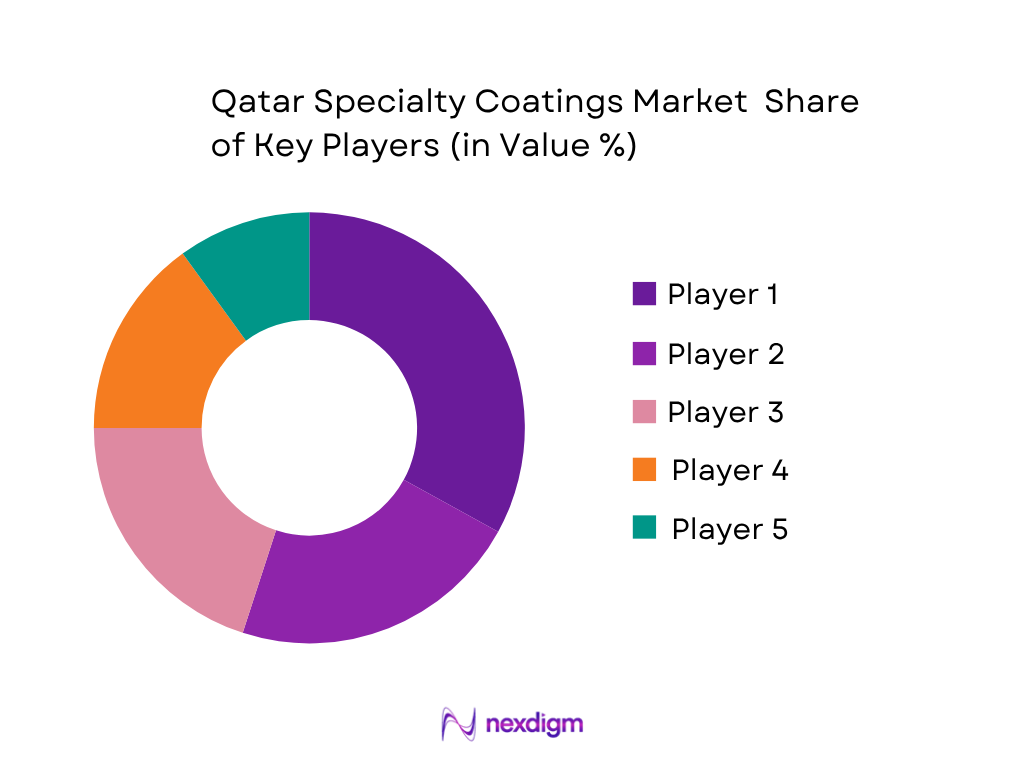
Qatar Specialty Coatings Market Analysis
Growth Drivers
Oil and Gas Infrastructure Expansion and LNG Asset Maintenance Requirements
Qatar’s specialty coatings demand is strongly supported by its hydrocarbon-based industrial infrastructure, where protective coatings are required for LNG plants, offshore platforms, pipelines, storage tanks and processing facilities. Qatar produced approximately 179.5 billion cubic meters of natural gas in 2024, maintaining its position as one of the world’s leading LNG exporters, according to the U.S. Energy Information Administration. The country’s LNG infrastructure, including facilities operated by QatarEnergy, requires continuous corrosion protection due to exposure to seawater, humidity, hydrocarbons and high temperatures. Qatar’s GDP reached approximately USD 219.6 billion in 2024, according to World Bank data, reflecting continued economic activity supported by energy exports. Expansion and maintenance of energy assets create recurring requirements for epoxy, polyurethane, thermal-resistant and anti-corrosion coating systems. LNG facilities, offshore production units and export terminals require coatings that extend asset life, reduce maintenance frequency and protect critical infrastructure from environmental degradation. The continued development of energy infrastructure and operational reliability requirements support long-term demand for specialty coatings across Qatar’s oil and gas ecosystem.
Mega Construction Projects and Infrastructure Development Programs
Construction and infrastructure development remain important demand generators for specialty coatings in Qatar due to ongoing urban development, transportation projects, commercial buildings and public infrastructure investments. Qatar’s construction sector continues to benefit from large-scale infrastructure modernization initiatives, including roads, stadiums, airports, ports and real estate developments. The country’s population reached approximately 2.9 million people in 2024, according to World Bank demographic data, supporting continued demand for residential, commercial and urban infrastructure development. Qatar’s total gross fixed capital formation remained significant, supported by government-led infrastructure spending and private-sector construction activity. Specialty coatings are widely used in bridges, concrete structures, steel frameworks, parking facilities and architectural applications due to their corrosion resistance, durability and weather protection properties. Marine exposure, high temperatures and dust conditions require advanced protective coating solutions for infrastructure longevity. The expansion of industrial zones such as Ras Laffan and Mesaieed further increases demand for industrial protective coatings used in factories, warehouses and energy-related construction projects.
Market Challenges
Dependence on Imported Specialty Raw Materials and Limited Domestic Manufacturing
The Qatar Specialty Coatings Market faces challenges due to dependence on imported specialty chemicals, resins, pigments and additives required for advanced coating formulations. Qatar’s domestic chemical manufacturing base is primarily concentrated around petrochemicals and basic chemical production, while many specialty coating inputs continue to rely on international supply chains. Qatar recorded merchandise imports of approximately USD 42 billion in 2024, according to World Bank trade indicators, highlighting the country’s reliance on imported industrial products and materials. Specialty coatings require specific raw materials including epoxy resins, fluoropolymers, curing agents and performance additives that are often sourced from global suppliers. Supply chain disruptions, transportation delays and fluctuations in international chemical availability can affect procurement timelines for coating manufacturers and industrial contractors. Additionally, limited local production capacity for advanced specialty coatings increases reliance on multinational suppliers and regional distributors. Companies operating in Qatar must maintain strong supply chain networks to ensure availability of coating systems for energy, marine and infrastructure projects.
Extreme Climate Conditions and Environmental Compliance Requirements
Qatar’s harsh climatic conditions create performance challenges for specialty coatings due to extreme heat, intense solar radiation, humidity and saline exposure. The country experiences summer temperatures that frequently exceed 40°C, while coastal industrial zones face continuous exposure to saltwater and marine humidity. These environmental conditions accelerate corrosion risks for steel structures, pipelines, offshore assets and industrial equipment, requiring advanced coating technologies with higher durability. Qatar’s environmental management framework has increased attention toward chemical handling, emissions control and sustainable industrial practices. The country generated approximately 16.8 million tonnes of carbon dioxide equivalent greenhouse gas emissions from energy-related activities in 2022, according to World Bank environmental indicators, highlighting the importance of improving industrial sustainability practices. Specialty coating manufacturers face pressure to develop low-VOC, environmentally compliant and durable solutions. Application challenges also arise from the requirement for trained coating professionals capable of handling surface preparation, application conditions and quality control requirements under Qatar’s extreme environmental conditions.
Market Opportunities
Advanced Anti-Corrosion Coatings and LNG Infrastructure Protection Solutions
Qatar’s expanding LNG and energy infrastructure creates significant opportunities for advanced anti-corrosion coatings designed for harsh industrial environments. Qatar operates one of the world’s largest LNG production ecosystems, with LNG export capacity supported by major facilities located in Ras Laffan Industrial City. QatarEnergy announced LNG expansion projects targeting production capacity growth from existing facilities, increasing the need for protective coating systems across processing units, pipelines, storage tanks and marine terminals. According to QatarEnergy, North Field expansion projects are central to Qatar’s energy development strategy. These projects require high-performance coatings capable of resisting corrosion, chemicals and temperature variations. Advanced epoxy systems, polyurethane coatings and protective barrier technologies provide opportunities for suppliers focusing on energy-sector applications. The country’s extensive offshore infrastructure and LNG export facilities create recurring maintenance requirements because protective coatings require periodic inspection, repair and renewal. Companies offering specialized anti-corrosion solutions, certified application systems and long-life protective technologies are positioned to benefit from Qatar’s continued energy infrastructure development.
Sustainable Low-VOC Coatings and Smart Functional Coating Technologies
Environmental regulations and increasing focus on sustainable industrial practices are creating opportunities for low-VOC coatings, water-based formulations and smart functional coating technologies in Qatar. Industrial operators are increasingly seeking coating solutions that provide durability while reducing environmental impact during application and operation. Qatar’s industrial sector includes energy, desalination, manufacturing and infrastructure facilities where sustainable coating systems can support compliance objectives. Qatar produced approximately 5.7 billion cubic meters of desalinated water in 2023, according to International Desalination Association industry data, demonstrating the importance of protecting water infrastructure assets such as desalination plants, pipelines and storage facilities. Sustainable specialty coatings can provide corrosion resistance, chemical protection and improved maintenance performance across these facilities. Smart coatings with self-healing properties, thermal management capabilities and antimicrobial functionality also offer opportunities in healthcare facilities, industrial buildings and infrastructure applications. The adoption of advanced coating technologies aligns with Qatar’s industrial diversification initiatives and demand for solutions that improve asset efficiency, reduce maintenance requirements and support environmental performance objectives.
Future Outlook
The Qatar Specialty Coatings Market is expected to demonstrate steady expansion through 2035, supported by continued investment in LNG infrastructure, industrial modernization, marine asset protection and construction activities. Demand will increasingly shift toward high-performance coatings offering corrosion resistance, thermal protection, fire resistance and environmental compliance. The growth of Qatar’s energy sector, including LNG-related developments, will continue generating demand for advanced coating systems for offshore platforms, pipelines, storage facilities and processing units. Sustainable coating technologies such as water-based, low-VOC and bio-based formulations are also expected to gain importance due to increasing environmental requirements.
Major Players
- Jotun
- Akzo Nobel
- Hempel
- PPG Industries
- The Sherwin-Williams Company
- Axalta Coating Systems
- RPM International
- Sika AG
- Nippon Paint Holdings
- Kansai Paint
- Teknos
- Tnemec Company
- Chugoku Marine Paints
- Carboline Company
- Nouryon
Key Target Audience
- Oil and gas companies (LNG operators, petrochemical companies, offshore asset owners)
- Infrastructure developers and construction companies
- Marine and shipbuilding companies
- Industrial equipment manufacturers
- Energy and utility companies
- Investments and venture capitalist firms (Industrial coatings, specialty chemicals and infrastructure investment portfolios)
- Government and regulatory bodies (QatarEnergy, Ministry of Commerce and Industry Qatar, Ministry of Environment and Climate Change Qatar)
- Coating distributors and industrial maintenance service providers
Research Methodology
Step 1: Identification of Key Variables
The initial phase involves defining the Qatar Specialty Coatings Market ecosystem by identifying coating manufacturers, raw material suppliers, distributors, applicators and major end-user industries. Secondary research is conducted to evaluate industrial demand factors including LNG infrastructure, construction activity, marine assets and regulatory requirements affecting coating adoption.
Step 2: Market Analysis and Construction
Historical market information is analyzed through demand assessment across resin types, technologies, applications and end-user industries. The study evaluates consumption patterns of epoxy, polyurethane, acrylic and specialty coating solutions across energy, infrastructure, marine and industrial sectors to determine market structure.
Step 3: Hypothesis Validation and Expert Consultation
Market assumptions are validated through discussions with industry participants including coating manufacturers, distributors, application contractors and industrial procurement professionals. These consultations provide insights into product preferences, technology adoption, maintenance cycles and competitive dynamics.
Step 4: Research Synthesis and Final Output
The final stage integrates primary and secondary findings to develop a comprehensive analysis of market size, segmentation, competitive landscape and future opportunities. Data triangulation ensures consistency between industry demand indicators, supplier information and end-user requirements.

- Executive Summary
- Research Methodology (Market Definition and Scope, Specialty Coatings Classification Framework, Market Boundary Assessment, Resin-Based Analysis Approach, Application Industry Mapping, Market Sizing Methodology, Top-Down Analysis, Bottom-Up Analysis, Demand-Side Assessment, Supply-Side Assessment, Primary Industry Interviews, Data Triangulation, Forecasting Framework, Assumptions and Limitations)

- Definition and Scope
- Specialty Coatings Industry Evolution and Market Development Timeline
- Qatar Specialty Coatings Value Chain Analysis
- Raw Material Ecosystem Analysis
- Manufacturing and Import Supply Chain Analysis
- Specialty Coatings Application Ecosystem

- Growth Drivers (Oil and Gas Infrastructure Expansion, LNG Asset Maintenance Requirements, Mega Construction Projects, Infrastructure Development Programs, Marine and Offshore Activity Growth, Industrial Manufacturing Expansion, Water Desalination Infrastructure Development, Energy Sector Asset Protection Demand)
- Market Challenges (Dependence on Imported Specialty Raw Materials, Extreme Temperature Exposure, High UV Radiation Conditions, Chemical Storage and Handling Requirements, Environmental Compliance Standards, Limited Domestic Specialty Coating Manufacturing, Skilled Application Workforce Requirement, Supply Chain Dependency)
- Market Opportunities (Advanced Anti-Corrosion Coatings, LNG Infrastructure Protection Coatings, Offshore Platform Coatings, Sustainable Low-VOC Coatings, Thermal Barrier Coatings, Desalination Plant Protection Coatings, Smart Functional Coatings, Fire Protection Coatings, Antimicrobial Surface Technologies)
- Market Trends (High-Performance Protective Coatings, Low-VOC Formulations, Heat-Resistant Coatings, Digital Coating Inspection Technologies, Sustainable Coating Adoption, Long-Life Asset Protection Systems, Functional Surface Engineering, Advanced Polymer Technologies)
- Government Regulations (Qatar Environmental Protection Regulations, Chemical Import Requirements, Industrial Safety Standards, VOC Emission Management, Construction Material Standards, Oil and Gas Asset Protection Requirements)
- SWOT Analysis
- Porter’s Five Forces Analysis
- PESTLE Analysis

- By Market Value (2020-2025)
- By Volume Consumption (2020-2025)
- By Average Selling Price (2020-2025)
- By Resin Type (2020-2025)
- By Technology Type (2020-2025)
- By Application Industry (2020-2025)

- By Resin Type (In Value %)
Epoxy Coatings
Polyurethane Coatings
Acrylic Coatings
Fluoropolymer Coatings
Alkyd Coatings
Silicone Coatings
Polyaspartic Coatings
Hybrid Resin Coatings - By Technology Type (In Value %)
Solvent-Based Specialty Coatings
Water-Based Specialty Coatings
High-Solids Coatings
Powder Coatings
UV-Curable Coatings
Thermal Spray Coatings - By Application Industry (In Value %)
Oil and Gas
Construction and Infrastructure
Marine and Offshore
Industrial Equipment
Power Generation
Automotive and Transportation
Chemical Processing
Water Treatment Infrastructure - By Functional Property (In Value %)
Anti-Corrosion Coatings
Heat Resistant Coatings
Chemical Resistant Coatings
Abrasion Resistant Coatings
Fire Protection Coatings
Thermal Barrier Coatings
Antimicrobial Coatings
Waterproofing Coatings - By Distribution Channel (In Value %)
Direct Industrial Procurement
Specialty Chemical Distributors
OEM Supply Agreements
Construction Material Suppliers
Industrial Maintenance Providers

- Market Positioning of Major Players (By Product Portfolio, Resin Technology, Application Expertise, Industrial Customer Base, Distribution Network)
- Cross Comparison Parameters (Product Portfolio Breadth, Anti-Corrosion Coating Capability, Oil and Gas Application Expertise, LNG Coating Solutions, Extreme Climate Performance, Sustainable Coating Portfolio, Technical Service Capability, Regional Distribution Coverage)
- SWOT Analysis of Major Players
- Detailed Profiles of Major Companies
PPG Industries
Sherwin-Williams
AkzoNobel
BASF Coatings
Axalta Coating Systems
Hempel
Jotun
Nippon Paint Holdings
Kansai Paint
Sika AG
RPM International
Tnemec Company
Teknos Group
Chugoku Marine Paints
Carboline

- Industrial Consumption Assessment
- Oil and Gas Sector Coating Demand Analysis
- Construction Sector Coating Demand Analysis
- Marine and Offshore Coating Assessment
- Industrial Equipment Protection Analysis
- Product Performance Preference Analysis
- Procurement Decision Analysis

- By Market Value (2026-2035)
- By Volume Consumption (2026-2035)
- By Average Selling Price (2026-2035)
- By Resin Type (2026-2035)
- By Technology Type (2026-2035)
- By Application Industry (2026-2035)


 Request a Sample
 Ask for Customization
 Get a Quote
 Enquire Now