
 Download PDF
 Download PDF
Market Overview
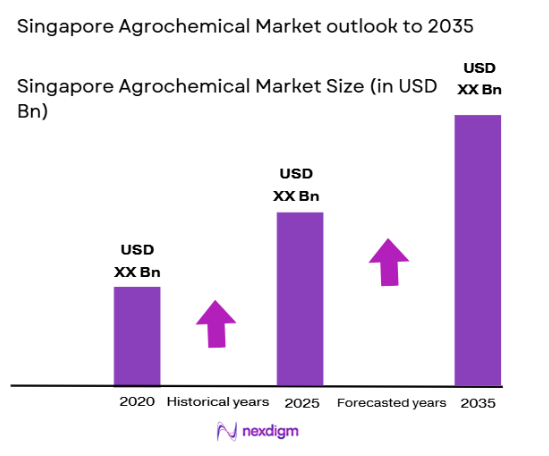
The Singapore agrochemical market is projected to witness robust growth, driven by the increasing demand for crop protection solutions and sustainable agricultural practices. With a market size reaching USD ~ billion, the sector is expected to see continued expansion fueled by advancements in agricultural technology, increased adoption of modern farming techniques, and the government’s push for enhanced food security. The market is primarily driven by the demand for pest control products, herbicides, fungicides, and other crop protection solutions, which are essential for ensuring consistent food production in the country.
Singapore is a leading hub for agrochemical products in Southeast Asia, due to its strategic location, advanced infrastructure, and highly regulated market. The country plays a critical role in the regional agrochemical industry by serving as a key exporter and facilitator for innovations in agricultural technologies. Singapore’s dominance is supported by its state-of-the-art manufacturing facilities, which cater to the growing demand for sustainable farming solutions across the region. Additionally, the government’s initiatives focused on increasing agricultural productivity through innovation make it a primary player in the sector.
Market Segmentation
By Product Type:
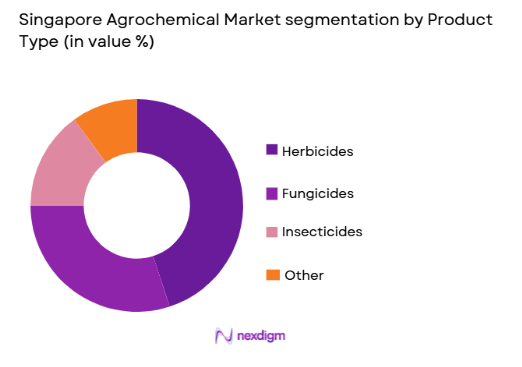
The Singapore agrochemical market is segmented by product type into herbicides, fungicides, insecticides, and other agrochemical products. Recently, herbicides have had a dominant market share due to their widespread use in controlling unwanted plant growth and ensuring efficient crop yield. The increasing demand for food security, along with the adoption of modern farming practices, has significantly driven the herbicide market. Moreover, the government’s support for enhancing agricultural productivity through herbicide use in sustainable farming practices has further solidified its market position.
By Technology Type:
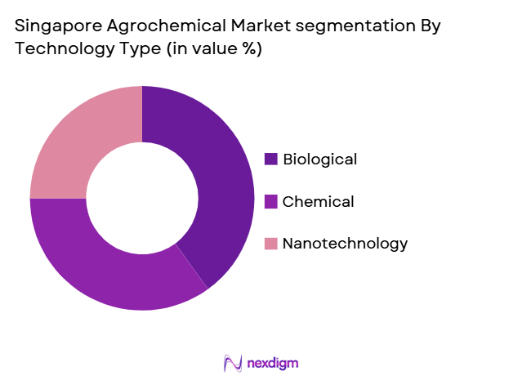
The market is segmented by technology into chemical agrochemicals, biological agrochemicals, and nanotechnology-based agrochemicals. Biological agrochemicals have emerged as the dominant technology due to increasing consumer demand for sustainable farming practices and organic products. With growing environmental awareness, farmers are shifting towards natural solutions, and biological agrochemicals offer an effective alternative. The higher adoption rate of organic farming practices and the rising concerns over chemical pesticides are expected to further bolster the market for biological agrochemicals.
Competitive Landscape
The competitive landscape of the Singapore agrochemical market is characterized by a few dominant players and ongoing consolidation. Major multinational agrochemical companies have established a significant presence in the market, benefiting from advanced research and development capabilities, strong distribution networks, and extensive product portfolios. These players maintain leadership by continually investing in technology, expanding their product offerings, and strengthening their market position through strategic mergers and acquisitions. With increasing demand for sustainable and eco-friendly products, competition has intensified among both local and international firms, fostering innovation and enhanced product offerings.
| Company Name | Establishment Year | Headquarters | Technology Focus | Market Reach | Key Products | Revenue | Product Innovation |
| Syngenta | 2000 | Switzerland | ~ | ~ | ~ | ~ | ~ |
| Bayer CropScience | 1863 | Germany | ~ | ~ | ~ | ~ | ~ |
| BASF | 1865 | Germany | ~ | ~ | ~ | ~ | ~ |
| Corteva | 2019 | USA | ~ | ~ | ~ | ~ | ~ |
| FMC Corporation | 1883 | USA | ~ | ~ | ~ | ~ | ~ |
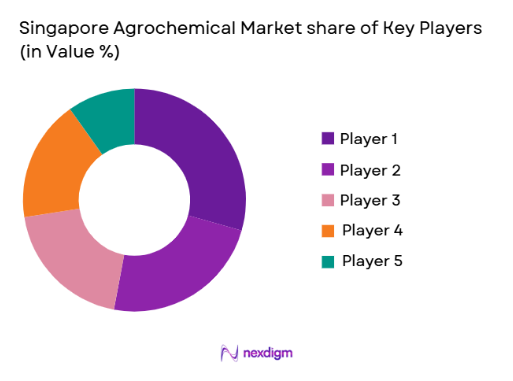
Singapore Agrochemical Market Analysis
Growth Drivers
Technological Advancements in Crop Protection:
The Singapore agrochemical market is largely driven by the rapid technological advancements in crop protection. With an increasing focus on improving crop yields, manufacturers are continually innovating to develop more effective and sustainable agrochemicals. The use of advanced technologies such as precision agriculture, drone-based applications, and genetically modified crops is expected to enhance the efficacy of agrochemicals, leading to higher demand. These technological innovations also help minimize the environmental impact of agrochemicals, supporting the government’s push for sustainable farming practices. Additionally, increasing consumer demand for food safety and traceability in agricultural production is further boosting the adoption of advanced agrochemical technologies in the market. As a result, companies investing in R&D and developing cutting-edge technologies will continue to drive market growth, maintaining a competitive edge in the ever-evolving agrochemical landscape.
Government Support for Sustainable Agriculture:
Government policies and initiatives aimed at enhancing food security and promoting sustainable agriculture play a critical role in driving the growth of the Singapore agrochemical market. The government has introduced various support mechanisms such as subsidies, tax incentives, and research grants to encourage the adoption of sustainable farming practices and agrochemical products. Additionally, the government’s commitment to improving agricultural productivity through technological innovations and collaborations with agrochemical manufacturers fosters an environment conducive to market growth. As the country seeks to reduce its reliance on food imports and increase local food production, the demand for agrochemicals, especially in areas such as pest control, soil health, and crop protection, is expected to continue rising, further solidifying the agrochemical market’s position in the country.
Market Challenges
Regulatory Compliance and Product Approval:
One of the primary challenges faced by the Singapore agrochemical market is the stringent regulatory framework governing the approval and use of agrochemicals. As the demand for eco-friendly products increases, regulatory bodies are enforcing stricter rules to limit the environmental impact of agrochemicals. Compliance with these regulations is time-consuming and costly, as agrochemical companies must go through rigorous testing and certification processes to obtain approval for their products. Additionally, the ongoing changes in government policies and global standards add complexity to the regulatory landscape, making it difficult for companies to quickly adapt to evolving compliance requirements. As a result, the lengthy approval process and the need for continuous monitoring of regulations remain significant hurdles for companies operating in the market.
Environmental Impact and Public Perception:
Another challenge affecting the agrochemical market in Singapore is the growing concern over the environmental impact of chemical pesticides and fertilizers. While agrochemicals are essential for ensuring food security and high crop yields, their excessive or improper use can lead to soil degradation, water contamination, and harm to biodiversity. Public awareness of these environmental issues is increasing, and consumers are demanding more sustainable farming practices. This has led to a shift towards organic and biological agrochemical solutions, which, while offering potential benefits, often come at a higher cost. Agrochemical companies must balance the need to meet regulatory standards and consumer demands for eco-friendly products while maintaining profitability and competitiveness in the market.
Opportunities
Growing Demand for Organic and Biologically Derived Agrochemicals:
As consumers become more conscious of the environmental and health impacts of conventional agrochemicals, the demand for organic and biologically derived agrochemical products has surged. Organic farming is gaining momentum in Singapore as consumers increasingly prefer pesticide-free, organic produce. Agrochemical companies are responding by investing in the development of biopesticides, biocides, and other eco-friendly solutions. This shift towards biological solutions presents significant opportunities for growth in the market, as products derived from natural sources are becoming more popular among consumers seeking healthier and more sustainable options. As governments worldwide introduce stricter regulations for chemical pesticides, the market for biologically derived agrochemicals is expected to expand rapidly, offering new business opportunities for agrochemical manufacturers and farmers alike.
Innovation in Digital Agriculture Technologies:
The integration of digital technologies such as artificial intelligence (AI), machine learning (ML), and data analytics into agriculture is creating significant opportunities in the Singapore agrochemical market. These innovations are enabling farmers to better manage crop health, predict pest outbreaks, and optimize the use of agrochemicals, thereby reducing environmental impact and improving productivity. Agrochemical companies are increasingly adopting digital tools to enhance their product offerings and improve the precision of their applications. The growing adoption of digital agriculture solutions provides an opportunity for market players to differentiate themselves through innovation, offering products that cater to the evolving needs of farmers and enhancing the overall efficiency of agricultural practices.
Future Outlook
The future outlook of the Singapore agrochemical market is promising, with continued growth expected due to increased government support, technological advancements, and the rising adoption of sustainable farming practices. The market is anticipated to witness significant growth driven by advancements in precision agriculture and digital technologies, which will enhance the efficacy of agrochemicals while minimizing their environmental impact. Furthermore, the shift toward organic and biologically derived products is likely to continue, as consumer demand for safer and more sustainable solutions grows. In the coming years, regulatory support will play a crucial role in shaping the market, as the government implements policies aimed at improving food security and agricultural productivity. With these factors at play, the agrochemical market in Singapore is well-positioned for long-term growth.
Major Players
- Syngenta
- Bayer CropScience
- BASF
- Corteva
- FMC Corporation
- Dow AgroSciences
- UPL Limited
- ADAMA Agricultural Solutions
- Nufarm
- Sumitomo Chemical
- ISK Biosciences
- Arysta LifeScience
- Cheminova
- BioAg
- Monsanto
Key Target Audience
- Agrochemical manufacturers
- Government and regulatory bodies
- Farmers
- Agricultural cooperatives
- Retailers and distributors
- Venture capitalists and investors
- Agribusinesses
- Research institutions
Research Methodology
Step 1: Identification of Key Variables
The key factors influencing the market, including product types, technology types, and demand trends, are identified to define the scope of the study.
Step 2: Market Analysis and Construction
A thorough analysis is conducted to evaluate the current market size, segmentation, and competitive landscape, based on historical data and projections.
Step 3: Hypothesis Validation and Expert Consultation
Industry experts and stakeholders are consulted to validate assumptions and provide insights into market dynamics and future trends.
Step 4: Research Synthesis and Final Output
The data collected is synthesized into a final report, which includes actionable insights, conclusions, and recommendations for stakeholders in the agrochemical market.

- Executive Summary
- Research Methodology (Definitions, Scope, Industry Assumptions, Market Sizing Approach, Primary & Secondary Research Framework, Data Collection & Verification Protocol, Analytic Models & Forecast Methodology, Limitations & Research Validity Checks)

- Market Definition and Scope
- Value Chain & Stakeholder Ecosystem
- Regulatory / Certification Landscape
- Sector Dynamics Affecting Demand
- Strategic Initiatives & Infrastructure Growth

- Growth Drivers
Technological Advancements in Agrochemical Formulations
Government Support for Sustainable Agriculture
Rising Demand for Food Security
Increasing Demand for Organic and Biologically Derived Products
Technological Advancements in Precision Agriculture - Market Challenges
High Costs of Research and Development
Regulatory Barriers for New Agrochemical Products
Environmental and Ecological Concerns
Dependency on Weather Patterns for Agrochemical Application
Limited Market for Organic Alternatives - Market Opportunities
Growing Investment in Agrochemical R&D
Expansion of Digital Agriculture Solutions
Increasing Demand for Pest and Disease Control Solutions - Trends
Adoption of Biopesticides and Biofertilizers
Increased Use of Drones for Agrochemical Applications
Integration of Internet of Things (IoT) in Agrochemical Systems
Shift Toward Sustainable and Eco-Friendly Agrochemicals
Increased Automation in Agrochemical Application Processes - Government Regulations & Defense Policy
Stricter Environmental Regulations for Agrochemicals
Support for Green Technologies and Organic Agriculture
International Trade Policies Affecting Agrochemical Import/Export - SWOT Analysis
- Stakeholder and Ecosystem Analysis
- Porter’s Five Forces Analysis
- Competition Intensity and Ecosystem Mapping

- By Market Value, 2020-2025
- By Installed Units, 2020-2025
- By Average System Price, 2020-2025
- By System Complexity Tier, 2020-2025

- By System Type (In Value%)
Fungicides
Herbicides
Insecticides
Growth Regulators
Nematicides - By Platform Type (In Value%)
Conventional Agrochemicals
Biological Agrochemicals
Nano-Enabled Agrochemicals
Smart Agrochemicals
Precision Application Systems - By Fitment Type (In Value%)
Field Crops
Horticultural Crops
Pasture and Forage
Aquatic Crops
Urban Farming Solutions - By EndUser Segment (In Value%)
Farmers
Agrochemical Manufacturers
Government Agencies
Retailers and Distributors
Agricultural Cooperatives - By Procurement Channel (In Value%)
Direct Procurement
Retail Distribution
Online Sales
Agricultural Cooperatives
Wholesale Distribution - By Material / Technology (in Value%)
Chemical Synthesis
Biological Extracts
Nano-Materials
Biotechnology Innovations
Chemical Formulations

- Market structure and competitive positioning
- Market share snapshot of major players
- CrossComparison Parameters (Technology, System Type, Procurement Channel, Fitment Type, Material, EndUser Segment, Market Share, Price, Product Type, Geographic Reach)
- SWOT Analysis of Key Players
- Pricing & Procurement Analysis
- Key Players
BASF
Syngenta
Dow AgroSciences
Bayer CropScience
FMC Corporation
ADAMA Agricultural Solutions
Sumitomo Chemical
UPL Limited
Nufarm
Mosaic Company
Dupont
Ishihara Sangyo Kaisha
Sygenta Group
BioAg
Nantong Jiangshan Agrochemical

- Farmers’ Increasing Adoption of Modern Agrochemical Products
- Government Initiatives for Agrochemical Usage
- Retailer and Distributor Demand for Sustainable Agrochemicals
- Agricultural Cooperatives’ Role in Agrochemical Distribution

- Forecast Market Value, 2026-2035
- Forecast Installed Units, 2026-2035
- Price Forecast by System Tier, 2026-2035
- Future Demand by Platform, 2026-2035


 Request a Sample
 Ask for Customization
 Get a Quote
 Enquire Now