
 Download PDF
 Download PDF
Market Overview
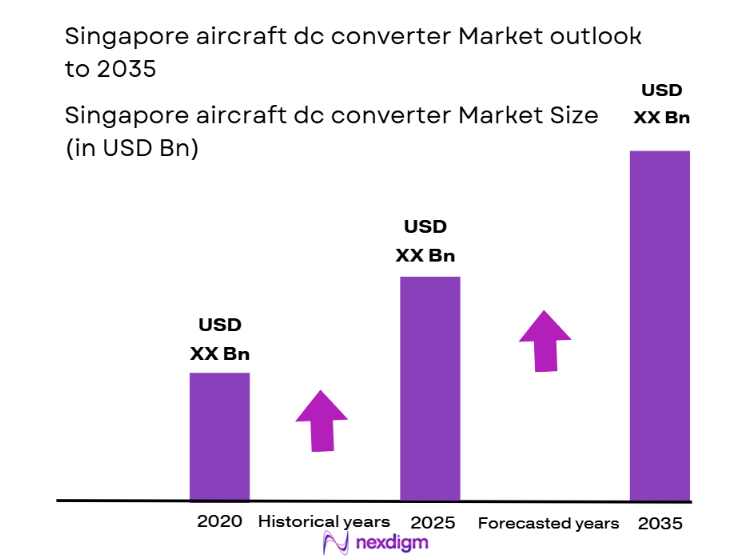
Based on a recent historical assessment, the Singapore Aircraft DC Converter market is expected to reach USD ~ billion by the mid-2020s, driven by a steady demand for reliable, energy-efficient power conversion systems in the aviation industry. This growth is primarily fueled by the increasing demand for modern, lightweight, and compact power solutions to meet the rising needs of both commercial and military aviation sectors. Additionally, advancements in power electronics and the push for more sustainable aircraft systems are accelerating the market’s development.
The market is dominated by key players and regions such as Singapore, which is strategically positioned as a major aviation hub in Southeast Asia, and countries with advanced aerospace industries like the United States and Europe. Singapore’s dominance is attributed to its robust infrastructure, regulatory support for aviation technologies, and its significant role in global aircraft maintenance and manufacturing. Additionally, cities with a strong presence of aerospace firms contribute significantly to the growth of this market.
Market Segmentation
By Product Type
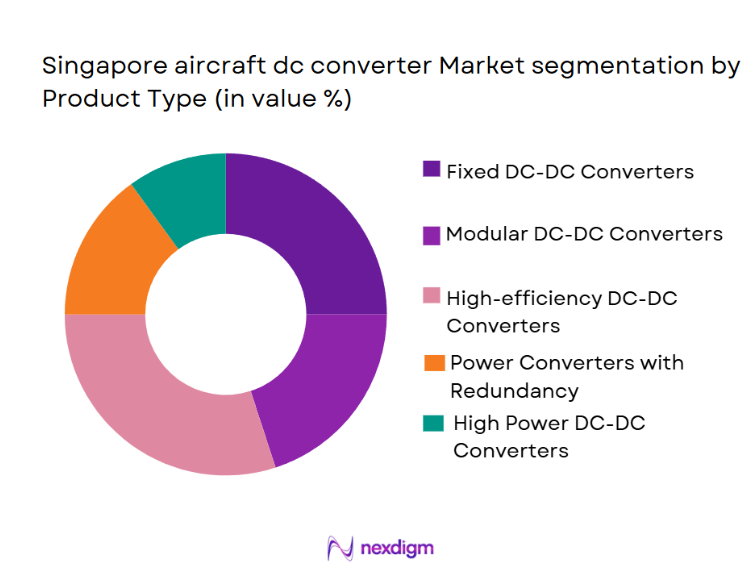
The Singapore Aircraft DC Converter market is segmented by product type into fixed DC-DC converters, modular DC-DC converters, high-efficiency DC-DC converters, power converters with redundancy, and high-power DC-DC converters. Recently, high-efficiency DC-DC converters have seen a dominant market share due to factors such as rising demand for energy-saving technologies, increasing regulatory pressures to reduce carbon emissions, and a growing preference for lighter, more compact solutions in aircraft systems. These converters are highly favored for their ability to deliver more efficient power conversion and their adaptability in various aircraft platforms.
By Platform Type
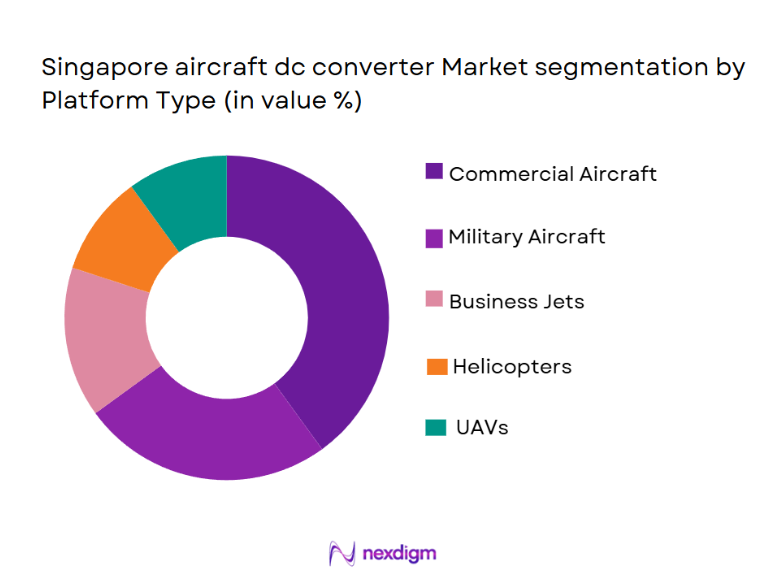
The Singapore Aircraft DC Converter market is segmented by platform type into commercial aircraft, military aircraft, business jets, helicopters, and UAVs. Recently, commercial aircraft have dominated the market share due to their growing fleet and the increasing need for efficient power systems to support next-generation aircraft designs. These aircraft platforms demand reliable power converters to maintain operational efficiency while minimizing weight, which makes DC-DC converters an ideal choice for modern aircraft systems that emphasize energy efficiency and sustainability.
Competitive Landscape
The competitive landscape of the Singapore Aircraft DC Converter market is highly consolidated, with several leading aerospace technology providers dominating the sector. Key players are focused on advancing technologies, particularly in the development of high-efficiency and modular DC converters, to cater to the growing demand for energy-efficient aircraft systems. These companies are leveraging innovations in power electronics and forming strategic alliances with aerospace manufacturers to maintain their competitive edge. The presence of well-established market players, combined with regulatory support for aviation technology, continues to influence the market dynamics.
| Company Name | Establishment Year | Headquarters | Technology Focus | Market Reach | Key Products | Revenue (USD) |
| Honeywell Aerospace | 1906 | USA | ~ | ~ | ~ | ~ |
| Thales Group | 1893 | France | ~ | ~ | ~ | ~ |
| Raytheon Technologies | 1922 | USA | ~ | ~ | ~ | ~ |
| Collins Aerospace | 1934 | USA | ~ | ~ | ~ | ~ |
| Safran | 2005 | France | ~ | ~ | ~ | ~ |
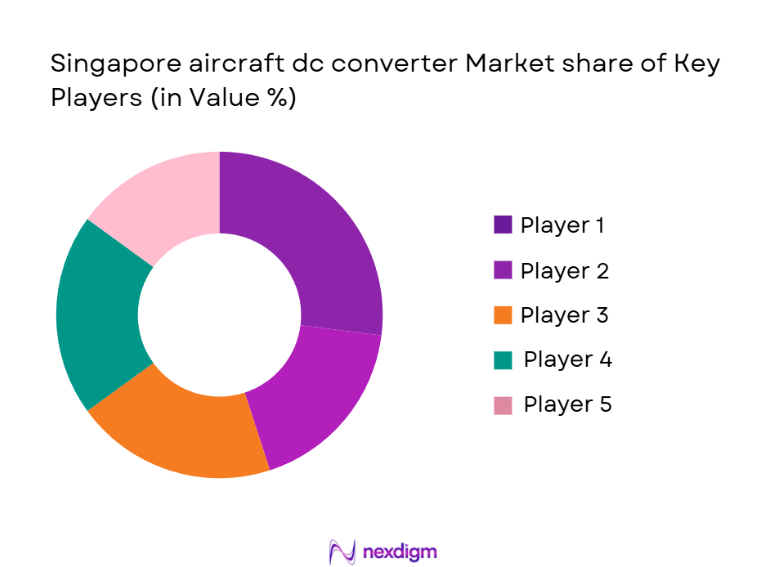
Singapore Aircraft DC Converter Market Analysis
Growth Drivers
Rising Demand for Energy Efficiency
The increasing demand for fuel-efficientaircraft is one of the key drivers of the aircraft DC converter market. Aircraft manufacturers are under pressure to meet stricter environmental regulations and reduce operational costs. DC converters, by providing optimal power distribution systems, help reduce fuel consumption while supporting the smooth functioning of avionics and electrical systems. This drives market growth as the demand for greener, more efficient aircraft solutions grows worldwide.
Technological Advancements
Another growth driver is the continuous advancement in DC converter technology. New developments in power electronics, such as wide-bandgap semiconductors, are enhancing the efficiency, weight, and size of DC converters. These innovations are increasingly becoming integral to modernaircraft systems, especially in the context of reducing aircraft weight to improve fuel efficiency. As a result, manufacturers are prioritizing the incorporation of next-generation DC converters in their designs, further propelling the market.
Market Challenges
High Initial Cost of Advanced Technology
One of the challenges faced by theaircraft DC converter market is the high initial cost associated with advanced DC converter systems. Although these converters offer significant long-term operational savings due to increased efficiency and reduced fuel consumption, their high upfront costs can be a deterrent for some aircraft operators, especially in the general aviation sector. Manufacturers must find ways to make these systems more cost-effective to boost adoption across various aviation segments.
Complex Regulatory Environment
The market also faces challenges due to complex and stringent regulatory requirements in the aerospace industry. DC converter technologies must meet rigorous safety standards, which vary by region andaircraft type. Adapting to these regulatory frameworks can be time-consuming and expensive for manufacturers, delaying the development and deployment of new products. Additionally, compliance with evolving environmental regulations further adds to the complexity and cost of production.
Opportunities
Increase in Aircraft Electrification
The push for increased electrification inaircraft systems represents a significant opportunity for the aircraft DC converter market. As more aircraft systems shift from traditional hydraulic and pneumatic technologies to electric systems, the demand for DC converters capable of powering these systems will grow. This trend, coupled with the introduction of hybrid and fully electric aircraft, offers new avenues for market players to expand their product offerings.
Expansion of Commercial Aviation in Asia-Pacific
The growing air travel demand in the Asia-Pacific region presents a considerable opportunity for market expansion. As airlines in the region continue to invest in modernizing their fleets to meet growing passenger demands and environmental standards, the need for high-efficiency DC converters will increase. This trend is expected to drive significant market growth, particularly in countries like China, India, and Singapore, which are key players in the global aviation industry.
Future Outlook
The future of the Singapore Aircraft DC Converter market over the next five years is expected to witness significant growth, driven by technological advancements in power electronics and increasing demand for fuel-efficient aircraft. With regulatory frameworks supporting green aviation, manufacturers will continue to innovate and produce high-performance converters that cater to both commercial and military applications. Moreover, the rise of electric and hybrid aircraft platforms will further boost the need for advanced DC-DC converters, ensuring that the market remains on an upward trajectory. This period will also see an expansion in market opportunities as emerging economies invest in modern aviation technologies.
Major Players
- Honeywell Aerospace
- Thales Group
- Raytheon Technologies
- Collins Aerospace
- Safran
- Curtiss-Wright Corporation
- MTU Aero Engines
- Diehl Aviation
- Boeing
- GE Aviation
- Rockwell Collins
- Textron
- L3 Technologies
- Northrop Grumman
- Airbus
Key Target Audience
- Aircraft Manufacturers
- Aerospace Suppliers
- Airlines and Operators
- Government and Regulatory Bodies
- Maintenance, Repair, and Overhaul (MRO) Providers
- Aviation Technology Investors
- Aerospace Component Distributors
- Original Equipment Manufacturers (OEMs)
Research Methodology
Step 1: Identification of Key Variables
Key variables such as technological advancements, regulatory impacts, and consumer preferences are identified to provide a detailed market understanding. This step sets the foundation for in-depth market analysis.
Step 2: Market Analysis and Construction
Market trends, historical data, and current demand are analyzed to construct a comprehensive overview of the market. Factors such as market size, growth rates, and technological adoption are considered.
Step 3: Hypothesis Validation and Expert Consultation
Expert opinions and consultations with industry leaders validate market hypotheses, ensuring that all findings are grounded in real-world insights.
Step 4: Research Synthesis and Final Output
The collected data and insights are synthesized into a final report, providing actionable recommendations for stakeholders. The final output also includes market forecasts and strategic recommendations.

- Executive Summary
- Research Methodology (Definitions, Scope, Industry Assumptions, Market Sizing Approach, Primary & Secondary Research Framework, Data Collection & Verification Protocol, Analytic Models & Forecast Methodology, Limitations & Research Validity Checks)

- Market Definition and Scope
- Value Chain & Stakeholder Ecosystem
- Regulatory / Certification Landscape
- Sector Dynamics Affecting Demand
- Strategic Initiatives & Infrastructure Growth

- Growth Drivers
Increasing Demand for Efficient Power Systems
Growth in Commercial and Military Aviation
Technological Advancements in DC Converter Systems - Market Challenges
High Initial Costs
Complex Certification and Regulatory Requirements
Supply Chain Constraints - Market Opportunities
Growth in Electric Aircraft Technologies
Rising Demand for Sustainable Aviation Solutions
Opportunities in Emerging Markets - Trends
Increased Adoption of Modular and Scalable Systems
Focus on Reduced Weight and Power Loss
Integration with Hybrid and Electric Propulsion Systems - Government Regulations
Aerospace Safety Standards and Certification
Environmental Regulations for Aircraft Power Systems
Government Initiatives for Green Aviation

- By Market Value 2020-2025
- By Installed Units 2020-2025
- By Average System Price 2020-2025
- By System Complexity Tier 2020-2025

- By System Type (In Value%)
Fixed DC-DC Converters
Modular DC-DC Converters
High Efficiency DC-DC Converters
Power Converters with Redundancy
High Power DC-DC Converters - By Platform Type (In Value%)
Commercial Aircraft
Military Aircraft
Business Jets
Helicopters
UAVs (Unmanned Aerial Vehicles) - By Fitment Type (In Value%)
Linefit
Retrofit
Aftermarket Components
OEM Fitment
Upgraded Systems - By EndUser Segment (In Value%)
Aircraft Manufacturers
Aerospace Suppliers
Airlines and Operators
Government and Military
Maintenance, Repair, and Overhaul (MRO) Providers - By Procurement Channel (In Value%)
Direct Procurement
Online Procurement
OEM Channels
Third-Party Distributors
Aftermarket Suppliers

- Market Share Analysis
- CrossComparison Parameters (System Type, Platform Type, End-User Demand, Procurement Channel, Market Value Growth)
- SWOT Analysis of Key Competitors
- Pricing & Procurement Analysis
- Porter’s Five Forces
- Key Players
Honeywell Aerospace
Thales Group
Raytheon Technologies
Collins Aerospace
Curtiss-Wright Corporation
Aerospace Component Systems, Inc.
MTU Aero Engines
Diehl Aviation
Boeing
Safran
GE Aviation
Rockwell Collins
Textron
L3 Technologies
Northrop Grumman

- Aircraft Manufacturers’ Demand for Advanced DC Converters
- Military Aircraft Fitment Requirements
- Trends in Airlines’ Retrofit Programs
- Aerospace MRO Sector’s Need for DC Converter Replacements

- Forecast Market Value 2026-2035
- Forecast Installed Units 2026-2035
- Price Forecast by System Tier 2026-2035
- Future Demand by Platform 2026-2035


 Request a Sample
 Ask for Customization
 Get a Quote
 Enquire Now