

 Download PDF
 Download PDF
Market Overview
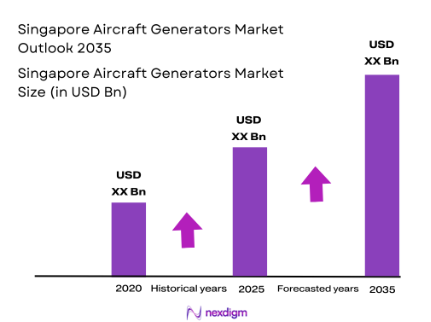
The Singapore Aircraft Generators Market is valued at approximately USD ~ million in 2025, with expectations to reach USD ~ million by 2026. The market’s growth is primarily driven by the ongoing expansion of the aviation sector in Southeast Asia and the increasing need for efficient and reliable power generation systems in modern aircraft. With the growing number of international and regional flights, driven by major airlines such as Singapore Airlines, the demand for aircraft generators continues to rise. Additionally, the increasing adoption of advanced technologies in aircraft, such as fuel-efficient and low-emission systems, is propelling the demand for high-performance power systems that can support these innovations. The steady increase in air traffic, both for commercial and cargo purposes, is also a key factor fueling the market.
Singapore remains a dominant player in the aircraft generators market due to its position as a leading aviation hub in Asia. Its world-class aviation infrastructure, particularly Changi Airport, and the presence of major airlines like Singapore Airlines and low-cost carriers have cemented the country’s role as a key player in the aviation industry. Additionally, Singapore’s strategic location as a key transit point between the East and West, along with its growing aviation fleet, ensures a high demand for reliable and advanced aircraft generators. The nation’s investment in cutting-edge technology and a well-developed maintenance, repair, and overhaul (MRO) sector further strengthens its dominance in the regional market.
Market Segmentation
By Product Type
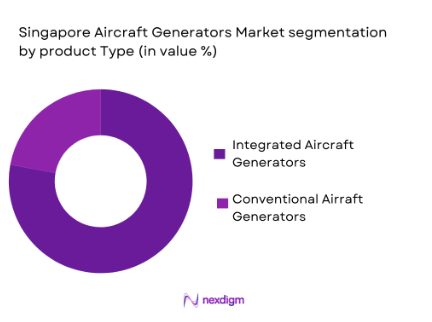
The Singapore Aircraft Generators Market is segmented by product type into integrated aircraft generators and conventional aircraft generators. The integrated aircraft generator segment is currently dominant, as it provides enhanced performance and efficiency, particularly in newer, fuel-efficient aircraft like the Airbus A350 and Boeing 787. Integrated generators allow for better space utilization and reduced weight, which are critical factors for modern aircraft designs that emphasize efficiency and lower operational costs. The growing trend toward electrification in aviation further boosts the demand for integrated generators, as these systems are designed to support the increasing reliance on electrical power for aircraft systems. Integrated generators are favored by airlines and aircraft manufacturers for their reliability and contribution to fuel savings.
By Application
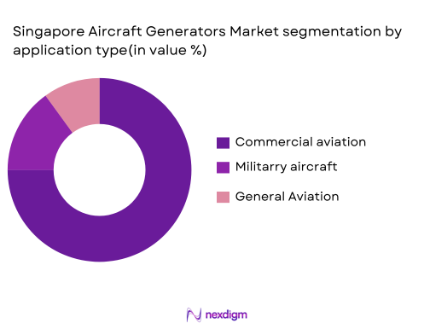
The market is segmented by application into commercial aviation, military aviation, and general aviation. The commercial aviation segment takes the lead, driven by the expansion of airlines such as Singapore Airlines and the growing fleet of commercial aircraft in the region. As air travel continues to grow, both regionally and internationally, there is an increased demand for reliable and efficient aircraft generators to power a variety of aircraft. The commercial sector is undergoing continuous fleet upgrades, with airlines investing in newer aircraft models that require advanced generators for optimal performance. With air travel being a critical aspect of Singapore’s economy, this segment’s dominance is set to continue, especially as the need for sustainable and energy-efficient solutions grows in the aviation industry.
Competitive Landscape
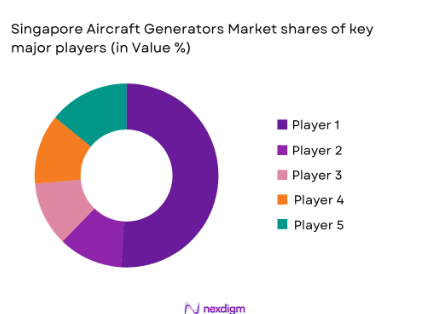
The Singapore Aircraft Generators market is competitive, with several global and regional players competing based on technological advancements, performance reliability, and after-sales service. Key players in this market include established aviation companies such as Rolls-Royce, Honeywell International, General Electric, Safran, and Pratt & Whitney. These companies dominate due to their long-standing presence in the industry, advanced R&D capabilities, and established relationships with airlines and aircraft manufacturers. Their comprehensive portfolios of aircraft generators for both commercial and military aviation applications ensure they maintain a significant share of the market in Singapore, which is a crucial hub for both commercial airliners and military aircraft.
| Company | Year Established | Headquarters | Revenue | Key Products | Market Focus | Technological Innovations | |
| Rolls-Royce | 1904 | United Kingdom | – | – | – | – | – |
| Honeywell International | 1906 | United States | – | – | – | – | – |
| General Electric (GE) | 1892 | United States | – | – | – | – | – |
| Safran | 1905 | France | – | – | – | – | – |
| Pratt & Whitney | 1925 | United States | – | – | – | – | – |
Singapore Aircraft Generators Market Analysis
Growth Drivers
Expansion of the Aviation Industry in Southeast Asia
Southeast Asia’s aviation industry is rapidly expanding, driven by increased air traffic and the growing middle class in the region. In 2022, Southeast Asia’s aviation sector recorded over 178 million passengers, with Singapore’s Changi Airport alone handling more than 68 million passengers. As the region’s air travel continues to recover from the pandemic, the demand for both commercial and cargo flights is increasing. Singapore, as one of the most prominent aviation hubs in the region, benefits from this trend, fostering the growth of the aircraft generators market. The continuous expansion of airline fleets in Singapore, particularly for Singapore Airlines, further drives demand for high-quality and efficient power systems in aircraft.
Increased Demand for Energy-Efficient and Reliable Aircraft Generators
As the global aviation industry strives to reduce carbon emissions and fuel consumption, the demand for energy-efficient and reliable aircraft generators has significantly risen. The push for greener aviation solutions has led to the adoption of more efficient power generation systems. For example, the Singapore Airlines fleet includes energy-efficient aircraft such as the Airbus A350, which relies on advanced electrical power systems for greater fuel efficiency. This trend is expected to continue as more airlines and aircraft manufacturers prioritize energy-efficient solutions. In Singapore, where air travel is a significant contributor to the economy, the demand for such generators is expected to remain high, driven by technological advancements in aircraft systems.
Market Challenges
High Cost of Advanced Aircraft Generators
One of the significant challenges facing the Singapore Aircraft Generators Market is the high cost of advanced generators. These advanced systems are designed to be more fuel-efficient, environmentally friendly, and capable of powering modern aircraft, but they come at a premium price. The integration of new technologies such as hybrid and fully electric power generation systems increases the overall cost of these generators. Additionally, the complexity involved in manufacturing high-performance generators with a longer lifespan, especially for modern wide-body aircraft, adds to the financial burden on airlines and operators. Singapore Airlines, for instance, has invested in cutting-edge aircraft systems to maintain its fleet’s competitiveness, but the rising cost of such equipment impacts the overall cost structure of airlines.
Regulatory and Certification Requirements for New Technologies
The implementation of new technologies in aircraft power systems often faces delays due to stringent regulatory and certification requirements. Regulatory bodies such as the Civil Aviation Authority of Singapore (CAAS) enforce strict guidelines to ensure safety and compliance for new systems. The process of certifying new aircraft generators involves a detailed evaluation of their reliability, safety, and performance under various operating conditions. This creates a significant challenge for companies in the aircraft generators market, as they must navigate complex certification processes before they can integrate new power systems into commercial fleets. As a result, the market experiences slower adoption of the latest technological advancements, which can delay potential market growth.
Market Opportunities
Growth in Aircraft Fleet Size in Singapore
Singapore’s aircraft fleet has been growing steadily, which presents significant opportunities for the aircraft generators market. As of 2023, Singapore Airlines operated over 130 aircraft, with plans to expand its fleet to meet growing demand for both passenger and cargo services. The increasing fleet size is driving demand for aircraft generators, as each aircraft requires reliable and efficient power generation systems. Additionally, Singapore’s position as a regional hub for low-cost carriers and cargo airlines further boosts fleet growth. The continual expansion of Changi Airport’s services and the government’s strategic initiatives to position Singapore as a global aviation hub ensure a sustained growth trajectory for the aircraft generators market.
Technological Advancements in Energy-Efficient Power Systems
Technological advancements in energy-efficient power systems provide a unique opportunity for growth in the aircraft generators market. Innovations such as more compact, lighter, and environmentally friendly generators are becoming the norm in modern aircraft. For example, the introduction of more advanced electrical generation and distribution systems in aircraft like the Boeing 787 Dreamliner and Airbus A350, both of which are operating in Singapore, has shifted demand toward more efficient power systems. These systems not only reduce fuel consumption but also enhance the overall efficiency of the aircraft, offering significant long-term operational savings. The growing focus on sustainability and efficiency in aviation is expected to continue fueling the adoption of these advanced technologies.
Future Outlook
Over the next decade, the Singapore Aircraft Generators Market is poised for continued growth. Factors such as the steady rise in air travel, the ongoing fleet expansion of commercial airlines, and the increasing demand for more energy-efficient and environmentally friendly aircraft will be key growth drivers. Additionally, technological advancements in power generation systems, such as hybrid and fully electric engines, will create new opportunities in the market. The continued focus on sustainability and reducing carbon emissions will lead to further innovation in aircraft generators, with Singapore playing a central role in the adoption of these technologies. The country’s strong aviation infrastructure and favorable government policies are expected to support the market’s positive trajectory.
Major Players
- Rolls-Royce
- Honeywell International
- General Electric (GE)
- Safran
- Pratt & Whitney
- MTU Aero Engines
- United Technologies Corporation (UTC)
- Liebherr Aerospace
- Collins Aerospace
- Mitsubishi Heavy Industries
- Thales Group
- Dowty Propellers
- Ametek Aerospace & Defense
- Avio Aero
- IAE International Aero Engines
Key Target Audience
- Airlines and aircraft operators
- Aircraft manufacturers
- Military and defense agencies
- Aircraft leasing companies
- Maintenance, Repair, and Overhaul (MRO) providers
- Aviation equipment suppliers
- Investments and venture capital firms
- Government and regulatory bodies
Research Methodology
Step 1: Identification of Key Variables
The first step is to map out the key variables affecting the Singapore Aircraft Generators market, such as fleet size, aircraft upgrades, air traffic growth, and technological advancements in aircraft generators. The data is gathered through a combination of secondary research, using industry reports, and proprietary data sources from aviation authorities and key market participants.
Step 2: Market Analysis and Construction
This step involves compiling historical and current data related to the Singapore Aircraft Generators market, including market penetration, the rate of adoption of advanced generator systems, and the growth of key segments such as commercial and military aviation. A comprehensive analysis is conducted to build a market forecast.
Step 3: Hypothesis Validation and Expert Consultation
Hypotheses and assumptions are validated through expert consultations and interviews with key stakeholders, such as aircraft manufacturers, airlines, and MRO providers. These interviews help ensure the data is accurate and provide insights into market trends and future developments.
Step 4: Research Synthesis and Final Output
The final phase involves synthesizing the data and insights from all phases of the research. This includes cross-checking with industry experts and validating the findings with key aviation authorities to ensure that the final report provides a comprehensive and reliable outlook for the Singapore Aircraft Generators market.

- Executive Summary
- Research Methodology (Definitions, Scope, Industry Assumptions, Market Sizing Approach, Primary & Secondary Research Framework, Data Collection & Verification Protocol, Analytic Models & Forecast Methodology, Limitations & Research Validity Checks)

- Market Definition and Scope
- Value Chain & Stakeholder Ecosystem
- Regulatory / Certification Landscape
- Sector Dynamics Affecting Demand
- Strategic Initiatives & Infrastructure Growth

- Growth Drivers
Expansion of the aviation industry in Southeast Asia
Increased demand for energy-efficient and reliable aircraft generators
Technological advancements in hybrid and electric aircraft systems - Market Challenges
High cost of advanced aircraft generators
Regulatory and certification requirements for new technologies
Complexity in integrating next-generation power systems - Market Opportunities
Growth in aircraft fleet size in Singapore
Technological advancements in energy-efficient power systems
Increase in demand for MRO services in Southeast Asia - Trends
Adoption of smart and predictive technologies in power generation systems
Rise of electric and hybrid propulsion technologies in aviation
Growing focus on sustainable and eco-friendly aviation technologies

- By Market Value 2020-2025
- By Installed Units 2020-2025
- By Average System Price 2020-2025
- By System Complexity Tier 2020-2025

- By System Type (In Value%)
Turbofan Engine Generators
Turbojet Engine Generators
Turboprop Engine Generators
Helicopter Engine Generators
Auxiliary Power Unit (APU) Generators - By Platform Type (In Value%)
Commercial Aircraft
Military Aircraft
Private Aircraft
Cargo Aircraft
Unmanned Aerial Vehicles (UAVs) - By Fitment Type (In Value%)
OEM (Original Equipment Manufacturer) Generators
Replacement Generators
Aftermarket Generators
Upgrade Generators
Refurbished Generators - By End User Segment (In Value%)
Aircraft Manufacturers
Maintenance, Repair, and Overhaul (MRO) Service Providers
Airlines and Fleet Operators
Military Organizations
Private and Corporate Jet Operators - By Procurement Channel (In Value%)
Direct Sales
Third-Party Distributors
Online Procurement
OEM Partnerships
MRO Service Contracts

- Market Share Analysis
Cross Comparison Parameters (Market Share by Region, Technology Adoption, Pricing Strategy, Customer Base, Innovation Rate) - SWOT Analysis of Key Competitors
- Pricing & Procurement Analysis
- Detailed Company Profiles
Rolls-Royce
General Electric
Pratt & Whitney
Honeywell Aerospace
Safran Aircraft Engines
MTU Aero Engines
Liebherr Aerospace
Raytheon Technologies
Boeing Commercial Airplanes
Embraer
Airbus
Comac
Korean Air Aerospace Division
IHI Corporation
Mitsubishi Heavy Industries

- Strong demand for aircraft generators from Singapore Airlines
- Military fleet growth driving demand for advanced aircraft generators
- Expansion of private jet operators in the region
- Increased focus on MRO services for commercial aircraft fleets

- Forecast Market Value 2026-2035
- Forecast Installed Units 2026-2035
- Price Forecast by System Tier 2026-2035
- Future Demand by Platform 2026-2035


 Request a Sample
 Ask for Customization
 Get a Quote
 Enquire Now