
 Download PDF
Market Overview
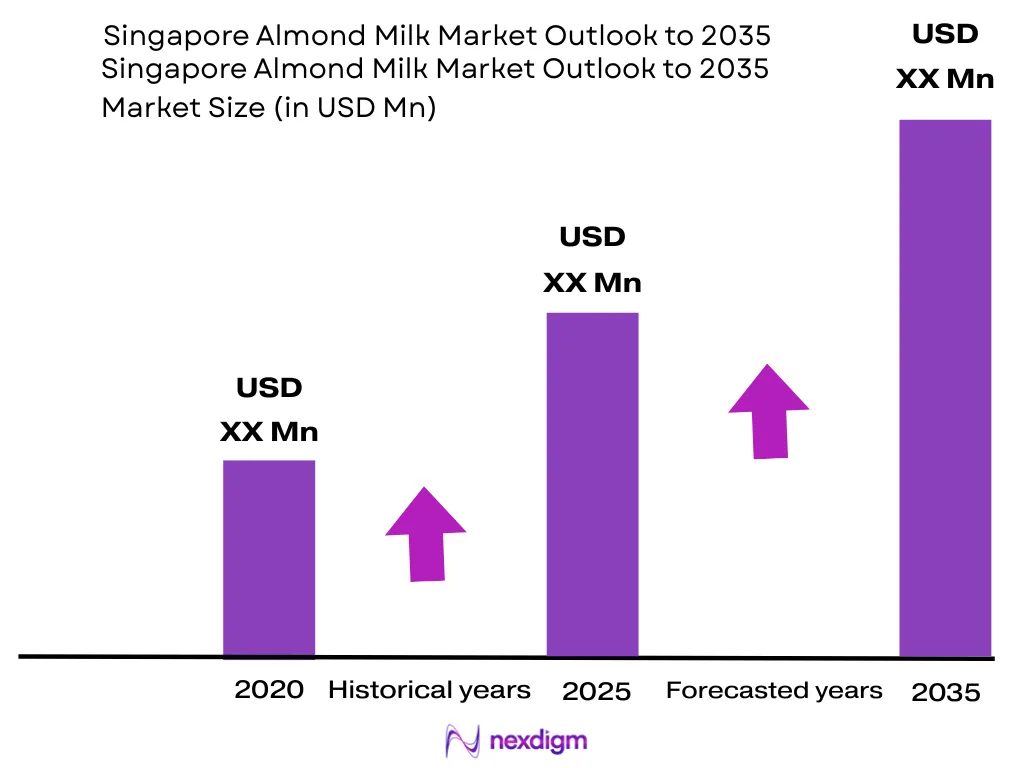
The Singapore Almond Milk Market is estimated at approximately USD ~ million in 2024 and is part of the broader dairy alternatives and plant-based beverage industry. Growth is supported by increasing lactose intolerance prevalence across Asia, rising vegan and flexitarian dietary adoption, and premium health-focused consumption patterns. Singapore’s dairy alternatives imports recorded growth during 2024, reflecting sustained consumer demand for plant-based beverages. The country’s highly developed retail ecosystem, premium grocery penetration, and expanding café culture continue to strengthen almond milk consumption across both household and foodservice channels.
Market Segmentation
By Product Type
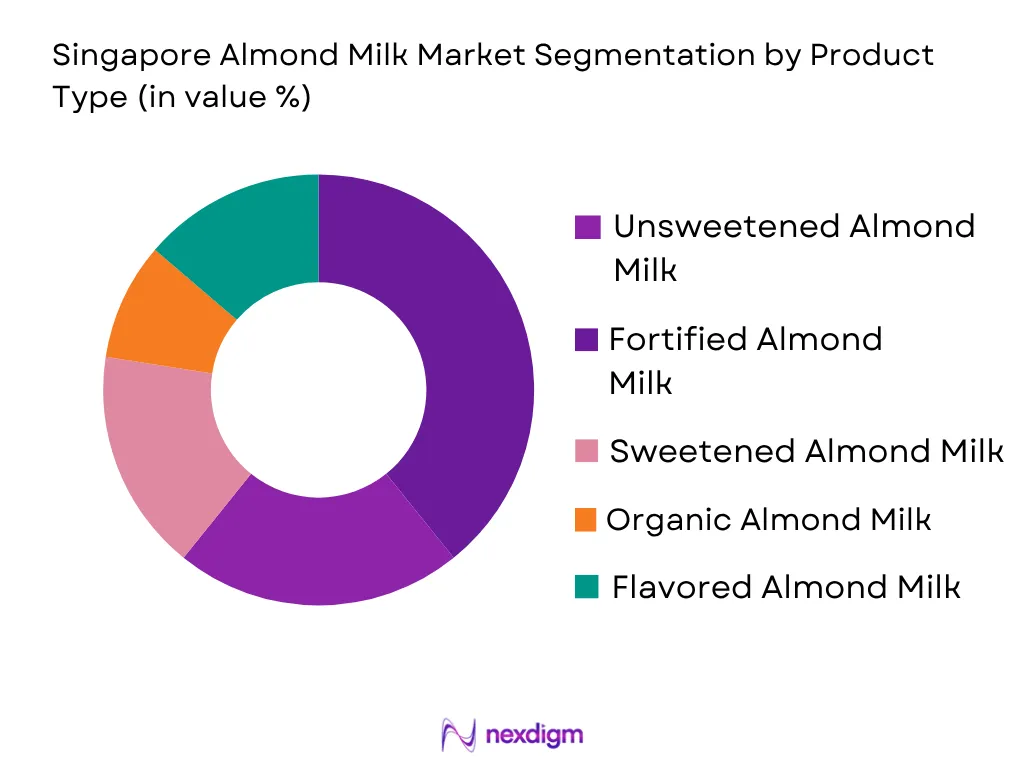
Unsweetened almond milk dominates the Singapore market due to growing consumer focus on sugar reduction, weight management, and clean-label nutrition. Consumers increasingly prefer beverages that align with wellness-focused lifestyles and support calorie-conscious dietary habits. The segment also benefits from strong adoption among fitness enthusiasts, diabetic consumers, and individuals seeking dairy-free alternatives without added sugars. Major brands including Almond Breeze, Alpro, Califia Farms, and Vitasoy actively promote unsweetened variants through supermarkets, specialty health stores, and online channels. Additionally, café operators and coffee chains frequently utilize unsweetened almond milk due to its compatibility with specialty coffee beverages. Growing awareness regarding nutritional transparency and ingredient simplicity further strengthens demand for unsweetened formulations across Singapore’s premium retail environment.
By Distribution Channel
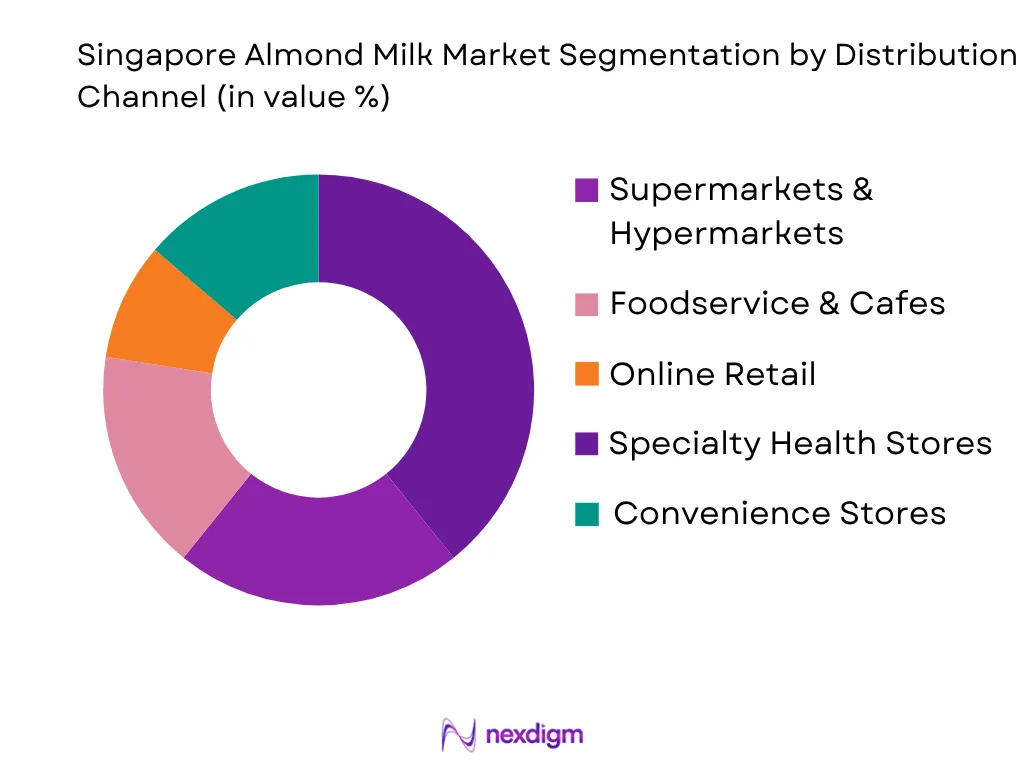
Supermarkets and hypermarkets maintain the largest share of almond milk sales due to their extensive product assortment, strong consumer footfall, and ability to showcase premium imported brands. Retail chains such as NTUC FairPrice, Cold Storage, Giant, and Sheng Siong offer dedicated plant-based beverage sections that increase product visibility and encourage consumer trial. These stores provide access to multiple almond milk variants, packaging formats, and price points, allowing consumers to compare products efficiently. Promotional campaigns, loyalty programs, and premium shelf placement further strengthen sales. Additionally, Singapore’s highly urbanized retail infrastructure ensures convenient access to almond milk products across residential and commercial districts, supporting continued dominance of this distribution channel.
Competitive Landscape
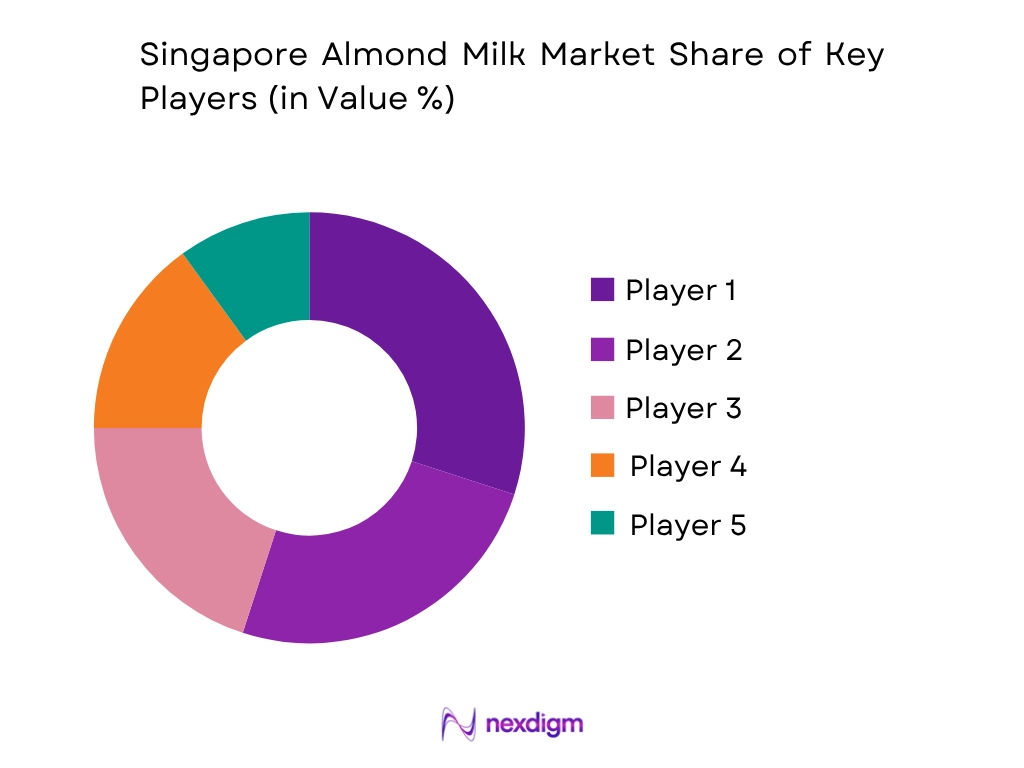
The Singapore Almond Milk Market is moderately consolidated, with international brands accounting for a significant share of retail shelf space. The market is characterized by strong participation from global plant-based beverage manufacturers alongside regional dairy alternative producers. Competition revolves around product innovation, fortification, organic certifications, clean-label positioning, barista formulations, and omnichannel distribution strategies. Premiumization remains a key differentiating factor as brands target affluent urban consumers seeking healthier beverage alternatives.
| Company | Establishment Year | Headquarters | Product Portfolio | Distribution Reach | Fortified Variants | E-Commerce Presence | Packaging Formats | Foodservice Presence |
| Blue Diamond Almond Breeze | 1910 | ~ | ~ | ~ | ~ | ~ | ~ | ~ |
| Silk (Danone) | 1977 | ~ | ~ | ~ | ~ | ~ | ~ | ~ |
| Alpro | 1980 | ~ | ~ | ~ | ~ | ~ | ~ | ~ |
| Califia Farms | 2010
|
~ | ~ | ~ | ~ | ~ | ~ | ~ |
| Koita | 2013
|
~ | ~ | ~ | ~ | ~ | ~ | ~ |
Singapore Almond Milk Market Analysis
Growth Drivers
Rising Health Consciousness and Demand for Dairy Alternatives
Singapore’s almond milk market is benefiting from strong health and wellness consumption trends supported by the country’s high-income economy and increasing preference for functional foods. According to the World Bank, Singapore’s GDP reached USD 547.39 billion in 2024, while GDP per capita stood at USD 90,674, among the highest globally, enabling consumers to spend more on premium health-oriented products such as almond milk. Singapore’s population reached approximately 6 million in 2024, creating a large consumer base for plant-based beverages. Demand is further supported by widespread lactose intolerance across Asian populations. Studies referenced in Singapore’s plant-based dairy sector indicate lactose malabsorption affects a substantial proportion of Asian consumers, encouraging a shift toward dairy-free alternatives such as almond milk. Singapore’s healthcare focus also supports healthier dietary choices. The IMF reported national GDP of USD 659.57 billion at current prices in 2024, reflecting strong economic conditions that encourage premium food consumption. Additionally, increasing consumer interest in clean-label, low-cholesterol, and nutrient-fortified beverages is driving retail demand for almond milk through supermarkets, specialty stores, cafés, and online platforms. These macroeconomic and demographic indicators collectively support sustained growth in almond milk consumption across Singapore.
Expansion of Plant-Based Food Ecosystem and Premium Retail Infrastructure
The development of Singapore’s plant-based food ecosystem is significantly accelerating almond milk adoption. Dairy-alternative beverages represent the largest product category within Singapore’s plant-based food sector, indicating strong consumer acceptance of non-dairy beverages. Singapore recorded 94 internet users per 100 people in 2024 according to the World Bank, supporting rapid growth of online grocery and e-commerce channels that improve accessibility for almond milk products. The country also maintains 100% access to electricity and 100% access to safely managed sanitation services, creating a highly efficient retail and cold-chain environment for premium beverages. Singapore’s resident population exceeded 4 million residents while total population approached 6 million, supporting demand for imported and premium dairy alternatives. Major retail chains such as NTUC FairPrice, Cold Storage, Giant, and Sheng Siong increasingly dedicate shelf space to plant-based products. Additionally, Singapore’s role as a regional food distribution hub enables consistent imports of almond milk brands from the United States, Australia, and Europe. The combination of strong purchasing power, advanced logistics infrastructure, digital commerce penetration, and expanding plant-based product availability continues to strengthen almond milk consumption throughout the country.
Market Challenges
High Import Dependency and Supply Chain Vulnerability
Singapore relies heavily on imported food products due to limited agricultural land availability, creating a challenge for the almond milk market. Almonds used in commercial almond milk production are primarily sourced from international suppliers, particularly the United States and Australia. Singapore’s food security strategy recognizes that more than 90% of food consumption originates from imports, making imported food categories vulnerable to global supply disruptions. Singapore’s population of approximately 6 million and GDP of USD 547.39 billion create substantial demand for premium food products, but dependence on international supply chains exposes almond milk brands to logistics bottlenecks and raw material availability issues. Global shipping disruptions, climate-related impacts on almond harvests, and geopolitical trade uncertainties can affect product availability. Since almond milk is largely positioned as a premium imported beverage in Singapore, any disruption in almond-producing regions may influence inventory levels and retail assortment. Additionally, Singapore’s limited domestic agricultural production capacity means that local substitution options remain constrained. This dependence on imports creates operational challenges for distributors and retailers seeking stable supplies of almond milk products across supermarkets, cafés, specialty stores, and online channels.
Competition from Other Plant-Based Beverage Categories
Although almond milk is gaining popularity, it faces strong competition from other plant-based beverages, particularly oat milk and soy milk. Singapore’s plant-based food market demonstrates significant diversification across dairy-alternative categories, with oat-based products receiving substantial investment and commercial attention. Singapore-based plant beverage company Oatside secured approximately USD 35 million in funding to expand production and distribution activities, highlighting the growing competitive intensity within the dairy alternatives segment. Soy-based beverages also maintain a strong presence because of long-standing consumer familiarity and widespread availability throughout Asia. Within Singapore’s plant-based food ecosystem, multiple dairy-alternative formats compete for shelf space and consumer spending. High-income consumers have broad access to diverse beverage choices, creating intense competition among almond, oat, soy, coconut, and blended plant-based products. Singapore’s advanced retail infrastructure enables rapid introduction of new alternatives, increasing pressure on almond milk brands to differentiate through fortification, sustainability, flavor innovation, and clean-label formulations. As a result, almond milk producers must continuously invest in product innovation and brand positioning to maintain consumer preference within a rapidly expanding and highly competitive plant-based beverage market.
Market Opportunities
Growth in Functional and Fortified Nutrition Products
Singapore’s strong health and wellness culture creates significant opportunities for fortified almond milk products. Consumers increasingly seek beverages enriched with calcium, vitamin D, vitamin B12, protein, and functional ingredients that support active lifestyles. The World Bank reported GDP per capita of USD 90,674 in 2024, indicating strong purchasing power for premium nutritional products. Singapore’s healthcare-oriented consumer base continues to prioritize preventive nutrition and healthy aging, creating favorable conditions for functional almond milk innovation. The country’s highly educated population and advanced retail infrastructure facilitate adoption of value-added products that offer specific nutritional benefits. In addition, Singapore’s food innovation ecosystem actively supports development of alternative protein and plant-based nutrition categories. Dairy-alternative beverages already represent the leading category within Singapore’s plant-based food market, demonstrating strong consumer willingness to incorporate plant-based nutrition into daily diets. Manufacturers introducing fortified almond milk variants targeted at children, fitness consumers, elderly populations, and lactose-intolerant individuals can capitalize on these trends. The combination of strong economic fundamentals, health-focused consumption patterns, and premium retail penetration provides a substantial opportunity for expansion of functional almond milk offerings.
Expansion Through E-Commerce and Foodservice Channels
Singapore’s highly digital economy presents a major opportunity for almond milk manufacturers and distributors. According to the World Bank, internet penetration reached 94 users per 100 people in 2024, creating one of the most digitally connected consumer markets globally. This digital infrastructure supports rapid growth of online grocery platforms, direct-to-consumer sales models, and subscription-based health food services. Singapore’s dense urban environment and sophisticated logistics network enable efficient delivery of refrigerated and shelf-stable almond milk products. At the same time, the country’s vibrant café culture continues to drive demand for almond milk as a dairy substitute in coffee and specialty beverages. Foodservice operators increasingly incorporate almond milk into menus to address changing dietary preferences among consumers seeking lactose-free and plant-based options. The expansion of modern retail and e-commerce channels has improved access to premium imported almond milk brands across the country. Furthermore, Singapore’s position as a regional business and tourism hub supports continued growth in hospitality, cafés, restaurants, and premium foodservice establishments. These factors collectively create significant opportunities for almond milk brands to expand distribution, improve consumer reach, and increase product penetration across multiple sales channels.
Future Outlook
The Singapore Almond Milk Market is expected to experience sustained expansion through the forecast period, supported by rising consumer preference for dairy alternatives, increasing vegan and flexitarian adoption, and greater awareness of lactose intolerance. Product innovation is expected to remain a major growth catalyst, particularly in organic, sugar-free, fortified, and barista-focused almond milk categories. Expanding online grocery platforms and premium retail channels are anticipated to improve product accessibility. Furthermore, foodservice adoption across cafés, hotels, and restaurants is likely to strengthen market penetration as almond milk becomes a mainstream beverage ingredient. Continued investment in sustainable packaging and clean-label formulations is expected to further accelerate consumer acceptance.
Major Players
- Blue Diamond Growers (Almond Breeze)
- Danone (Alpro)
- Califia Farms
- Nestlé
- Vitasoy International
- Oatly Group
- Oatside
- 137 Degrees
- F&N Foods
- Nush Foods
- Silk
- Earth’s Own
- Minor Figures
- Pureharvest
- Sanitarium
Key Target Audience
- Almond Milk Manufacturers
- Plant-Based Beverage Producers
- Dairy Alternative Brands
- Foodservice Operators and Café Chains
- Supermarket and Hypermarket Chains
- E-Commerce Grocery Platforms
- Investments and Venture Capitalist Firms
- Government and Regulatory Bodies (Singapore Food Agency, Enterprise Singapore, Ministry of Sustainability and the Environment)
Research Methodology
Step 1: Identification of Key Variables
The research process begins with identifying all critical stakeholders within Singapore’s almond milk ecosystem, including manufacturers, importers, distributors, retailers, foodservice operators, and consumers. Extensive secondary research is conducted using trade publications, government databases, customs records, and industry reports to establish key market variables influencing growth.
Step 2: Market Analysis and Construction
Historical market performance is analyzed using consumption trends, import-export statistics, retail sales data, product launch activity, and distribution channel performance. Both top-down and bottom-up approaches are applied to estimate market size, ensuring robust validation across multiple data sources.
Step 3: Hypothesis Validation and Expert Consultation
Market assumptions are validated through discussions with industry participants, including distributors, retailers, plant-based beverage manufacturers, and foodservice operators. These consultations provide practical insights regarding consumer preferences, channel dynamics, pricing structures, and competitive developments.
Step 4: Research Synthesis and Final Output
The final phase integrates quantitative and qualitative findings into a comprehensive market framework. Cross-verification of data ensures consistency and reliability. The resulting analysis delivers detailed insights regarding market size, segmentation, competition, future opportunities, and strategic recommendations.

- Executive Summary
- Research Methodology (Market Definitions and Assumptions, Abbreviations, Market Sizing Approach, Bottom-Up Market Assessment, Top-Down Market Validation, Primary Industry Interviews, Trade and Import Analysis, Consumer Behavior Mapping, Data Triangulation Framework, Limitations and Future Conclusions)

- Definition and Scope
- Market Evolution and Industry Genesis
- Timeline of Plant-Based Dairy Adoption in Singapore
- Almond Milk Ecosystem Overview
- Supply Chain Analysis

- Growth Drivers (Rising Lactose Intolerance Awareness, Expanding Vegan Population, Growth of Premium Beverage Consumption, Increasing Health and Wellness Spending, Expansion of Café Culture)
- Market Challenges (High Import Dependency, Premium Product Pricing, Competition from Oat and Soy Milk, Limited Domestic Production, Supply Chain Volatility)
- Market Opportunities (Functional Almond Milk Products, Organic Almond Milk Expansion, Foodservice Penetration, Private Label Growth, Sustainable Packaging Solutions)
- Market Trends (Barista Almond Milk Adoption, Sugar-Free Variants, Fortified Nutrition Formulations, Clean Label Products, Sustainable Packaging Innovations)
- Government Regulations (Singapore Food Agency Standards, Food Labeling Regulations, Nutritional Claims Requirements, Import Compliance Framework, Organic Product Certification)
- SWOT Analysis
- PESTLE Analysis
- Porter’s Five Forces Analysis
- Competition Ecosystem

- By Market Value (2020-2025)
- By Volume Consumption (2020-2025)
- By Average Retail Price (2020-2025)

- By Product Type (In Value %)
Unsweetened Almond Milk
Sweetened Almond Milk
Flavored Almond Milk
Organic Almond Milk
Fortified Almond Milk - By Packaging Type (In Value %)
Cartons
PET Bottles
Glass Bottles
Tetra Packs
Multipack Formats - By Distribution Channel (In Value %)
Supermarkets & Hypermarkets
Convenience Stores
Online Retail
Specialty Health Stores
Foodservice - By Consumer Category (In Value %)
Vegan Consumers
Lactose-Intolerant Consumers
Health-Conscious Consumers
Fitness Enthusiasts
General Consumers - By Region (In Value %)
Central Singapore
East Region
North Region
North-East Region
West Region

- Market Share of Major Players (Value, Volume, By Product Type)
- Cross Comparison Parameters (Product Portfolio Breadth, Almond Milk SKU Count, Organic Product Availability, Fortification Portfolio, Retail Distribution Reach, E-Commerce Presence, Packaging Sustainability Initiatives, Foodservice & Café Penetration)
- SWOT Analysis of Major Players
- Pricing Analysis by SKU and Pack Size
- Detailed Profiles of Major Companies
Blue Diamond Almond Breeze
Alpro
Califia Farms
Silk (Danone)
Oatly
Minor Figures
Pureharvest
Sanitarium So Good
Vitasoy
Pacific Foods
Earth’s Own
Isola Bio
Natura Organic
Pure Harvest Smart Farms
Nature’s Heart

- Consumer Demographics and Consumption Patterns
- Urban Health-Conscious Consumer Assessment
- Vegan and Plant-Based Consumer Analysis
- Lactose Intolerance Driven Demand Analysis
- Premium Beverage Consumption Behavior
- Brand Awareness and Loyalty Assessment
- Consumer Preference Mapping
- Purchase Decision-Making Framework
- Average Basket Value Analysis
- Consumer Pain Point Assessment

- By Market Value (2026-2035)
- By Volume Consumption (2026-2035)
- By Average Retail Price (2026-2035)


 Request a Sample
 Ask for Customization
 Get a Quote
 Enquire Now