
 Download PDF
Market Overview
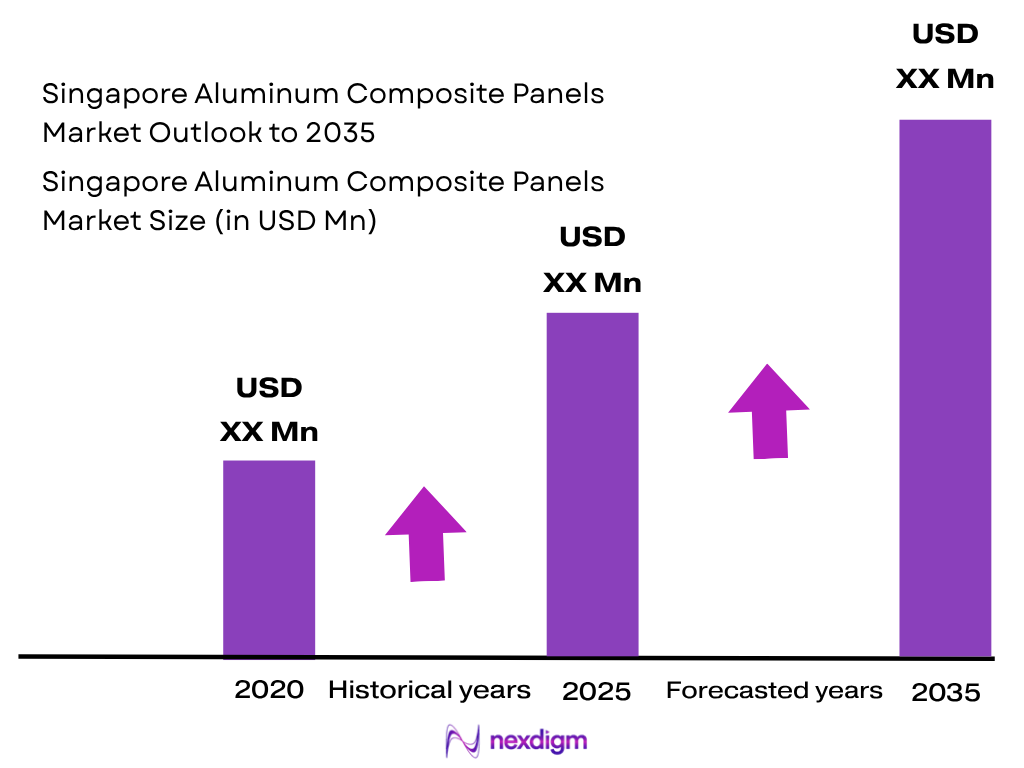
The Singapore aluminum composite panels market is valued at USD ~ billion in 2024 and is supported by demand from commercial buildings, residential developments, infrastructure projects, hospitality facilities, and façade modernization activities. The market expansion is driven by Singapore’s highly urbanized construction environment, where lightweight, durable, and aesthetically flexible façade materials are widely adopted. Singapore recorded a GDP of approximately USD 501 billion in 2023, according to World Bank data, reflecting a strong economic base supporting construction and real estate development. The country’s construction sector continues to benefit from public infrastructure investments, private property developments, and building refurbishment projects. Aluminum composite panels are increasingly preferred due to their corrosion resistance, lightweight characteristics, ease of installation, and compatibility with tropical climatic conditions.
The Singapore aluminum composite panels market is concentrated primarily in the Central Region, Downtown Core, Marina Bay, Jurong, and Punggol, supported by commercial development, urban redevelopment, residential expansion, and infrastructure modernization. The Central Region dominates demand due to the presence of premium commercial buildings, financial district developments, shopping malls, hotels, and high-rise mixed-use projects requiring advanced façade systems. Jurong contributes through industrial transformation, business parks, and infrastructure projects, while Punggol benefits from residential and smart township developments. Singapore’s limited land availability encourages vertical construction, increasing demand for lightweight façade solutions such as aluminum composite panels. The country’s focus on sustainable buildings and green construction practices further supports adoption of ACP systems in modern architectural applications.
Market Segmentation
By Application Type
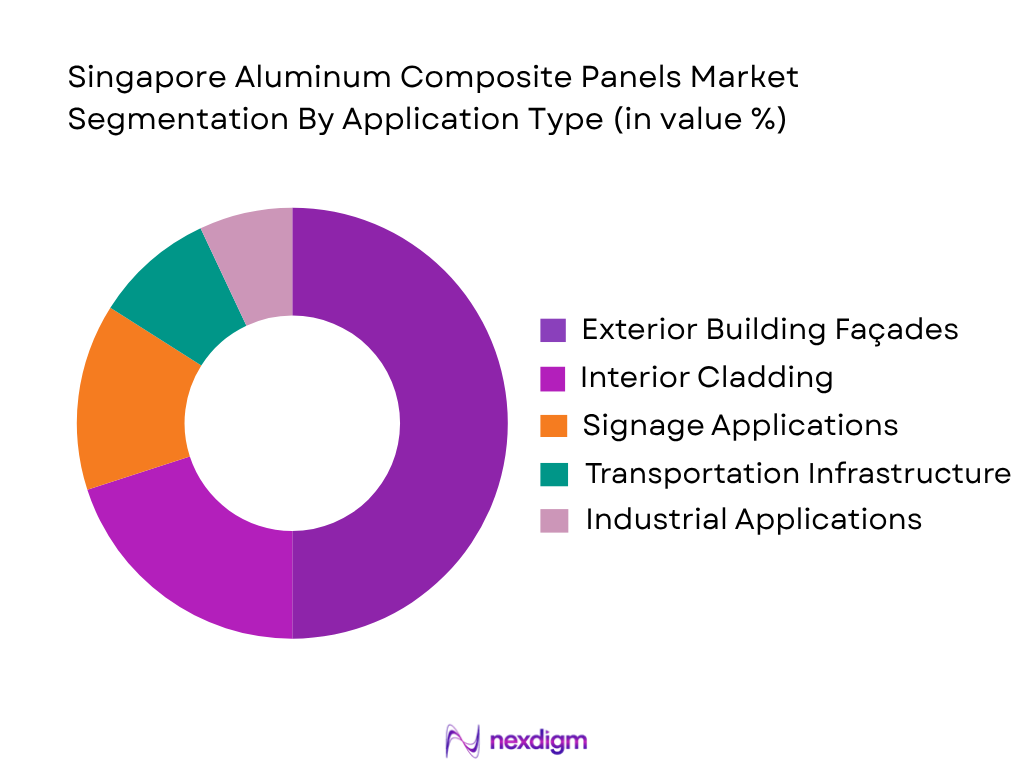
Singapore aluminum composite panels market is segmented by application type into exterior building façades, interior cladding, signage applications, transportation infrastructure, and industrial applications. Recently, exterior building façades hold the dominant market share under the application segmentation, due to extensive use across commercial towers, residential condominiums, hotels, and mixed-use developments. ACP panels are preferred for façade applications because they provide architectural flexibility, lightweight installation, weather resistance, and compatibility with modern building designs. Singapore’s high-rise construction environment requires materials capable of supporting efficient installation and long-term durability. The increasing focus on building aesthetics, façade refurbishment, and premium architectural finishes continues to strengthen exterior ACP adoption. Commercial districts such as Marina Bay and Downtown Core experience consistent demand due to redevelopment projects and modern office construction. The growing requirement for fire-rated façade systems in high-rise structures is also increasing demand for advanced ACP solutions.
By Core Material Type
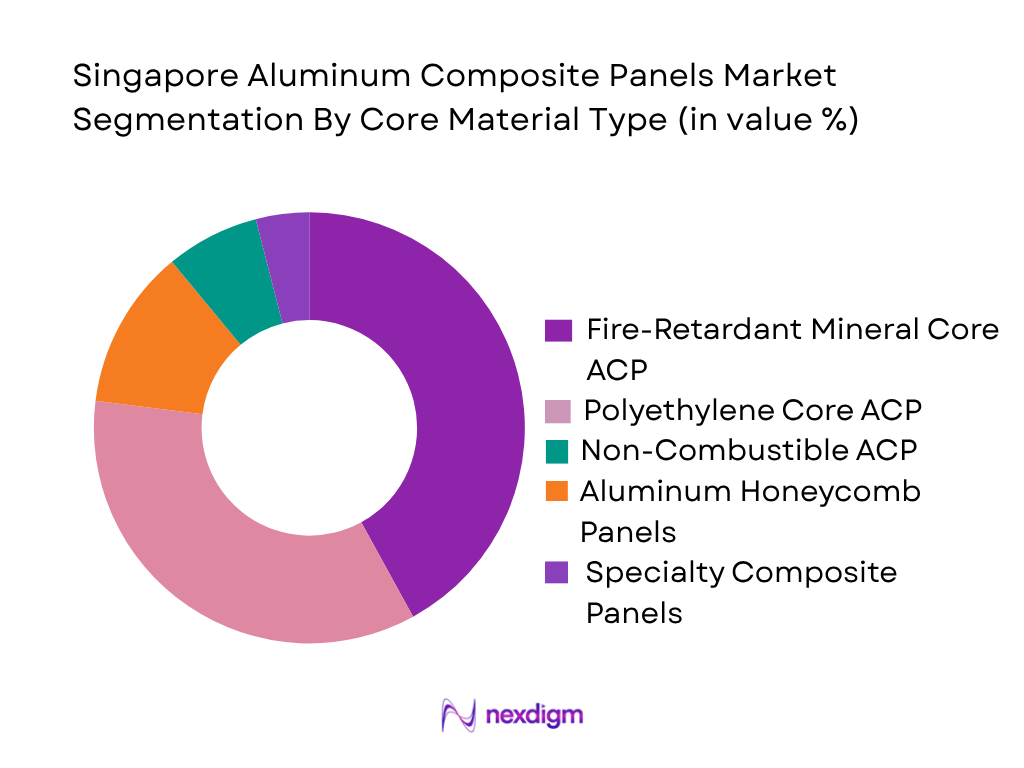
Singapore aluminum composite panels market is segmented by core material type into polyethylene core ACP, fire-retardant mineral core ACP, non-combustible ACP, aluminum honeycomb panels, and specialty composite panels. Currently, fire-retardant mineral core aluminum composite panels represent a leading segment due to Singapore’s strict building safety requirements and demand for safer façade materials. High-rise commercial buildings, residential towers, hotels, and institutional facilities increasingly require ACP systems with improved fire performance. Regulations administered through Singapore’s Building and Construction Authority and fire safety requirements have increased awareness regarding certified façade materials. While polyethylene core panels remain widely used for signage and selected applications due to cost advantages, fire-retardant ACP adoption is increasing in premium construction projects. The demand for non-combustible materials is further supported by Singapore’s emphasis on sustainable and safe building environments. Manufacturers offering certified fire-resistant solutions with advanced coatings and technical support are gaining preference among developers and contractors.
Competitive Landscape
The Singapore aluminum composite panels market consists of international ACP manufacturers, regional suppliers, façade solution providers, and construction material distributors. Competition is influenced by fire safety certification, product quality, coating technology, customization capability, technical support, and project execution experience. Leading companies focus on supplying premium ACP solutions for commercial buildings, residential developments, transportation infrastructure, and hospitality projects. International brands maintain strong positions due to advanced product technology, while regional suppliers compete through pricing flexibility, availability, and customized solutions.
| Company | Establishment Year | Headquarters | ACP Product Portfolio | Fire-Retardant Capability | Coating Technology | Panel Thickness Range | Application Capability |
| Alucobond / 3A Composites | 1969 | Switzerland | ~ | ~ | ~ | ~ | ~ |
| Alpolic / Mitsubishi Chemical | 1995 | Japan | ~ | ~ | ~ | ~ | ~ |
| Alubond USA | 1992 | UAE | ~ | ~ | ~ | ~ | ~ |
| Mulk Holdings | 1965 | UAE | ~ | ~ | ~ | ~ | ~ |
| Alstrong Enterprises | 2001 | India | ~ | ~ | ~ | ~ | ~ |
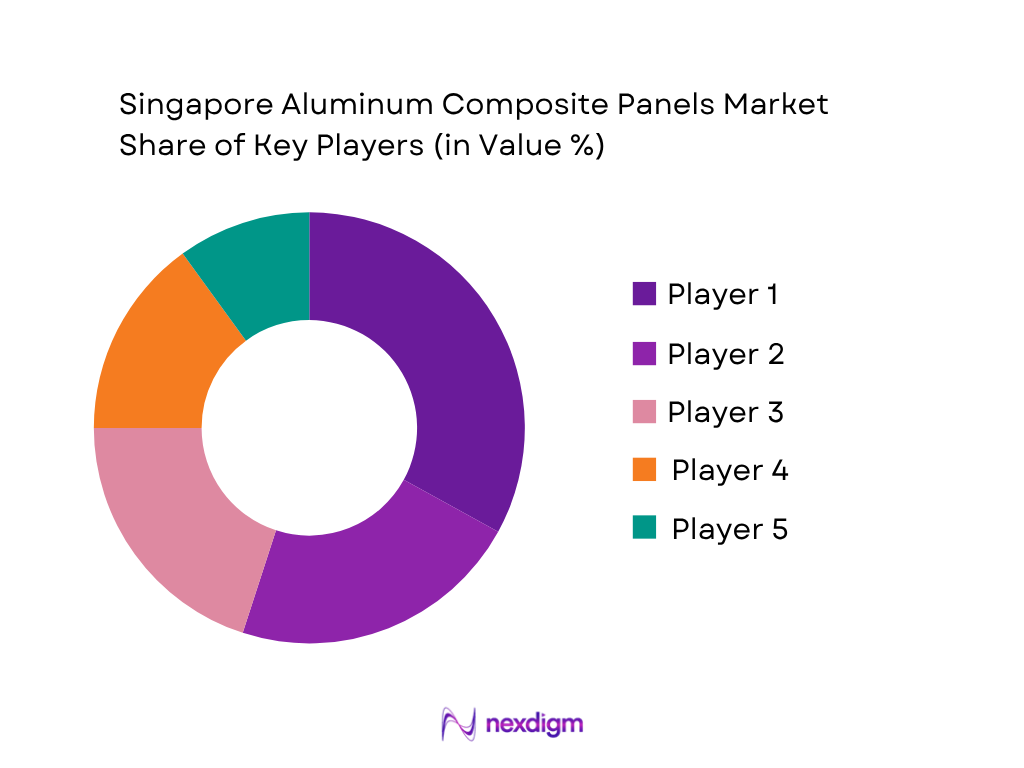
Singapore Aluminum Composite Panels Market Analysis
Growth Drivers
Accelerating High-Rise Construction and Infrastructure Development Demand
The Singapore aluminum composite panels market is supported by continuous urban development, high-rise construction activity, and infrastructure expansion across commercial, residential, and institutional segments. Singapore’s construction sector remains a key contributor to economic development, with the Building and Construction Authority (BCA) reporting construction demand of approximately SGD 33.8 billion in 2023, driven by public infrastructure projects and private sector developments. The country’s economic strength, reflected by a GDP of approximately USD 501.4 billion in 2023 according to the World Bank, enables sustained investment in urban infrastructure. Singapore’s population exceeded 5.9 million people in 2023 according to the Singapore Department of Statistics, increasing pressure on limited land resources and encouraging vertical development. Aluminum composite panels are increasingly adopted in high-rise buildings due to their lightweight characteristics, ease of installation, weather resistance, and architectural flexibility. Expansion of mixed-use developments, transport infrastructure upgrades, commercial towers, and residential projects continues to create demand for advanced façade materials. The requirement for efficient construction solutions in densely developed urban environments supports the adoption of ACP systems among developers, architects, and façade contractors. The growing redevelopment of older buildings and increasing emphasis on modern façade appearances further strengthen demand for ACP applications. Additionally, government-led infrastructure programs, including transport-oriented developments and urban renewal projects, continue creating opportunities for façade material suppliers. The need for faster installation methods in land-constrained construction environments further encourages adoption of lightweight cladding solutions such as aluminum composite panels.
Growing Demand for Sustainable and Energy-Efficient Façade Materials
The Singapore aluminum composite panels market is benefiting from increasing emphasis on sustainable construction practices, green building certifications, and energy-efficient building envelopes. Singapore’s Building and Construction Authority promotes environmentally responsible development through initiatives such as the Green Mark certification framework, encouraging the use of sustainable materials and efficient building technologies. The country recorded electricity consumption of approximately 56.8 terawatt-hours in 2023 according to the International Energy Agency, highlighting the importance of improving building energy performance. Aluminum composite panels support modern façade requirements through lightweight construction, thermal insulation compatibility, reflective surface options, and durability in tropical climatic conditions. Singapore’s high-rise urban environment, where more than 80% of residents live in high-density housing according to government housing data, creates continuous demand for durable external cladding systems. Developers are increasingly seeking ACP solutions with improved fire performance, recyclability, corrosion resistance, and compliance with green construction requirements. This shift toward sustainable building materials is encouraging manufacturers to develop advanced ACP products suitable for commercial towers, residential buildings, and institutional infrastructure projects. Increasing adoption of green-certified buildings is creating demand for façade materials that contribute to improved building lifecycle performance. Furthermore, architects are focusing on materials that provide aesthetic flexibility while supporting environmental objectives. The integration of energy-efficient coatings, recyclable aluminum components, and improved insulation compatibility is expected to strengthen ACP adoption in sustainable construction projects.
Market Restraints
Stringent Fire Safety Standards Limiting Conventional ACP Applications
The Singapore aluminum composite panels market faces challenges due to strict fire safety regulations governing façade materials used in high-rise and public buildings. Singapore’s regulatory authorities, including the Singapore Civil Defence Force and Building and Construction Authority, enforce comprehensive requirements for external wall systems, fire resistance performance, and material certification. With Singapore having more than 1,000 high-rise residential buildings according to Housing and Development Board data, façade safety remains a critical requirement for construction projects. Conventional ACP products containing combustible polymer cores face restrictions in applications requiring higher fire performance standards, increasing demand for fire-retardant and non-combustible alternatives. Manufacturers must invest in advanced core technologies, testing procedures, and compliance certifications to meet regulatory expectations. These requirements increase product development complexity and create additional barriers for suppliers offering standard ACP solutions. Developers and contractors increasingly prioritize certified façade systems with documented safety performance, limiting opportunities for low-cost manufacturers without technical certifications. The need to comply with strict building regulations influences product selection decisions and affects market entry strategies for ACP suppliers operating in Singapore. Fire safety requirements also increase project approval timelines as contractors must submit detailed product specifications and compliance documentation. Additionally, demand is shifting toward mineral-filled cores and fire-resistant ACP technologies, requiring manufacturers to upgrade product portfolios and technical capabilities.
High Dependence on Imported Materials and Regional Supply Networks
The Singapore aluminum composite panels market is challenged by dependence on imported raw materials, including aluminum sheets, polymer cores, coatings, and finishing components. Singapore’s limited domestic manufacturing base for construction materials increases reliance on international supply chains and regional suppliers. Enterprise Singapore reported total merchandise trade exceeding SGD 1 trillion in 2023, reflecting the country’s strong dependence on global trade networks. International fluctuations in aluminum availability, transportation costs, and raw material supply conditions can affect procurement planning for ACP distributors and construction contractors. The World Bank highlighted continued volatility in global commodity markets due to energy prices, geopolitical factors, and supply chain adjustments. Since Singapore imports a significant portion of construction inputs, ACP suppliers must maintain efficient logistics management and supplier diversification strategies. Limited availability of domestic manufacturing capacity also restricts large-scale ACP production expansion within the country. These supply chain dependencies can influence delivery timelines, customized product availability, and inventory management for construction projects requiring specialized aluminum composite panel solutions. Regional disruptions, shipping constraints, and changes in import regulations can further affect material availability. Suppliers are increasingly required to establish stronger regional sourcing networks and maintain adequate inventory levels to reduce project execution risks.
Market Expansion Opportunities
Increasing Demand for Façade Renovation and Building Modernization Activities
The Singapore aluminum composite panels market has significant opportunities through increasing façade refurbishment, building upgrading, and modernization projects. Singapore’s mature urban landscape consists of a large number of existing commercial, residential, and institutional buildings requiring periodic renovation to improve aesthetics, safety, and operational performance. The Urban Redevelopment Authority continues to support urban rejuvenation programs aimed at enhancing existing districts and extending building lifecycles. Singapore has more than 1 million housing units according to Housing and Development Board statistics, creating long-term requirements for maintenance, upgrading, and façade improvement activities. Aluminum composite panels are suitable for renovation applications because of their lightweight properties, installation flexibility, and ability to improve exterior appearance without major structural modifications. Commercial offices, retail centers, hotels, and mixed-use developments are increasingly adopting modern façade systems to maintain competitiveness and meet updated building standards. Demand for fire-rated ACP solutions, sustainable surface finishes, and customized façade designs creates opportunities for manufacturers offering advanced products and technical installation support. Building modernization initiatives are expected to remain an important application area for ACP suppliers in Singapore. Aging commercial buildings require façade upgrades to improve energy efficiency, visual appeal, and compliance with updated construction regulations. The increasing focus on extending the operational lifespan of existing structures provides opportunities for ACP replacement and retrofit projects.
Rising Adoption of Premium Architectural Façade Designs and Customized ACP Solutions
The Singapore aluminum composite panels market is positioned to benefit from growing demand for premium architectural designs, customized façade systems, and visually distinctive building exteriors. Singapore’s role as a regional commercial and tourism hub drives continuous development of luxury hotels, corporate buildings, retail complexes, and integrated developments requiring advanced architectural materials. The Singapore Tourism Board recorded approximately 13.6 million international visitor arrivals in 2023, supporting continued investment in hospitality and commercial infrastructure. Aluminum composite panels provide architects with flexibility in creating customized designs through various finishes, textures, colors, and fabrication options suitable for complex building structures. Growing interest in smart buildings, sustainable developments, and energy-efficient façades further increases demand for ACP systems with advanced coatings and performance characteristics. Developers increasingly seek façade materials that combine aesthetics, durability, and compliance with environmental standards. Expansion of premium commercial projects and urban landmark developments creates opportunities for ACP manufacturers specializing in customized fabrication, high-performance coatings, and integrated façade solutions. The rise of architectural landmark projects in Singapore is encouraging demand for innovative façade materials capable of achieving unique designs. Furthermore, digital fabrication technologies and advanced surface finishing techniques are enabling greater customization of ACP systems. This trend creates opportunities for suppliers offering specialized design support, engineering assistance, and premium façade installation services.
Future Outlook
Over the next decade, the Singapore aluminum composite panels market is expected to demonstrate steady growth driven by urban redevelopment, high-rise construction, infrastructure modernization, and increasing demand for advanced façade materials. The adoption of fire-retardant ACP systems, sustainable construction solutions, and premium architectural finishes is expected to increase. Singapore’s focus on green buildings, smart city development, and building refurbishment will create additional opportunities for ACP manufacturers. Demand will continue across commercial towers, residential developments, transportation facilities, and hospitality projects requiring durable and visually appealing façade solutions.
Major Players
- Alucobond / 3A Composites
- Alpolic / Mitsubishi Chemical Group
- Alubond USA
- Mulk Holdings
- Alstrong Enterprises
- Eurobond Industries
- Aludecor
- Alucoil
- Yaret Industrial Group
- Goodsense Technology Co., Ltd.
- Jyi Shyang Industrial Co., Ltd.
- Seven Aluminium Composite Panel
- Kronospan
- 3A Composites Asia Pacific
- Arconic Architectural Products
Key Target Audience
- Aluminum Composite Panel Manufacturers and Suppliers
- Façade Contractors and Architectural Cladding Companies
- Real Estate Developers and Construction Companies
- Building Material Distributors and ACP Fabricators
- Investments and Venture Capitalist Firms (Vertex Ventures Singapore, Temasek Holdings, GIC Private Limited)
- Government and Regulatory Bodies (Building and Construction Authority Singapore, Singapore Civil Defence Force, Urban Redevelopment Authority, Ministry of National Development Singapore)
- Hospitality Developers and Property Operators
- Infrastructure and Transportation Project Developers
Research Methodology
Step 1: Identification of Key Variables
The initial phase involves developing a comprehensive ecosystem map covering ACP manufacturers, aluminum suppliers, façade contractors, architects, developers, regulatory authorities, and construction stakeholders operating in Singapore. Extensive secondary research is conducted using government publications, industry databases, company reports, and construction data sources. The objective is to identify major variables influencing market growth, including product demand, application trends, safety requirements, and supply chain dynamics.
Step 2: Market Analysis and Construction
This phase involves collecting and analyzing historical information related to ACP consumption, construction activity, product adoption, and application penetration across Singapore. The assessment includes analysis of façade applications, core material preferences, fire-rated product demand, coating technologies, and regional construction trends. Market sizing is developed through supply-side and demand-side evaluation methods.
Step 3: Hypothesis Validation and Expert Consultation
Market assumptions are validated through discussions with ACP manufacturers, distributors, façade contractors, architects, and construction stakeholders. These consultations provide insights into procurement patterns, regulatory requirements, product specifications, installation challenges, and competitive strategies. Expert inputs are used to validate market trends and strengthen industry analysis.
Step 4: Research Synthesis and Final Output
The final stage integrates primary and secondary research findings to create a detailed assessment of the Singapore aluminum composite panels market. Data collected from manufacturers, contractors, developers, and industry participants is analyzed using top-down and bottom-up approaches. The final report provides segmentation analysis, competitive benchmarking, market dynamics, and strategic insights.

- Executive Summary
- Research Methodology (Market Definition and Scope, Singapore Aluminum Composite Panels Market Classification, Aluminum Composite Panel Technology Mapping, Aluminum Skin Thickness Assessment, Aluminum Alloy Grade Evaluation, Polyethylene Core ACP Assessment, Fire-Retardant Mineral Core ACP Evaluation, Non-Combustible ACP Analysis, Aluminum Honeycomb Panel Assessment, PVDF Coating Technology Evaluation, FEVE Coating Technology Assessment, Surface Finish Analysis, Texture and Color Customization Assessment, Panel Thickness and Dimension Evaluation, Exterior Façade Application Mapping, Interior Cladding Application Assessment, Signage Application Evaluation, Transportation Infrastructure Application Assessment, Green Building Material Assessment, Building Renovation Demand Assessment, Façade Replacement Assessment, Architectural Specification Analysis, Domestic Manufacturing Capability Assessment, Import Dependency Assessment, Supply-Side Assessment, Demand-Side Assessment)

- Definition and Scope
- Singapore Aluminum Composite Panels Industry Evolution and Development of High-Rise Building Façades, Architectural Cladding Systems, Commercial Building Envelope Solutions, Residential Condominium Façades, Fire-Retardant ACP Systems, Sustainable Construction Materials, Lightweight Building Materials, Green Building Solutions, Premium Architectural Finishes, Digital Printed ACP Panels, Transportation Infrastructure Cladding, Retail and Hospitality Façade Applications, Modular Construction Integration, Building Retrofit Solutions, Advanced Surface Treatment Technologies
- Aluminum Composite Panels Value Chain Analysis
- Aluminum Composite Panels Supply Chain Analysis
- Aluminum Coil Suppliers, Aluminum Sheet Manufacturers, Polymer Core Suppliers, Mineral Core Suppliers, Coating Chemical Suppliers, PVDF Coating Providers, ACP Manufacturers, Façade Fabricators, Architectural Consultants, Building Material Distributors, Main Contractors, Specialist Façade Contractors, Real Estate Developers, Commercial Property Owners, Government Infrastructure Developers, Green Building Certification Stakeholders

- Growth Drivers (High-Rise Construction Expansion, Commercial Building Development, Building Retrofit Activities, Green Building Adoption, Demand for Lightweight Façade Materials, Premium Architectural Design Requirements, Urban Redevelopment Projects, Hospitality Infrastructure Expansion, Transportation Infrastructure Development)
- Market Challenges (Strict Fire Safety Regulations, Competition from Glass and Alternative Façade Materials, Imported Raw Material Dependency, Limited Domestic ACP Manufacturing, High Certification Requirements, Installation Complexity, Tropical Weather Exposure, Quality Compliance Requirements)
- Market Opportunities (Fire-Retardant ACP Adoption, Sustainable and Recyclable ACP Solutions, Green Mark Certified Materials, Smart Building Façade Integration, Building Modernization Projects, Premium Architectural Finishes, Customized Digital ACP Printing, Infrastructure Cladding Applications)
- Market Trends (Increasing Fire-Rated ACP Demand, Sustainable Façade Material Adoption, Premium Surface Finish Preference, Lightweight Construction Solutions, Modular Building Integration, Energy-Efficient Building Design, Customized Architectural Panels, Advanced Coating Technologies)
- Government Regulations and Standards (Building and Construction Authority Regulations, Singapore Fire Code Requirements, Green Mark Certification Standards, Building Control Regulations, Façade Safety Requirements, Construction Product Standards, Environmental Sustainability Guidelines)
- SWOT Analysis
- Porter’s Five Forces Analysis
- PESTLE Analysis
- Stakeholder Ecosystem
- Competition Ecosystem

- By Market Value (2020-2025)
- By Installed Panel Volume (2020-2025)
- By Installed Surface Area (2020-2025)
- By Average Selling Price per Square Meter (2020-2025)
- By Exterior Façade ACP Consumption Volume (2020-2025)
- By Interior Cladding ACP Consumption Volume (2020-2025)
- By Fire-Retardant ACP Consumption Volume (2020-2025)
- By Non-Combustible ACP Consumption Volume (2020-2025)
- By Commercial Building ACP Consumption Volume (2020-2025)
- By Residential Building ACP Consumption Volume (2020-2025)
- By Infrastructure Project ACP Consumption Volume (2020-2025)

- By Core Material Type (In Value %)
Polyethylene Core Aluminum Composite Panels
Fire-Retardant Mineral Core Aluminum Composite Panels
Non-Combustible Aluminum Composite Panels
Aluminum Honeycomb Composite Panels
Corrugated Aluminum Composite Panels
Specialty Composite Core Panels - By Application (In Value %)
Exterior Building Façades
Curtain Wall Cladding Systems
Interior Wall Cladding
Ceiling Applications
Retail and Commercial Signage
Transportation Infrastructure Cladding
Industrial Facility Cladding
Corporate Office Interiors
Hospitality Building Applications
Public Infrastructure Applications - By Building Type (In Value %)
Commercial Office Buildings
Residential Condominiums
Shopping Malls and Retail Complexes
Hotels and Hospitality Buildings
Healthcare Facilities
Educational Institutions
Industrial Buildings
Government Buildings
Transportation Terminals
Mixed-Use Developments - By End User (In Value %)
Real Estate Developers
Construction Contractors
Façade Contractors
Architectural Firms
Government Infrastructure Agencies
Commercial Property Owners
Industrial Facility Owners - By Region (In Value %)
Central Region
East Region
West Region
North Region
North-East Region

- Market Share of Major Players (By Singapore Revenue, ACP Product Portfolio, Core Material Technology Capability, Fire-Retardant ACP Availability, Coating Technology Capability, Panel Thickness Range, Exterior Façade Capability, Interior Application Coverage, Customization Capability, Distribution Network Presence, Manufacturing Capability, Import Capability, Architectural Specification Reach, Project Portfolio, Technical Support Capability)
- Cross Comparison Parameters (Fire Rating Performance, Aluminum Skin Thickness Range, Core Material Technology, PVDF and FEVE Coating Capability, Panel Size and Thickness Availability, Weather Resistance Performance, Green Building Certification Compatibility, Singapore Project Reference and Technical Support Capability)
- SWOT Analysis of Major Player
- Competitive Positioning Matrix
- ACP Technology and Architectural Application Benchmarking
- Exterior Weathering and Durability Capability Assessment
- Singapore Distribution, Architectural Specification and Technical Support Assessment
- Major Companies
Alucobond / 3A Composites
Alpolic / Mitsubishi Chemical Group
Alubond USA
Mulk Holdings
Alstrong Enterprises
Eurobond Industries
Aludecor
Alucoil
Yaret Industrial Group
Goodsense Technology Co., Ltd.
Jyi Shyang Industrial Co., Ltd.
Seven Aluminium Composite Panel
Kronospan
3A Composites Asia Pacific
Arconic Architectural Products

- Architectural Façade Requirement Assessment
- Exterior Wall Cladding Demand Analysis
- Interior Feature Wall Requirement Assessment
- Building Renovation and Modernization Requirement Analysis
- Commercial Office Application Assessment
- Transportation Infrastructure Application Assessment
- Luxury Hotel and Hospitality Application Assessment
- Retail and Shopping Center Application Assessment

- By Market Value (2026-2035)
- By Installed Panel Volume (2026-2035)
- By Installed Surface Area (2026-2035)
- By Average Selling Price per Square Meter (2026-2035)
- By Exterior Façade ACP Consumption Volume (2026-2035)
- By Interior Cladding ACP Consumption Volume (2026-2035)
- By Fire-Retardant ACP Consumption Volume (2026-2035)
- By Non-Combustible ACP Consumption Volume (2026-2035)
- By Commercial Building ACP Consumption Volume (2026-2035)
- By Residential Building ACP Consumption Volume (2026-2035)
- By Infrastructure Project ACP Consumption Volume (2026-2035)


 Request a Sample
 Ask for Customization
 Get a Quote
 Enquire Now