

 Download PDF
Market Overview
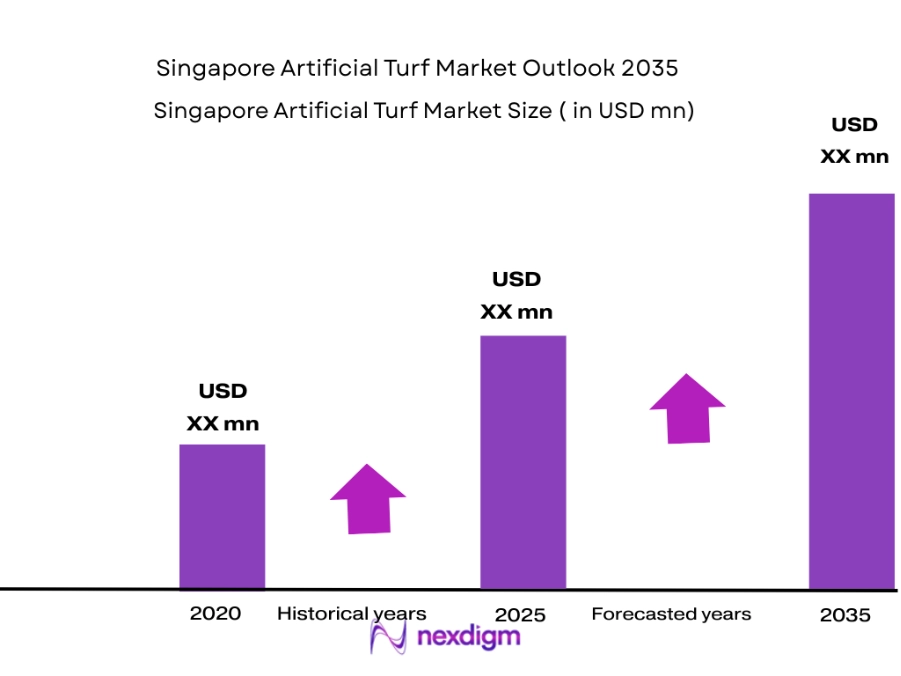
The Singapore Artificial Turf Market is valued at USD ~ million in 2024, driven by the increasing demand for water-efficient solutions, the expansion of sports and recreational facilities, and the rising preference for low-maintenance landscaping options. The adoption of artificial turf is supported by technological advancements that enhance its durability and environmental benefits. Moreover, the growth is bolstered by rising awareness of sustainable practices and government incentives encouraging the use of artificial turf in public and private spaces.
Key regions driving the Singapore Artificial Turf Market include Central Singapore, which is the commercial and recreational hub, and Western Singapore, where large-scale infrastructure projects and sports facilities are located. The dominance of these areas can be attributed to a high concentration of commercial developments, residential projects, and government-backed initiatives aimed at creating green spaces. Additionally, the growing popularity of artificial turf in landscaping and sports fields further boosts the market’s presence in these regions.
Market Segmentation
By Application
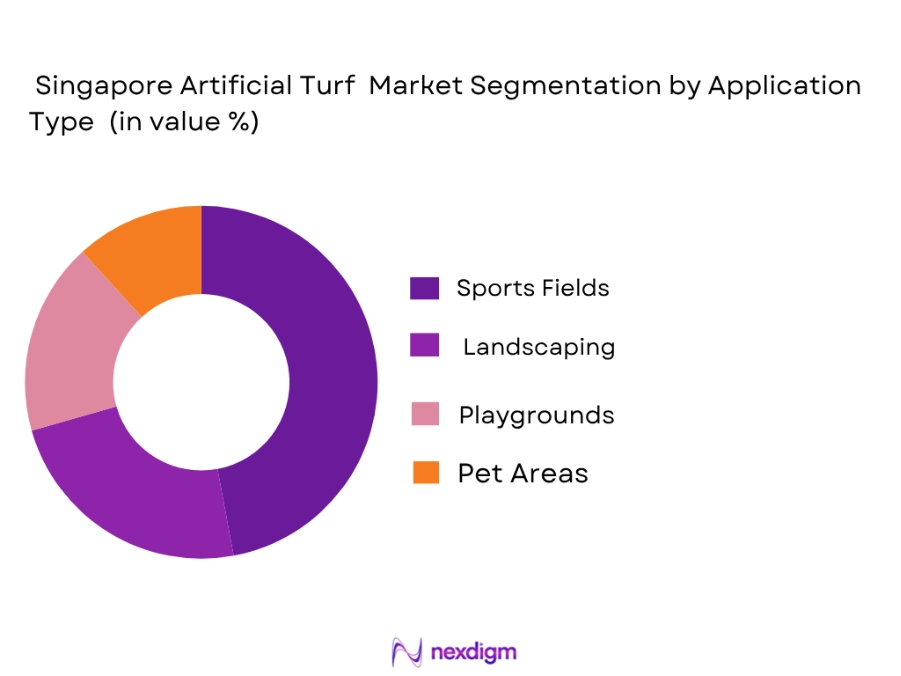
The Singapore Artificial Turf Market is segmented by application into sports fields, landscaping, playgrounds, pet areas, golf courses, and residential spaces. Among these, the sports fields segment holds a dominant position in the market. This is primarily due to the increasing number of sports facilities and stadiums, particularly in urban areas, coupled with the demand for sustainable, low-maintenance turf options that can withstand high foot traffic. Artificial turf provides an ideal solution for sports fields as it reduces water consumption and eliminates the need for chemical treatments typically required for natural grass.
By Turf Type
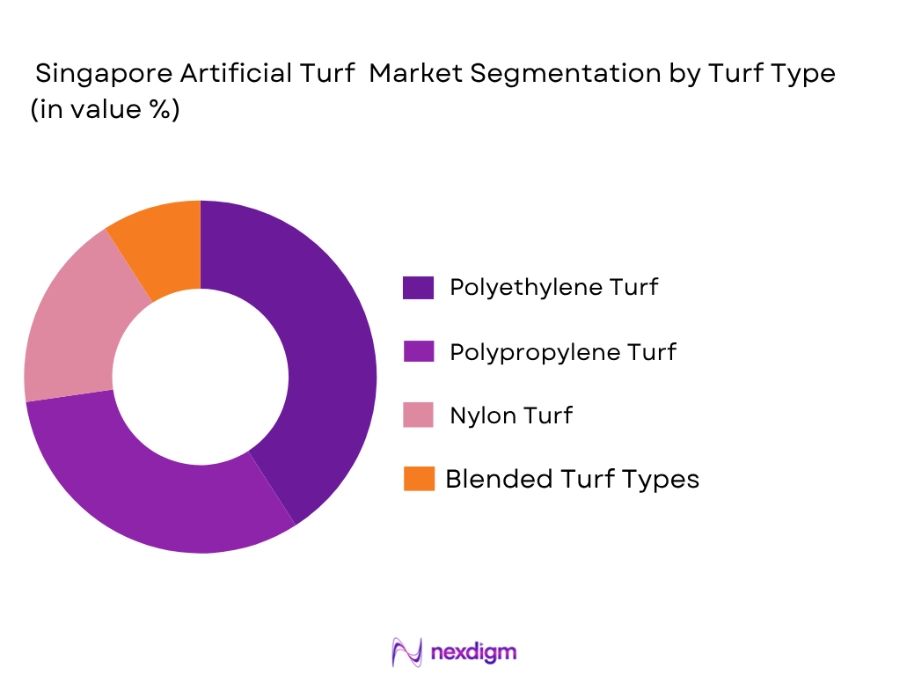
The Singapore Artificial Turf Market is segmented by turf type into polyethylene, polypropylene, nylon, and blended turf types. Polyethylene turf dominates the market due to its soft texture and high durability, which make it ideal for both sports fields and landscaping applications. It is also highly resistant to UV radiation, which contributes to its longevity, even under intense sunlight. Polyethylene is preferred by consumers due to its natural look and feel, making it ideal for high-visibility areas such as sports fields, golf courses, and public spaces.
Competitive Landscape
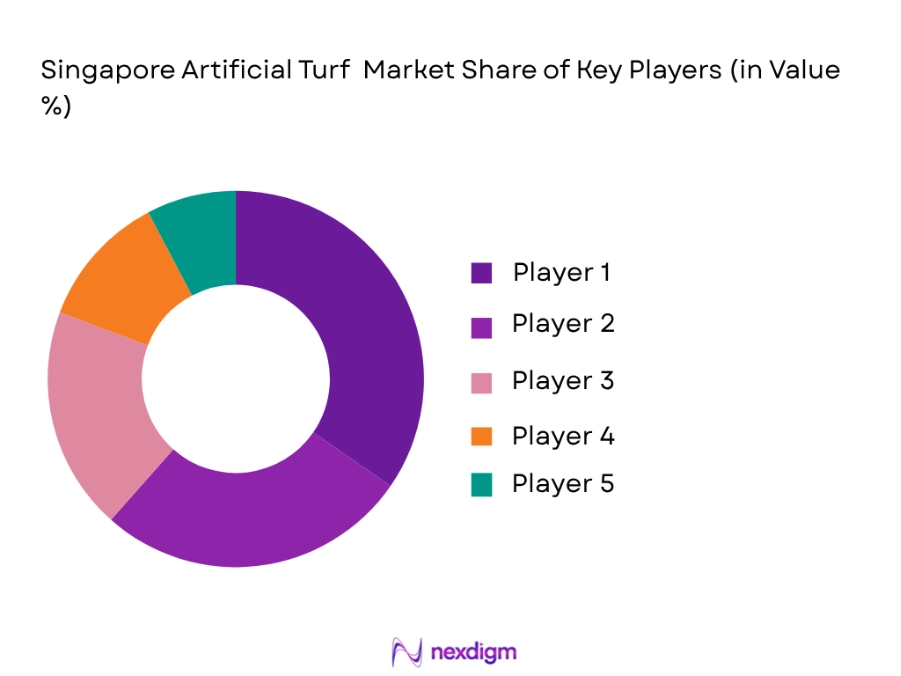
The Singapore Artificial Turf Market is dominated by several international and local companies offering a wide range of synthetic turf products. Leading players include FieldTurf, AstroTurf, TurfScape Singapore, and TurfTech Singapore, as well as regional companies like SIS Pitches. These companies have a strong presence due to their ability to offer customized, high-quality turf solutions suitable for various applications, from sports fields to residential landscaping. The consolidation of major players highlights the significant influence of these key companies in shaping market trends and driving growth through technological innovation and strategic partnerships.
| Company Name | Establishment Year | Headquarters | Market Segment Focus | Product Portfolio | Distribution Channels | Revenue | Production Capacity | Key Partners |
| FieldTurf | 1994 | USA | ~ | ~ | ~ | ~ | ~ | ~ |
| AstroTurf | 1965 | USA | ~ | ~ | ~ | ~ | ~ | ~ |
| TurfScape Singapore | 2008 | Singapore | ~ | ~ | ~ | ~ | ~ | ~ |
| TurfTech Singapore | 2010 | Singapore | ~ | ~ | ~ | ~ | ~ | ~ |
| SIS Pitches | 1982 | UK | ~ | ~ | ~ | ~ | ~ | ~ |
Singapore Artificial Turf Market Analysis
Growth Drivers
Increasing Demand for Water-Efficient Landscaping Solutions
The growing need for water conservation has significantly driven the adoption of artificial turf in Singapore. Water-efficient landscaping is particularly relevant due to the country’s tropical climate and periodic water shortages. Artificial turf requires no irrigation, reducing water consumption compared to natural grass, making it an ideal solution for homeowners, businesses, and municipalities focused on sustainable landscaping. As public awareness about water conservation continues to rise, artificial turf is becoming a preferred option in both residential and commercial spaces. The incorporation of artificial turf aligns with government and environmental initiatives to promote water-saving technologies, further boosting its popularity across various sectors in Singapore.
Expansion of Sports and Recreational Facilities
The expansion of sports infrastructure, including stadiums, football fields, and recreational parks, is another major growth driver in Singapore’s artificial turf market. As the city-state aims to boost its sports culture and provide better recreational facilities for its growing population, artificial turf is increasingly being adopted in sports fields due to its durability and low maintenance requirements. It is particularly suitable for high-traffic areas such as football fields and multi-sports complexes, where maintaining natural grass would be resource-intensive and costly. The Singapore government’s focus on creating world-class sports facilities further strengthens the demand for artificial turf, contributing to the market’s rapid growth.
Market Challenges
High Initial Installation Costs
One of the significant barriers to the widespread adoption of artificial turf in Singapore is the high initial installation cost. Although artificial turf offers long-term savings in terms of maintenance and water usage, the upfront costs for materials and installation can be considerable, particularly for large-scale applications like sports fields or commercial landscaping. For residential customers, this may also be a deterrent, especially when compared to the relatively lower cost of natural grass. The initial investment can make artificial turf less attractive to price-sensitive consumers, slowing market adoption despite its numerous long-term benefits.
Consumer Perceptions and Misconceptions about Artificial Turf
Despite the benefits of artificial turf, there are still misconceptions among consumers, especially regarding its safety and environmental impact. Some individuals believe artificial turf is hazardous, especially in terms of heat retention and its potential to contribute to pollution due to non-biodegradable materials. Additionally, there is a common perception that artificial turf does not provide the same aesthetic appeal as natural grass, leading to hesitations in adopting it for residential or public spaces. Educating the market and dispelling these myths is essential for overcoming this challenge and enhancing the adoption of artificial turf across various sectors in Singapore.
Opportunities
Growing Adoption in Landscaping for Residential and Commercial Spaces
There is a significant opportunity for artificial turf in the landscaping sector, both in residential and commercial spaces. With Singapore’s focus on sustainable urban development, there is a growing trend toward low-maintenance landscaping options that reduce water usage and require minimal upkeep. Artificial turf is increasingly being used in residential gardens, commercial properties, and public spaces like parks and playgrounds. Its ability to withstand heavy foot traffic, coupled with its eco-friendly benefits, makes it an attractive choice for property developers, homeowners, and municipalities looking to create beautiful, sustainable green spaces that require less maintenance.
Technological Innovations in Artificial Turf Durability and Performance
Technological advancements in artificial turf manufacturing have opened up new opportunities for growth in the market. Innovations that enhance the durability, performance, and appearance of artificial turf are helping to address previous concerns such as heat management, UV degradation, and infill contamination. New technologies such as improved yarns, UV-resistant coatings, and advanced infill materials are making artificial turf more realistic, long-lasting, and sustainable. These innovations are expected to reduce maintenance costs and increase the appeal of artificial turf in various sectors, driving further market adoption in Singapore, especially in sports facilities, public spaces, and high-traffic areas.
Future Outlook
Over the next five years, the Singapore Artificial Turf Market is expected to witness significant growth. The market is driven by the continuous expansion of sports infrastructure, advancements in turf technology, and growing consumer preference for sustainable, low-maintenance landscaping solutions. Moreover, government initiatives supporting eco-friendly practices, including the use of artificial turf for public and private spaces, will provide further momentum to the market. Technological innovations, such as turf with enhanced heat management properties, will likely see an uptick in adoption, contributing to market expansion.
Major Players
- FieldTurf
- AstroTurf
- TurfScape Singapore
- TurfTech Singapore
- SIS Pitches
- Sporturf
- Artificial Grass Singapore
- Xtreme Turf
- Perfect Turf
- Act Global
- Global Syn-Turf
- GreenFields
- Synthetic Turf International
- GreenTech Turf
- NeoTurf
Key Target Audience
- Sports Facility Operators
- Commercial Developers
- Government and Regulatory Bodies
- Residential Builders
- Landscaping Companies
- Real Estate Developers
- Investments and Venture Capitalist Firms
- Municipal Planning Agencies
Research Methodology
Step 1: Identification of Key Variables
The initial phase of the research involves constructing an ecosystem map that includes all major stakeholders in the Singapore Artificial Turf Market. The focus is on identifying variables such as turf type, application areas, and market dynamics, with data gathered through secondary research and primary surveys to create an accurate landscape of the market.
Step 2: Market Analysis and Construction
Data from historical market trends, industry reports, and government publications are compiled to assess the market’s current state and projected growth trajectory. This phase includes evaluating factors like demand for artificial turf in sports fields, landscaping, and commercial spaces.
Step 3: Hypothesis Validation and Expert Consultation
Market hypotheses regarding market growth drivers and challenges are validated by conducting interviews with industry experts and key players. This step provides qualitative insights that complement quantitative data, ensuring the accuracy of the market forecasts.
Step 4: Research Synthesis and Final Output
The final phase involves synthesizing all collected data and insights into a comprehensive market report. This includes an analysis of key trends, market drivers, challenges, and a thorough competitive analysis to ensure that the final output reflects an accurate and up-to-date view of the Singapore Artificial Turf Market.

- Executive Summary
- Research Methodology (Market Definitions and Assumptions, Abbreviations, Market Sizing Approach, Consolidated Research Approach, Understanding Market Potential Through In-Depth Industry Interviews, Primary Research Approach, Limitations and Future Conclusions)

- Definition and Scope
- Market Dynamics Overview
- Market Genesis
- Major Players and Market Timeline
- Business Cycle and Trends
- Supply Chain and Value Chain Analysis

- Growth Drivers
Increasing Demand for Water-Efficient Landscaping Solutions
Expansion of Sports and Recreational Facilities
Government Focus on Sustainable Urban Development
Rise in Residential Landscaping Projects
Increasing Commercial Adoption of Artificial Turf
Technological Advancements in Turf Manufacturing
Awareness of Environmental Benefits and Low Maintenance - Market Challenges
High Initial Installation Costs
Consumer Perceptions and Misconceptions about Artificial Turf
Limited Awareness of Maintenance Practices
Competition from Natural Grass Landscaping
Climate Sensitivity and Heat Management
Regulatory Compliance and Certification Standards
Dependence on Import Markets for Raw Materials - Opportunities
Growing Adoption in Landscaping for Residential and Commercial Spaces
Expansion of Sports Infrastructure and Stadiums
Partnerships with Municipalities for Public Space Enhancements
Technological Innovations in Artificial Turf Durability and Performance
Integration of Artificial Turf in Green Building Projects and Urban Parks
Government Incentives for Sustainable Landscaping Solutions - Key Trends
Shift Toward Eco-Friendly and Organic Turf Solutions
Growing Preference for Scented and Skin-Friendly Formulations
Innovation in Packaging (Portable, Refillable Bottles)
Increased Adoption in Public and Private Sectors
Rising Preference for Instant and Convenient Turf Solutions
Demand for Customization and Aesthetic Turf Designs - Government Regulations
Standards for Artificial Turf Manufacturing
Safety and Labeling Requirements
Impact of Regulations Post-COVID-19
Environmental and Sustainability Compliance - SWOT Analysis
- Porter’s Five Forces Analysis

- By Value, 2020–2025
- By Volume, 2020–2025
- By Average Price, 2020–2025

- By Application (In Value %)
Sports Fields
Landscaping
Playgrounds
Pet Areas - By Turf Type (In Value %)
Polyethylene Turf
Polypropylene Turf
Nylon Turf
Blended Turf Types - By End-User (In Value %)
Sports Facility Operators
Commercial Developers
Government and Municipalities
Residential Builders
Landscaping Companies
Educational Institutions
Real Estate Developers - By Distribution Channel (In Value %)
Direct Sales
Distributors and Dealers
Online Sales
Contractors and Installers
Retail Stores - By Region (In Value %)
Central Singapore
Western Singapore
Eastern Singapore
Northern Singapore
Southern Singapore
Other Regions

- Market Share of Major Players by Value/Volume
- Market Share of Major Players by Product Type
- Cross Comparison Parameters(Company Overview, Business Strategies, Recent Developments, Strength, Weakness, Organizational Structure, Revenues, Revenues by Product Type, Number of Touchpoints, Distribution Channels, Number of Dealers and Distributors, Margins, Production Plant, Capacity, Unique Value Offering, and Others)
- SWOT Analysis of Major Players
- Pricing Analysis Based on Product Categories for Major Players
- Detailed Profiles of Major Companies
FieldTurf
AstroTurf
TurfScape Singapore
Emirates Turf
TurfTech Singapore
SIS Pitches
Sporturf
Artificial Grass Singapore
Xtreme Turf
Perfect Turf
Act Global
Global Syn-Turf
GreenFields
Synthetic Turf International
GreenTech Turf

- Demand and Application Patterns
- Consumer Spending Power and Budget Distribution
- Regulatory Guidelines and Compliance Standards
- Customer Needs, Preferences, and Challenges
- Factors Influencing Purchasing Decisions

- By Value, 2026–2035
- By Volume, 2026–2035
- By Average Price, 2026–2035


 Request a Sample
 Ask for Customization
 Get a Quote
 Enquire Now