
 Download PDF
Market Overview
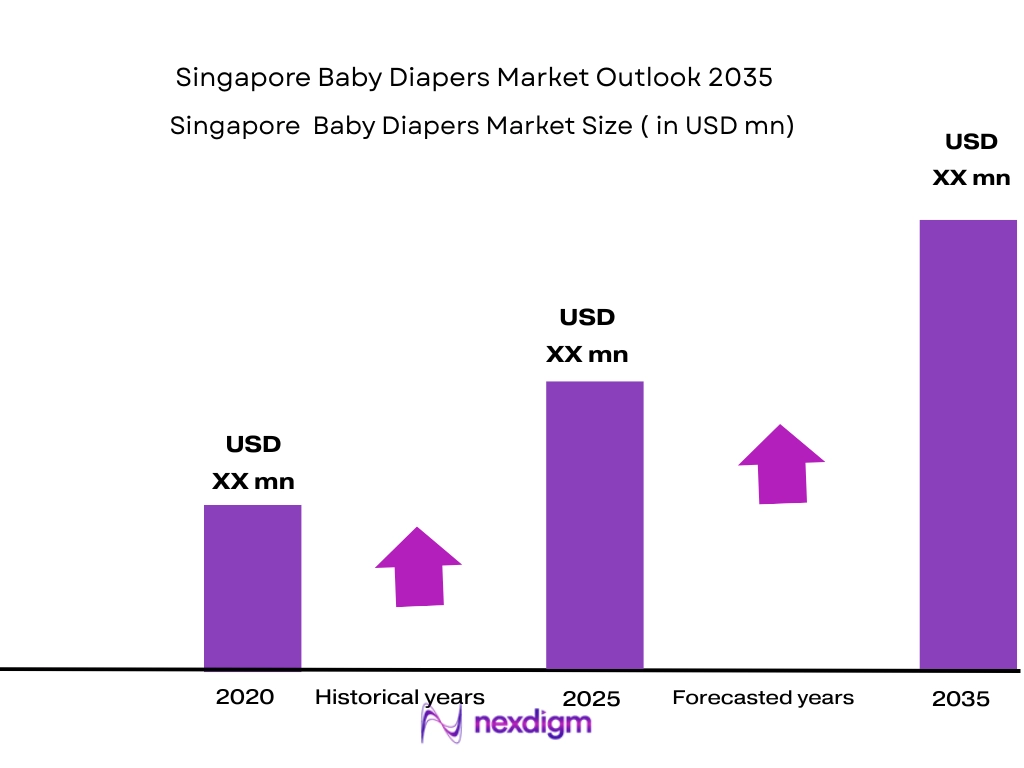
The Singapore baby diapers market is valued at USD ~ million, underpinned by the growing demand for convenience products in the baby care sector. This growth is primarily driven by increasing consumer awareness about the benefits of disposable diapers and rising disposable income levels. As more parents prioritize hygiene and comfort, the baby diaper market continues to expand, with the premium segment gaining significant traction. In 2027, the market is expected to experience further growth, fueled by innovations and advancements in diaper technology, which cater to the specific needs of babies.
The market is dominated by major urban areas such as Singapore City, where the higher population density and purchasing power contribute significantly to the market’s growth. These areas have seen a rise in dual-income households, leading to an increase in disposable income. Additionally, the country’s robust healthcare infrastructure and urbanization trends have played a key role in making Singapore a significant market for baby care products. The focus on cleanliness, health, and convenience is particularly pronounced in these urban centers, boosting the demand for high-quality diapers.
Market Segmentation
By Product Type
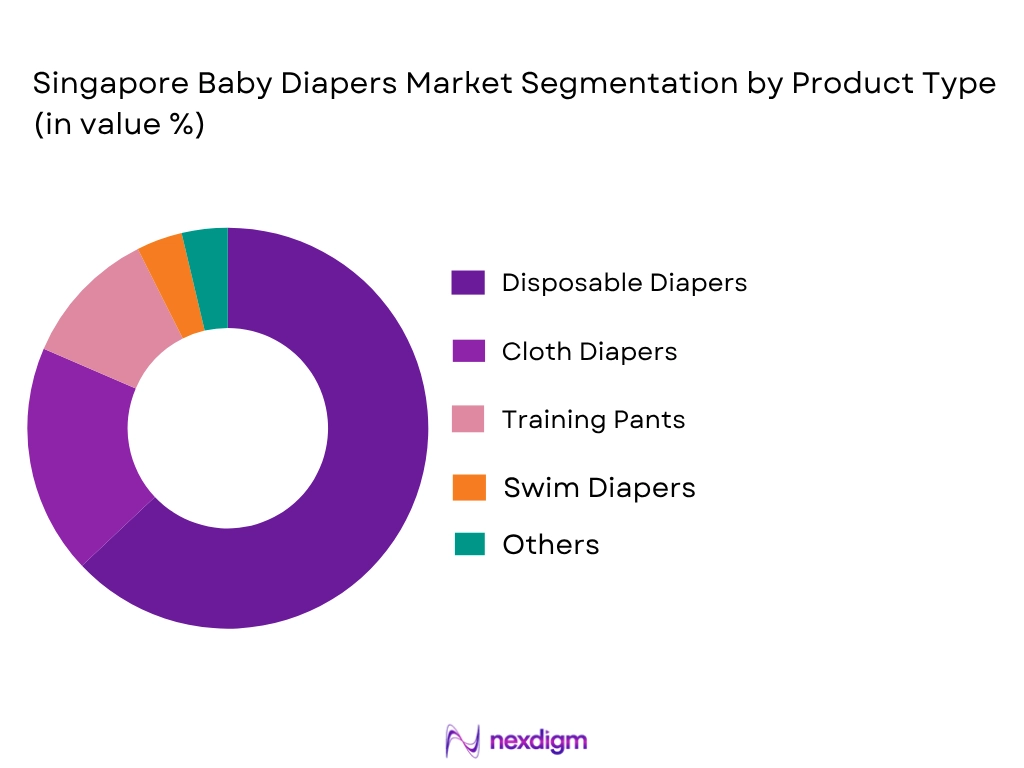
The Singapore baby diapers market is segmented into disposable diapers, cloth diapers, training pants, and swim pants. Disposable diapers hold the largest market share in Singapore, driven by their convenience and hygiene benefits. These diapers are highly favored by working parents who seek ease of use and effectiveness in managing baby care needs. The preference for disposable diapers has increased with the growing awareness about hygiene and the availability of various premium options in the market. Companies have also innovated by introducing advanced features like anti-leakage technology, ultra-absorbent layers, and hypoallergenic materials, further driving the adoption of disposable diapers.
By Distribution Channel
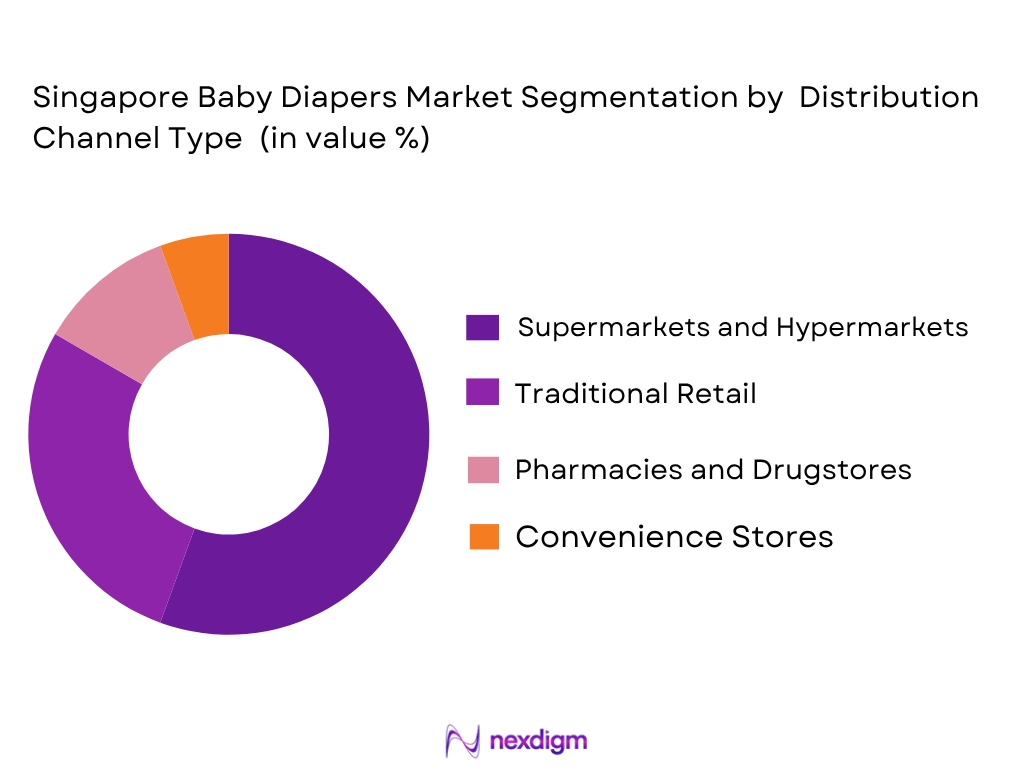
The market is also segmented by distribution channel, which includes supermarkets and hypermarkets, convenience stores, traditional retail, pharmacies and drugstores, and e-commerce. Supermarkets and hypermarkets are the leading distribution channels in the Singapore baby diapers market due to their wide availability and frequent promotions. These channels cater to the high demand from urban households where large retail spaces are prevalent. The increase in e-commerce also plays a significant role, as more parents prefer the convenience of home delivery. Online platforms like Lazada and Shopee provide ease of access to various diaper brands, making it an increasingly preferred channel for purchases.
Competitive Landscape
The Singapore baby diapers market is dominated by a few major players, including global brands like Procter & Gamble, Kimberly-Clark, and Unicharm. These companies have established a strong presence in Singapore, thanks to their vast distribution networks, strong brand equity, and ability to meet the growing demand for high-quality baby care products. Their dominance is further reinforced by continuous innovation and a deep understanding of local consumer preferences.
| Company Name | Establishment Year | Headquarters | Product Portfolio | E-commerce Presence | Brand Recall | Retail Shelf Share |
| Procter & Gamble | 1837 | Cincinnati, USA | ~ | ~ | ~ | ~ |
| Kimberly-Clark | 1872 | Irving, USA | ~ | ~ | ~ | ~ |
| Unicharm | 1961 | Tokyo, Japan | ~ | ~ | ~ | ~ |
| Drypers | 1989 | Singapore | ~ | ~ | ~ | ~ |
| First Quality Enterprises | 1987 | USA | ~ | ~ | ~ | ~ |
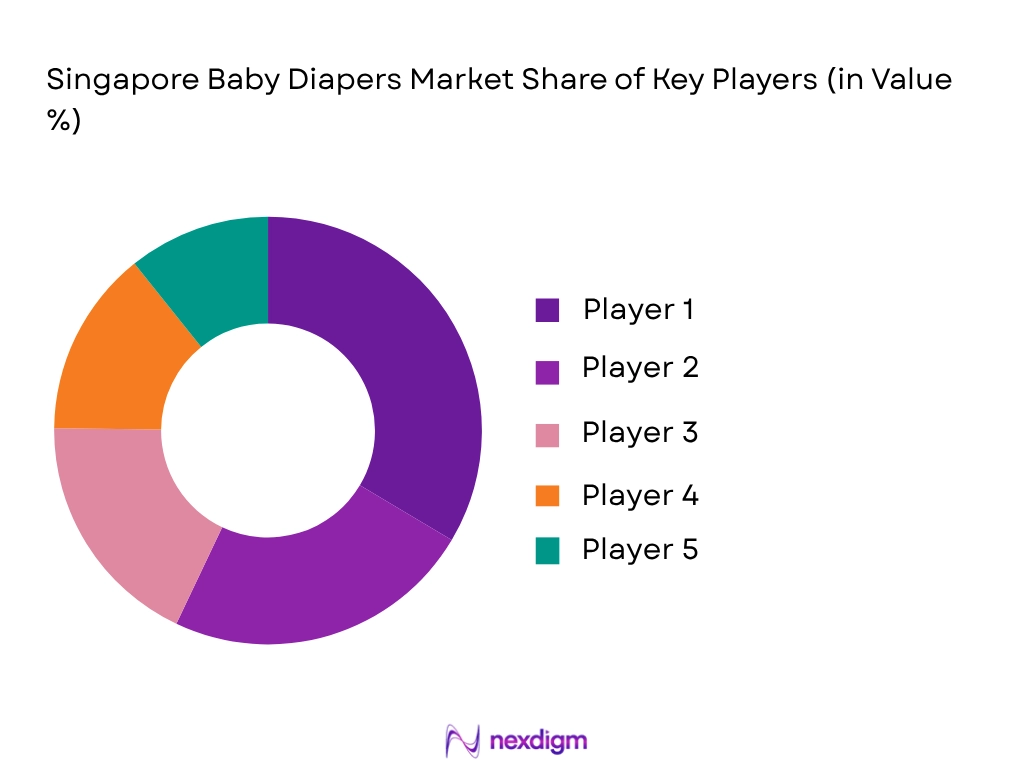
Singapore Baby Diapers Market Analysis
Growth Drivers
Urban Household Growth Rate
Urbanization in Singapore has significantly driven the growth of the baby diapers market. The increasing number of urban households, especially those with dual-income families, is a key factor behind the rising demand for convenient baby care solutions. These households have greater purchasing power, and with the high cost of living in urban areas, disposable diapers are often seen as a practical choice for parents seeking convenience and hygiene. The growth of these households also aligns with busy lifestyles, where time-saving products like disposable diapers become essential. As Singapore’s urban population continues to grow, the demand for baby diapers, particularly those offering high-quality and innovative features, is expected to rise, fueling market growth.
Increased Awareness of Baby Hygiene
The growing awareness of baby hygiene in Singapore has also played a crucial role in propelling the baby diapers market. Parents are becoming increasingly conscious of the importance of maintaining proper hygiene for their babies, particularly due to the rising incidence of skin irritations and allergies. As a result, there is a strong demand for high-quality, hypoallergenic, and dermatologically tested baby diapers. This awareness is further boosted by social media and parenting forums where experiences and tips are shared. Parents are more likely to invest in premium diaper products to ensure comfort and cleanliness, contributing to the market’s expansion. Brands are responding to this trend with diapers that offer enhanced absorbency, skin-friendly materials, and eco-friendly options.
Challenges
Inflationary Pressure on Raw Materials
Inflation has significantly impacted the cost of raw materials used in the production of baby diapers, creating challenges for manufacturers in Singapore. The rising prices of materials such as fluff pulp, nonwoven fabrics, and elastic components have led to an increase in production costs. These higher costs are often passed on to consumers, making diapers more expensive and potentially reducing their affordability for price-sensitive customers. Additionally, fluctuations in the price of raw materials, driven by global supply chain disruptions, can make it challenging for manufacturers to maintain stable pricing structures. This inflationary pressure is particularly challenging for manufacturers of budget and mid-range products, who must balance quality with cost efficiency to remain competitive.
High Competition from Private Labels
The rise of private label brands in the baby diapers market presents a significant challenge to established brands in Singapore. Retailers such as supermarkets and e-commerce platforms are increasingly offering their own store-branded diapers at a lower price point, which directly competes with premium products from established players like Procter & Gamble and Kimberly-Clark. These private labels often capitalize on cost-efficient production methods and can offer similar product features, such as absorbency and comfort, at a fraction of the price. As a result, consumers, particularly those who are price-sensitive, are increasingly opting for these affordable alternatives. This intensifies the competitive landscape, pushing established brands to innovate and offer added value through premium features, eco-friendly options, or advanced technology.
Opportunities
Eco-friendly and Biodegradable Diapers
The growing consumer preference for sustainability presents a significant opportunity for the Singapore baby diapers market. Parents are becoming more environmentally conscious, and this trend is leading to an increasing demand for eco-friendly and biodegradable diapers. Brands are responding by developing diapers made from sustainable materials such as bamboo, cotton, and plant-based plastics, which are less harmful to the environment. These products are designed to break down more easily in landfills, reducing the long-term environmental impact compared to traditional disposable diapers. Additionally, the growing awareness of the environmental footprint of disposable products is encouraging parents to seek out eco-friendly alternatives. As a result, manufacturers have the chance to tap into a niche market of eco-conscious consumers and gain a competitive edge.
Smart Diaper Technology
The integration of technology into baby diapers presents a significant growth opportunity in the Singapore market. Smart diaper technology, such as diapers equipped with sensors that track moisture levels and alert parents when it’s time for a change, is gaining traction. This innovation addresses a key concern for parents, offering greater convenience and peace of mind. Additionally, such technology can help monitor a baby’s health by tracking patterns in urine output, which can be vital for early detection of potential health issues. As parents in Singapore become more tech-savvy and seek convenience-driven solutions, the demand for smart diapers is expected to grow. Companies that invest in developing and integrating these technologies into their products can differentiate themselves and capture a growing segment of the market.
Future Outlook
Over the next 5 years, the Singapore baby diapers market is expected to show significant growth, driven by continuous innovations in product technology, as well as an increasing preference for eco-friendly and hypoallergenic options. The market is also set to benefit from the growing number of dual-income households, which are increasingly relying on convenient solutions like disposable diapers. Additionally, the expansion of e-commerce platforms will continue to provide ease of access to consumers, while government initiatives focusing on promoting health and hygiene standards for babies will further boost market growth.
Major Players in the Market
- Procter & Gamble
- Kimberly-Clark
- Unicharm
- Drypers
- First Quality Enterprises
- Essity
- Kao Corporation
- Johnson & Johnson
- Hengan International
- Pigeon Singapore
- MooNi
- MamyPoko
- Mundipharma
- Linette
- Parent’s Choice
Key Target Audience
- Investments and Venture Capitalist Firms
- Government and Regulatory Bodies (Ministry of Health, Singapore)
- E-commerce Platforms (Lazada, Shopee)
- Supermarkets and Hypermarkets (FairPrice, Giant, Sheng Siong)
- Pharmacies and Drugstores (Guardian, Watsons)
- Baby Care Product Manufacturers
- Retail Distributors
- Healthcare Providers (Pediatricians, Hospitals)
Research Methodology
Step 1: Identification of Key Variables
The first step involves identifying key variables influencing the Singapore Baby Diapers Market. This includes understanding product categories, consumer preferences, and buying behaviors, using data from credible sources like government agencies, market reports, and industry associations.
Step 2: Market Analysis and Construction
The next phase involves gathering historical and current market data. This data is used to analyze growth patterns, consumer behavior, and industry-specific factors such as raw material costs and innovations in product development.
Step 3: Hypothesis Validation and Expert Consultation
To validate the hypothesis, in-depth interviews with industry experts, manufacturers, and distributors are conducted. This helps to refine the market analysis and ensure that all variables are accurately represented.
Step 4: Research Synthesis and Final Output
In the final phase, the insights obtained from expert consultations, secondary research, and market data are synthesized. The result is a comprehensive and detailed market report that offers actionable insights, trends, and forecasts for the Singapore Baby Diapers Market

- Executive Summary
- Research Methodology (Market Definitions and Scope of Baby Diapers, Product Category Classification Framework, Retail Audit and E-commerce Data Utilization Approach, Primary Interviews with Manufacturers, Distributors and Retailers, Bottom-Up Household Consumption Modelling, Top-Down FMCG Sales Validation, Assumptions on Pricing, Inflation and Pack Sizes, Limitations and Data Triangulation Techniques, TAM/SAM/SOM Modelling Framework Based on Household Penetration and Spend)

- Definition and Scope
- Evolution of Baby Diapers Ecosystem in Singapore
- Timeline of Regulatory and Consumer Market Developments
- Household Diaper Usage Lifecycle Integration
- Value Chain Analysis
- Stakeholder Ecosystem

- Growth Drivers
Urban Household Growth Rate
Increased Awareness of Baby Hygiene
Disposable Income and FMCG Spend Growth
E-commerce Penetration
Premiumization of Baby Diapers - Challenges
Inflationary Pressure on Raw Materials
Price Sensitivity of Consumers
High Competition from Private Labels
Supply Chain and Distribution Complexity
Regulatory Compliance Costs - Opportunities
Eco-friendly and Biodegradable Diapers
Smart Diaper Technology
Subscription-based Diaper Models
Untapped Rural Household TAM - Market Trends
Natural and Hypoallergenic Diapers
Recyclable and Sustainable Packaging
Online Grocery Expansion
Premium Fragrance-led Diapers - Government Regulations
- SWOT Analysis
- Porter’s Five Forces
- Sustainability and Packaging Impact
- Retail Channel Integration Analysis

- By Value, 2020-2025
- By Volume, 2020-2025
- By Average Spend per Household, 2020-2025

- By Product Type (in Value %)
Disposable Diapers
Cloth Diapers
Training Pants
Swim Pants - By Distribution Channel (in Value %)
Supermarkets and Hypermarkets
Convenience Stores
Traditional Retail
Pharmacies and Drugstores
E-commerce - By Price Segment (in Value %)
Mass
Mid-Premium
Premium - By End User (in Value %)
Urban Households
Rural Households
Commercial and Institutional Users
Healthcare Facilities

- Market Share of Major Players
By Value
By Volume
By Product Category
TAM Coverage Ratio - Cross Comparison Parameters(Product Portfolio Breadth, Average Price per Unit, Distribution Network, E-commerce Presence, Sustainability Claims, Local Manufacturing Presence, Brand Recall, Retail Shelf Share, Innovation Pipeline, Customer Retention)
- SWOT Analysis of Major Players
- Pricing Benchmarking
- Detailed Profiles of Major Companies
Procter & Gamble Singapore
Unicharm Singapore
Kimberly-Clark Singapore
Nestlé Singapore
First Quality Enterprises
Amsino International
Pigeon Singapore
Merries Singapore
Drypers Singapore
Huggies Singapore
Pigeon Singapore
MooNi
MamyPok
Mundipharm
Linette

- Household Consumption Patterns and Seasonality
- Brand Loyalty and Switching Behavior
- Price Sensitivity and Pack Size Preference
- Pain Point Analysis
- Purchase Decision-Making Criteria
- Consumer TAM Analysis

- By Value, 2026-2035
- By Volume, 2026-2035
- By Average Spend per Household, 2026-2035


 Request a Sample
 Ask for Customization
 Get a Quote
 Enquire Now