

 Download PDF
 Download PDF
Market Overview
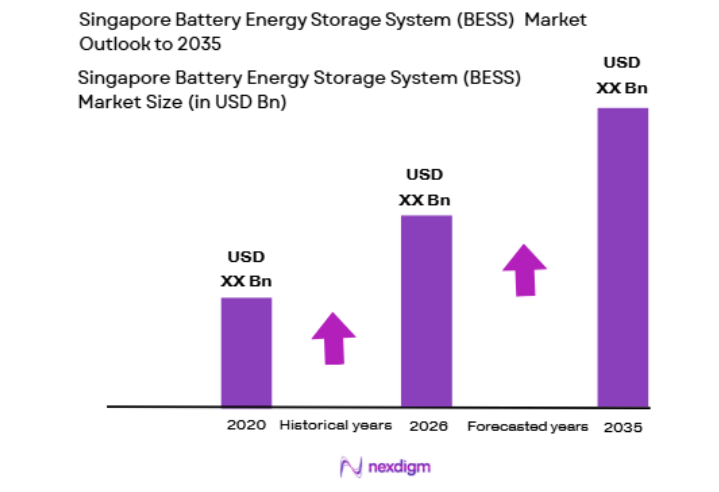
The Singapore Battery Energy Storage System (BESS) market is valued at approximately USD ~ billion, driven by the increasing need for energy storage solutions to support the country’s transition to renewable energy sources. BESS plays a crucial role in stabilizing the energy grid, especially as Singapore increases its adoption of solar power and other renewable energy technologies. Additionally, government policies, such as tax incentives for clean energy projects, are further boosting demand for BESS in the country.
Singapore leads in the BESS market in Southeast Asia due to its advanced infrastructure, technological capabilities, and strong governmental support for green energy initiatives. The government’s commitment to reducing carbon emissions, along with the country’s strategic location as a regional energy hub, has positioned Singapore as a pioneer in the development and implementation of energy storage solutions. Urbanization, combined with the need for sustainable and efficient energy management, makes Singapore a key player in the regional BESS market.
Market Segmentation
By Technology Type
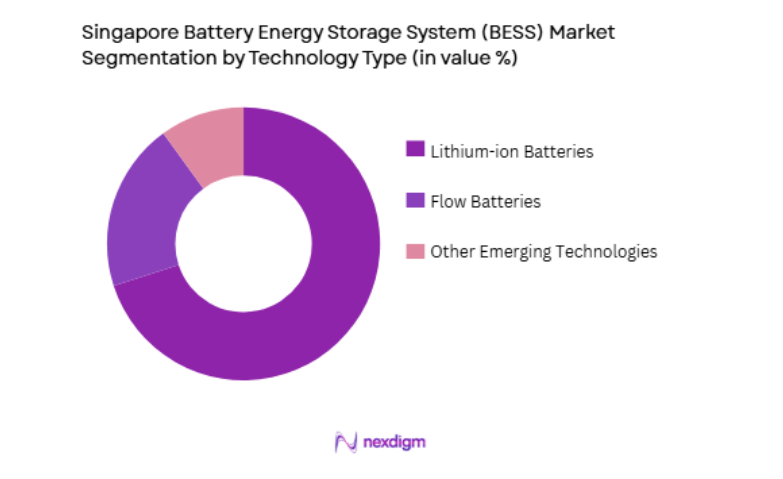
The Singapore BESS market is segmented by technology type into lithium-ion batteries, flow batteries, and other emerging technologies. Lithium-ion batteries dominate the market due to their high energy density, longer life cycle, and decreasing costs over time. The widespread adoption of lithium-ion technology in both consumer electronics and electric vehicles has driven economies of scale, making it the most cost-effective and reliable solution for large-scale energy storage. Additionally, the infrastructure for lithium-ion battery production and the established supply chain further solidify its dominant position in the market.
By Application
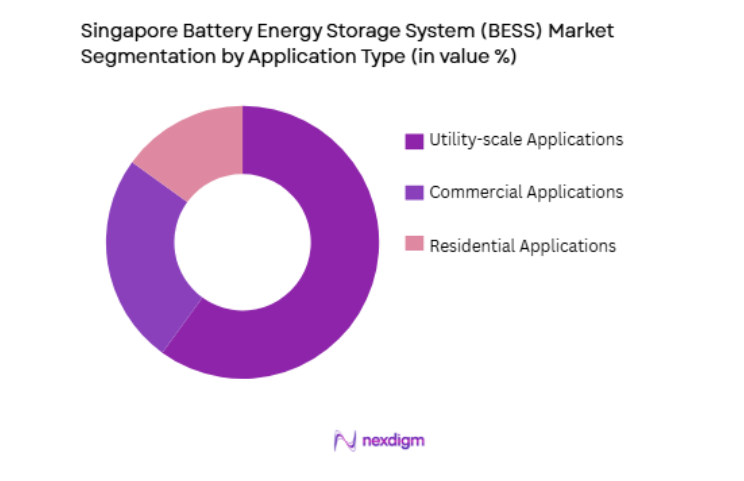
The Singapore BESS market is segmented by application into residential, commercial, and utility-scale applications. The utility-scale application has the dominant market share due to its critical role in supporting grid stability and integrating renewable energy sources. Large-scale energy storage systems are essential for storing excess power generated during peak solar production hours and releasing it when demand is high or renewable generation is low. The high demand for renewable energy storage, coupled with supportive regulatory frameworks, makes utility-scale BESS the leading segment in the market.
Competitive Landscape
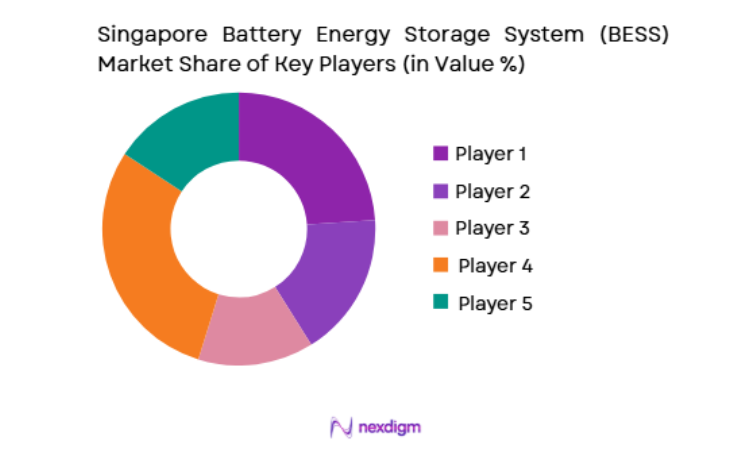
The competitive landscape of the Singapore BESS market is marked by strong competition among both international and local players. Major multinational companies with advanced battery technologies, such as lithium-ion and flow batteries, are actively investing in the Singaporean market. The government’s green energy initiatives and focus on sustainability have encouraged the entry of numerous technology companies, while local startups are also capitalizing on niche market segments such as residential and commercial BESS applications. The market continues to see collaborations between battery manufacturers, energy storage companies, and utility providers, further enhancing competition.
| Company Name | Establishment Year | Headquarters | Technology Focus | Market Reach | Key Products | Revenue (USD Million) | Additional Market-Specific Parameter |
| Siemens Energy | 1847 | Munich, Germany | ~ | ~ | ~ | ~ | ~ |
| ABB | 1988 | Zurich, Switzerland | ~ | ~ | ~ | ~ | ~ |
| Samsung SDI | 1970 | Seoul, South Korea | ~ | ~ | ~ | ~ | ~ |
| AES Clean Energy | 1981 | Arlington, USA | ~ | ~ | ~ | ~ | ~ |
| Sunseap Group | 2009 | Singapore | ~ | ~ | ~ | ~ | ~ |
Singapore Battery Energy Storage System Market Analysis
Growth Drivers
Government Support and Regulatory Incentives
One of the primary growth drivers for the Singapore BESS market is the government’s active role in supporting the development and adoption of energy storage systems. The Singaporean government has implemented various policies aimed at reducing carbon emissions and promoting the use of renewable energy. These policies include tax incentives, grants, and funding opportunities for companies involved in the clean energy sector, including BESS manufacturers. Additionally, the government’s long-term sustainability goals, such as the Singapore Green Plan 2030, outline ambitious targets for increasing renewable energy adoption, thus fostering a favorable market environment for BESS technologies. These initiatives are expected to continue driving the demand for energy storage systems as Singapore works to meet its energy transition goals.
Rising Demand for Renewable Energy Integration
As Singapore increasingly adopts renewable energy sources, particularly solar power, the demand for energy storage solutions is growing. Solar energy production is intermittent, meaning that it requires efficient storage solutions to ensure a stable energy supply when generation is low or demand is high. BESS technologies are critical in balancing supply and demand, enabling the integration of renewables into the grid and ensuring energy security. The expansion of solar energy capacity in Singapore, coupled with the government’s commitment to reducing its reliance on fossil fuels, is creating a strong demand for advanced energy storage systems. As the renewable energy sector grows, the need for efficient and scalable BESS solutions will continue to rise, fueling the market’s growth.
Market Challenges
High Initial Investment Costs
Despite the promising growth potential, the high initial cost of BESS remains a significant challenge for both consumers and businesses in Singapore. Energy storage systems, particularly large-scale solutions, require substantial upfront investments in infrastructure and technology. While the cost of batteries has been decreasing over the years, it remains a barrier to entry for many stakeholders, particularly in commercial and residential applications. To overcome this challenge, there is a need for continued technological advancements that will further reduce the cost of energy storage systems. Additionally, financing options and incentives provided by the government or private sector can help alleviate the burden of these high upfront costs, allowing more players to enter the market and fostering wider adoption.
Technological Limitations and Scalability
Another challenge faced by the Singapore BESS market is the technological limitations of current battery technologies, particularly in terms of scalability and performance. While lithium-ion batteries have become the most widely used solution for energy storage, they still face challenges related to lifespan, energy density, and charging speed. Additionally, the scalability of battery storage systems, particularly for utility-scale applications, can be limited by factors such as space and the cost of maintaining large battery banks. These technological challenges need to be addressed to ensure that energy storage systems can meet the growing demand for renewable energy integration, especially in the face of ambitious targets set by the government. Advances in battery chemistry, such as solid-state batteries, offer promising solutions, but they still face hurdles before achieving widespread commercial viability.
Opportunities
Integration of Energy Storage with Smart Grids
One of the significant opportunities for the Singapore BESS market lies in the integration of energy storage systems with smart grids. As Singapore moves towards a more digital and interconnected energy infrastructure, the combination of BESS with smart grids can optimize energy distribution, improve grid reliability, and enhance the efficiency of renewable energy usage. Smart grids allow for real-time monitoring and management of energy storage, which ensures that stored energy is used efficiently and distributed according to demand. By incorporating energy storage into smart grid systems, Singapore can further advance its energy transition goals while improving grid stability and reducing energy wastage. This opportunity provides a path for innovation, creating a market for integrated energy storage and smart grid solutions.
Development of Sustainable and Advanced Energy Storage Technologies
Another significant opportunity in the Singapore BESS market is the development and adoption of more sustainable and advanced energy storage technologies. While lithium-ion batteries currently dominate the market, other emerging technologies, such as flow batteries and solid-state batteries, show promise in addressing current limitations, including higher energy density, longer lifespans, and better scalability. Additionally, energy storage systems that utilize recycled materials or reduce the environmental impact of battery production are gaining traction in the market. Companies and research institutions in Singapore are increasingly focusing on developing these next-generation technologies, which will further drive market growth by offering more efficient, sustainable, and cost-effective energy storage solutions.
Future Outlook
The future outlook for the Singapore BESS market is highly positive, with substantial growth expected over the next five years. Key factors such as government support for renewable energy integration, technological advancements in battery storage, and increasing demand for clean energy solutions will drive the market. The adoption of smart grid technologies and continued focus on sustainable energy storage solutions will also shape the market’s growth trajectory. As costs decrease and new technologies emerge, the market will become more accessible to various industries and consumers, ensuring long-term growth and greater energy resilience for Singapore.
Major Players
- Siemens Energy
- ABB
- Samsung SDI
- AES Clean Energy
- Sunseap Group
- Fluence
- BYD
- LG Energy Solutions
- Tesla
- General Electric
- Hitachi
- Schneider Electric
- Vestas
- Envision Energy
- Mitsubishi Electric
Key Target Audience
- Investments and venture capitalist firms
- Government and regulatory bodies
- Electric utility providers
- Battery storage manufacturers
- Renewable energy companies
- Solar developers
- Grid operators
- Energy system integrators
Research Methodology
Step 1: Identification of Key Variables
The identification of key market variables such as battery technology, government policies, renewable energy adoption, and grid infrastructure is the first step in understanding the dynamics of the BESS market in Singapore.
Step 2: Market Analysis and Construction
Comprehensive market analysis is conducted by evaluating various segments, including product types, applications, and technological advancements. Both primary and secondary research methods are used to gather data and assess market trends.
Step 3: Hypothesis Validation and Expert Consultation
Expert consultations are held with stakeholders such as battery manufacturers, energy companies, and government agencies to validate assumptions and refine the market forecast.
Step 4: Research Synthesis and Final Output
The data collected is synthesized into a final report that provides insights on the growth drivers, challenges, and opportunities in the Singapore BESS market, offering strategic recommendations for industry stakeholders.

- Executive Summary
- Research Methodology (Definitions, Scope, Industry Assumptions, Market Sizing Approach, Primary & Secondary Research Framework, Data Collection & Verification Protocol, Analytic Models & Forecast Methodology, Limitations & Research Validity Checks)

- Market Definition and Scope
- Value Chain & Stakeholder Ecosystem
- Regulatory / Certification Landscape
- Sector Dynamics Affecting Demand

- Growth Drivers
Government Incentives for Renewable Energy Storage
Rising Demand for Clean Energy Solutions
Technological Advancements in Battery Efficiency - Market Challenges
High Initial Capital Investment
Battery Recycling and Disposal Concerns
Limited Public Awareness and Adoption - Market Opportunities
Integration of BESS with Solar Energy
Expansion of Electric Vehicle Charging Stations
Partnerships with Utility Providers for Grid Stabilization - Trends
Increased Adoption of Solar + Storage Systems
Growth in Distributed Energy Storage Solutions - Government Regulations
- SWOT Analysis
- Porter’s Five Forces

- By Market Value, 2020-2025
- By Installed Units, 2020-2025
- By Average System Price, 2020-2025
- By System Complexity Tier, 2020-2025

- By System Type (In Value%)
Lithium-Ion Batteries
Flow Batteries
Lead-Acid Batteries
Sodium-Ion Batteries
Solid-State Batteries - By Platform Type (In Value%)
Residential Energy Storage
Commercial Energy Storage
Industrial Energy Storage
Utility-Scale Storage
Mobile Storage Systems - By Fitment Type (In Value%)
On-site Energy Storage
Grid-connected Energy Storage
Off-grid Energy Storage
Hybrid Energy Storage - By End User Segment (In Value%)
Energy Providers
Private Households
Industrial Consumers

- Market Share Analysis
- Cross Comparison Parameters (Battery Type, Platform Type, Storage Capacity, System Complexity, Cost per kWh, Round-Trip Efficiency, Cycle Life, Warranty Period, Response Time, Integration with Renewable Sources)
- SWOT Analysis of Key Competitors
- Pricing & Procurement Analysis
- Key Players
Tesla
LG Chem
Sungrow Power Supply
BYD Company
Samsung SDI
Panasonic
CATL
Fluence
Siemens Energy
Schneider Electric
ABB
Vestas
GE Renewable Energy
Kokam
Mitsubishi Power

- Growing Demand for Sustainable Energy Solutions
- Rise of Electric Vehicle Adoption
- Government Mandates for Renewable Energy Integration
- Consumer Preferences for Energy Independence

- Forecast Market Value, 2026-2035
- Forecast Installed Units, 2026-2035
- Price Forecast by System Tier, 2026-2035
- Future Demand by Platform, 2026-2035


 Request a Sample
 Ask for Customization
 Get a Quote
 Enquire Now