
 Download PDF
Market Overview
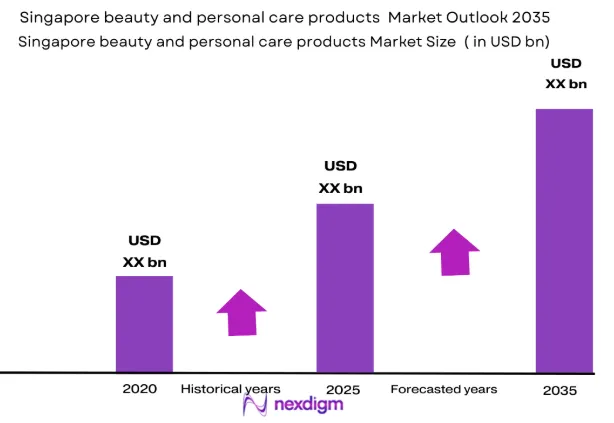
The Singapore beauty and personal care products market is valued at USD ~ billion, based on a historical market assessment, and is forecast to expand at a 4.07% CAGR over the forecast period referenced by Deep Market Insights. Demand is driven by skincare-led routines, premium grooming, online beauty retail, and rising adoption of personalized products. A separate U.S. International Trade Administration note cites Statista’s Singapore beauty and personal care revenue at USD 1.244 billion, reflecting narrower category coverage.
Singapore dominates its own beauty and personal care market through concentrated urban retail corridors such as Orchard Road, Marina Bay, Bugis, and suburban malls in Tampines, Jurong, and Woodlands. The country’s 6.04 million population base, supported by 16.5 million international visitor arrivals and tourism receipts projected near S$27.5–29.0 billion, sustains demand for prestige skincare, fragrances, travel retail, cosmetics, and pharmacy-led personal care.
Market Segmentation
By Product Type
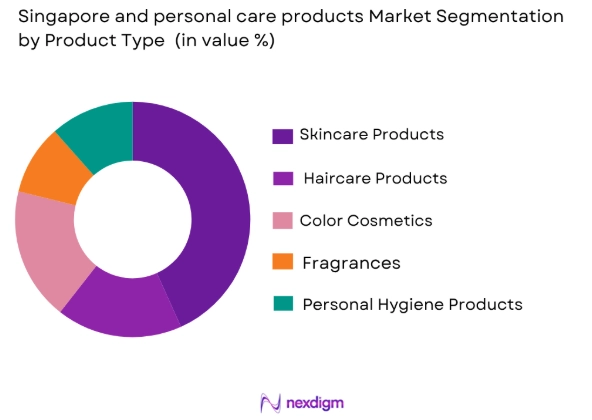
The Singapore beauty and personal care products market is segmented by product type into skincare, haircare, color cosmetics, fragrances, and personal hygiene products. Skincare holds the dominant market position because Singapore consumers prioritize preventive skin health, hydration, sun protection, anti-aging, and dermatology-backed formulations. Deep Market Insights identifies skincare as the largest product segment, with skincare revenue reported at USD 1.16 billion within the USD 2.57 billion market. The segment also benefits from Korean, Japanese, French, and U.S. brand influence, with trusted brands such as Innisfree, Laneige, Kiehl’s, M.A.C, Bobbi Brown, and Maybelline having strong consumer recognition.
By Price Tier
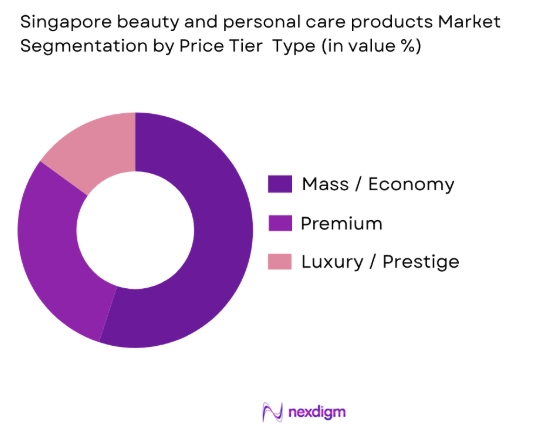
The Singapore beauty and personal care products market is segmented by price tier into mass, premium, and luxury or prestige products. Mass products dominate because beauty and hygiene purchases are frequent, pharmacy-led, and supported by strong availability through Watsons, Guardian, supermarkets, online marketplaces, and brand-owned digital stores. Deep Market Insights reports the mass tier at USD 1.42 billion, making it the largest price-tier segment. Premium and luxury segments remain important because Singapore has high retail density, strong tourism-linked spending, and affluent consumer clusters, but mass products benefit from repeat purchase cycles and broader affordability.
Competitive Landscape
The Singapore beauty and personal care products market is moderately consolidated at the brand-owner level but highly competitive at the retail and distribution level. Global multinationals such as L’Oréal, Estée Lauder, Procter & Gamble, Shiseido, Unilever, and Beiersdorf compete with Korean, Japanese, pharmacy, specialty retail, and direct-to-consumer beauty brands. Competition is shaped by skincare innovation, omnichannel retail, ingredient transparency, personalization, and strong merchandising across Sephora, Watsons, Guardian, department stores, and e-commerce platforms.
| Company | Establishment Year | Headquarters | Core Categories | Singapore Channel Strength | Positioning | Digital Capability | Premium Exposure | Key Strength |
| L’Oréal | 1909 | Clichy, France | ~ | ~ | ~ | ~ | ~ | ~ |
| Estée Lauder Companies | 1946 | New York, USA | ~ | ~ | ~ | ~ | ~ | ~ |
| Procter & Gamble | 1837 | Cincinnati, USA | ~ | ~ | ~ | ~ | ~ | ~ |
| Shiseido | 1872 | Tokyo, Japan | ~ | ~ | ~ | ~ | ~ | ~ |
| Unilever | 1929 | London, UK | ~ | ~ | ~ | ~ | ~ | ~ |
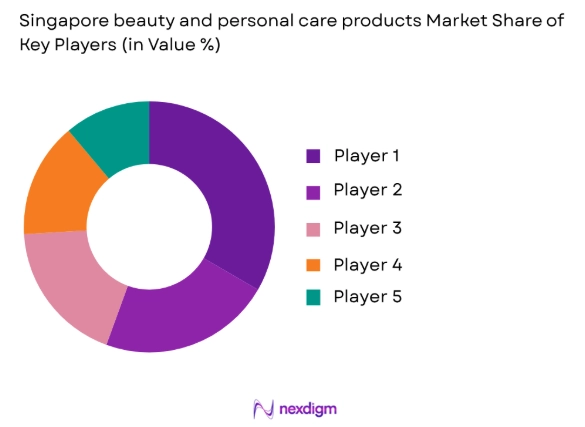
Singapore Beauty and Personal Care Products Market Analysis
Growth Drivers
Rising Consumer Spending on Premium Beauty Products
Singapore’s strong macroeconomic fundamentals support premium beauty consumption, with GDP per capita reaching USD 84,734 and total GDP at USD 501.4 billion as per World Bank data. Household consumption expenditure stood at SGD 427.3 billion, reflecting sustained discretionary spending power. Additionally, inbound tourism reached 16.5 million arrivals, with tourism receipts estimated between SGD 27.5 billion and SGD 29.0 billion, according to Singapore Tourism Board. These figures support strong demand for premium skincare, fragrances, and cosmetics across retail and travel channels. High-income urban consumers and tourists continue to drive purchases of prestige beauty products in department stores, specialty outlets, and airport retail zones.
High Skincare Awareness and Preventive Beauty Adoption
Singapore’s demographic and health indicators reinforce preventive skincare demand. Life expectancy stands at 83.5 years, and healthcare expenditure reached SGD 24.2 billion, as reported by Ministry of Health Singapore. The population of 6.04 million, combined with high urban density and exposure to UV radiation (annual UV index averages above 11 in equatorial regions), drives consistent sunscreen and skincare usage. According to National Environment Agency, high humidity levels averaging 82% annually influence demand for hydration-focused and dermatology-backed products. These factors collectively promote daily skincare routines, supporting consumption of serums, moisturizers, and sun protection products.
Challenges
High Market Competition and Brand Saturation
Singapore’s open trade economy intensifies competition in beauty retail, with total imports valued at USD 423 billion, according to World Bank. Cosmetics imports fall under a broader category of manufactured goods, enabling easy entry for global brands. The presence of over 11,000 retail establishments as reported by Singapore Department of Statistics increases shelf competition across pharmacies, malls, and e-commerce platforms. High retail density in areas such as Orchard Road and suburban malls leads to brand overcrowding. This saturation reduces product differentiation and increases marketing costs, making it difficult for new entrants to establish visibility without strong digital or retail partnerships.
Dependence on Imported Beauty and Personal Care Products
Singapore relies heavily on imports due to limited domestic manufacturing, with merchandise imports reaching USD 423 billion, as per World Bank. According to Enterprise Singapore, the country functions primarily as a re-export hub, with a significant portion of cosmetics sourced from France, Japan, South Korea, and the United States. This dependence exposes the market to exchange rate fluctuations and global supply chain disruptions. Additionally, logistics costs increased during recent global trade constraints, impacting product availability. The absence of large-scale local production infrastructure further reinforces reliance on international suppliers for skincare, cosmetics, and personal hygiene products.
Opportunities
Expansion of Premium and Luxury Beauty Products
Singapore’s high-income consumer base creates strong opportunities for premium beauty expansion. Gross national income per capita stands at USD 88,450, according to World Bank. The country also recorded 16.5 million tourist arrivals, with high-spending visitors from China, Indonesia, and India contributing significantly to retail purchases, as reported by Singapore Tourism Board. Retail sales in department stores and luxury malls such as Orchard Road benefit from this influx. Additionally, private consumption expenditure remains strong at SGD 427.3 billion, supporting discretionary spending. These indicators highlight continued demand for high-end skincare, fragrances, and cosmetics in both domestic and travel retail segments.
Growth of Dermatology-Backed and Functional Skincare
Singapore’s advanced healthcare infrastructure supports the growth of dermatology-backed skincare products. Healthcare expenditure reached SGD 24.2 billion, and the country has over 13,000 registered medical doctors, according to Ministry of Health Singapore. The prevalence of skin-related concerns due to tropical climate conditions—high humidity averaging 82% and UV exposure—encourages demand for clinically tested skincare solutions. Additionally, aging demographics, with 19.1% of the population aged 65 and above, as reported by Singapore Department of Statistics, further drive anti-aging and therapeutic skincare usage. These factors support increased adoption of dermatologist-recommended and functional beauty products.
Future Outlook
The Singapore beauty and personal care products market is expected to grow steadily, supported by premium skincare demand, omnichannel retail, beauty-tech adoption, tourism recovery, and stronger consumer preference for clean, clinically backed, and sustainable formulations. Growth is likely to be less volume-led and more value-led, as brands push serums, sun care, anti-aging, derma beauty, and personalized routines. Online beauty platforms, social commerce, and hybrid retail experiences will remain critical. Regulatory compliance and high competition will pressure weaker brands.
Major Players
- L’Oréal Singapore
- Estée Lauder Companies
- Shiseido Singapore
- Procter & Gamble Singapore
- Unilever Singapore
- Beiersdorf Singapore
- Johnson & Johnson Consumer Health
- Amorepacific Singapore
- Kao Corporation
- Sephora Singapore
- Watsons Singapore
- Guardian Health & Beauty
- The Body Shop Singapore
- Innisfree Singapore
- SK-II
Key Target Audience
- Beauty and personal care product manufacturers
- Skincare and cosmetics brand owners
- Retail chains and pharmacy retailers
- E-commerce and beauty marketplace operators
- Premium and luxury beauty distributors
- Packaging and ingredient suppliers
- Investments and venture capitalist firms
- Government and regulatory bodies
Research Methodology
Step 1: Identification of Key Variables
The initial phase involves constructing an ecosystem map covering brand owners, retailers, importers, distributors, online platforms, and regulatory bodies in the Singapore beauty and personal care products market. Desk research is used to identify demand drivers, product categories, pricing tiers, and retail channels.
Step 2: Market Analysis and Construction
Historical market data is compiled across product types, channel mix, pricing tiers, and consumer adoption patterns. Market sizing is cross-checked using published industry estimates, retail indicators, tourism data, and category-level revenue references.
Step 3: Hypothesis Validation and Expert Consultation
Market hypotheses are validated through interviews with beauty retailers, distributors, product managers, e-commerce operators, and category specialists. These discussions help refine assumptions related to category dominance, pricing behavior, and channel-level growth.
Step 4: Research Synthesis and Final Output
The final phase integrates secondary data, expert inputs, and bottom-up category mapping. The output is reviewed for consistency across market size, segmentation, competitive benchmarking, and future outlook to ensure a validated assessment of the Singapore beauty and personal care products market.

- Executive Summary
- Research Methodology (Market Definitions and Assumptions, Abbreviations and Terminology, Data Sources and Validation Approach, Singapore Beauty and Personal Care Products Market Sizing Methodology, Primary and Secondary Research Benchmarks, Market Reliability and Confidence Intervals)

- Industry Definition and Scope
- Market Genesis and Evolution in Singapore
- Consumer Adoption Patterns
- Market Value Chain and Distribution Architecture
- Import and Export Dynamics

- Growth Drivers
Rising Consumer Spending on Premium Beauty Products
High Skincare Awareness and Preventive Beauty Adoption
Growth of E-Commerce and Social Commerce
Influence of K-Beauty, J-Beauty, and Global Beauty Trends
Increasing Demand for Natural, Clean, and Sustainable Products
Rising Men’s Grooming Adoption - Challenges
High Market Competition and Brand Saturation
Price Sensitivity in Mass-Market Segments
Dependence on Imported Beauty and Personal Care Products
Regulatory Compliance and Product Safety Requirements
Short Product Life Cycles and Changing Consumer Preferences - Opportunities
Expansion of Premium and Luxury Beauty Products
Growth of Dermatology-Backed and Functional Skincare
Rising Demand for Men’s Grooming Products
Personalized Beauty and AI-Based Product Recommendations
Sustainable Packaging and Refill-Based Beauty Models
Growth of Halal and Inclusive Beauty Products - Trends
Clean Beauty and Ingredient Transparency
Premiumization of Skincare
Social Commerce and Influencer-Led Beauty Discovery
Beauty Tech and Personalized Skincare
Refillable and Sustainable Packaging
Hybrid Retail Experiences
Rise of Wellness-Linked Beauty Products - Government Regulations
Product Safety and Cosmetic Ingredient Regulations
Health Sciences Authority Guidelines for Cosmetic Products
ASEAN Cosmetic Directive Compliance
Labeling and Claims Regulations
Import and Distribution Requirements
Regulations for Online Sale of Beauty and Personal Care Products - SWOT Analysis
- Porter’s Five Forces

- By Market Value, 2020-2025
- By Unit Sales Volume, 2020-2025
- By Average Selling Price, 2020-2025
- By Product Category Revenue Contribution, 2020-2025

- By Product Type (In Value %)
Skincare Products
Haircare Products
Color Cosmetics
Fragrances
Personal Hygiene Products
- By Price Tier (In Value %)
Mass / Economy
Premium
Luxury / Prestige Beauty - By Distribution Channel (In Value %)
Supermarkets and Hypermarkets
Pharmacies and Drugstores
Beauty Specialty Stores
Department Stores
E-Commerce Platforms - By Consumer Demographic (In Value %)
Young Adults
Urban Working Professionals
Women Consumers
Men’s Grooming Segment
Middle- and High-Income Households - By Product Positioning (In Value %)
Natural and Organic Products
Dermatology-Backed Products
Anti-Aging Products
Clean Beauty Products
K-Beauty and J-Beauty Products - By Region / Retail Cluster (In Value %)
Central Singapore
East Singapore
West Singapore
North Singapore
North-East Singapore

- Market Share by Product Category
- Sales Volume by Major Brands
- Cross Comparison Parameters(Company Overview, Product Portfolio Strength, Retail and E-Commerce Footprint, Pricing Strategy, Brand Equity, Consumer Preference Score, Annual Revenue, Growth Trajectory)
- Company Profiles
L’Oréal Singapore
Estée Lauder Companies
Shiseido
Unilever
Procter & Gamble
Beiersdorf
Johnson & Johnson Consumer Health
Amorepacific
Kao Corporation
Sephora Singapore
Watsons Singapore
Guardian Health & Beauty
The Body Shop
Innisfree
SK-II

- Buying Decision Drivers
- Brand Loyalty and Repurchase Cycle
- Payment Preferences and Promotion Sensitivity
- Post-Purchase Usage Patterns
- Pain Points in Product Selection, Pricing, and Availability

- By Market Value, 2026-2035
- By Unit Sales Volume, 2026-2035
- By Average Selling Price, 2026-2035
- By Product Category Revenue Contribution, 2026-2035


 Request a Sample
 Ask for Customization
 Get a Quote
 Enquire Now