

 Download PDF
 Download PDF
Market Overview
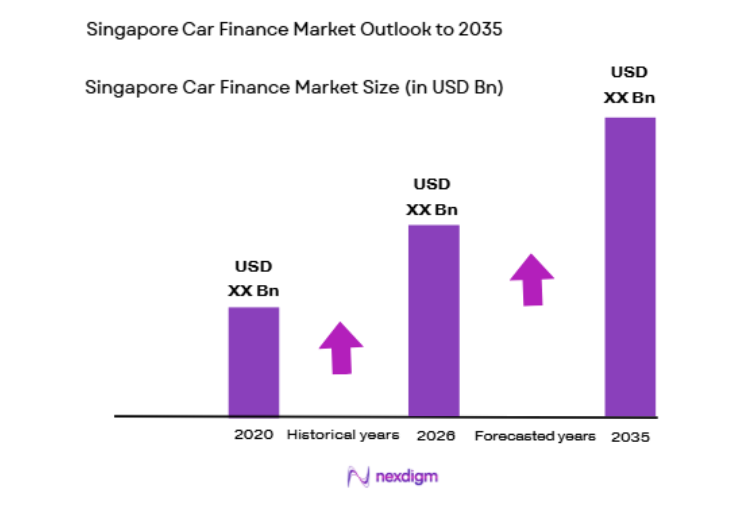
The Singapore car finance market is valued at approximately USD ~ billion, driven by increasing car ownership rates, the availability of financing options, and a growing middle-class population. The market’s growth is supported by low-interest rates, the convenience of auto loans, and government-backed financial schemes, making car ownership more accessible to a broader segment of the population. Additionally, the shift toward electric vehicles (EVs) further fuels the demand for financing solutions tailored to sustainable mobility.
Singapore’s dominance in the car finance market can be attributed to its high-income economy, strong financial institutions, and robust regulatory framework that encourages consumer lending. The country’s strategic location in Southeast Asia and its position as a global financial hub provide access to a wide range of financial products and services. Moreover, the Singaporean government’s focus on clean energy solutions, such as EV adoption, further enhances the growth of car finance, particularly for green vehicles, ensuring the market remains vibrant and attractive to investors.
Market Segmentation
By Financing Type
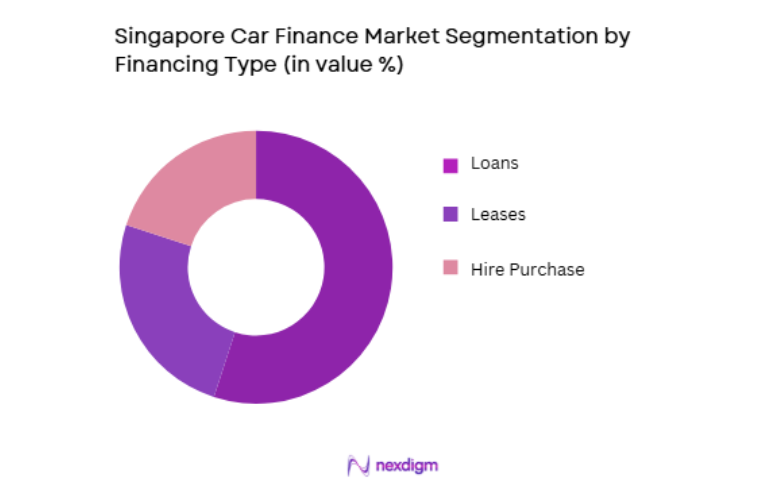
The Singapore car finance market is segmented by financing type into loans, leases, and hire purchase. Car loans have the dominant market share due to their flexibility and widespread availability through banks and financial institutions. A car loan allows buyers to own the vehicle after completing the payments, which is particularly appealing in a market where consumers seek long-term ownership of their vehicles. Leases and hire purchase options are also popular, but they typically appeal to consumers seeking short-term financial commitments or lower upfront costs, limiting their share relative to loans.
By End-User
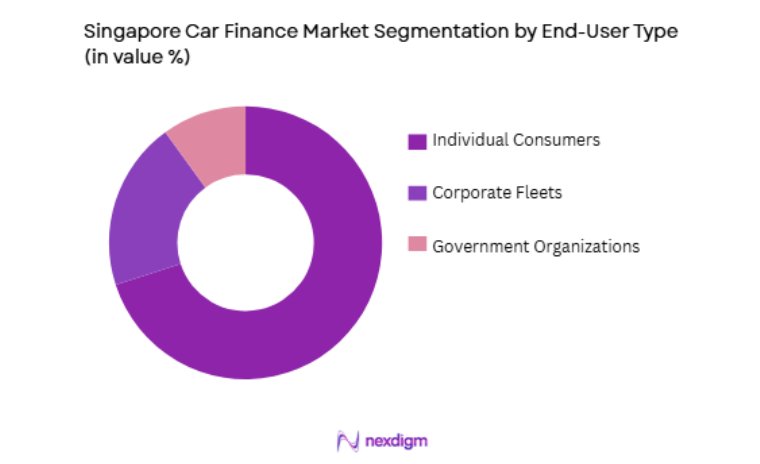
The Singapore car finance market is segmented by end-user into individual consumers, corporate fleets, and government organizations. Individual consumers dominate the market, driven by the growing desire for personal mobility solutions. With the rise of middle-class income and financial support options, many individuals are now more inclined to finance their cars, whether they are purchasing personal vehicles or electric cars. Corporate fleets also make up a significant portion of the market, as businesses increasingly opt for financing to acquire vehicles for their operations, and the government’s push for electric vehicles further increases the demand for car financing.
Competitive Landscape
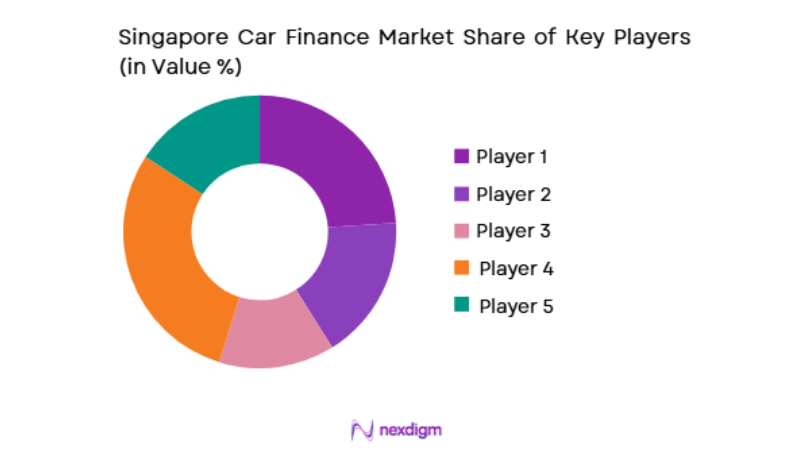
The competitive landscape of the Singapore car finance market is characterized by both established banks and fintech companies offering a range of financing solutions. Large banks like DBS, OCBC, and UOB have long dominated the car financing sector by providing competitive interest rates and flexible loan packages. However, fintech companies and online platforms are increasingly entering the market, offering digital-first, quicker, and more convenient financing options. The growth of electric vehicles (EVs) has also prompted specialized financing products, further increasing competition in the market.
| Company Name | Establishment Year | Headquarters | Technology Focus | Market Reach | Key Products | Revenue (USD Million) | Additional Market-Specific Parameter |
| DBS Bank | 1968 | Singapore | ~ | ~ | ~ | ~ | ~ |
| OCBC Bank | 1932 | Singapore | ~ | ~ | ~ | ~ | ~ |
| UOB | 1935 | Singapore | ~ | ~ | ~ | ~ | ~ |
| Singtel | 1879 | Singapore | ~ | ~ | ~ | ~ | ~ |
| GoBear | 2015 | Singapore | ~ | ~ | ~ | ~ | ~ |
Singapore Car Finance Market Analysis
Growth Drivers
Low-Interest Rates and Affordable Financing
One of the key growth drivers for the Singapore car finance market is the availability of affordable financing options due to low interest rates. With interest rates remaining relatively low in Singapore, consumers are more inclined to opt for car financing solutions that make vehicle ownership more accessible. Banks and financial institutions are offering flexible repayment terms and lower down payments, making it easier for individuals to purchase vehicles, even in an environment where car prices have been steadily increasing. The low-interest environment is supported by the country’s strong economic stability and efficient regulatory framework, ensuring that car financing remains an attractive option for consumers.
Government Incentives for Electric Vehicles
Another growth driver in the Singapore car finance market is the government’s push for electric vehicle adoption through incentives and rebates. The Singaporean government has introduced various policies aimed at reducing carbon emissions, including grants for EV purchases and tax incentives for consumers and businesses investing in electric mobility. These policies make EVs more financially viable for consumers, encouraging the adoption of electric vehicles, and consequently boosting demand for car financing products tailored for EVs. As the EV market expands, the demand for financing solutions that support the purchase of green vehicles will continue to rise, fueling the growth of the car finance market in Singapore.
Market Challenges
High Car Prices and Affordability Concerns
Despite the availability of car financing options, high car prices remain a major challenge for many consumers in Singapore. While car loans and financing products make it easier to own a vehicle, the overall cost of car ownership, including taxes, registration fees, and insurance, remains high. This challenge is compounded by the government’s policy of vehicle ownership restrictions, which limits the number of Certificate of Entitlement (COEs) available. As a result, the high initial cost of purchasing a vehicle continues to deter many individuals from entering the car finance market. To overcome this challenge, car financing providers must develop more affordable solutions, such as longer loan tenures, lower interest rates, and financing options for electric vehicles.
Limited Financing Options for Electric Vehicles
While electric vehicles (EVs) are gaining popularity in Singapore, financing solutions specifically tailored for EVs are still limited. Many car financing providers offer traditional car loans that are better suited to internal combustion engine (ICE) vehicles, but these solutions often do not address the unique needs of EV buyers, such as battery warranties and longer loan terms. The lack of dedicated EV financing products can create a barrier to entry for consumers who are interested in transitioning to electric mobility but are unsure about the affordability and financing options. This gap in the market presents a challenge for both consumers and financial institutions, as more targeted solutions for EVs are needed to support the growing demand for electric vehicles.
Opportunities
Growth of EV Financing Products
A significant opportunity for the Singapore car finance market lies in the development and expansion of financing solutions specifically designed for electric vehicles (EVs). As the government continues to promote green mobility, there is increasing consumer interest in EVs, and financial institutions can tap into this demand by offering financing products that cater to EV buyers. These products could include long-term loans with low-interest rates, battery-specific financing, and flexible repayment schemes. Furthermore, the introduction of government-backed EV financing solutions can reduce the cost of ownership for consumers, providing an attractive proposition for those seeking to purchase electric vehicles. The growing adoption of EVs presents a substantial opportunity for car finance providers to expand their portfolios and reach new customer segments.
Expansion of Digital Car Financing Platforms
Another opportunity for the Singapore car finance market is the rise of digital-first car financing platforms. As consumers increasingly shift towards online shopping and digital services, there is growing demand for digital platforms that offer convenient, fast, and transparent car financing solutions. These platforms allow consumers to apply for loans, receive instant approvals, and access competitive financing rates from the comfort of their homes. The growing popularity of fintech and digital lending solutions presents an opportunity for traditional financial institutions as well as new fintech startups to expand their presence in the car finance market. By leveraging digital platforms, car finance providers can streamline the financing process, attract younger, tech-savvy consumers, and offer more personalized financing solutions.
Future Outlook
The future outlook for the Singapore car finance market is positive, with continued growth driven by government policies, technological advancements, and an increasing consumer preference for sustainable transportation options. The car finance market is expected to experience expansion as electric vehicles (EVs) become more mainstream, leading to the development of more tailored financing products for EVs. Digital platforms will continue to disrupt traditional financing models, offering consumers greater convenience and flexibility. As Singapore’s urban mobility continues to evolve, the car finance market will remain a key component of the country’s transportation infrastructure, offering solutions to meet the needs of a changing automotive landscape.
Major Players
- DBS Bank
- OCBC Bank
- UOB
- Singtel
- GoBear
- Standard Chartered
- Citibank
- HSBC
- Maybank
- CIMB
- Bank of China
- RHB Bank
- Citigroup
- ANZ Bank
- Toyota Financial Services
Key Target Audience
- Investments and venture capitalist firms
- Government and regulatory bodies
- Car dealerships and automotive distributors
- Banks and financial institutions
- Car loan brokers and advisors
- Insurance companies
- Fleet operators
- Environmental organizations
Research Methodology
Step 1: Identification of Key Variables
Key market variables such as consumer preferences, interest rates, government policies, and car pricing are identified to understand the dynamics of the car finance market in Singapore.
Step 2: Market Analysis and Construction
Comprehensive market analysis is conducted by evaluating various segments, including financing types, customer demographics, and technological developments in the car finance market.
Step 3: Hypothesis Validation and Expert Consultation
Expert consultations are carried out with financial institutions, car dealerships, and government agencies to validate market assumptions and ensure accurate forecasting.
Step 4: Research Synthesis and Final Output
The data collected from primary and secondary sources is synthesized into a final report, providing actionable insights on market trends, growth drivers, challenges, and opportunities for stakeholders in the Singapore car finance market.

- Executive Summary
- Research Methodology (Definitions, Scope, Industry Assumptions, Market Sizing Approach, Primary & Secondary Research Framework, Data Collection & Verification Protocol, Analytic Models & Forecast Methodology, Limitations & Research Validity Checks)

- Market Definition and Scope
- Value Chain & Stakeholder Ecosystem
- Regulatory / Certification Landscape
- Sector Dynamics Affecting Demand

- Growth Drivers
Increase in Car Ownership in Singapore
Government Incentives for Electric Vehicles
Growth of E-Commerce Platforms for Car Sales - Market Challenges
High Loan Default Rates
Regulatory Challenges in Financing
Rising Vehicle Prices and Interest Rates - Market Opportunities
Integration of Digital Car Financing Solutions
Expansion of Used Car Financing
Government Focus on Green Financing for EVs - Trends
Rise in Digital and Mobile Financing Solutions
Growing Adoption of Green Financing Options - Government Regulations
- SWOT Analysis
- Porter’s Five Forces

- By Market Value, 2020-2025
- By Installed Units, 2020-2025
- By Average System Price, 2020-2025
- By System Complexity Tier, 2020-2025

- By System Type (In Value%)
Lease Financing
Hire Purchase Financing
Personal Loans for Car Purchase
Dealer Financing
Bank Financing - By Platform Type (In Value%)
Online Financing Platforms
Traditional Bank Platforms
Dealership Financing Platforms
Peer-to-Peer Lending Platforms
Mobile Application Platforms - By Fitment Type (In Value%)
New Car Financing
Used Car Financing
Refinancing Car Loans
Car Loan Top-Up - By End User Segment (In Value%)
Individual Consumers
Car Dealers
Leasing Companies

- Market Share Analysis
- Cross Comparison Parameters (Loan Type, Platform Type, Interest Rate, Loan Tenure, End User Segment, Approval Time, Repayment Options, Collateral Requirements, Down Payment, Loan-to-Value Ratio)
- SWOT Analysis of Key Competitors
- Pricing & Procurement Analysis
- Key Players
OCBC Bank
UOB
DBS Bank
Standard Chartered
HSBC
Citibank
Maybank
RHB Bank
Singapore Finance
SINGA
Carro
Autobahn Motors
LTA (Land Transport Authority)
NTUC Income
AXA Insurance

- Growing Preference for Car Ownership Over Leasing
- Shift Toward Online Financing Solutions
- Demand for Financing of Electric Vehicles
- Expanding Car Rental and Leasing Market

- Forecast Market Value, 2026-2035
- Forecast Installed Units, 2026-2035
- Price Forecast by System Tier, 2026-2035
- Future Demand by Platform, 2026-2035


 Request a Sample
 Ask for Customization
 Get a Quote
 Enquire Now