
 Download PDF
Market Overview
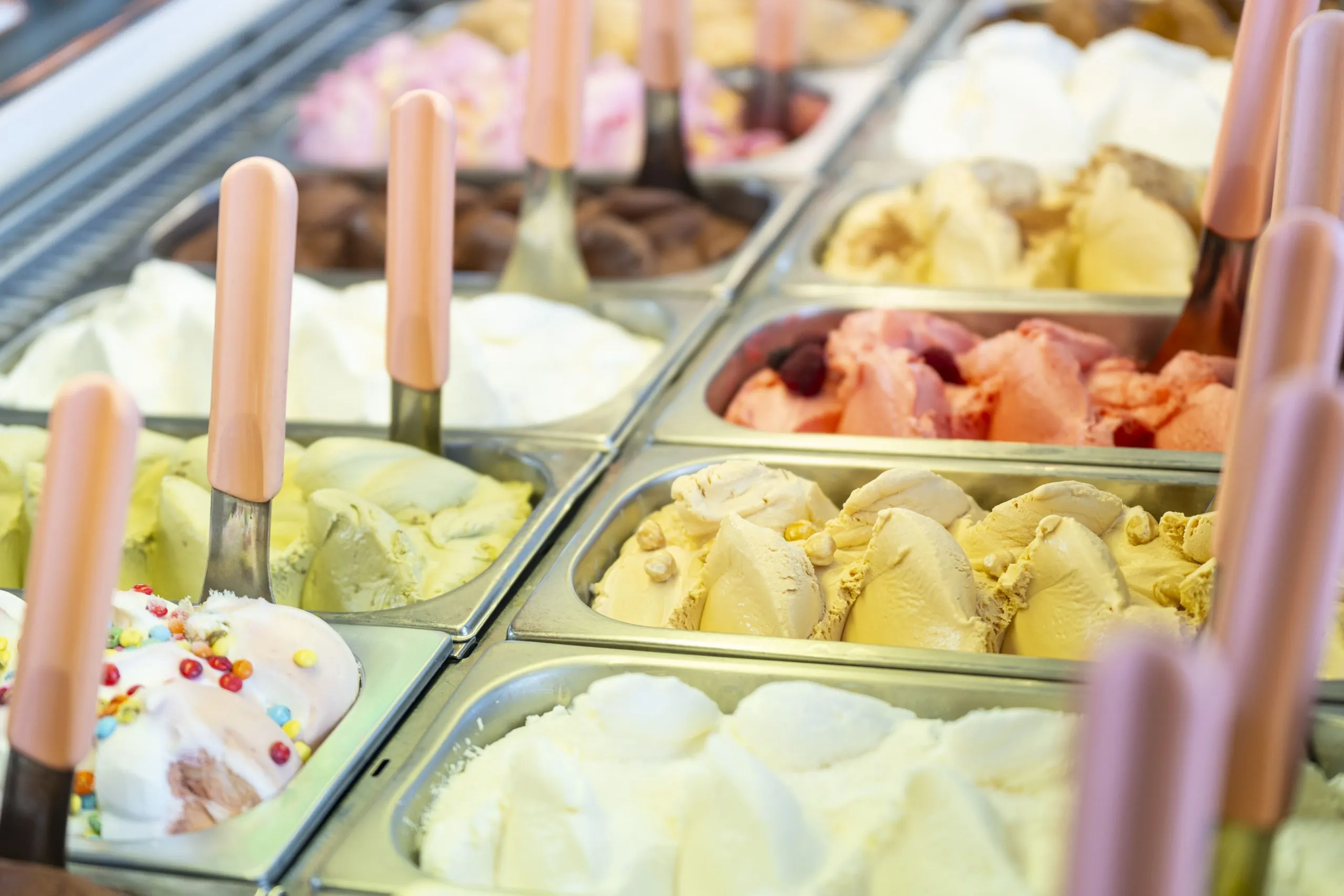
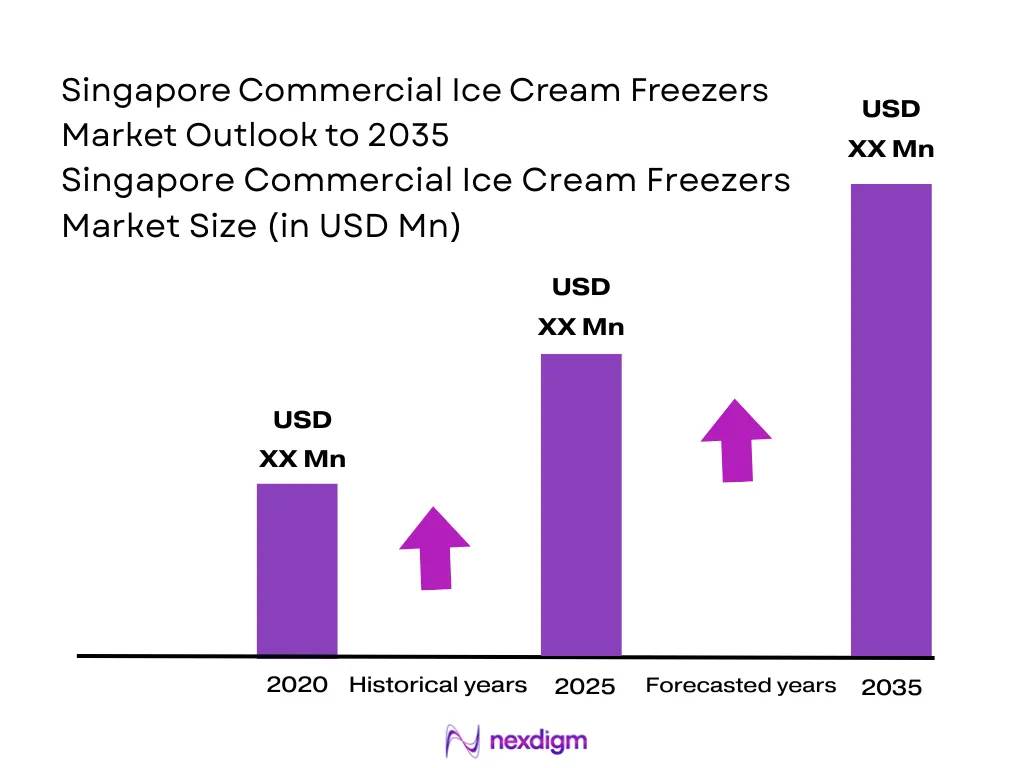
The Singapore Commercial Ice Cream Freezers Market is valued at USD ~ million, compared with USD ~ million in the previous recorded year, using WITS/UN Comtrade HS 841850 imports for refrigerating or freezing chests, cabinets, display counters and showcases. Demand is driven by supermarket freezer aisles, convenience-store impulse cabinets, gelato parlours, dessert cafés, QSR dessert counters, hotels and airport F&B outlets requiring display-led frozen dessert storage. Singapore’s demand is concentrated across Orchard Road, Marina Bay, CBD, Sentosa, Changi Airport, Tampines, Jurong East and heartland mall clusters because these areas combine tourist traffic, mall-based F&B, hotels, supermarkets and convenience retail. Singapore recorded ~ million international visitor arrivals, while consumer foodservice sales reached USD ~ billion and retail-location foodservice sales reached USD 4.88 billion, supporting high freezer placement across travel, retail and foodservice locations.
Market Segmentation
By Product Type
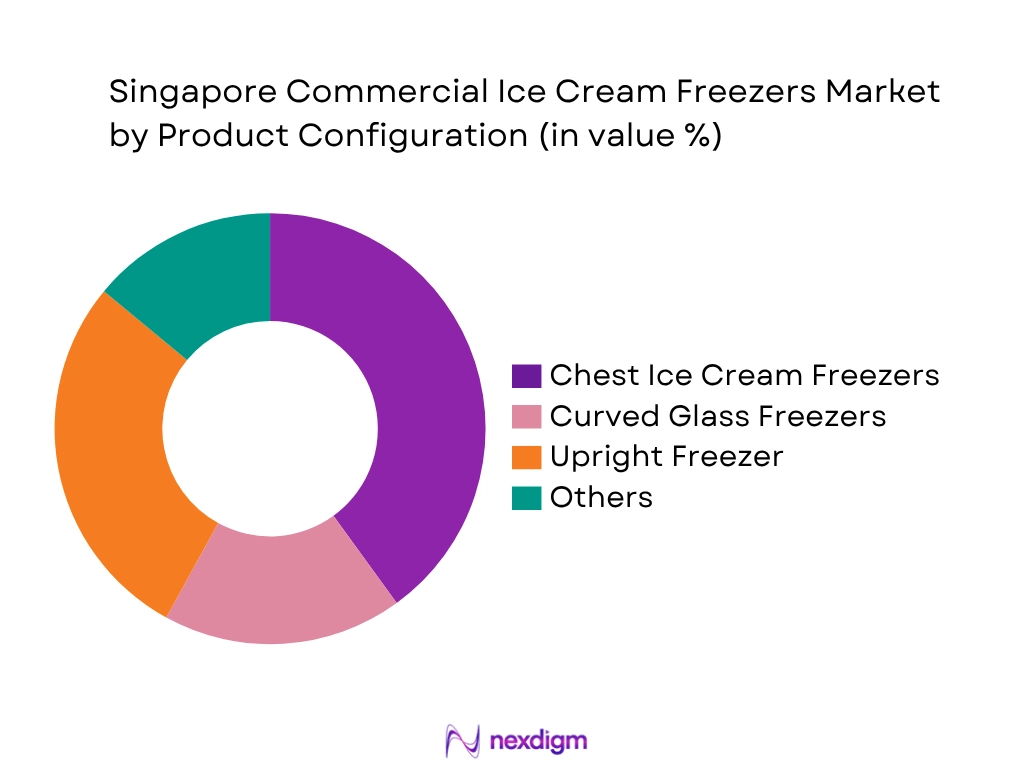
Singapore Commercial Ice Cream Freezers Market is segmented by product type into glass-top chest ice cream freezers, upright glass-door display freezers, scoop ice cream display cabinets, gelato display showcases, countertop ice cream freezers and mobile cart freezers. Glass-top chest ice cream freezers hold the dominant market share because they suit Singapore’s organized grocery, convenience retail and compact impulse-sales environment. These units provide visibility, storage density and relatively easy placement in supermarkets, mini-marts, fuel-station stores and brand-owned retail cabinets. Their dominance is also supported by Singapore’s import profile for refrigerating or freezing cabinets, where China, Japan, Malaysia, Italy and Taiwan-related sources supply a wide equipment mix across mass-market and premium retail needs. In high-rent locations, retailers prioritize freezer cabinets that combine storage and merchandising rather than back-of-house cold storage alone.
By End User
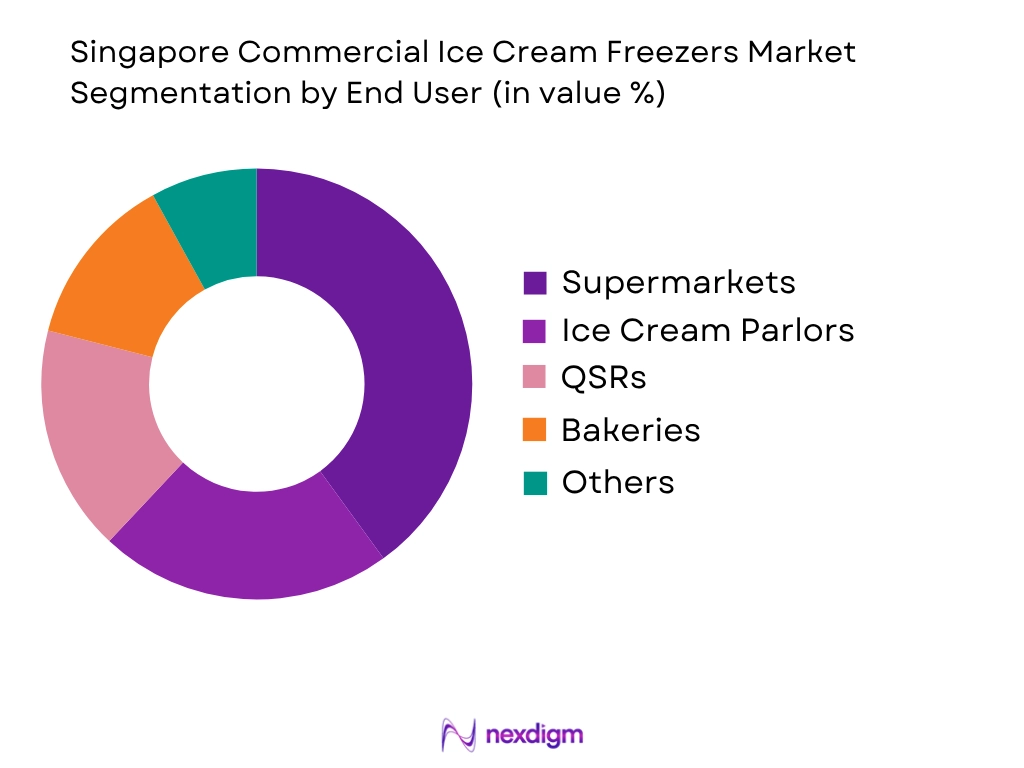
Singapore Commercial Ice Cream Freezers Market is segmented by end user into supermarkets, hypermarkets, convenience stores, ice cream parlours, gelato shops, dessert cafés, bakeries, QSRs, restaurants, hotels, caterers, attractions, cinemas, airports and event operators. Supermarkets, hypermarkets and convenience stores dominate because they require continuous freezer visibility for multipacks, tubs, cones, ice cream sticks and branded impulse cabinets. Retail-location foodservice sales are the largest location category in Singapore’s consumer foodservice structure, while street stalls/kiosks and cafés/bars form strong dessert-adjacent channels. Singapore’s compact retail geography also increases reliance on plug-in, high-visibility freezers that can serve both storage and merchandising roles within limited floor space. Ice cream brands also use branded freezer placement in these outlets to secure shelf visibility and product control.
Competitive Landscape
The Singapore Commercial Ice Cream Freezers Market is led by global and regional commercial refrigeration companies, supported by Singapore-based commercial kitchen suppliers and project contractors. Competition is shaped by temperature stability, low-GWP refrigerants, compact cabinet design, service response, spare-part availability, warranty support and suitability for supermarkets, convenience stores, hotels, dessert cafés and gelato parlours. Premium European and Japanese brands compete in high-end gelato and HoReCa segments, while regional suppliers serve mid-market freezer cabinet demand.
| Player | Establishment Year | Headquarters | Product Relevance | Core Singapore Channel | Refrigeration Strength | End-User Focus | Service Proposition | Market Positioning |
| Hoshizaki Singapore | 1999 locally / 1947 global | Singapore / Nagoya, Japan | ~ | ~ | ~ | ~ | ~ | ~ |
| Liebherr | 1949 | Bulle, Switzerland | ~ | ~ | ~ | ~ | ~ | ~ |
| Panasonic | 1974 Singapore entity / 1918 global | Singapore / Osaka, Japan | ~ | ~ | ~ | ~ | ~ | ~ |
| SKOPE | 1960s | Christchurch, New Zealand | ~ | ~ | ~ | ~ | ~ | ~ |
| True Manufacturing | 1945 | O’Fallon, Missouri, USA | ~ | ~ | ~ | ~ | ~ | ~ |
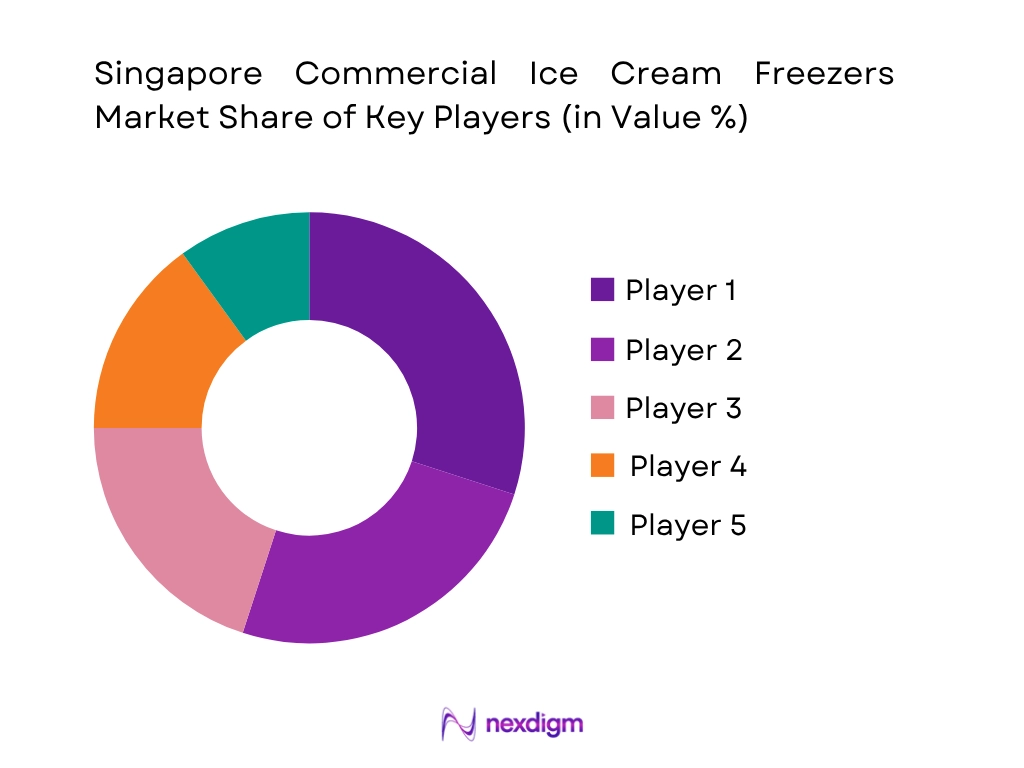
Singapore Commercial Ice Cream Freezers Market Outlook to 2035
Growth Drivers
Dense Foodservice and Grocery Outlet Base Supporting Commercial Freezer Placement
Singapore Commercial Ice Cream Freezers Market is supported by a concentrated base of licensed food and grocery locations where freezer cabinets are used for ice cream tubs, sticks, gelato pans, frozen cakes and impulse dessert SKUs. Singapore Food Agency data published through data.gov.sg records 23,589 food shops, 14,134 food stalls, 717 supermarkets, 2,529 non-retail food establishments and 12,943 NEA hawker stalls in 2024. This creates a broad equipment universe for glass-top chest freezers, scoop cabinets, upright display freezers and compact plug-in cabinets. The demand case is reinforced by Singapore’s strong macro base: World Bank records Singapore’s GDP at USD 547.39 billion and GDP per capita at USD 90,674.1 in 2024, supporting organized retail, premium dessert concepts and HoReCa equipment replacement. For suppliers, the opportunity is not only new outlet installation but also freezer replacement, service contracts and branded cabinet placement across supermarkets, dessert cafés, convenience stores and central kitchens.
Tourism, Airport Footfall and Destination Retail Driving Ice Cream Display Demand
Singapore Commercial Ice Cream Freezers Market benefits from high tourism and transport-linked footfall because frozen desserts are frequently sold through impulse cabinets in airports, malls, attractions, hotels, cinemas and visitor-heavy retail streets. Singapore Tourism Board reported 16.5 million international visitor arrivals in 2024, while Changi Airport’s traffic table shows 5.97 million passenger movements in January 2026, 5.54 million in February 2026, 6.10 million in March 2026 and 5.73 million in April 2026, with 23.3 million passenger movements year-to-date. These flows support freezer placements in Changi Airport, Marina Bay, Orchard Road, Sentosa and major mall clusters where gelato shops, dessert cafés and convenience stores require compact, high-visibility cabinets. The macro environment also supports premium F&B consumption: World Bank places Singapore’s 2024 population at around 6 million and GDP per capita at USD 90,674.1, indicating a high-income consumer base for premium dessert retail.
Market Challenges
Energy-Intensive Operating Environment Raising Freezer Efficiency Requirements
Singapore Commercial Ice Cream Freezers Market faces a major challenge from the energy intensity of commercial operations, because freezer cabinets operate continuously and must maintain stable temperatures in high-footfall retail and foodservice locations. Energy Market Authority data shows Singapore’s electricity consumption reached 58 TWh in 2024, compared with 55 TWh in 2023, while the commerce and services sector consumed 23 TWh in 2024. Singapore also generated 60 TWh of electricity in 2024, of which 55 TWh came from main power producers and 5 TWh from autoproducers. These numbers are directly relevant to ice cream freezers because supermarkets, convenience stores, hotels, cafés and food courts sit inside the commerce and services energy load. Buyers are therefore increasingly sensitive to inverter compressors, LED lighting, insulated glass, door sealing, natural refrigerants and smart temperature controls. With World Bank recording Singapore GDP at USD 547.39 billion in 2024, operating efficiency becomes a board-level procurement issue for organized retail and HoReCa chains.
F&B Outlet Churn Increasing Risk for Freezer Procurement and Payback
Singapore Commercial Ice Cream Freezers Market is challenged by churn in foodservice outlets, especially among independent dessert cafés, small restaurants, pop-ups and short-lease operators that may hesitate to purchase premium freezer equipment. Reuters, citing government data, reported average monthly food and beverage closures of 254 in 2024, 307 in 2025 and around 230 in 2023 and 2022. This matters for ice cream freezer suppliers because outlet closures reduce equipment payback certainty and increase demand for rental, leasing, refurbished cabinets and buy-back options. SingStat also shows food and beverage services sales value at S$1.0 billion in December 2024, with restaurants, fast food outlets, food caterers, cafés, food courts and other eating places all tracked as distinct F&B categories. The macro backdrop shows inflation at 2.4 in 2024 under World Bank data, while IMF notes Singapore’s economy slowed in 2025Q1 after stronger 2024 growth.
Market Opportunities
Energy-Efficient and Smart Freezer Replacement for Retail and HoReCa Operators
Singapore Commercial Ice Cream Freezers Market has a strong opportunity in energy-efficient, sensor-enabled and low-GWP freezer replacement because retail and HoReCa operators need to manage continuous cold-storage loads while maintaining frozen dessert quality. Energy Market Authority data shows overall electricity consumption of 58 TWh in 2024 and 29 TWh in the first half of 2025, while the commerce and services sector accounted for 23 TWh in 2024. These indicators support future demand for inverter compressors, R290/R600a refrigerant systems, smart thermostats, remote temperature alerts, automatic defrost and preventive-maintenance contracts. The opportunity is market-specific because ice cream freezers must maintain product texture, prevent melt-refreeze damage and comply with food-safety expectations in supermarkets, cafés, hotels and airport F&B outlets. IMF lists Singapore’s country population at 6.121 million and projected 2026 real GDP at 3.5, signalling a stable operating base for replacement-led equipment demand without relying on future freezer-market projections.
Branded Freezer Fleet Placement Across Supermarkets, Food Shops and Travel Retail
Singapore Commercial Ice Cream Freezers Market has a future-facing opportunity in branded freezer fleet placement, where ice cream manufacturers and distributors install controlled cabinets in supermarkets, convenience stores, dessert cafés, kiosks and airport F&B locations. Singapore Food Agency data records 717 supermarkets, 23,589 food shops, 14,134 food stalls and 2,529 non-retail food establishments in 2024, creating multiple freezer deployment points for tubs, cones, novelty sticks, gelato and frozen cakes. Changi Airport also recorded 23.3 million passenger movements year-to-date through April 2026, with monthly passenger movements above 5.5 million in each of the first four months shown in the airport table. This supports branded cabinets in travel corridors, tourist retail and high-turnover grab-and-go outlets. The macro base remains supportive, with World Bank recording Singapore’s 2024 GDP per capita at USD 90,674.1 and GDP at USD 547.39 billion. The opportunity lies in freezer asset tracking, stocking compliance, service-level agreements and retailer-specific cabinet formats.
Future Outlook
The Singapore Commercial Ice Cream Freezers Market is expected to grow at a forecast CAGR of 5.71% during 2026-2035, benchmarked to the global commercial ice cream freezers outlook. Growth will be supported by premium dessert cafés, gelato parlours, supermarket frozen aisles, airport F&B, tourist retail, convenience-store impulse purchases and replacement of older cabinets with energy-efficient models. The market will increasingly favor smart temperature control, low-GWP refrigerants, compact plug-in cabinets and service-backed freezer procurement. Over the next period, Singapore’s freezer buyers are expected to focus on operating efficiency rather than only equipment capacity. High-rent foodservice locations will prefer compact units with high SKU visibility, while supermarkets and convenience stores will require freezer fleets that support branded merchandising. Tourist-heavy zones such as Orchard Road, Marina Bay, Sentosa and Changi Airport will continue to support demand for premium display cabinets and mobile event freezers. Regulation and sustainability will also influence procurement. Singapore Food Agency food safety standards, mall fit-out rules, electrical load planning, refrigerant transition and energy-efficiency objectives will increase the importance of verified equipment performance. Suppliers that combine premium freezers, preventive maintenance, faster spare-part replacement and IoT temperature monitoring will be better placed than suppliers competing only on upfront price.
Major Players
- Hoshizaki Singapore
- Liebherr
- Panasonic
- SKOPE
- True Manufacturing
- Carrier Commercial Refrigeration
- Epta / Costan
- ISA
- IFI
- CIAM
- Tecfrigo
- Framec
- Afinox
- Turbo Air
- Berjaya
Key Target Audience
- Commercial ice cream freezer manufacturers
- Commercial refrigeration equipment distributors
- Supermarket, hypermarket and convenience-store chains
- Ice cream, gelato and frozen dessert brands
- HoReCa operators and commercial kitchen procurement teams
- Airport, attraction, cinema and event venue operators
- Investments and venture capitalist firms
- Government and regulatory bodies
Research Methodology
Step 1: Identification of Key Variables
The initial phase involves constructing an ecosystem map for the Singapore Commercial Ice Cream Freezers Market, covering OEMs, importers, distributors, commercial kitchen suppliers, supermarkets, convenience stores, cafés, gelato parlours, hotels, caterers and service technicians. The objective is to identify the key variables influencing market demand, including freezer type, installed base, import value, replacement cycle, end-user format, location cluster and service intensity.
Step 2: Market Analysis and Construction
In this phase, historical trade data, import values and category-level commercial refrigeration flows are analyzed to construct the market base. Bottom-up validation is conducted through freezer cabinet demand across supermarkets, convenience stores, dessert cafés, gelato shops, hotels, QSRs and event venues. Product segmentation is developed through SKU mapping by capacity, freezer configuration, refrigerant type and retail application.
Step 3: Hypothesis Validation and Expert Consultation
Market hypotheses are validated through CATIs and structured interviews with equipment dealers, commercial kitchen suppliers, refrigeration technicians, ice cream brand distributors, supermarket procurement teams and HoReCa buyers. These consultations refine assumptions related to dominant freezer formats, maintenance frequency, cabinet replacement, rental models, service response and energy-efficiency preference.
Step 4: Research Synthesis and Final Output
The final stage integrates trade statistics, desk research, competitive benchmarking, primary interviews and channel checks. Market size, segmentation, competitive landscape, future outlook and recommendations are synthesized into a validated research output. The approach combines top-down import analysis with bottom-up end-user demand modelling to ensure a business-facing view of the Singapore Commercial Ice Cream Freezers Market.

- Executive Summary
- Research Methodology (Market definitions and assumptions, commercial ice cream freezer taxonomy, abbreviations, top-down sizing approach, bottom-up sizing approach, import-flow triangulation, outlet universe mapping, SKU basket benchmarking, distributor interviews, HoReCa buyer interviews, supermarket and convenience-store channel checks, service technician validation, limitations and future conclusions)

- Definition and Scope
- Overview Genesis
- Evolution of Commercial Ice Cream Freezer Adoption
- Business Cycle
- Supply Chain and Value Chain Analysis

- Growth Drivers (Supermarket frozen aisle expansion, convenience-store impulse demand, premium gelato cafés, tourism-linked dessert consumption, malls and food courts, compact commercial kitchen formats, energy-efficient cabinet replacement)
Growth of HoReCa and Tourism-Linked Foodservice
Demand for Compact and High-Visibility Freezer Cabinets
Energy Efficiency and Refrigerant Transition - Market Challenges (High equipment cost, space constraints, rental pressure, labour shortage, maintenance turnaround, energy-use scrutiny, refrigerant compliance, imported equipment lead time)
- Opportunities (Premium display cabinets, smart temperature monitoring, service contracts, freezer leasing, branded cabinet fleets, energy-efficient retrofits, airport and tourist retail, event freezer rentals)
- Market Trends (Curved glass display, LED illumination, slimline cabinets, natural refrigerants, freezer fleet monitoring, modular plug-in units, premium Italian gelato showcases, multifunction dessert cabinets)
- Government Regulations and Compliance (Singapore Food Agency food safety, Enterprise Singapore energy efficiency, National Environment Agency environmental standards, refrigerant handling, workplace safety, electrical appliance compliance, mall fit-out requirements)
- Supply Chain Analysis
- Pricing Analysis
- SWOT Analysis
- Porter’s Five Forces
- PESTLE Analysis
- Competition Ecosystem

- By Value (2020-2025)
- By Volume (2020-2025)
- By Average Selling Price (2020-2025)

- By Product Configuration (In Value %)
Chest Ice Cream Freezers
Curved Glass-Top Display Freezers
Upright Glass-Door Display Freezers
Scoop Ice Cream Display Cabinets - By End User (In Value %)
Supermarkets and Hypermarkets
Convenience Stores and Petrol-Station Marts
Ice Cream Parlours and Gelato Shops
Dessert Cafés and Bakeries
Hotels, Caterers and Institutional Kitchens - By Cooling & Refrigerant Tech (In Value %)
DX (Direct Expansion)
Remote Air / Water Cooled
Natural Refrigerants (CO2/R290)
IoT Monitoring & Controls
Energy‑Efficient Glacier Systems - By Distribution Channel (In Value %)
Direct OEM Business
Multi‑Brand Dealer Channels
B2B E‑Commerce Platforms
Retail Chain Procurement
After‑Sales & Maintenance Services

- Cross Comparison Parameters (Temperature stability and recovery time, low-GWP refrigerant compatibility, cabinet footprint and display area, pan capacity and SKU visibility, energy efficiency and compressor technology, warranty and preventive maintenance coverage, spare-part availability and service response time, customization and branding capability)
- SWOT Analysis of Major Players
- Pricing Analysis by SKU Basket
- Dealer and Distributor Network Benchmarking
- After-Sales Service Benchmarking
- Brand Visibility and Retail Placement Analysis
- Detailed Profiles of Major Companies
Hoshizaki Singapore
Liebherr
Panasonic
SKOPE
Turbo Air
True Manufacturing
Carrier Commercial Refrigeration
Epta / Costan
ISA
IFI
CIAM
Tecfrigo
Framec
Afinox
Berjaya

- Market Demand and Utilization
- Purchasing Power and Budget Allocation
- Regulatory and Compliance Requirements
- Needs, Desires and Pain Point Analysis
- Decision-Making Process
- End-User Cohort Mapping

- By Value (2026-2035)
- By Volume (2026-2035)
- By Average Selling Price (2026-2035)


 Request a Sample
 Ask for Customization
 Get a Quote
 Enquire Now