
 Download PDF
Market Overview
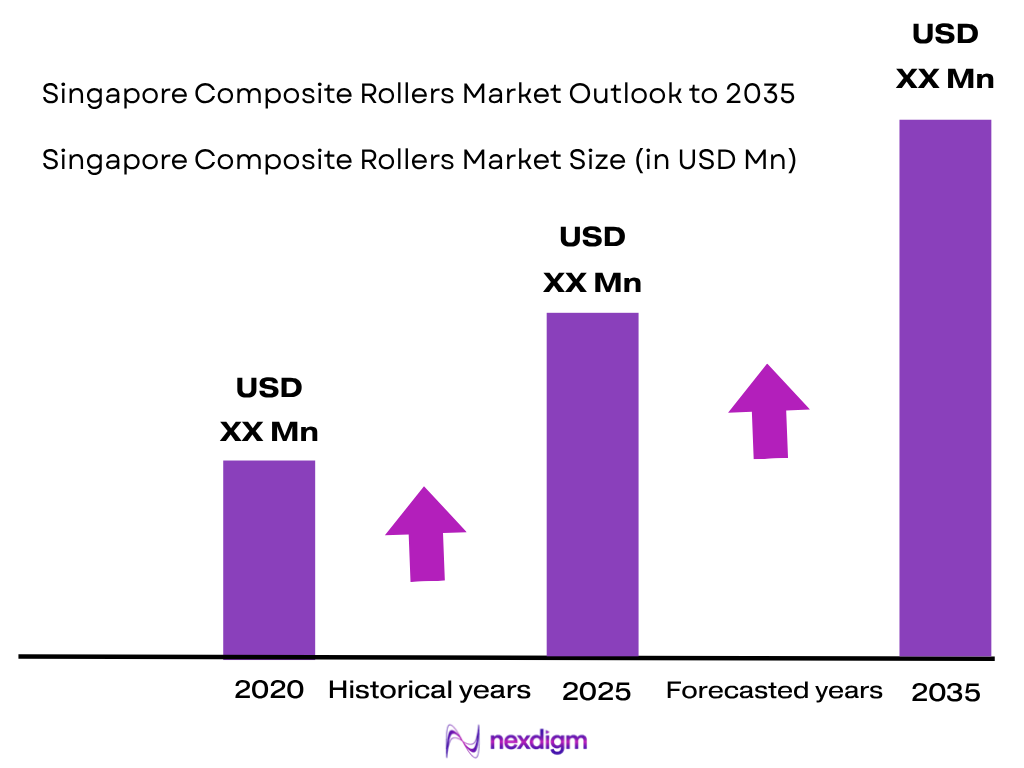
The Singapore Composite Rollers Market is valued at ~USD XX Mn in 2024, supported by increasing adoption of lightweight and high-performance industrial components across semiconductor manufacturing, precision engineering, packaging, and automated production sectors. The market is driven by Singapore’s advanced manufacturing ecosystem, where industries require rollers with improved durability, corrosion resistance, dimensional accuracy, and reduced operational weight. Singapore’s manufacturing sector contributed SGD XX billion to the economy, supported by high-value industries including electronics and precision engineering. Wikipedia The growing requirement for advanced production equipment is supporting composite roller adoption.
Singapore’s composite rollers demand is concentrated around industrial clusters including Jurong, Tuas, and Changi due to the presence of semiconductor, electronics, logistics, and advanced manufacturing facilities. The country operates as a regional manufacturing and technology hub with strong foreign investment inflows and advanced industrial infrastructure. Singapore’s electronics sector remains a major manufacturing contributor, with semiconductor-related activities requiring precision equipment and specialized components. The country’s focus on high-value manufacturing and automation supports demand for lightweight composite rollers used in high-speed industrial machinery.
Market Segmentation
By Fiber Material Type
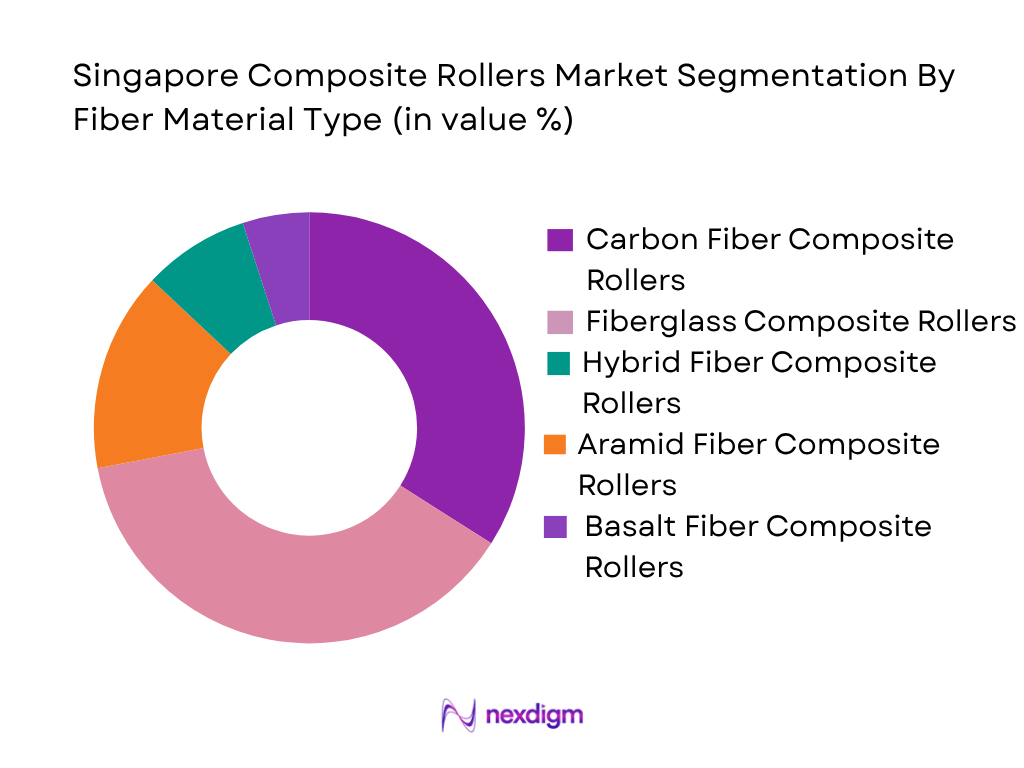
The Singapore Composite Rollers Market is segmented by fiber material type into carbon fiber composite rollers, fiberglass composite rollers, hybrid fiber composite rollers, aramid fiber composite rollers, and basalt fiber composite rollers. Carbon fiber composite rollers hold a leading position due to their superior stiffness, lightweight characteristics, low rotational inertia, and suitability for precision manufacturing applications. These rollers are increasingly used in semiconductor processing, electronics manufacturing, and high-speed converting equipment where dimensional stability and operational efficiency are critical. Fiberglass composite rollers maintain strong adoption due to their durability, corrosion resistance, and suitability for general industrial applications. The expansion of Singapore’s advanced manufacturing sector and increasing automation requirements are encouraging industries to adopt high-performance composite materials for improved production efficiency and reduced equipment downtime.
By Application
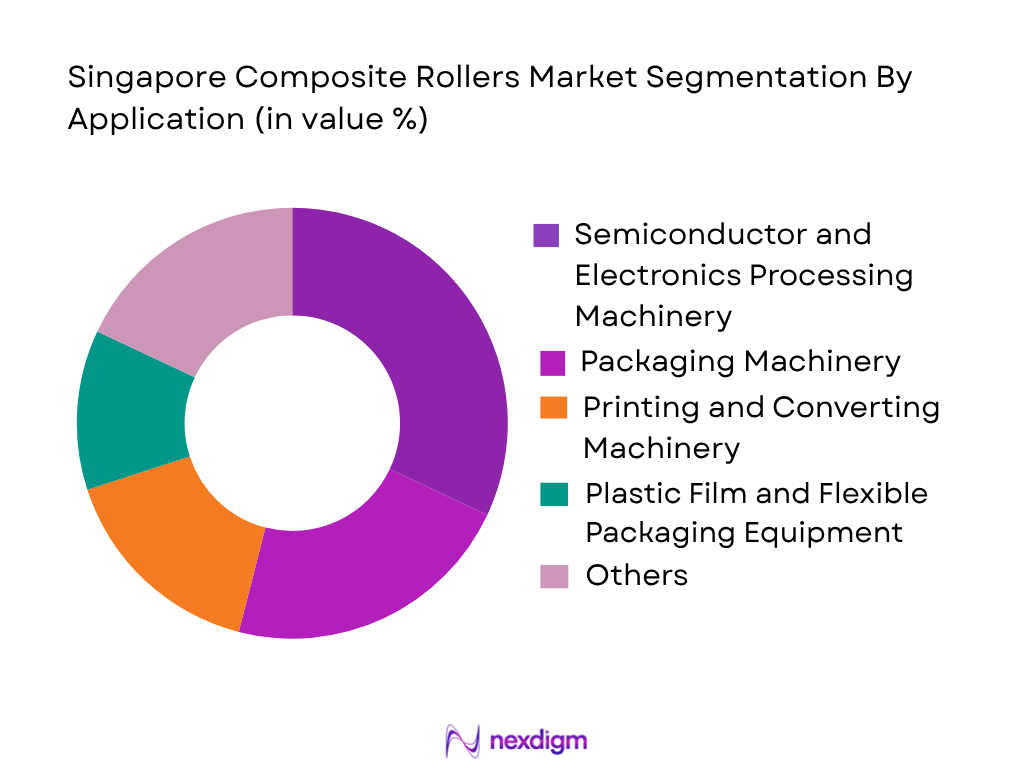
The Singapore Composite Rollers Market is segmented by application into semiconductor and electronics processing machinery, packaging machinery, printing and converting machinery, plastic film and flexible packaging equipment, precision engineering equipment, food processing equipment, and renewable energy equipment. Semiconductor and electronics processing machinery represents a dominant application segment due to Singapore’s established electronics manufacturing base and demand for high-precision production systems. Composite rollers are preferred in these applications because they provide low vibration operation, dimensional accuracy, corrosion resistance, and lightweight performance. Packaging and converting applications also contribute significantly due to increasing automation in manufacturing and logistics operations. The expansion of advanced manufacturing facilities and industrial automation initiatives continues to increase demand for specialized composite rollers across multiple industrial applications.
Competitive Landscape
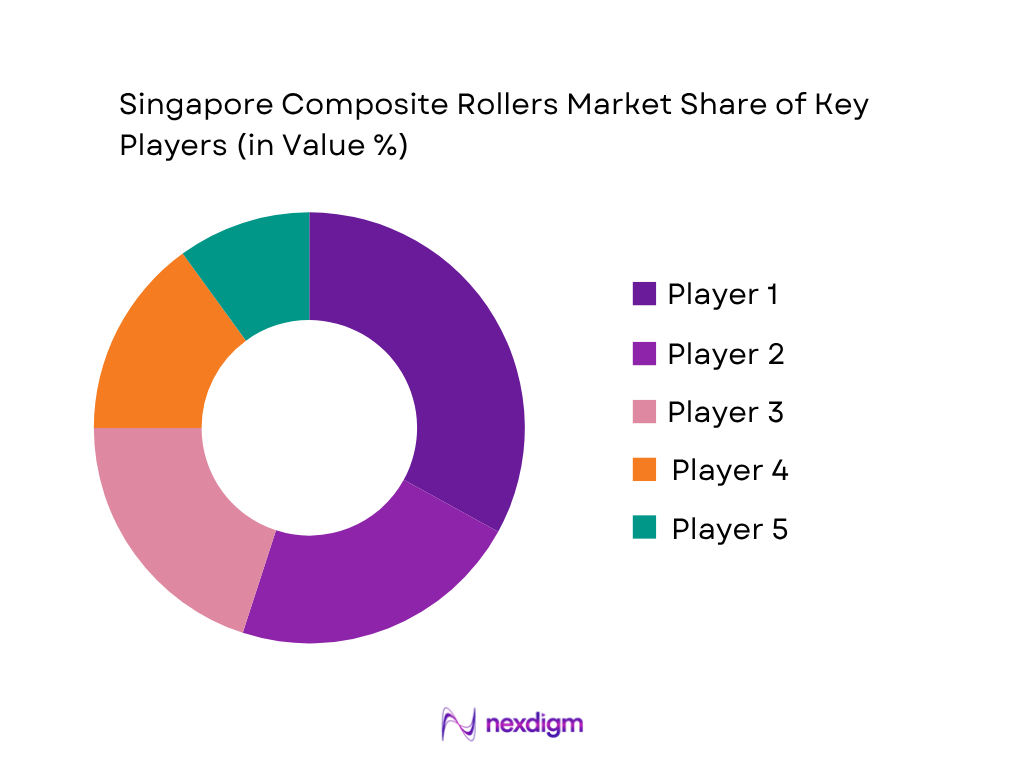
The Singapore Composite Rollers Market includes global composite roller manufacturers, industrial component suppliers, and specialized engineering companies providing customized roller solutions. Competition is influenced by material technology capabilities, application expertise, manufacturing precision, and the ability to supply rollers for semiconductor, packaging, and industrial automation applications.
| Company | Establishment Year | Headquarters | Fiber Material Capability | Application Expertise | Manufacturing Technology | Customization Capability | Industry Presence | Distribution Network |
| Double E Company | 1972 | United States | ~ | ~ | ~ | ~ | ~ | ~ |
| Maxcess International | 1991 | United States | ~ | ~ | ~ | ~ | ~ | ~ |
| Voith GmbH & Co. KGaA | 1867 | Germany | ~ | ~ | ~ | ~ | ~ | ~ |
| Kadant Inc. | 1991 | United States | ~ | ~ | ~ | ~ | ~ | ~ |
| Epsilon Composite | 1987 | France | ~ | ~ | ~ | ~ | ~ | ~ |
Singapore Composite Rollers Market Analysis
Growth Drivers
Expansion of Semiconductor Manufacturing and Precision Engineering Sector
The Singapore Composite Rollers Market is supported by the country’s strong semiconductor and precision manufacturing ecosystem, where composite rollers are used in high-speed, high-accuracy production equipment. Singapore’s electronics manufacturing sector generated SGD 46,813 million in value added in 2024, while the semiconductor segment contributed SGD 38,195 million, indicating strong industrial demand for advanced manufacturing components. The semiconductor industry employed 34,285 workers in 2024, creating continuous requirements for precision machinery, automation systems, and lightweight industrial components. Composite rollers are increasingly relevant in semiconductor and electronics processing applications because they provide low vibration operation, dimensional stability, corrosion resistance, and reduced rotational weight compared with conventional metal rollers. Singapore’s manufacturing sector expanded by 4.3 in real terms in 2024 after contracting in the previous period, reflecting renewed industrial activity and supporting demand for specialized machinery components. The continued development of advanced manufacturing facilities, precision engineering capabilities, and automated production lines is expected to strengthen adoption of composite roller solutions across electronics, packaging, and industrial processing applications. Isomer User Content
Growth of Industrial Automation and Advanced Manufacturing Applications
The Singapore Composite Rollers Market is benefiting from increasing industrial automation and the expansion of advanced manufacturing activities requiring lightweight, durable, and high-performance machine components. Singapore’s manufacturing sector accounted for SGD 116,595.3 million in value added in 2024, demonstrating the scale of industrial operations requiring specialized equipment and precision components. The precision engineering cluster contributed SGD 15,xxx million in value added in 2024, reflecting the importance of machinery, automation equipment, and industrial systems within the manufacturing ecosystem. Composite rollers support automated production environments by reducing equipment load, improving operational speed, and providing resistance against wear and corrosion. Singapore’s electronics manufacturing cluster recorded SGD 181,166 million in total output in 2024, with semiconductor production contributing SGD 136,786 million, highlighting demand for high-performance processing equipment. The increasing adoption of automated manufacturing lines, robotics-assisted production, and advanced processing technologies across electronics, packaging, and industrial sectors is creating opportunities for composite roller suppliers. These industrial requirements encourage manufacturers to replace conventional heavy rollers with engineered composite alternatives offering improved efficiency and longer operational life. Isomer User Content
Market Challenges
Dependence on Imported Composite Materials and Specialized Manufacturing Technologies
The Singapore Composite Rollers Market faces challenges due to dependence on imported composite raw materials, specialized manufacturing technologies, and international supply chains. Composite rollers require advanced inputs such as carbon fiber, fiberglass, resin systems, and precision manufacturing equipment, which are not produced extensively within Singapore. Although Singapore has a strong manufacturing base, domestic manufacturing output relies significantly on global suppliers for specialized materials and industrial components. The electronics sector, which generated SGD 181,166 million in total output in 2024, depends on globally integrated supply chains for advanced manufacturing inputs. Any disruption in international material availability can affect production schedules and increase procurement complexity for composite roller manufacturers and industrial users. Additionally, composite roller production requires specialized engineering expertise in fiber orientation, resin selection, surface treatment, and precision balancing. Smaller industrial users may face challenges in adopting composite solutions due to technical requirements and limited familiarity compared with conventional metal rollers. These factors can slow adoption among industries where existing equipment continues to use traditional roller technologies. Isomer User Content
High Initial Investment and Limited Standardization Across Industrial Applications
The Singapore Composite Rollers Market experiences challenges related to higher initial investment requirements and limited standardization across different industrial applications. Composite rollers often require customized engineering based on operating speed, load capacity, temperature conditions, and application-specific requirements. Unlike conventional rollers with standardized designs, composite solutions frequently require specialized manufacturing processes, increasing engineering complexity. Singapore’s manufacturing ecosystem includes diverse industries such as electronics, precision engineering, packaging, and industrial equipment, each requiring different performance specifications. The precision engineering sector contributed SGD 15.4 billion in nominal value-added share within manufacturing activity in 2024, reflecting a broad industrial base with varied component requirements. The need for application-specific designs can increase development timelines and require technical collaboration between suppliers and equipment manufacturers. In addition, industries with established metal roller systems may hesitate to transition due to replacement costs, compatibility concerns, and limited awareness of long-term operational benefits. These challenges create barriers for faster adoption despite the performance advantages offered by composite roller technologies. Default
Market Opportunities
Expansion of Semiconductor Equipment and Advanced Electronics Manufacturing
The Singapore Composite Rollers Market presents opportunities through continued expansion of semiconductor equipment manufacturing and advanced electronics production. Singapore remains a major electronics manufacturing hub, with the electronics cluster generating SGD 46,813 million in value added and SGD 181,166 million in total output in 2024. The semiconductor segment alone contributed SGD 38,195 million in value added and SGD 136,786 million in total output, creating demand for precision components used in manufacturing equipment. Composite rollers can support semiconductor production processes by providing high dimensional accuracy, lightweight operation, and resistance to contamination and corrosion. Increasing requirements for advanced semiconductor manufacturing equipment, automated handling systems, and precision processing lines create opportunities for composite roller suppliers specializing in high-performance applications. The presence of established electronics manufacturing activities, skilled industrial workforce, and advanced production infrastructure provides a strong environment for adoption of engineered composite components. Future opportunities are expected in wafer processing equipment, electronics assembly systems, and precision automation machinery where performance requirements exceed conventional roller capabilities. Isomer User Content
Replacement of Conventional Metal Rollers Through Lightweight Composite Solutions
The Singapore Composite Rollers Market has opportunities from the replacement of traditional metal rollers with lightweight composite alternatives across industrial processing applications. Industries including packaging, printing, electronics, and precision engineering are increasingly focused on improving operational efficiency, reducing machine weight, and minimizing maintenance requirements. Singapore’s manufacturing sector recorded SGD 116,595.3 million in value added in 2024, indicating a large installed base of industrial equipment where component upgrades can create demand for composite technologies. Composite rollers provide advantages such as lower rotational inertia, improved corrosion resistance, reduced wear, and better performance in high-speed machinery. The growth of automated production systems and advanced manufacturing facilities increases the need for components that support faster processing speeds and improved equipment reliability. Industrial clusters located in areas such as Jurong and Tuas provide opportunities for composite roller adoption in manufacturing and logistics-related applications. The increasing focus on productivity improvement and advanced machinery modernization supports replacement opportunities for conventional rollers across multiple industrial segments. data.gov.sg
Future Outlook
Over the next decade, the Singapore Composite Rollers Market is expected to experience increased adoption driven by semiconductor manufacturing expansion, industrial automation, and demand for lightweight precision components. The shift toward advanced manufacturing technologies will increase requirements for rollers offering higher speed capability, improved durability, and reduced maintenance requirements. Increasing focus on sustainable manufacturing and energy-efficient industrial equipment is expected to support adoption of composite materials across multiple industries. Singapore’s manufacturing strategy continues to emphasize high-value industries, supporting opportunities for advanced composite component suppliers. Singapore Green Plan 2030
Major Players
- Double E Company
- Maxcess International
- Voith GmbH & Co. KGaA
- Kadant Inc.
- Epsilon Composite
- Menges Roller Company
- Webex Inc.
- American Roller Company LLC
- Western Machine Works
- C.R. Products Inc.
- Coastal Enterprises Inc.
- Kinetic Co.
- Advance Composite Structures
- Carbon Axis
- TSE Troller AG
Key Target Audience
- Industrial equipment manufacturers
- Semiconductor manufacturing equipment companies
- Packaging machinery manufacturers
- Printing and converting machinery manufacturers
- Precision engineering companies
- Investments and venture capitalist firms
- Government and regulatory bodies (Economic Development Board Singapore, Enterprise Singapore, Ministry of Trade and Industry Singapore)
- Industrial automation solution providers
Research Methodology
Step 1: Identification of Key Variables
The initial phase involves developing an ecosystem map covering composite roller manufacturers, raw material suppliers, industrial machinery producers, and end-use industries in Singapore. Extensive secondary research is conducted to identify market variables including material adoption, application demand, manufacturing capabilities, and industrial requirements influencing market development.
Step 2: Market Analysis and Construction
Historical market information is analyzed through supply-side and demand-side assessment of composite rollers used across semiconductor, packaging, printing, and industrial automation applications. Market evaluation includes production capabilities, industrial adoption patterns, application requirements, and technology trends affecting composite roller demand.
Step 3: Hypothesis Validation and Expert Consultation
Market assumptions are validated through discussions with industry participants, including composite material suppliers, machinery manufacturers, and industrial component providers. Expert insights are used to evaluate application trends, technology adoption, operational requirements, and future market opportunities.
Step 4: Research Synthesis and Final Output
The final stage integrates collected information through data triangulation, validating market estimates using multiple analytical approaches. The research output provides detailed insights into segmentation, competitive landscape, market drivers, challenges, opportunities, and future industry developments.

- Executive Summary
- Research Methodology (Market Definition and Scope, Singapore Composite Rollers Market Classification, Composite Roller Technology Mapping, Composite Material Assessment, Fiber Reinforcement Analysis, Resin Matrix Evaluation, Manufacturing Process Assessment, Filament Winding Technology Assessment, Pultrusion Manufacturing Analysis, Compression Molding Evaluation, Roller Design and Engineering Assessment, Surface Treatment and Coating Evaluation, Mechanical Performance Assessment, Thermal Performance Assessment, Corrosion Resistance Assessment, Weight Reduction Analysis, Industrial Application Mapping, Manufacturing Capability Assessment, Domestic Production Assessment, Import Dependency Assessment, Supply-Side Assessment, Demand-Side Assessment, Top-Down Market Sizing, Bottom-Up Market Sizing, Primary Industry Interviews, Data Triangulation, Forecasting Framework)

- Definition and Scope
- Singapore Composite Rollers Industry Evolution and Development of Lightweight Composite Rollers, Industrial Precision Rollers, High-Speed Processing Rollers, Corrosion-Resistant Composite Rollers, Semiconductor Manufacturing Rollers, Electronics Processing Rollers, Printing and Converting Rollers, Packaging Machinery Rollers, Food Processing Rollers, Renewable Energy Equipment Rollers, Automated Manufacturing Rollers, Advanced Composite Manufacturing Technologies
- Composite Rollers Value Chain Analysis
- Composite Rollers Supply Chain Analysis
- Composite Material Suppliers, Carbon Fiber Suppliers, Glass Fiber Manufacturers, Resin System Suppliers, Polymer Matrix Suppliers, Composite Material Producers, Filament Winding Equipment Providers, Pultrusion Technology Providers, Composite Roller Manufacturers, Precision Machining Providers, Surface Treatment Providers, Industrial Equipment Integrators, Semiconductor Equipment Manufacturers, Electronics Manufacturing Equipment Suppliers, Packaging Machinery Manufacturers, Printing Equipment Manufacturers, Renewable Energy Equipment Producers, Industrial End Users

- Growth Drivers (Expansion of Semiconductor Manufacturing, Growth of Precision Engineering Sector, Increasing Adoption of Lightweight Industrial Components, Expansion of Automated Manufacturing Systems, Growth of Packaging and Converting Activities, Rising Demand for Corrosion Resistant Materials, Development of Advanced Manufacturing Facilities)
- Market Challenges (Limited Domestic Composite Roller Production Capacity, Dependence on Imported Composite Materials, High Manufacturing Complexity, Higher Initial Investment Compared with Conventional Rollers, Limited Awareness Among Traditional Industrial Users, Requirement for Specialized Engineering Expertise, Customization Challenges Across Applications)
- Market Opportunities (Semiconductor Equipment Expansion, Replacement of Conventional Metal Rollers, Smart Manufacturing Integration, Advanced Packaging Industry Growth, Sustainable Composite Material Adoption, Renewable Energy Equipment Applications, Local Composite Technology Development)
- Market Trends (Carbon Fiber Composite Adoption, Lightweight Precision Machinery Development, Hybrid Fiber Material Innovation, Automated Composite Manufacturing, Advanced Surface Coating Technologies, High-Speed Processing Applications, Digital Manufacturing Integration, Long-Life Composite Roller Development)
- Government Regulations and Standards (Singapore Standards Requirements, Workplace Safety and Health Regulations, Environmental Protection Standards, ISO Manufacturing Quality Standards, Composite Material Testing Requirements, Industrial Equipment Safety Regulations, Semiconductor Manufacturing Quality Requirements, Manufacturing Process Standards)
- SWOT Analysis
- Porter’s Five Forces Analysis
- PESTLE Analysis
- Stakeholder Ecosystem
- Competition Ecosystem

- By Market Value (2020-2025)
- By Composite Roller Production Volume (2020-2025)
- By Installed Roller Units (2020-2025)
- By Average Selling Price per Roller Unit (2020-2025)
- By Carbon Fiber Composite Roller Consumption Volume (2020-2025)
- By Fiberglass Composite Roller Consumption Volume (2020-2025)
- By Semiconductor and Electronics Processing Roller Volume (2020-2025)
- By Printing and Converting Application Volume (2020-2025)
- By Packaging Machinery Application Volume (2020-2025)
- By Industrial Automation Application Volume (2020-2025)

- By Fiber Material Type (In Value %)
Carbon Fiber Composite Rollers
Fiberglass Composite Rollers
Aramid Fiber Composite Rollers
Hybrid Fiber Composite Rollers
Basalt Fiber Composite Rollers
Natural Fiber Composite Rollers - By Resin Matrix Type (In Value %)
Epoxy Matrix Composite Rollers
Polyester Matrix Composite Rollers
Vinyl Ester Matrix Composite Rollers
Polyurethane Matrix Composite Rollers
Thermoplastic Composite Rollers
High-Temperature Resin Composite Rollers - By Application (In Value %)
Semiconductor and Electronics Processing Machinery
Printing and Converting Machinery
Packaging Machinery
Plastic Film and Flexible Packaging Equipment
Paper and Pulp Processing Equipment
Food Processing Equipment
Textile Machinery
Renewable Energy Equipment
Automotive Manufacturing Equipment
Industrial Automation Systems - By End-Use Industry (In Value %)
Semiconductor Industry
Electronics Manufacturing Industry
Packaging Industry
Printing Industry
Precision Engineering Industry
Food Processing Industry
Renewable Energy Industry
Automotive Industry
Textile Industry
Industrial Manufacturing Industry - By Roller Type (In Value %)
Idler Rollers
Guide Rollers
Pressure Rollers
Cooling Rollers
Heating Rollers
Drive Rollers
Tension Control Rollers
Coating Rollers - By Region (In Value %)
Central Region
East Region
West Region
North Region
North-East Region
Jurong Industrial Cluster
Tuas Manufacturing Cluster
Changi Industrial Cluster
Rest of Singapore

- Market Share of Major Players (By Singapore Revenue, Composite Roller Product Portfolio, Carbon Fiber Technology Capability, Fiberglass Composite Capability, Manufacturing Capacity, Roller Design Capability, Application Coverage, Semiconductor Industry Presence, Customization Capability, Surface Treatment Capability, Technical Support Capability, Distribution Network, Customer Base)
- Cross Comparison Parameters (Fiber Material Technology Capability, Roller Weight Reduction Performance, Maximum Operating Speed Capability, Thermal Resistance Performance, Corrosion Resistance Capability, Load Bearing Capacity, Manufacturing Process Expertise, Semiconductor and Precision Engineering Application Experience)
- SWOT Analysis of Major Players
- Competitive Positioning Matrix
- Major Companies
Double E Company
C.R. Products Inc.
Menges Roller Company
Webex Inc.
Western Machine Works
American Roller Company LLC
Coastal Enterprises Inc.
Kinetic Co.
Advance Composite Structures
Carbon Axis
Reifenhäuser Group
Voith GmbH & Co. KGaA
Kadant Inc.
Maxcess International
TSE Troller AG

- Industrial Equipment Manufacturer Requirement Assessment
- Semiconductor Equipment Manufacturer Demand Analysis
- Precision Engineering Industry Requirement Assessment
- Packaging Machinery Demand Analysis
- Printing and Converting Application Assessment
- Electronics Manufacturing Roller Requirement Assessment
- Food Processing Equipment Application Assessment
- Renewable Energy Equipment Requirement Analysis
- Industrial Automation Requirement Analysis
- High-Speed Processing Line Requirement Analysis
- Composite Performance Requirement Assessment (Weight Reduction, Durability, Thermal Stability, Corrosion Resistance, Load Capacity)

- By Market Value (2026-2035)
- By Composite Roller Production Volume (2026-2035)
- By Installed Roller Units (2026-2035)
- By Average Selling Price per Roller Unit (2026-2035)
- By Carbon Fiber Composite Roller Consumption Volume (2026-2035)
- By Fiberglass Composite Roller Consumption Volume (2026-2035)
- By Semiconductor and Electronics Processing Roller Volume (2026-2035)
- By Printing and Converting Application Volume (2026-2035)
- By Packaging Machinery Application Volume (2026-2035)
- By Industrial Automation Application Volume (2026-2035)


 Request a Sample
 Ask for Customization
 Get a Quote
 Enquire Now