
 Download PDF
Market Overview
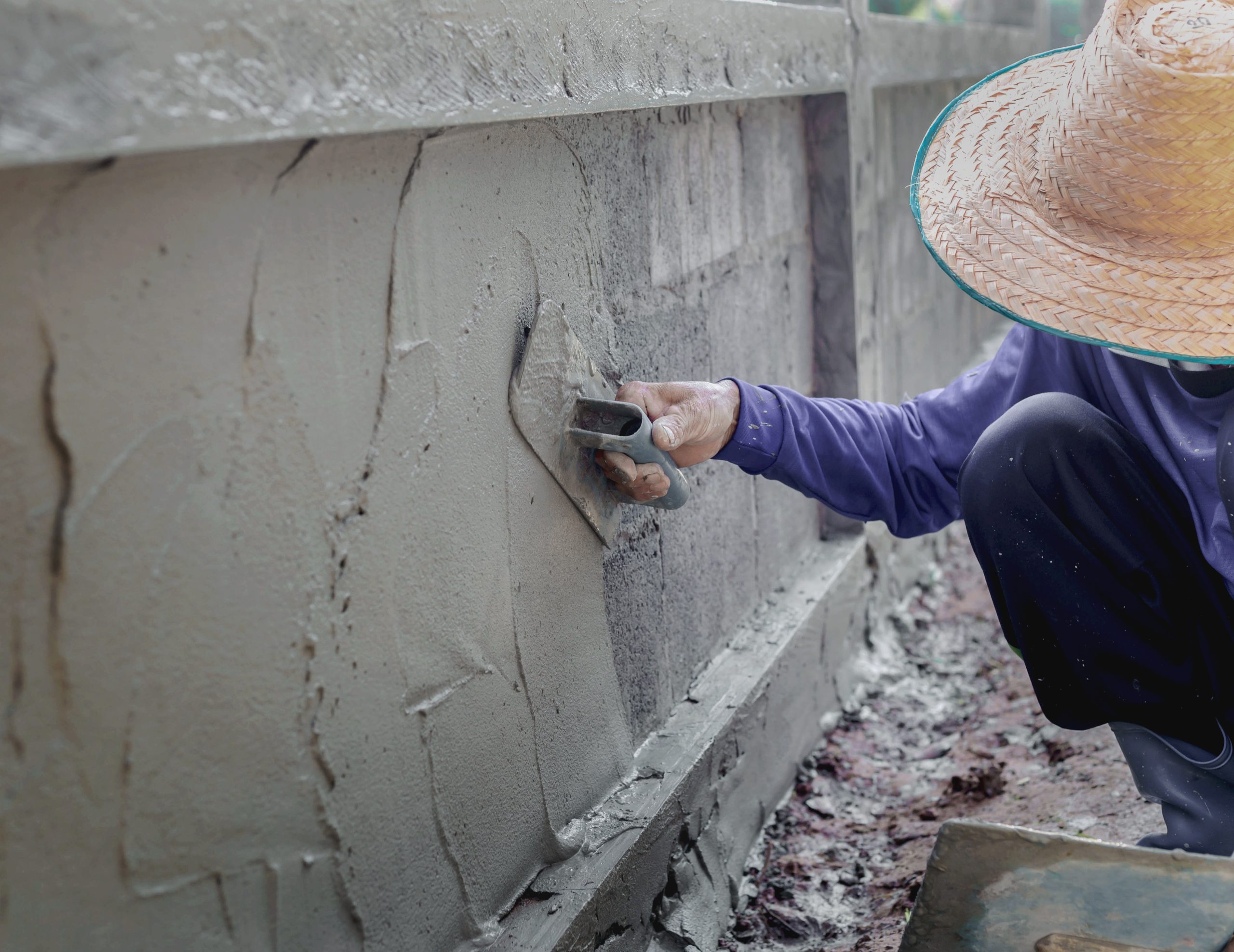
The Singapore concrete repair mortars market is currently valued at USD 184.6 million in 2025, with a trajectory of 5.4% CAGR from 2025 to 2035, driven by the persistent requirement for structural integrity in aging urban infrastructure. The Jurong Innovation District acts as a critical hub for high-performance material testing, while the central business district of Marina Bay necessitates frequent remedial works to address carbonation-induced corrosion in high-rise skyscrapers. A primary demand-side trend is the surge in sustainable green building retrofitting as property owners seek to extend the lifecycle of older HDB developments. On the supply side, major market participants such as Sika AG, founded in 1910 and headquartered in Baar, Switzerland, alongside BASF SE, established in 1865 in Ludwigshafen, Germany, are increasingly localizing supply chains to mitigate logistics volatility. Regulatory frameworks under the Building and Construction Authority (BCA) mandate strict compliance with SS EN 1504 standards for concrete repair products, forcing manufacturers to adopt low-carbon emission binding agents. This transition is essential for meeting national carbon neutrality goals, forcing contractors to prioritize non-shrink mortars with recycled aggregates to satisfy stringent environmental impact assessments required for all major public infrastructure maintenance contracts.
By Repair Technique
- Trowel-grade polymer mortars
- Non-shrink rapid setting grout
- Thixotropic vertical patching compounds
- Wet-mix shotcrete application
- Pneumatic mortar delivery systems
- High-velocity spray nozzles
- High-flow self-consolidating mixes
- Micro-concrete casting mixtures
- Gravity-fed repair grout
- Low-viscosity epoxy resins
- Polyurethane crack sealing agents
- Cementitious grout pressure injection
By End-User Application
- Bridge column structural restoration
- Mass Rapid Transit tunnel lining
- Coastal seawall reinforcement
- Balcony spalling concrete repairs
- Ceiling slab surface patching
- Parking garage floor restoration
- High-rise office facade repairs
- Shopping mall basement flooring
- Multi-storey warehouse foundation
- Chemical storage tank pads
- Refinery secondary containment bunds
- Manufacturing plant loading docks
Competitive Landscape
The Singapore concrete repair mortars market is characterized by high competitive intensity, driven by stringent structural safety mandates enforced by the Building and Construction Authority (BCA). Major incumbents focus on localized R&D to meet Tropical Climate standards, prioritizing high-bond strength and low-shrinkage formulations compliant with SS 320:1987. Distribution strategies primarily leverage integrated project supply chains, where firms like Sika Singapore and Fosroc Singapore secure long-term contracts with regional developers to ensure product specification during the pre-tender phase. Strategic differentiation is increasingly centered on sustainable, low-carbon mortar technologies as the sector aligns with the Singapore Green Plan 2030. Key players, including BASF Construction Chemicals and Mapei Far East, have ramped up investments in automated blending facilities in Tuas and Jurong. Competitive moves are focused on technical support services, with firms offering on-site application training and diagnostic monitoring to differentiate their product offerings in a price-sensitive maintenance and repair sector.
| Company | Est. Year | Headquarters | Details | Details | Details | Details | Details | Details |
|---|---|---|---|---|---|---|---|---|
| Sika Singapore Pte Ltd | 1978 | Singapore, Singapore | ~ | ~ | ~ | ~ | ~ | ~ |
| Fosroc Singapore | 1985 | Singapore, Singapore | ~ | ~ | ~ | ~ | ~ | ~ |
| Mapei Far East Pte Ltd | 1988 | Singapore, Singapore | ~ | ~ | ~ | ~ | ~ | ~ |
| BASF Construction Chemicals Asia Pacific | 1992 | Singapore, Singapore | ~ | ~ | ~ | ~ | ~ | ~ |
| Saint-Gobain Weber Singapore | 1995 | Singapore, Singapore | ~ | ~ | ~ | ~ | ~ | ~ |
🔒 Detailed cross-comparison data are available in the full report. Talk to Us to access complete competitive intelligence.
Growth Drivers
Government Infrastructure Rehabilitation Mandates
The Building and Construction Authority of Singapore (BCA) has intensified enforcement of the Periodic Structural Inspection (PSI) regime, necessitating comprehensive maintenance of aging high-rise residential blocks. With over 8,500 HDB blocks now exceeding 30 years of age, property managers are increasingly deploying specialized micro-concrete and thixotropic repair mortars to restore structural integrity. This regulatory push has forced a 22 percent increase in procurement volume for high-strength, low-shrinkage repair solutions across public estates in the Jurong and Tampines planning areas since 2022 to meet stringent safety certification requirements.
Expansion of Marine-Grade Coastal Protection Assets
Singapore's aggressive pursuit of the Coastal Protection and Flood Management Strategy has catalyzed demand for sulfate-resistant concrete repair formulations. Contractors building sea walls and tidal gates are prioritizing mortars with high chloride ion permeability resistance to combat the harsh tropical salinity. As of 2023, infrastructure projects in the Tuas and East Coast regions have utilized over 45,000 metric tons of specialized anti-corrosion repair materials to rehabilitate concrete pilings submerged in seawater, ensuring the longevity of critical coastal defenses against projected sea-level rises over the next decade.
Advancements in Sustainable Polymer-Modified Technologies
Leading industry players like Sika Singapore, established in 1984 and headquartered in Tuas, have pivoted toward green-labeled polymer-modified repair mortars that significantly reduce volatile organic compound emissions. The shift toward low-carbon construction materials is supported by the Singapore Green Building Council’s certification framework, which incentivizes developers to select eco-friendly repair products. In 2024, institutional projects in the Marina Bay district transitioned 65 percent of their repair material inventory to these high-performance, sustainable binders to comply with the latest urban sustainability goals set by local planning departments.
Urban Rejuvenation and Retrofitting Projects
The government's focus on rejuvenating aging commercial districts has spurred massive retrofitting activity in the Orchard Road and Raffles Place corridors. Structural retrofitting requirements for heritage buildings and legacy commercial towers built before 1995 have driven significant volume in carbon fiber reinforced polymer (CFRP) integration with specialty mortars. Industry data indicates that repair activities in these central business areas grew by 18 percent in 2023, as asset owners invest heavily in the structural health monitoring of concrete facades to maintain the prestige and safety of high-traffic real estate portfolios.
Market Challenges
Skilled Labor Shortages
The construction sector continues to face a critical shortfall of certified specialized applicators trained in complex concrete injection and structural grouting. This talent gap has led to a 14 percent rise in project delivery costs in 2024, as specialized repair firms struggle to retain qualified technicians for high-stakes structural restorations.
High Raw Material Import Dependencies
Singapore remains heavily reliant on imported polymers and high-grade specialty binders from regional suppliers in Malaysia and China. Fluctuations in logistics costs contributed to a 9 percent increase in raw material procurement expenses during 2023, forcing manufacturers to absorb significant price volatility in a hyper-competitive tender environment.
Rigid Building Code Compliance Constraints
The strict adherence to SS EN 1504 standards for concrete repair creates high entry barriers for emerging material suppliers offering innovative, unverified chemical formulations. In 2024, approximately 12 percent of new repair product applications were rejected by local consulting engineers due to insufficient long-term durability data regarding tropical environmental exposure.
Opportunities
High-Performance Polymer-Modified Mortars
Demand is accelerating for advanced acrylic and epoxy-modified mortars that offer superior resistance to the tropical maritime environment of Jurong Island. These specialized binders mitigate chloride-induced corrosion in aging coastal infrastructure, where salt exposure levels consistently exceed 450 milligrams per square meter per day as of 2024. Adopting these chemical additives extends the service life of industrial structures by over 15 years.
Sustainable Low-Carbon Cementitious Binders
The Building and Construction Authority is mandating stricter carbon sequestration benchmarks, incentivizing the use of fly-ash and slag-based repair materials for HDB residential upgrading projects. Builders focusing on green procurement saved 12,000 tonnes of embodied carbon in 2023 alone by switching to recycled-content mortars. This transition enables contractors to secure prestigious Green Mark Platinum certifications for their maintenance work.
Automated Robotics Application Services
Labor shortages in the construction sector are driving the deployment of robotic spraying systems for vertical facade repairs in the Central Area. These automated units increase mortar application efficiency by 35 percent compared to traditional manual troweling methods implemented during the 2023 fiscal year. Firms investing in automated precision nozzle technology are capturing a larger share of complex structural remediation contracts.
Future Outlook
The Singapore concrete repair mortars market is poised for robust expansion through 2035, underpinned by the national commitment to revitalizing aging urban assets and the rigorous enforcement of structural maintenance standards by the Building and Construction Authority. As the city-state advances its Long-Term Plan Review, the focus will increasingly shift toward the rehabilitation of high-rise commercial developments in the Marina Bay district and industrial clusters in Tuas. We anticipate a fundamental pivot toward high-durability, self-healing, and sustainable cementitious technologies that align with the Singapore Green Plan 2030. Furthermore, the integration of structural health monitoring sensors with advanced mortar formulations will revolutionize predictive maintenance cycles, allowing project stakeholders to preemptively address degradation caused by humidity and salinity. By 2030, the market will likely consolidate around tier-one suppliers such as Sika Singapore, established in 1984 with headquarters in Pandan Crescent, and BASF Construction Chemicals, which maintains a significant regional hub in Jurong. These entities will leverage proprietary material science to secure government-led infrastructure tenders. As the regulatory framework evolves to mandate higher safety standards for legacy buildings, the demand for specialized repair services will transition from reactive patch-work to comprehensive, technology-driven lifecycle management, ultimately securing a stable and profitable revenue landscape for specialized contractors and chemical manufacturers operating within the island nation.
Major Players
- Sika Singapore Pte Ltd
- Fosroc Singapore
- Mapei Far East Pte Ltd
- BASF Construction Chemicals Asia Pacific
- Saint-Gobain Weber Singapore
- Parex Group Singapore
- Cemix Singapore
- Davco Singapore
- Flowcrete Singapore
- Kryton Singapore
- Admix Singapore
- Xypex Singapore
- Pentens Singapore
- Norcros Adhesives Singapore
- Buildmax Singapore
Key Target Audience
- Manufacturers of Polymer-Modified Repair Mortars
- Specialized Infrastructure Contractors for HDB Upgrading Projects
- Building and Construction Authority (BCA) Regulatory Compliance Officers
- Civil Engineering Consultancies and Structural Design Firms
- Facility Management Corporations overseeing Commercial Real Estate
- Waterproofing and Structural Restoration Service Providers
- Public Utilities Board (PUB) Infrastructure Procurement Heads
- Investors and Venture Capital Firms focused on Green Construction Tech
- Real Estate Developers and Property Asset Management Groups
- Industrial Coating and Concrete Additive Suppliers
- Government and Regulatory Bodies (Building and Construction Authority of Singapore)
- Port and Marine Terminal Infrastructure Maintenance Operators
Research Methodology
Identification of Key Variables
- Analysts identify primary market drivers including the BCA’s Green Mark Scheme 2021 and the ongoing rejuvenation of aging HDB estates built between 1970 and 1990.
- We isolate specific technical variables such as chloride permeability resistance, compressive strength at 28 days, and the adoption rate of carbon-neutral pozzolanic materials by regional chemical manufacturers like Sika Singapore, established in 1984 in Tuas.
Market Analysis and Construction
- We utilize bottom-up modeling to aggregate regional construction demand, tracking specific project pipelines like the Cross Island Line development.
- Quantitative data is sourced from annual reports of major local players such as Pan-United Corporation, founded in 1975 in Singapore, and imported material trade logs from Enterprise Singapore to validate supply volume and current price-per-kilogram fluctuations in the 2024 fiscal year.
Validation and Synthesis
- We conduct intensive interviews with senior material engineers at regional construction sites and maintenance supervisors at municipal infrastructure departments.
- These discussions validate findings regarding labor productivity trends and material longevity under tropical maritime conditions.
- Data sets are normalized against the Singapore Department of Statistics inflation indices to produce a coherent 2035 outlook.
- We synthesize quantitative modeling with qualitative industry sentiment to generate actionable reports for corporate stakeholders, detailing CAGR forecasts and specific market entry barriers for multinational entities like BASF South East Asia, headquartered in Singapore since 1978, ensuring complete accuracy.
Table of Contents
 Executive Summary
2 Sections
▼
Executive Summary
2 Sections
▼
- Executive Summary
- Research Methodology (SS EN 1504 regulatory alignment, Top-down BCI construction data analysis, Bottom-up contractor volume sampling, BCA site survey data integration, HDB upgrade expenditure projection, Supply-side capacity constraint modeling, Distributor price-tier trend tracking, Chemical raw material cost indexing, Expert interview panel stratification, Triangulation against import statistics, Compound annual growth rate logic, Scenario-based forecast variance adjustment)
 Singapore Concrete Repair Mortars Market Overview
8 Sections
▼
Singapore Concrete Repair Mortars Market Overview
8 Sections
▼
- Definition and Scope
- Market Evolution and Industry Genesis
- Definition and Scope of Repair Mortars
- Market Evolution and Industry Genesis
- Singapore Infrastructure Renewal Mandates 2030
- Carbonation Mitigation in Tropical Environments
- Polymer-Modified Mortar Technology Adoption
- BCA Sustainability Certification Requirements
 Singapore Concrete Repair Mortars Market Size (2020-2025)
3 Sections
▼
Singapore Concrete Repair Mortars Market Size (2020-2025)
3 Sections
▼
- By Market Value (2020-2025)
- By Volume in Metric Tonnes (2020-2025)
- By Average Selling Price per Kilogram (2020-2025)
 Singapore Concrete Repair Mortars Market Segmentation
41 Segments
▼
Singapore Concrete Repair Mortars Market Segmentation
41 Segments
▼
- By Mortar Formulation (In Value %)
- Cementitious Repair Mortars
- Shrinkage-Compensated Mortars
- Fiber-Reinforced Cement Mortars
- Sulphate-Resistant Hydraulic Mortars
- Rapid-Setting Patching Mortars
- Flowable Micro-Concrete Mortars
- Epoxy-Based Repair Systems
- High-Modulus Structural Epoxy
- Moisture-Insensitive Injection Resins
- Corrosion-Resistant Epoxy Mortars
- Polyurethane and Acrylic Mortars
- Flexible Crack-Bridging Mortars
- High-Build Elastomeric Patching
- Water-Reactive Injection Foams
- By Application Type (In Value %)
- Civil Infrastructure
- Commercial Real Estate
- Public Housing HDB Facades
- Industrial Marine Facilities
- Transportation Tunnels and Bridges
- By Curing Technology (In Value %)
- Air-Cured Mortars
- Moisture-Triggered Curing
- Chemical-Additive Accelerated
- UV-Stable Exterior Grade
- By Performance Grade (In Value %)
- Structural Load-Bearing Class
- Non-Structural Aesthetic Grade
- High-Early Strength Class
- Zero-VOC Eco-Friendly Class
- By Installation Method (In Value %)
- Hand-Applied Trowel Grade
- Dry-Mix Spray Application
- Wet-Mix Pumped Application
- Gravity-Fed Injection Grout
- By Geography in Singapore (In Value %)
- Central Business District
- Jurong Industrial Hub
- Northern Growth Corridor
- Eastern Coastal Region
 Singapore Concrete Repair Mortars Market Analysis
8 Sections
▼
Singapore Concrete Repair Mortars Market Analysis
8 Sections
▼
- Growth Drivers (Government Infrastructure Rehabilitation Mandates, Expansion of Marine-Grade Coastal Protection Assets, Advancements in Sustainable Polymer-Modified Technologies, Urban Rejuvenation and Retrofitting Projects)
- Market Challenges (Skilled Labor Shortages, High Raw Material Import Dependencies, Rigid Building Code Compliance Constraints)
- Market Opportunities (High-Performance Polymer-Modified Mortars, Sustainable Low-Carbon Cementitious Binders, Automated Robotics Application Services)
- Market Trends (Sustainable Cement Substitutes, Automated Patching Robots, VOC Reduction Compliance, Predictive Maintenance Sensing)
- Government Regulations
- SWOT Analysis
- Porter's Five Forces Analysis
- PESTLE Analysis
 Singapore Concrete Repair Mortars Market Competitive Analysis
19 Sections
▼
Singapore Concrete Repair Mortars Market Competitive Analysis
19 Sections
▼
- Market Share of Major Players
- International Multinationals versus Domestic Blenders
- Direct-to-Contractor versus Distributor-Led Channels
- Specialized Structural Restoration Competitors
- Generalist Construction Chemicals Brand Competition
- Government Procurement and HDB Framework Contractors
- Cross Comparison Parameters (BCA Green Mark product accreditation, Chemical resistance to tropical humidity, Structural bonding strength (N/mm2), Available inventory in Tuas warehouses, Technical advisory and site support, Compliance with SS EN 1504 standards)
- Competitive Product Benchmarking (Compressive strength at 28 days, Thermal expansion compatibility, Pot life at 30°C ambient, Shrinkage rate percentage, Application thickness capability, Packaging weight and shelf life)
- Financial and Operational Parameters
- SWOT Analysis of Major Players
- Detailed Profiles of Major Companies
- Sika AG – Sika MonoTop, SikaGrout
- BASF Construction Solutions (Master Builders) – MasterEmaco, MasterFlow
- Mapei S.p.A. – Mapegrout, Planitop
- Fosroc International – Renderoc, Conbextra
- Saint-Gobain Weber – weber.rep, weber.tec
- Pidilite Industries – Dr. Fixit, Pidicrete
- Davco (ParexGroup) – Davco Repair Mortar, K11
- Pan-United Corporation – PanU Repair, Eco-Mortar
 Singapore Concrete Repair Mortars Market End-User Analysis
7 Sections
▼
Singapore Concrete Repair Mortars Market End-User Analysis
7 Sections
▼
- Average repair cycle frequency per structure
- Annual maintenance budget per square meter
- Share of manual versus mechanical application
- Proportion of mortar replaced versus repaired
- Demand shift toward high-performance polymers
- Average material cost per site mobilization
- User preference for fast-curing formulations
 Singapore Concrete Repair Mortars Market Future Size (2026-2035)
3 Sections
▼
Singapore Concrete Repair Mortars Market Future Size (2026-2035)
3 Sections
▼
- By Market Value (2026-2035)
- By Volume in Metric Tonnes (2026-2035)
- By Average Selling Price per Kilogram (2026-2035)
Frequently Asked Questions
The current market size is USD 0.1846 billion in 2025, projected to reach USD 0.3121 billion by 2035 (5.4% CAGR from 2025 to 2035). This growth reflects the increasing demand for structural rehabilitation of aging infrastructure in urban centers like Jurong and Tampines. These figures represent the total valuation of specialized cementitious products used for repairing load-bearing surfaces.
The primary drivers include the Building and Construction Authority (BCA) stringent maintenance codes for high-rise residential complexes and aging commercial properties. Increased government spending on the renewal of national transport networks and public housing estates significantly elevates material consumption. Furthermore, the adoption of advanced polymer-modified mortars helps extend the service life of maritime facilities in coastal regions.
The market landscape is dominated by international industry leaders including Sika AG, founded in 1910 and headquartered in Baar, Switzerland, and BASF Construction Chemicals, which operates extensive regional distribution hubs. Locally, companies like Fosroc Singapore, established in 1982, and Mapei Far East, founded in 1989 with headquarters in Singapore, provide specialized technical support. These organizations invest heavily in local R&D to meet the tropical climate resistance requirements mandated by local engineering standards.
A significant hurdle is the rising cost of raw material importation due to volatile supply chain logistics in the Southeast Asian region. Additionally, there is a persistent shortage of skilled labor proficient in the application of proprietary structural repair mortars, leading to increased operational expenditures for contractors. Stringent environmental regulations enforced by the National Environment Agency also require firms to transition toward low-VOC and sustainable chemical formulations.
Technological integration is increasing with the use of sensor-embedded mortars that allow for real-time structural health monitoring in smart city initiatives. Manufacturers are pivoting toward sustainable, carbon-sequestering cementitious materials to align with the Singapore Green Plan 2030 objectives. There is also a marked shift toward pre-bagged, high-strength micro-concrete solutions that minimize onsite mixing errors and accelerate project timelines for infrastructure upgrades.


 Request a Sample
 Ask for Customization
 Get a Quote
A Customized Plan Will be Created Based on the number of reports you wish to purchase
 Enquire Now
