
 Download PDF
Market Overview
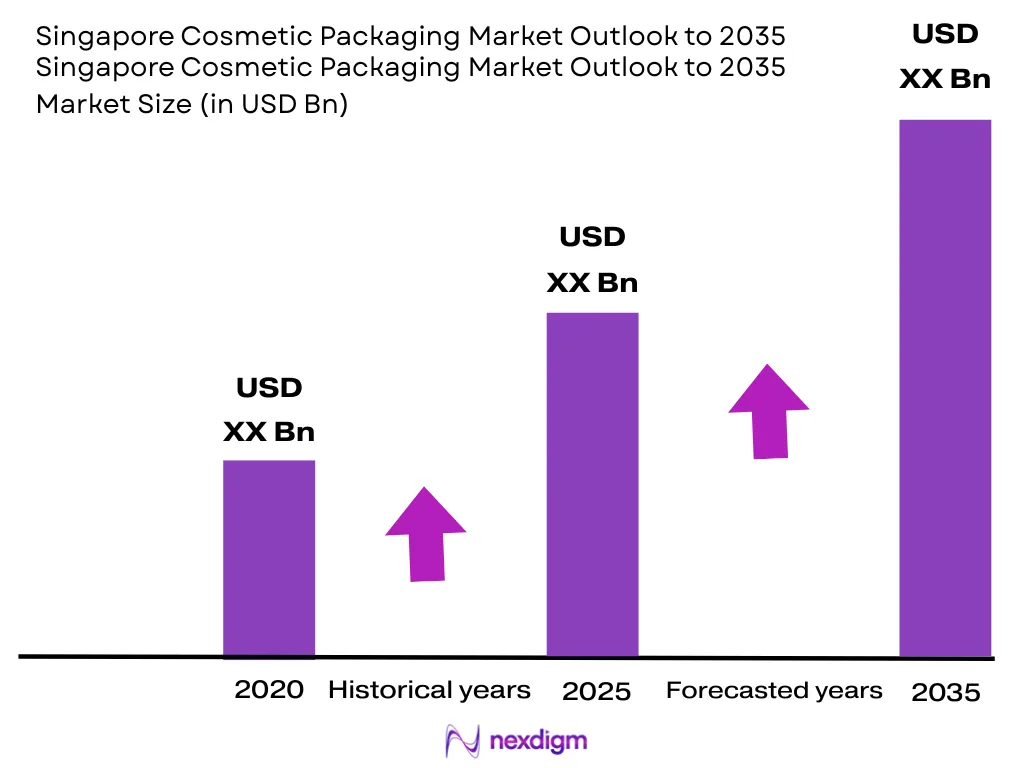
The Singapore Cosmetic Packaging Market was valued at USD ~ Billion in 2024 and is anticipated to expand at a CAGR of ~% during 2026–2035. The market is primarily driven by Singapore’s position as a regional OEM/ODM contract manufacturing and regulatory notification hub for the ASEAN beauty industry, rising demand for halal and vegan-certified packaging, and continued growth of Singapore-headquartered beauty conglomerates such as Best World International. Because Singapore has implemented the ASEAN Cosmetic Directive (ACD) since January 1, 2008, cosmetic products notified with the Health Sciences Authority’s (HSA) Cosmetics Control Unit can, in principle, be marketed across all eleven ASEAN member states, positioning Singapore-based brand owners and contract manufacturers as a natural gateway for regional market entry. This regulatory harmonization, combined with Singapore’s advanced logistics infrastructure and reputation for manufacturing quality, continues to attract both global luxury packaging suppliers and a dense cluster of domestic OEM/ODM contract manufacturers serving skincare, makeup, and personal care brands across the region.
Market Segmentation
By Packaging Tier
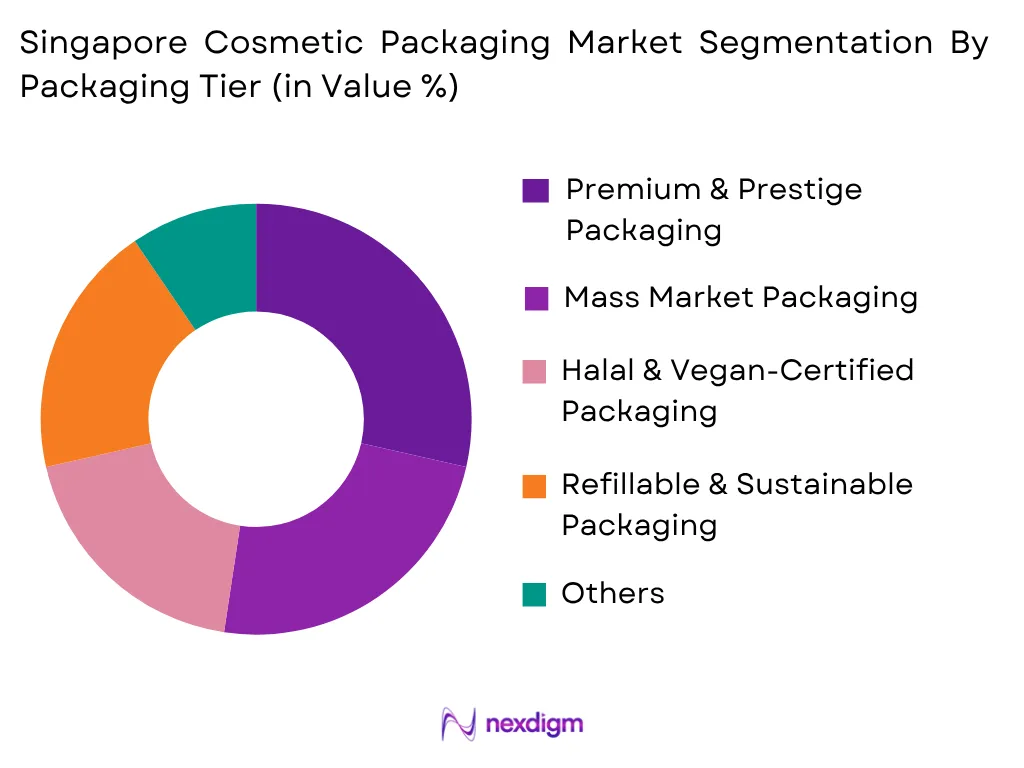
Premium & Prestige Packaging holds a significant share of the Singapore Cosmetic Packaging Market, reflecting Singapore’s role as a regional hub for premium and luxury beauty retail as well as the country’s base of contract manufacturers, including Chaks Cosmetic Design & Services, a GMP and ISO 22716-certified producer serving millions of beauty and personal care products annually. Halal & Vegan-Certified Packaging represents a distinctive and fast-growing category shaped by Singapore’s multicultural population and its role as a gateway to neighboring Muslim-majority markets including Malaysia and Indonesia; Singapore-based Believe Pte Ltd, founded in 2014, has built its brand specifically around 100% vegan, cruelty-free, and halal-certified beauty products spanning face serums, skincare, and makeup. Refillable & Sustainable Packaging remains a smaller but growing category, supported by contract manufacturers such as Makliea, which has built a reputation for helping brands develop skincare and personal care lines with eco-friendly packaging and low minimum order quantities suited to newer, sustainability-focused indie brands.
By Product Category
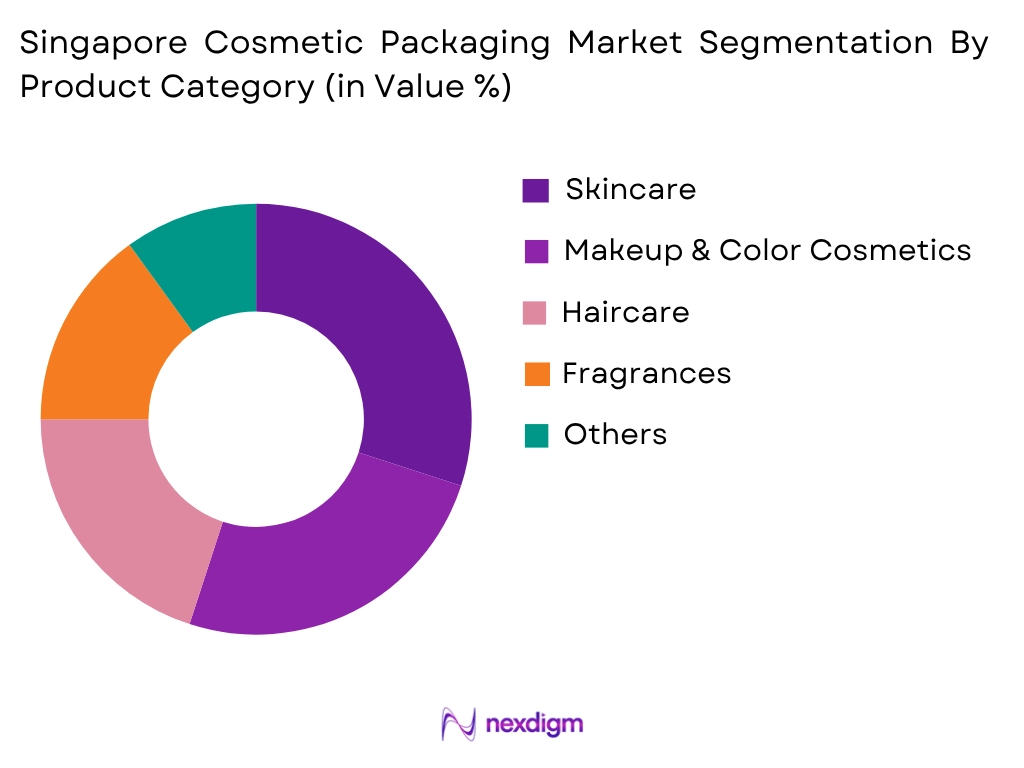
Skincare represents the largest product category within the Singapore Cosmetic Packaging Market, supported by a dense cluster of OEM/ODM contract manufacturers, including APD Pharmaceutical Manufacturing, BioAtoms, and Biocomm, that offer end-to-end skincare formulation, packaging design, and production services to both domestic and regional brand owners. Makeup & Color Cosmetics and Haircare also contribute meaningful demand, with Best World International, founded in 1990 and headquartered at Tuas Basin Link in Singapore, illustrating the scale that Singapore-based beauty manufacturers can achieve; the company has grown into a publicly listed regional conglomerate spanning premium beauty, personal care, health, and wellness brands including Miraglo, DR’s Secret, PENTA LAB, and Margaret Dabbs. Fragrances and Personal Care & Toiletries round out the market, benefiting from Singapore’s broader strength as a regional distribution and re-export hub for premium consumer goods.
Competitive Landscape
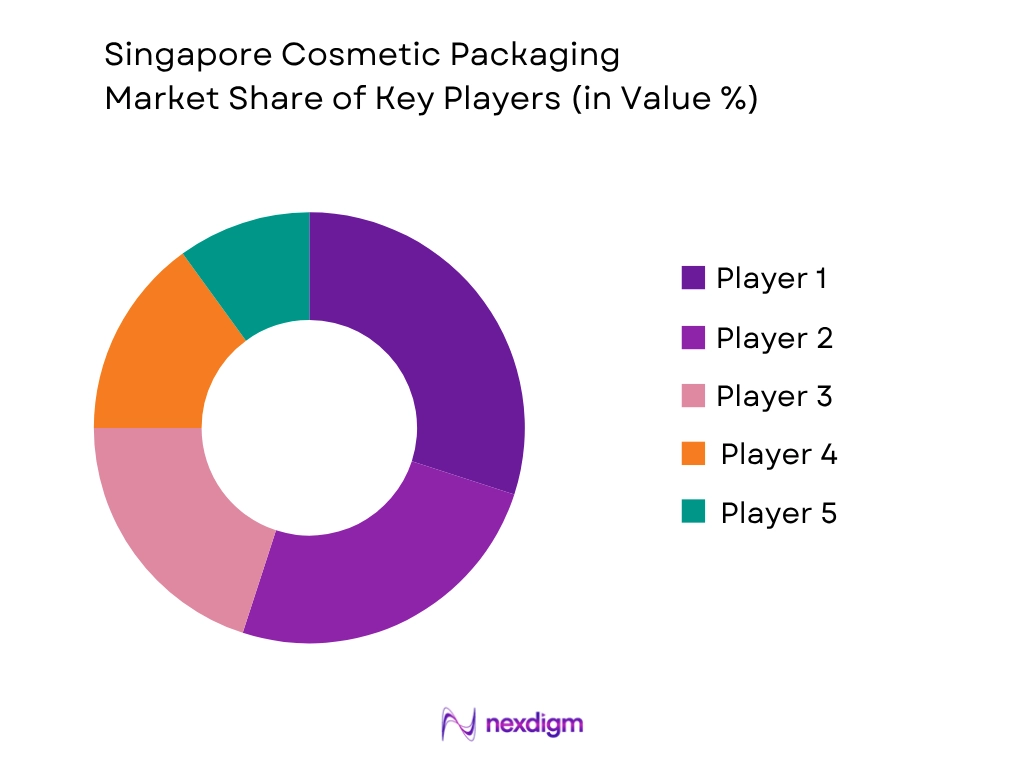
The Singapore Cosmetic Packaging Market is shaped by a dense cluster of domestic OEM/ODM contract manufacturers, a small number of large publicly listed regional beauty conglomerates, and global luxury packaging and dispensing technology majors serving the market through regional distribution relationships. Best World International, founded in 1990, stands out as Singapore’s most prominent homegrown beauty manufacturing and brand conglomerate, having scaled from domestic manufacturing into a diversified regional business spanning multiple premium beauty and wellness brands. Chaks Cosmetic Design & Services, also founded in 1990 and holding GMP and ISO 22716 certification, and APD Pharmaceutical Manufacturing represent Singapore’s base of established contract manufacturers serving both domestic and international private label brands, while newer entrants such as Believe Pte Ltd, founded in 2014, and Makliea have built differentiated positioning around halal, vegan, and eco-friendly packaging respectively. Global luxury packaging specialists including HCP Packaging and Quadpack, alongside dispensing technology leader AptarGroup, maintain regional sales and distribution relationships to serve prestige beauty brands operating through Singapore, competing on premium finish quality, technical dispensing performance, and the ability to support brands seeking to leverage Singapore’s ACD notification pathway for pan-ASEAN market access.
| Company | Establishment Year | Headquarters | Primary Product Portfolio | Cosmetic Packaging Portfolio
|
Manufacturing Presence | Major End-Use Industries | Key Strategic Focus | Certifications & Compliance |
| Best World International | 1990 | ~ | ~ | ~ | ~ | ~ | ~ | ~ |
| Chaks Cosmetic Design & Services | 1990 | ~ | ~ | ~ | ~ | ~ | ~ | ~ |
| APD Pharmaceutical Manufacturing | 2002 | ~ | ~ | ~ | ~ | ~ | ~ | ~ |
| Believe Pte Ltd | 2014 | ~ | ~ | ~ | ~ | ~ | ~ | ~ |
| AptarGroup | 1992 | ~ | ~ | ~ | ~ | ~ | ~ | ~ |
Singapore Cosmetic Packaging Market Analysis
Growth Drivers
Singapore’s Position as an ASEAN OEM/ODM and Regulatory Notification Hub
Singapore’s implementation of the ASEAN Cosmetic Directive since January 1, 2008 allows cosmetic products notified with the Health Sciences Authority to be marketed across all eleven ASEAN member states, positioning the country as a natural regulatory and manufacturing gateway for brands seeking pan-regional market access. This regulatory harmonization, combined with Singapore’s logistics infrastructure and manufacturing quality reputation, has attracted a dense cluster of OEM/ODM contract manufacturers, including Chaks Cosmetic Design & Services and APD Pharmaceutical Manufacturing, that offer end-to-end formulation, packaging design, and production services to brand owners across Southeast Asia. Best World International, which has grown from a domestic Singapore manufacturer founded in 1990 into a publicly listed regional conglomerate spanning multiple premium beauty and wellness brands, illustrates the commercial scale achievable through Singapore’s combination of manufacturing capability and regional market access, continuing to drive sustained demand for high-quality cosmetic packaging across the country’s contract manufacturing base.
Rising Demand for Halal and Vegan-Certified Packaging
Singapore’s multicultural population and its role as a gateway to neighboring Muslim-majority markets, including Malaysia and Indonesia, continue to drive distinctive demand for halal and vegan-certified cosmetic packaging. Singapore-based Believe Pte Ltd, founded in 2014, has built its business specifically around 100% vegan, cruelty-free, and halal-certified beauty products spanning face serums, skincare, and makeup, illustrating how Singapore-based brands and contract manufacturers are positioning themselves to serve both domestic multicultural demand and broader regional export opportunities. As clean beauty and ethically certified packaging continue to gain traction among ASEAN consumers more broadly, Singapore-based manufacturers with established halal and vegan certification capability are well positioned to capture growing contract manufacturing and packaging volume from brands seeking a single regional partner capable of serving these differentiated requirements.
Market Challenges
Complex ASEAN-Wide Regulatory Notification Burden
Despite the harmonization benefits of the ASEAN Cosmetic Directive, cosmetic brands and packaging suppliers operating in Singapore must still navigate a detailed notification process administered by HSA’s Cosmetics Control Unit through the PRISM electronic system, requiring a locally registered Responsible Person, a CRIS company account, and annual re-notification to maintain market authorization. Non-compliance with labelling and advertising requirements carries meaningful penalties, including fines of up to SGD 50,000 and imprisonment of up to two years for labelling breaches, creating a compliance environment that demands dedicated regulatory affairs expertise. Layered on top of this cosmetic-specific framework, Singapore’s National Environment Agency also extends its Mandatory Packaging Reporting requirements to cosmetic packaging for companies above the applicable turnover threshold, adding a further sustainability reporting obligation that increases the overall compliance burden for brands and manufacturers operating in Singapore.
High Operating Costs and Competition from Lower-Cost Regional Hubs
Singapore’s high land, labor, and operating costs relative to neighboring manufacturing hubs such as Malaysia, Thailand, Vietnam, and China create ongoing competitive pressure on domestic cosmetic packaging and contract manufacturing capacity, particularly for price-sensitive mass-market packaging formats. This cost structure has encouraged Singapore-based manufacturers to concentrate on higher-value OEM/ODM services, premium and halal-certified packaging, and regulatory notification services rather than competing directly on bulk manufacturing cost, reinforcing Singapore’s specialization as a regional hub for quality, compliance, and market access rather than the lowest-cost production base within ASEAN.
Market Opportunities
Growth as a Regional OEM/ODM and Halal Beauty Manufacturing Hub
Singapore’s regulatory harmonization under the ASEAN Cosmetic Directive, combined with its established base of GMP and ISO 22716-certified contract manufacturers, creates a clear opportunity for the country to deepen its position as a regional OEM/ODM hub serving brands seeking single-point access to the broader ASEAN market. Singapore-based manufacturers with halal certification capability, exemplified by Believe Pte Ltd’s vegan and halal-certified product lines, are particularly well positioned to serve the growing demand for ethically and religiously certified beauty products across neighboring Muslim-majority markets, positioning Singapore as a natural regional hub for halal beauty manufacturing and packaging innovation serving both domestic and export-oriented brand owners.
Sustainable and Recyclable Packaging Innovation Under NEA’s Framework
Singapore’s National Environment Agency’s Mandatory Packaging Reporting framework and its evolving path toward a full Extended Producer Responsibility scheme are creating sustained commercial incentive for cosmetic brands and packaging suppliers to invest in mono-material recyclable and refillable packaging design. Contract manufacturers such as Makliea, which has already built a reputation for helping brands develop skincare and personal care lines with eco-friendly packaging and low minimum order quantities, illustrate the kind of sustainability-focused positioning that is likely to gain further traction as Singapore’s regulatory framework continues to tighten, creating opportunities for packaging technology providers that can offer cost-effective, compliance-ready sustainable packaging solutions to Singapore’s dense base of indie and DTC beauty brands.
Future Outlook
The Singapore Cosmetic Packaging Market is expected to witness sustained expansion over the forecast period, supported by continued growth of Singapore’s OEM/ODM contract manufacturing base, sustained demand for halal and vegan-certified packaging, and Singapore’s deepening role as a regulatory and logistics gateway for the broader ASEAN beauty industry. Growing investment in sustainable and mono-material recyclable packaging under NEA’s evolving regulatory framework, alongside continued growth of Singapore-headquartered regional beauty conglomerates such as Best World International, will further accelerate demand for compliant, high-quality cosmetic packaging solutions. The market is also likely to benefit from Singapore’s position as a regional innovation hub, as domestic manufacturers and global packaging majors operating in Singapore develop packaging solutions for deployment across the wider ASEAN region as regional harmonization under the ASEAN Cosmetic Directive continues to mature.
Major Players
- Best World International
- Chaks Cosmetic Design & Services
- APD Pharmaceutical Manufacturing
- Believe Pte Ltd
- AptarGroup
- Makliea
- BioAtoms
- Biocomm
- OCML
- Harmony Skin Lab
- HCP Packaging
- Quadpack
- Albea Group
- Berry Global
- Amcor plc
Key Target Audience
- Cosmetic Packaging Manufacturers and Converters
- OEM/ODM Contract Manufacturers
- Prestige, Indie, and DTC Beauty Brands
- Halal and Vegan-Certified Beauty Manufacturers
- Regional Export and Distribution Partners
- Investment and Venture Capitalist Firms
- Government and Regulatory Bodies (Health Sciences Authority – HSA, National Environment Agency – NEA)
- Raw Material Suppliers and Packaging Material Distributors
Research Methodology
Step 1: Identification of Key Variables
The research process begins with identifying the complete ecosystem of the Singapore Cosmetic Packaging Market, including raw material suppliers, packaging converters, OEM/ODM contract manufacturers, brand owners, retailers, and regulatory authorities. Extensive secondary research is conducted using company reports, government publications, trade associations, customs statistics, industry journals, and proprietary databases to determine the variables influencing market demand, pricing, production, consumption, and technological developments.
Step 2: Market Analysis and Construction
Historical market information is collected and analyzed to estimate market size, import volumes, product-wise demand, and pricing trends. A combination of top-down and bottom-up approaches is used to estimate market revenues and validate segment-level performance. Consumption patterns across skincare, haircare, makeup, fragrance, and personal care categories are evaluated to establish an accurate representation of the industry.
Step 3: Hypothesis Validation and Expert Consultation
The preliminary findings are validated through Computer-Assisted Telephone Interviews (CATIs) and structured discussions with packaging converters, procurement managers, regulatory affairs specialists, brand executives, and senior professionals operating within the Singapore beauty and packaging industry. These interviews help verify market assumptions, competitive developments, technology adoption trends, pricing dynamics, and future investment opportunities while refining the overall market estimates.
Step 4: Research Synthesis and Final Output
The final stage integrates insights obtained from primary interviews with quantitative information collected through secondary sources. Data triangulation techniques are applied to reconcile differences between supply-side and demand-side estimates, ensuring robust market forecasting. The report is then reviewed through multiple quality assurance checkpoints to deliver a comprehensive analysis covering market size, segmentation, competitive landscape, future outlook, and strategic recommendations for industry stakeholders.

- Executive Summary
- Research Methodology (Market Definitions and Assumptions, Abbreviations, Market Sizing Approach, Top-Down Analysis, Bottom-Up Analysis, Demand-Side Assessment, Supply-Side Assessment, Primary Industry Interviews, Secondary Research Validation, Data Triangulation, Forecasting Framework, Limitations and Future Conclusions)

- Definition and Scope
- Market Evolution and Industry Genesis
- Timeline of Major Industry Developments
- Cosmetic Packaging Industry Value Chain Analysis
- Supply Chain Analysis

- Growth Drivers (Singapore’s Position as an ASEAN OEM/ODM and Regulatory Notification Hub, Rising Demand for Halal and Vegan-Certified Packaging, Growth of Regional Beauty Conglomerates, Premiumization of Skincare Packaging, Expansion of E-Commerce and DTC Beauty Brands, Government Sustainability and Packaging Reporting Requirements)
- Market Challenges (Complex ASEAN-Wide Regulatory Notification Burden, High Operating and Land Costs Limiting Manufacturing Scale, Competition from Lower-Cost Regional Manufacturing Hubs, Import Dependency for Packaging Materials and Components, Greenwashing Enforcement Risk, Raw Material and Logistics Cost Volatility)
- Market Opportunities (Growth as a Regional OEM/ODM and Halal Beauty Manufacturing Hub, Sustainable and Recyclable Packaging Innovation Under NEA’s Framework, Expansion of Clean Beauty and Vegan-Certified Packaging, Smart and Digitally Verifiable Packaging, Public-Private Sustainability Partnerships, ASEAN-Wide Export Growth Leveraging Regulatory Harmonization)
- Market Trends (Rise of Halal and Vegan-Certified Packaging Formats, Growth of Refillable and Mono-Material Packaging, Premiumization and Minimalist Design, Digital Notification and Compliance Automation, Growing Use of QR Code Consumer Transparency Features, Regional OEM/ODM Consolidation)
- Government Regulations (HSA Cosmetics Control Unit Notification Requirements, ASEAN Cosmetic Directive (ACD) Compliance, PRISM Electronic Notification System, NEA Mandatory Packaging Reporting (MPR), GMP and ISO 22716 Certification Standards, Halal Certification Requirements)
- Import and Export Analysis (Trade Volume, Major Import Sources, Re-Export Trade Flows, HS Code Analysis, Trade Balance)
- Raw Material Availability Analysis (Imported Plastic Resin Feedstocks, Imported Glass and Premium Component Feedstocks, Imported Aluminum and Metal Feedstocks, Regional ASEAN Supply Chain Access, Sustainable and Recycled Material Feedstocks)
- Technology Landscape (Injection Molding and Blow Molding Technology, Airless and Refillable Dispensing Systems, Premium Finishing and Decoration Technology, Digital Notification and Compliance Automation, Sustainable Material Innovation)
- Sustainability Assessment (Recyclable and Mono-Material Packaging Adoption, Carbon Footprint Reduction in Import Logistics, Sustainable Material Sourcing Initiatives, Waste Reduction in Premium Packaging, Circular Economy Alignment)
- PESTLE Analysis
- SWOT Analysis
- Porter’s Five Forces Analysis
- Stakeholder Ecosystem
- Competition Ecosystem

- By Market Value (2020-2025)
- By Volume Consumption (2020-2025)
- By Average Selling Price (2020-2025)

- By Material (In Value %)
Plastic (PP, PE, PET)
Glass
Aluminum & Metal
Paperboard & Paper
Bioplastics & Sustainable Alternatives - By Packaging Type (In Value %)
Bottles & Jars
Tubes
Compacts & Palettes
Sachets & Pouches
Caps, Closures & Dispensers - By Product Category (In Value %)
Skincare
Haircare
Makeup & Color Cosmetics
Fragrances
Personal Care & Toiletries - By Packaging Tier (In Value %)
Premium & Prestige Packaging
Mass Market Packaging
Halal & Vegan-Certified Packaging
Refillable & Sustainable Packaging - By Region (In Value %)
Central Region
East Region
West Region
North Region
North-East Region

- Market Share of Major Players (By Value, Volume, Material Type, Product Category, End User)
- Cross Comparison Parameters (Premium/Prestige Portfolio Breadth, Halal/Vegan Certification Capability, Sustainable Packaging Portfolio, OEM/ODM Service Capability, Manufacturing Capacity, Regulatory Compliance & Certifications, Customer Base, Innovation & New Product Launch Frequency)
- SWOT Analysis of Major Players
- Pricing Analysis by Product Category and SKU
- Production Capacity Analysis
- Manufacturing Footprint Analysis
- Distribution Network Analysis
- Innovation Benchmarking
- Detailed Profiles of Major Companies
Best World International
Chaks Cosmetic Design & Services
APD Pharmaceutical Manufacturing
Believe Pte Ltd
AptarGroup
Makliea
BioAtoms
Biocomm
OCML
Harmony Skin Lab
HCP Packaging
Quadpack
Albea Group
Berry Global
Amcor plc

- Consumption Pattern Analysis (Industrial Usage, Batch Size, Product Category Penetration, Seasonal Demand, Reformulation Activity)
- Purchasing Criteria (Regulatory Compliance, Aesthetic and Premium Appeal, Cost Efficiency, Halal/Vegan Certification, Recyclability, Refillability)
- Procurement and Supplier Selection Analysis
- Sustainable and Halal-Certified Packaging Adoption Assessment
- Premium vs Mass-Market Packaging Demand
- Product Attribute Preference Analysis (Aesthetic Finish, Dispensing Performance, Material Quality, Recyclability, Certification Compatibility, Brand Differentiation)
- Sustainability & ESG Influence on Procurement Decisions
- Pain Point Analysis
- Decision-Making Process

- By Market Value (2026-2035)
- By Volume Consumption (2026-2035)
- By Average Selling Price (2026-2035)


 Request a Sample
 Ask for Customization
 Get a Quote
 Enquire Now