
 Download PDF
Market Overview
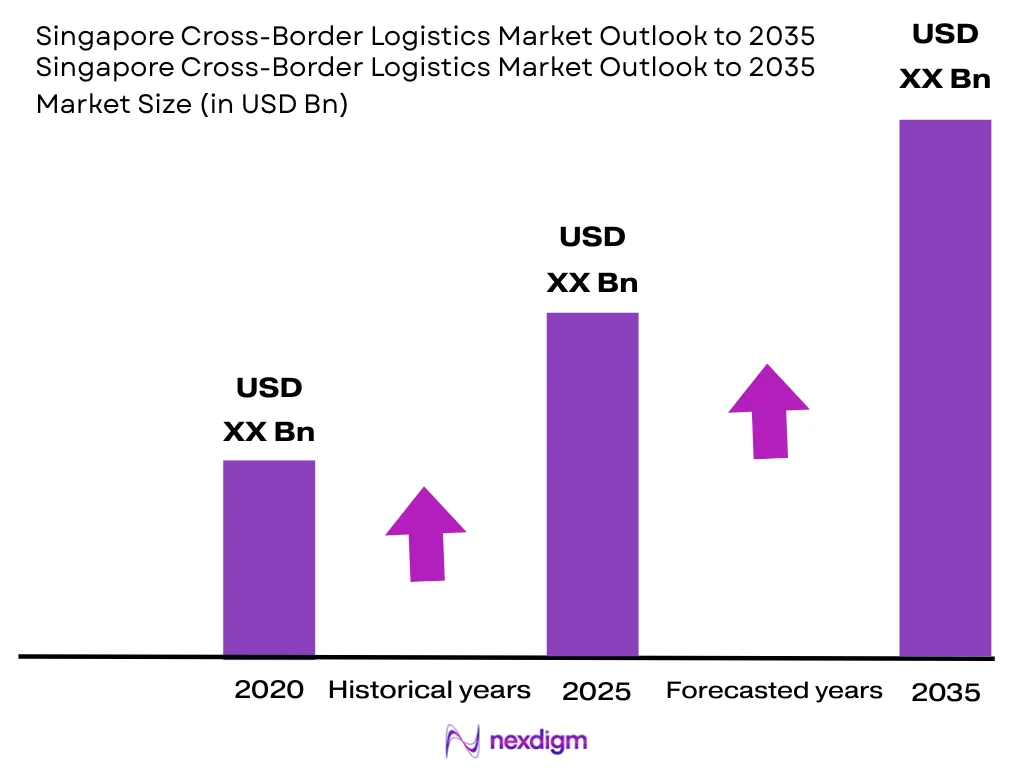
The Singapore Cross-Border Logistics Market was valued at USD ~ Billion in 2024 and is anticipated to expand at a CAGR of ~% during 2026–2035. The market is primarily driven by Singapore’s position as the world’s largest container transhipment hub, sustained infrastructure investment through the Tuas Mega Port development, and rapid growth in e-commerce parcel flows and high-value semiconductor, pharmaceutical, and biologics cargo. PSA Singapore handled 44.5 million TEUs of containers in 2025, operating around the clock with connections to more than 600 ports worldwide and a liner shipping connectivity index of 117.8 reflecting direct calls from more than 200 carriers. Singapore recorded approximately USD 1 trillion in merchandise trade and USD 800 billion in services trade in 2024, while the country’s maritime sector alone contributes more than 6% of GDP and supports approximately 140,000 jobs across more than 5,000 maritime entities operating in the city-state.
Market Segmentation
By Mode of Transport
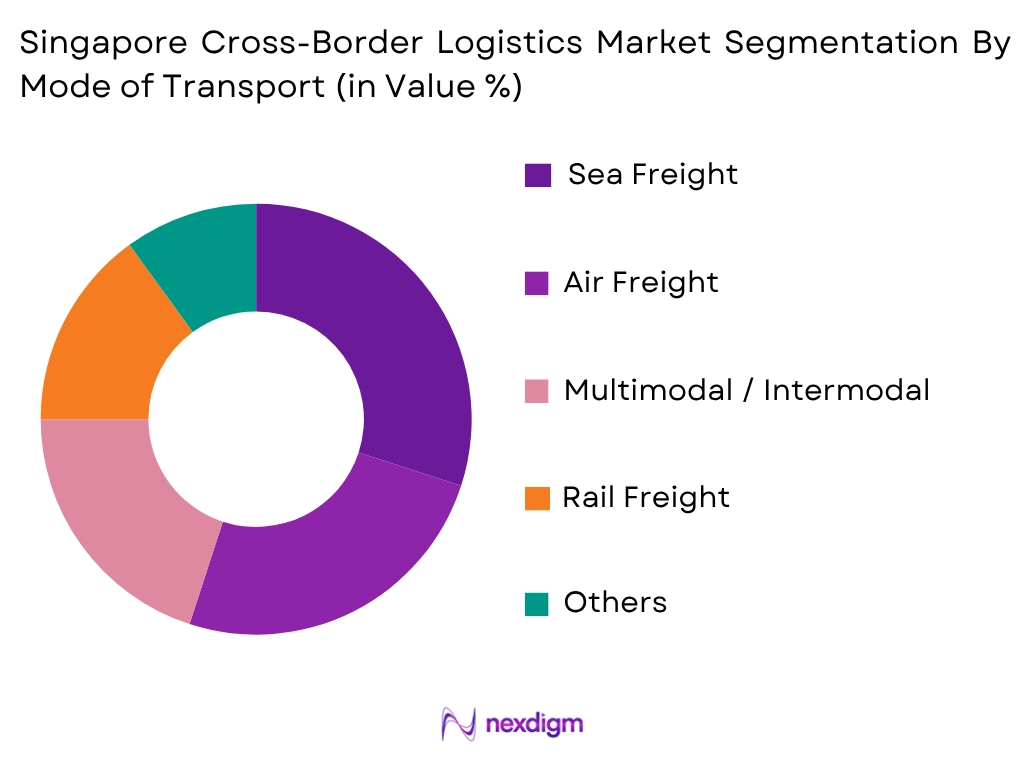
Sea Freight (Transhipment) represents the overwhelming majority of the Singapore Cross-Border Logistics Market, with the country’s port handling a record of more than 40 million TEUs in 2024, driving 15% of global container transhipment volume. The Tuas Mega Port, under construction by PSA International and scheduled for full completion in the 2040s, is set to become the world’s largest fully automated container terminal with a capacity of 65 million TEUs annually; as of early 2025, Tuas Port had already handled 10 million containers since its September 2022 opening, operating 11 berths supported by more than 200 automated guided vehicles running 24/7. Air Freight represents a critical complementary mode, with Singapore now Southeast Asia’s largest air cargo hub, supported by almost 7,000 weekly flights operated by nearly 100 carriers; the new Airport Logistics Park of Singapore is set to increase annual air cargo capacity from 3 million tonnes to more than 5 million tonnes, directly supporting growing e-commerce and specialized cargo demand across pharmaceuticals, biologics, semiconductors, and medical devices.
By End-User Industry
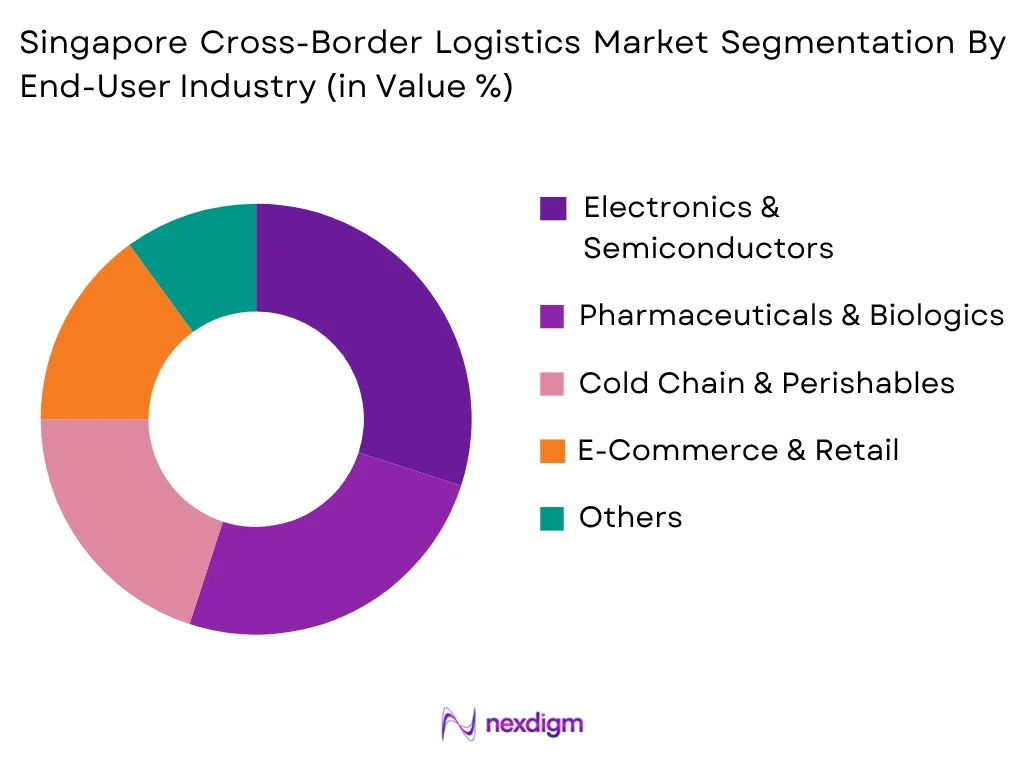
Electronics & Semiconductors and Pharmaceuticals & Biologics represent increasingly significant end-user industries within the Singapore Cross-Border Logistics Market, reflecting the country’s status as an attractive regional base for U.S. and global companies expanding across advanced manufacturing, semiconductors, and cold chain sectors. YCH Group and ST Logistics operate control towers that blend shipment data across modes, cutting lead time by as much as 20% for electronics exporters, illustrating the technical sophistication increasingly demanded by Singapore’s high-value cargo customers. Cold Chain & Perishables is a fast-growing category supported by the forthcoming PSA Supply Chain Hub @ Tuas, expected to be completed by 2027 and designed to handle high-value and temperature-sensitive cargo including cold storage and dangerous goods within an integrated facility. E-Commerce & Retail continues to grow steadily as accelerated digitalization and third-party logistics outsourcing among small and medium enterprises drives surging parcel flows through Singapore’s air and sea gateways.
Competitive Landscape
The Singapore Cross-Border Logistics Market is anchored by PSA International, which operates the world’s largest container transhipment hub 24 hours a day, seven days a week, and continues to develop the Tuas Mega Port as the future nucleus of a wider Tuas Ecosystem designed to orchestrate innovative supply chain solutions. PSA has recently expanded its collaboration with COSCO Shipping through a September 2025 memorandum of understanding exploring dedicated warehouse and logistics capabilities within the PSA Supply Chain Hub @ Tuas, while global players including DHL Supply Chain and DP World have launched new Singapore facilities, reflecting continued occupier commitment to the country’s logistics infrastructure according to CBRE research. YCH Group and ST Logistics represent established Singapore-based control tower and integrated logistics specialists serving the country’s electronics export base, while GovTech Singapore’s TradeTrust blockchain framework continues to underpin digital trade documentation across both government agencies and private logistics providers. Competitive dynamics are increasingly shaped by automation capability, digital control tower sophistication, and the ability to handle high-value cold chain, dangerous goods, and semiconductor cargo within Singapore’s expanding Tuas ecosystem.
| Company | Established | Headquarters | Primary Service | Cross-Border Network | Customs Brokerage | Digital Visibility Platform | Sustainability capability | Certifications & Complainces |
| PSA International | 1964 | ~ | ~ | ~ | ~ | ~ | ~ | ~ |
| YCH Group | 1955 | ~ | ~ | ~ | ~ | ~ | ~ | ~ |
| ST Logistics (ST Engineering) | 1997 | ~ | ~ | ~ | ~ | ~ | ~ | ~ |
| GovTech Singapore (TradeTrust) | 2016 | ~ | ~ | ~ | ~ | ~ | ~ | ~ |
| DHL Supply Chain | 1969 | ~ | ~ | ~ | ~ | ~ | ~ | ~ |
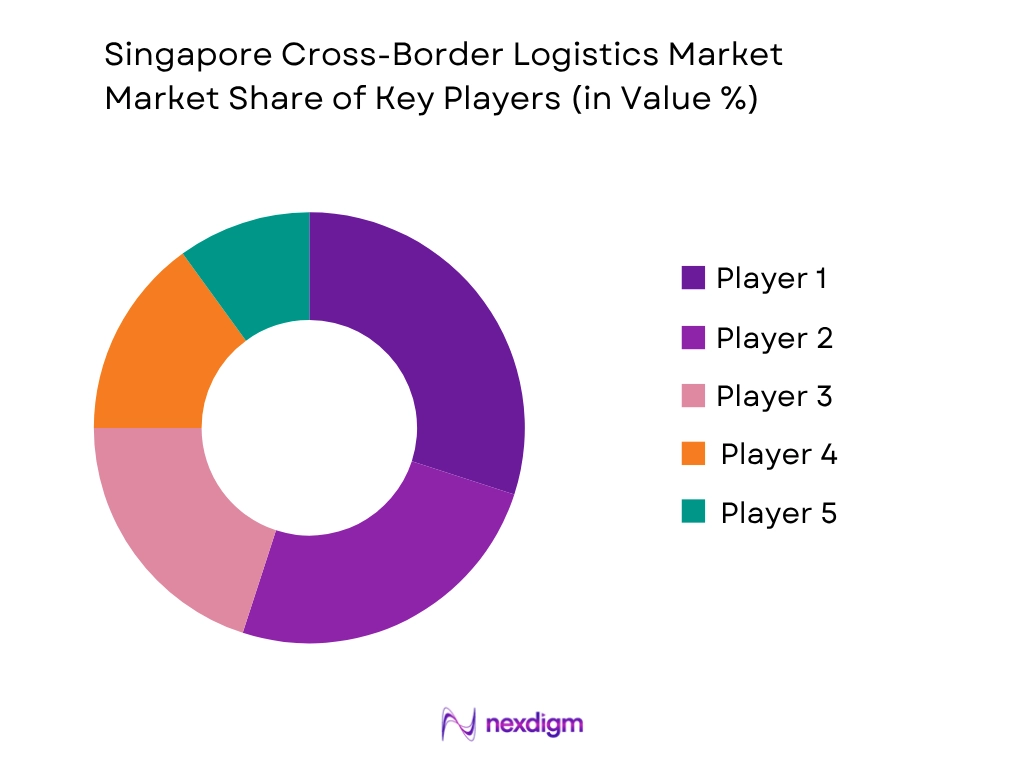
Singapore Cross-Border Logistics Market Analysis
Growth Drivers
PSA’s World-Leading Transhipment Hub and Tuas Mega Port Expansion
Singapore’s cross-border logistics market continues to be anchored by PSA International’s position as operator of the world’s largest container transhipment hub, handling 44.5 million TEUs in 2025 with connections to more than 600 ports worldwide. The Tuas Mega Port, set to become the world’s largest fully automated container terminal with a capacity of 65 million TEUs annually upon completion in the 2040s, had already handled 10 million containers since its September 2022 opening as of early 2025, with 11 berths in operation supported by more than 200 automated guided vehicles running 24 hours a day. Red Sea shipping disruptions have further diverted long-haul vessel strings via the Cape of Good Hope, adding Singapore stops and showcasing the port’s agility in absorbing rerouted global trade volumes even as the broader shift toward Tuas continues to unlock automated capacity that lowers unit costs and enhances schedule reliability.
Southeast Asia’s Largest Air Cargo Hub Expansion
Singapore has established itself as Southeast Asia’s largest air cargo hub, supported by almost 7,000 weekly flights operated by nearly 100 carriers connecting the country to global markets. The new Airport Logistics Park of Singapore is set to increase annual air cargo capacity from 3 million tonnes to more than 5 million tonnes, directly supporting growing demand in e-commerce and specialized cargo sectors including pharmaceuticals, biologics, semiconductors, and medical devices. This expansion, combined with the accelerated digitalization and third-party logistics outsourcing increasingly adopted by small and medium enterprises, supported in part by Enterprise Singapore’s Productivity Solutions Grant, which co-funds up to 50% of logistics technology adoption costs, continues to strengthen Singapore’s position as a comprehensive air and sea cross-border logistics gateway.
Market Challenges
Port Congestion and Capacity Strain Amid Global Shipping Disruptions
Singapore’s port infrastructure has faced significant congestion pressure amid broader global shipping disruptions, with 96% of major container ports worldwide reporting operational disruptions as of June 2025 and delays surging up to 300% above normal levels in some cases. Red Sea diversions routing additional vessel traffic through Singapore have compounded capacity strain at a time when port operations were already running at maximum levels, where single disruptions can trigger new waves of delay across the wider network. PSA responded by reactivating older berths at Keppel and Tanjong Pagar, adding new berths at Tuas, and hiring nearly 1,500 new frontline workers, successfully reducing average wait times to less than one day by mid-2025, though the episode underscored the ongoing challenge of maintaining schedule reliability amid volatile global shipping conditions.
Rising Labor Costs and Land Scarcity Driving Automation Imperative
Singapore’s rising labor costs and inherent land scarcity continue to encourage automation, multi-story warehousing, and off-site consolidation across the country’s logistics sector, trends that are reshaping how cross-border logistics providers structure their Singapore operations. This structural pressure requires sustained capital investment in automated port and warehouse technology to maintain cost competitiveness relative to lower-cost regional logistics hubs, creating a persistent challenge for smaller providers without the scale to justify significant automation capital expenditure, while reinforcing the competitive advantages held by large, well-capitalized operators such as PSA and global integrators investing directly in Singapore’s automated Tuas ecosystem.
Market Opportunities
PSA Supply Chain Hub @ Tuas and High-Value Cargo Integration
The PSA Supply Chain Hub @ Tuas, co-located within the same Free Trade Zone as Tuas Port and expected to commence operations in 2027, integrates container freight stations, a regional distribution centre, cold store, dangerous goods handling, and other value-added capabilities under one roof. PSA’s September 2025 memorandum of understanding with COSCO Shipping to explore dedicated warehouse and logistics capabilities within this hub illustrates the kind of strategic partnership likely to proliferate as the facility is expected to serve growing flows of high-value cargo across Southeast Asia, China, and the broader Asia-Pacific region, creating substantial opportunity for logistics providers capable of integrating cold chain, dangerous goods, and regional distribution capability within Singapore’s expanding Tuas ecosystem.
Green Freight and Digital Control Tower Adoption
The Maritime Singapore Green Initiative’s SGD 200 million (approximately USD 147.22 million) in grants continues to incentivize low-carbon propulsion adoption, while PSA is layering cold-chain, hazardous-cargo, and digital bunkering services onto Tuas operations, opening margin-rich adjacencies for logistics providers. YCH Group and ST Logistics’ digital control towers, which blend shipment data across transport modes to cut lead time by as much as 20% for electronics exporters, illustrate the kind of technology investment increasingly valuable across Singapore’s cross-border logistics market, particularly as Enterprise Singapore’s Productivity Solutions Grant continues to lower the barrier for small and medium enterprises to adopt cloud-based warehouse and transport management systems without significant upfront capital investment.
Future Outlook
The Singapore Cross-Border Logistics Market is expected to witness sustained expansion over the forecast period, supported by continued Tuas Mega Port development toward its eventual 65 million TEU annual capacity, expansion of Singapore’s air cargo infrastructure through the Airport Logistics Park, and growing integration of cold chain, dangerous goods, and high-value cargo handling within the PSA Supply Chain Hub @ Tuas. Growing adoption of automation, digital control towers, and blockchain-based trade documentation through frameworks such as TradeTrust will further accelerate market growth, while continued green freight investment under the Maritime Singapore Green Initiative shapes the sector’s transition toward low-carbon operations. The market is also likely to benefit from Singapore’s enduring position as the world’s largest container transhipment hub and Southeast Asia’s largest air cargo gateway, as global shipping lines, freight forwarders, and regional distribution operators continue to invest in the infrastructure and technology required to serve the country’s evolving cross-border trade requirements through 2035.
Major Players
- PSA International
- YCH Group
- ST Logistics (ST Engineering)
- GovTech Singapore (TradeTrust)
- DHL Supply Chain
- DP World
- COSCO Shipping (Singapore)
- DSV Singapore
- Kuehne+Nagel
- CEVA Logistics
- Kerry Logistics Network
- GAC Group
- Agility Logistics
- Singapore Airlines Cargo
- Changi Airport Group
Key Target Audience
- Cross-Border Logistics Providers and Freight Forwarders
- Port and Terminal Infrastructure Operators
- E-Commerce Marketplaces and Third-Party Logistics Providers
- Semiconductor, Electronics and Pharmaceutical Manufacturers
- Global Shipping Lines and Carriers
- Investment and Venture Capitalist Firms
- Government and Regulatory Bodies (Maritime and Port Authority of Singapore – MPA, Singapore Customs, GovTech Singapore, Enterprise Singapore)
- Regional Distribution Center Operators
Research Methodology
Step 1: Identification of Key Variables
The research process begins with identifying the complete ecosystem of the Singapore Cross-Border Logistics Market, including port and terminal operators, freight forwarders, customs brokers, warehousing and distribution providers, and regulatory authorities. Extensive secondary research is conducted using company reports, government publications, trade associations, customs statistics, industry journals, and proprietary databases to determine the variables influencing market demand, pricing, cargo volumes, and technological developments.
Step 2: Market Analysis and Construction
Historical market information is collected and analyzed to estimate market size, container and cargo throughput, service-wise demand, and pricing trends. A combination of top-down and bottom-up approaches is used to estimate market revenues and validate segment-level performance. Consumption patterns across e-commerce, electronics, pharmaceuticals, oil & gas, and cold chain applications are evaluated to establish an accurate representation of the industry.
Step 3: Hypothesis Validation and Expert Consultation
The preliminary findings are validated through Computer-Assisted Telephone Interviews (CATIs) and structured discussions with port operators, freight forwarding executives, customs brokerage specialists, regulatory experts, and senior professionals operating within the Singapore cross-border logistics industry. These interviews help verify market assumptions, competitive developments, technology adoption trends, pricing dynamics, and future investment opportunities while refining the overall market estimates.
Step 4: Research Synthesis and Final Output
The final stage integrates insights obtained from primary interviews with quantitative information collected through secondary sources. Data triangulation techniques are applied to reconcile differences between supply-side and demand-side estimates, ensuring robust market forecasting. The report is then reviewed through multiple quality assurance checkpoints to deliver a comprehensive analysis covering market size, segmentation, competitive landscape, future outlook, and strategic recommendations for industry stakeholders.

- Executive Summary
- Research Methodology (Market Definitions and Assumptions, Abbreviations, Market Sizing Approach, Top-Down Analysis, Bottom-Up Analysis, Demand-Side Assessment, Supply-Side Assessment, Primary Industry Interviews, Trade Flow Assessment, Freight Intelligence Analysis, Data Triangulation, Forecasting Framework, Limitations and Future Conclusions)

- Definition and Scope
- Market Evolution and Industry Genesis
- Timeline of Major Industry Developments
- Cross-Border Logistics Industry Value Chain Analysis
- Supply Chain Analysis

- Growth Drivers (PSA’s World-Leading Transhipment Hub and Tuas Mega Port Expansion, Southeast Asia’s Largest Air Cargo Hub Expansion, Surging E-Commerce Parcel Flows, Red Sea Disruption-Driven Route Diversification, Rapid Digital Adoption Among Shippers, Growth of High-Value Semiconductor and Pharmaceutical Cargo)
- Market Challenges (Port Congestion and Capacity Strain Amid Global Shipping Disruptions, Rising Labor Costs and Land Scarcity Driving Automation Imperative, High Operating Costs Relative to Regional Hubs, Vessel Diversion and Route Volatility, Cybersecurity Risk in Digital Trade Documentation, Skilled Workforce Shortages in Port Automation)
- Market Opportunities (PSA Supply Chain Hub @ Tuas and High-Value Cargo Integration, Green Freight and Digital Control Tower Adoption, Airport Logistics Park Capacity Expansion, Regional Distribution Hub Development for Southeast Asia, Blockchain-Based Trade Documentation Scaling, SME Digitalization Under Enterprise Singapore Grants)
- Market Trends (Growth of Automated and AI-Enabled Port Operations, Rise of Digital Control Towers Blending Multimodal Shipment Data, Expansion of Cold Chain and Dangerous Goods Handling Capacity, Blockchain Bills of Lading Adoption, Green Freight and Low-Carbon Propulsion Investment, Consolidation of Regional Distribution Facilities at Tuas)
- Government Regulations (Singapore Customs TradeNet Requirements, GovTech TradeTrust Digital Trade Document Standards, Networked Trade Platform (NTP) Compliance, Maritime and Port Authority of Singapore (MPA) Regulations, Maritime Singapore Green Initiative, Enterprise Singapore Productivity Solutions Grant)
- Import and Export Analysis (Trade Volume, Major Trading Partners, Transhipment Trade Flows, HS Code Analysis, Trade Balance)
- Raw Material Availability Analysis (Port and Terminal Capacity, Air Cargo Handling Capacity, Automated Guided Vehicle (AGV) Fleet Availability, Warehousing and Cold Chain Infrastructure, Digital Customs Infrastructure Access)
- Technology Landscape (Automated Guided Vehicles and Smart Crane Technology, Digitalport@SG and Just-in-Time (JIT) Vessel Systems, Blockchain-Based Trade Documentation, AI-Based Traffic Management and Control Towers, Digital Bunkering and Cold-Chain Monitoring Technology)
- Sustainability Assessment (Low-Carbon Propulsion and Green Shipping Adoption, Maritime Singapore Green Initiative Grant Utilization, Net-Zero Port Operations Roadmap, Greenhouse Gas Emissions Reduction Through Haulage Consolidation, Circular Economy Alignment in Reverse Logistics)
- PESTLE Analysis
- SWOT Analysis
- Porter’s Five Forces Analysis
- Stakeholder Ecosystem
- Competition Ecosystem

- By Market Value (2020-2025)
- By Cargo/Container Throughput (2020-2025)
- By Average Cost Per Shipment (2020-2025)

- By Service Type (In Value %)
Port & Terminal Operations
Freight Forwarding
Customs Brokerage
Warehousing & Distribution
Digital Trade Documentation - By Mode of Transport (In Value %)
Sea Freight (Transhipment)
Air Freight
Multimodal / Intermodal - By End-User Industry (In Value %)
E-Commerce & Retail
Electronics & Semiconductors
Pharmaceuticals & Biologics
Oil & Gas / Petrochemicals
Cold Chain & Perishables - By Trade Corridor (In Value %)
Singapore–China & East Asia
Singapore–ASEAN
Singapore–India & South Asia
Singapore–Europe
Singapore–Middle East & Africa - By Region (In Value %)
Central Region
East Region
West Region
North Region
North-East Region

- Market Share of Major Players (By Value, Container/Cargo Throughput, Service Type, End-User Industry, Trade Corridor)
- Cross Comparison Parameters (Port and Terminal Infrastructure Control, Digital Trade Documentation Capability, Control Tower and Multimodal Integration, Application Technical Support, Automation and AGV Fleet Capacity, Regulatory Compliance & Certifications, Customer Base, Innovation & New Service Launch Frequency)
- SWOT Analysis of Major Players
- Pricing Analysis by Service Type and Trade Corridor
- Capacity and Throughput Analysis
- Network and Hub Footprint Analysis
- Distribution Network Analysis
- Innovation Benchmarking
- Detailed Profiles of Major Companies
PSA International
YCH Group
ST Logistics (ST Engineering)
GovTech Singapore (TradeTrust)
DHL Supply Chain
DP World
COSCO Shipping (Singapore)
DSV Singapore
Kuehne+Nagel
CEVA Logistics
Kerry Logistics Network
GAC Group
Agility Logistics
Singapore Airlines Cargo
Changi Airport Group

- Consumption Pattern Analysis (Container Throughput Intensity, Cargo Type Distribution, End-User Industry Penetration, Seasonal and Peak-Period Demand, Transhipment vs Direct Trade Split)
- Purchasing Criteria (Cost Per Shipment, Schedule Reliability, Customs Clearance Speed, Digital Tracking Capability, Cold Chain and Dangerous Goods Handling, Network Connectivity)
- Procurement and Supplier Selection Analysis
- Digital Control Tower and Blockchain Documentation Adoption Assessment
- Transhipment vs Direct Import/Export Demand
- Product Attribute Preference Analysis (Schedule Reliability, Customs Clearance Speed, Tracking Accuracy, Network Coverage, Cost Efficiency, Cold Chain Integrity)
- Sustainability & ESG Influence on Procurement Decisions
- Pain Point Analysis
- Decision-Making Process

- By Market Value (2026-2035)
- By Cargo/Container Throughput (2026-2035)
- By Average Cost Per Shipment (2026-2035)


 Request a Sample
 Ask for Customization
 Get a Quote
 Enquire Now