
 Download PDF
Market Overview
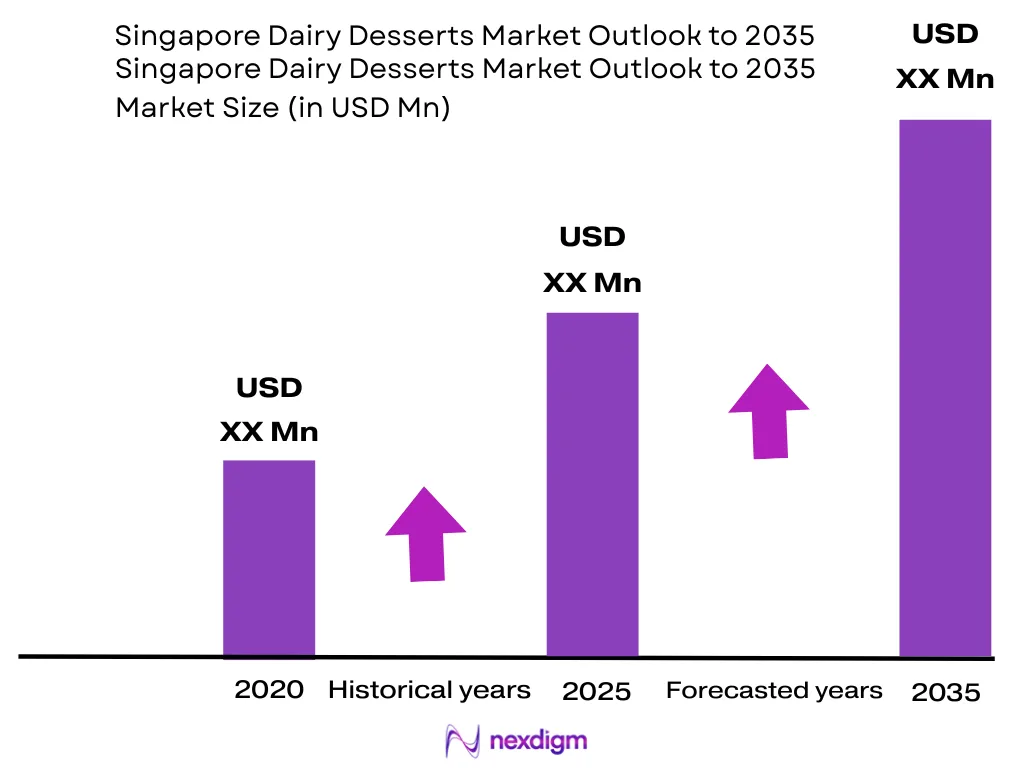
The Singapore Dairy Desserts Market is valued at approximately USD ~ Million, supported by strong demand for premium chilled snacks, high disposable incomes, and a mature organized retail sector. Singapore’s food and beverage retail sales exceeded SGD 12 billion in 2023, while household expenditure on food and non-alcoholic beverages remained above SGD 14 billion. The market benefits from rising consumption of yogurt-based desserts, puddings, and functional dairy products, supported by extensive cold-chain infrastructure and widespread availability through supermarkets, convenience stores, and online grocery platforms.
Market Segmentation
By Product Type
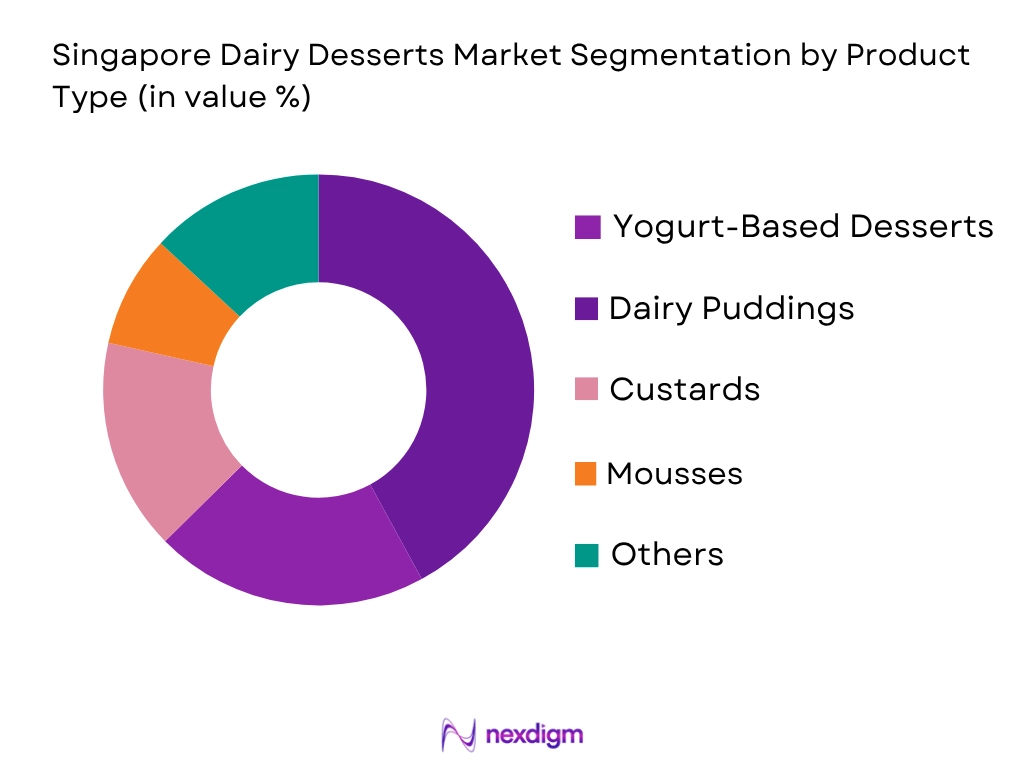
By Product Type, Singapore Dairy Desserts Market is segmented into yogurt-based desserts, dairy puddings, custards, mousses, flans, cheesecake desserts, and dairy gelatin desserts. Recently, yogurt-based desserts have maintained the dominant market share due to increasing consumer preference for healthier indulgence options. Singaporean consumers increasingly seek products that combine convenience, taste, and nutritional benefits. Yogurt desserts benefit from strong positioning as protein-rich and probiotic-enhanced products. Leading brands such as Meiji, Danone, Nestlé, and FAGE have strengthened category penetration through premium offerings and innovative flavors. The availability of single-serve packaging, low-sugar variants, and functional formulations further enhances demand. Additionally, the popularity of grab-and-go snacking and wellness-focused lifestyles among working professionals has contributed significantly to the segment’s leadership within the dairy desserts category.
By Distribution Channel
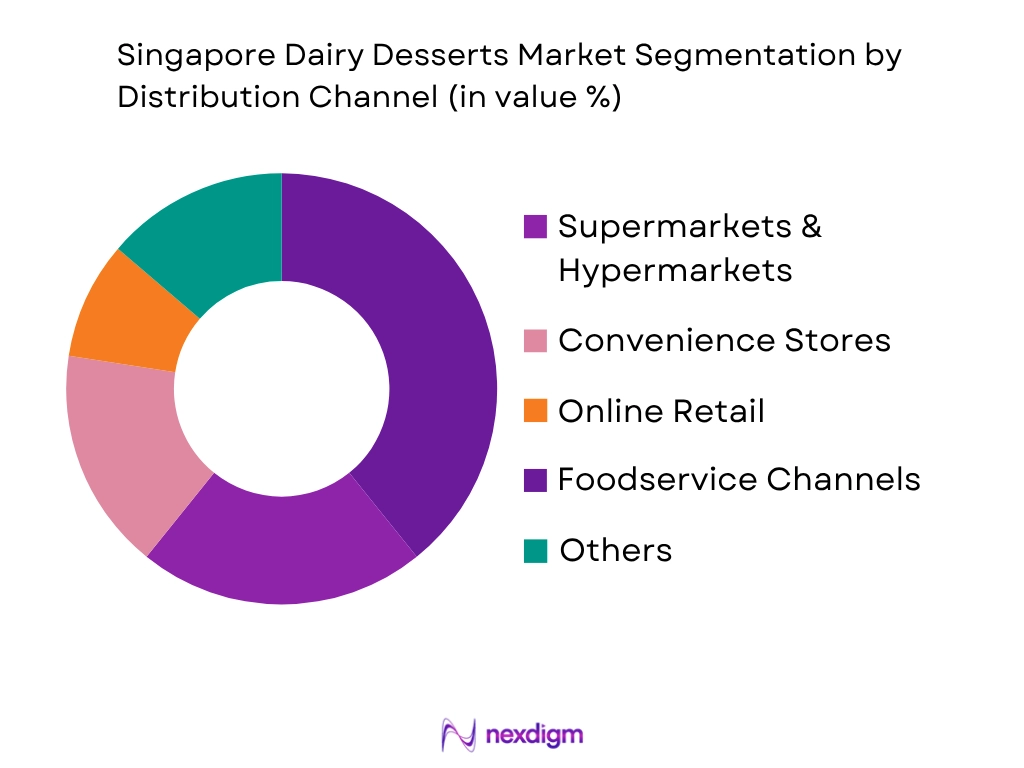
By Distribution Channel, Singapore Dairy Desserts Market is segmented into supermarkets and hypermarkets, convenience stores, online retail, specialty food stores, quick commerce platforms, and foodservice channels. Supermarkets and hypermarkets continue to dominate the market due to their extensive product assortment, established refrigeration infrastructure, and high consumer footfall. Major retail chains such as FairPrice, Cold Storage, Giant, and Sheng Siong offer broad selections of domestic and imported dairy desserts across multiple price points. These stores provide consumers with access to premium, functional, and mainstream dairy dessert products in a single location. Promotional activities, private-label offerings, and strong cold-chain capabilities further strengthen their position. Additionally, consumers often purchase dairy desserts alongside routine grocery shopping, making supermarkets and hypermarkets the preferred distribution channel for dairy dessert manufacturers and suppliers operating within Singapore.
Competitive Landscape
The Singapore Dairy Desserts Market is characterized by the presence of multinational dairy companies and premium imported brands. Competition is driven by product innovation, premiumization, functional ingredients, and distribution reach. Major companies leverage strong cold-chain logistics, established retail partnerships, and diverse product portfolios to strengthen their market position. International brands dominate shelf space, while regional dairy manufacturers compete through localized flavors and value-oriented offerings.
| Company | Establishment Year | Headquarters | Manufacturing Facilities | Product Portfolio | Distribution Reach | Cold Chain Strength | Functional Products | Key Brands |
| Nestlé | 1866 | ~ | ~ | ~ | ~ | ~ | ~ | ~ |
| Danone | 1919 | ~ | ~ | ~ | ~ | ~ | ~ | ~ |
| Fonterra | 2001 | ~ | ~ | ~ | ~ | ~ | ~ | ~ |
| Meiji Holdings | 1916 | ~ | ~ | ~ | ~ | ~ | ~ | ~ |
| Lactalis Group | 1933 | ~ | ~ | ~ | ~ | ~ | ~ | ~ |
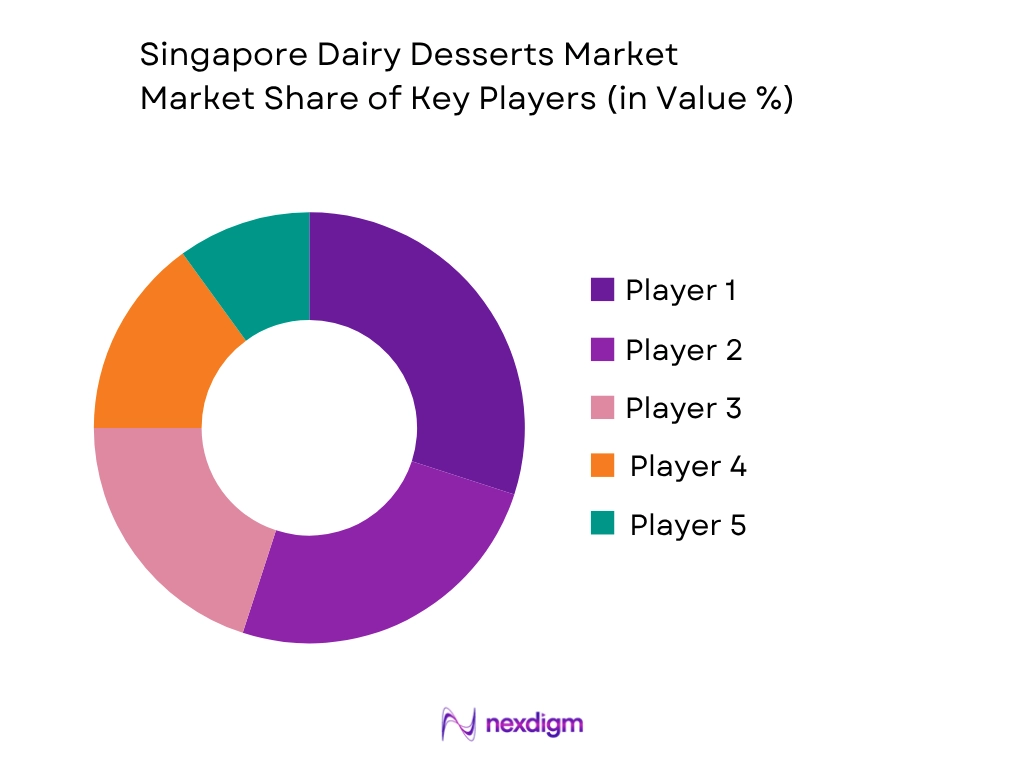
Singapore Dairy Desserts Market Analysis
Growth Drivers
Rising Premium Food Consumption and High Household Purchasing Power
Singapore Dairy Desserts Market benefits significantly from the country’s strong purchasing power and premium food consumption trends. According to the IMF, Singapore’s nominal GDP exceeded USD 530 billion in 2024, while GDP per capita remained above USD 90,000, among the highest globally. The Department of Statistics Singapore reported resident household expenditure exceeding SGD 108 billion, with food and beverage spending accounting for a substantial portion of consumer budgets. Singapore’s population surpassed 6.0 million residents, creating a dense urban consumer base concentrated in areas such as Central Singapore, Tampines, Jurong, and Woodlands. More than 90% of residents live in urban environments, supporting demand for convenient ready-to-eat dairy products. The country welcomed over 16 million international visitor arrivals during 2024, increasing foodservice and premium dessert consumption. High-income consumers increasingly seek indulgent dairy products featuring premium ingredients, functional benefits, and international flavors. Dairy desserts such as yogurt-based snacks, mousses, and chilled puddings have benefited from these consumption patterns. The widespread presence of premium supermarkets, convenience stores, and specialty food retailers further strengthens accessibility. These macroeconomic and demographic indicators collectively support the expansion of premium dairy dessert consumption across Singapore.
Expansion of Organized Retail and Advanced Cold Chain Infrastructure
Singapore possesses one of Asia’s most sophisticated food retail and logistics ecosystems, creating favorable conditions for dairy dessert consumption. The country handled over 40 million tonnes of cargo throughput through its logistics network in 2024, supporting efficient importation and distribution of chilled dairy products. Singapore Food Agency data indicates that more than 90% of food consumed domestically is imported, requiring highly efficient cold-chain systems. The retail sector contributes over SGD 40 billion annually to economic activity, supported by major chains such as NTUC FairPrice, Cold Storage, Giant, and Sheng Siong. Singapore operates one of the region’s most advanced refrigerated warehousing networks, enabling widespread distribution of temperature-sensitive dairy desserts. E-commerce penetration also continues to expand, with online retail transaction values exceeding SGD 8 billion. The growth of quick-commerce grocery platforms and food delivery services enhances accessibility to refrigerated dairy products. Additionally, Changi Airport and the Port of Singapore facilitate continuous inflows of premium dairy imports from New Zealand, Australia, France, and the Netherlands. This robust retail and logistics ecosystem enables manufacturers to maintain product quality and availability, directly supporting dairy dessert market growth.
Market Challenges
Dependence on Imported Dairy Ingredients and Supply Vulnerability
Singapore Dairy Desserts Market faces a structural challenge due to its limited domestic agricultural production. Singapore imports more than 90% of its food requirements, including nearly all dairy ingredients used in dairy dessert manufacturing. According to Singapore Food Agency statistics, the country sources food products from over 170 countries and regions, exposing the dairy sector to international supply chain disruptions. Dairy imports rely heavily on suppliers from New Zealand, Australia, the European Union, and the United States. Global disruptions affecting milk production, transportation, or export logistics can directly influence ingredient availability. Singapore’s total merchandise imports exceeded SGD 650 billion in 2024, highlighting the economy’s dependence on international trade flows. The country’s small land area of approximately 735 square kilometers limits opportunities for large-scale domestic dairy farming. Consequently, dairy dessert manufacturers remain dependent on imported milk powder, cream, cultures, and specialty ingredients. Any disruption in global dairy supply chains, shipping routes, or geopolitical conditions can affect product sourcing and operational planning. This structural dependence continues to represent a significant challenge for the long-term resilience of the dairy desserts market.
High Operating Costs and Competitive Food Landscape
Singapore’s business environment is characterized by high operating costs that affect food manufacturers and retailers. According to the Ministry of Manpower, median monthly wages exceeded SGD 5,500 in 2024, among the highest in Southeast Asia. Commercial rental costs remain substantial in key retail districts such as Orchard Road, Marina Bay, and Bugis. Singapore’s electricity consumption surpassed 55,000 gigawatt-hours, reflecting the energy requirements associated with maintaining refrigerated logistics and storage facilities. Dairy desserts require uninterrupted temperature control throughout transportation, warehousing, and retail display, increasing operational complexity. Additionally, Singapore consumers have access to a highly diverse food ecosystem that includes traditional Asian desserts, bakery products, confectionery items, frozen desserts, and emerging plant-based alternatives. More than 60,000 food and beverage establishments operate throughout Singapore, creating intense competition for consumer spending. The availability of numerous dessert alternatives limits category exclusivity and requires continuous innovation from dairy dessert manufacturers. Combined with elevated labor, logistics, refrigeration, and retail costs, this competitive environment presents ongoing challenges for companies seeking to maintain profitability and expand market presence.
Market Opportunities
Growing Demand for Functional, High-Protein and Wellness-Oriented Dairy Desserts
Singapore’s health-conscious consumer base creates substantial opportunities for functional dairy dessert products. The Ministry of Health reports that life expectancy exceeds 83 years, reflecting strong consumer focus on health and wellness. Singapore’s workforce exceeds 3.8 million people, many of whom actively seek convenient nutritional products that align with busy lifestyles. The country’s healthcare expenditure surpassed SGD 20 billion, reflecting growing awareness of nutrition and preventive health measures. Functional dairy desserts containing probiotics, protein enrichment, vitamins, and digestive health benefits align closely with these consumer preferences. Singapore also records one of Asia’s highest gym membership and fitness participation rates, supporting demand for protein-focused snacking products. Premium supermarkets increasingly dedicate shelf space to functional dairy categories, including high-protein yogurts, lactose-free desserts, and reduced-sugar dairy snacks. International brands continue introducing wellness-oriented innovations tailored to health-conscious consumers. These developments create significant opportunities for manufacturers to expand product portfolios beyond traditional indulgence categories. Functional positioning allows dairy dessert brands to target both health-oriented and premium consumer segments simultaneously, strengthening long-term market growth potential.
Expansion of Digital Grocery Platforms and Premium Imported Product Demand
Singapore’s highly digitalized economy creates attractive opportunities for dairy dessert manufacturers. According to the Infocomm Media Development Authority, internet penetration exceeds 5.8 million users, while smartphone subscriptions surpass 9 million connections. The country’s digital economy contributes over SGD 100 billion to national economic activity. Online grocery and quick-commerce platforms have become increasingly important distribution channels for chilled food products. Singapore’s e-commerce market generated transaction values exceeding SGD 8 billion, with grocery and food purchases representing a growing category. High-income households demonstrate strong demand for premium imported dairy products from Europe, Oceania, Japan, and North America. Changi Airport handled more than 67 million passenger movements, while Singapore’s global trade connectivity facilitates efficient importation of specialized dairy dessert products. Consumers increasingly seek unique flavors, premium ingredients, artisanal offerings, and international dessert concepts unavailable through traditional channels. Digital platforms enable manufacturers to reach affluent consumers directly while expanding product visibility. The convergence of digital commerce, premium consumption, and efficient import infrastructure creates favorable conditions for continued innovation and category expansion within Singapore’s dairy desserts market.
Future Outlook
The Singapore Dairy Desserts Market is expected to witness steady expansion over the forecast period driven by rising demand for premium and functional dairy products. Increasing health consciousness, growth in protein-rich snack consumption, and demand for low-sugar alternatives are expected to support category development. Product innovation focused on probiotics, digestive health, and convenience packaging will continue shaping consumer preferences. Expansion of online grocery channels and quick-commerce platforms is expected to improve accessibility and strengthen premium dairy dessert sales across the market.
Major Players
- Nestlé Singapore
- Danone
- Fonterra Brands Singapore
- FrieslandCampina
- Lactalis Group
- Meiji Holdings
- Arla Foods
- Yili Group
- Mengniu Dairy
- Chobani
- Müller Group
- Marigold
- Farm Fresh Berhad
- Yeo Hiap Seng (Yeo’s)
- FAGE International
Key Target Audience
- Dairy Dessert Manufacturers
- Dairy Ingredient Suppliers
- Refrigerated Food Distributors
- Supermarket and Hypermarket Chains
- Convenience Store Operators
- Foodservice and Hospitality Companies
- Investments and Venture Capitalist Firms
- Government and Regulatory Bodies (Singapore Food Agency, Enterprise Singapore, Health Promotion Board, Ministry of Sustainability and the Environment)
Research Methodology
Step 1: Identification of Key Variables
The research process begins with the identification of critical variables influencing the Singapore Dairy Desserts Market. Extensive secondary research is conducted to understand market dynamics, consumption patterns, retail penetration, dairy imports, and evolving consumer preferences. Key stakeholders including manufacturers, distributors, retailers, and regulatory authorities are mapped to establish a comprehensive ecosystem framework.
Step 2: Market Analysis and Construction
Historical market information is compiled and analyzed to establish market structure and segmentation. Market revenues, product category performance, consumption trends, retail sales patterns, and distribution channel dynamics are evaluated. Both top-down and bottom-up methodologies are applied to derive accurate market sizing and segment-level estimates.
Step 3: Hypothesis Validation and Expert Consultation
Preliminary findings and market assumptions are validated through interviews with dairy manufacturers, distributors, retailers, importers, and industry specialists. These consultations provide operational insights, product-level intelligence, and competitive dynamics that strengthen the reliability of market forecasts and segmentation analysis.
Step 4: Research Synthesis and Final Output
The final phase involves integrating primary and secondary findings through data triangulation. Market estimates are refined, forecasts are developed, and competitive intelligence is consolidated. The resulting analysis provides a comprehensive assessment of market opportunities, challenges, future trends, and strategic recommendations for stakeholders operating in the Singapore Dairy Desserts Market.

- Executive Summary
- Research Methodology (Market Definitions and Assumptions, Abbreviations, Market Sizing Approach, Bottom-Up Analysis, Top-Down Validation, Primary Research Framework, Expert Interviews, Demand-Supply Assessment, Trade Flow Analysis, Consumption Mapping, Data Triangulation Model, Forecasting Methodology, Limitations and Future Conclusions

- Definition and Scope
- Market Genesis and Evolution
- Timeline of Key Industry Developments
- Singapore Dairy Industry Overview
- Dairy Import Dependency and Supply Ecosystem

- Growth Drivers (Rising Demand for Premium Chilled Snacks, Increasing Urban Convenience Consumption, Growth of Organized Retail and E-Commerce, Expansion of Functional Dairy Products, Rising Household Disposable Income, Tourism-Driven Food Consumption)
- Market Challenges (High Import Dependence for Dairy Ingredients, Limited Domestic Dairy Production, Refrigerated Logistics Costs, Competition from Plant-Based Desserts, Shelf-Life Constraints, Rising Packaging Costs)
- Market Opportunities (Protein-Enriched Dairy Desserts, Premium Gourmet Dessert Innovation, Functional and Probiotic Product Expansion, Sustainable Packaging Adoption, Premium Asian Fusion Dessert Development, Quick Commerce Expansion)
- Market Trends (High-Protein Dessert Launches, Premiumization of Dairy Snacks, Low-Sugar Product Development, Lactose-Free Dairy Dessert Growth, Asian Flavor Innovation, Clean Label Formulations, Single-Serve Convenience Formats)
- Government Regulations (Singapore Food Agency Dairy Regulations, Food Safety and Hygiene Standards, Product Labeling Requirements, Nutritional Disclosure Standards, Import and Traceability Requirements, Sustainable Packaging Regulations)
- SWOT Analysis
- Porter’s Five Forces Analysis
- PESTLE Analysis
- Stakeholder Ecosystem
- Competition Ecosystem
- ESG and Sustainability Assessment

- By Market Value (2020-2025)
- By Volume Consumption (2020-2025)
- By Average Selling Price (2020-2025)

- By Product Type (In Value %)
Yogurt-Based Desserts
Dairy Puddings
Custards
Mousses
Flans
Cheesecake Desserts
Dairy Gelatin Desserts
Premium Layered Dairy Desserts
Functional Dairy Desserts - By Flavor Type (In Value %)
Chocolate
Vanilla
Strawberry
Caramel
Mixed Fruit
Coffee
Matcha
Mango
Asian-Inspired Flavors
Limited Edition Seasonal Flavors - By Distribution Channel (In Value %)
Supermarkets and Hypermarkets
Convenience Stores
Online Grocery Platforms
Quick Commerce Platforms
Specialty Food Stores
Department Store Food Halls
Foodservice and Cafés - By Price Category (In Value %)
Economy
Mid-Priced
Premium
Super Premium - By Packaging Type (In Value %)
Single-Serve Cups
Multi-Pack Cups
Family Tubs
Glass Containers
Pouches
On-the-Go Packs
Premium Gift Packaging

- Market Share of Major Players (By Value, Volume, Product Category, Distribution Channel, Premium Segment, Functional Segment )
- Cross Comparison Parameters (Product Portfolio Breadth, Dairy Dessert SKU Count, Premium Product Presence, Distribution Reach, Cold Chain Strength, Innovation Pipeline, Functional Dairy Product Portfolio, Sustainability Initiatives)
- SWOT Analysis of Major Players
- Pricing Analysis by SKU and Product Category
- Detailed Profiles of Major Companies
Nestlé Singapore
Danone
Fonterra Brands Singapore
Yeo Hiap Seng (Yeo’s)
FrieslandCampina
Meiji Holdings
Yili Group
Mengniu Dairy
Lactalis Group
Arla Foods
Chobani
Müller Group
The Dairy Farm Company
Marigold Peel Fresh
Farm Fresh Berhad

- Consumption Behavior Assessment
- Consumer Purchase Frequency Analysis
- Demographic Consumption Trends
- Household Expenditure on Dairy Products
- Premium vs Mass Market Consumption Analysis
- Health and Wellness Impact on Purchasing Decisions
- Consumer Preferences by Product Category
- Flavor Preference Analysis
- Brand Loyalty Assessment
- Consumer Pain Point Analysis
- Decision-Making Process Analysis
- Online vs Offline Purchase Behavior

- By Market Value (2026-2035)
- By Volume Consumption (2026-2035)
- By Average Selling Price (2026-2035)


 Request a Sample
 Ask for Customization
 Get a Quote
 Enquire Now