
 Download PDF
Market Overview
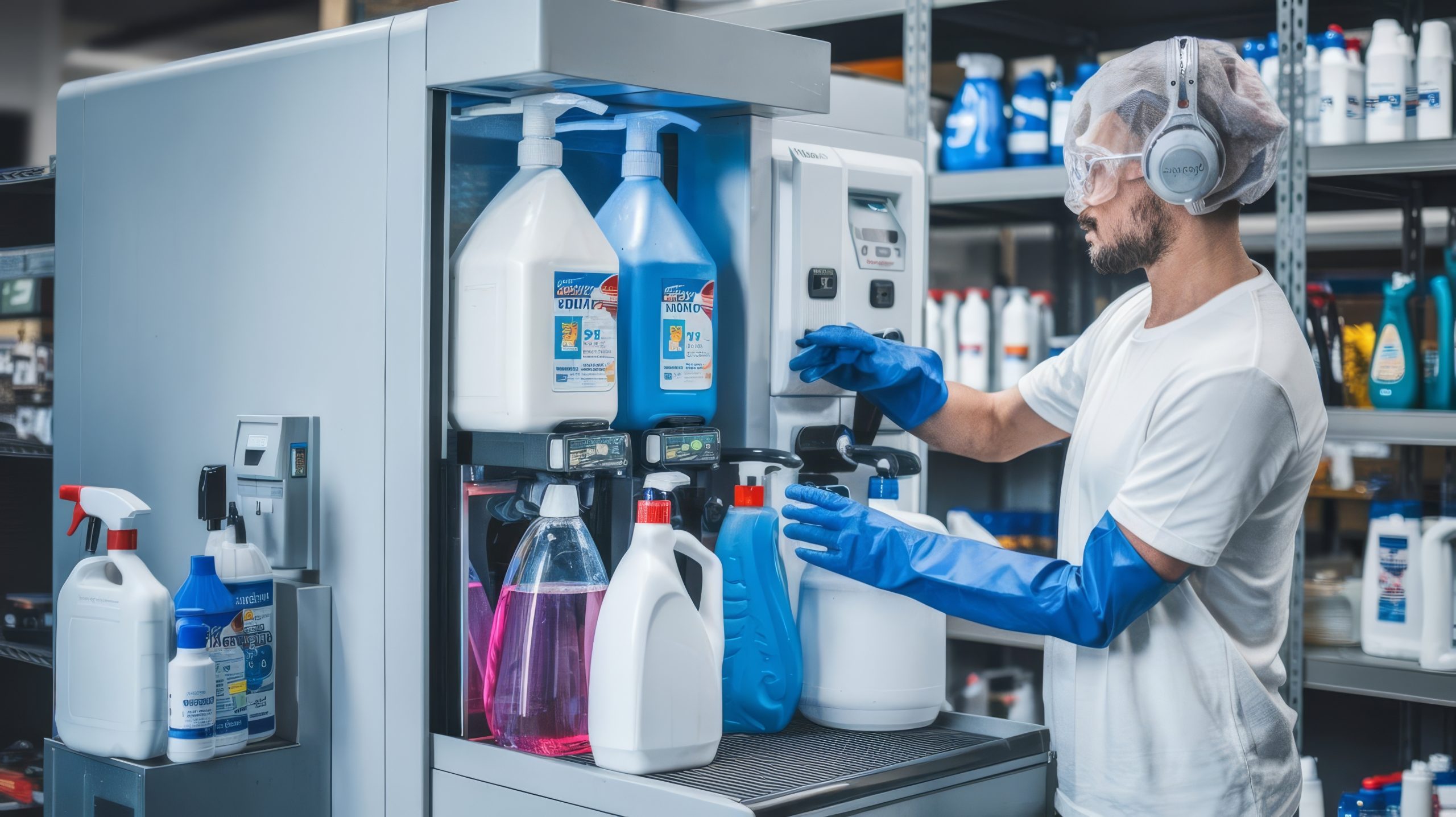
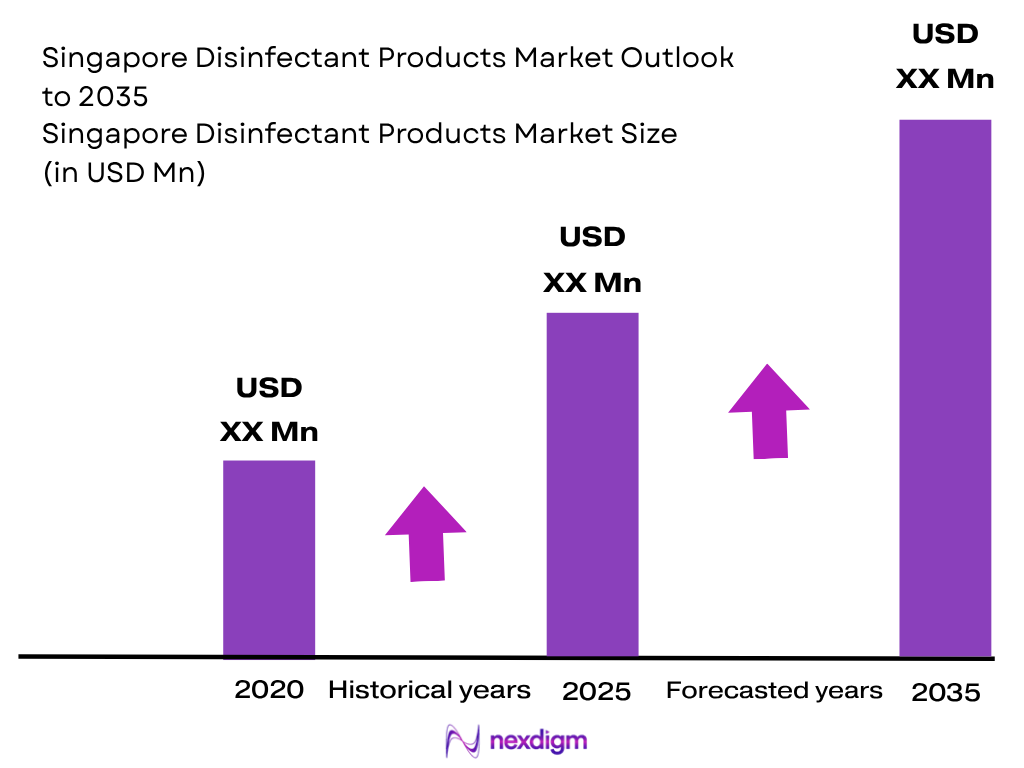
The Singapore Disinfectant Products Market is valued at USD ~ million in 2024, supported by demand from healthcare facilities, residential consumers, commercial buildings, hospitality establishments, food processing units, and institutional cleaning providers. The market is driven by Singapore’s strong public health infrastructure, strict hygiene standards, and regulatory focus on sanitation management. According to the Singapore Ministry of Health, the country operates more than 20 public hospitals and specialty centers, creating continuous demand for healthcare-grade disinfectants and infection prevention products. Singapore’s GDP reached approximately USD 501 billion in 2024 according to World Bank economic indicators, supporting commercial activity, healthcare investment, and institutional cleaning requirements. Increasing adoption of professional cleaning services, antimicrobial technologies, and sustainable hygiene solutions is strengthening demand across multiple application segments. The market is further supported by Singapore’s role as a regional business hub with high standards for workplace safety, food hygiene, and public infrastructure maintenance.
The Singapore Disinfectant Products Market is concentrated across major urban zones including the Central Region, Downtown Core, Jurong, Changi, and industrial areas due to high population density, healthcare infrastructure, commercial activities, and tourism facilities. The Central Region represents a major demand center because it contains government offices, corporate headquarters, healthcare facilities, shopping complexes, and hospitality establishments requiring continuous sanitation solutions. Jurong contributes significantly due to industrial activities, manufacturing facilities, and logistics operations requiring professional hygiene products. Changi benefits from airport operations and transportation infrastructure requiring strict cleaning standards. According to Singapore Department of Statistics, the country has a population exceeding 5.9 million people, supporting residential and commercial hygiene demand. Singapore’s position as a global business and tourism hub increases requirements for disinfectant solutions across hotels, restaurants, healthcare facilities, and public spaces.
Market Segmentation
By Product Type
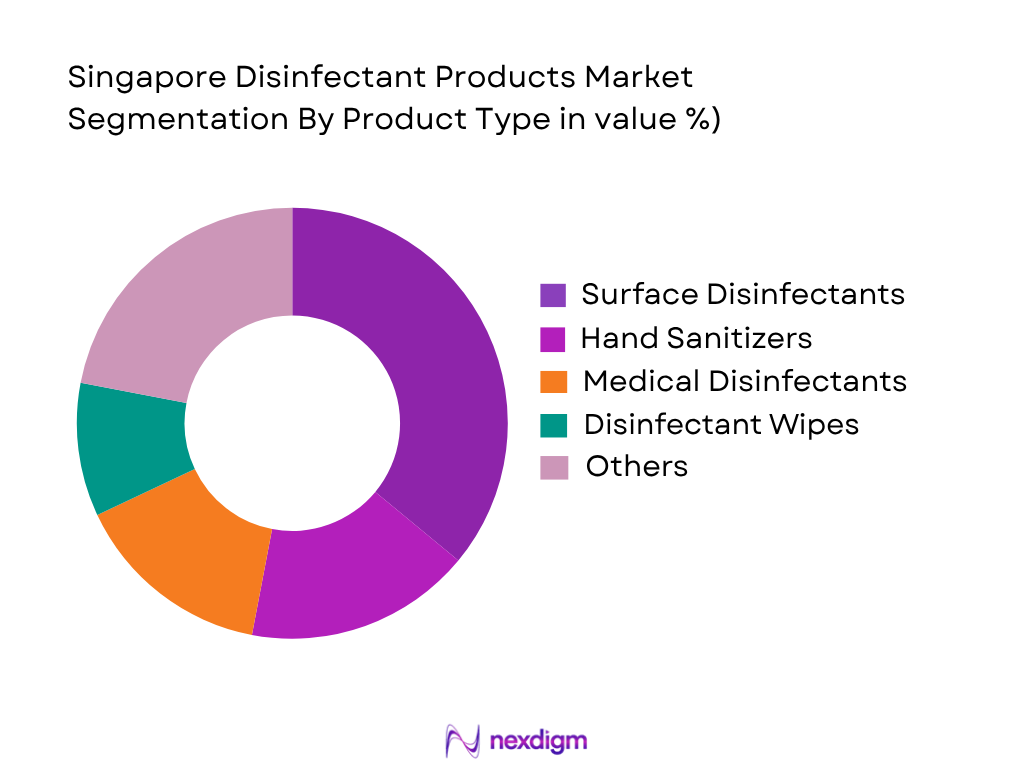
The Singapore Disinfectant Products Market is segmented by product type into surface disinfectants, disinfectant sprays and aerosols, disinfectant wipes, liquid disinfectants, concentrated disinfectants, ready-to-use disinfectants, air disinfectants, medical disinfectants, instrument disinfectants, and hand sanitizers. Surface disinfectants represent the dominant segment due to extensive usage across healthcare facilities, offices, hotels, educational institutions, and households. The segment benefits from frequent cleaning requirements for high-touch surfaces including desks, medical equipment, floors, and public facilities. Healthcare institutions represent a major consumer group due to infection prevention protocols and strict hygiene requirements. Commercial buildings and hospitality facilities also contribute significantly due to Singapore’s dense urban environment and high standards for cleanliness. Ready-to-use surface disinfectants are increasingly preferred because of ease of application and reduced preparation requirements. Growing adoption of professional cleaning practices and advanced antimicrobial formulations continues to support demand for surface disinfectant products.
By Application Area
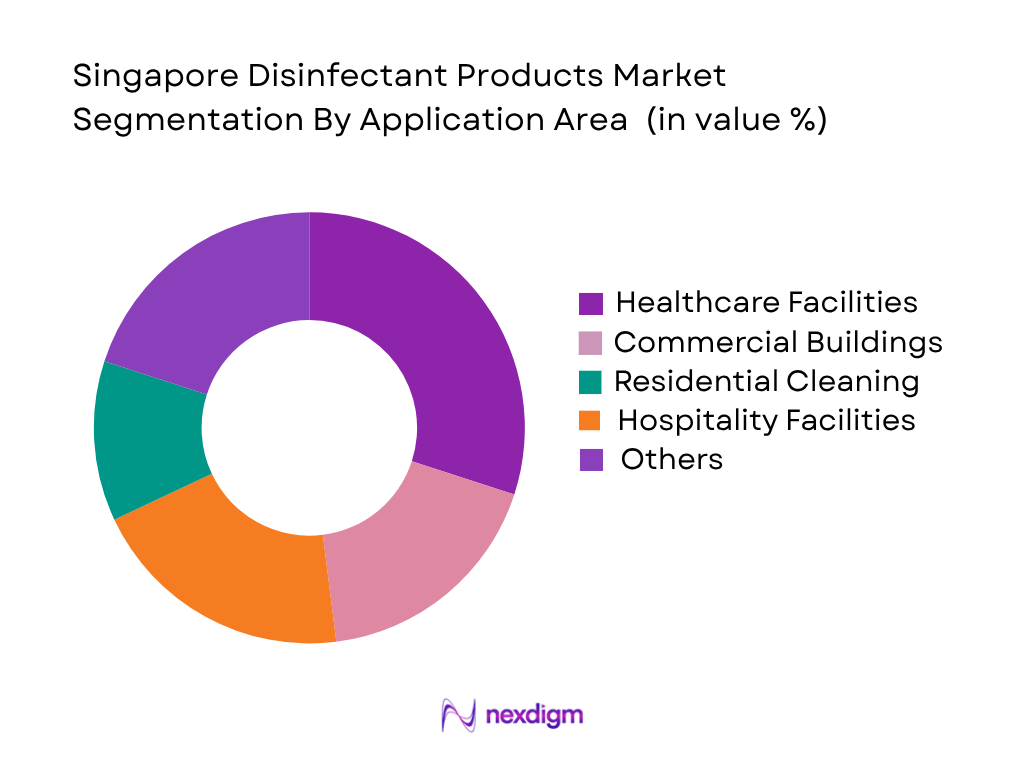
The Singapore Disinfectant Products Market is segmented by application area into healthcare facilities, residential cleaning, commercial establishments, food processing, pharmaceutical facilities, industrial manufacturing, educational institutions, hospitality facilities, transportation infrastructure, and government facilities. Healthcare facilities represent the leading application segment due to continuous requirements for infection control, medical equipment sanitation, and environmental cleaning. Singapore’s healthcare system maintains high standards for infection prevention, increasing demand for specialized disinfectant products. Commercial buildings and offices represent another major application area due to Singapore’s position as a regional business center with extensive corporate infrastructure. Hospitality facilities including hotels and restaurants require regular sanitation procedures due to tourism activities and food safety requirements. Food processing companies utilize disinfectants for production hygiene and regulatory compliance. Educational institutions, transportation facilities, and government buildings also contribute to demand due to structured cleaning requirements and public health standards.
Competitive Landscape
The Singapore Disinfectant Products Market is characterized by competition among multinational hygiene companies, professional cleaning solution providers, healthcare product suppliers, and chemical manufacturers. The competitive environment is influenced by product effectiveness, regulatory compliance, institutional supply capabilities, sustainability initiatives, and distribution network strength. Companies compete across healthcare hygiene, household cleaning, hospitality sanitation, food processing hygiene, and industrial applications.
| Company | Establishment Year | Headquarters | Product Portfolio | Healthcare Disinfection Capability | Institutional Supply Network | Active Ingredient Technology | Hospitality Cleaning Solutions | Sustainability Focus |
| Ecolab Inc. | 1923 | USA | ~ | ~ | ~ | ~ | ~ | ~ |
| Reckitt Benckiser | 1823 | United Kingdom | ~ | ~ | ~ | ~ | ~ | ~ |
| Diversey Holdings | 1923 | USA | ~ | ~ | ~ | ~ | ~ | ~ |
| Unilever | 1929 | United Kingdom | ~ | ~ | ~ | ~ | ~ | ~ |
| Procter & Gamble | 1837 | USA | ~ | ~ | ~ | ~ | ~ | ~ |
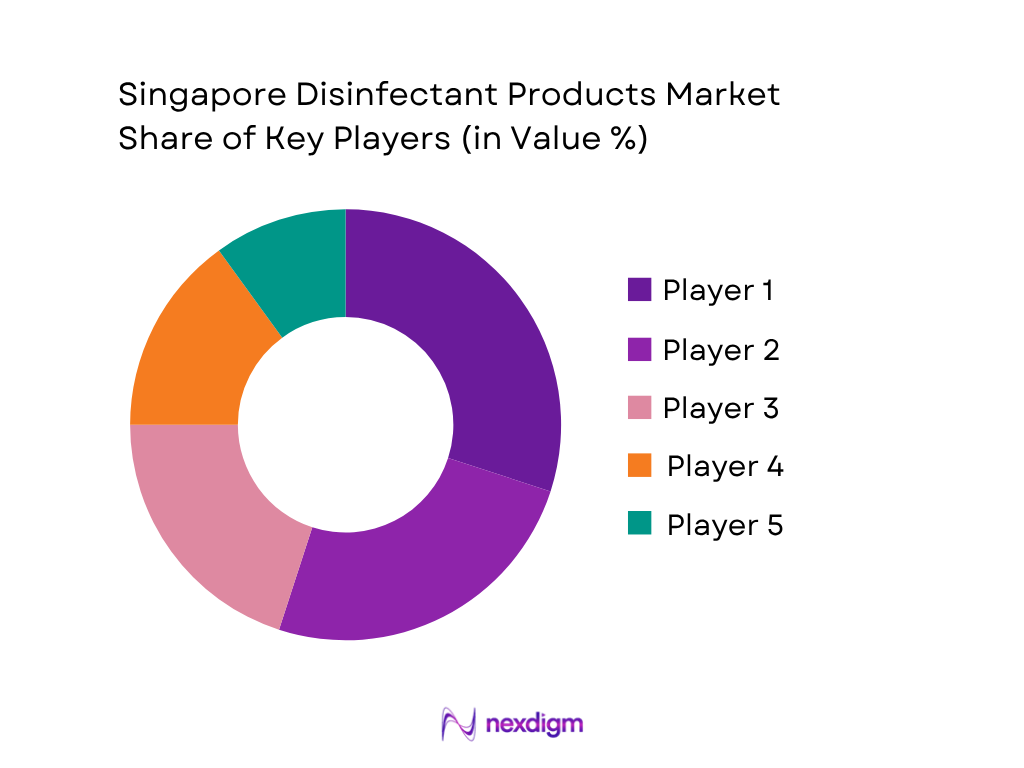
Singapore Disinfectant Products Market Analysis
Growth Drivers
Increasing Healthcare Infrastructure and Infection Prevention Requirements
The Singapore Disinfectant Products Market is supported by the country’s advanced healthcare infrastructure and continuous requirement for infection prevention solutions across hospitals, clinics, nursing facilities, and medical institutions. Singapore’s healthcare expenditure reached approximately SGD 32 billion in public healthcare spending allocation in recent government budget planning, reflecting continued investment in healthcare capacity and medical services. According to Singapore Ministry of Health data, the healthcare system includes more than 20 public hospitals and specialty centers, creating consistent demand for hospital-grade disinfectants, surface sanitizers, equipment disinfectants, and antimicrobial cleaning solutions. Singapore’s population exceeded 5.9 million according to Singapore Department of Statistics, increasing the need for healthcare accessibility and hygiene management. The country’s aging population structure also strengthens demand for infection control products, as residents aged 65 years and above represent more than 700,000 people, increasing requirements for long-term care and medical hygiene solutions. Expansion of healthcare facilities, strict infection control protocols, and regulatory emphasis on patient safety continue to encourage adoption of advanced disinfectant products across healthcare applications.
Expansion of Commercial, Hospitality, and Institutional Hygiene Demand
The Singapore Disinfectant Products Market benefits from strong commercial activity, tourism infrastructure, and institutional cleaning requirements across offices, hotels, transportation facilities, and food service establishments. Singapore recorded more than 16 million international visitor arrivals, according to Singapore Tourism Board data, creating continuous demand for hygiene management solutions across hotels, airports, restaurants, and public facilities. The country’s economy generated approximately USD 501 billion in GDP according to World Bank indicators, supporting commercial infrastructure development and workplace sanitation requirements. Singapore’s services sector contributes more than 70% of economic output, increasing the need for professional cleaning solutions in offices, retail centers, financial institutions, and hospitality properties. The country operates one of the world’s busiest aviation hubs, with Changi Airport handling more than 60 million passenger movements annually, requiring extensive disinfection procedures across terminals and public areas. Increasing workplace safety standards, food hygiene requirements, and customer expectations for cleanliness are encouraging businesses to adopt specialized disinfectant solutions, including surface cleaners, wipes, sprays, and professional-grade formulations.
Market Challenges
Dependence on Imported Chemical Raw Materials and Supply Chain Vulnerabilities
The Singapore Disinfectant Products Market faces challenges due to its dependence on imported chemical ingredients, active substances, and specialty formulation materials required for disinfectant manufacturing. Singapore has limited domestic availability of agricultural and chemical feedstocks, resulting in reliance on international supply networks for raw materials such as alcohol derivatives, quaternary ammonium compounds, hydrogen peroxide, and specialty additives. According to Singapore Department of Statistics trade indicators, the country recorded merchandise trade exceeding SGD 1 trillion annually, highlighting its strong dependence on global supply chains. Chemical products represent one of Singapore’s major trade categories, supported by the country’s petrochemical industry but still requiring imported intermediate materials. Global disruptions affecting shipping routes, energy availability, and chemical production can influence raw material availability and manufacturing schedules. Additionally, Singapore’s small geographic size, with a land area of approximately 735 square kilometers according to Singapore government data, limits domestic manufacturing expansion compared with larger regional markets. These supply chain dependencies create challenges for maintaining consistent availability and managing production flexibility for disinfectant manufacturers and distributors.
Regulatory Compliance and Environmental Sustainability Requirements
The Singapore Disinfectant Products Market operates under strict regulatory requirements related to chemical safety, environmental protection, product registration, and consumer health protection. Manufacturers must comply with requirements established by agencies including the National Environment Agency and Health Sciences Authority regarding chemical usage, labeling, safety documentation, and product claims. Singapore generated more than 7 million tonnes of solid waste annually according to National Environment Agency statistics, increasing government focus on sustainable product development and packaging waste reduction. Disinfectant manufacturers face increasing pressure to develop formulations with lower environmental impact while maintaining antimicrobial effectiveness. The growing preference for biodegradable ingredients, reduced chemical toxicity, and sustainable packaging creates additional formulation challenges. Singapore’s high urban density, with more than 7,800 people per square kilometer according to World Bank population density indicators, increases the importance of environmental management because chemical disposal and waste generation directly affect urban sustainability. Compliance with evolving environmental standards, chemical safety requirements, and sustainability expectations increases operational complexity for manufacturers and suppliers operating in the disinfectant sector.
Market Opportunities
Development of Sustainable and Bio-Based Disinfectant Solutions
The Singapore Disinfectant Products Market has significant opportunities through the development of environmentally sustainable disinfectant formulations, biodegradable ingredients, and low-toxicity hygiene products. Singapore’s national sustainability initiatives are increasing demand for products aligned with environmental protection objectives. According to Singapore Green Plan initiatives, the country targets significant reductions in waste generation intensity and carbon emissions while promoting sustainable consumption practices. Singapore’s recycling rate remains above 50%, reflecting strong national emphasis on resource efficiency and environmental responsibility. These sustainability priorities create opportunities for manufacturers to introduce bio-based disinfectants, eco-certified cleaning solutions, concentrated formulations, and recyclable packaging systems. Commercial buildings, hospitality operators, and government facilities are increasingly incorporating sustainability criteria into procurement decisions. The country’s green building ecosystem, supported by thousands of certified buildings under the Building and Construction Authority’s Green Mark program, creates demand for environmentally responsible cleaning solutions. Manufacturers offering sustainable disinfectant technologies can address growing institutional requirements while supporting Singapore’s broader environmental objectives.
Growth of Healthcare-Grade and Advanced Disinfection Technologies
The Singapore Disinfectant Products Market presents opportunities through advanced healthcare-grade disinfectants, antimicrobial technologies, automated dispensing systems, and specialized infection control solutions. Singapore continues to strengthen healthcare capabilities through investments in hospitals, medical facilities, and preventive healthcare programs. According to Singapore Ministry of Health data, healthcare infrastructure expansion includes development of additional medical facilities and increased capacity for healthcare services to support population needs. The country’s pharmaceutical and biomedical manufacturing sector also creates demand for specialized hygiene solutions, as Singapore hosts more than 50 biomedical manufacturing companies according to Singapore Economic Development Board industry information. Advanced disinfectant technologies such as hydrogen peroxide-based solutions, antimicrobial coatings, and automated cleaning systems can address requirements from hospitals, laboratories, pharmaceutical facilities, and high-risk environments. Growth in medical tourism, pharmaceutical production, and healthcare innovation activities further supports demand for specialized sanitation products. Companies developing application-specific disinfectant technologies for healthcare and industrial environments can capture opportunities created by Singapore’s focus on healthcare quality, safety standards, and advanced facility management.
Future Outlook
Over the next decade, the Singapore Disinfectant Products Market is expected to demonstrate continued development driven by healthcare hygiene requirements, commercial infrastructure growth, food safety standards, and increasing adoption of sustainable cleaning solutions. Demand will be supported by healthcare facilities, hospitality establishments, industrial users, and residential consumers. Manufacturers are expected to focus on environmentally friendly formulations, advanced antimicrobial technologies, automated cleaning systems, and application-specific disinfectant solutions. Expansion of digital procurement channels and professional cleaning services will further support market accessibility and institutional adoption.
Major Players
- Ecolab Singapore
- Reckitt Benckiser Singapore
- Unilever Singapore
- Procter & Gamble Singapore
- Diversey Singapore
- 3M Singapore
- Henkel Singapore
- SC Johnson Singapore
- Clorox Singapore
- STERIS Singapore
- GOJO Industries Singapore
- Kimberly-Clark Singapore
- Kao Singapore
- Lion Corporation Singapore
- Zep Singapore
Key Target Audience
- Healthcare facility management companies
- Hospital procurement departments
- Hospitality and hotel operators
- Food processing manufacturers
- Pharmaceutical manufacturing companies
- Professional cleaning service providers
- Investments and venture capitalist firms (Private equity firms, healthcare investment funds, consumer goods investment firms)
- Government and regulatory bodies (Ministry of Health Singapore, National Environment Agency, Health Sciences Authority, Singapore Food Agency)
Research Methodology
Step 1: Identification of Key Variables
The initial phase involves developing an ecosystem map covering major stakeholders within the Singapore Disinfectant Products Market. This includes disinfectant manufacturers, chemical suppliers, healthcare institutions, commercial users, distributors, and regulatory authorities. Extensive secondary research is conducted to identify critical market variables including product categories, application segments, supply chain structure, regulatory requirements, and competitive dynamics.
Step 2: Market Analysis and Construction
This phase involves compiling and analyzing historical information related to disinfectant consumption, product adoption, distribution channels, import dependency, and end-user requirements. The assessment covers healthcare, residential, commercial, hospitality, food processing, and industrial applications. Supply-side and demand-side evaluations are conducted to understand market structure and consumption patterns.
Step 3: Hypothesis Validation and Expert Consultation
Market assumptions are validated through discussions with industry participants including manufacturers, healthcare procurement professionals, institutional buyers, distributors, and hygiene solution providers. These consultations provide insights into product preferences, regulatory compliance, competitive positioning, and emerging market opportunities.
Step 4: Research Synthesis and Final Output
The final phase integrates primary and secondary research findings to develop a comprehensive assessment of the Singapore Disinfectant Products Market. Information collected from manufacturers, distributors, healthcare organizations, and end users is analyzed to validate segmentation, competitive analysis, market dynamics, and future opportunities.

- Executive Summary
- Research Methodology (Market Definition and Scope, Singapore Disinfectant Products Market Classification, Disinfectant Product Category Mapping, Chemical Composition Assessment, Active Ingredient Analysis, Quaternary Ammonium Compound Evaluation, Alcohol-Based Disinfectant Assessment, Chlorine-Based Disinfectant Assessment, Hydrogen Peroxide-Based Disinfectant Evaluation, Peracetic Acid-Based Disinfectant Assessment, Phenolic Disinfectant Assessment, Biocide Technology Assessment, Formulation Technology Assessment, Ready-to-Use and Concentrated Formulation Mapping, Surface Disinfectant and Air Disinfectant Evaluation, Antimicrobial Claim Assessment, Singapore National Environment Agency Compliance Assessment, HSA Product Registration Assessment)

- Definition and Scope
- Singapore Disinfectant Products Industry Evolution and Development of Infection Prevention Practices, Healthcare Hygiene Standards, Surface Disinfection Technologies, Antimicrobial Product Innovation, Consumer Hygiene Awareness, Institutional Cleaning Practices, Smart Cleaning Technologies, Sustainable Disinfectant Solutions and
- Advanced Hygiene Management Systems
- Disinfectant Products Value Chain Analysis
- Disinfectant Products Supply Chain Analysis
- Chemical Raw Material Suppliers, Active Ingredient Manufacturers, Formulation Developers, Disinfectant Product Manufacturers, Contract Manufacturers, Packaging Suppliers, Healthcare Cleaning Suppliers, Institutional Hygiene Suppliers, Importers, Distributors, Retail Channels, E-Commerce Platforms, Professional Cleaning Service Providers, Hospitals, Hotels, Commercial Establishments and Residential Consumers

- Growth Drivers (Increasing Healthcare Infection Prevention Requirements, Expansion of Healthcare Infrastructure, Rising Hygiene Awareness, Growth of Commercial Real Estate, Increasing Hospitality Activities, Food Safety Compliance Requirements, Government Cleaning Standards, Adoption of Professional Cleaning Services, Demand for Advanced Antimicrobial Technologies, Growth of Institutional Hygiene Solutions)
- Market Challenges (Dependence on Imported Raw Materials, Regulatory Compliance Requirements, High Quality Standards, Limited Domestic Chemical Manufacturing Base, Raw Material Price Volatility, Competition from International Brands, Environmental Concerns Regarding Chemical Usage, Disposal Challenges of Disinfectant Packaging Waste, Product Differentiation Challenges)
- Market Opportunities (Sustainable Disinfectant Formulations, Bio-Based Disinfectant Development, Healthcare-Grade Disinfection Expansion, Smart Cleaning Technologies, Automated Disinfection Systems, Food Processing Sanitation Solutions, Hospitality Hygiene Solutions, Pharmaceutical Facility Cleaning Demand, Premium Household Hygiene Products)
- Market Trends (Shift Toward Eco-Friendly Disinfectants, Increased Demand for Ready-to-Use Formats, Growth of Disinfectant Wipes, Digital Procurement Expansion, Antimicrobial Surface Technologies, Hydrogen Peroxide-Based Solutions, Low-Toxicity Formulations, Sustainable Packaging Adoption, Professional Cleaning Automation, Premium Hygiene Product Adoption)
- Government Regulations and Standards (National Environment Agency Requirements, Health Sciences Authority Product Regulations, Singapore Standard Requirements, Workplace Safety and Health Regulations, Environmental Protection Regulations, Food Safety Requirements, Healthcare Infection Prevention Guidelines, Chemical Management Standards, Hazard Communication Requirements)
- SWOT Analysis
- Porter’s Five Forces Analysis
- PESTLE Analysis
- Stakeholder Ecosystem
- Competition Ecosystem

- By Market Value (2020-2025)
- By Market Volume Consumption (2020-2025)
- By Average Selling Price (2020-2025)
- By Active Ingredient Consumption Volume (2020-2025)
- By Ready-to-Use Disinfectant Consumption Volume (2020-2025)
- By Concentrated Disinfectant Consumption Volume (2020-2025)
- By Professional-Grade Disinfectant Consumption Volume (2020-2025)

- By Product Type (In Value %)
Surface Disinfectants
Disinfectant Sprays and Aerosols
Disinfectant Wipes
Liquid Disinfectants
Concentrated Disinfectants
Ready-to-Use Disinfectants
Fogging and Misting Disinfectants
Air Disinfectants and Sanitizers
Instrument and Equipment Disinfectants
Hand and Skin Disinfectants - By Active Ingredient Type (In Value %)
Quaternary Ammonium Compounds (QACs)
Alcohol-Based Disinfectants
Chlorine-Based Disinfectants
Hydrogen Peroxide-Based Disinfectants
Peracetic Acid-Based Disinfectants
Phenolic Disinfectants
Iodophor-Based Disinfectants
Organic Acid-Based Disinfectants
Other Specialty Antimicrobial Formulations - By Application Area (In Value %)
Healthcare Facilities
Residential Cleaning
Commercial and Office Spaces
Food Processing and Foodservice
Pharmaceutical and Biotechnology Facilities
Industrial Manufacturing
Educational Institutions
Hospitality and Tourism Facilities
Transportation and Public Infrastructure
Water Treatment Facilities - By Distribution Channel (In Value %)
Supermarkets and Hypermarkets
Pharmacies and Drug Stores
Specialty Cleaning Product Distributors
Professional Janitorial Supply Distributors
Healthcare Supply Distributors
Online Retail and E-Commerce Platforms
Direct Sales and Institutional Procurement
Government Procurement Channels - By End-Use Industry (In Value %)
Hospitals and Healthcare Facilities
Residential Households
Commercial Buildings
Food and Beverage Processing
Pharmaceutical Manufacturing
Industrial Manufacturing
Education Sector
Hospitality Industry
Government and Public Facilities
Transportation Industry - By Region (In Value %)
Central Region
East Region
West Region
North Region
North-East Region

- Market Share of Major Players (By Singapore Revenue, Product Portfolio Breadth, Disinfectant Category Coverage, Active Ingredient Portfolio, Registered Product Portfolio, Healthcare Application Coverage, Institutional Customer Base, Retail Presence, Distribution Network Coverage, Manufacturing and Supply Capability, Sustainability Portfolio, Innovation Pipeline, Regional Presence)
- Cross Comparison Parameters (Disinfectant Product Portfolio Breadth, Registered Disinfectant Product Count, Active Ingredient Technology Coverage, Healthcare-Grade Disinfectant Capability, Ready-to-Use Product Portfolio, Disinfectant Wipes Manufacturing Capability, Institutional Distribution Network Reach, Sustainable Disinfectant Formulation Capability)
- SWOT Analysis of Major Players
- Competitive Positioning Matrix
- Consumer Disinfectant Product Innovation Assessment
- Detailed Profiles of Major Companies
Reckitt Benckiser Singapore
Unilever Singapore
Procter & Gamble Singapore
Ecolab Singapore
Diversey Singapore
3M Singapore
Henkel Singapore
SC Johnson Singapore
Clorox Singapore
STERIS Singapore
GOJO Industries Singapore
Kimberly-Clark Singapore
Zep Singapore
Kao Singapore
Lion Corporation Singapore

- Healthcare Facility Disinfectant Procurement Assessment
- Hospital Infection Prevention Requirement Analysis
- Elderly Care Facility Disinfection Demand Assessment
- Commercial Building Cleaning Requirement Assessment
- Food Processing Sanitation Requirement Analysis
- Pharmaceutical Facility Disinfectant Qualification Assessment
- Industrial Hygiene Product Requirement Analysis
- Residential Consumer Disinfectant Usage Analysis
- Professional Cleaning Service Procurement Assessment
- Institutional Contract Purchasing Assessment
- Janitorial Supply Distributor Demand Analysis
- Disinfectant Product Brand Preference Assessment

- By Market Value (2026-2035)
- By Market Volume Consumption (2026-2035)
- By Average Selling Price (2026-2035)
- By Active Ingredient Consumption Volume (2026-2035)
- By Ready-to-Use Disinfectant Consumption Volume (2026-2035)
- By Concentrated Disinfectant Consumption Volume (2026-2035)
- By Professional-Grade Disinfectant Consumption Volume (2026-2035)


 Request a Sample
 Ask for Customization
 Get a Quote
 Enquire Now