

 Download PDF
Market Overview
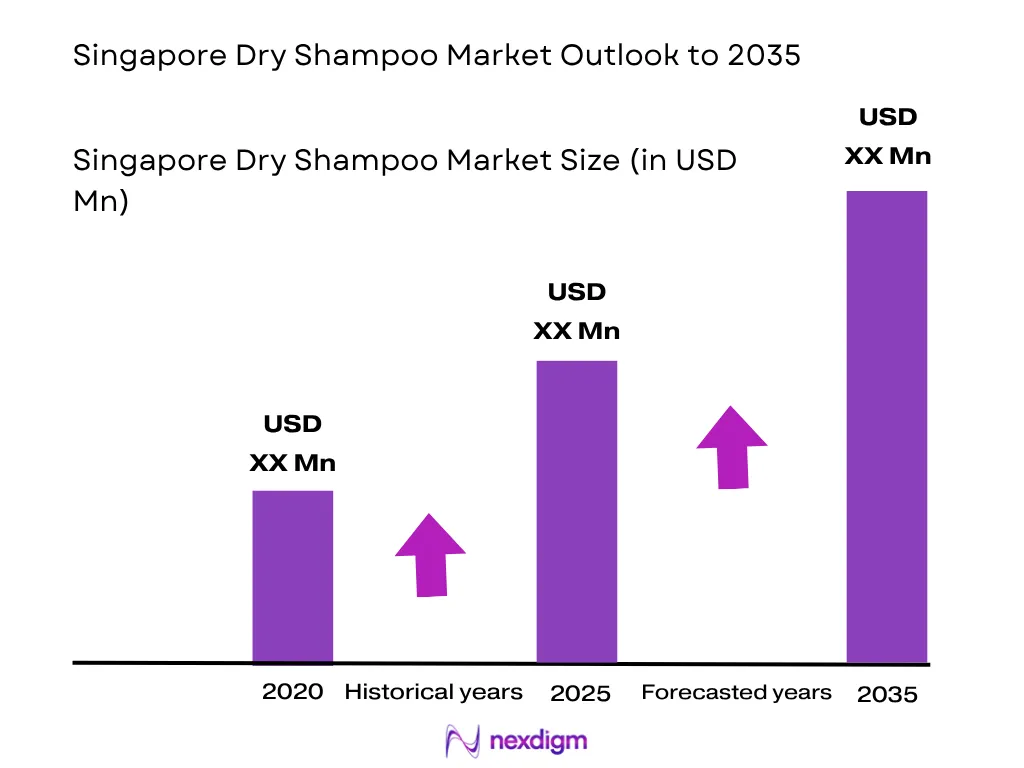
The Singapore Dry Shampoo Market was valued at USD ~ million in 2025, based on Nexdigm’s latest regional industry outlook covering product revenues and competitive positioning. Consumer adoption in Singapore is expanding steadily as urban lifestyles, time‑saving grooming needs, and a rising focus on personal care drive demand for convenient hair‑care alternatives to traditional washes. Increased retail presence of global brands and online availability have further supported this spend on quick‑use products among busy professionals and younger demographics.
In terms of geographic influence, Singapore’s market is shaped by advanced retail infrastructure and high disposable income, different from broader regional patterns. Premium malls in the Central Business District and major suburban centers attract international beauty brands, while local demand is buoyed by professional and travel‑oriented consumers who value quick styling solutions. Singapore’s position as a regional beauty hub also means frequent product launches and strong multinational supply chains, contributing to market depth relative to neighboring Southeast Asian markets.
Market Segmentation
By Form Type
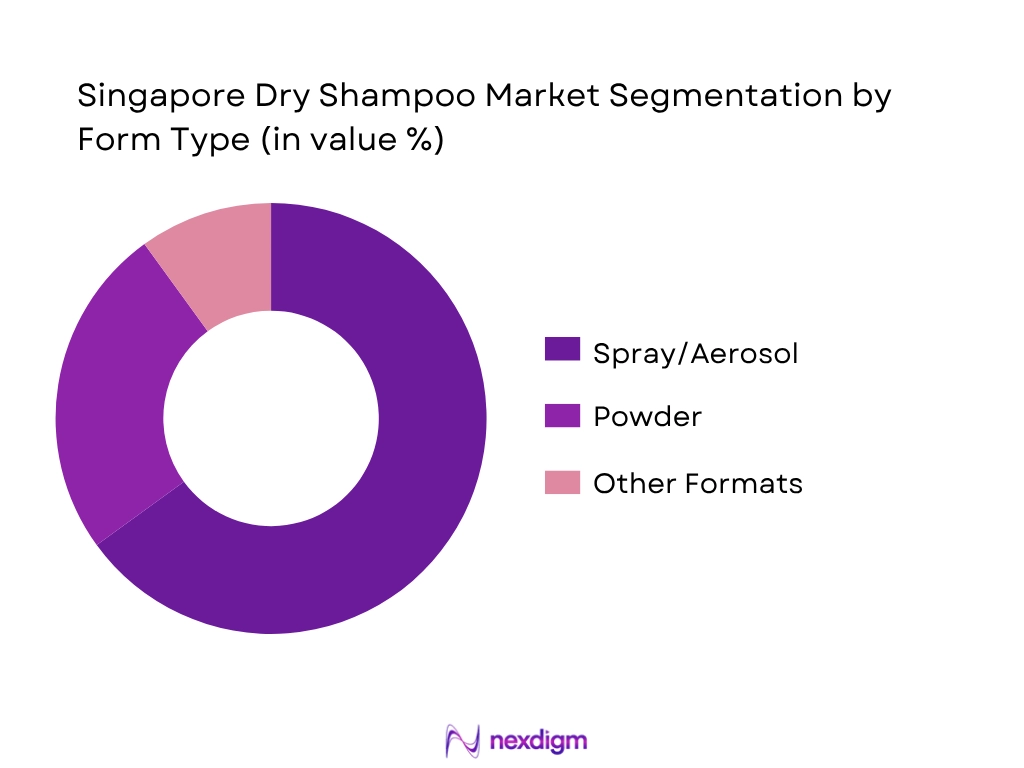
By form type, the market is segmented into spray, powder, and foam/others. The spray segment dominates the Singapore dry shampoo market with a substantial share, primarily because spray formulations deliver ease of use, rapid application, and perceived better oil absorption important attributes for consumers in a humid tropical climate. Spray formats are accessible in most retail channels and supported by strong global brand representation, reinforcing consumer confidence. Powder formats, while gaining popularity for niche and natural positioning, are still developing their presence among mainstream shoppers, whereas foam types remain specialised and smaller in share due to higher price points and perceived complexity of use.
By Distribution Channel
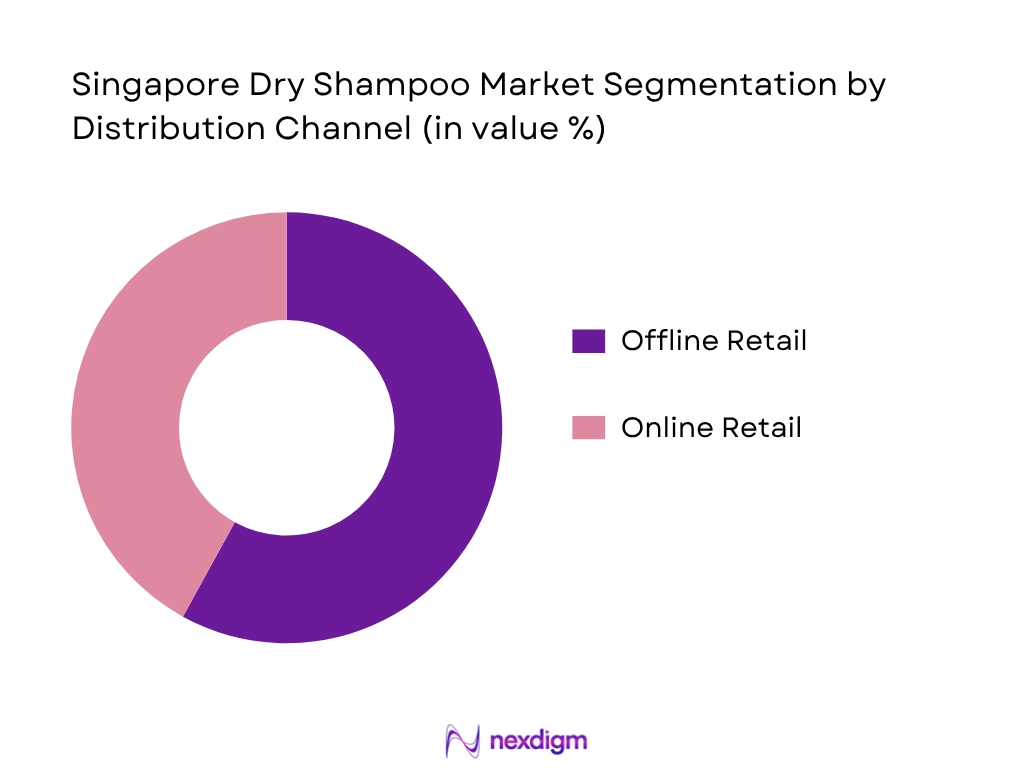
Distribution channels for dry shampoo comprise offline retail (including supermarkets, pharmacies, specialty stores, and beauty outlets) and online/e‑commerce platforms. Offline remains the leading distribution method due to the strong presence of established beauty retail stores and pharmacy chains where consumers can physically experience product performance before purchase. This is particularly relevant in Singapore’s compact urban setting, where convenience stores and premium malls are densely located, reinforcing the offline dominance. Meanwhile, online channels are rapidly gaining ground as digital purchasing behaviors strengthen driven by busy lifestyles, promotions, and enhanced delivery penetration. E‑commerce platforms also facilitate broader SKU choices and comparison shopping, which appeals to younger and tech‑savvy consumers.
Competitive Landscape
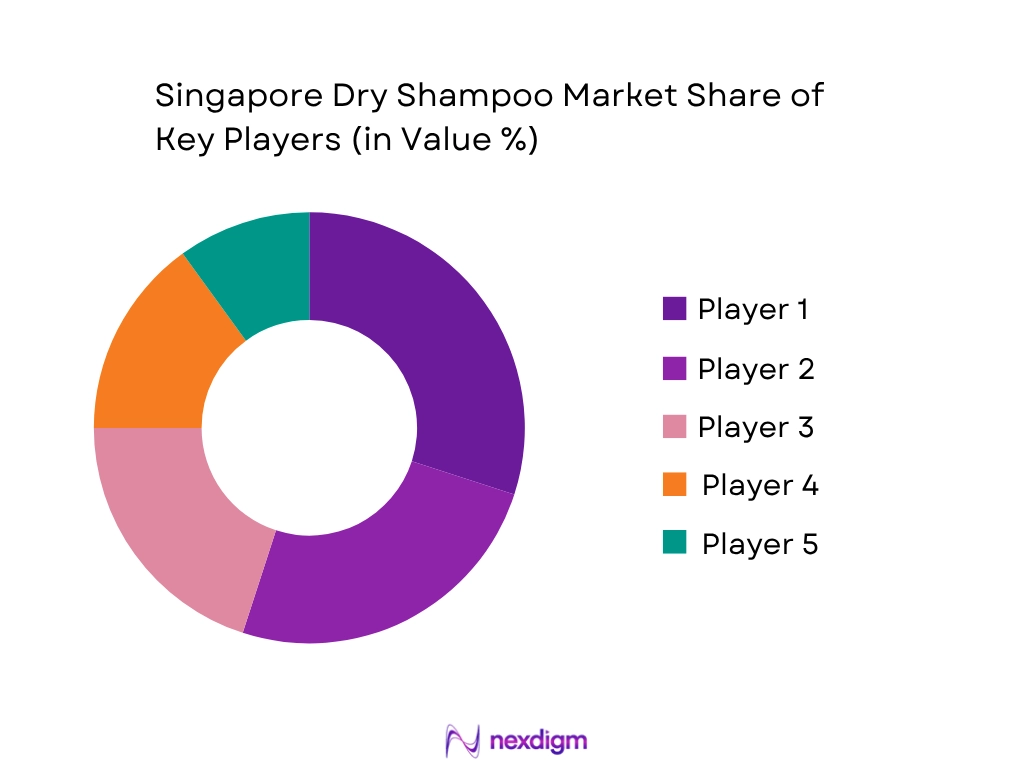
The Singapore Dry Shampoo Market is shaped by a mix of global personal care brands and specialized hair‑care players that bring diverse formulations and positioning. Competition is consolidated among established multi‑national brands that leverage strong distribution networks, marketing investment, and product innovation to capture consumer attention. Premium positioning, ingredient claims (e.g., talc‑free, sulfate‑free), and performance attributes (oil absorption, scalp benefits) are significant differentiators in the competitive environment. The market shows moderate concentration but increasing niche competition as mid‑tier and indie beauty brands enter with functional formats, especially in powder and eco‑friendly segments. Retail partnerships with large chain drugstores and omnichannel strategy execution are key competitive tactics among leading players.
| Company | Est. Year | Headquarters | Price Position | Distribution Strength | Product Portfolio Breadth | Innovation Focus | Online Presence |
| Procter & Gamble | 1837 | USA | ~ | ~ | ~ | ~ | ~ |
| Unilever | 1929 | UK/Netherlands | ~ | ~ | ~ | ~ | ~ |
| L’Oréal S.A. | 1909 | France | ~ | ~ | ~ | ~ | ~ |
| Henkel | 1876 | Germany | ~ | ~ | ~ | ~ | ~ |
| Coty Inc. | 1904 | USA | ~ | ~ | ~ | ~ | ~ |
Singapore Dry Shampoo Market Analysis
Growth Drivers
Urban Lifestyle
Singapore’s population is roughly 6,036,860 people as of 2024, with an annual growth rate of 2.0%, reflecting continued urban expansion in the city‑state’s dense metropolitan context. Urban dwellers typically contend with high‑pace work schedules and shorter leisure windows, which has translated into growing consumer interest in time‑efficient personal care routines. Alongside this, 94% of individuals use the internet in Singapore, indicating strong digital connectivity and enabling extensive online discovery and purchase of grooming products like dry shampoo. Singapore’s GDP per capita of USD 90,674.1 signifies high disposable income, which supports consumer willingness to spend on convenience‑oriented beauty categories. These factors align with lifestyle trends where products that offer quick hair refresh without water—especially for professionals commuting or balancing multiple responsibilities—are increasingly prioritized in personal care routines, driving demand for dry shampoo formats and reinforcing this category as a practical supplement to traditional washing practices.
Hair & Scalp Health Awareness
In Singapore’s personal care landscape, consumers are increasingly focused on targeted hair and scalp care solutions that promise functional benefits beyond basic cleansing, a shift documented in hair care category analyses which highlight demand for “personalised hair care solutions” and scalp‑focused innovations. This trend is supported by broader consumer wellness priorities seen in the hair care segment where innovations such as plant‑based proteins, natural oils, or specialised actives are gaining traction. Additionally, macroeconomic conditions support this trend: Singapore’s consumer price inflation of 2.4% in 2024 suggests relative purchasing power stability for non‑essential personal care segments. With professional services and scalp diagnostics becoming more visible and digital content on scalp health proliferating among local communities, there is growing awareness of solutions that address itchiness, excess oil, or sensitivity. These behaviours indicate a shift from merely buying basic personal care to investing in products that aim for improved hair quality a strategic driver that elevates inherent demand for hair‑refreshing products like dry shampoos that also claim scalp‑related benefits.
Market Restraints
Humidity Impact
Singapore experiences a tropical climate with high humidity levels year‑round, which places unique stresses on hair and scalp conditions. High humidity can cause hair to absorb moisture rapidly from the air, leading to frizz, oil accumulation, and reduced product efficacy especially for oil‑absorbing formulations like dry shampoos. Although direct humid‑weather measurements are not available in macroeconomic databases, Singapore’s climate conditions are widely recognised in scientific and consumer contexts as a factor that complicates hair styling and product performance. High humidity environments tend to diminish the perceived effectiveness of absorbent products, as airborne moisture counteracts oil removal mechanisms, which can constrain broader adoption frequency for dry shampoo products in daily routines among consumers accustomed to traditional water‑based washes. This climatic factor operates outside economic variables, influencing consumer satisfaction and usage patterns even as disposable income and digital access grow. Thus, relative humidity acts as a practical barrier to frequent dry shampoo use in Singapore’s context compared with regions with milder climates, restraining adoption rates despite other favourable market conditions.
Price Sensitivity
While Singapore’s GDP per capita stands high at USD 90,674.1, indicating broad purchasing power, core consumer inflation at 2.4% in 2024 points to ongoing cost pressures in everyday spending. Household budget allocation surveys and consumer behaviour data in personal care contexts often indicate that discretionary spending on premium or niche product formats (such as specialty shampoos or alternative hair care solutions) can be sensitive to price changes, particularly among young adults and middle‑income earners. Although direct national survey data for dry shampoo spending is limited, adjacent insights from broader beauty and personal care segments note that consumer expectations for value and performance shape willingness to trade up to higher price brackets. With stability in inflation but persistent cost considerations, some Singapore consumers may delay or limit purchases of non‑essential grooming products like dry shampoo, especially if perceived performance is uneven in local climate conditions. This constraint affects frequency of purchase and slows conversion of trial users into regular consumers an economic restraint linked to disposable budget choices and price‑value calculus in consumer spending behaviour.
Opportunities
Eco‑Friendly / Refillable Formats
In Singapore’s beauty and personal care context, there is a visible shift toward sustainability and eco‑conscious products among consumers, as documented by local retail expansions in eco‑friendly beauty lines and growing discussion around sustainable hair care solutions. While this specific shift is supported by broader consumer interest in greentech products and ethical purchasing behaviour, macroeconomic context supports the opportunity: Singapore’s GDP per capita of USD 90,674.1 means high discretionary spending capacity, which often correlates with greater willingness to pay premiums for eco‑conscious products. Additionally, Singapore’s policy emphasis on sustainability and resource efficiency reflects in national strategies and consumer awareness of environmental impacts, encouraging demand for refillable and minimal‑waste personal care products. With tightly regulated waste management systems and high expectations around corporate environmental performance, eco‑friendly formulations and refillable packaging present a strategic opportunity for dry shampoo brands looking to align with consumer values while differentiating from conventional options. As consumers continue to prioritise sustainability in purchasing decisions, these formats may unlock broader interest and mitigate concerns tied to disposable aerosol cans or single‑use plastic formats prevalent in the category.
Men’s & Youth Segment Expansion:
Macroeconomic indicators reveal Singapore’s labour market remains strong, with unemployment at 2.8% in 2025, reflecting robust employment and stable income flows that support consumer spending across demographics. In parallel, Singapore’s demographic profile with a substantial proportion of working‑age adults, drives demand for grooming and personal care products that address convenience and personal expression needs. Within hair care trends globally, male grooming categories and youth‑oriented styling products are expanding, supported by greater willingness among younger consumers to explore alternative grooming segments and normalize products traditionally marketed to women. This behavioural shift, aligned with digital engagement and social media influence, presents an opportunity to tailor dry shampoo formulations for men and younger audiences, including branding, scent profiles, and packaging that resonate with distinct consumer identities. Given Singapore’s high internet usage and active youth participation in beauty and lifestyle communities, these demographic segments represent untapped demand that can drive volume growth beyond traditional female‑oriented product positioning, thus expanding total market reach.
Future Outlook
The Singapore Dry Shampoo Market is expected to show steady growth from 2026 through 2035, buoyed by ongoing shifts toward convenient hair care in urban lifestyles, the influence of digital retailing, and rising demand for functional and sustainable personal care solutions. Innovation in formulation including natural and scalp‑supporting ingredients — will further diversify opportunities, especially among younger and beauty‑forward consumer segments. Increasing penetration of premium and niche brands addressing specific concerns such as color protection or sensitive scalps will sustain market dynamism. Growth in online retail channels and omnichannel strategies by major players will continue shaping purchasing behavior and access to a broader portfolio of options.
Major Players
- Procter & Gamble
- Unilever
- L’Oréal S.A.
- Henkel AG & Co.
- Coty Inc.
- Batiste
- Living Proof
- Revlon
- Moroccanoil
- COLAB
- Olaplex
- The Body Shop
- Amika
- O’right
- Phyto
Key Target Audience
- Beauty & Personal Care Brand Managers
- Retail Chain Buyers & Category Heads
- Investments and Venture Capitalist Firms
- Government and Regulatory Bodies (Health Sciences Authority Singapore)
- Retail & E‑commerce Platform Strategists
- Hair & Salon Business Owners
- Product Development & R&D Teams
- Supply Chain & Import/Export Decision Makers
Research Methodology
Step 1: Secondary Data Collection
Initial insights are gathered from reputable industry sources, market research databases, and trade publications covering the Singapore dry shampoo and broader hair care sector. Secondary research establishes historical market size, retail trends, import data, and competitive benchmarks.
Step 2: Segmentation & Data Triangulation
Collected data is segmented by key categories (form type, distribution channel, end‑use) and validated using a triangulation approach across multiple sources to ensure consistency. Cross‑verification with regional economic and consumer behavior indicators refines segmentation reliability.
Step 3: Expert Validation
Structured consultations with industry practitioners — including brand marketing leads, distribution partners, and category buyers — validate assumptions on growth drivers, pain points, and competitive intensity. This ensures market estimates align with real‑world operational insights.
Step 4: Forecast Modelling & Final Synthesis
Quantitative forecasting is constructed using historical trend extrapolation and econometric modeling calibrated to regional consumer spending patterns. Final outputs are synthesized into a comprehensive narrative that balances statistical precision with actionable strategic context.

- Executive Summary
- Research Methodology (Definitions & Scoping, Market Assumptions, Secondary Data Sources, Primary Interview Framework, Data Triangulation, Market Estimation Models, Future Forecast Confidence Indicators)

- Market Definition and Product Classification
- Market Genesis & Adoption Curve in Singapore
- Singapore Competitive Landscape Evolution
- Hair Care Cultural Dynamics Influencing Dry Shampoo Usage
- Dry Shampoo Consumption Drivers in Singapore’s Tropical Climate
- Value Chain Mapping
- Macroeconomic & Grooming Spend Indicators

- Growth Drivers (Urban Lifestyle, Hair & Scalp Health Awareness, E‑Commerce & Subscription, Travel Convenience, Premiumization, Social Media Influence)
- Market Restraints (Humidity Impact, Price Sensitivity, Regulatory Compliance, Raw Material Cost, Competition from Traditional Shampoo)
- Opportunities (Eco-Friendly / Refillable Formats, Men’s & Youth Segment Expansion, Private Label SKUs, Salon Partnerships, Innovative Delivery Formats)
- Emerging Trends (Influencer Marketing, Personalized & Functional Formulations, Sustainability Certifications, Premiumization, Multi-Benefit Solutions)
- Regulatory Environment (HSA Compliance, Import & Labeling, Ingredient Safety, Advertising Standards)
- Porter’s Five Forces Analysis (New Entrants, Supplier Power, Buyer Power, Substitutes, Competitive Rivalry)
- SWOT Analysis (Market Level)
- Value Chain and Supply Chain Analysis (Raw Materials – Alcohols, Starches, Botanicals; Domestic vs Imported; Manufacturing; Logistics Hubs; Wholesale & Retail; E‑Commerce Fulfillment; QA & Testing)
- Pricing Dynamics and Margin Stack (ASP – Value, Mid, Premium; Online vs Offline Prices; Promotions; Gross & Contribution Margins; Cost Pass-Through; Subscription Economics)
- Consumer Purchase Behavior & Retail Analytics (Purchase Frequency, Basket Affinity, Channel Preference, Brand Loyalty, Social Media Influence)

- By Revenue (2020-2025)
- By Volume (2020-2025)
- By Average Selling Price Trends (2020-2025)
- By Import Trend Analysis and Trade Balance (2020-2025)

- By Form Type (In Value %)
Spray / Aerosol
Powder
Foam & Innovative Delivery - By Function / Benefit Segment (In Value %)
Daily Refresh / Oil Absorption (Sebum Control)
Anti‑Dandruff
Color Protection
Scalp Health / Anti‑Itch
Hair Volume & Styling Support - By Demographic / End‑User (In Value %)
Women
Men
Kids / Teens
Professionals / Frequent Travelers - By Distribution Channel (In Value %)
Modern Trade (Hypermarkets, Supermarkets)
Drug Stores / Pharmacies
Specialty Beauty Retailers
Online Marketplace / E‑Commerce
Direct‑to‑Consumer & Subscription - By Ingredient Type (In Value %)
Natural / Botanical
Conventional Chemical

- Market Share Overview (Revenue & Volume Share by Leading Players, Segment-Wise Contribution – Form, Function, Channel)
- Cross-Comparison Parameters (Product Portfolio, Price Tier, Distribution Reach, Channel Coverage, Brand Recognition, Marketing Spend, SKU Innovation, Sustainability / Eco-Friendly Index)
- SWOT Analysis of Key Players (Strengths, Weaknesses, Opportunities, Threats – Market Level)
- Pricing & SKU Strategy (Average Selling Price by Segment – Value, Mid, Premium; Retail vs Online Pricing; Promotional & Discount Patterns; Subscription Bundle Pricing)
- Recent Developments & Strategic Moves (New Product Launches, Partnerships, Mergers & Acquisitions, Market Expansions, Innovation Initiatives)
- Distribution & Retail Presence Analysis (Modern Trade, Specialty Stores, Pharmacies, E-Commerce, Subscription Platforms, Omni-Channel Integration)
- Innovation & R&D Focus (New Formulations, Functional Ingredients, Sustainable Packaging, Multi-Benefit Product Development)
- Competitive Benchmarking Insights (Market Positioning, Differentiation Strategies, Channel Penetration, Consumer Loyalty Indicators)
- Top 15 Player Profiles
Procter & Gamble
Unilever
L’Oréal S.A.
Henkel AG & Co. KGaA
Coty Inc.
Kao Corporation
Batiste
Living Proof
Revlon
Amika
Moroccanoil
COLAB
Olaplex
The Body Shop
Living Proof Perfect Hair Day

- Demographic Insights (Gender – Women/Men; Age – Teens, Young Adults, Professionals; Income Tier; Urban vs Suburban Residents)
- Usage Patterns (Frequency of Use, Preferred Form Type – Spray, Powder, Foam, Multi-Benefit, Occasion-Based Use – Travel, Office, Gym)
- Purchase Drivers (Convenience, Brand Reputation, Scalp & Hair Benefits, Price Tier, Product Sustainability)
- Pain Points & Unmet Needs (Humidity Effectiveness, Residue / Visibility Issues, Limited Functional Options, Sensitivity Concerns, Packaging Waste)
- Channel Preferences (Online E‑Commerce, Modern Trade, Specialty Beauty Stores, Pharmacy / Drugstores, Subscription Services)
- Influencer & Social Media Impact (Beauty Influencers, Reviews, Tutorials, User-Generated Content, Trend Awareness)
- Brand Loyalty & Switching Behavior (Repeat Purchase Rate, Trial of New Products, Private Label Adoption, Sensitivity to Promotions)
- Cross-Selling & Basket Dynamics (Complementary Hair Care Products, Styling Products, Bundling Preferences, Subscription Add-Ons)

- By Revenue (2026-2035)
- By Volume (2026-2035)
- By Average Selling Price Trends (2026-2035)
- By Import Trend Analysis and Trade Balance (2026-2035)


 Request a Sample
 Ask for Customization
 Get a Quote
 Enquire Now