
 Download PDF
 Download PDF
Market Overview
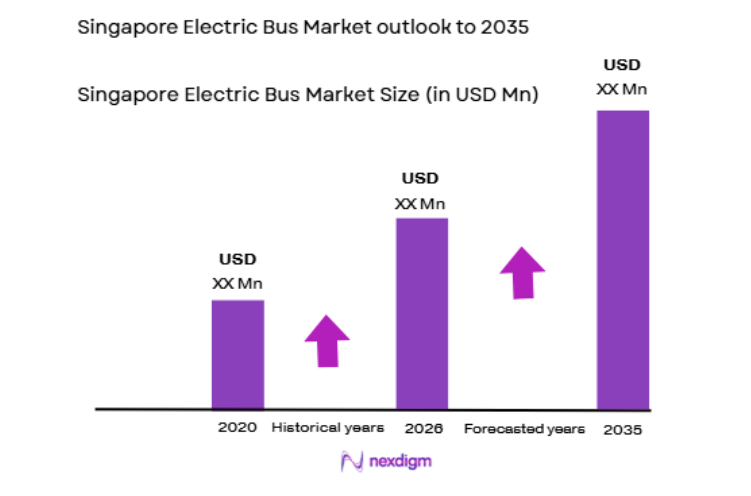
The Singapore electric bus (e-bus) market is valued at approximately USD ~ million, driven by the increasing demand for sustainable public transportation solutions and government initiatives supporting the adoption of electric vehicles. Factors such as the need to reduce carbon emissions, government policies incentivizing e-bus adoption, and the growing awareness of environmental impacts are contributing to market growth. In addition, Singapore’s strategic focus on reducing its reliance on fossil fuels further supports the expansion of the electric bus sector.
Singapore leads in the electric bus market in Southeast Asia due to its proactive policies and commitment to green mobility. The government has set ambitious targets to transition the public transportation sector to electric buses, which has spurred investments in the required charging infrastructure and fleet replacement programs. The city-state’s dense urban environment, along with its efficient public transportation network, makes it an ideal location for the large-scale deployment of electric buses.
Market Segmentation
By Battery Type
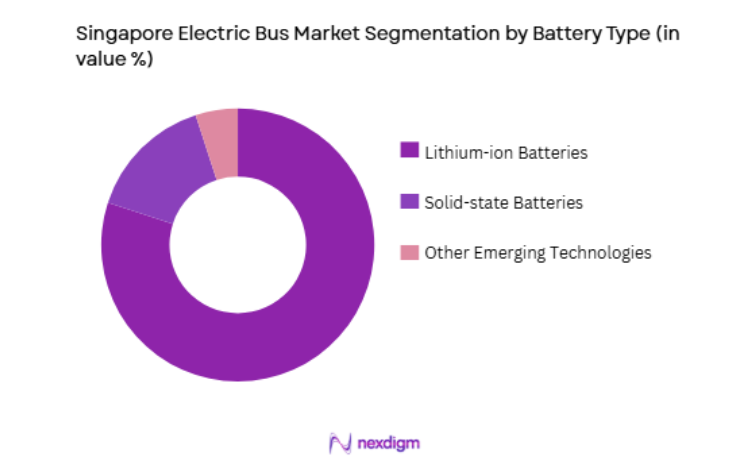
The Singapore e-bus market is segmented by battery type into lithium-ion batteries, solid-state batteries, and other emerging technologies. Lithium-ion batteries dominate the market due to their high energy density, longer lifespan, and decreasing costs. As the most commonly used technology in electric vehicles, lithium-ion batteries offer the best balance of cost and performance, making them the preferred choice for electric buses. Additionally, the growing availability of lithium-ion battery charging stations, coupled with the economies of scale associated with lithium-ion production, has further supported its dominance in the market.
By Application
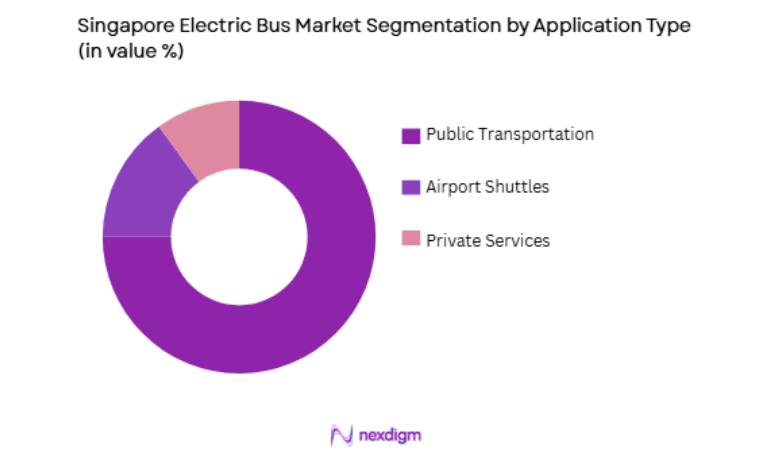
The Singapore e-bus market is segmented by application into public transportation, airport shuttles, and private services. Public transportation is the dominant application due to the government’s push to electrify the public transport fleet. Singapore’s Land Transport Authority (LTA) has been actively replacing diesel buses with electric buses as part of its Green Plan 2030, aiming for a fully electric public bus fleet. This strong government commitment, combined with the extensive public transportation network in Singapore, has driven the dominance of public transportation in the e-bus market.
Competitive Landscape
The competitive landscape of the Singapore e-bus market is characterized by a mix of established global manufacturers and local players. Multinational companies like BYD, Volvo, and BYD are leading the market, offering a range of electric buses equipped with advanced battery technologies and energy-efficient solutions. Local companies, such as Singapore-based SMRT, are also contributing to the market by partnering with global manufacturers to integrate electric buses into the city’s transport infrastructure. The market is seeing significant investments from both public and private sectors to meet the demand for green transportation solutions.
| Company Name | Establishment Year | Headquarters | Technology Focus | Market Reach | Key Products | Revenue (USD Million) | Additional Market-Specific Parameter |
| BYD | 1995 | Shenzhen, China | Lithium-ion | Global | Electric Buses | 15 | Leading EV Bus Manufacturer |
| Volvo | 1927 | Gothenburg, Sweden | ~ | ~ | ~ | ~ | ~ |
| MAN | 1758 | Munich, Germany | ~ | ~ | ~ | ~ | ~ |
| Nexport | 2013 | Singapore | ~ | ~ | ~ | ~ | ~ |
| SMRT | 1987 | Singapore | ~ | ~ | ~ | ~ | ~ |
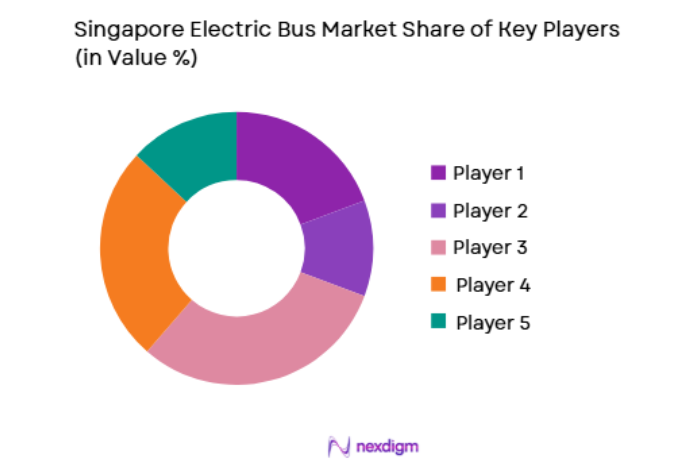
Singapore Electric Bus Market Analysis
Growth Drivers
Government Initiatives and Policies
One of the primary growth drivers for the Singapore electric bus market is the government’s strong commitment to reducing carbon emissions and promoting sustainable transport solutions. Through the Singapore Green Plan 2030, the government has committed to fully electrifying its public bus fleet by 2040. The Land Transport Authority (LTA) has already started transitioning the bus fleet by replacing diesel buses with electric buses and developing the necessary charging infrastructure. This ambitious target has led to significant investments in electric buses and charging stations, making the market highly attractive for local and international players. Furthermore, the government provides subsidies and incentives to bus operators to help defray the initial costs of electric buses and charging equipment, further accelerating adoption.
Technological Advancements in Battery and Charging Systems
Another key growth driver is the rapid advancement in battery technology and electric vehicle charging infrastructure. Lithium-ion batteries, which are widely used in electric buses, continue to improve in terms of energy density, charging time, and cost. Additionally, the development of ultra-fast charging systems allows for quicker turnaround times, making electric buses more suitable for operational use in a busy city like Singapore. Advances in battery recycling also contribute to sustainability, reducing the environmental impact of used batteries. The Singapore government’s emphasis on smart mobility solutions and investments in advanced charging networks ensure that electric buses can operate efficiently, further supporting the market’s growth.
Market Challenges
High Initial Costs of Electric Buses
The initial cost of electric buses remains a significant challenge for their widespread adoption in Singapore. While the total cost of ownership may decrease over time due to savings in fuel and maintenance costs, the upfront costs for purchasing electric buses and installing charging infrastructure are still considerably higher than those for conventional diesel buses. Public transportation agencies and private bus operators often face budgetary constraints, and without sufficient financial incentives or subsidies, the transition to electric buses may be delayed. Although government support can ease this burden, the cost of scaling up production and improving battery technology remains a hurdle for further market penetration.
Limited Charging Infrastructure for E-Buses
While Singapore is advancing in its development of charging infrastructure for electric vehicles, there remains a challenge in scaling up the charging network for electric buses. As the fleet of electric buses expands, the need for a larger and more efficient charging infrastructure becomes critical. The city must ensure that charging stations are strategically located to minimize downtime and avoid disruptions to the bus schedule. In addition, the ability to quickly charge buses during off-peak hours or between operational shifts is vital to ensure that the buses are ready for use. The growth of charging infrastructure must match the pace of fleet electrification to maintain service reliability.
Opportunities
Expansion of Green Public Transport Initiatives
A significant opportunity for the Singapore electric bus market lies in the expansion of green public transportation initiatives. As urbanization increases and the demand for eco-friendly transport grows, there is a clear opportunity to scale the deployment of electric buses in Singapore. The government’s Green Plan 2030, which includes the full electrification of public transportation by 2040, is expected to drive the demand for electric buses. Additionally, the growing global focus on sustainability and environmental conservation offers a favorable market for electric buses in Singapore. Public transportation agencies and private operators are looking to reduce their carbon footprints, which provides significant opportunities for the electric bus market to thrive.
Growth of Electric Bus Fleet in the Private Sector
Another opportunity is the growing interest in electric buses among private fleet operators and service providers. As more businesses and transportation companies in Singapore look for ways to reduce their operating costs and meet environmental targets, the adoption of electric buses is becoming increasingly attractive. The private sector’s transition to electric buses for shuttle services, employee transportation, and airport transfers presents an untapped market opportunity. Additionally, with the rise in demand for electric buses in the logistics and delivery sectors, the potential for expanding electric bus usage beyond public transportation into private fleets is significant.
Future Outlook
The future outlook for the Singapore electric bus market is highly promising, with significant growth expected over the next five years. Government initiatives supporting the electrification of the public transportation sector, coupled with advancements in battery technology and charging infrastructure, will continue to drive market growth. The expansion of electric bus fleets, particularly in the private sector, combined with the growing focus on sustainability, will further fuel demand. Singapore’s role as a global leader in smart mobility and sustainable transport solutions ensures that its electric bus market will remain a key driver of innovation and market expansion in the region.
Major Players
- BYD
- Volvo
- MAN
- Nexport
- SMRT
- Siemens
- GreenPower Motor
- Proterra
- BYD Auto
- Gemilang International
- New Flyer
- Yutong
- ABB
- Geely
- Ebusco
Key Target Audience
- Investments and venture capitalist firms
- Government and regulatory bodies
- Bus operators and fleet managers
- Electric vehicle manufacturers
- Public transportation agencies
- Charging infrastructure providers
- Commercial vehicle fleet operators
- Environmental NGOs
Research Methodology
Step 1: Identification of Key Variables
The identification of key market variables such as government policies, battery technology advancements, and infrastructure developments is critical to understanding the dynamics of the electric bus market in Singapore.
Step 2: Market Analysis and Construction
Comprehensive market analysis is carried out by evaluating the various segments, including product types, applications, and technological advancements in electric bus systems.
Step 3: Hypothesis Validation and Expert Consultation
Market assumptions are validated through consultations with industry professionals, including bus manufacturers, public transportation operators, and energy solution providers to ensure accuracy.
Step 4: Research Synthesis and Final Output
The data collected through primary and secondary research is synthesized into a comprehensive report that provides actionable insights and forecasts for the Singapore electric bus market.

- Executive Summary
- Research Methodology (Definitions, Scope, Industry Assumptions, Market Sizing Approach, Primary & Secondary Research Framework, Data Collection & Verification Protocol, Analytic Models & Forecast Methodology, Limitations & Research Validity Checks)

- Market Definition and Scope
- Value Chain & Stakeholder Ecosystem
- Regulatory / Certification Landscape
- Sector Dynamics Affecting Demand

- Growth Drivers
Government Subsidies for Electric Buses
Rising Environmental Awareness
Technological Advancements in Battery Efficiency - Market Challenges
High Initial Investment Costs
Charging Infrastructure Limitations
Battery Lifespan and Performance Issues - Market Opportunities
Expansion of Charging Infrastructure
Increase in Electric Bus Fleets for Public Transport
Growth of Smart City Initiatives - Trends
Rise of Autonomous Electric Buses
Integration of Electric Buses with Renewable Energy Sources - Government Regulations
- SWOT Analysis
- Porter’s Five Forces

- By Market Value, 2020-2025
- By Installed Units, 2020-2025
- By Average System Price, 2020-2025
- By System Complexity Tier, 2020-2025

- By System Type (In Value%)
Battery Electric Buses
Plug-in Hybrid Electric Buses
Fuel Cell Electric Buses
Autonomous Electric Buses
Double-Decker Electric Buses - By Platform Type (In Value%)
Urban Electric Buses
Intercity Electric Buses
Airport Shuttle Electric Buses
Tourist Electric Buses
School Bus Electric Buses - By Fitment Type (In Value%)
New Electric Bus Fleet
Electric Bus Retrofit Solutions
Hybrid to Electric Bus Conversions
Dedicated Electric Bus Systems - By End User Segment (In Value%)
Public Transport Authorities
Private Bus Operators
Corporate Fleets

- Market Share Analysis
- Cross Comparison Parameters (Battery Type, Platform Type, Charging Speed, Price, Range per Charge, Battery Life Cycle, Charging Infrastructure Compatibility, Energy Efficiency, Bus Capacity, Environmental Impact)
- SWOT Analysis of Key Competitors
- Pricing & Procurement Analysis
- Key Players
BYD Company
Proterra
Volaris
Yutong Bus
Wrightbus
Mercedes-Benz
New Flyer
Alexander Dennis
Scania
MAN Truck & Bus
Tesla
Gillig
Iveco Bus
SANY Group
Solaris Bus & Coach

- Government Initiatives to Promote Electric Buses
- Growing Demand from Urban and Intercity Transport
- Shift Toward Sustainable Mobility Solutions
- Increased Focus on Fleet Electrification

- Forecast Market Value, 2026-2035
- Forecast Installed Units, 2026-2035
- Price Forecast by System Tier, 2026-2035
- Future Demand by Platform, 2026-2035


 Request a Sample
 Ask for Customization
 Get a Quote
 Enquire Now