
 Download PDF
 Download PDF
Market Overview
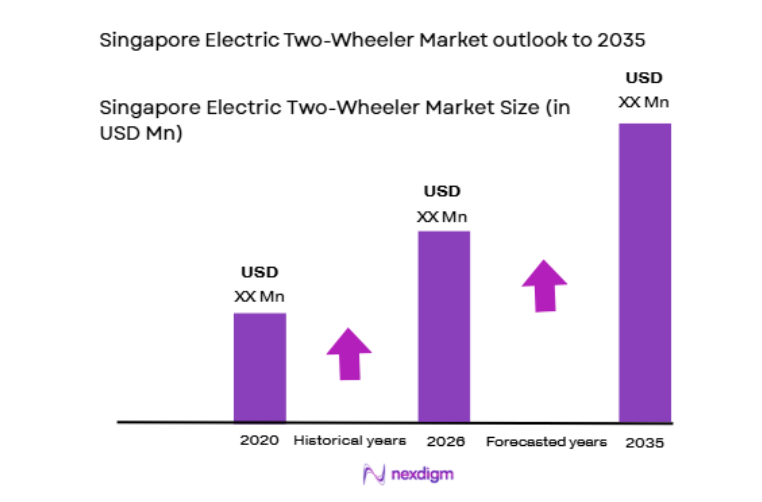
The Singapore electric two-wheeler (e-scooter and e-bike) market is valued at approximately USD ~ million, driven by the country’s increasing focus on sustainable urban mobility, government incentives, and growing consumer interest in eco-friendly transportation options. The adoption of electric two-wheelers is supported by policies encouraging cleaner air, reducing traffic congestion, and minimizing reliance on fossil fuels. Furthermore, innovations in battery technology, along with lower operating costs, are also contributing to the growth of the market.
Singapore is at the forefront of the electric two-wheeler market in Southeast Asia, mainly due to its urban density, technological infrastructure, and government support for green initiatives. The country’s push towards sustainable urban mobility, including the development of bike-sharing schemes and electric scooter regulations, has positioned it as a leader in electric two-wheeler adoption. Additionally, Singapore’s compact geography makes electric two-wheelers an ideal transportation solution for short-distance commutes, further driving their popularity in the city-state.
Market Segmentation
By Product Type
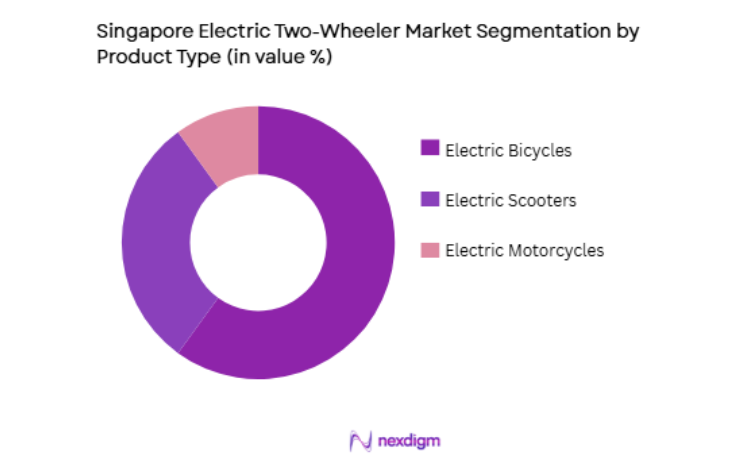
The Singapore electric two-wheeler market is segmented by product type into electric bicycles, electric scooters, and electric motorcycles. Electric bicycles have the dominant market share due to their popularity as a convenient and environmentally friendly mode of transport for daily commuting. The government’s promotion of cycling, combined with the development of extensive cycling infrastructure, has contributed significantly to the widespread adoption of e-bikes. E-bikes are seen as an efficient and cost-effective solution for short urban commutes, offering users flexibility in navigating Singapore’s dense cityscape while promoting a healthier lifestyle.
By End-User
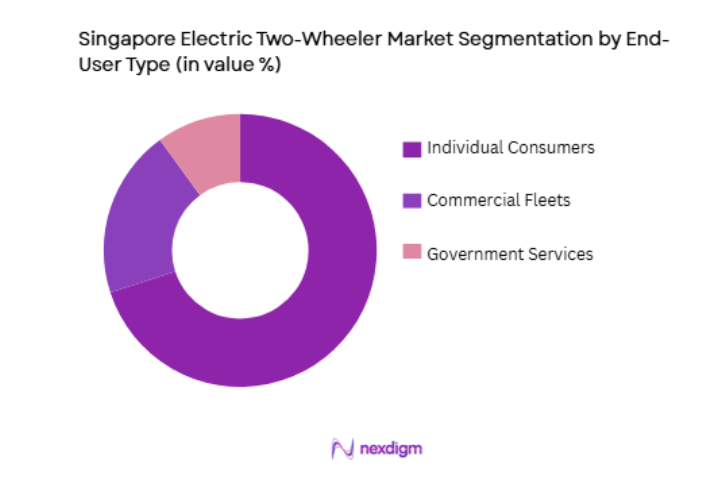
The Singapore electric two-wheeler market is segmented by end-user into individual consumers, commercial fleets, and government services. Individual consumers dominate the market, as electric two-wheelers offer an affordable, efficient, and environmentally friendly mode of transport for short-distance commuting. The adoption of electric two-wheelers is driven by the growing awareness of environmental issues, as well as the increasing cost of car ownership and public transport. Furthermore, the growing trend of online food and parcel delivery services is also contributing to the increasing demand for electric scooters and bikes in the commercial fleet segment.
Competitive Landscape
The competitive landscape of the Singapore electric two-wheeler market is characterized by a mix of global and local manufacturers. Major international players, such as Xiaomi, Segway-Ninebot, and Gogoro, are competing with local companies like QIQ, T1E-Scooter, and ST Kinetics. These players offer a variety of electric two-wheelers, including scooters and bikes, designed to meet the needs of different consumer segments. The market is also seeing significant investments in charging infrastructure, as well as the introduction of innovative shared mobility solutions, further intensifying competition.
| Company Name | Establishment Year | Headquarters | Technology Focus | Market Reach | Key Products | Revenue (USD Million) | Additional Market-Specific Parameter |
| Xiaomi | 2010 | Beijing, China | ~ | ~ | ~ | ~ | ~ |
| Segway-Ninebot | 2012 | Beijing, China | ~ | ~ | ~ | ~ | ~ |
| Gogoro | 2011 | Taipei, Taiwan | ~ | ~ | ~ | ~ | ~ |
| QIQ | 2018 | Singapore | ~ | ~ | ~ | ~ | ~ |
| ST Kinetics | 1997 | Singapore | ~ | ~ | ~ | ~ | ~ |
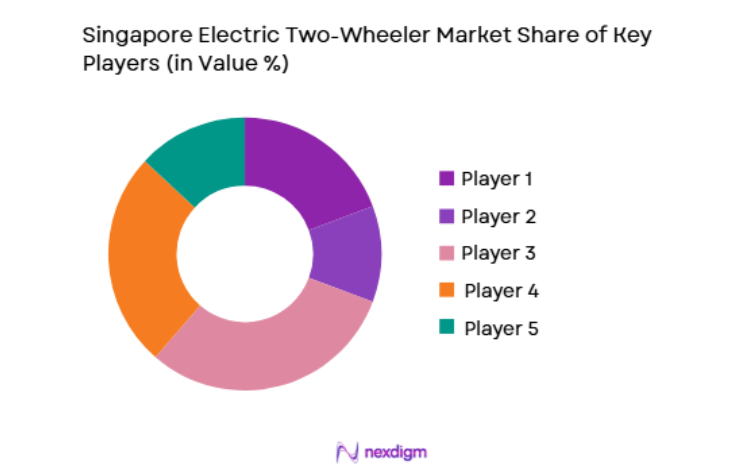
Singapore Electric Two-Wheeler Market Analysis
Growth Drivers
Government Support for Sustainable Mobility
Government policies in Singapore strongly support the adoption of electric vehicles (EVs) and sustainable transportation options. The government has implemented several initiatives to reduce carbon emissions, including the promotion of electric bicycles and scooters as part of its “Green Plan 2030.” These policies include subsidies for electric two-wheelers, tax incentives for consumers, and investments in cycling infrastructure. Additionally, the expansion of cycling paths and electric vehicle charging stations contributes to the growing adoption of electric two-wheelers as a cleaner, more sustainable transportation option. With the Singaporean government aiming to increase the adoption of electric vehicles and reduce fossil fuel dependency, the growth prospects for electric two-wheelers remain positive, spurring further investment in this sector.
Technological Advancements in Battery Systems
Technological advancements in battery systems, particularly lithium-ion and solid-state batteries, are a key growth driver for the electric two-wheeler market. Innovations in battery energy density, charging speed, and lifespan are significantly improving the efficiency and performance of electric two-wheelers, making them more appealing to consumers. In particular, the development of lighter, longer-lasting batteries enables electric two-wheelers to achieve greater ranges on a single charge, increasing their practicality for daily commutes. Moreover, faster-charging capabilities are reducing downtime, which is essential for users who rely on these vehicles for quick, efficient transportation. As battery technology continues to evolve, the performance of electric two-wheelers is expected to improve, thus further driving market growth.
Market Challenges
High Initial Costs of Electric Two-Wheelers
Despite the increasing popularity of electric two-wheelers, the initial cost remains a significant challenge for many consumers in Singapore. While the operational and maintenance costs of electric two-wheelers are generally lower compared to traditional gasoline-powered vehicles, the upfront price can still be prohibitive for some potential buyers. Although government subsidies and incentives help reduce the cost, the purchase price of high-quality electric scooters and bikes can still be a barrier to widespread adoption. As a result, manufacturers must focus on reducing costs through innovations in battery technology, mass production, and economies of scale, while also offering affordable financing options to make electric two-wheelers more accessible to a larger segment of the population.
Limited Charging Infrastructure
While Singapore has made significant progress in developing charging infrastructure for electric vehicles, the availability of charging stations for electric two-wheelers remains a challenge. Although there is an increasing number of charging points in key locations, such as residential areas and commercial districts, the infrastructure is still limited in comparison to the growing demand for electric two-wheelers. Consumers may be deterred from purchasing electric scooters and bikes if they are concerned about the availability and convenience of charging stations. Expanding the charging infrastructure, including the introduction of fast-charging options, is crucial to addressing this issue and supporting the continued growth of the electric two-wheeler market in Singapore.
Opportunities
Expansion of Shared Mobility Solutions
The growth of shared mobility solutions presents a significant opportunity for the electric two-wheeler market. Bike-sharing and scooter-sharing platforms have gained popularity in Singapore, particularly in urban areas where people seek affordable, convenient, and eco-friendly transportation options for short trips. These shared mobility services reduce the need for private vehicle ownership, contributing to decreased traffic congestion and lower carbon emissions. As the demand for shared mobility increases, the market for electric two-wheelers, particularly electric scooters, is poised to grow rapidly. With the integration of electric two-wheelers into shared mobility platforms, both consumers and operators benefit from reduced operational costs, further boosting market adoption.
Growth in Urban Delivery Services
The rise of e-commerce and the increasing demand for fast and efficient delivery services present another significant opportunity for the electric two-wheeler market. With the growing popularity of food delivery and parcel services, companies are looking for sustainable transportation options to reduce their carbon footprint. Electric scooters and bikes are ideal solutions for these businesses, offering low-cost, environmentally friendly options for last-mile delivery. The convenience of electric two-wheelers in urban areas, coupled with government incentives to promote sustainable transport, provides a fertile ground for the growth of electric two-wheelers in the delivery sector. This segment is expected to drive the adoption of electric two-wheelers across both the commercial and consumer markets.
Future Outlook
The future outlook for the Singapore electric two-wheeler market is highly promising, with significant growth anticipated over the next five years. Government policies that promote electric vehicles, technological advancements in battery systems, and the rise of shared mobility and delivery services are expected to drive increased adoption of electric two-wheelers. With a growing focus on sustainability, the demand for electric two-wheelers will likely rise, particularly in urban areas. The expansion of charging infrastructure and ongoing innovations in battery technology will make electric two-wheelers more accessible and practical, ensuring that the market remains on a strong growth trajectory.
Major Players
- Xiaomi
- Segway-Ninebot
- Gogoro
- QIQ
- SMRT
- Lime
- Bird
- T1E-Scooter
- Q-tech
- Super Soco
- E-TWOW
- Volta
- Scoot
- Razor
- Flluid
Key Target Audience
- Investments and venture capitalist firms
- Government and regulatory bodies
- Electric vehicle manufacturers
- Public transportation agencies
- Delivery service providers
- Commercial fleet operators
- Charging infrastructure providers
- Environmental NGOs
Research Methodology
Step 1: Identification of Key Variables
The identification of key market variables, such as government policies, battery technologies, consumer preferences, and charging infrastructure, is critical in understanding the dynamics of the electric two-wheeler market in Singapore.
Step 2: Market Analysis and Construction
Comprehensive market analysis is conducted by evaluating the different product types, end-user segments, and technological advancements in the electric two-wheeler market.
Step 3: Hypothesis Validation and Expert Consultation
Market assumptions are validated through consultations with industry professionals, including manufacturers, fleet operators, and government agencies to ensure the accuracy of the insights.
Step 4: Research Synthesis and Final Output
The data collected is synthesized into a comprehensive report that offers insights into the growth drivers, challenges, and opportunities in the electric two-wheeler market, providing actionable recommendations for industry stakeholders.

- Executive Summary
- Research Methodology (Definitions, Scope, Industry Assumptions, Market Sizing Approach, Primary & Secondary Research Framework, Data Collection & Verification Protocol, Analytic Models & Forecast Methodology, Limitations & Research Validity Checks)

- Market Definition and Scope
- Value Chain & Stakeholder Ecosystem
- Regulatory / Certification Landscape
- Sector Dynamics Affecting Demand

- Growth Drivers
Government Incentives for Electric Vehicles
Increasing Environmental Awareness
Rising Fuel Costs and Consumer Savings - Market Challenges
High Initial Cost of Electric Two-Wheelers
Limited Charging Infrastructure
Range Anxiety and Battery Life Concerns - Market Opportunities
Integration with Smart City Mobility Solutions
Growing Demand for Delivery Fleets
Advancements in Battery Technologies - Trends
Shift Towards Shared Electric Two-Wheeler Solutions
Increasing Adoption of Lithium-Ion Batteries - Government Regulations
- SWOT Analysis
- Porter’s Five Forces

- By Market Value, 2020-2025
- By Installed Units, 2020-2025
- By Average System Price, 2020-2025
- By System Complexity Tier, 2020-2025

- By System Type (In Value%)
Electric Scooters
Electric Motorcycles
Electric Mopeds
Electric Bicycles
Hybrid Two-Wheelers - By Platform Type (In Value%)
Urban Electric Two-Wheelers
Intercity Electric Two-Wheelers
Delivery Electric Two-Wheelers
Recreational Electric Two-Wheelers
High-Performance Electric Two-Wheelers - By Fitment Type (In Value%)
OEM Electric Two-Wheelers
Aftermarket Electric Two-Wheelers
Custom Electric Two-Wheelers
E-bike Conversion Kits - By End User Segment (In Value%)
Individual Consumers
Commercial Fleets
Government and Public Sector

- Market Share Analysis
- Cross Comparison Parameters (Battery Type, Platform Type, Price, Range per Charge, Charging Time, Motor Power, Speed Capabilities, Charging Infrastructure Compatibility, Vehicle Weight, Environmental Impact)
- SWOT Analysis of Key Competitors
- Pricing & Procurement Analysis
- Key Players
Gogoro
NIU Technologies
Super Soco
Ather Energy
Hero Electric
TVS Motor Company
Yamaha Motor Co.
Piaggio Group
Honda Motor Co.
Zero Motorcycles
BMW Motorrad
KTM
Vespa
Stromer
Giant Manufacturing

- Rising Affordability and Consumer Interest
- Government Subsidies and Incentives
- Increasing Urbanization and Need for Personal Transport
- Growing Demand from Delivery and Logistics Sectors

- Forecast Market Value, 2026-2035
- Forecast Installed Units, 2026-2035
- Price Forecast by System Tier, 2026-2035
- Future Demand by Platform, 2026-2035


 Request a Sample
 Ask for Customization
 Get a Quote
 Enquire Now