

 Download PDF
 Download PDF
Market Overview
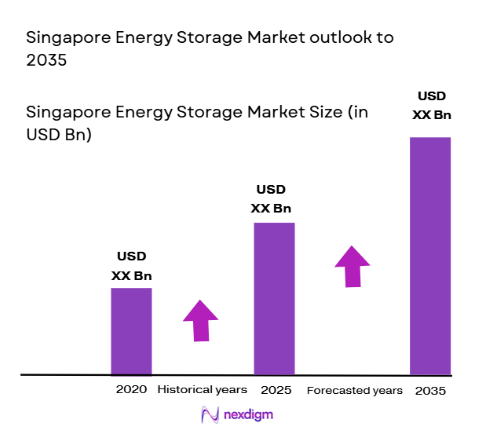
The Singapore energy storage market has grown significantly, valued at approximately USD ~ billion. This market is driven by strong government initiatives to integrate renewable energy sources into the grid, focusing on enhancing energy security and sustainability. With the nation’s aggressive renewable energy targets and increasing investments in storage technologies, the market is expected to expand rapidly. Additionally, the growing adoption of energy-efficient solutions across residential, commercial, and industrial sectors further supports the rise of energy storage systems, helping to address grid instability and optimize energy management.
Dominant countries driving the energy storage market include Singapore, with its advanced technological infrastructure, regulatory support, and high energy demand. Singapore’s focus on renewable energy integration and energy storage is bolstered by its strategic geographic location and significant private sector involvement. Additionally, the government’s progressive policies regarding subsidies and tax incentives for green technologies create a robust market environment. As a global hub for innovation, Singapore’s growing interest in energy storage aligns with its long-term sustainability goals.
Market Segmentation
By Product Type:
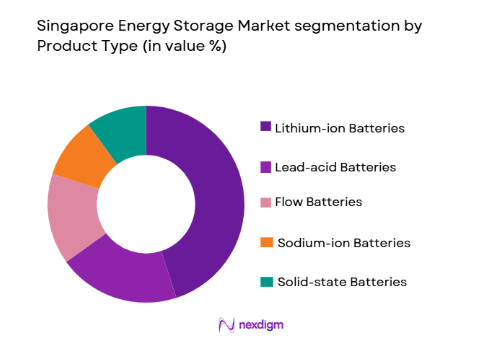
The Singapore energy storage market is segmented by product type into lithium-ion batteries, lead-acid batteries, flow batteries, sodium-ion batteries, and solid-state batteries. Recently, lithium-ion batteries have a dominant market share due to factors such as technological advancements, cost-effectiveness, and widespread adoption in both residential and industrial applications. Lithium-ion batteries are known for their high energy density, longer lifecycle, and reduced maintenance needs, making them a preferred choice for energy storage solutions. This sub-segment has experienced rapid growth due to the increasing demand for renewable energy integration, coupled with a decrease in battery prices. As more renewable energy sources are deployed, lithium-ion batteries continue to dominate in large-scale installations and electric vehicle applications, making them the key driving force in the market.
By Application:
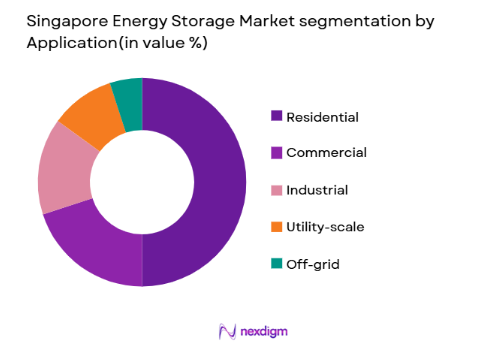
The Singapore energy storage market is segmented by application into residential, commercial, industrial, utility-scale, and off-grid systems. Among these, residential applications dominate the market, with a growing preference for home energy storage solutions. This is mainly due to the increasing number of solar panel installations and the desire for energy independence. As more homeowners seek to optimize their energy consumption and reduce costs, the demand for residential energy storage solutions has surged. These systems enable efficient energy management, enhance grid reliability, and ensure consistent energy supply, especially during peak hours or power outages. With government incentives and favorable policies supporting residential solar adoption, this sub-segment is expected to maintain its dominance in the energy storage market.
Competitive Landscape
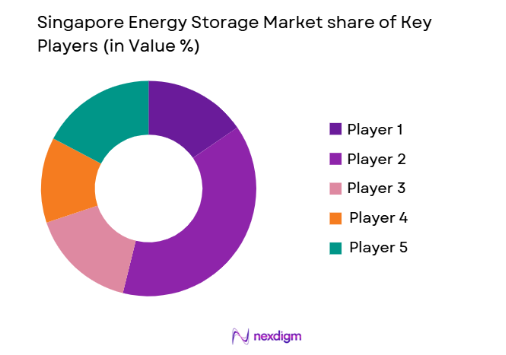
The Singapore energy storage market is highly competitive, with numerous players vying for market share. The market landscape is shaped by key players that drive technological advancements, cost reductions, and strategic collaborations. Major players are focusing on consolidating their positions through mergers, acquisitions, and partnerships. As competition intensifies, these companies aim to leverage emerging technologies such as solid-state batteries and energy management software to differentiate themselves. Despite the dominance of established players, there is room for smaller firms offering niche solutions tailored to specific market needs, further enhancing competition.
| Company Name | Establishment Year | Headquarters | Technology Focus | Market Reach | Key Products | Revenue (USD Billion) | Market-Specific Parameter |
| Tesla | 2003 | Palo Alto, USA | ~ | ~ | ~ | ~ | ~ |
| Siemens | 1847 | Munich, Germany | ~ | ~ | ~ | ~ | ~ |
| LG Chem | 1947 | Seoul, South Korea | ~ | ~ | ~ | ~ | ~ |
| Fluence Energy | 2018 | Arlington, USA | ~ | ~ | ~ | ~ | ~ |
| ABB | 1988 | Zurich, Switzerland | ~ | ~ | ~ | ~ | ~ |
Singapore Energy Storage Market Analysis
Growth Drivers
Government Incentives for Renewable Energy Projects:
Government support for renewable energy projects has been a significant driver for the growth of the energy storage market in Singapore. The government has set ambitious targets for carbon reduction and aims to achieve a substantial share of renewable energy in the country’s energy mix. This is being driven by investments in large-scale solar projects, offshore wind, and other renewable sources. The government offers subsidies, grants, and tax incentives to encourage the adoption of energy storage systems that enhance grid stability and facilitate the integration of renewables into the power grid. These incentives have lowered the upfront costs of energy storage technologies, making them more accessible to both businesses and homeowners. With the increasing deployment of renewable energy projects and the country’s energy security goals, energy storage solutions are integral to maintaining a reliable and sustainable energy system.
Technological Advancements in Energy Storage Systems:
Technological advancements have played a pivotal role in the growth of the energy storage market. As the need for efficient, cost-effective storage solutions increases, innovations in battery chemistry, energy management systems, and software have significantly improved performance and reduced costs. For instance, lithium-ion batteries, which dominate the market, have benefited from ongoing research and development that enhances their energy density, lifespan, and safety. Furthermore, emerging technologies like solid-state batteries and flow batteries are expected to revolutionize the market by offering even greater efficiency and longer lifecycles. These advancements are driving the adoption of energy storage systems across various applications, including residential, industrial, and utility-scale sectors. As technological barriers are overcome and economies of scale are realized, energy storage solutions will become more affordable and widely available, fostering market growth in the coming years.
Market Challenges
High Initial Capital Investment:
A major challenge faced by the energy storage market in Singapore is the high initial capital investment required for large-scale storage systems. Despite the long-term savings and efficiency benefits, the upfront cost of purchasing, installing, and maintaining energy storage systems is a significant barrier to adoption, particularly for smaller businesses and residential users. Although government incentives can offset a portion of the costs, the capital intensity remains a concern. For industrial-scale systems, which are essential for ensuring grid stability, the financial burden can be overwhelming. This challenge is exacerbated by the need for substantial infrastructure development and the long payback periods associated with large storage installations. Overcoming this financial hurdle is crucial for the widespread adoption of energy storage solutions across all sectors.
Regulatory and Certification Barriers:
Regulatory and certification processes continue to present a major obstacle for energy storage market players in Singapore. The complexities associated with safety standards, grid integration, and environmental regulations can lead to delays in product approval and project deployment. Energy storage systems must meet strict regulatory requirements related to safety, environmental impact, and grid compliance before they can be deployed on a commercial scale. These regulations vary by region and often require extensive testing and certification, which can slow down the development process. Additionally, inconsistencies in regulatory frameworks across different countries can complicate international collaborations and hinder the growth of the market. Addressing these barriers will require the alignment of regulatory standards and more streamlined processes to facilitate the deployment of energy storage systems.
Opportunities
Integration of Energy Storage with Electric Vehicles:
One of the key opportunities in the energy storage market is the growing integration of energy storage solutions with electric vehicles (EVs). As the adoption of electric vehicles continues to rise in Singapore, energy storage systems can play a critical role in enhancing their efficiency and performance. Energy storage solutions can be used to manage and store the energy generated by EVs, enabling them to serve as mobile storage units for the grid. This creates a mutually beneficial relationship, where energy storage systems help EVs manage power more efficiently, and EVs can provide grid support during peak demand periods. With the ongoing growth of the EV market and the increasing need for flexible, decentralized energy solutions, the integration of EVs with energy storage systems presents a significant opportunity for market expansion.
Emerging Demand for Energy Storage in Industrial Applications:
The industrial sector represents a growing opportunity for energy storage solutions, driven by the increasing demand for energy efficiency and reliability. As industries adopt automation, digitization, and renewable energy sources, they require advanced storage systems to manage energy use, reduce operational costs, and enhance overall efficiency. Energy storage solutions can provide backup power during grid outages, enable load shifting to avoid peak tariffs, and store excess renewable energy for later use. The industrial sector is particularly suited for large-scale energy storage systems, which can help optimize energy consumption, reduce costs, and meet sustainability goals. With more industries focusing on green energy and sustainability, energy storage has become an essential tool for modernizing industrial operations and driving long-term cost savings.
Future Outlook
The future outlook for the Singapore energy storage market is highly positive, with robust growth expected over the next five years. Continued technological advancements, such as improvements in battery chemistry and energy management systems, will lower costs and improve the performance of energy storage solutions. Government support for renewable energy and storage systems will continue to drive market expansion, particularly in residential and commercial sectors. Additionally, the integration of energy storage with electric vehicles and grid modernization projects will create new opportunities for market growth. As the demand for sustainable energy solutions increases, the energy storage market will play a pivotal role in supporting Singapore’s transition to a greener, more resilient energy system.
Major Players
- Tesla
- Siemens
- LG Chem
- Fluence Energy
- ABB
- Samsung SDI
- Envision Energy
- Pylon Technologies
- BYD
- VARTA
- Schneider Electric
- Hitachi ABB Power Grids
- Saft Batteries
- Redflow
- ENGIE
Key Target Audience
- Investments and venture capitalist firms
- Government and regulatory bodies
- Utility companies
- Commercial energy providers
- Industrial energy consumers
- Energy infrastructure developers
- Large-scale solar and wind energy operators
- Electric vehicle manufacturers
Research Methodology
Step 1: Identification of Key Variables
The first step involves identifying the core variables that affect the energy storage market in Singapore, including market size, demand drivers, technologies, and regulatory factors.
Step 2: Market Analysis and Construction
The collected data is analyzed to construct market models that represent different facets of the energy storage market, including product types, applications, and market dynamics.
Step 3: Hypothesis Validation and Expert Consultation
Consultations with industry experts validate the initial hypotheses about market trends, growth drivers, and challenges, ensuring accuracy and relevance.
Step 4: Research Synthesis and Final Output
The final step synthesizes all collected data and insights into a comprehensive report that provides a clear market overview, forecasts, and strategic recommendations.

- Executive Summary
- Research Methodology (Definitions, Scope, Industry Assumptions, Market Sizing Approach, Primary & Secondary Research Framework, Data Collection & Verification Protocol, Analytic Models & Forecast Methodology, Limitations & Research Validity Checks)

- Market Definition and Scope
- Value Chain & Stakeholder Ecosystem
- Regulatory / Certification Landscape
- Sector Dynamics Affecting Demand
- Strategic Initiatives & Infrastructure Growth

- Growth Drivers
Government Support for Renewable Energy Integration
Increasing Demand for Grid Stability
Technological Advancements in Battery Storage
Cost Reduction in Energy Storage Systems
Expansion of Electric Vehicles and Storage Solutions - Market Challenges
High Capital Investment Costs
Regulatory and Certification Barriers
Limited Infrastructure for Large-scale Storage
Supply Chain Constraints
Public Awareness and Adoption Challenges - Market Opportunities
Growing Demand for Residential Energy Storage
Emerging Integration with Electric Vehicles
Advancements in Battery Recycling Technologies - Trends
Increase in Adoption of Lithium-ion Batteries
Integration of AI and IoT for Enhanced Efficiency
Rise in Smart Grid and Microgrid Solutions
Focus on Energy Storage for Renewable Energy Sources
Growth in Energy Storage for Electric Vehicle Charging Stations - Government Regulations & Defense Policy
Government Incentives for Energy Storage Systems
Energy Security and Storage Policy Developments
Regulatory Framework for Renewable Integration - SWOT Analysis
- Stakeholder and Ecosystem Analysis
- Porter’s Five Forces Analysis
- Competition Intensity and Ecosystem Mapping

- By Market Value, 2020-2025
- By Installed Units, 2020-2025
- By Average System Price, 2020-2025
- By System Complexity Tier, 2020-2025

- By System Type (In Value%)
Lithium-ion Batteries
Flow Batteries
Lead-acid Batteries
Sodium-ion Batteries
Solid-state Batteries - By Platform Type (In Value%)
Residential Systems
Commercial Systems
Industrial Systems
Utility-scale Systems
Off-grid Systems - By Fitment Type (In Value%)
On-premise Systems
Cloud-based Systems
Hybrid Systems
Modular Systems
Integrated Systems - By EndUser Segment (In Value%)
Residential
Commercial
Industrial
Government
Utilities - By Procurement Channel (In Value%)
Direct Procurement
Government Tenders
Private Sector Procurement
Online Bidding Platforms
Third-party Distributors - By Material / Technology (In Value%)
Lithium-ion
Flow Batteries
Lead-acid
Sodium-ion
Solid-state Technologies

- Market structure and competitive positioning
- Market share snapshot of major players
- CrossComparison Parameters (System Type, Platform Type, Procurement Channel, EndUser Segment, Fitment Type, Technology Adoption, Price Sensitivity, Regulatory Compliance, Investment Focus, Geographic Reach)
- SWOT Analysis of Key Players
- Pricing & Procurement Analysis
- Key Players
Sungrow Power Supply
Tesla
Siemens
ABB
Fluence Energy
Samsung SDI
LG Chem
BYD Company
Sharp Corporation
Envision Energy
Eaton Corporation
Pylon Technologies
Huawei Technologies
Varta AG
Alpha ESS

- Increased Adoption of Energy Storage in Residential Sectors
- Government Investment in Energy Storage Solutions
- Commercial Sector Integration with Renewable Energy
- Industrial Sector Demand for Large-scale Storage Systems


 Request a Sample
 Ask for Customization
 Get a Quote
 Enquire Now