
 Download PDF
 Download PDF
Market Overview
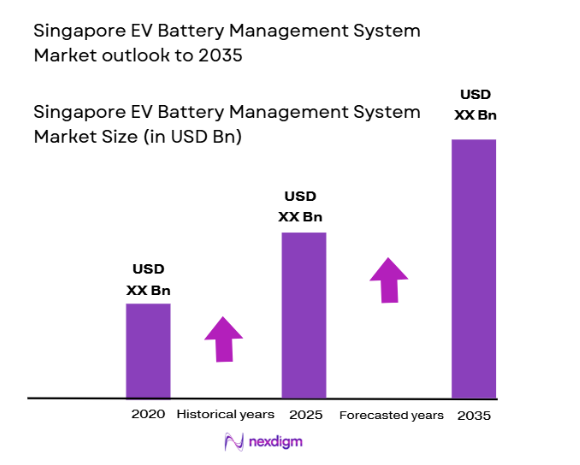
The Singapore EV Battery Management System market is driven by the rapid adoption of electric vehicles, with the market size in 2024 expected to be valued at approximately USD ~ billion. The growth is propelled by government incentives, advancements in battery technology, and increased awareness of environmental concerns. The government’s push for EV infrastructure and tax rebates has led to heightened investments in energy storage solutions and EV batteries. The market is poised for significant growth, particularly with the accelerating pace of EV adoption and technological advancements.
The dominant players in the market include Singapore, which leads the charge due to its strategic location in Southeast Asia, advanced technological infrastructure, and strong government support for clean energy. Neighboring countries such as Malaysia and Thailand also contribute to the region’s dominance, driven by similar regulatory environments and investments in green technologies. The adoption of electric mobility in urban centers like Singapore is being supported by the availability of charging stations, infrastructure projects, and an increase in local manufacturing capacity for EV components.
Market Segmentation
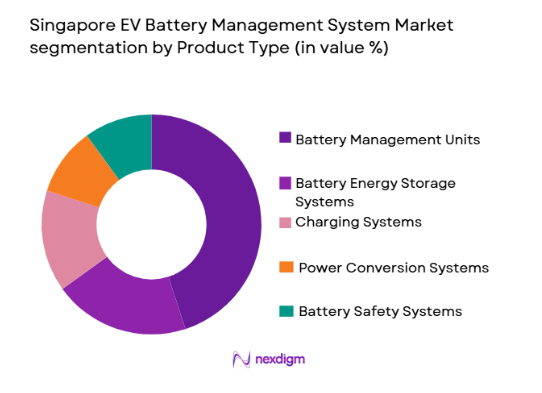
By Product Type:
Singapore EV Battery Management System market is segmented by product type into battery management units, battery energy storage systems, charging systems, power conversion systems, and battery safety systems. Recently, battery management units have a dominant market share due to their critical role in optimizing battery performance and enhancing the efficiency of electric vehicles. They ensure that energy is used efficiently, reducing wastage and extending the lifespan of batteries, which is crucial for both consumer satisfaction and cost-effectiveness. The growing demand for EVs, coupled with stringent regulations on battery performance, has led to the widespread adoption of these systems in the region.
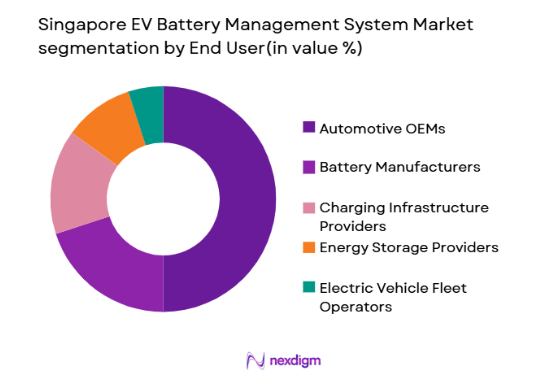
By End-User:
The market is segmented by end-user into automotive OEMs, battery manufacturers, charging infrastructure providers, energy storage providers, and electric vehicle fleet operators. Recently, automotive OEMs have dominated the market due to the increasing adoption of electric vehicles across Singapore and the broader Southeast Asia region. As car manufacturers continue to invest in EV production, they require advanced battery management systems to improve vehicle performance, efficiency, and safety. Additionally, the rise of hybrid and fully electric vehicle models in Singapore has significantly boosted the demand for BMS solutions from automotive OEMs, further cementing their leading role in the market.
Competitive Landscape
The competitive landscape of the Singapore EV Battery Management System market is dynamic, with both global and local players contributing to the market’s growth. Companies are consolidating their positions through strategic partnerships, technological advancements, and extensive R&D efforts. Key players are focusing on creating innovative solutions, such as enhancing battery life, improving charge cycles, and reducing energy consumption. Additionally, partnerships with local governments and corporations have been instrumental in expanding market reach and driving infrastructure development.
| Company Name | Establishment Year | Headquarters | Technology Focus | Market Reach | Key Products | Revenue (USD) | Market-Specific Parameter |
| STMicroelectronics | 1987 | Singapore | ~ | ~ | ~ | ~ | ~ |
| Infineon Technologies | 1999 | Singapore | ~ | ~ | ~ | ~ | ~ |
| NXP Semiconductors | 2006 | Singapore | ~ | ~ | ~ | ~ | ~ |
| Panasonic Corporation | 1918 | Japan | ~ | ~ | ~ | ~ | ~ |
| Tesla | 2003 | USA | ~ | ~ | ~ | ~ | ~ |
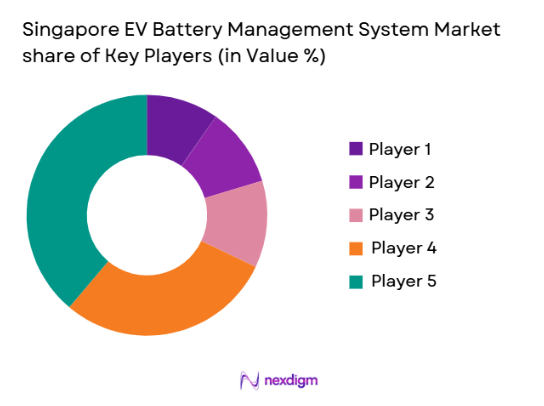
Singapore EV Battery Management System Market Analysis
Growth Drivers
Government Incentives and Subsidies:
Government incentives and subsidies have been pivotal in stimulating the demand for EVs and, consequently, battery management systems. Policies such as tax rebates, grants, and infrastructure development support have made EVs more affordable and accessible to consumers. The government’s long-term sustainability plans further encourage the production and adoption of electric vehicles. With EV adoption expected to increase significantly, demand for high-performance battery management systems is expected to rise. Additionally, investments in charging infrastructure, such as the deployment of public charging stations, ensure consumers have reliable access to charging, fostering further growth in the market.
Technological Advancements in Battery Management Systems:
Rapid advancements in battery management technology, including the integration of AI and machine learning for optimization, are driving the growth of the EV battery management system market. These technologies enhance battery efficiency, improve longevity, and ensure the safety of EVs, leading to higher adoption rates. Moreover, innovations in solid-state battery technology and enhanced charging solutions provide further impetus to the market. Battery management systems are evolving to support these technological changes, ensuring that EVs remain competitive in terms of range, charging speed, and overall performance. This ongoing development is a key factor fueling market growth.
Market Challenges
High Production Costs of EV Batteries:
One of the significant challenges facing the EV battery management system market is the high cost of EV battery production. The materials required for high-performance batteries, such as lithium, cobalt, and nickel, remain expensive, which impacts the overall price of electric vehicles. Although prices have been declining over the years, they still constitute a significant portion of the vehicle’s cost, affecting the affordability of EVs for a broader consumer base. As the market shifts towards solid-state batteries and alternative materials, these costs may decrease, but the transition remains slow. This challenge affects the pace at which EV adoption can reach mass-market levels.
Regulatory and Safety Concerns:
The regulatory environment and safety standards for battery management systems are continually evolving, presenting a challenge for manufacturers in the market. Stringent regulations on battery safety, performance standards, and environmental compliance require significant investment in R&D, certification processes, and ongoing testing. Companies must navigate complex global regulations to ensure their products are compliant with local and international standards. Additionally, safety concerns, such as thermal runaway and battery fires, require continuous innovation to develop safer battery technologies, adding to the complexity of battery management system design.
Opportunities
Integration with Renewable Energy Systems:
One of the significant opportunities for growth in the Singapore EV battery management system market lies in the integration of EV batteries with renewable energy systems. As the world moves towards more sustainable energy sources, there is an increasing need for energy storage solutions that can support solar and wind energy systems. EV battery management systems can play a critical role in managing energy storage, making the grid more reliable and sustainable. With Singapore’s commitment to renewable energy and carbon reduction goals, the demand for integrated solutions that combine EV batteries with renewable energy systems is expected to rise.
Expansion of Electric Vehicle Fleets:
The expansion of electric vehicle fleets presents a tremendous opportunity for the Singapore EV battery management system market. Corporate and government fleets are increasingly adopting electric vehicles as part of their sustainability initiatives. This shift creates significant demand for EV battery management systems to ensure the optimal performance, charging, and maintenance of these fleets. As businesses and government agencies continue to prioritize sustainability, the demand for fleet management solutions integrated with advanced battery management systems is expected to grow, opening new avenues for market expansion.
Future Outlook
The Singapore EV Battery Management System market is expected to grow significantly over the next five years. Key trends such as the development of more efficient battery technologies, the integration of EVs with renewable energy solutions, and increased government support will drive market expansion. As more businesses and individuals transition to electric vehicles, the demand for advanced battery management systems will increase, leading to continuous innovation and growth. Furthermore, the increasing emphasis on sustainability will continue to boost both consumer and corporate demand for EVs and related infrastructure.
Major Players
- STMicroelectronics
- Infineon Technologies
- NXP Semiconductors
- Panasonic Corporation
- Tesla
- LG Chem
- Samsung SDI
- BYD
- Bosch
- ABB
- Eaton
- General Electric
- A123 Systems
- Delphi Technologies
- Honeywell
Key Target Audience
- Investments and venture capitalist firms
- Government and regulatory bodies
- Automotive OEMs
- Battery manufacturers
- Charging infrastructure providers
- Energy storage solution providers
- Electric vehicle fleet operators
- Renewable energy companies
Research Methodology
Step 1: Identification of Key Variables
Identification of market trends, regulatory policies, and technological advancements impacting the EV battery management system industry.
Step 2: Market Analysis and Construction
Assessment of the market size, demand trends, and key drivers to construct a comprehensive market model.
Step 3: Hypothesis Validation and Expert Consultation
Consultation with industry experts, stakeholders, and market leaders to validate findings and adjust the market model.
Step 4: Research Synthesis and Final Output
Synthesis of the collected data into a final, comprehensive report with actionable insights.

- Executive Summary
- Research Methodology (Definitions, Scope, Industry Assumptions, Market Sizing Approach, Primary & Secondary Research Framework, Data Collection & Verification Protocol, Analytic Models & Forecast Methodology, Limitations & Research Validity Checks)

- Market Definition and Scope
- Value Chain & Stakeholder Ecosystem
- Regulatory / Certification Landscape
- Sector Dynamics Affecting Demand
- Strategic Initiatives & Infrastructure Growth

- Growth Drivers
Rising demand for electric vehicles
Government initiatives and incentives
Technological advancements in battery management
Expansion of charging infrastructure
Increasing environmental regulations - Market Challenges
High production and operational costs
Battery performance and longevity concerns
Regulatory and compliance challenges
Supply chain disruptions
Lack of standardization across platforms - Market Opportunities
Development of solid-state batteries
Expansion into ASEAN and regional markets
Integration with renewable energy systems - Trends
Growth in battery-as-a-service models
Rising adoption of AI for battery management
Increased focus on recycling and sustainability
Shift towards modular battery solutions
Technological innovations in fast charging - Government Regulations & Defense Policy
Battery recycling regulations
Subsidies for EV manufacturers
Standards for battery safety and performance - SWOT Analysis
- Stakeholder and Ecosystem Analysis
- Porter’s Five Forces Analysis
- Competition Intensity and Ecosystem Mapping

- By Market Value, 2020-2025
- By Installed Units, 2020-2025
- By Average System Price, 2020-2025
- By System Complexity Tier, 2020-2025

- By System Type (In Value%)
Battery Management Units
Battery Energy Storage Systems
Charging Systems
Power Conversion Systems
Battery Safety Systems - By Platform Type (In Value%)
Electric Vehicles
Stationary Energy Storage
Renewable Energy Integration
Backup Power Systems
Microgrids - By Fitment Type (In Value%)
On-vehicle Fitment
Off-vehicle Fitment
Modular Fitment
Integrated Fitment
Mobile Fitment - By EndUser Segment (In Value%)
Automotive OEMs
Battery Manufacturers
Charging Infrastructure Providers
Energy Storage Providers
Electric Vehicle Fleet Operators - By Procurement Channel (In Value%)
Direct Procurement
OEM Partnerships
Third-party Distributors
Online Procurement Platforms
Government Tenders - By Material / Technology (In Value%)
Lithium-ion Battery Technology
Solid-state Battery Technology
Battery Management Software
Supercapacitor Technology
Graphene-based Battery Materials

- Market structure and competitive positioning
- Market share snapshot of major players
- CrossComparison Parameters (System Type, Platform Type, Procurement Channel, EndUser Segment, Fitment Type, Material/Technology, Growth Drivers, Challenges, Opportunities, Trends)
- SWOT Analysis of Key Players
- Pricing & Procurement Analysis
- Key Players
STMicroelectronics
Infineon Technologies
NXP Semiconductors
LG Chem
Panasonic Corporation
Samsung SDI
BYD Company
Tesla
ABB
Siemens
Eaton
A123 Systems
Johnson Controls
Bosch
Xpeng Motors

- Government fleet electrification initiatives
- Automotive OEMs’ focus on EV adoption
- Battery manufacturers investing in R&D
- Energy storage providers seeking advanced BMS solutions

- Forecast Market Value, 2026-2035
- Forecast Installed Units, 2026-2035
- Price Forecast by System Tier, 2026-2035
- Future Demand by Platform, 2026-2035


 Request a Sample
 Ask for Customization
 Get a Quote
 Enquire Now