
 Download PDF
 Download PDF
Market Overview
The Singapore EV battery market is valued at approximately USD ~ billion, driven by the increasing adoption of electric vehicles (EVs) and government policies supporting sustainable transport solutions. Key factors such as the country’s push toward reducing carbon emissions, tax incentives for electric vehicle buyers, and the development of a robust charging infrastructure are accelerating the demand for EV batteries. Additionally, the growth of the automotive sector and the global shift toward green energy solutions further support the market’s expansion.
Singapore’s dominance in the EV battery market is largely attributed to its position as a leading financial and technology hub in Southeast Asia. The government’s proactive stance on green energy, the establishment of local research and development facilities, and its strategic location in the global supply chain make it an attractive destination for investment in EV technologies. Furthermore, Singapore’s dense urban environment and commitment to reducing vehicle emissions through regulatory measures create a fertile ground for EV adoption.
Market Segmentation
By Battery Type
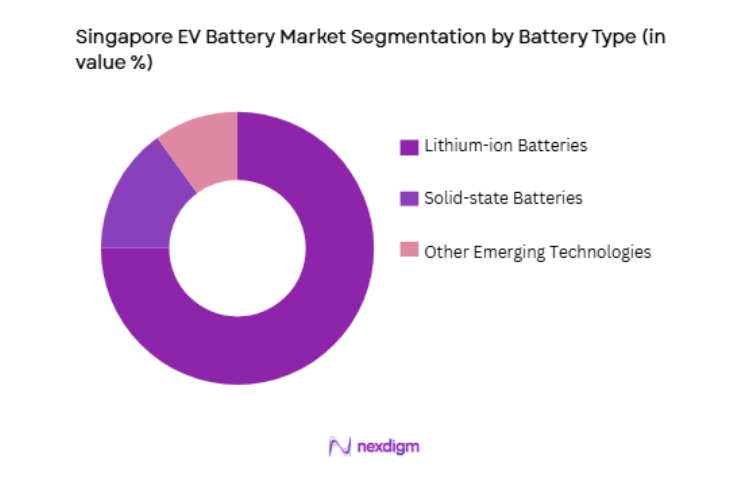
The Singapore EV battery market is segmented by battery type into lithium-ion (Li-ion) batteries, solid-state batteries, and other emerging battery technologies. Lithium-ion batteries dominate the market due to their established reliability, efficiency, and widespread use in electric vehicles. Their cost-effectiveness, longer life cycle, and improved performance characteristics make them the preferred choice for EV manufacturers. Furthermore, advancements in Li-ion battery technologies, such as improvements in energy density and reduced charging times, continue to drive their dominance in the EV battery sector, with Singapore positioning itself as a leader in adopting these innovations.
By End-User
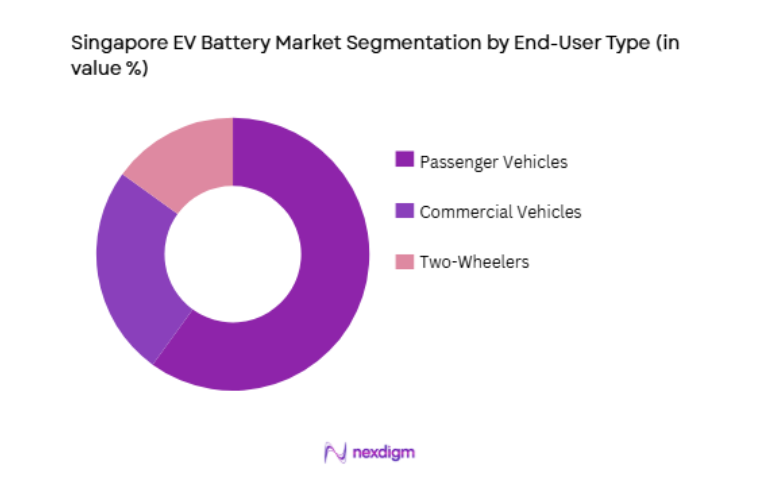
The Singapore EV battery market is segmented by end-user into passenger vehicles, commercial vehicles, and two-wheelers. Passenger vehicles have the dominant market share due to the increasing demand for personal electric cars, spurred by government incentives and environmental concerns. The availability of more affordable EV options and the growing public awareness of the environmental benefits of electric vehicles contribute to the shift away from traditional internal combustion engine vehicles. As Singapore continues to implement policies to reduce emissions, the consumer adoption of electric passenger vehicles is expected to grow substantially, making this segment the most significant in the EV battery market.
Competitive Landscape
The competitive landscape of the Singapore EV battery market is dynamic, with a mix of established players and new entrants vying for market share. Large multinational corporations and local firms are investing heavily in the development of advanced battery technologies, such as solid-state batteries and next-generation lithium-ion batteries. Additionally, partnerships between battery manufacturers, EV automakers, and research institutions are fueling innovation in the sector. The increasing demand for EVs and the government’s support for green energy provide a favorable environment for both competition and collaboration in the EV battery market.
| Company Name | Establishment Year | Headquarters | Technology Focus | Market Reach | Key Products | Revenue (USD Million) | Additional Parameter |
| Panasonic | 1918 | Osaka, Japan | ~ | ~ | ~ | ~ | ~ |
| BYD | 1995 | Shenzhen, China | ~ | ~ | ~ | ~ | ~ |
| Samsung SDI | 1970 | Seoul, South Korea | ~ | ~ | ~ | ~ | ~ |
| LG Energy Solution | 1992 | Seoul, South Korea | ~ | ~ | ~ | ~ | ~ |
| ST Engineering | 1997 | Singapore | ~ | ~ | ~ | ~ | ~ |
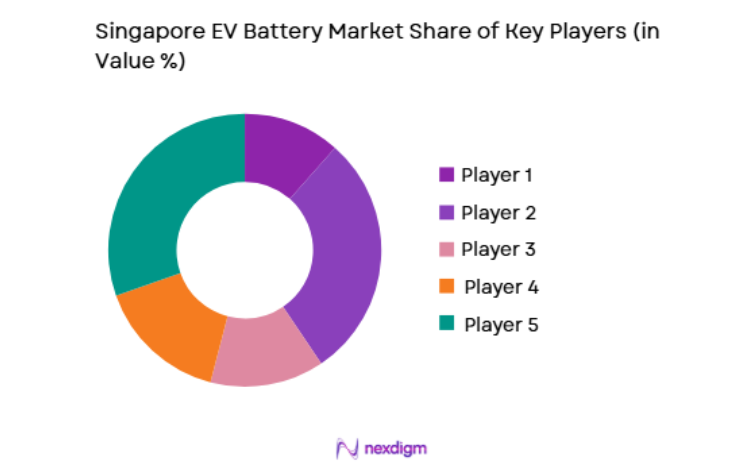
Singapore EV Battery Market Analysis
Growth Drivers
Government Policies and Incentives
One of the major growth drivers of the Singapore EV battery market is the government’s strong support for electric vehicles. The government has implemented various policies aimed at encouraging EV adoption, such as tax incentives, rebates, and exemption from registration fees for electric vehicles. These measures are designed to make EVs more affordable for consumers and to encourage businesses to transition to greener technologies. Additionally, the Singapore Green Plan 2030, which includes plans to expand EV infrastructure and increase the number of electric vehicles on the road, provides a conducive environment for the growth of the EV battery market. The focus on sustainability and the environment drives both consumers and businesses to adopt electric vehicles, thus stimulating the demand for EV batteries.
Technological Advancements in EV Battery Technology
Another key growth driver is the continuous advancements in EV battery technology. Lithium-ion batteries, which dominate the market, continue to evolve with improvements in energy density, charging speeds, and overall performance. Additionally, the development of solid-state batteries promises to bring even greater efficiency and safety to EV battery solutions. These advancements make EVs more attractive to consumers by offering longer range, faster charging, and lower costs, further driving the growth of the EV battery market. As battery technology improves, manufacturers and consumers alike are becoming more confident in the long-term viability of electric vehicles, which translates into increased market demand for high-performance EV batteries.
Market Challenges
High Battery Costs
Despite the progress in battery technology, one of the ongoing challenges for the Singapore EV battery market is the high cost of batteries. Lithium-ion batteries, while more affordable than their predecessors, still represent a significant portion of the overall cost of electric vehicles. The high cost of batteries is a major barrier to making electric vehicles more affordable for the average consumer. Although there have been significant reductions in the cost of lithium-ion batteries over the past decade, the price of EV batteries still needs to decrease further for the mass adoption of electric vehicles to be achievable. As demand for electric vehicles rises, cost reduction remains a critical challenge for the market.
Limited Charging Infrastructure
The lack of sufficient EV charging infrastructure remains another significant challenge for the Singapore EV battery market. While the government has made strides in expanding the public charging network, there is still a need for a more extensive and accessible charging infrastructure to support the growing number of electric vehicles on the road. The expansion of fast-charging stations and home charging solutions is essential to alleviate consumer concerns about the range of EVs and the availability of charging points. A more robust infrastructure is necessary to ensure the convenience of owning and operating electric vehicles, thereby increasing the adoption of EVs and the demand for EV batteries.
Opportunities
Growth of the Electric Commercial Vehicle Sector
One of the key opportunities in the Singapore EV battery market lies in the growth of the electric commercial vehicle sector. As Singapore moves towards greater sustainability, the adoption of electric commercial vehicles (such as buses, trucks, and delivery vans) is gaining traction. The government’s push to electrify public transportation and commercial fleets, coupled with the development of EV charging infrastructure for these vehicles, presents a significant market opportunity for EV batteries. Electric commercial vehicles offer a sustainable alternative to traditional fossil fuel-powered vehicles and provide a substantial opportunity for battery manufacturers to expand their product offerings.
Battery Recycling and Second-Life Applications
Another opportunity within the Singapore EV battery market is the development of battery recycling and second-life applications. As the number of EVs on the road increases, so does the volume of spent batteries. This creates a growing need for efficient and sustainable battery recycling methods to reduce environmental impact and recover valuable materials. Additionally, used EV batteries can be repurposed for second-life applications, such as energy storage systems, which further extends their useful life. This growing emphasis on battery recycling and repurposing presents a new avenue for innovation and investment in the market.
Future Outlook
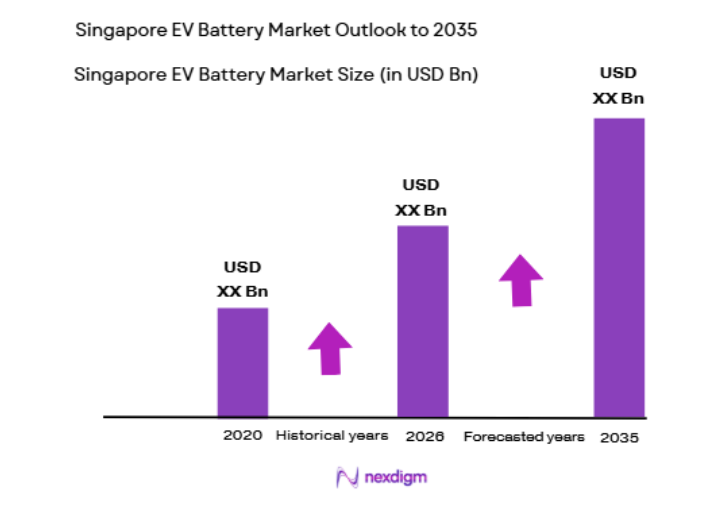
The future outlook for the Singapore EV battery market is highly positive, with continued growth expected over the next five years. Technological advancements in battery performance, coupled with government incentives and policies, will continue to drive the adoption of electric vehicles. The expansion of charging infrastructure and the growth of electric commercial vehicles will also fuel market demand. As battery costs decrease and efficiency improves, the market will become more accessible to a broader segment of the population. Additionally, the increasing focus on sustainability and carbon reduction will further accelerate the shift toward electric mobility, ensuring continued growth in the EV battery sector.
Major Players
- Panasonic
- BYD
- Samsung SDI
- LG Energy Solution
- ST Engineering
- Tesla
- CATL
- BYD Battery
- Schneider Electric
- Siemens
- ABB
- Ecolab
- Unilever
- Envision Energy
- Hitachi
Key Target Audience
- Investments and venture capitalist firms
- Government and regulatory bodies
- Automotive manufacturers
- Battery manufacturers
- Electric vehicle makers
- Technology providers
- Fleet operators
- Public transportation agencies
Research Methodology
Step 1: Identification of Key Variables
The identification of key market variables, such as government policies, EV adoption rates, technological advancements, and consumer demand patterns, is essential to understanding the dynamics of the EV battery market.
Step 2: Market Analysis and Construction
Market analysis is conducted by examining the various segments within the EV battery market, focusing on product types, end-users, and key geographic regions. Both quantitative and qualitative research methods are used to assess market trends.
Step 3: Hypothesis Validation and Expert Consultation
Expert consultations with industry professionals, including battery manufacturers, EV makers, and policymakers, are carried out to validate market assumptions and refine research findings.
Step 4: Research Synthesis and Final Output
The research data is synthesized into comprehensive reports, providing insights on growth drivers, challenges, opportunities, and future projections for the Singapore EV battery market.

- Executive Summary
- Research Methodology (Definitions, Scope, Industry Assumptions, Market Sizing Approach, Primary & Secondary Research Framework, Data Collection & Verification Protocol, Analytic Models & Forecast Methodology, Limitations & Research Validity Checks)

- Market Definition and Scope
- Value Chain & Stakeholder Ecosystem
- Regulatory / Certification Landscape
- Sector Dynamics Affecting Demand

- Growth Drivers
Government Initiatives Supporting EV Adoption
Rising Demand for Sustainable Transport Solutions
Technological Advancements in Battery Efficiency - Market Challenges
High Initial Cost of EV Batteries
Battery Recycling and Disposal Issues
Limited Charging Infrastructure - Market Opportunities
Growth in EV Fleet Market
Development of Charging Infrastructure
Advances in Battery Technology - Trends
Shift Toward Faster Charging Solutions
Rise of Battery Leasing Models - Government Regulations
- SWOT Analysis
- Porter’s Five Forces

- By Market Value, 2020-2025
- By Installed Units, 2020-2025
- By Average System Price, 2020-2025
- By System Complexity Tier, 2020-2025

- By System Type (In Value%)
Lithium-Ion Batteries
Solid-State Batteries
Nickel-Metal Hydride Batteries
Lead-Acid Batteries
Sodium-Ion Batteries - By Platform Type (In Value%)
Passenger Vehicles
Commercial Vehicles
Two-Wheelers
Electric Buses
Charging Infrastructure - By Fitment Type (In Value%)
OEM Battery Systems
Aftermarket Battery Systems
Battery Retrofit Solutions
Recycling and Reuse - By End User Segment (In Value%)
Automotive OEMs
Battery Manufacturers
Charging Station Providers
Consumers

- Market Share Analysis
- Cross Comparison Parameters (Battery Type, Platform Type, Charging Speed, Price, Lifecycle, Energy Density, Charging Infrastructure Compatibility, Battery Life Cycle, Warranty Period, Environmental Impact)
- SWOT Analysis of Key Competitors
- Pricing & Procurement Analysis
- Key Players
BYD Company
LG Energy Solution
Samsung SDI
Panasonic Corporation
CATL
SK Innovation
Tata Chemicals
Murata Manufacturing
AESC
Sanyo Electric
Tesla
QuantumScape
Lion Electric
Energizer Holdings
Shell

- Increasing Demand for EVs
- Government Subsidies and Incentives for Consumers
- Expansion of Commercial EV Fleets
- Consumer Preference for Longer Battery Life

- Forecast Market Value, 2026-2035
- Forecast Installed Units, 2026-2035
- Price Forecast by System Tier, 2026-2035
- Future Demand by Platform, 2026-2035


 Request a Sample
 Ask for Customization
 Get a Quote
 Enquire Now