

 Download PDF
Market Overview
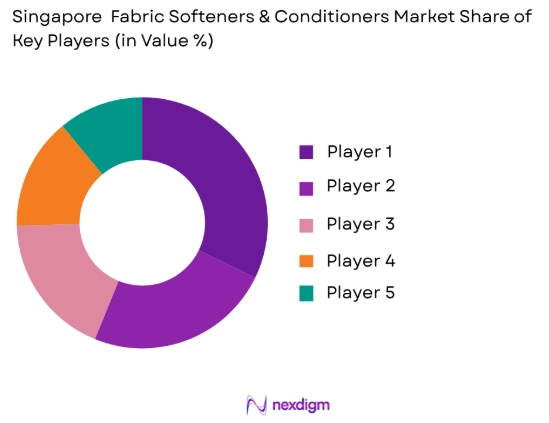
The Singapore fabric softeners and conditioners market is valued at approximately USD ~ million in 2025, supported by high urban household consumption, strong modern retail penetration, online grocery adoption, premium laundry care preferences, and hospitality-linked demand. Singapore’s population reached approximately 6 million in 2024, while GDP per capita stood at around USD 90,674.07, reflecting high purchasing power and strong demand for branded household care products. The country’s small but affluent consumer base supports premium fabric conditioner formats such as concentrated liquids, antibacterial variants, sensitive-skin products, fragrance boosters, and imported specialty products.
The Singapore fabric softeners and conditioners market is concentrated in the Central Region, East Region, and North-East Region due to dense residential clusters, high supermarket access, e-commerce penetration, and higher spending on branded home care products. Supermarkets and hypermarkets remain key channels, while online retail has become increasingly important. Singapore’s Department of Statistics reported total retail sales of about SGD 3.6 billion for December 2024, with online retail sales accounting for 14.7% of total retail sales; online sales accounted for 12.9% of supermarket and hypermarket sales, supporting digital purchases of recurring household products such as fabric conditioners.
 Market Segmentation
By Product Type
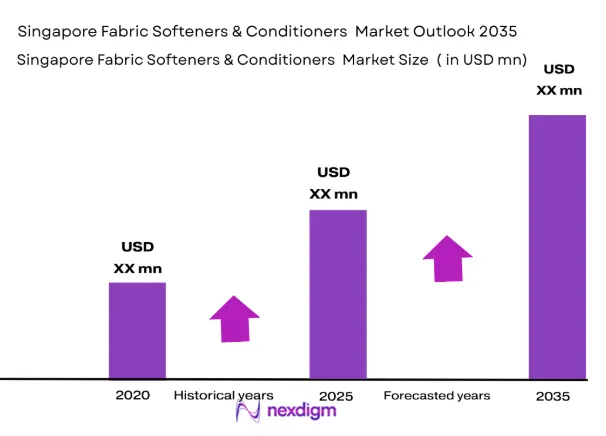
Singapore fabric softeners and conditioners market is segmented by product type into liquid fabric softeners, concentrated fabric conditioners, dryer sheets, scent boosters, and eco-friendly fabric conditioners. Concentrated liquid fabric conditioners dominate the market due to compact storage, premium fragrance delivery, lower dosage per wash, and strong compatibility with apartment-based urban households. Products such as Comfort Ultra Concentrated Fabric Softener and Downy Concentrate Fabric Conditioner are widely available through major online and supermarket channels, indicating strong consumer acceptance of concentrated formats.
 By Packaging Type
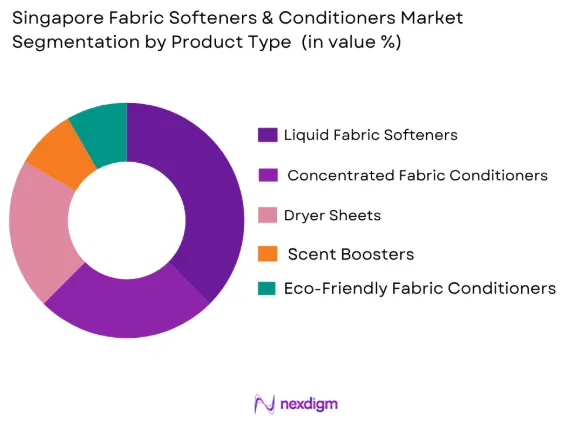
Singapore fabric softeners and conditioners market is segmented by packaging type into bottles, refill pouches, pods/capsules, and bulk packs. Refill pouches dominate repeat purchases due to space efficiency, affordability, lower packaging weight, and suitability for high-frequency household use. Bottles remain important for first-time purchases and premium variants because they provide brand visibility and convenient dispensing. Pods and capsules remain a niche format used by premium consumers seeking convenience and controlled dosage. Bulk packs are used by laundromats, hotels, serviced apartments, and institutional buyers requiring consistent laundry care performance.
Competitive Landscape
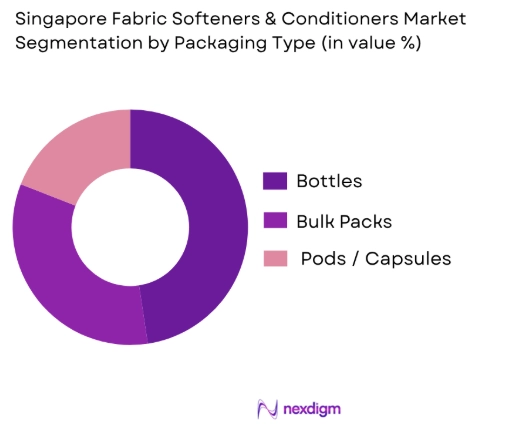
The Singapore fabric softeners and conditioners market is highly competitive, with multinational FMCG brands, Japanese and Korean household care imports, eco-friendly brands, supermarket private labels, and online marketplace brands competing across price points. Global brands dominate through fragrance innovation, concentrated formulas, antibacterial claims, and wide distribution. Imported specialty brands compete in premium and natural segments, while private labels compete through value pricing and captive supermarket shelf space.
| Company | Establishment Year | Headquarters | Product Focus | Distribution Network | Key Consumer Segment | Import/Local Presence | Competitive Advantage |
| Procter & Gamble Singapore | 1837 | United States / Singapore | ~ | ~ | ~ | ~ | ~ |
| Unilever Singapore | 1929 | United Kingdom / Singapore | ~ | ~ | ~ | ~ | ~ |
| Colgate-Palmolive Singapore | 1806 | United States / Singapore | ~~ | ~ | ~ | ~ | ~ |
| Kao Singapore | 1887 | Japan / Singapore | ~ | ~ | ~ | ~ | ~ |
| FairPrice Housebrand | 1973 | Singapore | ~ | ~ | ~ | ~ | ~ |
Singapore Fabric Softeners & Conditioners Market Analysis
Growth Drivers
High Urban Household Consumption and Premium Laundry Care Adoption
Singapore’s fabric softeners and conditioners market benefits from high urbanization, compact household living, and strong adoption of branded laundry care products. Consumers often look for laundry solutions that provide softness, freshness, fragrance, and better garment care, especially for frequently washed clothing in a humid climate. Premium laundry care adoption is supported by higher income levels, exposure to global brands, and preference for convenience-oriented household products. Fabric conditioners are increasingly viewed as part of a complete laundry routine rather than an optional product. Urban consumers also tend to value products that reduce static, improve fabric feel, and leave clothes smelling fresh for longer. This supports demand for both mainstream and premium variants across supermarkets, pharmacies, and online platforms.
Rising Preference for Concentrated and Long-Lasting Fragrance Products
Singaporean consumers are showing stronger interest in concentrated fabric conditioners and long-lasting fragrance variants. Concentrated products are attractive because they require smaller doses, save storage space, and offer better value per wash, which suits compact urban homes. Fragrance remains a key purchase driver, as consumers often associate clean laundry with a lasting fresh scent. Brands are responding with perfume-inspired products, scent capsules, and formulations designed to maintain freshness in humid weather. These products appeal to consumers seeking convenience, performance, and a premium laundry experience. Long-lasting fragrance variants also help brands differentiate in a mature and competitive market. As consumers become more selective, concentrated and fragrance-led fabric conditioners are likely to support higher-value category growth.
Market Challenges
Mature and Highly Competitive Household Care Market
Singapore’s household care market is mature, with strong competition from established global and regional laundry care brands. Fabric softeners and conditioners must compete not only with similar products but also with detergents that already include fragrance, softening, or fabric-care benefits. This makes it difficult for brands to drive frequent switching or expand usage significantly. Retail shelves are crowded, and consumers have access to many imported, premium, private-label, and value-oriented options. In such a competitive environment, price promotions, brand reputation, fragrance quality, and product claims strongly influence purchase decisions. New entrants may find it difficult to secure shelf space and build loyalty. Brands must differentiate through superior fragrance, sensitive-skin benefits, sustainability, or refill formats to remain relevant.
Environmental Concerns Around Plastic Packaging and Chemical Formulations
Environmental concerns are becoming an important challenge for fabric softener and conditioner brands in Singapore. Most products rely on plastic bottles, refill pouches, and chemical-based formulations, which may raise concerns about packaging waste and water-system impact. Consumers are becoming more aware of sustainability, recyclability, and ingredient safety, especially in premium household care categories. At the same time, Singapore’s limited land resources and strong waste-management focus increase pressure on companies to reduce packaging impact. However, eco-friendly packaging and biodegradable formulations can increase production and import costs, making affordability a concern. Brands must balance sustainability with performance, fragrance quality, and value. Products that make unclear or exaggerated environmental claims may also face consumer skepticism in a mature market.
Opportunities
Growth in Concentrated and Refill-Pack Fabric Conditioners
Concentrated and refill-pack fabric conditioners offer strong growth potential in Singapore’s laundry care market. Concentrated formulas suit small urban homes because they reduce storage needs while offering more washes per bottle. Refill packs also appeal to consumers who want convenience, lower packaging waste, and better value on repeat purchases. These formats can help brands address both sustainability concerns and premium performance expectations. Retailers can promote them through multipacks, bundle offers, and online subscription models. For consumers, the key benefits are easier handling, reduced plastic use, and lower cost per wash. As Singapore shoppers become more environmentally aware and space-conscious, concentrated and refill-pack fabric conditioners are likely to gain wider acceptance across supermarkets, e-commerce platforms, and specialty household stores.
Premiumization through Perfume-Based Fabric Care Products
Perfume-based fabric care products present a strong opportunity in Singapore, where consumers often seek premium household products that deliver noticeable fragrance and convenience. Fabric conditioners with perfume-inspired scents, scent capsules, and long-lasting freshness claims can command higher prices in a mature market. These products appeal to urban consumers who value fresh-smelling clothing, bedding, and towels, particularly in a humid environment where odor control is important. Premium fragrance positioning also allows brands to differentiate beyond basic softness and compete with lifestyle-oriented home care products. Online platforms and modern retail channels can further support this trend through product reviews, bundles, and targeted promotions. Brands that combine fragrance performance with skin-safe or eco-friendly claims may capture stronger consumer interest.
Future Outlook
Over the next five years, the Singapore fabric softeners and conditioners market is expected to grow steadily due to premium household care adoption, online grocery expansion, compact concentrated formats, and demand for long-lasting fragrance products. The market will remain mature, but product innovation in antibacterial, baby-safe, sensitive-skin, and eco-friendly formulations will support value growth.
Household laundry will continue to dominate demand, while hospitality, commercial laundry, serviced apartments, and institutional users will support bulk consumption. Concentrated conditioners, refill pouches, fragrance boosters, and sustainable formulations are expected to gain share. Multinational brands will continue to lead the market, while Japanese imports, eco-friendly brands, and supermarket private labels will compete in premium and value segments.
Major Players
- Procter & Gamble Singapore
- Unilever Singapore
- Colgate-Palmolive Singapore
- Kao Singapore
- Lion Corporation
- Reckitt Singapore
- The Clorox Company
- Ecover
- Seventh Generation
- Method Products
- Laundrin
- FairPrice Housebrand
- Cold Storage Private Label
- Watsons Singapore
- Guardian Singapore
Key Target Audience
- Fabric softener and conditioner manufacturers
- Laundry care product importers and distributors
- Supermarkets and hypermarkets
- Online grocery and e-commerce platforms
- Convenience store chains
- Health and beauty retailers
- Commercial laundry operators
- Hotels and serviced apartment operators
- Hospitals and institutional laundry buyers
- Packaging suppliers
- Fragrance and specialty chemical suppliers
- Investments and venture capitalist firms
- Government and regulatory bodies
Research Methodology
Step 1: Identification of Key Variables
The initial phase involves mapping stakeholders in the Singapore fabric softeners and conditioners market, including importers, distributors, supermarkets, online grocery platforms, household consumers, hospitality buyers, commercial laundries, and institutional users. Secondary data sources such as government statistics, retail sales data, company disclosures, product listings, and FMCG industry reports are used to identify key variables influencing market demand.
Step 2: Market Analysis and Construction
Historical data is analyzed to understand household laundry habits, retail channel growth, online grocery penetration, pricing trends, fragrance preferences, and product adoption across regions. The study evaluates fabric conditioner usage across households, hotels, laundromats, hospitals, serviced apartments, and institutional buyers to construct a reliable market model.
Step 3: Hypothesis Validation and Expert Consultation
Industry experts are consulted to validate assumptions and provide insights into market dynamics. These include FMCG distributors, supermarket category managers, online grocery operators, commercial laundry providers, hospitality procurement managers, and household care product specialists. These interactions help refine demand estimates, pricing assumptions, competitive positioning, and future growth drivers.
Step 4: Research Synthesis and Final Output
The final phase integrates primary and secondary research findings to deliver a validated market assessment. Data triangulation ensures accuracy and consistency across market size, segmentation, growth drivers, challenges, opportunities, and competitive analysis.

- Executive Summary
- Research Methodology (Market Definitions and Assumptions, Abbreviations, Market Sizing Approach, Consolidated Research Approach, Understanding Market Potential Through In-Depth Industry Interviews, Primary Research Approach, Limitations and Future Conclusions)

- Definition and Scope
- Market Dynamics Overview
- Market Genesis
- Major Players and Market Timeline
- Business Cycle and Trends
- Supply Chain and Value Chain Analysis

- Growth Drivers
High Urban Household Consumption and Premium Laundry Care Adoption
Growth of Modern Retail and Online Grocery Channels
Rising Preference for Concentrated and Long-Lasting Fragrance Products
Increasing Demand for Sensitive-Skin and Baby-Safe Products
Growing Demand from Hospitality and Commercial Laundry Services - Market Challenges
Mature and Highly Competitive Household Care Market
High Dependence on Imported Finished Goods and Ingredients
Premium Pricing and Consumer Value Sensitivity
Limited Domestic Manufacturing Base
Environmental Concerns Around Plastic Packaging and Chemical Formulations - Opportunities
Growth in Concentrated and Refill-Pack Fabric Conditioners
Premiumization through Perfume-Based Fabric Care Products
Expansion of Online Subscription and Bundle-Based FMCG Sales
Rising Demand for Eco-Friendly and Plant-Based Fabric Conditioners
Growth in Hospitality, Serviced Apartments, and Commercial Laundry Usage - Key Trends
Shift toward concentrated fabric conditioners
Rising demand for refill pouches and larger value packs
Growth in antibacterial and odor-control fabric conditioners
Increasing adoption of baby-safe and hypoallergenic products
Expansion of online grocery and marketplace-led household care sales - Government Regulations
- SWOT Analysis
- Porter’s Five Forces

- By Value, 2020–2025
- By Volume, 2020–2025
- By Average Price, 2020–2025

- By Product Type (In Value %)
Liquid Fabric Softeners
Concentrated Fabric Conditioners
Dryer Sheets
Scent Boosters
Eco-Friendly Fabric Conditioners - By Packaging Type (In Value %)
Bottles
Pods / Capsules
Bulk Packs - By Fragrance Type (In Value %)
Floral
Fresh / Ocean
Baby Care / Mild
Luxury Perfume
Natural / Herbal - By Application (In Value %)
Household Laundry
Commercial Laundry
Hospitality
Institutional Laundry
Premium Apparel Care - By Distribution Channel (In Value %)
Supermarkets and Hypermarkets
Convenience Stores
Health and Beauty Retailers
Online Channels
Direct / Institutional Sales - By Region (In Value %)
Central Region
East Region
North-East Region
West Region
North Region

- Market Share of Major Players by Value/Volume
- Market Share of Major Players by Product Type
- Cross Comparison Parameters (Company Overview, Business Strategies, Recent Developments, Strength, Weakness, Organizational Structure, Revenues, Revenues by Product Type, Number of Touchpoints, Distribution Channels, Number of Dealers and Distributors, Margins, Production Plant, Capacity, Unique Value Offering and Others)
- SWOT Analysis of Major Players
- Pricing Analysis Based on Product Categories for Major Players
- Detailed Profiles of Major Companies
Procter & Gamble Singapore
Unilever Singapore
Colgate-Palmolive Singapore
Kao Singapore
Lion Corporation
Reckitt Singapore
The Clorox Company
Ecover
Seventh Generation
Method Products
Laundrin
FairPrice Housebrand
Cold Storage Private Label
Watsons Singapore
Guardian Singapore

- Market Demand and Utilization
- Purchasing Power and Budget Allocations
- Regulatory and Compliance Requirements
- Needs, Desires, and Pain Point Analysis
- Decision-Making Process

- By Value, 2026–2035
- By Volume, 2026–2035
- By Average Price, 2026–2035


 Request a Sample
 Ask for Customization
 Get a Quote
 Enquire Now