
 Download PDF
Market Overview
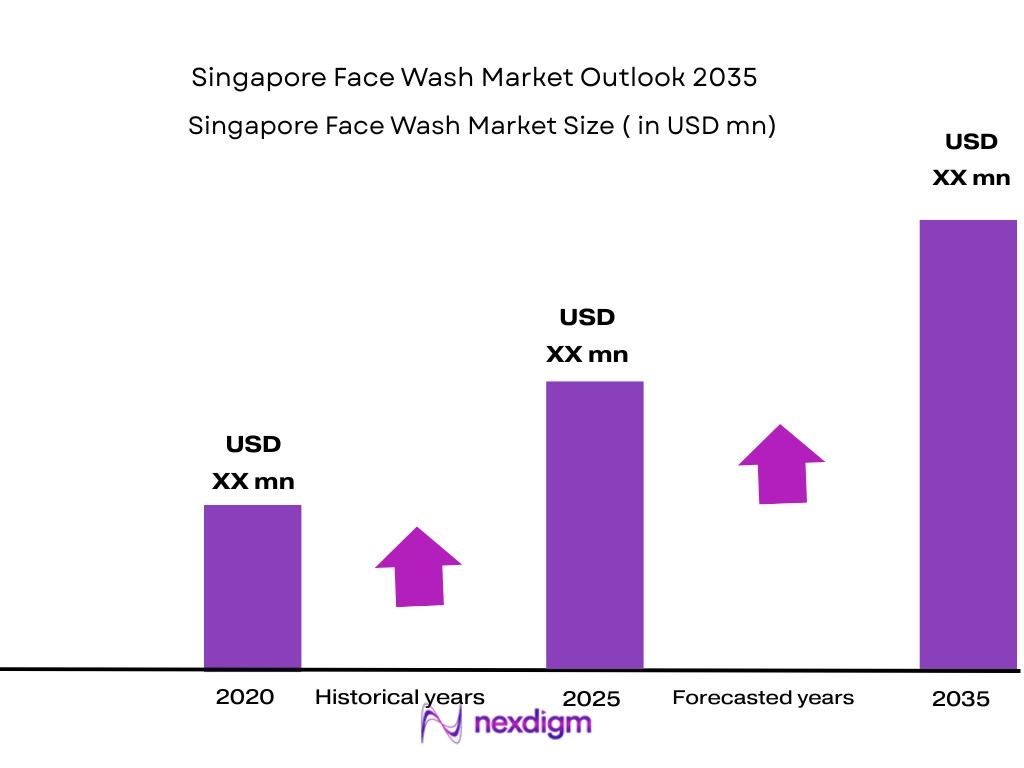
The Singapore face wash market is valued at USD ~ million, based on a five-year historical analysis. This growth is primarily driven by increasing consumer awareness about personal hygiene and skincare routines, coupled with rising disposable incomes that enable consumers to invest in premium and specialized facial cleansing products. Innovations in product formulations, including natural, anti-acne, and sensitive skin variants, have further fueled demand across urban and suburban populations, creating sustained market expansion.
Singapore’s market is dominated by cities such as Central Singapore, North Singapore, and East Singapore due to their high urbanization, dense population, and concentrated commercial and retail hubs. These areas host most of the country’s premium retail outlets, e-commerce fulfillment centers, and dermatology clinics, which directly influence the adoption of face wash products. Additionally, international and domestic brands prefer establishing headquarters and distribution points in these locations to efficiently reach high-income and beauty-conscious consumers.
Market Segmentation
By Product Type
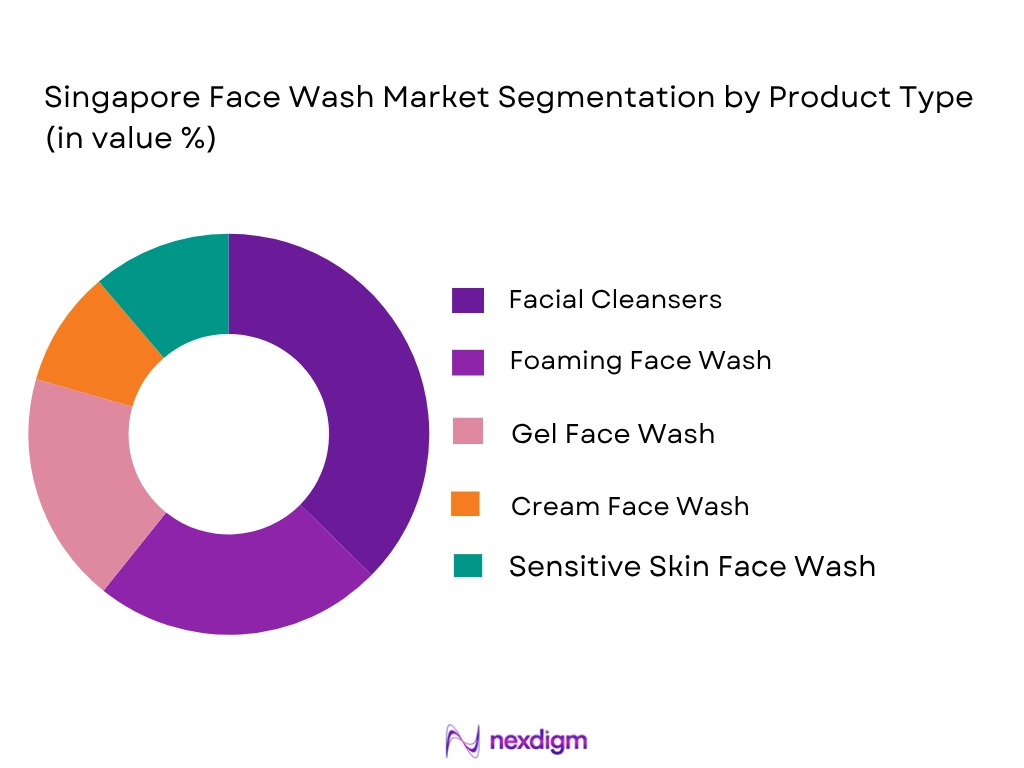
The Singapore face wash market is segmented by product type into foaming face wash, gel face wash, cream face wash, exfoliating face wash, and sensitive skin face wash. Foaming face wash dominates the market due to its versatility for all skin types, quick absorption, and effective cleansing properties. Brands such as Neutrogena and Cetaphil have entrenched consumer trust, making foaming face wash the preferred choice across both retail and online channels. Continuous marketing campaigns emphasizing gentle yet deep cleansing contribute to its market leadership.
By Ingredient Type
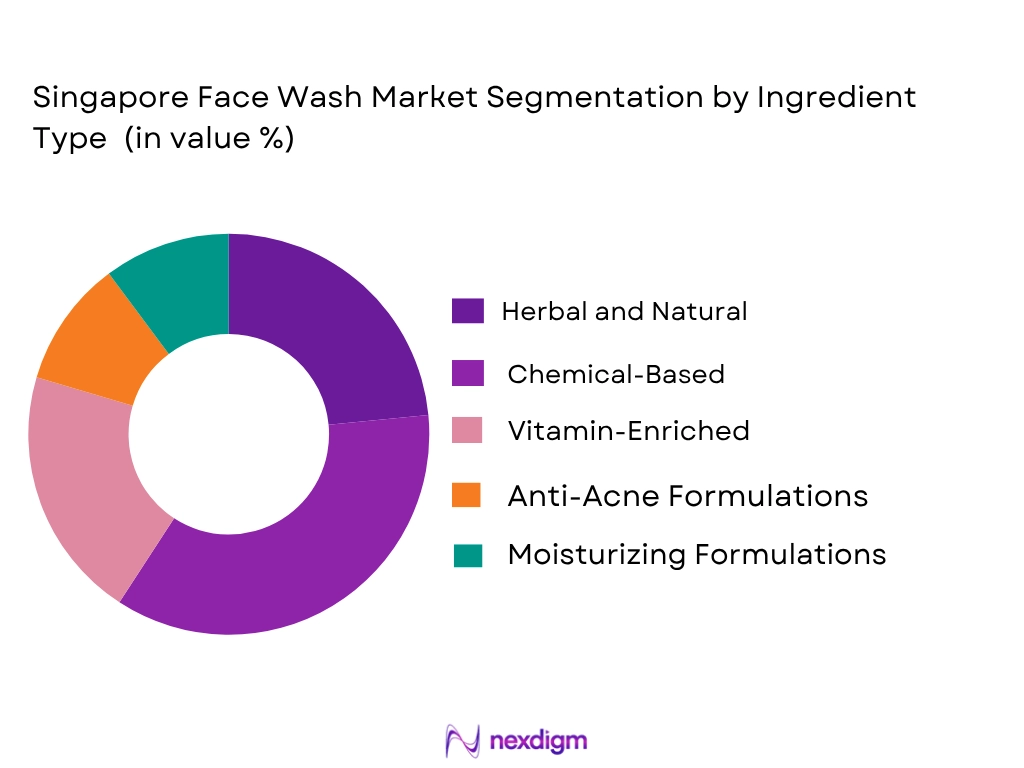
The market is segmented into herbal and natural, chemical-based, vitamin-enriched, anti-acne formulations, and moisturizing formulations. Herbal and natural ingredients dominate due to growing consumer preference for clean beauty and chemical-free skincare. Products with aloe vera, green tea, and turmeric are widely adopted for their perceived safety and skin-soothing properties. The trend toward sustainable and eco-friendly formulations has further enhanced the popularity of this sub-segment, especially among millennials and Gen Z consumers seeking effective but gentle skincare solutions.
Competitive Landscape
The Singapore face wash market is dominated by a few major players, including global giants such as L’Oréal, Shiseido, and Procter & Gamble, as well as regional and local brands. This consolidation highlights the influence of established companies that maintain extensive distribution networks, strong brand recognition, and consistent product innovation.
| Company Name | Establishment Year | Headquarters | Revenue (USD Million) | Product Portfolio | Distribution Channels | Production Capacity | Marketing Spend | Unique Value Proposition |
| L’Oréal Singapore | 1909 | Singapore | ~ | ~ | ~ | ~ | ~ | ~ |
| Shiseido Company | 1872 | Singapore | ~ | ~ | ~ | ~ | ~ | ~ |
| Procter & Gamble | 1837 | Singapore | ~ | ~ | ~ | ~ | ~ | ~ |
| Neutrogena Singapore | 1930 | Singapore | ~ | ~ | ~ | ~ | ~ | ~ |
| Cetaphil Singapore | 1947 | Singapore | ~ | ~ | ~ | ~ | ~ | ~ |
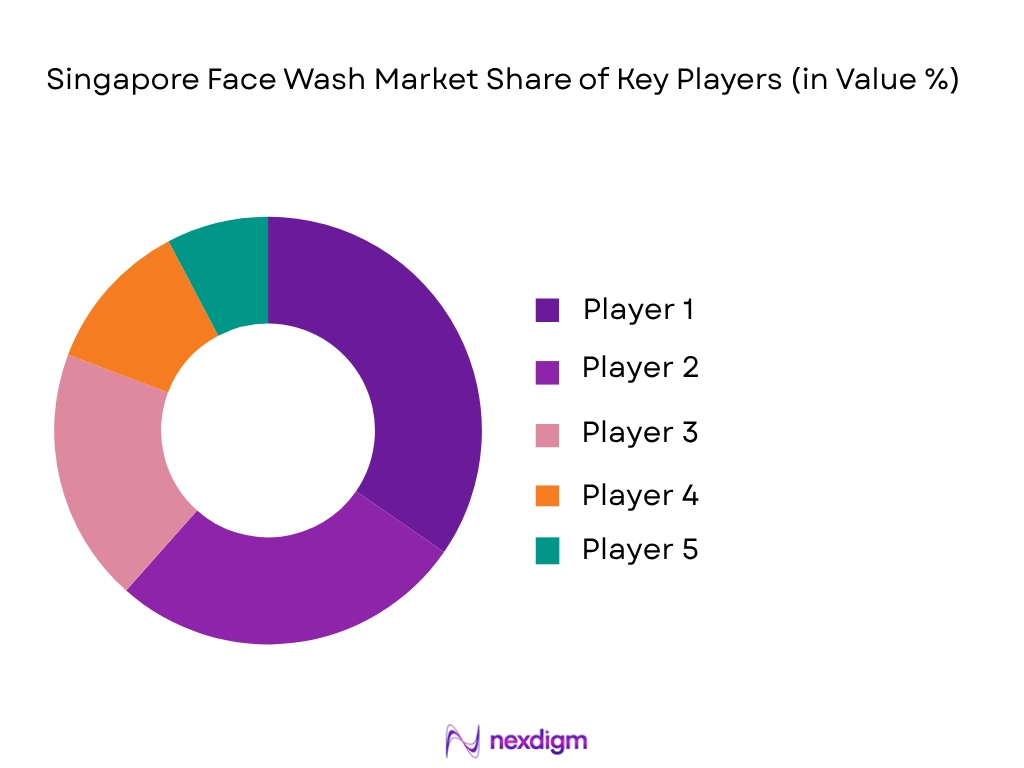
Singapore Face Wash Market Analysis
Growth Drivers
Rising Awareness of Skincare and Personal Hygiene
In Singapore, consumers are increasingly aware of personal hygiene and skin health, driven by media, social platforms, and beauty campaigns. There is strong focus on preventive skincare, with individuals seeking products that address acne, sensitivity, oil control, and hydration. Both men and women are adopting structured daily routines that include cleansers, toners, and specialized face washes. Awareness campaigns led by influencers, dermatologists, and wellness advocates have strengthened consumer knowledge and trust, encouraging adoption of premium and multifunctional products. This heightened skincare literacy has created a growing market for targeted face wash products, stimulating innovation in formulations that cater to diverse skin types, age groups, and environmental conditions.
Increasing Disposable Income and Premium Product Adoption
Singapore’s high per capita income and growing middle- to upper-income segments have fueled demand for premium skincare products, including face washes. Consumers are willing to pay higher prices for products offering advanced benefits, dermatological approval, or natural ingredients. Urban populations have access to a wide range of local and international brands through retail stores, department chains, and online platforms. This disposable income allows consumers to experiment with specialized products such as anti-acne, anti-aging, or sensitive skin formulations. Consequently, brands can introduce innovative offerings, differentiate through packaging and ingredients, and capture market segments seeking quality and efficacy over price.
Market Challenges
High Competition and Brand Proliferation
Singapore’s face wash market is highly competitive, with numerous local and international brands competing for consumer attention. The presence of multiple alternatives leads to aggressive marketing, frequent product launches, and price promotions. Smaller or new brands may struggle to establish visibility, while established brands must continuously innovate to retain loyalty. Brand switching is common, as consumers can easily choose alternative products based on perceived benefits, trends, or promotions. Sustaining differentiation, product quality, and consumer trust is essential to maintain a competitive edge. The crowded market environment increases pressure on profit margins, marketing budgets, and brand positioning strategies.
Price Sensitivity Among Middle-Income Consumers
Despite the adoption of premium skincare, a significant portion of Singapore’s middle-income population remains price-conscious. Consumers often compare prices across brands and channels before making purchases, especially in mass-market segments. Brands targeting these consumers must balance affordability with product efficacy, quality, and brand perception. Seasonal promotions, bundled offers, and loyalty incentives are commonly used to drive sales while maintaining market share. Managing pricing effectively is critical for sustaining profitability without alienating cost-sensitive consumers, particularly in a market where alternatives are abundant and switching costs are low.
Opportunities
Innovation in Natural and Organic Formulations
Singaporean consumers are increasingly seeking natural, chemical-free, and eco-friendly face wash products. Ingredients such as herbal extracts, plant-based oils, and sustainably sourced components are favored for their perceived safety and long-term benefits. Brands that develop organic and cruelty-free formulations can differentiate in a competitive market, capture premium segments, and strengthen brand loyalty. Marketing campaigns highlighting environmental sustainability, dermatological testing, and efficacy enhance credibility. This trend allows companies to innovate across product lines, develop niche offerings, and meet the growing consumer demand for holistic and health-conscious skincare solutions.
Expansion of Online and Omnichannel Distribution
The growth of e-commerce, mobile apps, and social media marketplaces provides opportunities for face wash brands to engage directly with consumers in Singapore. Omnichannel strategies that integrate online platforms, physical retail, and brand websites allow for personalized marketing, product education, and targeted promotions. Direct-to-consumer channels enable better data collection, tailored recommendations, and loyalty program implementation. Influencer collaborations, live streams, and digital campaigns further enhance visibility and drive trial. Expanding online and omnichannel presence allows brands to reach urban and tech-savvy consumers effectively, increase sales frequency, and strengthen long-term engagement in the competitive Singaporean skincare market.
Future Outlook
Over the next five years, the Singapore face wash market is expected to experience strong growth, driven by rising consumer awareness of skincare, expanding online retail channels, and increasing preference for premium and natural formulations. Continuous innovation in anti-acne, anti-aging, and eco-friendly product lines will further drive adoption. The market will also benefit from increased marketing campaigns through social media and influencer partnerships that strengthen brand recognition and engagement.The market is forecasted to grow at a CAGR of 6.8% during 2024–2030, supported by rising urbanization, higher disposable incomes, and increasing demand for specialized skincare products across various consumer segments.
Major Players
- Shiseido Company
- L’Oréal Singapore
- Procter & Gamble Singapore
- Unilever Singapore
- Johnson & Johnson Singapore
- Nivea Singapore
- Kao Corporation
- The Body Shop Singapore
- Neutrogena Singapore
- Innisfree Singapore
- Garnier Singapore
- Cetaphil Singapore
- Simple Singapore
- Biore Singapore
- Sasa Singapore
Key Target Audience
- Retail Chains and Department Stores
- E-Commerce Platforms
- Pharmacy Chains
- Dermatology Clinics
- Beauty Salons and Spas
- Investments and Venture Capitalist Firms
- Government and Regulatory Bodies
- Consumer Goods Distributors
Research Methodology
Step 1: Identification of Key Variables
The initial phase involves constructing an ecosystem map encompassing all major stakeholders within the Singapore Face Wash Market. Extensive desk research, utilizing secondary and proprietary databases, is conducted to identify critical variables influencing market dynamics.
Step 2: Market Analysis and Construction
Historical data related to the Singapore face wash market is compiled and analyzed, including product penetration, distribution channel evaluation, and revenue generation. Service quality and brand performance statistics are assessed to ensure reliable estimates.
Step 3: Hypothesis Validation and Expert Consultation
Market hypotheses are developed and validated through structured interviews with industry experts representing local and global skincare brands. Insights regarding operational performance, consumer preferences, and distribution strategies are gathered to refine the market data.
Step 4: Research Synthesis and Final Output
Direct engagement with key manufacturers and distributors provides detailed insights on product performance, market demand, and future trends. This information verifies and complements data derived from secondary and bottom-up analyses to produce a comprehensive and accurate market report.

- Executive Summary
- Research Methodology (Market Definitions and Assumptions, Abbreviations, Market Sizing Approach, Consolidated Research Approach, Understanding Market Potential Through In-Depth Industry Interviews, Primary Research Approach, Limitations and Future Conclusions)

- Definition and Scope
- Market Dynamics Overview
- Market Genesis
- Major Players and Market Timeline
- Business Cycle and Trends
- Supply Chain and Value Chain Analysis

- Growth Drivers
Rising Awareness of Skincare and Personal Hygiene
Increasing Disposable Income and Premium Product Adoption
Growth of E-Commerce and Online Beauty Platforms
Expansion of Anti-Acne and Sensitive Skin Product Lines - Market Challenges
High Competition and Brand Proliferation
Price Sensitivity Among Middle-Income Consumers
Dependence on Imported Ingredients
Regulatory Compliance and Quality Standards - Opportunities
Innovation in Natural and Organic Formulations
Expansion of Online and Omnichannel Distribution
Increasing Demand for Anti-Aging and Specialized Skincare Products
Partnerships with Dermatologists and Beauty Professionals - Key Trends
Shift toward natural, herbal, and chemical-free formulations
Rising popularity of multifunctional face washes
Growth in male grooming and unisex skincare segments
Digital marketing and influencer-driven product adoption - Government Regulations
- SWOT Analysis
- Porter’s Five Forces

- By Value, 2020–2025
- By Volume, 2020–2025
- By Average Price, 2020–2025

- By Product Type (In Value %)
Foaming Face Wash
Gel Face Wash
Cream Face Wash
Exfoliating Face Wash
Sensitive Skin Face Wash - By Ingredient Type (In Value %)
Herbal and Natural
Chemical-Based
Vitamin-Enriched
Anti-Acne Formulations
Moisturizing Formulations - By Application (In Value %)
Daily Skincare
Acne Treatment
Anti-Aging
Sensitive Skin Care
Professional and Salon Use - By Distribution Channel (In Value %)
Direct Sales
Distributors and Wholesalers
Retail Pharmacies
Online Channels
Supermarkets and Hypermarkets - By Region (In Value %)
Central Singapore
North Singapore
East Singapore
West Singapore
South Singapore

- Market Share of Major Players by Value/Volume
- Market Share of Major Players by Product Type
- Cross Comparison Parameters(Company Overview, Business Strategies, Recent Developments, Strength, Weakness, Organizational Structure, Revenues, Revenues by Product Type, Number of Touchpoints, Distribution Channels, Number of Dealers and Distributors, Margins, Production Plant, Capacity, Unique Value Offering and Others)
- SWOT Analysis of Major Players
- Pricing Analysis Based on Product Categories for Major Players
- Detailed Profiles of Major Companies
Shiseido Company
L’Oréal Singapore
Procter & Gamble Singapore
Unilever Singapore
Johnson & Johnson Singapore
Nivea Singapore
Kao Corporation
The Body Shop Singapore
Neutrogena Singapore
Innisfree Singapore
Garnier Singapore
Cetaphil Singapore
Simple Singapore
Biore Singapore
Sasa Singapore

- Market Demand and Utilization
- Purchasing Power and Budget Allocations
- Regulatory and Compliance Requirements
- Needs, Desires, and Pain Point Analysis
- Decision-Making Process

- By Value, 2026–2035
- By Volume, 2026–2035
- By Average Price, 2026–2035


 Request a Sample
 Ask for Customization
 Get a Quote
 Enquire Now