
 Download PDF
 Download PDF
Market Overview
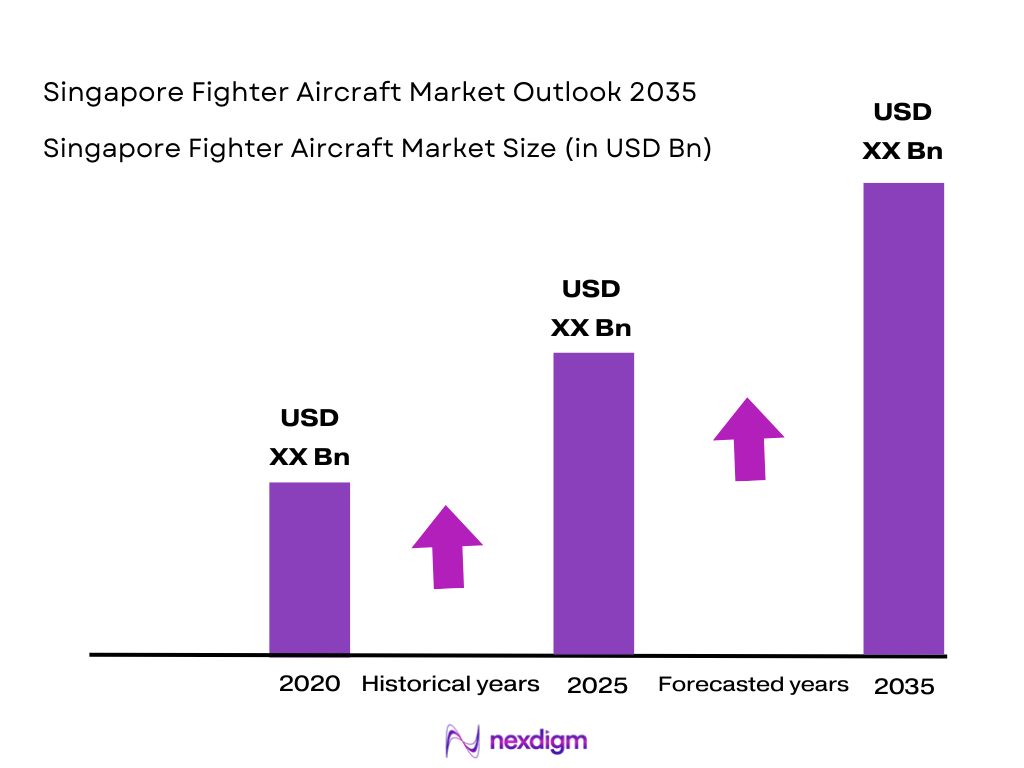
The Singapore Fighter Aircraft Market is valued at approximately USD ~ billion, driven by the growing defense spending of the country in response to regional security threats. Singapore’s strategic location in Southeast Asia and its commitment to modernizing the Republic of Singapore Air Force (RSAF) contribute significantly to this market’s growth. The market is fueled by continuous government support, advancements in aviation technology, and the increasing demand for multi-role and stealth fighter aircraft. In 2024, the market is expected to expand further due to the government’s ongoing investment in defense modernization programs.
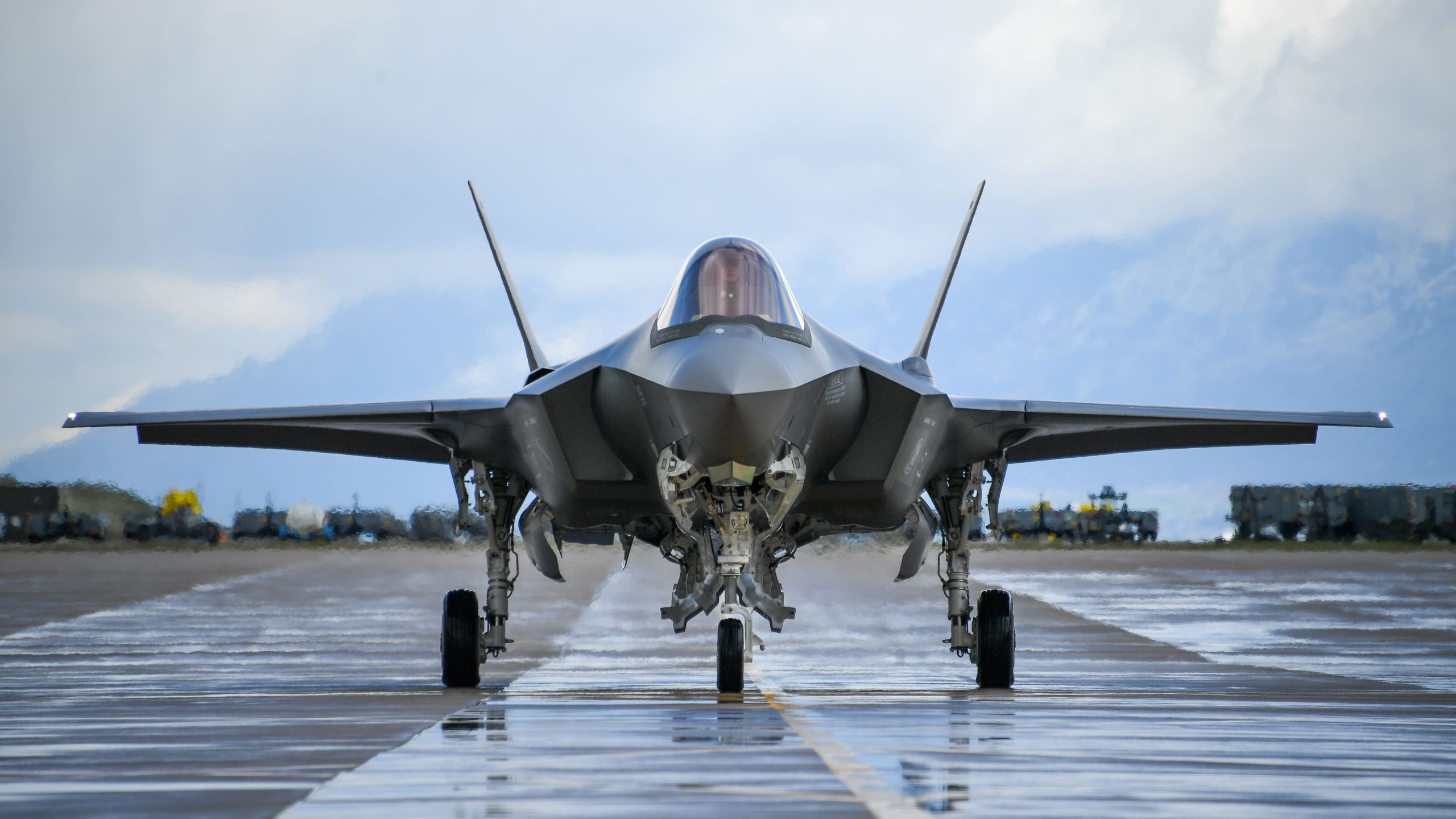
Singapore remains the dominant player in the regional fighter aircraft market, thanks to its robust defense sector and its strategic position in Southeast Asia. The Republic of Singapore Air Force (RSAF) is one of the most advanced air forces in the region, known for its comprehensive fleet of modern fighter aircraft, including the F-15SG and the upcoming F-35. Singapore’s proactive defense policy, coupled with strong partnerships with global defense contractors like Lockheed Martin and Boeing, makes it a leading force in the regional fighter aircraft market. Additionally, government initiatives to boost indigenous aerospace capabilities further solidify Singapore’s dominance.
Market Segmentation
By Platform Type
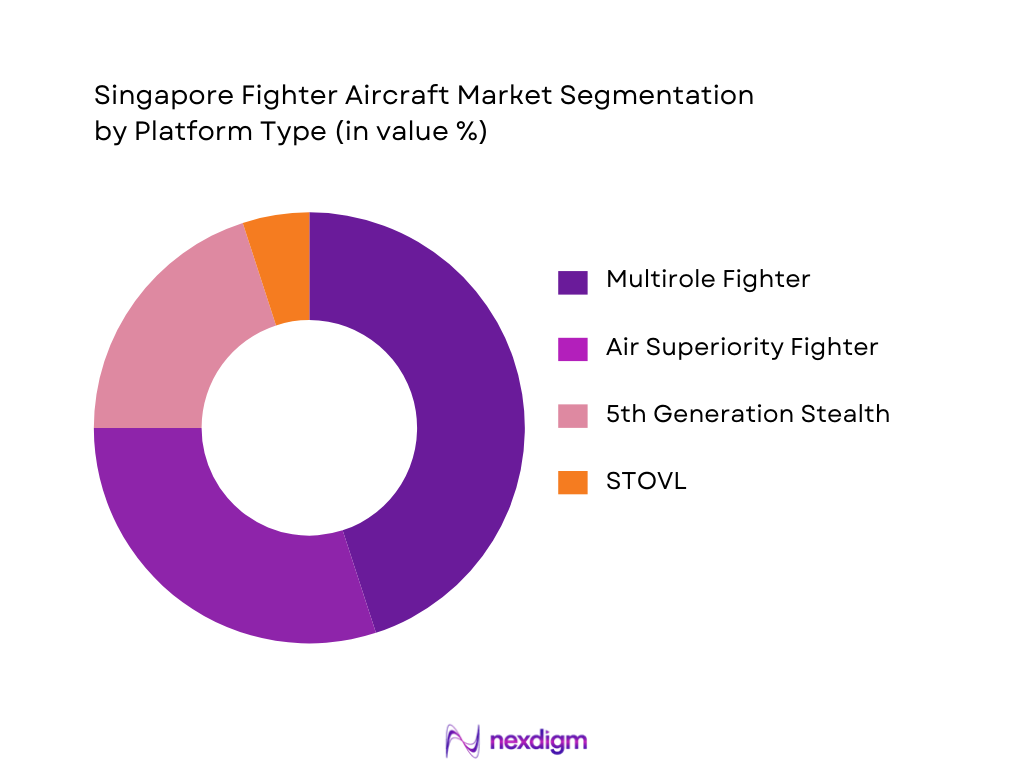
The Singapore Fighter Aircraft market is segmented by platform type into multirole fighters, air superiority fighters, 5th generation stealth fighters, and carrier/vertical/short take-off and landing (STOVL) aircraft. The multirole fighter segment holds the dominant market share due to its versatility and ability to conduct various missions, such as air-to-air, air-to-ground, and reconnaissance. Aircraft like the F-15SG and F-16 are key examples of this segment, which continues to receive significant investments for upgrades and sustainment to maintain operational efficiency.
By Acquisition Type
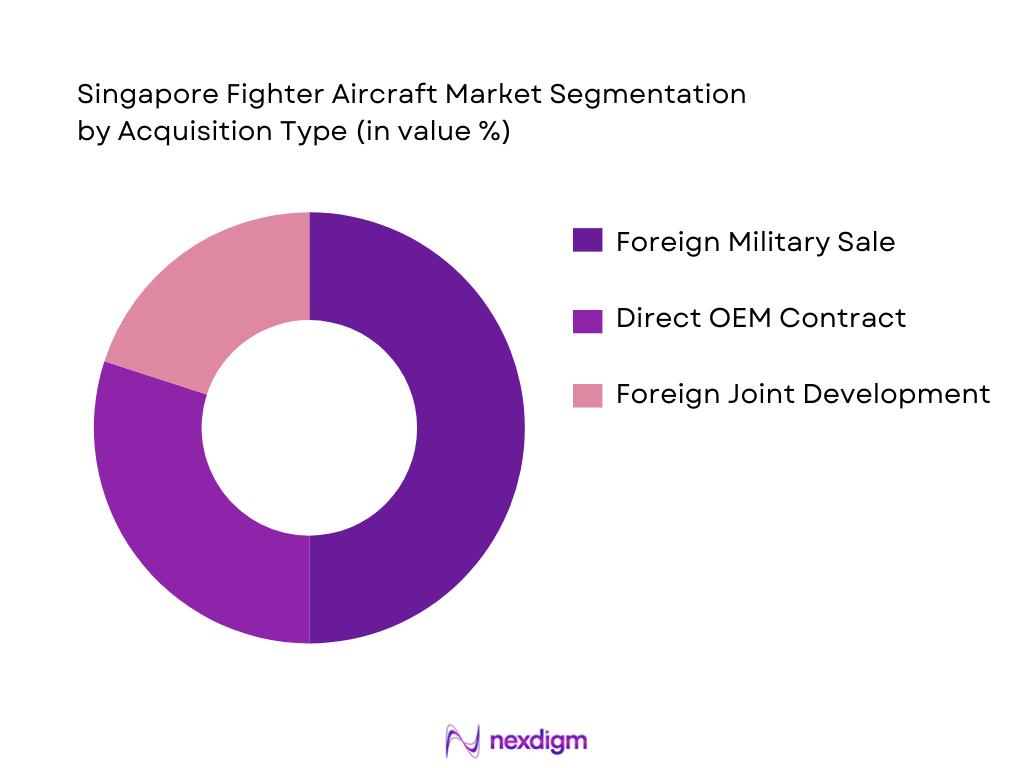
The acquisition type segment consists of foreign military sales (FMS), direct OEM contracts, and foreign joint development. FMS continues to dominate the market, driven by Singapore’s historical reliance on U.S. defense technologies, including the procurement of F-35 fighter jets through government-to-government deals. The country also engages in direct OEM contracts, particularly for aircraft upgrades, and is increasingly involved in joint development programs, such as the F-35 program, to enhance its local defense capabilities.
Competitive Landscape
The Singapore Fighter Aircraft market is characterized by a few dominant players, including both local and international defense contractors. Global defense giants like Lockheed Martin, Boeing, and Dassault Aviation dominate the market, alongside Singapore’s indigenous defense capabilities, such as the local aerospace industry contributing to aircraft sustainment and upgrades. This consolidation underlines the significant influence of these key companies in shaping the market.
| Company | Establishment Year | Headquarters | Aircraft Portfolio | Market Focus | Government Collaborations | Technological Edge |
| Lockheed Martin | 1912 | Bethesda, USA | ~ | ~ | ~ | ~ |
| Boeing | 1916 | Chicago, USA | ~ | ~ | ~ | ~ |
| Dassault Aviation | 1929 | Paris, France | ~ | ~ | ~ | ~ |
| BAE Systems | 1999 | London, UK | ~ | ~ | ~ | ~ |
| Saab | 1937 | Linköping, Sweden | ~ | ~ | ~ | ~ |
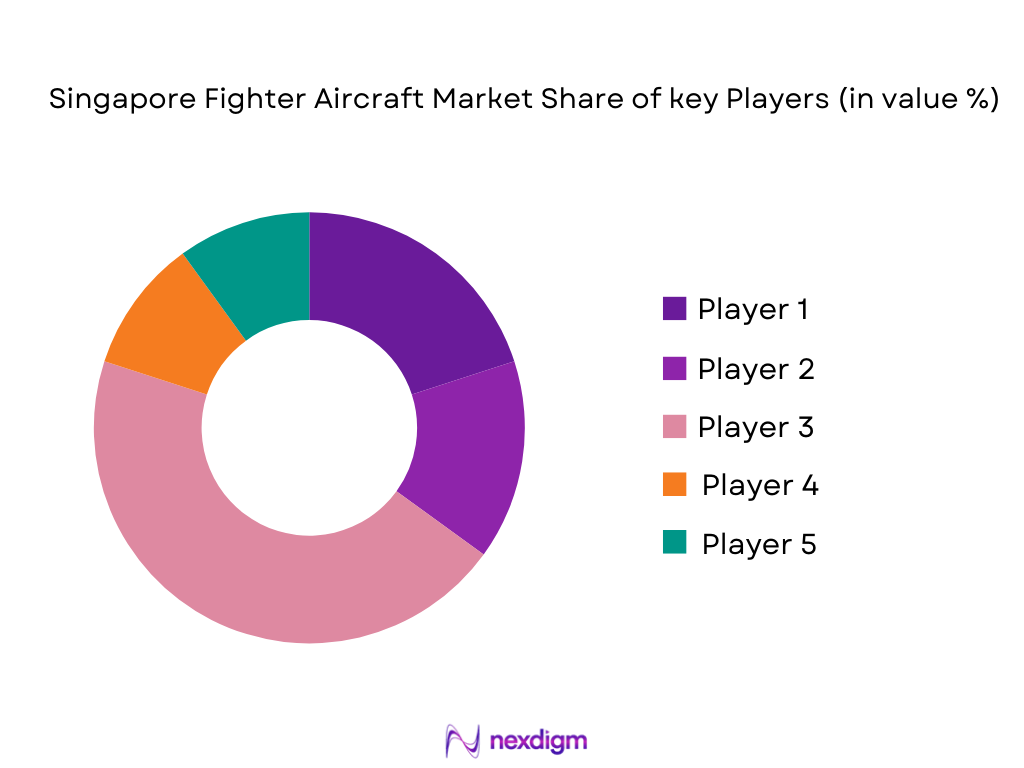
Singapore Fighter Aircraft Market Analysis
Growth Drivers
Regional Security Dynamics
Singapore’s strategic location in Southeast Asia, coupled with increasing regional security threats, significantly drives the demand for advanced fighter aircraft. Geopolitical tensions, especially in the South China Sea, have intensified the need for defense modernization to ensure air superiority in a region facing rising military capabilities. As these threats continue to evolve, Singapore’s focus on maintaining a modern, capable air force becomes crucial for safeguarding its sovereignty and enhancing regional stability.
Air Superiority Imperatives
Air superiority is vital for Singapore, given its comprehensive air defense strategy. The growing capabilities of regional adversaries highlight the need for advanced, multi-role, and stealth fighter aircraft such as the F-35 to maintain an edge in the skies. This demand for cutting-edge aircraft ensures that Singapore remains a strategic deterrent and maintains control over its airspace, vital for national security and operational effectiveness in a contested region.
Market Constraints
Budget Caps Relative to GDP
Despite the steady increase in defense spending, Singapore faces budget constraints due to competing priorities within the public sector. The defense budget, as a percentage of GDP, remains finite, limiting the number of fighter aircraft that can be procured or upgraded, especially for high-cost platforms like the F-35. These fiscal constraints require strategic decisions regarding the size and capabilities of the air force to ensure cost-efficiency without compromising national defense.
Operating Costs
The operational and maintenance costs associated with advanced fighter aircraft present significant challenges for Singapore’s defense budget. The expenses for fuel, spare parts, and specialized personnel training are considerable, particularly with high-tech aircraft. Managing these costs while ensuring long-term operational efficiency remains a priority for the Republic of Singapore Air Force (RSAF) to maintain combat readiness without overstretching its defense finances.
Opportunities
Local MRO & Sustainment Expansion
Expanding local Maintenance, Repair, and Overhaul (MRO) capabilities provides an opportunity for Singapore to reduce reliance on foreign suppliers and lower long-term operational costs. Strengthening the local aerospace sector aligns with the government’s strategy to enhance self-sufficiency and improve the sustainment of fighter aircraft. The expansion of local MRO facilities also supports the creation of high-value jobs, promoting a more robust defense industry while ensuring the long-term operational readiness of the air force.
Simulation & Synthetic Training Integration
The integration of synthetic training solutions into pilot training programs presents a valuable opportunity for the RSAF. By investing in advanced simulators and synthetic training systems, Singapore can reduce the need for live-fly hours, thereby lowering costs associated with fuel, aircraft wear, and tear. These systems enable pilots to train for complex fighter operations in a controlled environment, enhancing readiness and operational efficiency while minimizing the strain on valuable aircraft resources.
Future Outlook
Over the next few years, the Singapore Fighter Aircraft market is expected to show significant growth, driven by continuous government support, advancements in fighter technology, and Singapore’s ambition to maintain its regional defense superiority. The government’s investments in next-generation platforms, such as the F-35, and its growing commitment to increasing the capabilities of the RSAF, will continue to shape the market’s expansion. With regional defense tensions increasing and technological advancements in stealth and sensor fusion, Singapore’s fighter aircraft market will remain a key sector in the Southeast Asian defense landscape.
Major Players
- Lockheed Martin
- Boeing
- Dassault Aviation
- BAE Systems
- Saab
- Northrop Grumman
- Mitsubishi Heavy Industries
- General Dynamics
- Thales Group
- Raytheon Technologies
- Rolls-Royce
- Pratt & Whitney
- Leonardo S.p.A
- Embraer
- Gulfstream Aerospace
Key Target Audience
- Investments and venture capitalist firms
- Government and regulatory bodies (Ministry of Defence, Singapore)
- Aircraft procurement officers within the RSAF
- Aerospace and defense manufacturers
- International defense organizations
- Commercial aviation manufacturers
- Regional defense contractors
- Defense technology providers
Research Methodology
Step 1: Identification of Key Variables
The initial phase involves identifying key stakeholders within the Singapore Fighter Aircraft market, including government bodies, defense contractors, and military personnel. A comprehensive ecosystem map will be created, utilizing secondary research and proprietary databases.
Step 2: Market Analysis and Construction
Historical data on fighter aircraft procurement and spending will be compiled. This includes evaluating key military programs, aircraft models in use, and growth in defense budgets, alongside analyzing industry-specific revenue generation patterns.
Step 3: Hypothesis Validation and Expert Consultation
Hypotheses formed during initial research will be validated through interviews with industry experts from government agencies (RSAF), OEMs, and defense suppliers. These consultations will provide critical insights into market dynamics, helping refine data and forecasts.
Step 4: Research Synthesis and Final Output
Engagement with defense contractors will be undertaken to verify key market trends. This final step ensures that all findings are corroborated with up-to-date field data, leading to a robust, accurate market analysis.

- Executive Summary
- Research Methodology (Market Scope Definition, Fighter Aircraft Market Taxonomy, Primary & Secondary Sources, Singapore Ministry of Defence (MINDEF) Data Integration, Local Supply Chain Validation, Competitor Benchmarks, Quantitative Modeling Approach, Limitations & Assumptions)

- Definition and Scope of the Fighter Aircraft Market
- Defense Procurement Governance (MINDEF & DSTA Evaluation Framework)
- Geopolitical & Strategic Drivers (Indo‑Pacific Air Superiority Requirements)
- Singapore Armed Forces 2040 Transformation Relevant to Fighter Fleet
- Singapore Airpower Doctrine & Multi‑Domain Integration

- Growth Drivers
Regional Security Dynamics
Air Superiority Imperatives
Next‑Gen Capability Needs - Market Constraints
Budget Caps Relative to GDP
Operating Costs
Logistic Footprint - Opportunities
Local MRO & Sustainment Expansion
Simulation & Synthetic Training Integration
Partnering for Future Sixth‑Gen Capabilities
Integration of Advanced AI & Autonomous Systems
Growing Regional Demand for High-Tech Fighter Aircraft - Technology & Innovation Trends
Stealth
Sensor Fusion
Network‑Centric Warfare - Regulatory & Compliance Factors
Export Controls
Foreign Military Sales (FMS)
Offsets & Local Industry Participation

- Market Value, 2020-2025
- Volume Consumption Across Subsegments, 2020-2025
- Composite Adoption Intensity, 2020-2025

- By Platform Type (In Value %)
Multirole Fighter
Air Superiority Fighter
5th Generation Stealth
Carrier/Vertical/Short Take‑Off & Landing (STOVL) - By Acquisition Type (In Value %)
Foreign Military Sale (FMS)
Direct OEM Contract
Foreign Joint Development - By Mission Capability (In Value %)
Air‑to‑Air
Air‑to‑Ground
ISR/SEAD - By Lifecycle Element (In Value %)
Procurement
Upgrades
Sustainment/Logistics - By Technology Stack (In Value %)
Avionics
Sensors
EW/ECM
Weapon Integration

- Competitive Landscape Overview (Market shares by deliveries & contracts)
- Cross‑Comparison Parameters (Company Overview (Ownership, Business Unit Focus), Strategic Positioning (Fighter Platforms, Regional Strategy), Govt/Defense Engagement Model (FMS vs. DCS vs. Co‑Development), Technology Differentiators (Stealth, AESA Radar, EW Suites), Avionics Ecosystem Compatibility & Lifecycle Support Capability, Production Footprint & Local Supply Chain Presence, After‑Sales & Sustainment Offerings, Defense Offsets & Transfer Agreements, Unit Cost & Total Lifecycle Cost Benchmarks, Delivery Timelines & Program Risk Profiles, Contract Value & Revenue Recognition Patterns)
- Key Fighter Aircraft Players & Profiles
Lockheed Martin (F‑35 variants)
The Boeing Company (F‑15SG derivatives)
Dassault Aviation (Rafale)
Eurofighter GmbH (Typhoon)
Saab AB (Gripen)
Northrop Grumman (EW & Sensor Suites)
BAE Systems (Avionics & Integration)
General Dynamics (Combat Systems)
Raytheon Technologies (Missile & Radar Systems)
Korea Aerospace Industries (KF‑21)
Mitsubishi Heavy Industries (F‑2 / Future Fighter)
Leonardo S.p.A. (Avionics & EW)
Textron Aviation (Simulation & Training Convergence)
Elbit Systems (Mission Systems)
Rolls‑Royce / Pratt & Whitney (Engine OEMs related to fighters)

- Market Demand and Utilization
- Purchasing Power and Budget Allocations
- Regulatory and Compliance Requirements
- Needs, Desires, and Pain Point Analysis
- Decision-Making Process

- Forecast by Value & Growth Scenarios, 2026-2035
- Forecast by Volume & Composite Penetration, 2026-2035
- Future Demand by Aircraft Segment, 2026-2035


 Request a Sample
 Ask for Customization
 Get a Quote
 Enquire Now